
You may be doing many things right already.
You track food. You try to exercise consistently. You cut back on sugar, then carbs, then late-night snacks. The scale may move for a few weeks, then stall. Or you lose weight and gain it back while still feeling tired, hungry, puffy, and frustrated. After enough rounds of that cycle, many people start blaming themselves.
In clinic, I see a different pattern. Often, the issue isn't effort. It's that the plan never matched the biology. Functional medicine weight loss starts from a different question. Not “How do we force your body to lose weight?” but “Why is your body resisting weight loss in the first place?” That shift matters because weight gain is often a signal from deeper systems like hormones, inflammation, sleep, stress, gut health, and blood sugar regulation.
That's why some people feel relieved when they begin a more structured medical program. Instead of being told to try harder, they get a process that looks for causes, measures patterns, and builds a plan around their real physiology.
Table of Contents
- Beyond Calories In Calories Out
- Uncovering the Root Causes of Weight Gain
- Your Personalized Health Blueprint
- A Tale of Two Approaches
- Key Interventions in a Functional Program
- What to Expect from Your ProMD Health Program
- Common Questions About Functional Medicine Weight Loss
Beyond Calories In Calories Out
A common story goes like this. Someone cuts calories, adds more cardio, and white-knuckles cravings for months. They may lose some weight early, but energy drops, workouts feel harder, sleep gets worse, and the body seems to push back.
That's the moment many patients start looking for a different model, such as getting started with weight management. Not because they want a shortcut, but because they want an explanation.
Functional medicine weight loss treats body weight as one part of a larger metabolic picture. If insulin is running high, if cortisol is out of rhythm, if sleep is poor, or if inflammation is driving hunger signals, a simple calorie target may not solve much. You can follow the rules and still feel stuck.
Practical rule: If a plan depends on constant willpower to work, it usually isn't addressing the main driver.
This approach doesn't dismiss nutrition or movement. It puts them in context. Two people can eat the same lunch and have very different blood sugar responses, energy patterns, and cravings later that day. One person may do fine with a standard plan. Another may need a program that addresses thyroid function, gut symptoms, stress load, medication support, or body composition goals all at once.
That's why this field feels hopeful to people who've been spinning their wheels. It replaces self-blame with better questions. When a provider looks for the “why” behind stubborn weight, the next step becomes more precise and often more realistic.
Uncovering the Root Causes of Weight Gain
Why the check engine light matters
Weight gain works a lot like a check engine light. The light itself isn't the problem. It tells you something underneath needs attention. You can cover the light with tape, but the car still needs a mechanic.
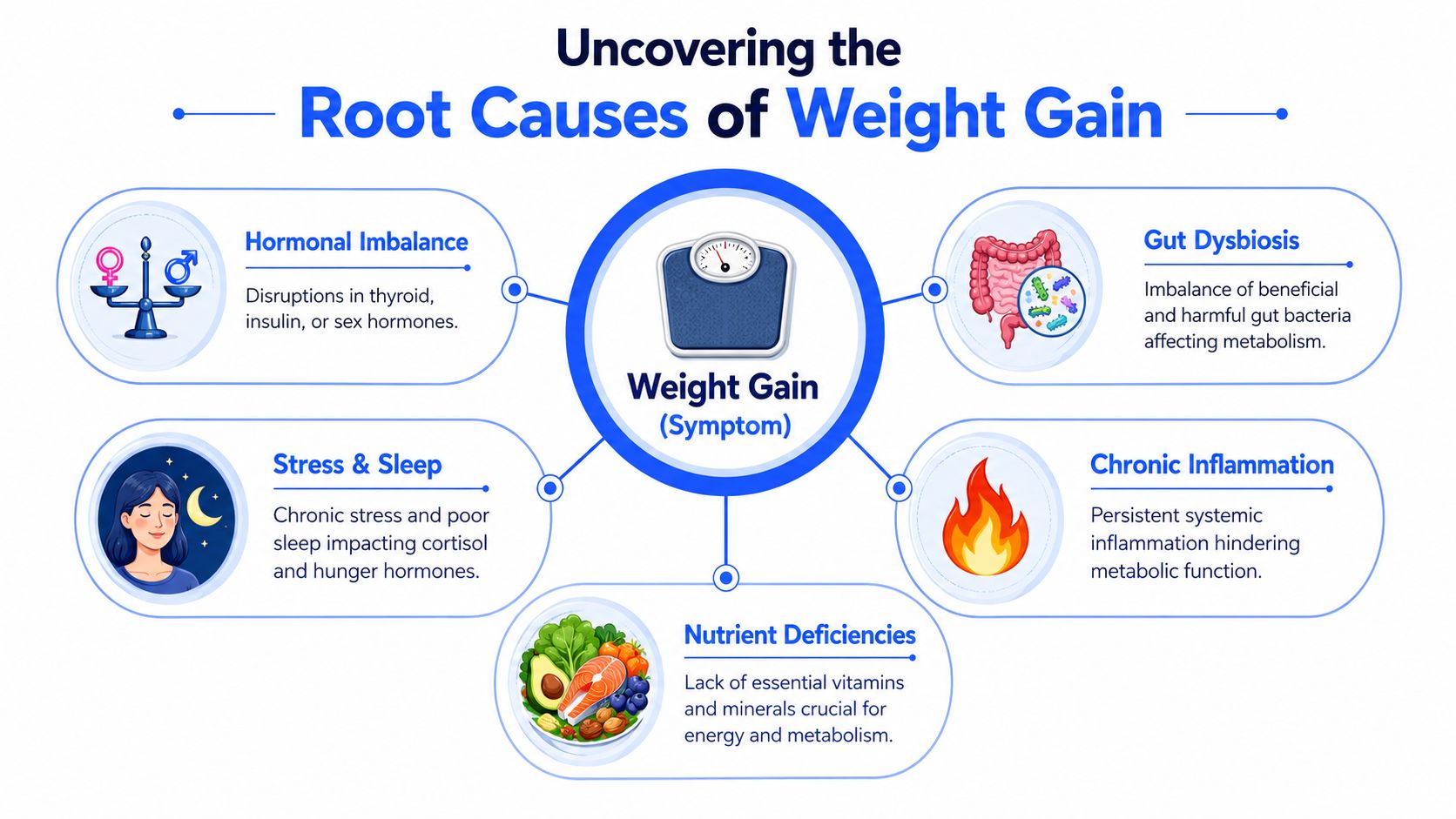
The same idea applies here. Extra weight can be a visible symptom of hidden imbalance. For some people, the issue centers on insulin and blood sugar. For others, it's thyroid function, chronic stress, disrupted sleep, gut symptoms, inflammation, or a combination of several factors at once.
The main systems that deserve a closer look
Hormones are often the first place clinicians look. Insulin resistance can make the body store energy more readily and make hunger harder to manage. Thyroid dysfunction can leave patients feeling slow, cold, constipated, or mentally foggy. Cortisol patterns can shift appetite, sleep, and where the body tends to hold fat. If you want a more focused explanation of that connection, this guide on managing hormones for weight loss is a useful starting point.
Gut health can be another missing piece. Patients with bloating, irregular bowel habits, reflux, or food reactions often notice that their weight concerns travel with digestive symptoms. The goal isn't to blame the gut for everything. It's to recognize that digestion, inflammation, and metabolic signaling are connected. Even everyday choices like coffee can matter differently from person to person, which is why some readers find this article on understanding coffee's gut impact helpful when they're trying to sort out how digestion affects the bigger picture.
A few root causes make their presence known:
- Sleep disruption: Poor sleep can intensify hunger, reduce recovery, and make cravings harder to manage the next day.
- Chronic inflammation: When the body stays in a low-grade inflammatory state, metabolism often becomes less flexible.
- Nutrient shortfalls: Low nutrient status can show up as fatigue, poor exercise tolerance, hair changes, or stalled progress despite good habits.
When weight is the symptom, chasing the symptom alone rarely feels satisfying for long.
One more point matters, especially for adults over 50. Muscle preservation becomes part of the conversation, not a side note. There's a real evidence gap around exactly how much lean mass functional protocols preserve versus standard calorie restriction in older adults, even though strength training, protein, hormone balance, and insulin sensitivity are central concerns in this age group. That uncertainty doesn't make the approach less useful. It means careful assessment and follow-up matter even more.
Your Personalized Health Blueprint
Why basic advice often falls short
Generic advice sounds simple because it is simple. Eat less. Move more. Avoid processed food. Those ideas aren't wrong, but they don't tell you how your body is responding.
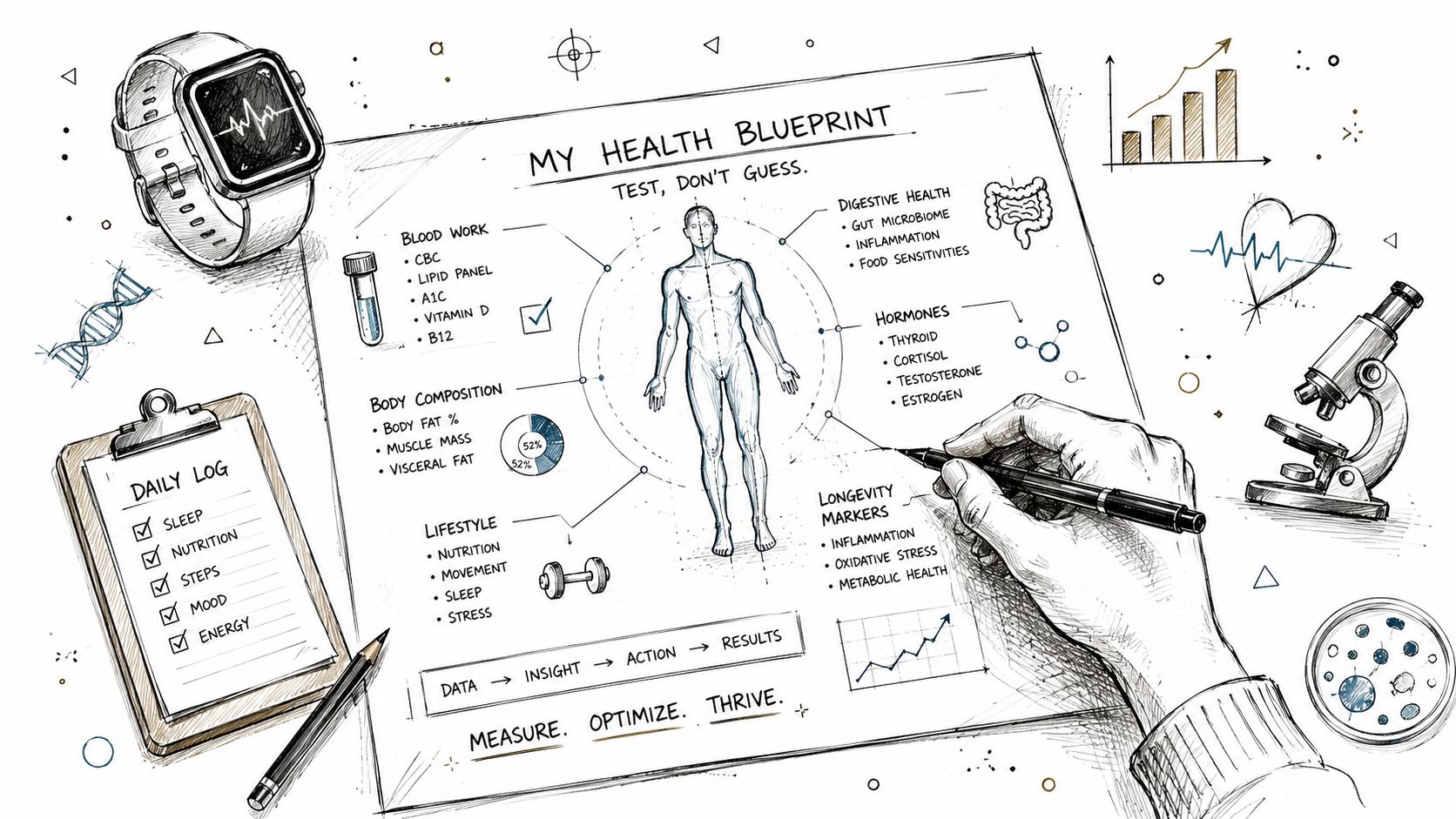
That's where the “test, don't guess” mindset becomes valuable. A standard blood panel may catch some problems, but it often doesn't build a detailed map of why weight loss is difficult for one specific person. A more complete blueprint looks at patterns instead of isolated numbers.
What a deeper workup can reveal
A functional medicine workup often includes a broader review of hormone balance, metabolic markers, digestive symptoms, inflammation, and nutrient status. Depending on the person, that can mean taking a closer look at thyroid patterns, sex hormones, adrenal stress signals, food triggers, and the microbiome. The point isn't to order every test possible. It's to order the right tests for the history in front of you.
One modern tool that has changed this process is the continuous glucose monitor. Instead of guessing which foods are “good” or “bad,” patients can watch how meals, sleep, exercise, and stress affect glucose in real time. That feedback can make advice feel concrete. In a 2025 peer-reviewed trial on continuous glucose monitoring in functional medicine care, programs that used CGM and real-time dietary feedback showed a 38% higher adherence rate to low-inflammatory, whole-food diets and produced an additional 4.2 kg (~9.3 lbs) of weight loss over 6 months compared with standard dietary counseling.
That kind of monitoring also helps patients understand why one breakfast keeps them full and focused while another leads to a crash by midmorning. The lesson isn't “never eat this food again.” It's “your body is giving us data, so now we can adjust with more precision.”
A personalized blueprint usually shapes decisions in several areas:
- Food selection: Which meals support steady energy and fewer cravings.
- Meal timing: Whether fasting windows or earlier dinners fit the person's pattern.
- Exercise planning: When resistance work, recovery, or lower-intensity movement makes the most sense.
- Medical support: Whether prescriptions, supplements, or hormone workup belong in the plan.
Good testing doesn't replace clinical judgment. It sharpens it.
A Tale of Two Approaches
Many readers have already experienced conventional weight loss care. That model can help, especially when someone needs a straightforward first step. But it usually operates with a narrower lens than functional medicine weight loss.
The difference isn't that one side cares and the other doesn't. The difference is scope. A conventional visit may focus on short-term weight reduction. A functional visit is more likely to ask why the weight is there, what systems are involved, and which tools fit the person's metabolic reality. For patients considering medication support, programs like a semaglutide weight loss program often make more sense when they're placed inside a broader care plan instead of being treated as stand-alone fixes.
Functional vs. Conventional Weight Loss
| Attribute | Conventional Approach | Functional Medicine Approach |
|---|---|---|
| Primary goal | Lower body weight | Improve metabolic health while addressing body weight |
| Core strategy | Calorie restriction and general exercise advice | Root cause resolution with personalized nutrition, lifestyle, and medical support |
| Diagnostic approach | Basic history and routine labs | Broader review of hormones, inflammation, nutrient status, gut concerns, and glucose patterns |
| Treatment tools | Standard meal plans, activity goals, occasional medication discussion | Customized protocols that may include nutrition timing, resistance training, prescriptions, supplements, and hormone evaluation |
| Patient role | Follows instructions | Partners in tracking symptoms, reviewing data, and adjusting the plan |
| View of setbacks | Often interpreted as noncompliance | Interpreted as feedback that the plan or diagnosis needs refinement |
One way to think about it is this. Conventional care often asks, “What should you do?” Functional care also asks, “What is your body responding to, and why?”
That distinction changes the emotional tone of treatment. Patients who've felt judged by prior attempts often respond well when the conversation becomes more investigative and less moral. Weight becomes a clinical clue, not a character test.
Key Interventions in a Functional Program
Once the underlying drivers are clearer, treatment becomes layered. The power of functional medicine weight loss isn't usually in one intervention. It's in how the parts work together.
Nutrition timing movement and recovery
Food quality still matters, but the conversation gets more specific than calories. Some patients do better with simpler meal structure. Others benefit from removing foods that seem to trigger bloating, cravings, or crashes. Timing can matter too. According to clinical guidance on obesity and weight management in a functional model, time-restricted eating in an 8 to 10 hour window is used to extend fasting-state AMPK activation, reduce total daily insulin exposure, and support processes linked to metabolic health. The same source notes that this approach can decrease body weight and fat mass independent of calorie restriction while improving fasting blood sugar and blood pressure.
Movement is also chosen with purpose. The same clinical guidance describes resistance training 3 to 4 times weekly as a highly insulin-sensitizing modality because it increases GLUT-4 expression and builds metabolically active lean tissue. In plain language, muscle helps the body handle glucose better. That matters for anyone dealing with insulin resistance or stubborn abdominal fat.

A well-built program usually includes lifestyle supports that don't look dramatic from the outside but change outcomes over time:
- Sleep repair: Consistent sleep often improves hunger control and exercise recovery.
- Stress reduction: A calmer nervous system supports better food choices and steadier daily energy.
- Structured follow-up: People do better when the plan is adjusted instead of abandoned after a plateau.
When prescriptions hormones and supplements fit in
Some patients need more than nutrition and exercise changes. That's not failure. It's just a sign that the biology needs broader support.
In integrated functional medicine models, patients who receive monthly hormone optimization achieve a 2.3x higher rate of sustained weight loss than those receiving only diet and exercise advice, according to the IFM longitudinal study and the landmark medication trials cited here. That same evidence summary notes that semaglutide and tirzepatide can produce mean weight reductions of 14.9% and 19.5% respectively when used as part of a complete program.
That wording matters. Medications can be powerful, but they work best when they're connected to a larger plan that also addresses eating patterns, muscle retention, sleep, and follow-up. The same logic applies to supplements. The right supplement may support a documented deficiency or targeted goal, but random stacking rarely helps. If you're trying to understand the categories people often discuss, this overview of best supplements for metabolic health can provide helpful context.
A prescription can lower the barrier to progress. It doesn't replace the work of building a healthier metabolism.
This integrated model is also where peptide therapy, hormone review, and body composition support may enter the conversation. The exact mix depends on symptoms, goals, history, and how the patient responds over time.
What to Expect from Your ProMD Health Program
A real clinical program usually feels less like joining a diet and more like entering a guided care pathway.
How the patient journey is typically structured
Many patients start remotely through ProMD Connect. The first visit focuses on history, symptoms, goals, prior attempts, and whether issues like fatigue, cravings, menopause symptoms, poor sleep, or body composition concerns are part of the picture. From there, the care team can recommend diagnostic testing and shape a treatment plan around the results rather than defaulting to a one-size-fits-all template.

That plan may include telehealth follow-up, home-shipped prescriptions, and medical-grade supplements selected to match the patient's needs. For the right patient, prescription support can sit alongside food changes, movement goals, and hormone evaluation. In broader integrated programs that combine clinical guidance, prescription medications, and personalized supplements, average body weight reduction reaches 15% to 20% over 12 months, compared with 5% from standard lifestyle counseling alone, according to the 2024 meta-analysis in JCEM.
Why the model feels more connected
What stands out in this kind of program is coordination. Patients aren't trying to piece together advice from separate places. Telehealth check-ins, lab review, prescriptions, supplements, and body composition planning can all sit inside one care journey.
That's also where aesthetic technology can complement medical care. Some patients want help with body composition changes that the scale doesn't fully capture. Emsculpt NEO can fit into that discussion because it targets muscle building and fat reduction as part of a broader physique and wellness plan. ProMD Health also offers an AI Simulator that helps patients visualize potential aesthetic and weight loss outcomes, which can make goals feel more concrete during planning conversations.
The payment model matters too. ProMD Health operates as a cash-pay practice, so patients shouldn't expect insurance coverage for these services. For many people, that model allows more flexibility and a more personalized level of care because the program isn't built around insurance restrictions.
Common Questions About Functional Medicine Weight Loss
How is this different from working with a nutritionist
A nutritionist can be very helpful with meal planning, habit coaching, and accountability. Functional medicine weight loss goes further into medical assessment. It can include diagnostic testing, prescription treatment, hormone review, and ongoing clinical monitoring. The focus isn't only on what you're eating. It's on why your body is responding the way it is.
How does payment work
At ProMD Health, this care is cash-pay. That means patients should not assume insurance coverage for visits, prescriptions, testing, or related services through the program. The upside is that treatment can be built around the patient's goals and clinical needs instead of insurance rules.
What happens after the initial weight loss phase
The best programs don't end when the scale improves. Maintenance usually shifts toward protecting muscle, stabilizing routines, adjusting medication if appropriate, and staying ahead of the triggers that caused regain in the first place. For many patients, the long-term win isn't just losing weight. It's understanding their body well enough to stop starting over.
If you're ready for a more personalized path, ProMD Health offers medically supervised weight management, hormone optimization, functional medicine support, telehealth through ProMD Connect, and body composition services designed to meet patients where they are.


