
You may be staring at a closet full of “goal clothes,” a notes app full of diet rules, and a scale that keeps undoing your best efforts. Maybe you've done low-carb, counted macros, skipped meals, hired a trainer, and still ended up in the same place a few months later. That pattern is exhausting, and it often leaves people feeling like they failed when the bigger issue is that appetite, metabolism, habits, sleep, stress, and medical risk were never addressed in one coordinated plan.
That's where a Semaglutide weight loss program changes the conversation. The right program isn't a quick prescription and a generic meal handout. It's a medically supervised process that screens for safety, uses evidence-based treatment, and builds a realistic long-term strategy for keeping weight off.
Table of Contents
- The End of the Dieting Cycle
- Understanding Medical Weight Loss Programs
- How Semaglutide Powers Modern Weight Management
- Are You a Candidate for a Semaglutide Program
- Your Journey with a ProMD Health Weight Loss Program
- Measuring Success Beyond the Scale
- How to Choose a Program and Understand Costs
- Frequently Asked Questions About Semaglutide
The End of the Dieting Cycle
Those asking about semaglutide aren't new to weight loss. They're veterans of it. They know how to be disciplined for two weeks, six weeks, sometimes even six months. What keeps breaking the pattern is that hunger returns, cravings get louder, progress slows, and life gets busy again.
A common story looks like this. Someone starts a strict plan on Monday, loses some weight, feels encouraged, then reaches a stall. The stall turns into frustration, and frustration turns into grazing, emotional eating, or “starting over” after a vacation, birthday, or stressful month at work.
That cycle doesn't always reflect a lack of willpower. Often, it reflects biology.
Clinical reality: If a person is fighting persistent hunger, poor satiety, and recurrent weight regain, a better meal plan alone usually won't solve the whole problem.
Medical weight loss treats obesity and overweight as health conditions that deserve structured care. That means evaluating whether medication is appropriate, identifying barriers such as insulin resistance or appetite dysregulation, reviewing medical history, and setting up follow-up instead of leaving patients to manage side effects and setbacks alone.
A strong program also changes expectations. The goal isn't to lose as much as possible, as fast as possible. The goal is to build a plan that is safe enough to continue, effective enough to matter, and realistic enough to maintain when motivation fades.
That's why a semaglutide weight loss program works best when it's physician-led and behavior-supported. Medication can reduce the biological pressure that drives overeating. The rest of the program has to teach patients what to do with that new window of control.
Understanding Medical Weight Loss Programs
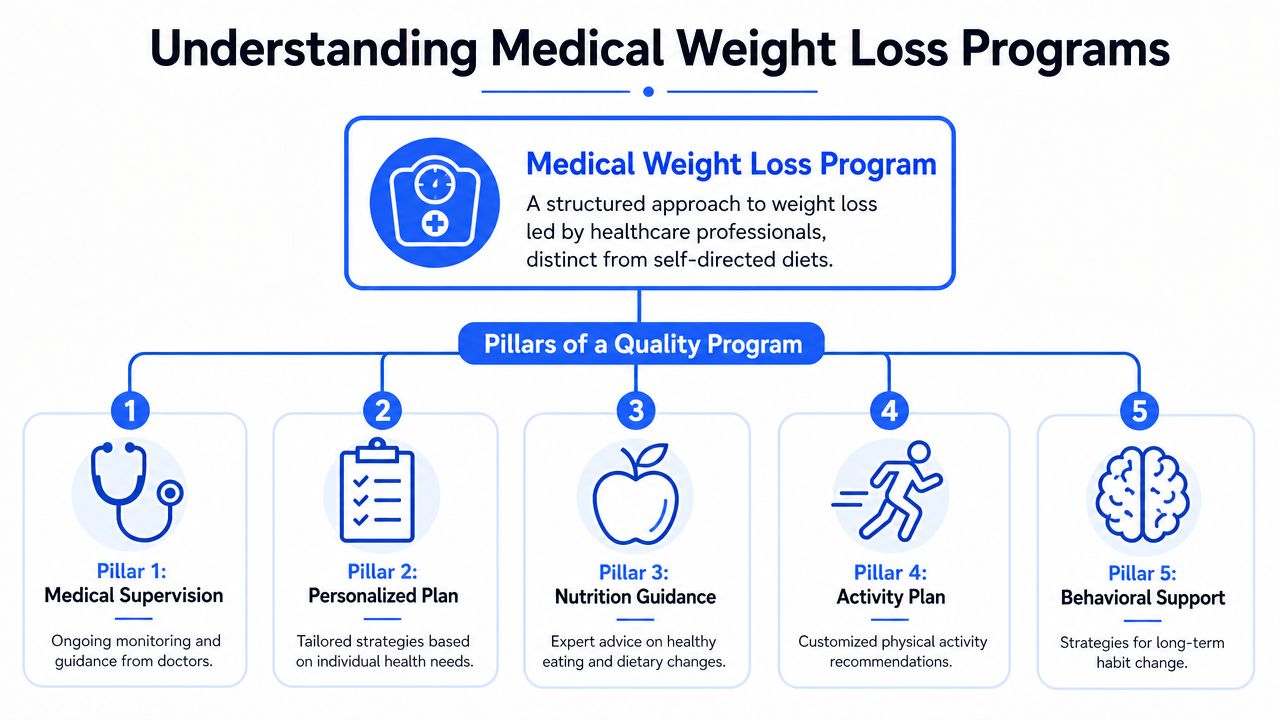
A medical weight loss program is different from a commercial diet because it starts with diagnosis, not slogans. It asks why weight gain happened, what risks are present now, and which treatment tools fit the patient in front of you. That's very different from handing every person the same food list and hoping compliance solves everything.
What makes a program medical
The first difference is clinical oversight. A real program includes a medical history, medication review, assessment of current health conditions, and a decision about whether prescription treatment is appropriate. If a person has symptoms or risk factors that need more attention, the plan should adjust before treatment starts.
The second difference is personalization. One patient may need appetite control and regular follow-up. Another may need a slower ramp because of gastrointestinal sensitivity. Another may need extra help rebuilding muscle and improving body composition after years of yo-yo dieting.
A structured approach should also include lifestyle guidance that's specific enough to use. General advice like “eat better” and “move more” isn't enough.
For readers exploring a physician-led model, medically supervised weight loss care gives a clearer picture of how these programs are built around assessment, treatment planning, and follow-up.
What a complete program includes
A quality semaglutide weight loss program usually combines several elements:
- Medical evaluation: Baseline health review, risk screening, and confirmation that treatment is appropriate.
- Prescription management: Medication selection, dose changes, side effect monitoring, and response assessment.
- Nutrition guidance: A practical eating framework that supports satiety, protein intake, and consistency.
- Activity planning: Movement goals that protect muscle and improve long-term maintenance.
- Behavior support: Tools for cravings, routines, sleep disruption, stress eating, and relapse prevention.
Some programs also use body composition support, not just body weight targets. That matters because patients often want to lose fat, preserve strength, and feel firmer in clothing, not just see a lower number on the scale.
A more complete model may also pair pharmacotherapy with treatments such as Emsculpt NEO for patients focused on muscle support and contour changes while they lose weight. That doesn't replace nutrition or medication. It complements a broader plan.
The best programs don't treat medication as the whole answer. They use medication to make the rest of the work more achievable.
How Semaglutide Powers Modern Weight Management
A common pattern shows up in clinic. A patient starts the day determined to eat less, does well for a few hours, then gets hit with persistent hunger, stronger cravings at night, and the sense that willpower keeps failing. In many cases, the issue is not a lack of effort. It is biology pushing hard in the opposite direction.
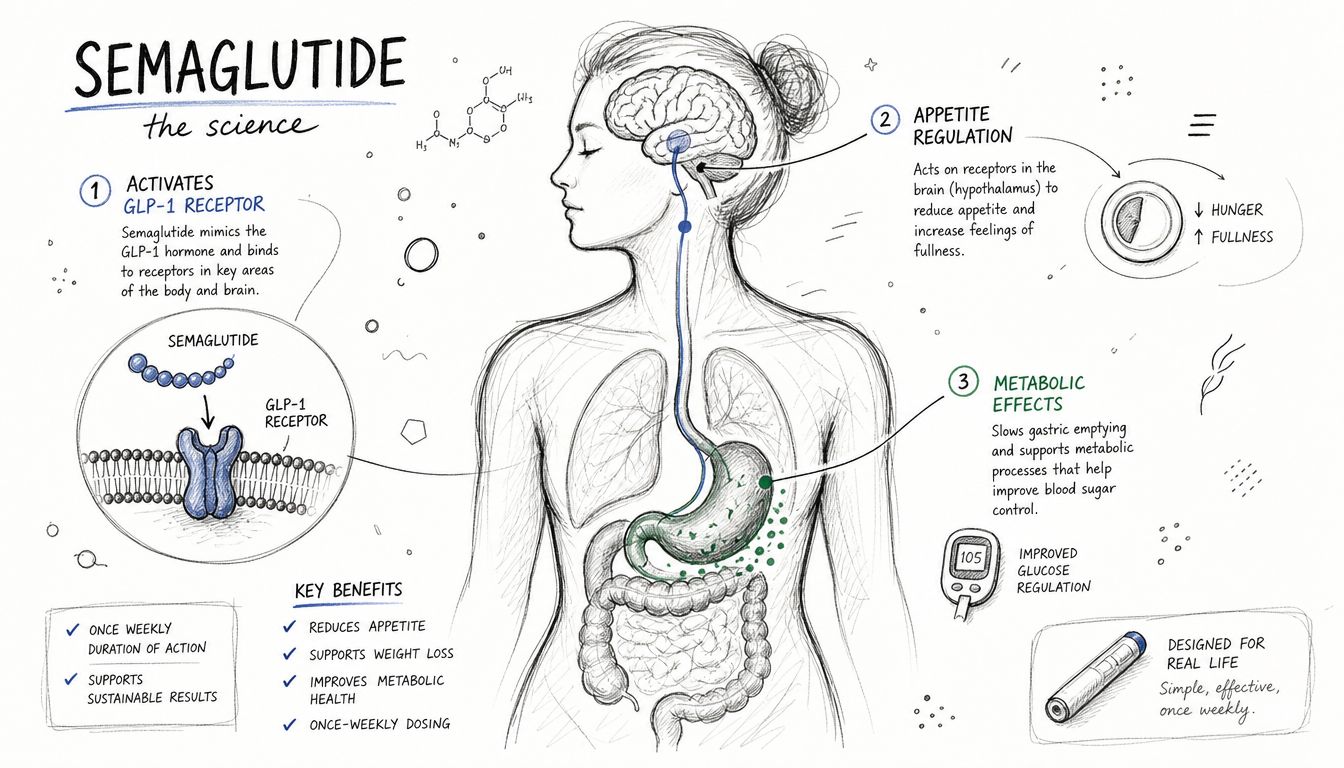
Semaglutide is a GLP-1 receptor agonist. It works on the brain and gut signals involved in appetite, fullness, and blood sugar regulation. Patients often report less “food noise,” fewer urges to keep eating, and a more noticeable stopping point during meals.
Why appetite regulation matters
Weight management gets harder when hunger signals stay high after calorie reduction. That is one reason many people can follow a plan for a short period, then regain weight once appetite, cravings, and fatigue build up.
Semaglutide helps reduce that pressure. It slows gastric emptying, increases satiety, and lowers appetite for many patients. The result is practical, not magical. A protein-focused meal plan becomes easier to follow. Portion control feels more realistic. Late-night grazing often becomes less frequent.
For a broader explanation of how these treatments work, GLP-1 medications and metabolic health explains the power of these therapies in modern obesity care.
What the clinical results show
Semaglutide became a major part of medical weight management because clinical trials showed meaningful weight loss in appropriate patients, especially when medication was paired with lifestyle treatment. Those outcomes matter, but so do the trade-offs.
In practice, results vary. Some patients respond early. Others need slower dose escalation because nausea, constipation, reflux, or reduced appetite becomes too strong at first. A good program plans for that. Dose changes, food adjustments, hydration, protein intake, and follow-up visits all affect whether a patient can stay on treatment long enough to benefit.
This is also where program structure matters. At ProMD Health, semaglutide is part of an integrated model that can include telehealth follow-up through ProMD Connect, ongoing medical supervision, nutrition guidance, and for selected patients, body composition support such as Emsculpt NEO while weight is coming down. That approach reflects what I see in practice. Medication helps lower the biological resistance to weight loss, but outcomes are stronger when patients have regular check-ins and a plan that addresses muscle, habits, and adherence at the same time.
Remote follow-up can make that process more consistent, especially when side effects or dosing questions come up between visits. For readers interested in how remote monitoring fits into ongoing care, this guide to RPM solutions gives useful context.
Semaglutide is a useful medical tool. It is not passive treatment, and it is not cosmetic fine-tuning. Used in the right patient, with physician oversight and a clear plan, it can improve the odds of steady, safer, more sustainable weight loss.
Are You a Candidate for a Semaglutide Program
A common first visit goes like this. A patient says, "I have tried diets for years, my weight keeps coming back, and I want to know whether semaglutide is appropriate for me." That is the right question. Candidacy starts with medical fit, not interest alone.
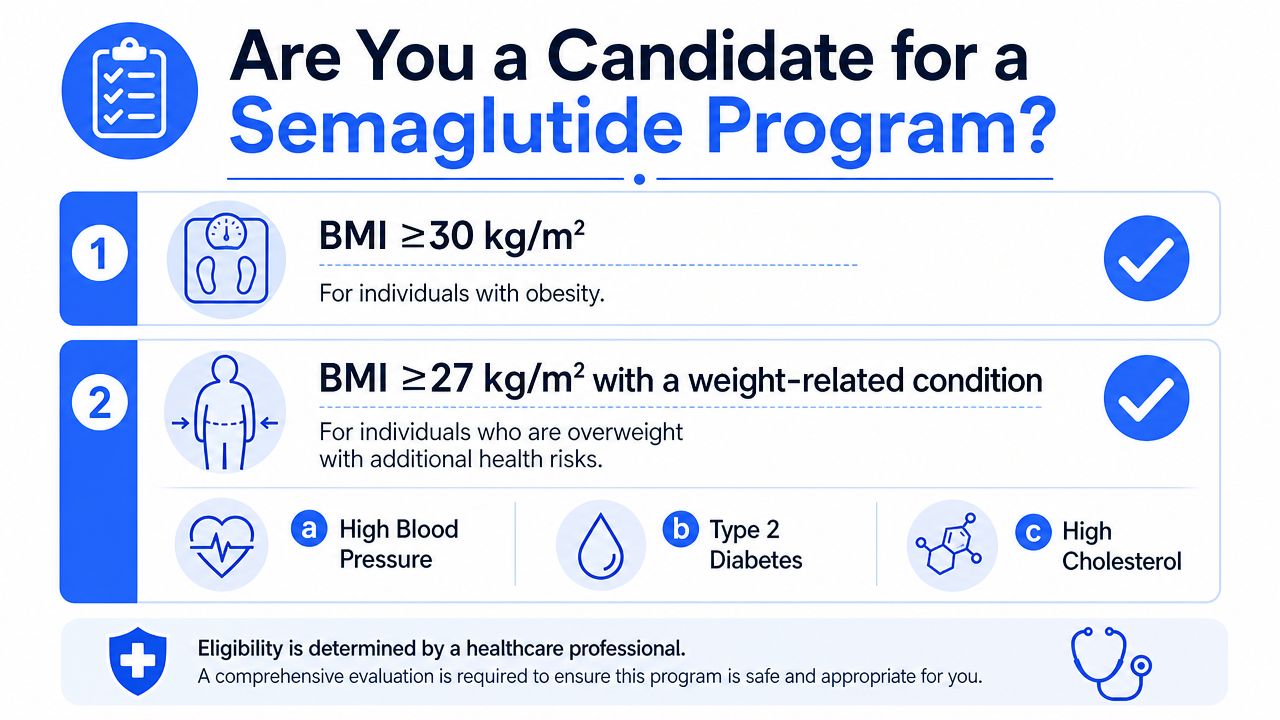
In practice, semaglutide is usually considered for adults with obesity, or for adults who are overweight and also have a weight-related condition such as high blood pressure, abnormal cholesterol, or type 2 diabetes. The point of that screening is straightforward. This treatment is meant for chronic weight management when excess weight is affecting health risk, not for short-term cosmetic goals.
A careful review should answer four basic questions:
- Has weight been hard to manage despite real effort? Repeated regain after structured diet and exercise attempts matters.
- Is weight contributing to current health concerns? Blood pressure, glucose, lipids, sleep apnea, joint pain, and fatty liver disease can all change the risk-benefit discussion.
- Are there medications or conditions that affect safety? Current prescriptions, GI symptoms, prior pancreatitis, and endocrine history all need review.
- Are the goals medically appropriate? The best candidates usually want better metabolic health, lower long-term risk, and a plan they can stay with.
Some patients qualify on paper but still need a slower start.
That includes patients who are prone to nausea, eat very little protein, get dehydrated easily, or have schedules that make follow-up inconsistent. In a real program, those details matter as much as the prescription itself. At ProMD Health, candidacy is tied to whether we can support the patient safely through monitoring, telehealth follow-up with ProMD Connect when needed, and a broader plan that may also address body composition during weight loss.
There are also situations where semaglutide should be avoided or approached with extra caution. A personal or family history of medullary thyroid carcinoma or Multiple Endocrine Neoplasia type 2 is a clear reason to stop and review alternatives. Pregnancy planning, active gastrointestinal symptoms, and complex medication regimens also deserve careful physician review before treatment starts.
Safety often comes down to follow-through. Patients do better when they have clear instructions, scheduled check-ins, and practical reminders to stay engaged. Many clinics use systems that reduce patient no-shows with texts, because missed follow-ups can delay dose adjustments and make side effects harder to address early.
The best candidate is not the patient who wants the fastest result. It is the patient whose medical history, goals, and follow-up plan make treatment reasonable, supervised, and sustainable.
Your Journey with a ProMD Health Weight Loss Program
A patient starts treatment motivated, takes the first injection, then realizes within the first two weeks that success depends on much more than getting a prescription. Appetite changes. Meal size has to change. Hydration becomes more important. Follow-up matters because dose timing, side effects, and day-to-day habits all affect whether the program stays tolerable and effective.
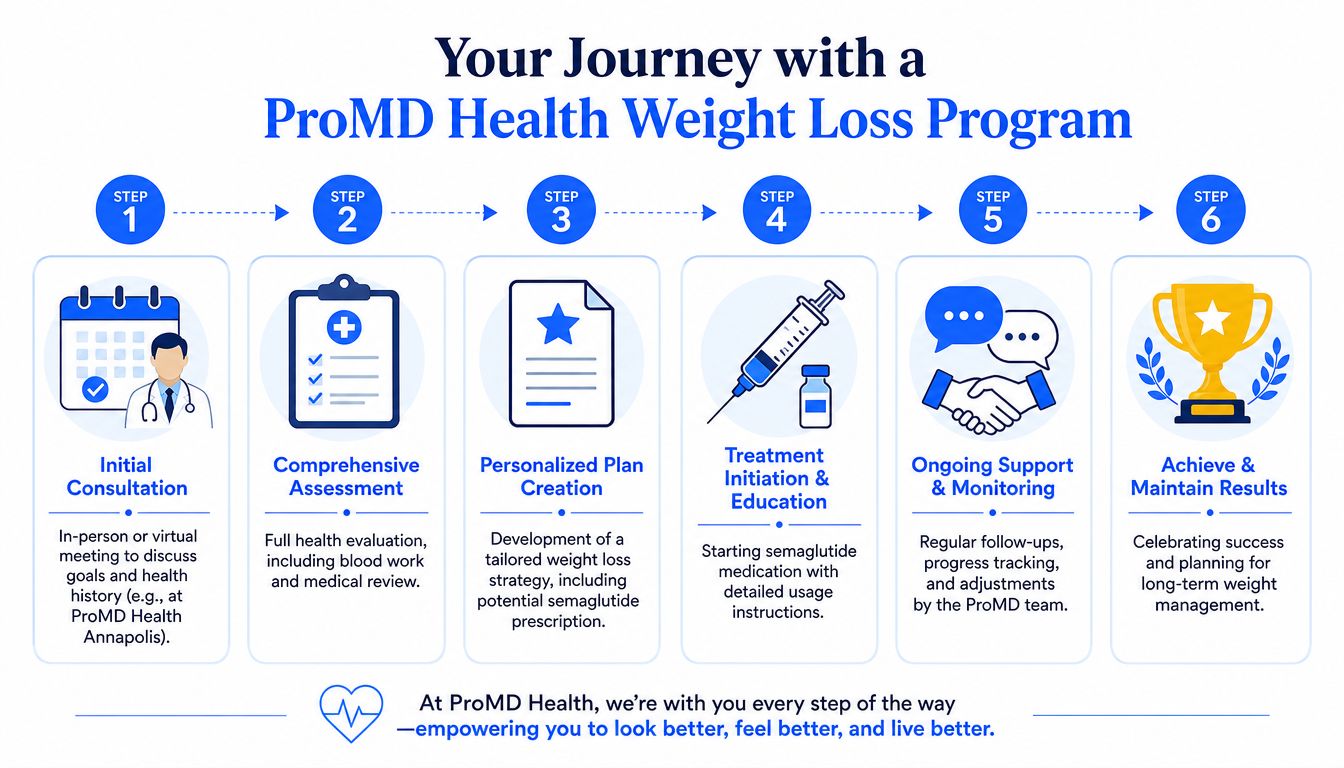
At ProMD Health, the process is built to be structured and practical. Patients may start in person or through ProMD Connect, but the goal is the same. Establish a clear baseline, set realistic expectations, and build a plan that covers medication, nutrition, activity, and accountability. For some patients, that plan also includes body composition support with Emsculpt NEO while weight loss is underway.
What the first visit should accomplish
The first visit should answer three clinical questions. Is semaglutide appropriate? What could interfere with adherence or tolerance? What support will this patient need over the next several months?
That visit usually includes:
- Medical review: Weight history, current symptoms, medications, risk factors, and any lab work or prior records that help guide treatment.
- Treatment planning: A program that pairs semaglutide with eating guidance, movement goals, and a follow-up schedule that the patient can realistically keep.
- Patient education: Injection technique, common side effects, hydration, protein intake, bowel habits, and clear instructions on when to contact the clinic.
Operations matter too. Patients are more likely to stay on schedule when communication is consistent, and clinics that reduce patient no-shows with texts often improve continuity of care for medication follow-up.
Why the dosing schedule matters
Semaglutide is started low and increased gradually over time. A common schedule begins at 0.25 mg weekly, then steps up monthly to 0.5 mg, 1.0 mg, 1.7 mg, and 2.4 mg as tolerated. The reason is simple. A slower buildup usually makes nausea, early fullness, constipation, and fatigue easier to manage.
Patients often expect the medication to do all the work at once. In practice, the early phase is quieter than that. People notice they get full sooner, portions need to shrink, greasy meals become harder to tolerate, and eating too fast can backfire. Those are not treatment failures. They are signs that behavior has to adjust to the medication.
I tell patients to respect the early weeks. Problems usually start when someone keeps eating the same portions, falls behind on fluids, or pushes dose increases before their body is ready.
A supervised program also leaves room for judgment. Some patients stay at a lower dose longer because they are losing steadily and feel well there. Others need slower escalation because their work schedule, travel, GI symptoms, or hydration habits make standard pacing less realistic. That flexibility is part of good medical care.
The stronger results usually come from integration, not speed. Medication can lower appetite, telehealth follow-up through ProMD Connect can keep treatment on track between visits, and Emsculpt NEO may help support body composition goals for selected patients who want more than a lower number on the scale.
Measuring Success Beyond the Scale
A patient reaches a point where the weekly weigh-in barely changes, yet the rest of life looks different. Pants fit better. Evening cravings are quieter. Walking feels easier. That stretch can feel confusing if the scale is the only measure being tracked.
In medical weight loss, I look for a broader pattern. Body weight matters, but waist size, eating control, physical function, energy, and body composition often show progress before the next drop on the scale. That is one reason a structured medical weight loss approach works better than chasing a number alone.
What long-term success looks like
Long-term results depend on more than the first few months. The SELECT trial reported sustained weight loss with semaglutide over several years, along with improvement in waist circumference. That matters because a smaller waist usually reflects lower visceral fat, which has stronger metabolic relevance than a single weigh-in.
In practice, success often looks like this:
- More stable eating patterns: fewer binge-restrict swings, less grazing, and fewer episodes of eating past fullness
- Better day-to-day function: improved stamina for exercise, work, travel, and routine activities
- Reduced central fat: a shrinking waist often signals meaningful health improvement even during slower scale weeks
- Less mental noise around food: fewer impulsive eating decisions and less constant hunger
These changes are easier to preserve when patients stay connected to care. Ongoing check-ins through ProMD Connect help catch plateaus, side effects, and behavior drift before they turn into drop-off points. Many practices also use tools that automate healthcare with compliant AI to support communication and follow-up workflows while protecting patient privacy.
Body composition matters too
Weight loss can improve health while still leaving a patient dissatisfied with how they feel physically. Some people feel smaller but weaker. Others lose inches without seeing the muscle definition or firmness they expected. That is usually a body composition issue, not a treatment failure.
A medically supervised program should address that directly. Protein intake, resistance training, sleep, and recovery all affect whether the body gives up mostly fat or too much lean mass along the way. At ProMD Health, some patients also add Emsculpt NEO to support muscle engagement and fat reduction while they continue semaglutide treatment and behavior change.
The best outcome is not the lowest possible number. It is a result a patient can maintain, function well with, and build on safely.
Some of the strongest early wins happen before goal weight. Patients sleep better, move with less joint strain, and stop organizing the day around hunger. Those are real markers of progress, and they often predict who stays engaged long enough to keep the weight off.
How to Choose a Program and Understand Costs
A patient starts a low-cost online prescription service, gets the medication, loses some weight, then runs into nausea, stalled progress, or questions about how long to stay on treatment. No one knows their history well enough to adjust the plan. That is a program problem, not a motivation problem.
A semaglutide weight loss program should include medical screening, dose management, side effect support, and a clear maintenance plan. Access to injections alone does not cover those needs.
What to look for before you sign up
Start with supervision. A qualified clinician should confirm candidacy, review risks, and follow your response over time. Semaglutide can be effective, but the practical details matter. Dose increases may need to slow down. Side effects may require changes in meal size, food choices, or timing. Some patients need a different strategy altogether.
Long-term planning matters just as much. Research on semaglutide has shown that weight regain can occur after stopping treatment if the structure and habits built during treatment do not hold. Programs should address that risk early, not after progress starts to reverse.
Look for a model that includes:
- Physician oversight: Someone tracks side effects, progress, and whether the medication still fits your health picture.
- Behavior coaching: Patients need guidance they can repeat at home, including food choices, protein intake, activity, and recovery.
- Maintenance planning: The discussion about staying on treatment, tapering, or transitioning should happen before the end of the initial weight-loss phase.
- Reliable follow-up: Questions should be answered promptly so small problems do not turn into treatment drop-off.
If you are comparing options, this guide on how to lose weight medically explains what evidence-based care should include.
Program infrastructure matters too. Practices that use systems to automate healthcare with compliant AI can handle scheduling, education, and patient communication more consistently, which supports better follow-up during a long treatment plan.
Why cash-pay transparency matters
ProMD Health uses a cash-pay model, and that should be stated plainly. Insurance coverage for medical weight loss is often inconsistent, and many patients come in unsure what is included, what is billed separately, and who manages follow-up.
Transparent pricing helps patients make a real comparison. The right question is not only what the prescription costs. Ask what the fee includes: medical evaluation, lab review if needed, ongoing visits, access through ProMD Connect, medication monitoring, and whether other services such as Emsculpt NEO are optional add-ons or part of a broader body composition plan.
Cheap entry pricing can become expensive if support is missing. Patients may stop early, handle side effects poorly, or regain weight after treatment because no one built a plan beyond the prescription. A stronger program makes the costs, the clinical support, and the long-term expectations clear from the start.
Frequently Asked Questions About Semaglutide
Is semaglutide a shortcut
No. It's a medical tool. It can reduce appetite, improve fullness, and make it easier to follow a plan, but it doesn't replace food quality, movement, sleep, and consistency.
Do I still need to change how I eat
Yes. Patients usually do best when they eat in a way that matches the medication's effects. Smaller portions, adequate protein, hydration, and less impulsive eating tend to make treatment more tolerable and more effective.
What side effects are most common
The most common complaints are usually gastrointestinal, especially during dose increases. In practice, nausea is the issue patients ask about most often. Slower eating, smaller meals, and careful dose progression usually matter more than trying to “push through” without guidance.
How long do people stay on it
That depends on the patient, the response, side effects, and the long-term strategy. Obesity treatment often requires a maintenance mindset, not a short sprint. The bigger question is whether the plan includes what happens after the initial success phase.
What happens if I stop taking it
Weight regain can happen if the medication is stopped and the habits built during treatment don't hold. That's why maintenance planning matters from the beginning, not only once a goal weight is reached.
Can it help if I've regained weight after bariatric surgery
It may. The verified data includes an underserved but important point that retrospective real-world studies found semaglutide helped patients with weight recurrence after bariatric surgery, with meaningful weight reduction over six months. That situation needs individualized medical review, but it's a legitimate clinical discussion.
Is telehealth enough for a weight program
Telehealth can work well when it's part of a structured medical model with appropriate screening, follow-up, and communication. For some patients, virtual care improves adherence because it removes the friction of travel and scheduling.
If you're ready for a more structured approach to weight management, ProMD Health offers medically supervised wellness care, including virtual support through ProMD Connect and in-person care across approved locations. The right next step is a real evaluation that looks at candidacy, safety, and whether a long-term plan fits your health goals.


