
A 2025 systematic review of facial rejuvenation studies found that 80% reported improved skin thickness, 75% reported better elasticity, and no serious adverse events were reported across the included studies after PRP and PRF treatments. That matters because the conversation around regenerative skin rejuvenation treatment isn't about instant glow, it's about whether a procedure can help rebuild the tissue that makes skin look and behave younger over time. The category has also moved into the mainstream, with market research projecting continued growth in skin rejuvenation and regenerative aesthetics over the next several years, which tells you this is no longer a fringe idea, it's part of everyday aesthetic medicine (systematic review of PRP and PRF facial rejuvenation studies, skin rejuvenation market outlook).
Table of Contents
- What Regenerative Skin Rejuvenation Actually Means
- The Aging Problems Regeneration Is Built to Solve
- Comparing the Four Major Regenerative Modalities
- Your Visit Journey From Consult to Follow-Up
- Why Combination Protocols Outperform Single Treatments
- Durability, Safety, and Honest Trade-Offs
- How to Choose the Right Provider
- Common Questions and Your Next Step
What Regenerative Skin Rejuvenation Actually Means
A regenerative skin rejuvenation treatment is not just a fancier version of resurfacing. The biology is different. Current reviews describe cutaneous regeneration as a coordinated process that includes extracellular-matrix reorganization, controlled inflammation, angiogenesis, mechanotransduction, and dermal-hypodermal crosstalk, with biostimulatory agents helping recruit repair cells, activate fibroblasts, and drive deposition of collagen types I and III to improve tissue biomechanics (biologic remodeling review).
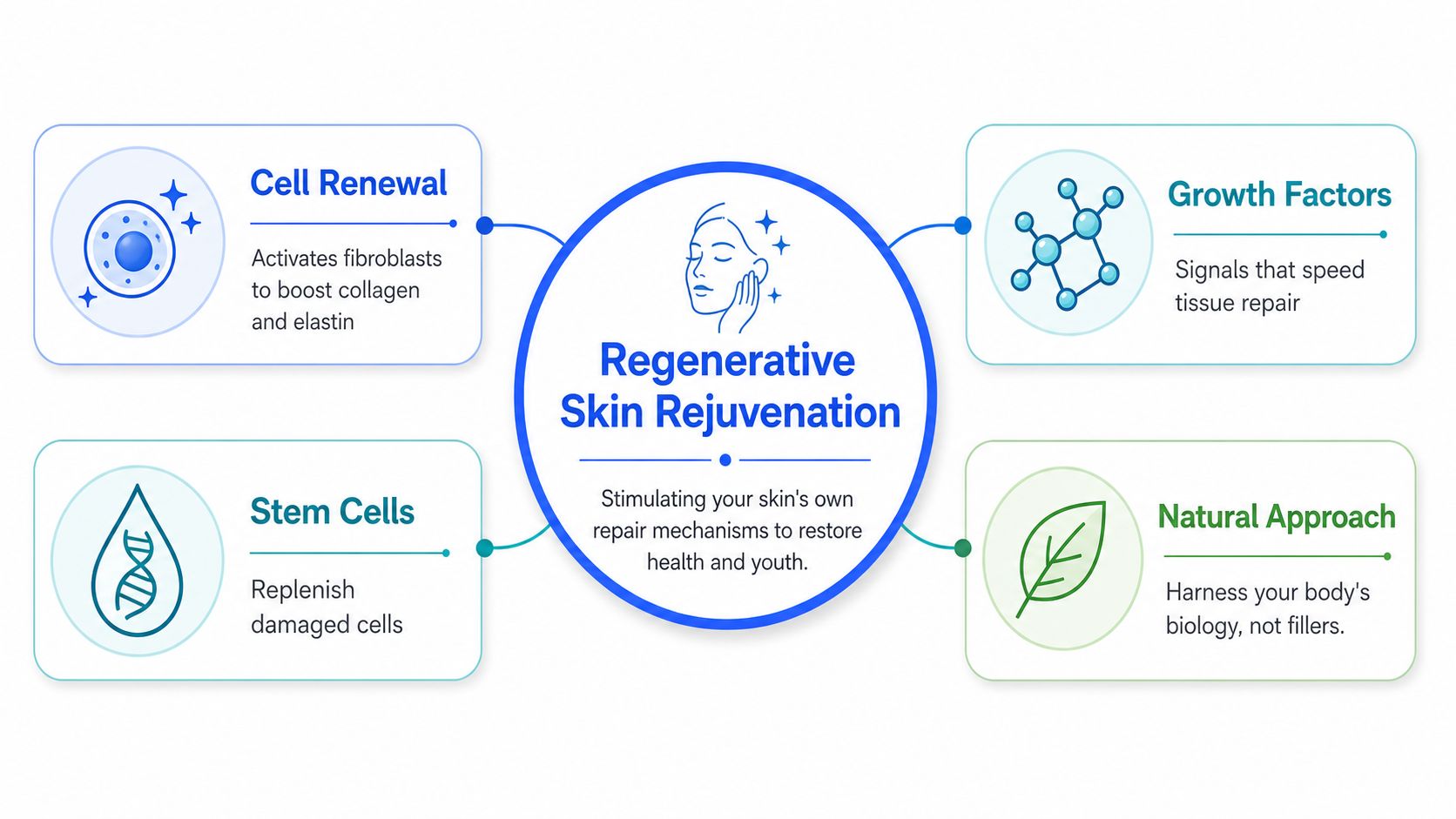
A regenerative skin rejuvenation treatment is more like renovating a building's foundation instead of repainting the facade. A peel or ablative laser can improve the surface, but regenerative care is aimed at the structures underneath, the collagen network, the dermal support, and the communication signals that tell skin how to repair itself. That's why the results often build gradually instead of appearing all at once.
Why the market signal matters
The category is growing because patients want more than temporary camouflage. Independent market research projects the global skin rejuvenation market to reach US$2.0 billion in 2026 and US$3.5 billion by 2033, with a projected 8.0% CAGR from 2026 to 2033, while a separate analysis places regenerative aesthetics at USD 3.76 billion in 2025 and USD 7.15 billion by 2034. Those numbers don't prove one treatment is right for every patient, but they do show that this is a major clinical category, not a buzzword fad.
The four families you'll see most often
In practical terms, most conversations about regenerative care cluster around four treatment families. Platelet-based therapies like PRP and PRF use your own blood signals. Fat-derived approaches such as ADSCG and SVF work with harvested tissue. Biostimulatory injectables like Sculptra encourage your body to lay down collagen. Energy-based devices such as fractional CO2 and radiofrequency create a controlled repair signal in the skin.
Practical rule: if a treatment claims to be regenerative, ask what it changes, surface texture, dermal collagen, volume support, or all three. If the answer is vague, the plan probably is too.
For readers who want to see how these ideas connect to real-world treatment pathways, a useful starting point is the broader overview of regenerative medicine examples. That kind of framework helps separate biologic remodeling from marketing language.
The Aging Problems Regeneration Is Built to Solve
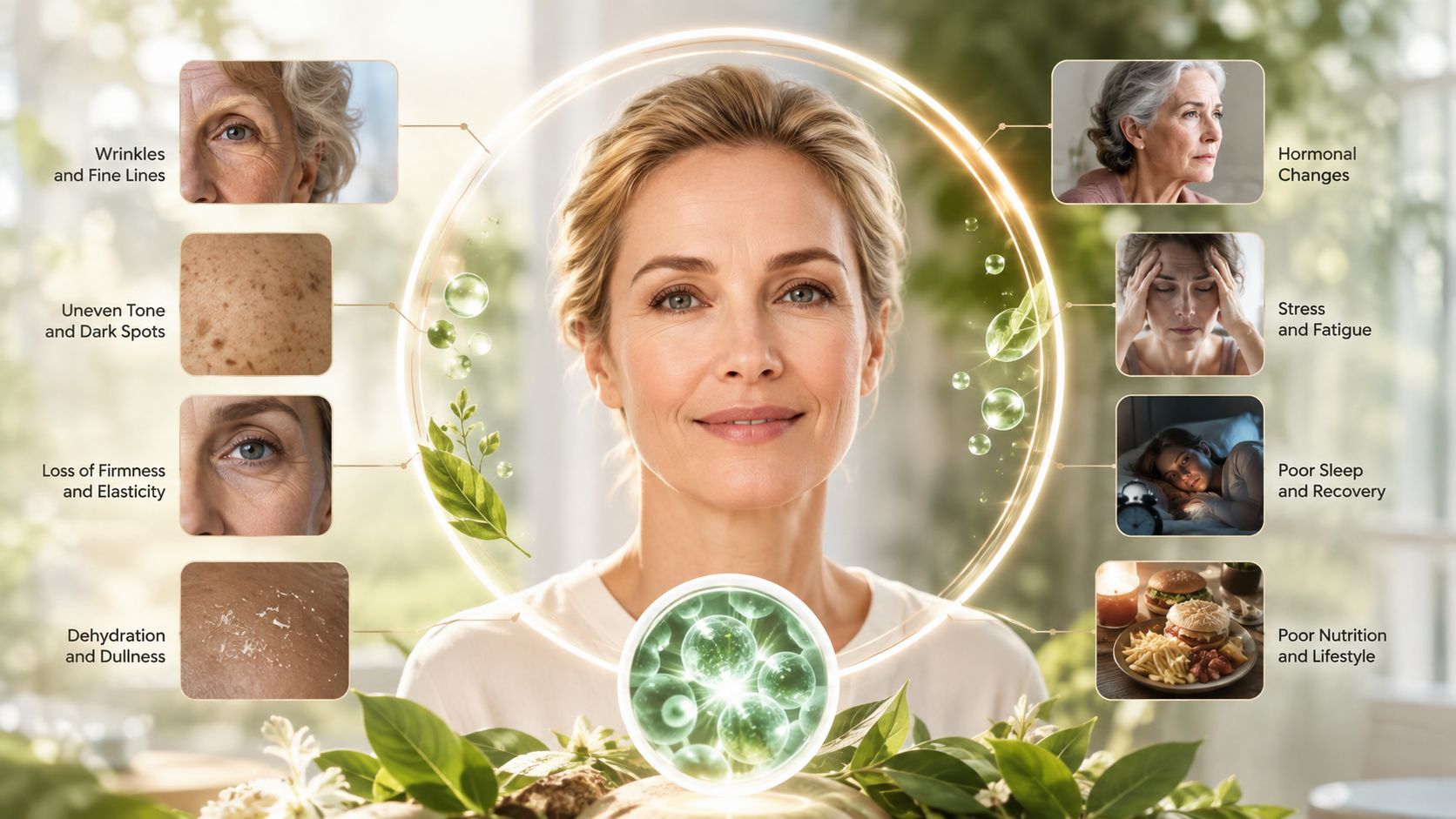
Facial aging doesn't happen in one layer, so a single tool rarely solves everything. Johns Hopkins Medicine describes the main goals of facial rejuvenation as restoring volume and contour, reducing under-eye wrinkles and hollows, correcting forehead wrinkles and sagging brows, tightening the neck and jaw, and addressing pigmentary changes. Those goals map to different tissue depths, which is why treatment selection needs to start with anatomy, not branding.
Match the concern to the layer
Epidermal changes show up as uneven tone, rough texture, and visible discoloration. Those concerns live closest to the surface, so they're often the easiest to improve with resurfacing or supportive skincare. Dermal changes are deeper, and that's where collagen loss, reduced elasticity, and fine lines begin to matter. Regenerative treatments are especially relevant there because they aim to improve tissue quality instead of just shaving off damaged surface cells.
Hypodermal changes involve fat compartments and contour. When cheeks flatten or the under-eye area hollows, the issue isn't only skin texture, it's support. Deeper structural changes affect how the face lifts and settles, which is why advanced laxity often needs more than a cream, a peel, or a single energy session.
Why one treatment rarely solves every layer
A peel can brighten, but it won't rebuild lost contour. A biostimulatory injectable can improve support, but it won't erase surface pigment by itself. A laser can resurface, yet it won't replace volume where it's been lost. That's the reason regenerative plans are often layered, they're trying to address different parts of the same aging pattern.
Aging usually shows up as a mixed problem, not a single defect. The best treatment plans respect that reality.
For a patient, the useful question isn't “Which treatment is strongest?” It's “Which layer needs help first, and which modality reaches that layer without creating more downtime than I can manage?” That question leads directly into the comparison of the main regenerative options.
Comparing the Four Major Regenerative Modalities
The strongest recent evidence in this group belongs to platelet-based therapy. In the 2025 review of facial rejuvenation studies, 80% of included studies reported improvement in skin thickness and 75% reported improvement in elasticity after PRP and PRF, while 40% reported wrinkle improvement, 33% reported better texture, and 17% reported improvement in dyschromia (PRP and PRF systematic review). That pattern matters because it points to a real biologic shift in tissue quality, not just a temporary cosmetic change.
PRP and PRF
PRP and PRF work by concentrating platelet signals that help recruit repair cells and support collagen remodeling. In the review, all studies measuring patient satisfaction reported significant gains before to after treatment, and no serious adverse events were reported across the included studies (PRP and PRF systematic review). The best fit is usually the patient who wants gradual improvement in texture, elasticity, and overall skin quality, especially when the goal is to make the skin function better, not just look smoother on the surface.
Fat-derived regenerative approaches
Adipose-derived stem cell grafting and stromal vascular fraction are usually discussed as extensions of fat grafting. They're relevant when the problem includes both volume loss and tissue quality, because the harvested fat can contribute structural support while the cellular fraction brings regenerative potential. These techniques belong in the conversation when the face needs more than an injectable glow, but they also require a more involved procedure and a more deliberate recovery window.
Sculptra
Sculptra, or poly-L-lactic acid, is best understood as a biostimulatory collagen inducer. It doesn't fill space; it encourages your body to build support over time. That makes it useful for patients who want gradual restoration rather than obvious immediate volume, and it often pairs well with other modalities that address the surface or tissue quality.
Fractional CO2 and radiofrequency
Energy-based regenerative rejuvenation works by creating a controlled repair signal. Fractional CO2 laser can ablate about 100 μm of skin while creating an additional 50 to 300 μm of adjacent thermal damage, and monopolar radiofrequency can penetrate roughly 3 to 6 mm into the dermis to encourage collagen denaturation, contraction, and neocollagenesis. That's why these devices are especially useful for resurfacing, tightening, and laxity, not just for superficial polishing.
| Modality | Mechanism | Typical Downtime | Best-Fit Concern |
|---|---|---|---|
| PRP and PRF | Platelet signals support repair and collagen remodeling | Usually short | Texture, elasticity, tissue quality |
| ADSCG and SVF fat grafting | Harvested fat plus regenerative cellular fraction | Longer | Volume loss, contour, deeper support |
| Sculptra | Biostimulatory collagen induction | Short to moderate | Gradual structural support |
| Fractional CO2 and radiofrequency | Controlled thermal injury and dermal remodeling | Variable, often longer for ablative treatments | Resurfacing, tightening, laxity |
A helpful way to evaluate your own needs is to ask which category solves the biggest part of your concern, then which one closes the gap. That's the logic behind many layered protocols.
Your Visit Journey From Consult to Follow-Up
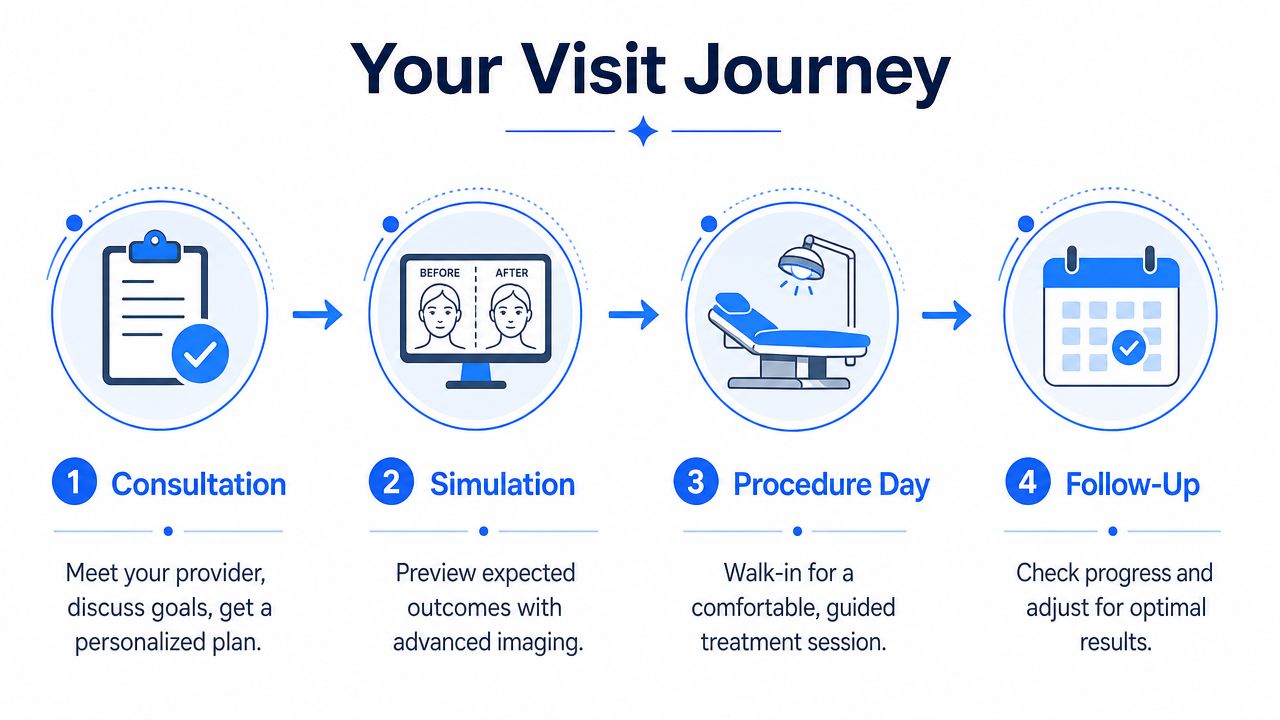
A good regenerative visit begins before anyone touches your skin. ProMD Connect lets prospective patients start with a telehealth conversation from home, which is useful if you want to review goals, medical history, and candidacy before traveling to a clinic. For patients comparing options across offices, that first step can save time and prevent a mismatch between expectations and what a specific location offers.
From screening to visualization
The in-person consultation usually adds skin analysis and a pre-treatment preview. ProMD uses the Entity Med AI Simulator to visualize potential aesthetic outcomes before treatment, which helps patients see the difference between small texture changes and larger contour changes. That step matters because a person asking for “rejuvenation” may be asking for either smoother skin, softer folds, more volume, or all three.
What the appointment feels like
The procedure day depends on the selected modality. A platelet-based treatment, a collagen-stimulating injectable, and a fat-based approach all involve different preparation and recovery, but the shared pattern is medically supervised care in a cash-pay setting. If you're doing something more surface-focused, you might be back to normal quickly. If you're doing an ablative laser or fat grafting, the recovery is naturally longer and more hands-on.
Recovery and follow-up
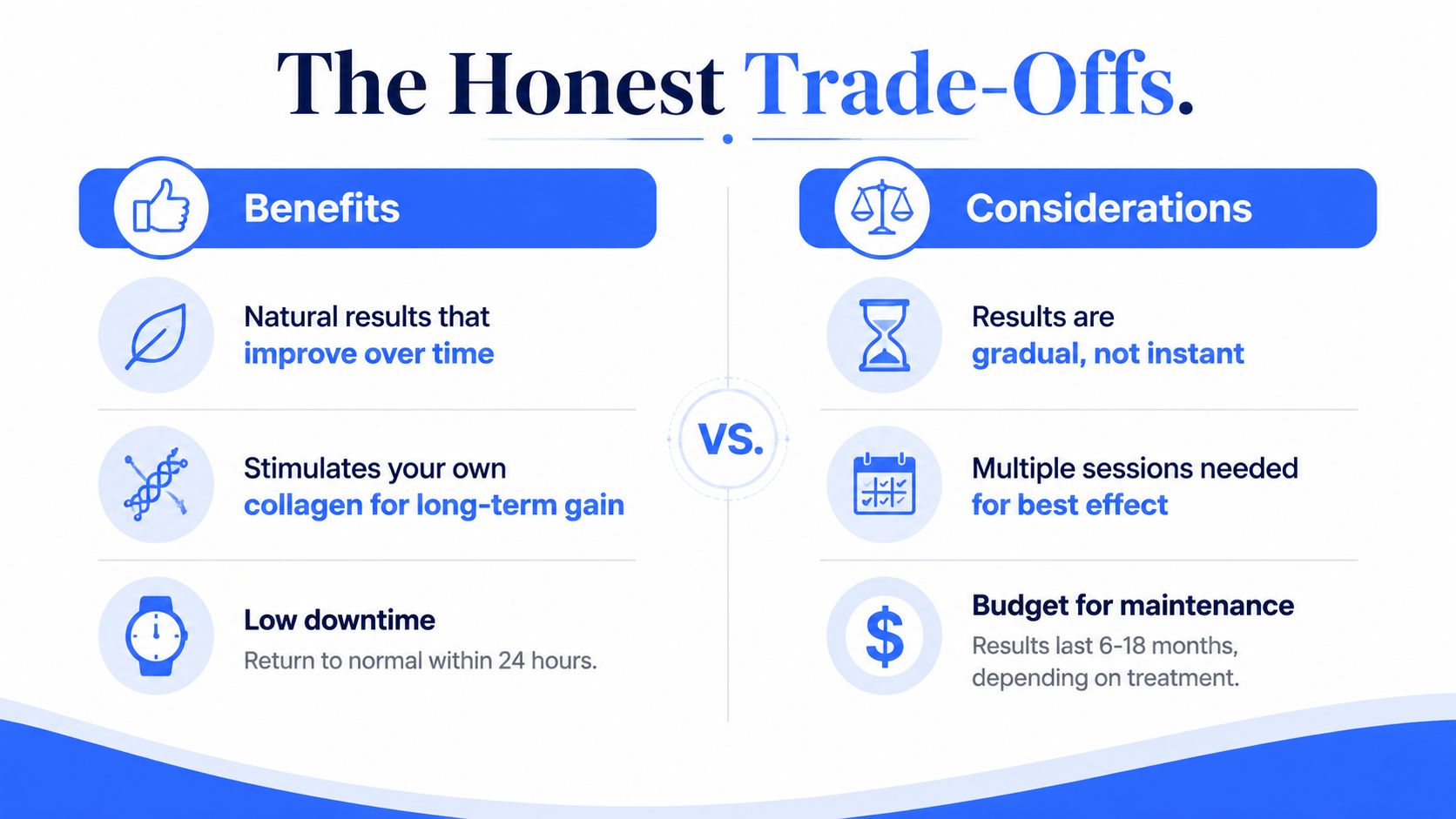
PRP and Sculptra typically allow return to most activities within 24 to 48 hours, while ablative laser and fat grafting involve longer downtime. That difference is the reason follow-up instructions should be specific instead of generic. Medical-grade skincare from The Skin Shoppe can also be folded into the plan to support skin quality between visits, especially when the provider wants to keep the tissue environment steady while collagen is remodeling.
For patients who care about the broader life-plan context of procedure timing, even unrelated planning decisions can affect when treatment feels practical. A resource such as the guide to egg freezing in Germany shows how people often organize elective care around their schedules, not around a single appointment date.
Why Combination Protocols Outperform Single Treatments
A single treatment can improve one piece of the puzzle, but aging usually affects several tissue layers at once. PRP and PRF deliver growth signals, fat-derived approaches add a cellular and structural rebuild component, Sculptra promotes collagen synthesis over time, and energy-based devices create the controlled injury signal that starts remodeling. Used together, they address different parts of the same problem instead of asking one tool to do all the work.
Sequencing matters more than stacking
The order is just as important as the ingredients. A common evidence-informed pattern is to use a laser or radiofrequency session, then apply platelet-based support on the same day, then follow later with a collagen stimulator or fat-based restoration once the tissue has settled. That sequencing respects how skin heals, first the signal, then the rebuild, then the maintenance.
Supportive care matters too. Hormone optimization, peptide therapy, and medical-grade skincare can help keep the tissue environment more favorable for recovery. Those aren't magic add-ons, they're part of the broader biology of skin quality.
The goal isn't to do more for its own sake, it's to line up each treatment with the tissue job it does best.
That's why combination care often looks more thoughtful than single-device marketing. It's not about chasing the newest technology, it's about matching mechanisms to the patient's actual pattern of aging.
The same logic applies if you're considering microneedling-based regenerative care. A helpful overview of how platelet-based protocols are combined with skin-needling is available in the PRP microneedling complete guide.
Durability, Safety, and Honest Trade-Offs
Durability is where hype and evidence part ways. Established regenerative options such as PRP, traditional fat grafting, and adipose-derived stem cell therapies have meaningful clinical implementation, but newer ideas like exosome-based, RNA-based, and epigenetic-reprogramming approaches are still early-stage or experimental in the broader literature (regenerative skin and facial treatment review, cell-based and cell-free therapy review). That's an important distinction for anyone trying to separate proven care from futuristic language.
What patients should expect
PRP and PRF often fit people who want biologic improvement with low serious-risk signals in the available studies. Fat-based approaches can be powerful, but they're more invasive and require a more realistic conversation about downtime and contour changes. Sculptra works gradually, so patience is part of the deal. Energy-based devices can be very effective, but they trade convenience for stronger recovery, especially when the treatment is ablative.
Where the field is still evolving
A lot of content online blends established regenerative treatments with newer concepts that haven't been validated in humans. That creates false confidence. Patients do better when they ask which part of the plan has actual clinical implementation, which part is still emerging, and which part the provider can stand behind with clear follow-up and monitoring.
Safety depends on selection
The literature keeps pointing back to patient selection. Skin type, age, baseline laxity, medication history, and healing capacity all influence whether a person is a good candidate and what adverse events might matter most. Regenerative care can improve skin quality, but it does not replace surgery for advanced laxity.
For practical product and material standards that support safe clinical handling in a treatment environment, safe peptide water for resellers is a useful example of how purity and preparation matter in biologic workflows. In aesthetics, those details are part of the safety conversation even when they sit behind the scenes.
How to Choose the Right Provider
Start with the basics. You want medical oversight, a clear explanation of which regenerative options are offered, and a provider who can tell you whether your concern is primarily texture, pigment, volume, or laxity. If a practice only has one device and tries to solve every problem with it, the plan is probably too narrow.
What to check before you book
- Credentials and supervision: Confirm that a medical provider is directing the plan, not just selling a procedure.
- Menu of options: Look for a practice that can discuss platelet-based care, injectables, lasers, microneedling, and fat-based approaches when appropriate.
- Visualization tools: Ask whether pre-treatment imaging or simulation is available, because that helps align expectations.
- Cash-pay clarity: ProMD Health operates on a cash-pay model, so pricing discussions should be direct and not framed around insurance coverage.
- Location and availability: Approved locations include Annapolis, Arlington, Ashburn, Bel Air, Bethesda, Columbia, Easton, Fort Lauderdale, Hutto, Lafayette, Lewes, Timonium, Tox Bar in Baltimore City, Tysons Corner, Washington, DC, Wellington, and Westminster.
Practical rule: if the office can't explain downtime, candidacy, and follow-up in plain language, keep looking.
For patients comparing skin-focused options, the guide to choosing a top-tier Alastin provider is a useful model for the kind of evaluation you should expect from any regenerative clinic.
Common Questions and Your Next Step
A good candidate is usually an adult with mild to moderate aging changes, realistic expectations, and no contraindicating conditions. PRP and PRF often show changes within weeks, while Sculptra and fat grafting build more gradually over the following months. Downtime depends on the modality, with platelet-based and collagen-stimulating treatments often easier to fit into a normal week than ablative laser or fat-based procedures.
How long results last depends on the treatment, the body, and the maintenance plan. The most honest answer is that regenerative care usually works best when it's treated like a program, not a one-off event. If you're weighing your options, telehealth through ProMD Connect is a sensible first step, because it lets the team confirm candidacy before you visit an approved office for in-person evaluation and AI-based visualization.
If you're ready to turn this into a plan, book a consultation with ProMD Health and ask which regenerative options fit your skin, your downtime, and your goals. Their team can walk you through the available treatments, the approved location nearest you, and the next step from telehealth to in-person evaluation.


