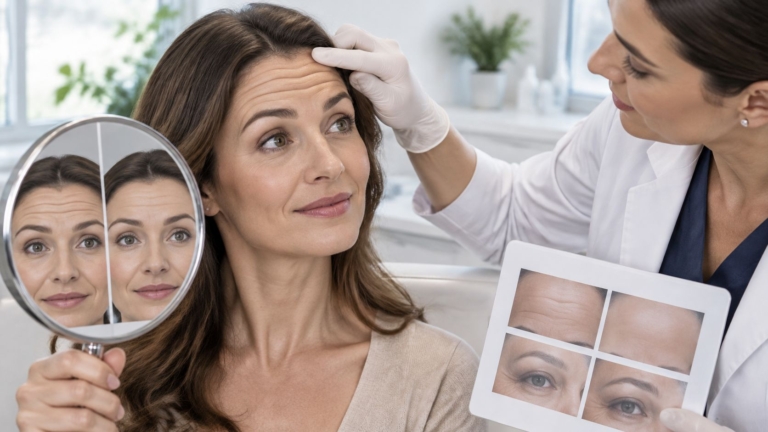
If a laser can make pores look smaller, why do they sometimes become noticeable again? The missing piece is that pore appearance and permanent pore closure aren't the same thing. A treatment can improve the skin supporting a pore without removing the follicle opening itself.
Laser treatment for pores is best understood as a process of controlled injury, healing, and skin remodeling, not an instant tightening trick. Choosing well means looking beyond the device name to your skin tone, acne activity, recovery tolerance, and the plan for maintaining improvement.
Table of Contents
- Laser Options for Enlarged Pores Compared
- Who Is a Good Candidate for Pore Laser
- What Happens During a Pore Laser Session
- Downtime and Aftercare Timeline
- How Pore Improvement Is Measured and What to Expect
- Keeping Results Between Sessions
- Confirm Your Laser Plan Before You Book
Laser Options for Enlarged Pores Compared
The device name matters less than three variables: what the laser removes, how deep it reaches, and how many sessions the protocol uses. The table below summarizes published pore outcomes and schedules. Read it as a map of evidence, not a scoreboard.
| Laser type | Reported pore result | Sessions and interval |
|---|---|---|
| Fractional CO2, ablative | 28.8% fewer enlarged pores after the second session and 54.5% at post-treatment evaluation in 32 patients, reported in the fractional CO2 clinical study. | Three sessions, four weeks apart in that study. |
| Fractional 1064-nm picosecond | Reported outcomes focus on pore size rather than disappearance of follicles. | A staged fractional series. Protocol details and follow-up are covered in the measurement discussion. |
| Fractional 1565-nm nonablative | Pore numbers decreased significantly in a randomized split-face comparison with fractional picosecond laser. | Three sessions, two weeks apart in that trial. |
| Long-pulsed 1064-nm Nd:YAG | Pore numbers decreased significantly, without a statistically significant difference from the 1565-nm side in a comparative clinical study. | A repeated-treatment protocol selected for the device and patient. Schedules from different trials should not be combined. |
| Single fractional CO2 treatment | A single session is not equivalent to the staged series above. It is a different protocol, not a shortcut. | One session. |
| 755-nm picosecond alexandrite | Average facial pore count fell from 1,614.1 to 1,262.6 three months after the final treatment in a 2024 study of 129 patients published in Lasers in Medical Science. | The available study summary does not establish a session schedule. |
Recovery is deliberately absent from the table because the studies do not use one downtime scale. A mild, transient reaction in a trial is not a promise that you can return to work or a social event the next day.
What the categories actually mean
Ablative lasers remove microscopic columns of tissue. Fractional CO2 works like spot-sanding: it creates treatment zones separated by untreated skin, so healing and remodeling happen around each column.
Nonablative lasers deliver energy without removing tissue in that way. Fractional picosecond treatment uses specialized optics to concentrate very short pulses into microscopic zones. A picosecond device is a tool, not a single procedure; its optics and settings change what it does.
Count and volume are different endpoints. A study that reports fewer pores is not automatically comparable to one that reports smaller pores. The measurement discussion explains how those endpoints are tracked and why a percentage from one protocol should not be transplanted to another.
The table is not a ranking. A device that looks strongest in one study may be a poor fit for your skin, active acne, or a schedule you cannot follow. The useful comparison is between the options your clinician can safely deliver.
Practical rule: Choose by the skin problem the treatment must address, then by the recovery you can accept, not by the largest percentage in a table.
Laser isn't the only collagen-focused option. This comparison of microneedling versus RF microneedling explains how needle-based treatment differs from laser resurfacing.
For planning, ablative approaches usually mean more recovery. Nonablative approaches may suit a gentler refresh, but gentle does not mean maintenance-free. Pores can look smaller while the follicle opening remains. Sebum control, sun protection, and a repeat schedule decide how long that improvement lasts.
Who Is a Good Candidate for Pore Laser
Adults with visible pores alongside uneven texture, oiliness, or fine lines may be reasonable candidates, especially when skincare hasn't addressed the full concern. The strongest starting point is healthy skin, realistic expectations, and willingness to follow a staged plan.
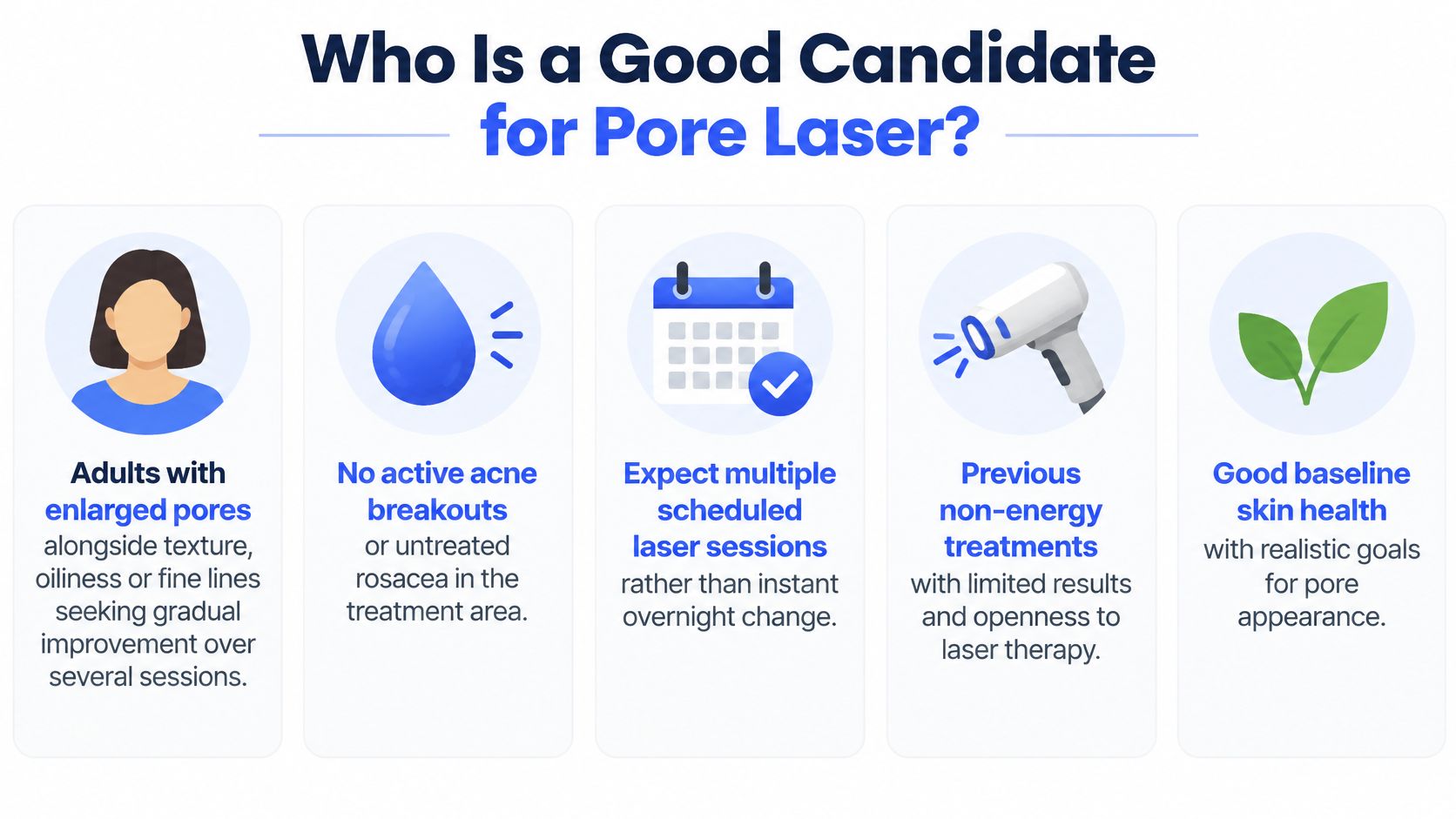
What to confirm during consultation
- Your skin tone and pigment history. Explain whether acne, scratches, or previous treatments have left dark marks. Post-inflammatory hyperpigmentation risk affects device selection and treatment intensity. Our guide to laser treatment for darker skin explains why individualized planning matters.
- Whether acne or rosacea is active. Untreated inflammation needs assessment before cosmetic resurfacing. That doesn't mean every person with acne must avoid lasers, but treating pores and treating inflammatory acne aren't identical tasks.
- Your recent exposure and medications. Disclose tanning, substantial sun exposure, active skin infections, and current or recent isotretinoin use. These require a clinician's review rather than an automatic booking.
- Your recovery capacity. Consider whether you can simplify skincare, protect the treated area, and attend follow-up appointments. A treatment that doesn't fit your schedule may not be the right choice now.
- What you've already tried. Bring the names of cleansers, retinoids, exfoliants, and previous procedures. This helps distinguish stubborn texture from irritation or congestion caused by an unsuitable routine.
In a randomized split-face trial involving 30 patients with acne and enlarged pores, four treatments at 14-day intervals produced significantly greater pore-size improvement on the fractional CO2 side than on the long-pulsed Nd:YAG side. That finding supports matching treatment to the combination of concerns, not assuming that every laser performs equally.
When waiting is the better decision
Postpone cosmetic treatment if you have unexplained skin symptoms, an untreated infection, or inflammation that hasn't been assessed. A clinician should first establish what you're seeing, since small depressed scars can resemble enlarged pores.
You should also wait if your goal is completely poreless skin or you can't protect your skin from sun afterward. A good consultation may lead to treatment, a different procedure, or a recommendation to stabilize your skin first.
What Happens During a Pore Laser Session
A well-planned session begins before the handpiece touches your face. The clinician needs a clear baseline, an appropriate treatment area, and a recovery plan you can follow.
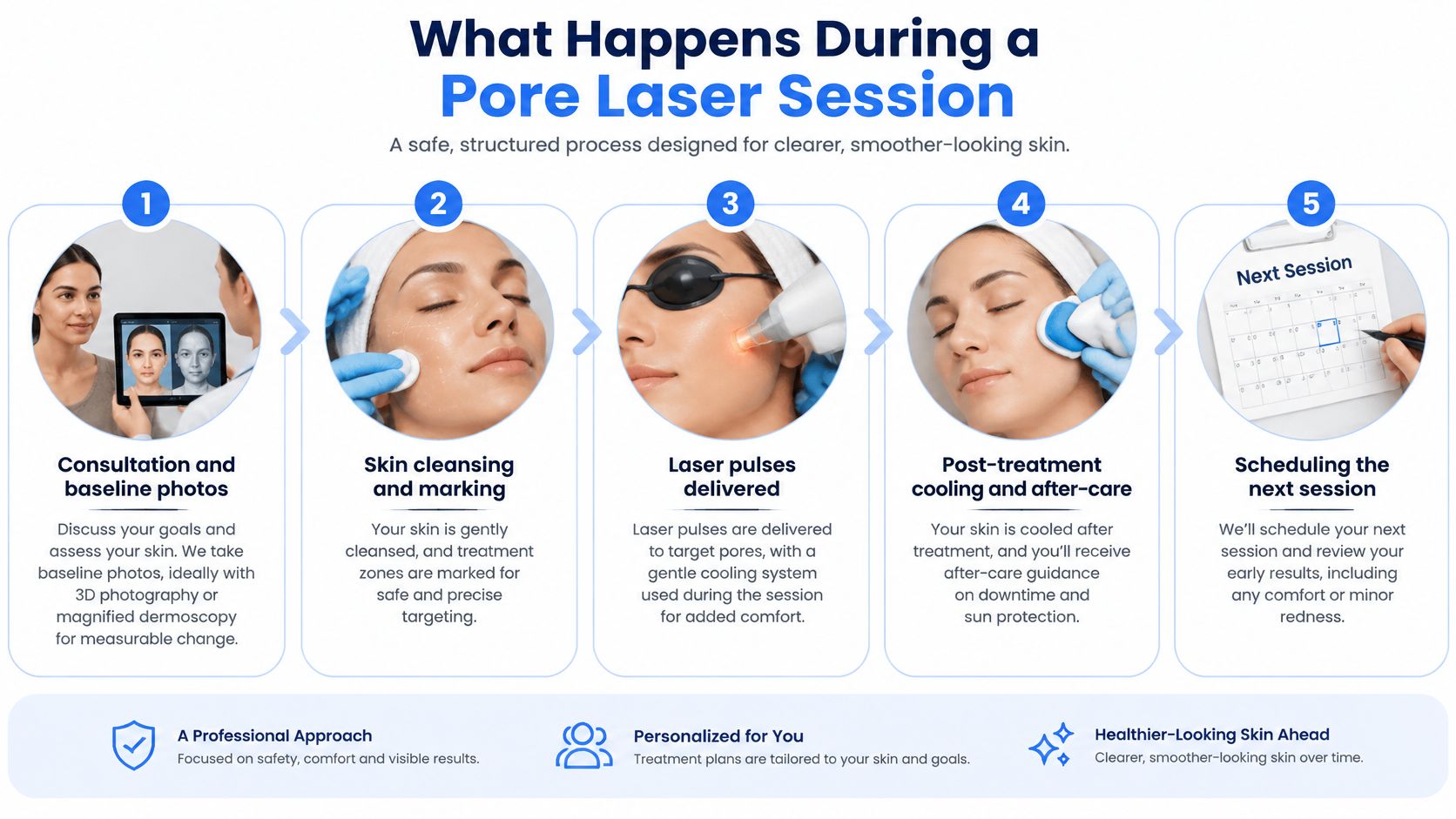
The appointment step by step
Consultation and baseline photographs. The clinician examines your pores, texture, pigment, and any acne before confirming the treatment plan. Consistent photographs, ideally supported by objective imaging when available, allow a meaningful comparison later rather than relying on memory.
Cleansing and treatment-zone preparation. Makeup, sunscreen, and surface oils are removed so the clinician can assess and treat clean skin. Treatment boundaries may be marked to keep the planned coverage clear, particularly when only selected facial areas need attention.
Numbing or cooling. The comfort approach is selected for the device, treatment intensity, and patient. Topical anesthetic, cooling, or a combination may be appropriate, but not every laser appointment uses the same preparation.
Individualized laser passes. The clinician selects settings such as energy, pulse characteristics, spot size, and treatment density, while patient and staff use appropriate protective eyewear. Settings aren't transferable instructions: the same device may require a different approach for someone with a different skin tone, pigment history, or treatment goal.
Immediate skin care and instructions. Cooling and a suitable soothing or barrier-supporting product help manage early discomfort, while written aftercare reduces confusion once you're home. Sunscreen should be introduced or continued according to the clinician's healing instructions, especially when the surface has been disrupted.
Follow-up planning. The next appointment and reassessment are scheduled around the protocol and your healing response. Don't assume that feeling comfortable means your skin is ready for another treatment, because visible recovery and deeper remodeling aren't the same process.
What to clarify before you leave
Ask which sensations are expected, which products to pause, and how to reach the office if symptoms worsen. Have the clinician identify when you can restart makeup, exercise, retinoids, and exfoliating acids rather than guessing from someone else's recovery.
Bring your usual skincare products or a clear list of their ingredients. A product marketed as gentle can still contain an exfoliating acid or fragrance that isn't suitable immediately after resurfacing.
Your written aftercare plan should match the procedure you actually received, not just say laser aftercare.
During treatment, you may feel warmth, prickling, or brief snapping sensations. More intensive resurfacing can feel substantially different from a gentle nonablative session, even when both are described as treatments for pores.
There isn't a reliable universal appointment length across these protocols. A small treatment zone, full-face coverage, anesthetic preparation, and the chosen device all change the time required, so confirm the total appointment time, not just the time the laser is active.
Downtime and Aftercare Timeline
Recovery timeline after a pore laser session
| Recovery stage | Typical timing | What to do |
|---|---|---|
| Immediate redness and warmth | Immediately after treatment and during early recovery | Use a cool compress if advised, and cleanse gently according to your instructions. |
| Redness and swelling | Averaged about four days in the fractional picosecond clinical study | Use a fragrance-free moisturizer and sun protection as directed. |
| Purpuric spots | Occasional spots lasted five to seven days in that study | Don't pick or scrub; contact the clinician if spots spread or other symptoms worsen. |
| Sun-sensitive healing skin | Throughout healing | Use appropriate broad-spectrum sunscreen, hats, and shade. |
| Reassessment | After the treatment series, at the clinician's planned review | Compare healed skin with baseline images and discuss whether maintenance is warranted. |
These picosecond recovery observations aren't a schedule for every laser. Ablative resurfacing can require more intensive wound care and a longer social recovery than a nonablative procedure.
Keep the healing routine simple
- Cleanse without friction. Use a gentle cleanser approved for the treated skin, lukewarm water, and clean hands. Don't use brushes or abrasive cloths.
- Support the barrier. Apply the recommended fragrance-free moisturizer or healing product. If the clinician prescribes a specific wound-care regimen, use that instead of substituting your usual cosmetics.
- Protect from sunlight. Combine broad-spectrum sunscreen, once appropriate for the skin surface, with shade and a hat. Don't use sunscreen as permission to tan.
- Pause aggressive products. Avoid picking, scrubs, strong exfoliation, and unapproved active ingredients until the clinician clears them.
- Limit heat exposure. Avoid hot tubs and intense heat during early recovery, and follow the procedure-specific instructions for exercise and sweating.
Our overview of laser skin resurfacing treatment provides additional context for the difference between treatment intensity and the recovery commitment.
Know when to call
Increasing pain, blistering, spreading redness, pus, or fever warrants prompt contact with the treating clinician. Warmth immediately after treatment can be expected, but warmth that increases alongside worsening tenderness or discharge needs assessment.
Don't judge recovery only by whether a symptom appears on a general timeline. Direction matters: skin that becomes progressively more painful or inflamed needs attention even if the appointment was recent.
How Pore Improvement Is Measured and What to Expect
Pore improvement can mean a change in count, diameter, area, or volume. Those outcomes aren't interchangeable, and a useful before-and-after assessment needs to specify which one is being measured.
An imaging system may stop classifying an opening as enlarged after treatment even though the follicle remains present. That's why fewer enlarged pores doesn't mean the laser removed that number of pores.
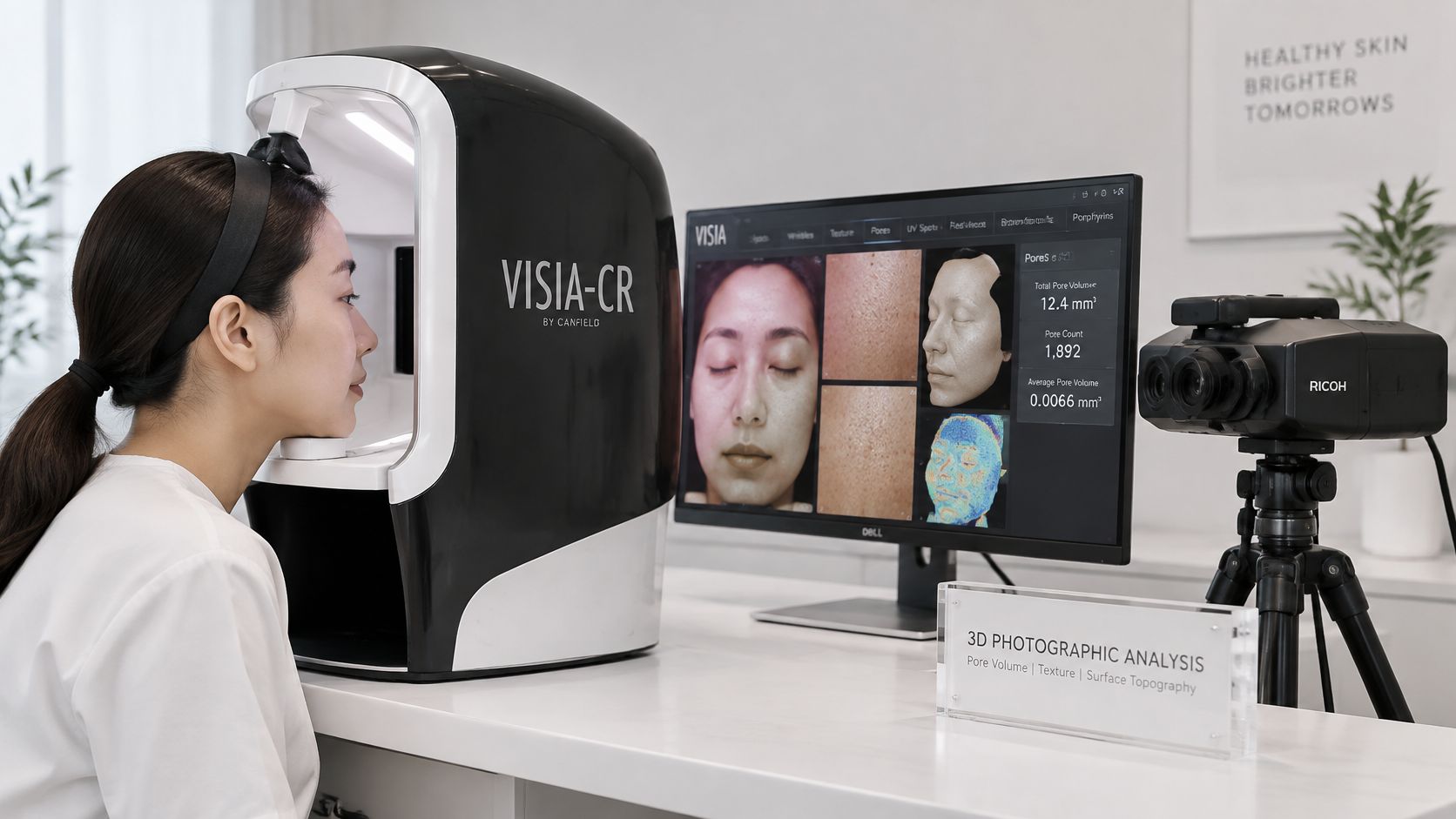
What objective imaging adds
A clinical report describing objective pore assessment describes automated imaging that identifies circular objects measuring 0.4 to 1.0 mm, while other assessment approaches include three-dimensional photography and magnified dermoscopic sampling.
Three-dimensional photography can evaluate pore volume, whereas dermoscopic images allow close examination of selected openings. Neither approach should be confused with taking a flattering photograph after treatment.
For a fair visual comparison, keep lighting, camera position, facial expression, and makeup status consistent. Say your baseline photo uses strong side lighting but the follow-up uses soft frontal light: your skin may look smoother even without a biological change.
A concrete example of a measured outcome
In a 2021 study of 25 Asian patients receiving fractional 1064-nm picosecond laser, three sessions at four-week intervals produced approximately 30% mean pore-size reduction six months after the final treatment, assessed using three-dimensional photography. Improvement continued between the one-month and six-month assessments, supporting a gradual response rather than an immediate plateau.
The important point isn't just the percentage. The investigators measured the same concern over time, which makes the outcome more informative than satisfaction alone.
A small, Asian-only study population still limits how confidently that average can be applied to someone with a different skin type or treatment history. Even within a matching population, an average doesn't predict an individual's exact result.
A credible result includes a defined measurement, a follow-up date, and photographs taken under comparable conditions.
You may notice smoother texture or less conspicuous openings without reaching a dramatic numerical change. Reduced shine may also improve appearance, but oil production should be assessed separately rather than assumed to fall after every laser.
Bring these questions to consultation:
- Which outcome are we tracking? Clarify whether success means fewer visibly enlarged pores, reduced volume, better texture, or a combination.
- How will comparisons stay consistent? Ask about photography conditions and whether objective imaging is available.
- When will we judge the result? Agree on a healed-skin assessment rather than evaluating success during swelling or immediately after treatment.
Keeping Results Between Sessions
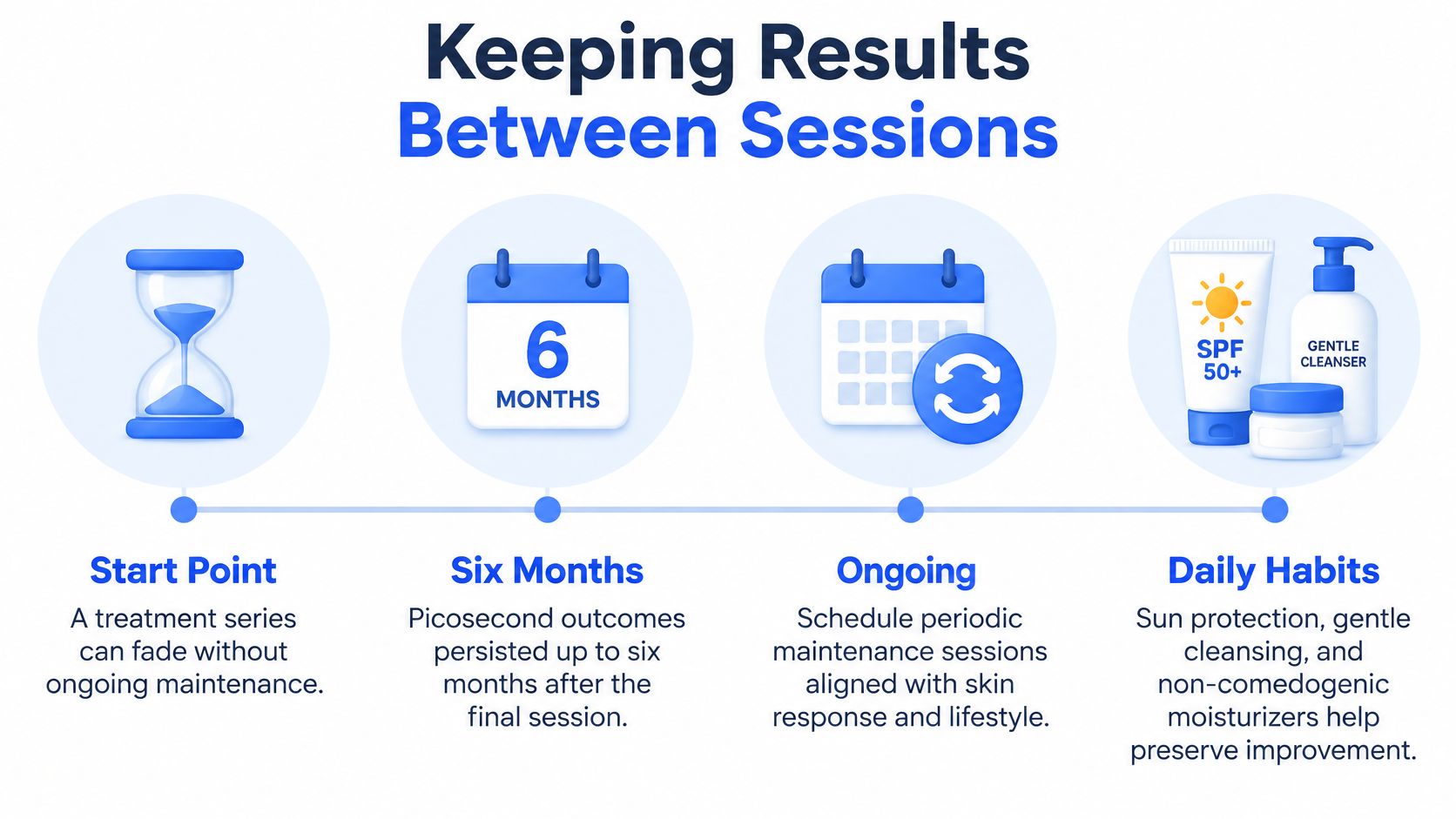
The belief that laser permanently shrinks pores skips an important distinction: a successful initial response doesn't establish lifelong durability. Follow-up studies describe particular observation periods, not an expiration date for everyone or proof of permanence.
Maintenance should therefore be a decision based on your skin's response, not an automatic subscription to repeated procedures. You may need better acne control, an adjusted skincare routine, another treatment, or more time before reassessment.
Manage what makes pores noticeable
Oil production, congestion, inflammation, sun exposure, and age-related changes can affect how noticeable pores become. Genetics also influences your starting point, so recurrence doesn't necessarily mean the original procedure failed.
For someone with oily, acne-prone skin, repeated resurfacing without addressing breakouts may leave a major contributor untreated. For someone with sun-related texture changes, ongoing tanning works against the goal of protecting the skin's supporting structure.
A provider-guided routine can include:
- Daily sun protection. Use broad-spectrum sunscreen and practical exposure limits to protect healing skin and reduce additional photodamage.
- Non-comedogenic basics. Choose a cleanser and moisturizer that don't leave your skin irritated or congested.
- Targeted acne care. Use an appropriate acne or sebum-management treatment once your clinician says the skin is ready.
- Selective active ingredients. Introduce retinoids or exfoliating products cautiously instead of stacking several irritating products at once.
Medical-grade skincare can fit this plan, but the label alone doesn't determine suitability. The useful question is whether each ingredient addresses your skin's needs without disrupting recovery.
Use follow-up to make decisions
A practical reassessment schedule separates comfort, emerging improvement, and longer-term planning.
| Checkpoint | Main question |
|---|---|
| After the final session | Has the skin healed as expected, and is the home routine appropriate? |
| Early follow-up | Are irritation, acne, or pigmentation changes affecting the result? |
| Remodeling review | Do matched photographs show meaningful texture or pore improvement? |
| Longer-term reassessment | Is maintenance justified by the current appearance and your goals? |
Combination treatment is another possibility, not a default requirement. A 2024 clinical report in Practical Dermatology reported maximum average pore-size reductions at three months of 19.8% with fractional laser alone and 25.1% with laser plus botulinum toxin.
That finding doesn't mean everyone should add injections. The decision needs to account for the exact technique, suitability, additional risks, and whether the added treatment addresses a problem you have.
The most useful maintenance plan names what you're maintaining, how you'll assess it, and what would justify another procedure. It shouldn't promise that any routine can freeze your skin at its post-treatment appearance.
Confirm Your Laser Plan Before You Book
Book a consultation to establish whether laser treatment fits your skin type, acne status, and goals before you commit to a series. Look for a plan that explains why a particular approach suits your skin and what it can realistically change. Ask how quickly temporary tightening differs from gradual collagen remodeling, and how maintenance, sebum control, and sun protection affect how long results last.
At ProMD Health, Laser Genesis targets fine lines, redness, acne scars, and large pores. Halo addresses sunspots, discoloration, enlarged pores, fine lines, wrinkles, and uneven texture. Both are options to evaluate, not automatic recommendations for every person concerned about pores.
Bring a decision checklist
- Recommended treatment and rationale. What is driving the pore appearance, and why is this approach preferable to skincare or another procedure?
- Session schedule. How many appointments are proposed, at what interval, and what might change the plan?
- Measurement. Will progress be judged through standardized photographs, imaging, clinical assessment, or a combination?
- Recovery. What skin changes should you expect, when can you resume usual activities, and whom should you contact with concerns?
- Maintenance. What home care is appropriate, and what findings would justify another treatment?
- Total pricing. Ask for pricing for the selected treatment and clarification about what the course includes.
Laser availability varies by office, and each location has its own service page listing its full menu. Confirm that the specific device and treatment are available at your chosen location before booking.
A consultation should leave you with a realistic target, a recovery plan, and a clear way to evaluate progress. You don't need a promise of poreless skin; you need enough information to decide whether the likely improvement is worth the commitment.
ProMD Health offers laser treatments and provider-curated medical-grade skincare for concerns including enlarged pores and uneven texture. Visit ProMD Health to book a consultation, confirm treatment availability at your preferred office, and bring the checklist so you can discuss a plan suited to your skin.