
Surface healing after one laser tattoo removal session typically takes 1 to 3 weeks, with 2 to 4 weeks common, but sessions are usually spaced 6 to 8 weeks apart, and complete clearance takes months. The treatment may last only minutes, yet your skin and immune system continue working long after you leave the clinic.
You may be searching after noticing redness, swelling, blistering, or scabbing around a recently treated tattoo. Or perhaps you're planning your first appointment and trying to decide when you can return to work, exercise, or normal clothing. The phrase tattoo removal healing time sounds simple, but it can describe three separate timelines: the time for the skin surface to recover, the time for your body to clear fragmented pigment, and the time needed to complete the full treatment course.
Table of Contents
- Introduction to Tattoo Removal Healing Time
- How Laser Tattoo Removal Heals Beneath the Surface
- Week by Week Healing Timeline After a Session
- What Changes Your Personal Healing Time
- Aftercare That Supports Faster Safer Healing
- Normal Recovery Versus Signs to Contact Your Provider
- Planning Your Full Course and Realistic Results
Introduction to Tattoo Removal Healing Time
Consider a common situation. You had laser treatment yesterday, and the tattoo now looks redder than it did before the appointment. The area feels warm or tender, and you may see swelling or small blisters. You know the procedure was brief, but the treated skin looks as if it needs attention, so you're wondering whether this is normal and how long it will last.
The answer depends on which kind of healing you mean. Surface healing refers to the epidermis repairing itself after treatment. Immune clearance refers to the weeks when your body continues processing the ink fragments created by the laser. Total treatment time includes every session and the recovery intervals between them, so complete fading usually takes months rather than a few weeks.
A medical clinic such as ProMD Health's tattoo removal service can assess the tattoo, select an appropriate treatment approach, and provide aftercare instructions for the treated area. Your personal schedule still matters. A tattoo on an ankle may behave differently from one on an upper arm, and darker or tanned skin may experience pigment changes later in recovery.
What the timeline means in daily life
For planning purposes, don't treat the day your redness fades as the day your tattoo has finished healing. Your skin may look much calmer while fading continues underneath. That distinction can affect when you schedule another appointment, expose the area to sunlight, wear tight clothing, or resume activities that cause friction and sweating.
This guide follows the recovery process from the first day through the later fading phase. It also addresses factors that can lengthen healing, practical aftercare, warning signs, and the difference between feeling healed and achieving meaningful tattoo clearance.
How Laser Tattoo Removal Heals Beneath the Surface
After a laser session, the treated area may look calmer before the tattoo has changed much. That happens because surface healing and immune clearance follow different clocks. The skin repairs the visible treatment response first, while immune cells continue handling ink fragments underneath.
Laser energy targets tattoo pigment and breaks larger deposits into smaller fragments. Your immune system then carries those fragments away over time. The laser starts the process, but your body completes much of the clearance.
The process works like shattered glass and a cleanup crew. Before treatment, pigment particles are too large for immune cells to move efficiently. The laser breaks them into smaller pieces, and immune cells collect and transport those pieces away. A tattoo can therefore look nearly unchanged while clearance continues below the surface.
The epidermis follows its own repair schedule. Inflammation may cause redness, swelling, itching, blistering, or scabbing. Surface healing usually takes about 1 to 3 weeks, while deeper pigment clearance continues for roughly 4 weeks before another session is considered, according to this medical explanation of the tattoo removal healing process.
Why spacing protects the treatment area
A session scheduled too soon may interrupt tissue repair while the skin is still recovering. Clinical guidance supports at least a 1-month interval for wound healing and pigment breakdown, while some recommendations favor approximately 8 weeks between treatments to allow continued immune clearance and repair, as discussed in this clinical review of laser tattoo removal intervals.
The waiting period allows your body to process more fragmented ink and gives the provider a clearer view of the response. A shorter gap does not automatically speed removal. Treating before adequate healing may increase the risk of fibrosis or visible textural changes.
Why fading continues after the skin looks normal
Redness is an external sign of inflammation. Pigment clearance occurs deeper in the skin and depends on immune activity, treatment settings, tattoo characteristics, and individual healing. Location can also affect the process. Ink on an ankle may clear differently from ink on an upper arm, while darker or tanned skin may show pigment changes later in recovery.
At the next appointment, the provider looks beyond whether the surface appears calm. They assess healing, remaining pigment, texture, and any color changes before deciding whether the area is ready for another treatment. That assessment connects the short surface-repair timeline with the longer course toward clearance.
Week by Week Healing Timeline After a Session
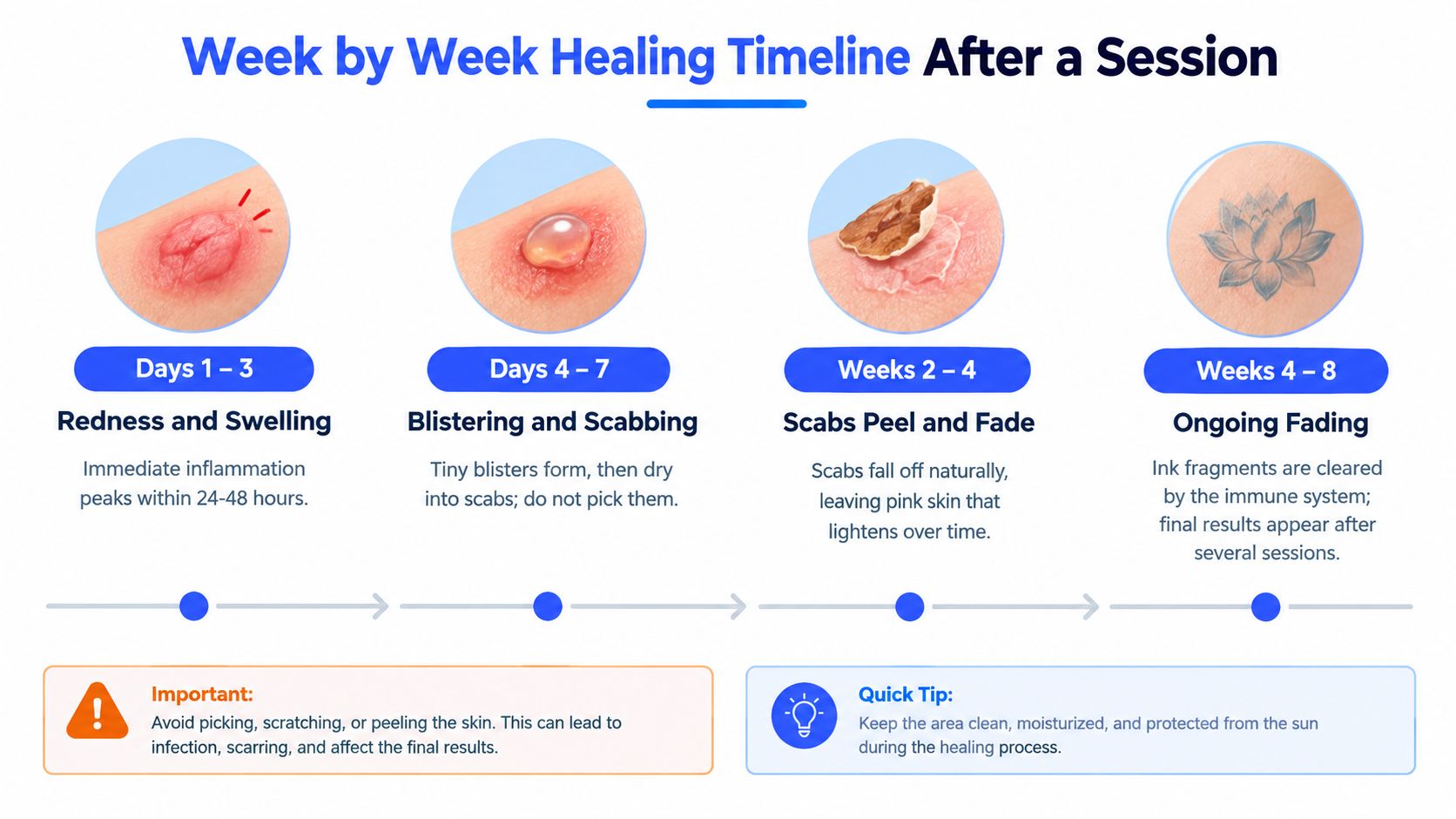
The treated area often changes in stages. A useful way to read those changes is to separate surface healing from immune clearance. The skin repairs first, while the immune system continues handling fragmented ink beneath the surface. Your provider's instructions take priority because settings, tattoo characteristics, skin type, and location can alter the response.
Days 1 through 3
During the first day, the area may look red or swollen and feel tender, itchy, or sensitive. Erythema, edema, and itching commonly begin within 24 hours and may continue for 1 to 2 weeks, according to this medical reference on laser tattoo removal reactions.
Some patients develop a raised appearance, blistering, or early crusting. These reactions can reflect the skin's immediate response rather than a treatment problem. The area still needs gentle handling and protection from avoidable friction.
Restraint matters most at this stage. Do not scratch, rub, puncture, or remove material from treated skin unless your provider gives specific instructions. Clean, protected skin can repair with less added irritation.
Days 4 through 7
Blisters may dry and turn into scabs during the first week. Redness and swelling usually become less noticeable over time. Itching may increase as the surface repairs, much like a small scrape that feels more irritating while new skin forms.
Picking at a scab can disturb that new tissue and raise the risk of scarring or infection. Loose clothing can reduce rubbing, especially when the tattoo is near a waistband, shoe, or joint. A location that bends or receives repeated contact may feel more uncomfortable than a protected area, even when both are healing normally.
Weeks 2 through 4
By the second week, many uncomplicated reactions have settled. Some areas remain pink, dry, or mildly uneven in color. Scabs should detach naturally rather than being pulled away. The tattoo may start to look lighter, although day-to-day change can be difficult to judge.
This phase often causes confusion. Surface healing may appear nearly complete while immune clearance continues below it. The immune system acts like a cleanup service, gradually carrying away ink fragments created by the laser. A calm surface therefore does not mean the tattoo has finished fading.
For another visual reference, this guide from TattoosAI can help you compare general tattoo-related healing stages with what you observe. It does not replace instructions from the clinic treating you.
Weeks 4 through 8
The later phase is usually quieter. Skin may look healed, yet the tattoo can continue fading as pigment fragments are cleared. Sessions are commonly spaced 6 to 8 weeks apart, giving the epidermis time to recover while the immune system continues its work between visits.
The full course toward clearance is longer than either the visible skin-repair period or the fading seen after one session. A tattoo may not look dramatically different every week. Take photos in similar lighting and compare them across longer intervals. ProMD Health's tattoo removal before-and-after guide can clarify why progress is assessed across a treatment course instead of immediately after one appointment.
What Changes Your Personal Healing Time
Two people can treat similar tattoos and experience different recoveries. One may have little swelling, while another notices tenderness or temporary color changes for longer. That difference does not automatically mean treatment went poorly. Your timeline reflects the tattoo, its location, your skin, and how closely you follow the clinic's aftercare instructions.
| Factor | Tends to Lengthen Healing | Tends to Shorten Healing |
|---|---|---|
| Tattoo size | A larger treated area leaves more skin to protect and repair | A smaller area may be easier to keep clean and covered |
| Ink density | Dense pigment may need a stronger or longer treatment course | Less concentrated pigment may respond more simply |
| Tattoo age | Older ink can still vary in depth and density | Age alone does not determine the outcome |
| Body location | Areas with slower healing patterns may take longer | Well-protected areas with less friction may be easier to manage |
| Skin type and tanning | Darker or tanned skin can be more susceptible to later pigment changes | Untanned skin with careful sun protection may reduce that concern |
| Aftercare | Picking, rubbing, sun exposure, or poor protection can prolong irritation | Gentle care and adherence to clinic instructions support repair |
Location deserves more attention
Location affects more than convenience. An ankle tattoo may face repeated movement, shoe friction, and swelling when the leg stays below heart level during the day. Clinical observations suggest ankle tattoos can take longer to heal, although that pattern does not predict every person's result.
The same distinction applies to the three timelines involved. Friction can extend surface healing, while circulation and the body's immune clearance process influence how quickly the tattoo continues fading beneath healed skin. The total course to clearance depends on the tattoo's depth, density, colors, and response across sessions, so an ankle tattoo should not be judged against someone's experience on the upper arm.
Skin tone and delayed changes
Some pigment changes appear after the initial redness has faded. Temporary lightening or darkening can become noticeable around 4 to 6 weeks after treatment and may last longer in darker or tanned skin. A calm surface therefore does not end the need for observation, especially while the immune system continues clearing fragmented ink.
Sun protection remains important beyond the early redness phase. Ask your provider how they will monitor your skin tone and treatment response. A slower, carefully assessed approach may suit areas with a higher risk of temporary or prolonged color change, and follow-up should consider both the visible skin repair and the fading that continues underneath.
Aftercare That Supports Faster Safer Healing
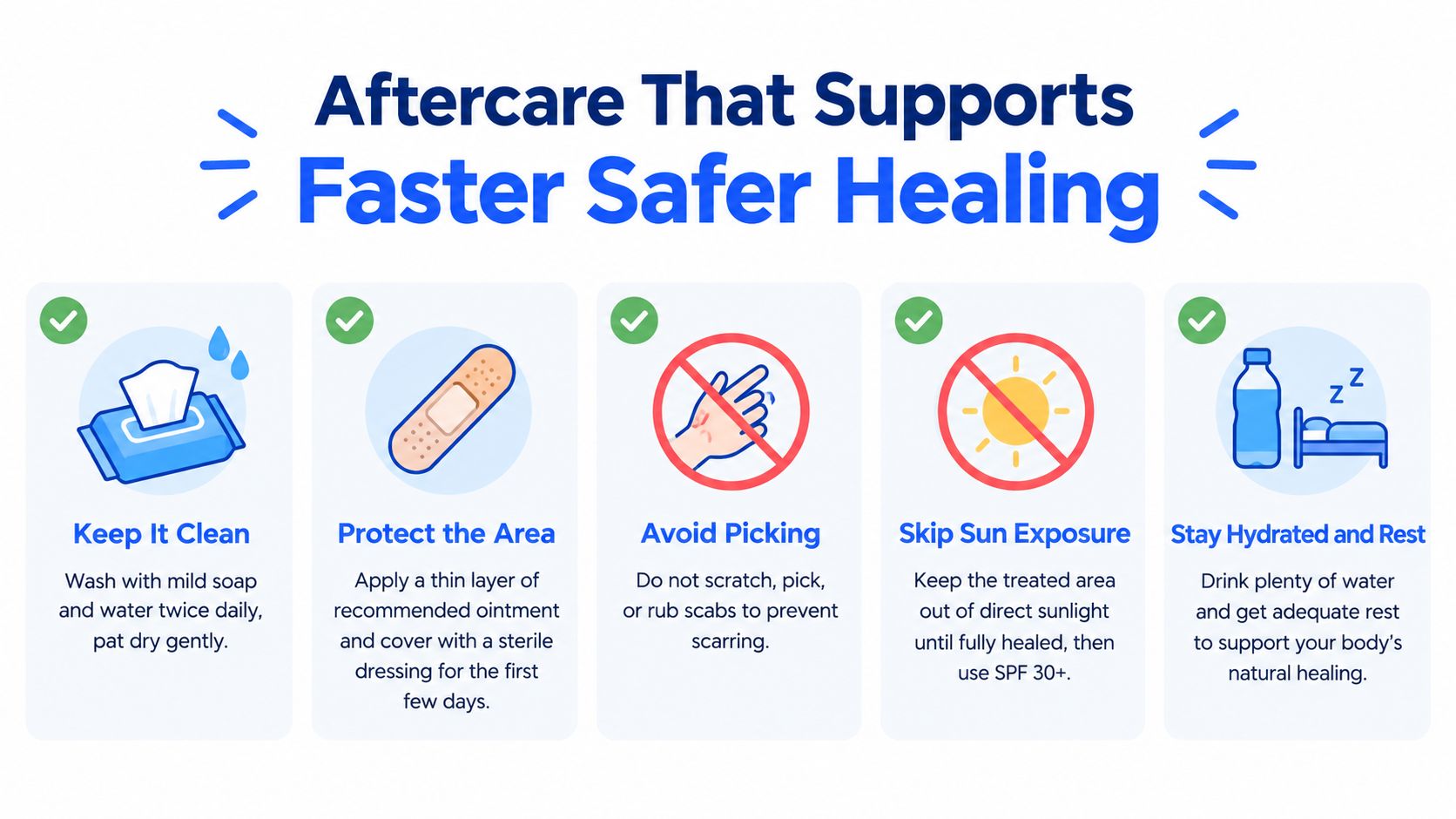
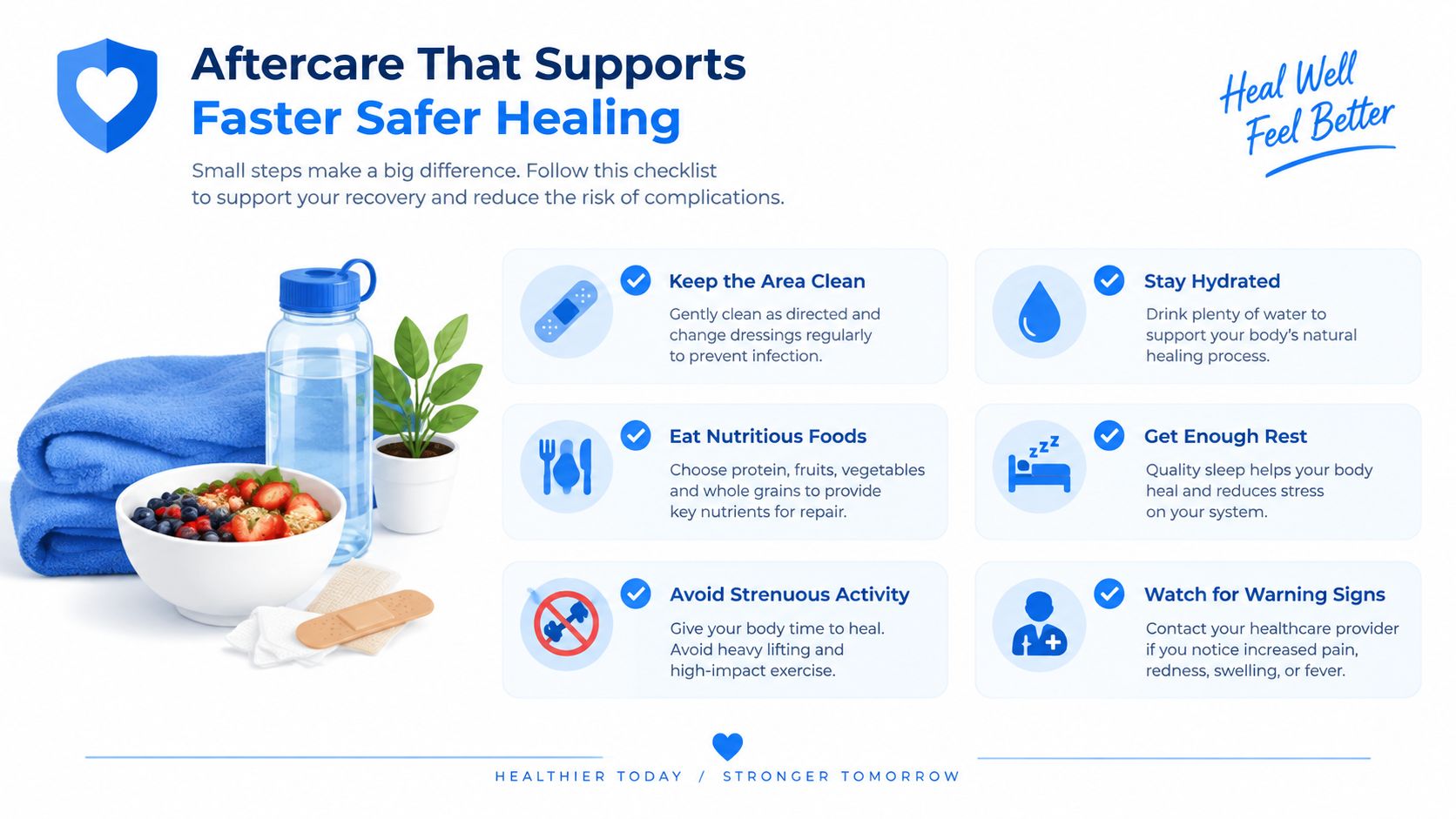
Aftercare should follow the stage your skin is in. During the early period, the goal is to keep the area clean, protected, and free from unnecessary friction. During the later period, the focus shifts toward sun protection and allowing the immune system to continue clearing pigment without repeated irritation.
A practical recovery routine
- Keep the area clean: Use the cleansing method recommended by your clinic, then pat the skin dry rather than rubbing it.
- Protect the surface: Apply only the ointment or dressing your provider recommends. A thin layer may support comfort, but extra product can trap moisture or irritate the area.
- Leave scabs alone: Don't scratch, pick, peel, or pop blisters. The crust acts as temporary protection while the surface repairs.
- Reduce friction: Choose loose clothing and avoid pressure from straps, waistbands, footwear, or equipment over the treated area.
- Limit heat and sweating early on: Intense sweating, soaking, pools, hot tubs, and activities that aggravate tenderness may interfere with early comfort and protection.
- Avoid direct sunlight: Keep the area covered during early healing. Once the skin has healed, follow your provider's advice about sunscreen and ongoing protection.
The reason these steps matter is straightforward. Irritation can prolong the surface phase, while sun exposure can contribute to pigment changes. Before you add a product or resume a demanding activity, ask whether it could rub, heat, soak, or expose the treated skin.
Comfort without disrupting repair
Mild tenderness, itching, and tightness can be uncomfortable, but aggressive rubbing usually makes the area feel worse. Let the skin settle, and contact the clinic if you aren't sure whether a reaction is expected. For broader guidance on protecting skin after sun exposure, you can review these expert after sun tips, while remembering that post-treatment instructions from your provider take precedence.
ProMD Health provides clinic-specific pre- and post-care guidance for tattoo removal. Follow those instructions over generic internet advice because your treatment settings and skin response are individual.
Normal Recovery Versus Signs to Contact Your Provider
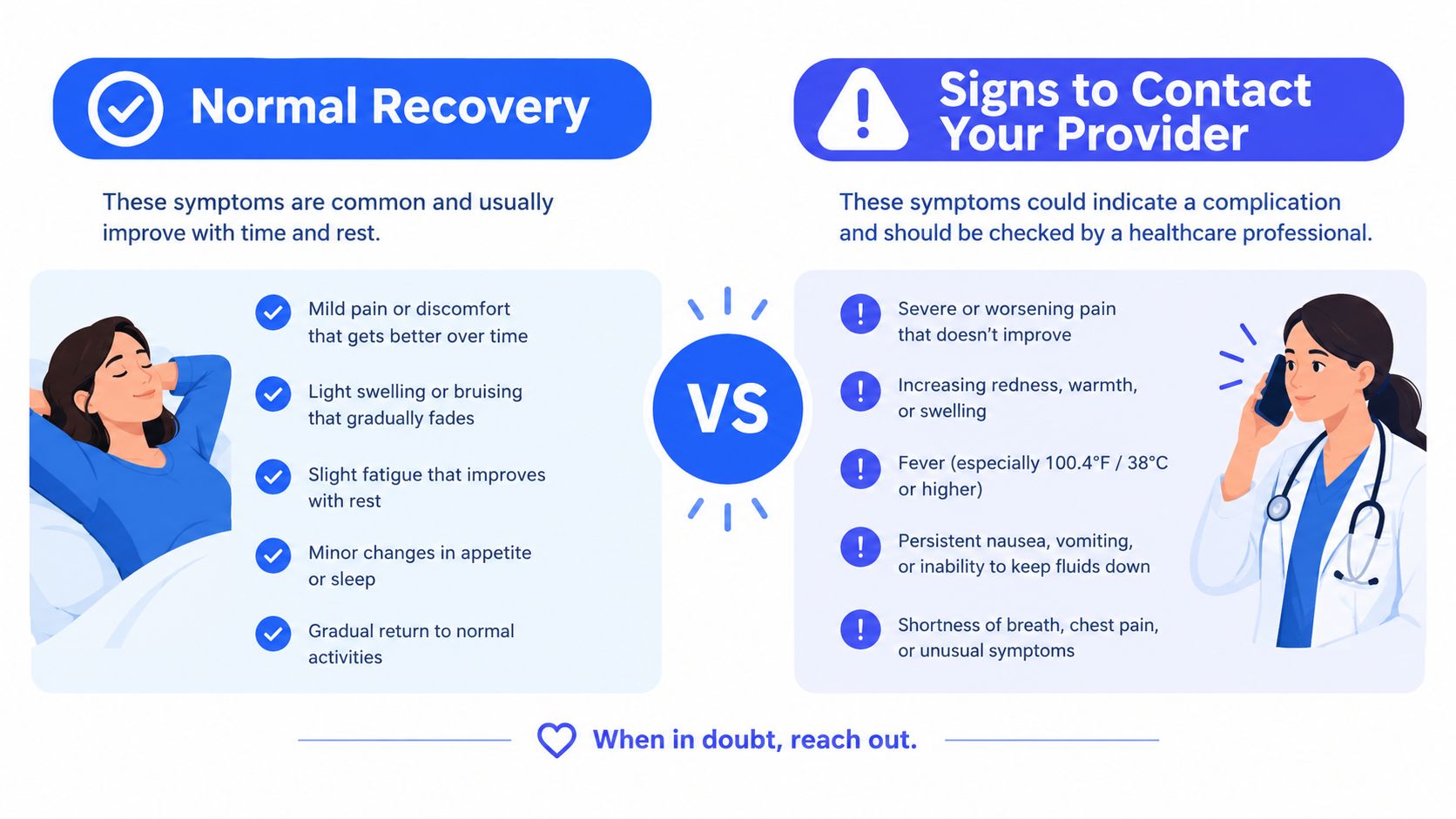
A treated tattoo can look worse before it looks better. Redness, swelling, itching, mild blistering, and scabbing may develop after a session, then ease as the surface repairs. The direction of change matters. A reaction that steadily settles is different from one that spreads, intensifies, or begins causing new symptoms.
Expected changes
| Often part of recovery | Needs clinical attention |
|---|---|
| Redness that gradually fades | Redness that spreads outward or becomes more intense |
| Mild swelling near the treated tattoo | Swelling that continues worsening |
| Tenderness that improves | Increasing or severe pain |
| Small blisters or scabs | Pus, worsening drainage, or a foul odor |
| Itching during surface repair | Fever, chills, or feeling acutely unwell |
| Temporary color variation | Persistent or concerning pigment changes |
Contact your provider promptly if redness spreads, pain increases, pus appears, fever or chills develop, or drainage becomes heavier rather than better. Do not wait for the next appointment if the area appears infected or the reaction is escalating.
These symptoms belong mainly to the surface-healing timeline. Your immune system has a separate task beneath that surface, clearing fragmented ink over time. Calm-looking skin therefore does not prove that clearance is complete.
Pigment changes may become noticeable around 4 to 6 weeks after treatment, particularly in darker or tanned skin. A new or persistent change does not always mean permanent damage, but a provider should assess it, document the appearance, and guide the next step. Skin tone, tanning, and the treated location can affect how color changes appear and how easily they are noticed.
Faster visible healing isn't faster removal
Picosecond treatments may shorten adverse reactions compared with older laser systems. A randomized comparison reported reactions lasting about 7 to 15 days on average, while expert recommendations still support spacing sessions at least 7 to 8 weeks apart, as described in this peer-reviewed comparison of picosecond and nanosecond laser treatments.
That difference explains a common misunderstanding. Early surface healing is like closing the outer layer of a wound. Immune clearance continues underneath, so booking another session as soon as the skin looks calm can interrupt recovery. To understand expected discomfort, review this tattoo removal pain information, and contact your provider about pain or symptoms outside your usual instructions.
Planning Your Full Course and Realistic Results
A tattoo that looks calm after one visit may still need a long clearance period. Many tattoos require about 6 to 12 sessions, with several weeks between appointments, so the complete course often spans roughly 6 to 18 months for many patients, according to this medical overview of tattoo removal healing time.
These are three separate timelines: the surface may heal first, immune clearance continues below it, and the total course ends only when the remaining ink has faded as far as treatment can achieve. Each appointment breaks pigment into smaller pieces. Your immune system then removes those pieces while the skin restores its protective barrier. Scheduling too soon can increase irritation and leave less time for that process.
Surgical excision has a shorter surface-wound period, with wounds typically healing in about 5 to 7 days. Dermabrasion wounds may take about 10 to 14 days, according to the medical overview. Faster surface healing does not guarantee faster or better clearance. These methods also carry different risks, including surgical or textural scarring.
During consultation, discuss tattoo size, ink characteristics, location, skin type, sun exposure, aftercare, session spacing, and whether the treatment is available at that office. ProMD Health uses a cash-pay model, so insurance does not cover its services. Confirm the service and location, then request an individualized estimate. A friend's timeline cannot predict yours.
If you are considering removal or healing after a session, visit ProMD Health to learn about the service and request a consultation.


