
You're brushing your teeth, leaning toward the mirror, and there they are. Two short vertical lines sit between your eyebrows, even though you're not angry, worried, or concentrating particularly hard. You relax your face and they soften a little. Then you frown, just to check, and they snap back into place.
That little test tells you almost everything you need to know. If a line deepens when you move and fades when you rest, muscle movement is driving it. That's the core idea behind Botox for wrinkles between eyebrows, and it explains both what the treatment does well and where it stops helping.
Table of Contents
- Why Those Two Frown Lines Show Up Between Your Brows
- How Botox Quiets the Muscles That Cause Frown Lines
- The Standard Injection Pattern for Glabellar Lines
- What Realistic Results and Timing Actually Look Like
- How to Reduce the Risk of Heavy Brow or Drooping Eyelid
- When Botox Is Not the Whole Answer and What Complements It
- Is Botox for Your Frown Lines Worth It and Next Steps
Why Those Two Frown Lines Show Up Between Your Brows
Catch yourself squinting at a screen or concentrating on traffic and you'll feel it. Your brows pull inward and slightly down, bunching the skin between them into one or two vertical folds. People often call them "11 lines" because, side by side, that's what they look like. Clinicians call them glabellar lines, named for the glabella, the smooth area between the brows.
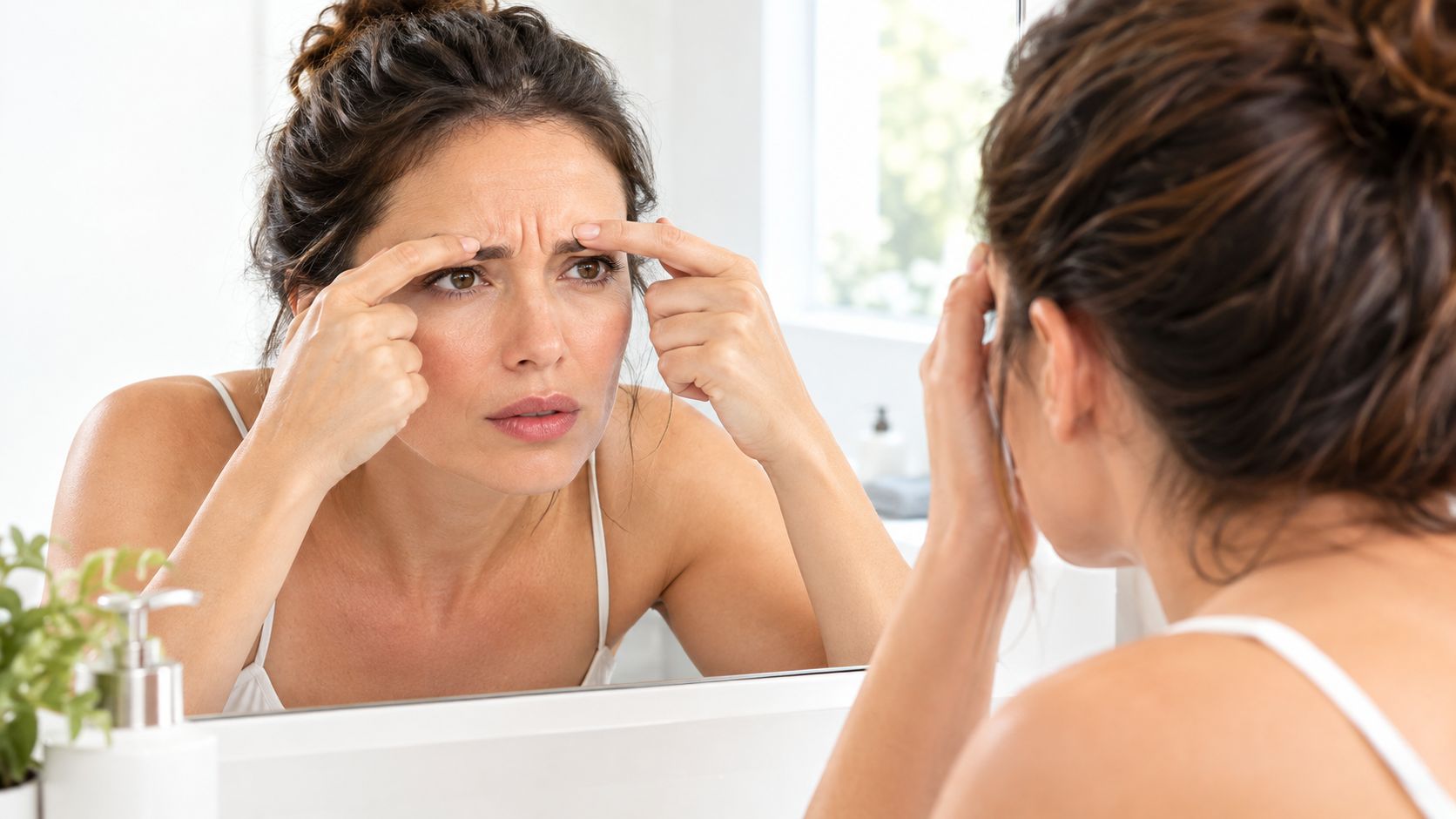
Two muscle groups create that bunching. The paired corrugator muscles pull each brow inward, like sliding doors closing toward the center. The procerus muscle sits in the middle and pulls the inner brows down. Working together, they fold the overlying skin in the same place, thousands of times, for years.
Think of folding a piece of paper along the same crease. At first the paper springs back flat. Fold it enough times and a faint line remains even when you smooth it out. Skin behaves in a similar way, which is why a line that once appeared only during a frown can eventually linger at rest.
The Distinction That Decides Everything
This gives you a simple way to sort your own lines:
- Dynamic lines: They appear or deepen when you frown and mostly disappear at rest. Muscle movement is the main cause.
- Static lines: They stay visible when your face is completely relaxed. The crease has been etched into the skin itself, often helped along by sun exposure, thinning skin, and loss of support underneath.
Many people have a mix. You might see a faint groove at rest that becomes a deep furrow the moment you concentrate. That mix matters because Botox only addresses the muscle part of the equation. It can't rebuild thinned skin or replace volume that's been lost.
Try this at home: Relax your face fully, then frown as hard as you can. The difference between those two states is roughly the share of the line that Botox can influence.
If your lines mostly vanish at rest, you're likely in the group that responds best. If a deep groove stays put no matter what you do, Botox may still soften the movement, but it probably won't be the whole answer. Holding onto that distinction will make every decision that follows clearer, from dosing to timing to whether a second treatment type belongs in your plan.
How Botox Quiets the Muscles That Cause Frown Lines
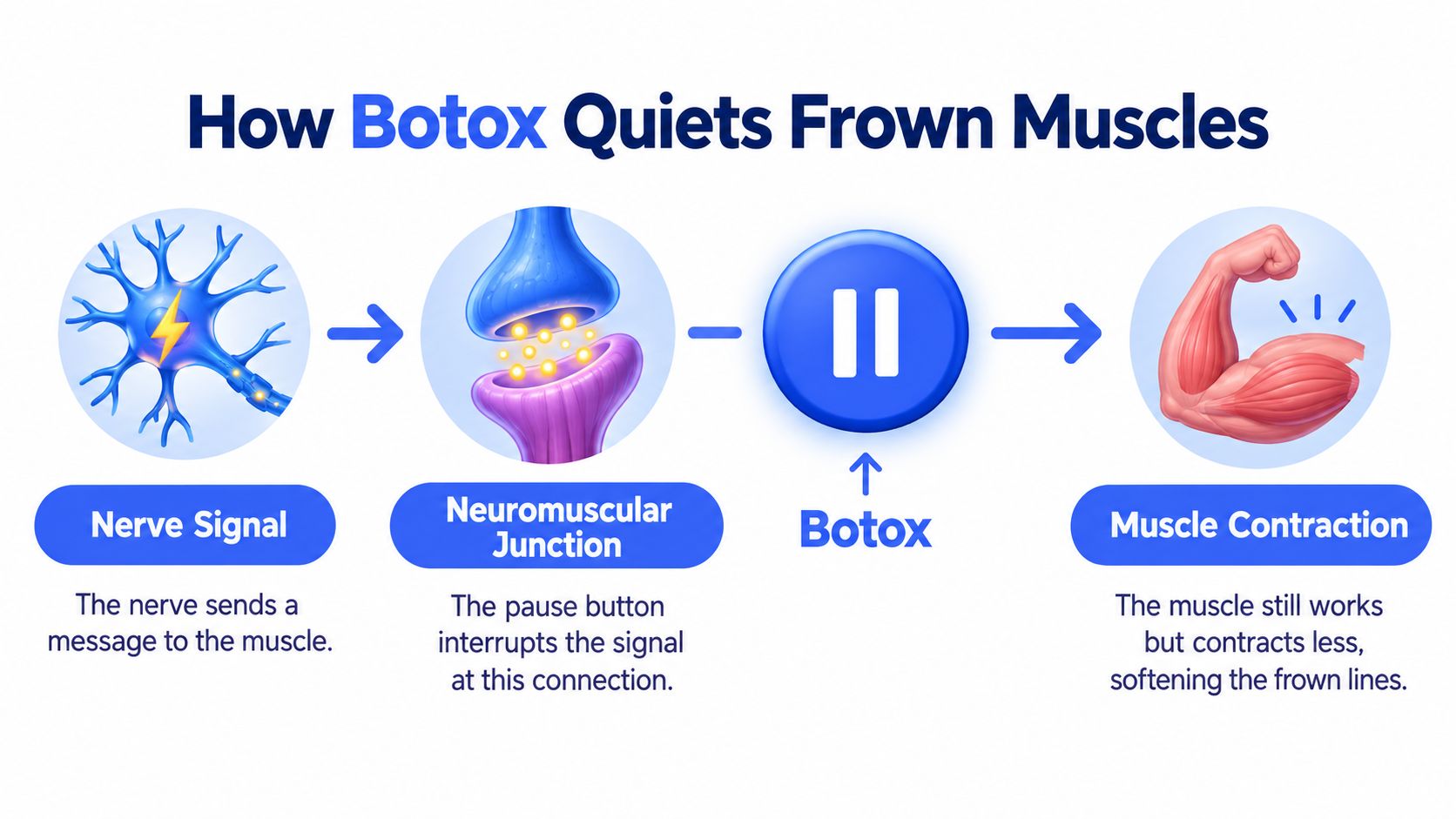
Start with an analogy. A muscle contracts because a nerve sends it a chemical message telling it to squeeze. Botox works like a pause button on that message. The muscle isn't destroyed, removed, or paralyzed forever. It receives a weaker instruction for a while, so it squeezes less forcefully.
The technical version isn't much harder. Botulinum toxin acts at the neuromuscular junction, the tiny connection point where nerve and muscle meet. There, it temporarily inhibits the release of acetylcholine, the chemical messenger that triggers contraction. With less messenger getting through, the corrugator and procerus muscles pull less, and the skin above them folds less.
Why Temporary Is a Feature, Not a Flaw
Patients sometimes hear "temporary" and feel disappointed. Reframe it. Because the effect fades gradually, nothing is permanent if you dislike the result, and your injector can adjust the dose at the next visit based on how your muscles responded. A first treatment that's slightly conservative becomes useful information, not a mistake.
The timeline follows from the mechanism. The cosmetic effect commonly begins within several days and reaches its maximum between approximately 2 and 4 weeks, according to clinical literature on botulinum toxin for glabellar lines. That same literature reports a median response duration of 150 days, after which muscle activity returns and the lines gradually reappear, which is why maintenance is periodic rather than permanent.
Soft Versus Frozen Is a Dosing Choice
A common worry is looking frozen. That outcome isn't automatic. It's largely a function of how much product goes where. A lighter dose leaves some natural movement while taking the sharp edge off the frown. A fuller dose limits the frown much more. Neither is right for everyone, and you should say out loud which end of that spectrum you prefer.
The same pause button principle explains uses beyond cosmetics. When overactive jaw muscles cause pain or clenching, the goal is identical, just in a different location, and you can find Botox TMJ treatment options explained through that same lens of reducing excessive muscle activity rather than changing the tissue itself.
Once you understand that Botox quiets a signal instead of filling or resurfacing anything, dosing stops sounding arbitrary. Units are a way of describing how strongly, and where, that signal gets turned down.
The Standard Injection Pattern for Glabellar Lines
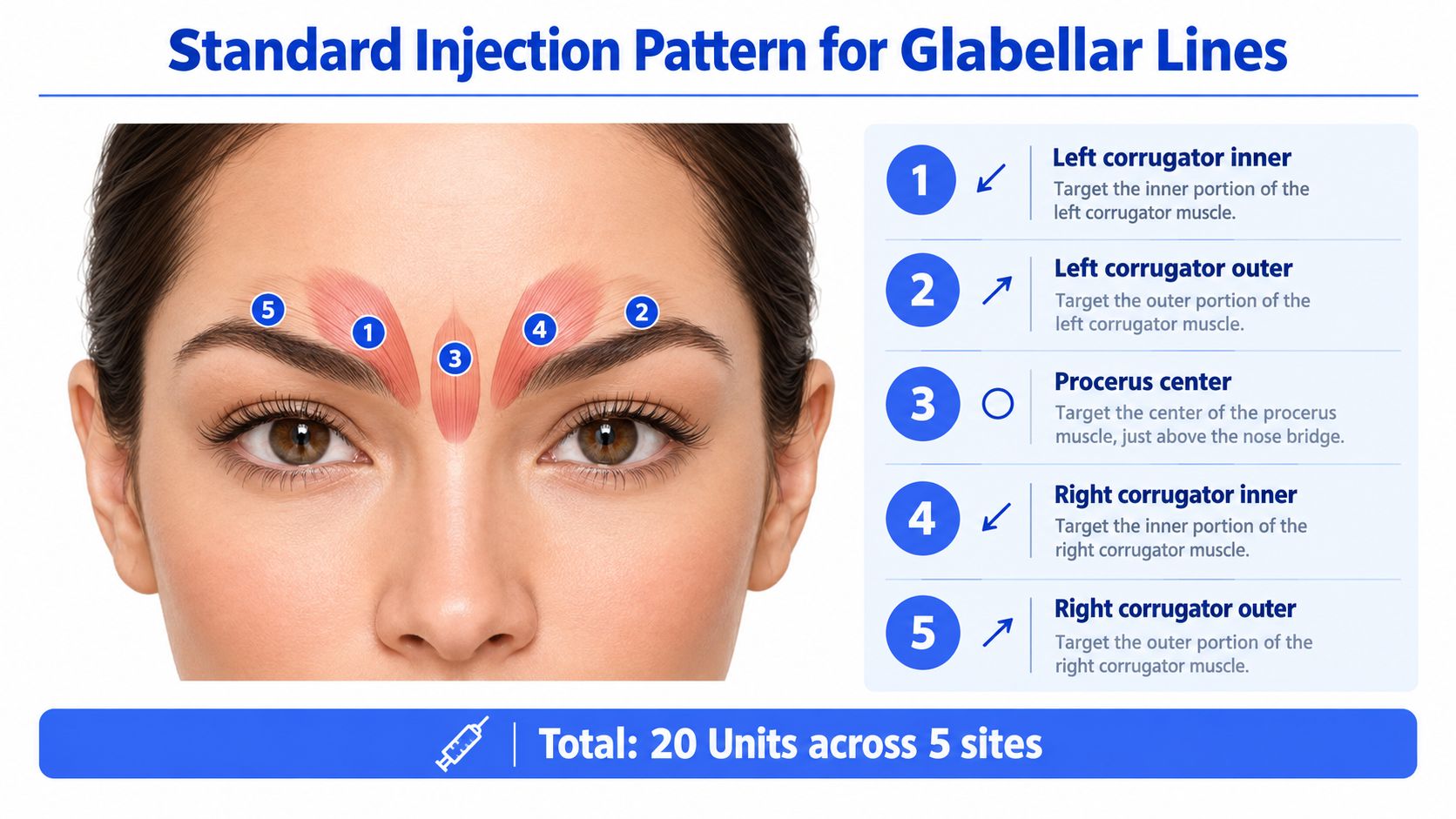
There's a well established starting blueprint for this area. For moderate to severe glabellar lines, the FDA labeled onabotulinumtoxinA technique uses 20 Units total, given as 4 Units in each of five intramuscular injection sites, with two sites in each corrugator and one site in the procerus, as described in the FDA approved Botox labeling for glabellar lines.
That pattern exists for anatomical reasons, not tradition. Each corrugator is a paired muscle that pulls one brow inward, so each side gets two points to cover its length. The single central point addresses the procerus, which pulls the middle of the brow area down. Cover all three muscles and you've addressed the full team responsible for the "11s."
A Reference Point, Not a Prescription
Treat that blueprint as a reference, not a guarantee that everyone should receive exactly the same thing. A person with strong, thick corrugator muscles may need a different plan than someone with delicate movement and a naturally low brow. Conservative dosing is common when there's already some brow or eyelid heaviness at baseline, because over relaxing the area can make that heaviness more noticeable.
What Your Injector Is Actually Assessing
A good consultation involves more than looking at your resting face. Expect to be asked to frown, relax, and raise your brows while the injector watches:
- Brow position at rest: Where your brows sit before anything is injected sets the safety margin.
- Brow movement during frowning: This shows which muscles dominate and how strong they are.
- Baseline asymmetry: Most faces are slightly uneven, and documenting that beforehand prevents confusion later.
- Skin at rest: Any line that remains when you're relaxed hints at a static component Botox alone won't erase.
Ask which muscles are being treated, how many units are planned, and why that dose fits your anatomy. A clear answer is a good sign.
It's also worth telling your injector about past experiences. If a previous treatment felt too heavy or wore off in one spot sooner than others, that history helps refine placement and dose. Precision matters here because the treated muscles sit close to muscles you'd rather leave alone. Localized pain, bruising, swelling, and tenderness are recognized short term effects, and accurate depth and placement reduce the chance of product affecting neighbors it wasn't meant for.
What Realistic Results and Timing Actually Look Like
The most common source of anxiety after treatment is checking the mirror too early and too often. Botox doesn't work like filler, where change is visible immediately. It works on a signal, and signals fade gradually.
| Time After Injection | What You Typically Notice | What This Means |
|---|---|---|
| First several days | The frown feels slightly harder to make | The nerve signal is starting to quiet down |
| Around 2 to 4 weeks | Lines look softest, frowning is limited | You're at or near peak effect, the right moment to judge results |
| Following months | Movement slowly returns, lines deepen again with expression | The effect is wearing off normally, not failing suddenly |
What the Evidence Supports
Response rates in research are high for this area. One synthesis reports that 97% of patients receiving botulinum toxin type A achieved at least a one grade improvement in glabellar lines within one month, compared with 20% of placebo recipients, as summarized in a review of botulinum toxin evidence for glabellar wrinkles. That same body of evidence notes that more than half of day 30 responders maintained clinical benefit for at least four months, which matches the gradual fade most patients describe.
The earliest regulatory evidence pointed the same direction. In the studies behind the original cosmetic approval, investigators rated 74% of treated participants as having glabellar lines that were absent or mild at maximum frown by Day 7, according to the original FDA labeling summary for glabellar line treatment.
If you want a week by week sense of onset, this overview of how long Botox takes to show its full effect walks through the waiting period in plain language.
Two Patients, Two Different Experiences
Consider someone who frowns hard every time they read. At peak effect, their change is obvious because a strong movement has been turned down. Now consider someone with gentle natural movement. Their result is subtler, a smoother look rather than a dramatic difference, and that's the treatment working correctly, not underperforming.
A useful habit: Judge your result once, at the four week mark, in normal lighting. Daily mirror checks mostly measure your attention, not your outcome.
Clinicians measure improvement on standardized facial expression scales, comparing your maximum frown before and after. You can borrow that approach. Take a photo frowning before treatment, then repeat it a month later. If the resting line looks unchanged but the frown photo is clearly softer, Botox has done its job, and whatever remains belongs to the skin conversation covered later.
How to Reduce the Risk of Heavy Brow or Drooping Eyelid
Many people have heard a story about a droopy eyelid after Botox. It helps to separate that story into two different events, because they happen for different reasons and they're prevented in different ways.
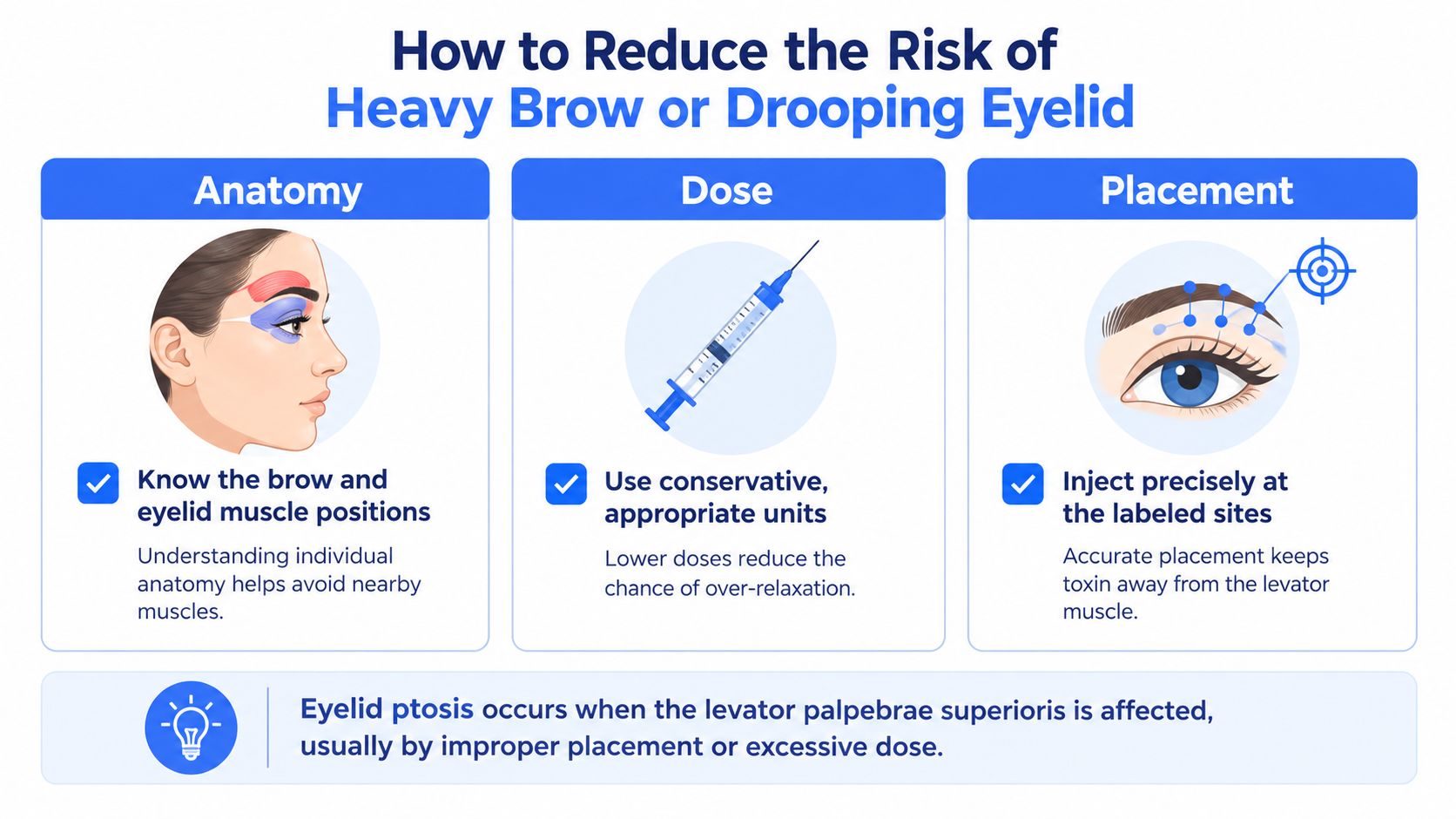
Eyelid ptosis means the upper eyelid itself sits lower. It happens when toxin reaches the levator palpebrae superioris, the muscle that lifts the eyelid, usually through diffusion from a nearby injection point. Brow ptosis is different. The eyelid muscle is fine, but the brow sits lower and feels heavy because the balance of muscles holding it up and pulling it down has shifted.
Anatomy and Placement Matter More Than Brand
Here's the assumption worth challenging. People often treat drooping as bad luck or a product problem. In reality, it's primarily an anatomy, dose, and placement issue. FDA labeling specifically warns clinicians to avoid injection near the levator palpebrae superioris, particularly in people with larger brow depressor complexes, and reports that eyelid ptosis occurred in approximately 3% of treated patients in clinical studies, per the current FDA Botox labeling on eyelid ptosis risk. Switching brands doesn't remove that anatomical reality. Careful assessment does more work than brand choice.
You can read more about how clinics approach these precautions in this explanation of Botox safety practices and patient screening.
Questions Worth Asking Before You're Treated
- Where exactly will each injection go, and how does my brow anatomy affect that?
- My brows already sit low. Does that change the dose or the plan?
- If a previous treatment felt heavy, what will you adjust this time?
- What should I do, and how quickly, if my eyelid feels droopy afterward?
There's also an honest trade off to name. Weakening the frown muscles softens lines, but it can subtly change brow position and expression. For a first treatment, a conservative dose often makes sense. You can always add at a follow up. You can't subtract.
If drooping does occur, it's typically temporary as the effect wears off, but don't wait. Contact your clinic promptly for new visual changes, one eyelid sitting noticeably lower, or severe brow heaviness. Early contact lets the team assess you, document what's happening, and advise you properly rather than leaving you to guess at home.
When Botox Is Not the Whole Answer and What Complements It
Return to the paper fold analogy. Once a crease is etched into the paper, smoothing your hand over it doesn't make the paper new again. The same logic applies between the brows. When a line stays visible at complete rest, part of the problem now lives in the skin and its support structure, not in the muscle underneath.
A common mistake happens here. A patient sees a remaining line and asks for more units. But increasing the dose mostly flattens expression further. It doesn't rebuild the dermal groove, because that was never Botox's job. More of a muscle treatment can't fix a skin problem.
Matching the Tool to the Layer
Think in layers, and the options sort themselves:
- Muscle layer: Botox and other neurotoxins reduce the repeated folding that created and deepens the line.
- Skin surface and texture: Lasers, chemical peels, and microneedling target etched lines, texture, and tone in the skin itself.
- Volume and support: Carefully selected dermal fillers or biostimulatory treatments such as Sculptra can support areas where loss of structure contributes to a persistent groove.
- Daily maintenance: Medical grade skincare supports skin quality between visits and helps protect the investment you've made in office treatments.
If you're weighing the two injectable categories against each other, this comparison of Botox versus dermal fillers and what each one treats lays out the different jobs clearly.
Botox handles the muscle. Everything else on that list handles the skin and structure. They're complements, not competitors.
Framed that way, a combination plan isn't upselling. It's honesty about layers. A clinician who tells you Botox alone won't fully erase a deep resting line is giving you accurate information, and a plan that pairs muscle relaxation with resurfacing or support often looks more natural than pushing any single treatment too hard.
Use this decision prompt at your consultation. If your line disappears when your face rests, Botox is likely enough on its own. If it persists, ask what's contributing to the resting line and which adjunct fits that specific cause. The answer should name a layer, not just a product.
Is Botox for Your Frown Lines Worth It and Next Steps
Every section of this guide comes back to one question. Is your line mainly muscle driven, mainly skin driven, or a bit of both? Answer that and the rest of the decision gets much easier.
A Calm Candidacy Checklist
- Your lines deepen a lot when you frown and fade at rest. You fit the profile that tends to respond best to Botox for wrinkles between eyebrows.
- You're comfortable with maintenance. Results fade gradually over a period of months as movement returns, so this is an ongoing choice, not a one time fix.
- You want softening, not a new face. Realistic goals usually mean looking less stern or tired at rest, not erasing every trace of expression.
- You've considered the resting line. If a groove remains when relaxed, you're open to hearing about skin focused additions rather than expecting extra units to solve it.
- You value assessment over a standard dose. Individualized dosing based on your brow position, muscle strength, and history is what keeps results natural and risk low.
Cost deserves plain language too. ProMD Health operates on a cash pay model, so cosmetic Botox isn't billed to or covered by insurance. Ask for the expected total before treatment so there are no surprises, and factor in periodic maintenance when you decide whether it's worth it for you. Consultations are available at approved locations including Annapolis, Bethesda, and Columbia in Maryland, Arlington and Tysons Corner in Virginia, Washington, DC, Lewes in Delaware, Fort Lauderdale and Wellington in Florida, Hutto in Texas, and Lafayette in Colorado, among others.
The honest takeaway is simple. Botox reliably softens the movement driven part of glabellar lines for many individuals, and it does so without surgery. The best outcomes come from pairing that with a clear eyed look at what your resting skin needs, rather than asking one treatment to do two different jobs.
If your frown lines are mostly movement driven and you'd like a personalized assessment at rest and in expression, schedule a consultation through ProMD Health to discuss neurotoxin dosing for your anatomy, any complementary skin treatments your resting lines might need, and transparent cash pay pricing before you commit.


