
A compelling tattoo removal before and after gallery requires more than two photographs placed side by side. Readers need to know whether each example is a verified ProMD patient case, an anonymized aggregate, or an illustrative archetype. Without that distinction, a polished image can imply a real outcome that hasn't been documented.
A reliable review should verify seven points: case provenance, tattoo characteristics, skin tone, treatment records, device details, timeline, and patient notes. Clinical evidence shows why this matters. In a cohort of 352 people treated with a Q-switched laser, cumulative success reached 47.2% after 10 sessions and 74.8% after 15 sessions, reinforcing that fading is usually incremental rather than immediate (PubMed clinical cohort). Tattoo removal is an approved ProMD Health service, but device availability and exact treatment protocols require confirmation at the office level.
Table of Contents
- 1. Flagged for Human Review
- 2. Missing Real Case Examples
- 3. Service Verification Needed
- 4. Image and Photo Requirements
- 5. Provide Patient Case Documentation
- 6. Confirm Device Specifications
- 7. Clarify Scope and Approval Pathway
- 7-Case Tattoo Removal Before & After Review & Verification
- Build the Gallery on Verified Evidence
1. Flagged for Human Review
A before-and-after image shouldn't be published solely because it looks persuasive. The example supplied for this topic shows a woman's arm with a colorful flower tattoo before and after apparent fading, but the image alone doesn't establish who received treatment, whether the result is genuine, how many sessions occurred, or which laser was used.
That gap creates legal, ethical, clinical, and brand concerns. A reader could reasonably interpret the photograph as a ProMD patient outcome, even when no patient identity, consent record, treatment history, or clinic attribution accompanies it. The image also doesn't document the tattoo's age, ink density, depth, location details, skin tone, healing response, or whether the result represents complete removal, partial fading, or a cover-up preparation.
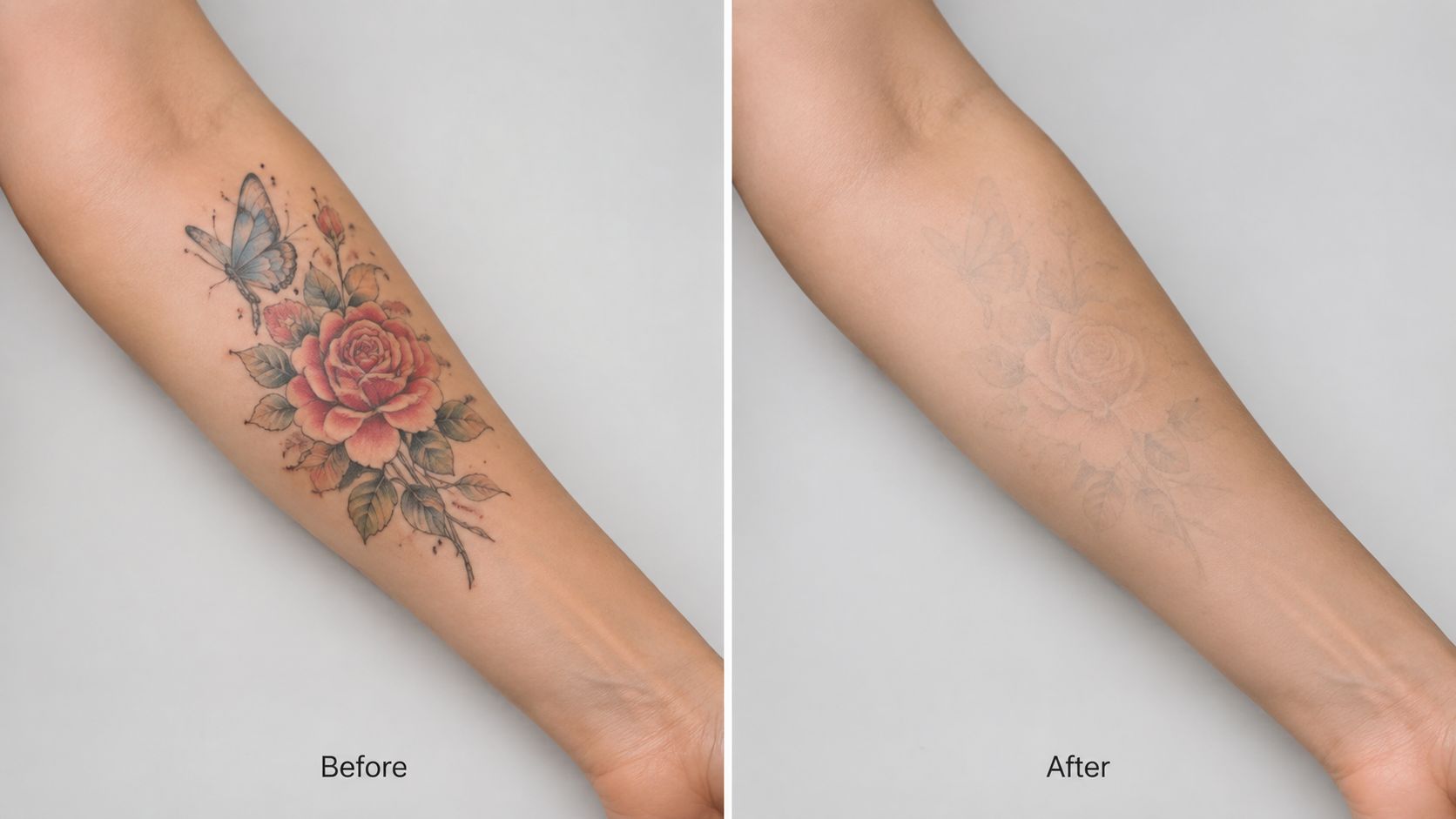
What the image cannot prove
A credible gallery needs documentation that answers practical questions:
- Patient status: Is this a verified ProMD case, an anonymized aggregate, or an illustration?
- Consent: Did the patient authorize marketing use of the photographs?
- Treatment history: Are session dates, treatment areas, and clinical notes available?
- Photography: Were lighting, camera angle, distance, and skin preparation consistent?
- Outcome: Does “after” mean fading, cover-up readiness, or intended full removal?
Clinical outcomes vary with ink color, skin color, wavelength, pulse duration, pigment composition, density, depth, age, and body location (NCBI clinical overview). A colorful floral tattoo therefore shouldn't be treated as a universal model for every patient.
Publication rule: If the source, consent, and treatment record can't be verified, label the image for human review rather than presenting it as a patient result.
2. Missing Real Case Examples
The requested gallery calls for seven detailed before-and-after cases with photographs and treatment data. No real ProMD patient files were supplied, so there isn't enough evidence to create those cases responsibly. Writing in session counts, laser settings, timelines, skin observations, or patient experiences would turn missing documentation into fabricated medical marketing.
The cleanest alternative is to obtain existing ProMD case studies with signed releases. If those aren't available, the article can use anonymized aggregate findings or educational archetypes, provided each example is clearly labeled and never presented as an actual patient's result. A real case should identify the tattoo's broad characteristics and treatment objective while protecting personal information.
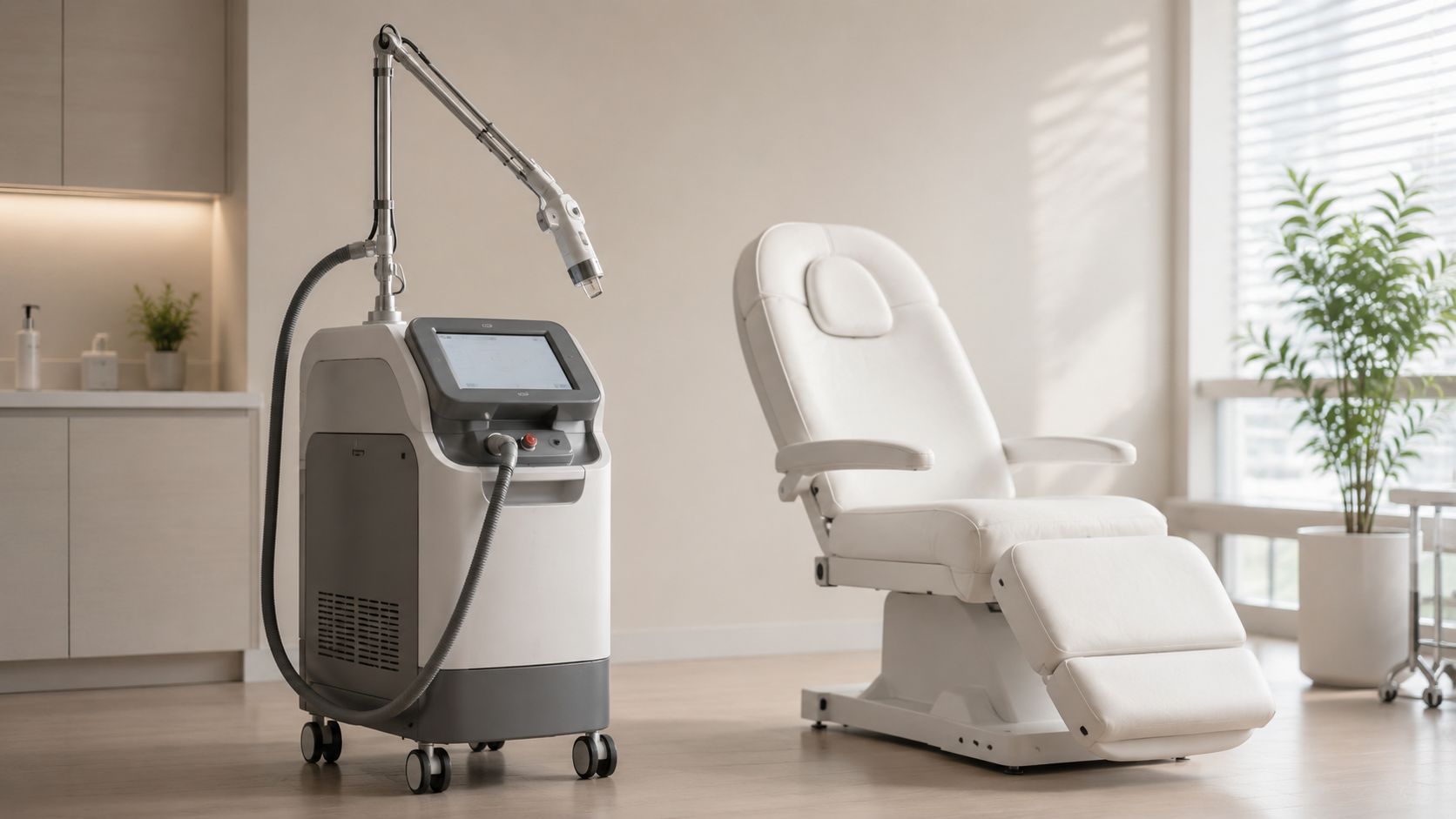
Evidence a gallery should include
A publishable case file might contain:
- Verified provenance: Confirmation that treatment occurred at ProMD Health.
- Consented photographs: Before and follow-up images approved for marketing use.
- Relevant tattoo details: Ink colors, approximate size, placement, density, and whether the tattoo is amateur or professional.
- Treatment record: Dates, modality, clinical observations, aftercare, and follow-up notes.
- Outcome language: A precise description of visible fading, residual pigment, or cover-up preparation.
Clinical literature provides useful context without replacing patient documentation. One review reports that amateur tattoos may require 5 to 10 sessions, while professional tattoos may require 15 to 20, with as many as 25 in rare cases, depending on tattoo and patient factors (review of laser tattoo removal). Those figures can frame expectations, but they can't be assigned to an unnamed ProMD case.
For approved gallery materials, compare the available files with the ProMD before-and-after gallery and confirm that every image has supporting records before publication.
3. Service Verification Needed
Tattoo removal is an approved ProMD Health service, but a service-level description isn't the same as confirmation of a specific device at every office. A photograph of a laser, a wavelength claim, or a device name can become inaccurate if availability differs between locations. Device-specific wording should therefore wait until clinical operations confirms the equipment used for tattoo removal at each relevant clinic.
That verification matters because laser performance depends on the relationship between the ink, the patient's skin, the wavelength, and the pulse duration. A picosecond system and a nanosecond system may produce different clearance patterns, but a gallery shouldn't imply that one technology was used unless the treatment record confirms it.

Confirm the clinical details first
For each approved ProMD location offering the service, request:
- Device inventory: The exact laser system or systems used for tattoo removal.
- Technical specifications: Confirmed wavelengths, pulse characteristics, and approved treatment indications.
- Protocol variation: Office-level differences in settings, treatment intervals, and clinical workflow.
- Case matching: The device and protocol documented for each featured patient.
- Patient communication: Accurate aftercare information tied to the actual treatment process.
A prospective randomized study of 49 patients found that picosecond lasers achieved at least 75% colour-intensity reduction in 33% of tattoos, compared with 14% for a nanosecond laser, based on standardized photographs and blinded physician review (randomized picosecond and nanosecond laser study). That evidence supports careful technology reporting, not automatic claims about every ProMD location.
Readers can learn about the service through ProMD's tattoo removal overview, while device details should remain subject to office-level confirmation.
4. Image and Photo Requirements
Real before-and-after photographs are essential when an article makes visual claims. They also carry privacy obligations. ProMD brand standards prohibit AI-generated provider imagery, and synthetic or unverified patient images shouldn't be used to represent treatment outcomes.
The supplied scope image can illustrate the difference between educational material, real cases, and archetypes, but it can't substitute for a consented clinical photograph. A gallery should use consistent photography and preserve enough context for readers to understand what changed.

Separate evidence from illustration
Use clear labels:
- Verified patient case: A real ProMD patient with documented treatment and signed marketing consent.
- Anonymized aggregate: Combined information that doesn't identify an individual and is supported by clinic records.
- Illustrative archetype: A fictional educational scenario that doesn't claim to represent a real patient.
- Educational image: A treatment-room or equipment photograph that demonstrates process, not outcome.
Image handling should follow HIPAA requirements and ProMD's internal privacy and brand rules. Consistency also matters. If the “before” photograph uses different lighting, angle, distance, or skin preparation than the “after” image, readers may mistake photographic variation for treatment progress.
A clinical series of professional black tattoos treated with a picosecond Q-switched Nd:YAG laser reported mean improvement of 61±24.6%, with individual outcomes ranging from 20% to 95% improvement (clinical series and review). These findings demonstrate variability. They don't authorize the use of any unrelated image as proof of a comparable outcome.
5. Provide Patient Case Documentation
If ProMD has existing tattoo removal cases, the next step is straightforward. Collect the complete file for each proposed example, including the original photograph, follow-up photograph, signed release, and treatment record. The content team can then describe what the documentation supports without filling gaps with assumptions.
A practical file set could include a photo pair, a signed marketing release, and a treatment record. The record should connect the images to the patient encounter while limiting protected information to what is necessary for clinical and editorial review.
Build a defensible case file
Each submission should clarify:
- Photograph identity: Which image is the baseline and which is the follow-up.
- Consent status: Whether the release authorizes website and blog marketing use.
- Treatment chronology: Dates and number of documented sessions, if approved for publication.
- Tattoo profile: Color, approximate size, placement, age, and professional or amateur origin where available.
- Clinical context: Relevant skin response, aftercare, residual pigment, and stated treatment goal.
- Privacy controls: Redaction or anonymization where a full HIPAA-compliant transfer isn't appropriate.
The case should also state whether the patient wanted complete removal or partial fading for a cover-up. A systematic review found that meaningful clearance of black and blue pigments generally required 4 to 8 sessions to reach at least 75% clearance in most reviewed studies (systematic review of Nd:YAG tattoo removal). That benchmark can inform educational context, but it shouldn't be attached to a ProMD patient unless the patient's own record supports it.
No photograph should appear beside a session count or outcome statement that belongs to a different person.
6. Confirm Device Specifications
A device name can make a gallery appear more authoritative, but incorrect technical detail weakens trust. Clinical operations should provide a per-clinic inventory and identify which systems are currently used for tattoo removal at approved locations. The final article should reflect those records, including any office-level differences.
This step is especially important when a case spans multiple clinics or when a patient transfers care. The same branded service may involve different equipment or protocols depending on location, treatment area, ink profile, skin response, and provider assessment.
Record technology without overpromising
Confirm the following before using device-specific language:
- Make and model: Record the exact system documented in the patient chart.
- Wavelengths: Include only specifications verified by ProMD clinical operations.
- Pulse type: Distinguish picosecond and nanosecond claims where the record supports them.
- Treatment settings: Publish technical parameters only if approved for patient-facing content.
- Location: Identify the office where treatment occurred, if publication consent allows it.
- Protocol notes: Capture intervals, test spots, adjustments, and aftercare instructions when relevant.
Laser tattoo removal became clinically practical through the development of short-pulse and Q-switched systems, with commercial availability expanding in the 1990s and early American publications appearing around 1990 (history of laser tattoo removal). Historical context can explain why older results aren't directly comparable to modern images, but it shouldn't be used to imply a particular ProMD device.
For accurate background on changing technology, link readers to ProMD's explanation of how tattoo removal technology has changed, then keep clinic-specific claims tied to verified inventory.
7. Clarify Scope and Approval Pathway
Before drafting a gallery, ProMD should decide what kind of evidence it wants readers to see. A page built from verified patient cases has different consent, documentation, and review requirements from an educational article built around anonymized aggregates or fictional archetypes.
That choice also determines how the copy should describe outcomes. A verified case can report only what the record supports. An anonymized aggregate can describe a group without implying that every patient followed the same path. An archetype can explain a common decision, such as fading an old professional tattoo before a cover-up, but must be labeled as illustrative.
Use a clear review sequence
A practical approval pathway includes:
- Scope decision: Choose real cases, anonymized data, educational examples, or a clearly separated combination.
- Clinical review: Confirm that treatment descriptions and expectations are medically accurate.
- Legal and privacy review: Verify releases, redactions, and advertising compliance.
- Brand review: Approve photography, image sourcing, tone, and service language.
- Location review: Confirm the target office and current service availability.
- Client approval: Send the complete package to Sheena and Abby before publication.
The outcome should be described with restraint. Tattoo removal often requires multiple sessions, and clearance depends on ink color, density, depth, body site, skin color, and treatment parameters. One clinical framework states that sessions are often spaced 6 to 8 weeks apart to allow fragmented ink clearance and skin recovery, while tattoos nearer the heart may clear faster than tattoos on the extremities (clinical treatment framework).
7-Case Tattoo Removal Before & After Review & Verification
| Item | Implementation complexity | Resource requirements | Expected outcomes | Ideal use cases | Key advantages |
|---|---|---|---|---|---|
| Flagged for Human Review | High – requires cross-team escalation and approvals | Legal/compliance reviewers, subject matter experts, verified patient data | Formal decision to approve, modify, or reject request; mitigates legal/brand risk | Requests with legal, ethical, or brand constraints | Ensures compliance and reduces legal/brand exposure |
| Issue: Missing Real Case Examples | Moderate–High – sourcing and validating cases is time consuming | Patient consents, HIPAA-compliant documentation, verified before/after photos | Either authentic case examples or decision to use anonymized/educational alternatives | Creating before-and-after case galleries or detailed treatment profiles | Produces legally defensible, accurate case material |
| Issue: Service Verification Needed | Moderate – requires inventory and clinical confirmation | Clinic device inventories, clinical ops input, vendor specifications | Accurate device-specific content and location-level accuracy | Device- or technology-specific content and claims | Increases technical accuracy and credibility |
| Issue: Image/Photo Requirement & Brand Policy | High – strict policy and privacy controls required | Signed release forms, secure/HIPAA storage, brand review | Useable, brand-compliant real photos or alternative approved assets | Marketing or educational content requiring images | Maintains brand integrity and patient privacy |
| Recommended Next Step: Provide Patient Case Documentation | Moderate – collect, verify, and redact as needed | High-resolution photos, signed releases, treatment logs, redaction tools | Ready-to-draft, reviewable case studies and marketing assets | Publishing patient-specific case studies or galleries | Streamlines drafting and compliance review |
| Recommended Next Step: Confirm Device Specifications | Low–Moderate – data collection and verification | Device lists, make/model/wavelength details, clinical input | Accurate descriptions of devices and expected outcomes | Technical articles, FAQs, and device comparisons | Enables precise claims and realistic expectations |
| Recommended Next Step: Clarify Scope and Approval Pathway | Moderate – decision-making and process definition | Stakeholder alignment (clinical, legal, brand), approval checklist | Defined scope (educational vs real vs archetype) and approval workflow | Planning content strategy and pre-publication review | Reduces rework and clarifies responsibilities and labeling |
Build the Gallery on Verified Evidence
A trustworthy gallery starts with a scope decision. Choose whether the page will feature verified ProMD patient cases, anonymized aggregate information, educational archetypes, or a carefully separated combination. Don't blend those categories under a single “results” label, because readers need to understand which statements describe documented outcomes and which explain general treatment patterns.
For real cases, collect consented photographs and treatment records before writing. The images should show the same tattoo area under reasonably consistent conditions, while the records should support any published statement about session count, treatment interval, device, ink color, skin response, or outcome. If a patient's release doesn't authorize marketing use, don't publish the photographs, even if the images are clinically useful.
Device information needs a separate verification step. ProMD Health offers tattoo removal, but exact laser availability and protocols may vary by office. Confirm the make, model, wavelengths, pulse type, and relevant clinical workflow with the appropriate team before attaching technical claims to a location or patient result.
The article should also distinguish complete removal from partial fading. Some patients seek enough fading for a cover-up, while others want the greatest possible clearance. Residual pigment, ghosting, color-specific response, skin-tone considerations, and healing reactions all influence how an “after” image should be interpreted. A gallery that acknowledges uncertainty gives readers more useful information than one that promises a uniform endpoint.
Finally, complete the review pathway before publication. Send Sheena and Abby the blog title, draft, target service, target location, and selected images for approval. No patient outcome, session count, timeline, skin-tone observation, laser modality, or photograph should be presented as real without supporting ProMD documentation.
ProMD Health offers laser tattoo removal with consultation and aftercare guidance for adults evaluating fading or removal goals. Visit ProMD Health to learn more about the service and request a consultation at an approved location.


