
You notice it in ordinary moments, not on a dramatic day in the mirror. A side glance in a car window, a phone camera held a little too low, a pendant light catching the shadow under your chin. The face may still look familiar, but the neck starts to read as older, softer, or more textured, and that change can feel sudden even when it has been building gradually for years.
That's why non surgical neck rejuvenation treatments deserve their own plan. The neck has thinner skin, more motion, and different anatomy than the face, so treating it like an afterthought usually leads to underwhelming results. A better approach is layered, practical, and honest about what can improve bands, fullness, laxity, and texture without surgery.
Table of Contents
- Why the Neck Ages Before the Face
- The Four Layers of Neck Aging
- Treatment Categories at a Glance
- Injectables for Bands, Volume, and Fat
- Energy-Based Tightening and Resurfacing
- Threads, Microneedling, and Combination Protocols
- Realistic Results, Downtime, and Cost Considerations
- Planning Your Treatment Start to Finish
Why the Neck Ages Before the Face
A lot of people don't notice neck changes until they catch that awkward angle in a store window or car mirror. The problem usually isn't one single thing. It's a mix of thinner skin, less natural oil, constant movement, gravity, and sun exposure, all working on a very exposed area that gets skipped over until the signs are obvious.
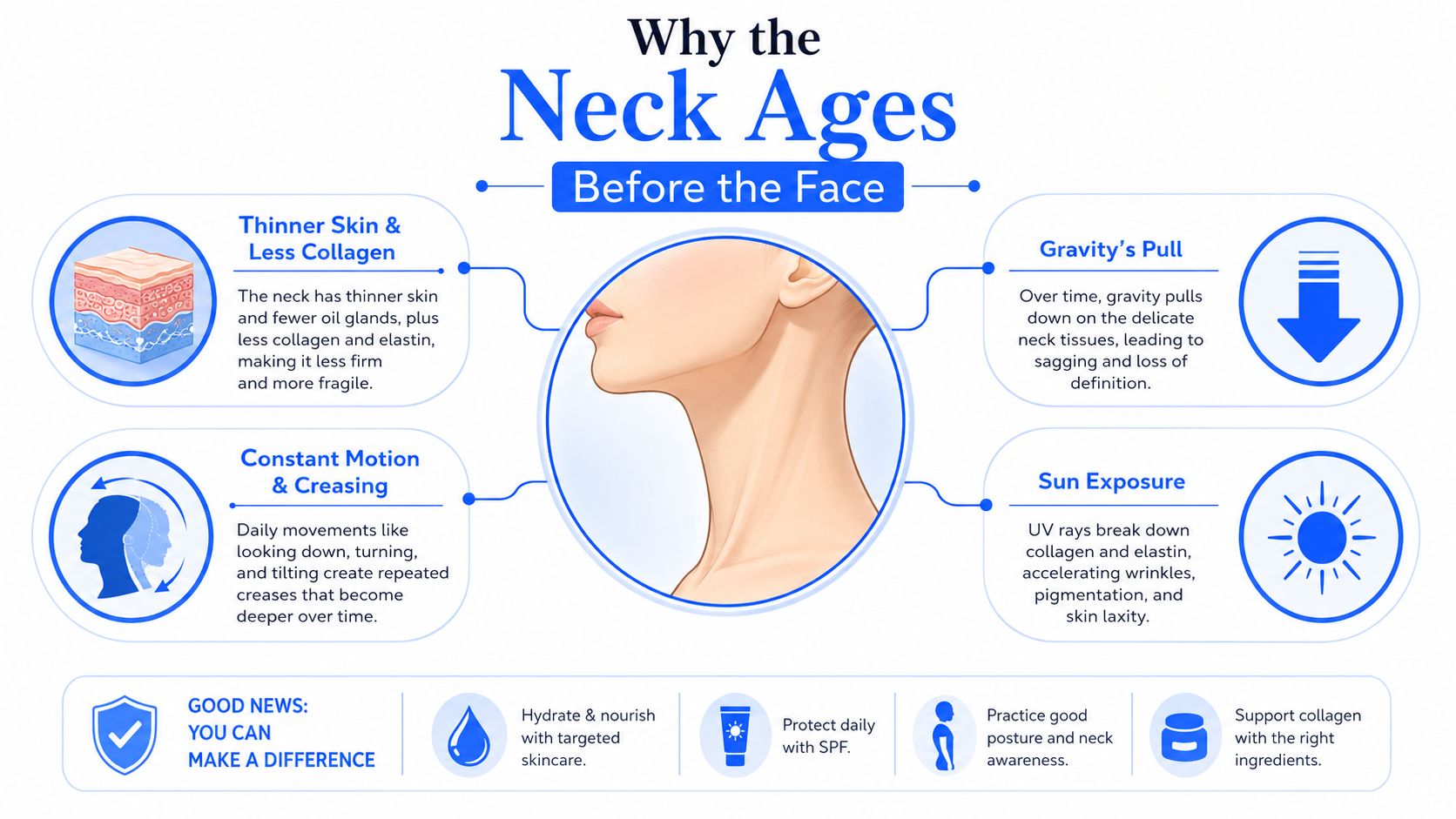
Why the neck shows change so quickly
The neck is in motion all day. You tilt it to look at your phone, turn it while driving, and extend it when you talk or exercise. Those repeated creases act like folds in fabric, and over time they become more visible.
Sun exposure matters too, because the neck often gets broad daylight but not the same care people give their face. That combination of motion and environmental stress helps explain why people can have a fairly smooth face and a noticeably older-looking neck.
Practical rule: if the neck is changing before the face, it usually needs its own treatment logic, not a copied facial plan.
Why “neck aging” looks different from person to person
One person notices fine crepey texture first. Another sees horizontal lines. Another feels bothered most by soft fullness under the chin or by vertical bands that show when they speak or clench. Those aren't interchangeable problems.
That's where patient confusion usually starts. People ask for one neck treatment as if there were one neck issue, but the area can be aging in more than one layer at the same time. A good plan starts by separating those layers.
The Four Layers of Neck Aging
The neck ages across four distinct layers, skin quality, submental fat, platysma muscle activity, and structural support. Each layer changes the neck in a different way, so a good treatment plan starts by identifying which layer is doing most of the work. That is the part many people miss when they ask for one fix for the whole area.
Skin quality, fat, muscle, and support
Skin quality and texture shape whether the neck looks smooth or crepey. Submental fat affects the contour under the chin. Platysma muscle activity creates the vertical bands that can show up with speaking, chewing, or clenching. Structural support influences how well the neck and jawline hold their shape from below.
The layers can change separately or together. A person may have thin, wrinkled skin with little fullness under the chin. Someone else may have a softer angle under the jaw, but fairly decent skin quality. Another patient may mainly notice cords in the front of the neck when the platysma contracts.
The platysma is the thin sheet-like muscle that runs across the front of the neck and can form vertical bands. When those bands are active, the neck can look tense or corded during expression. Submental fullness does something different. It blunts the angle beneath the chin and can make the lower face and neck look heavier from the side, even when the rest of the face still appears fairly balanced.
Why a single-device mindset falls short
A laser can improve texture, but it does not remove muscle bands. A neuromodulator can relax bands, but it does not tighten loose skin. Fat reduction can sharpen the profile, but it will not smooth crepey surface change on its own. That is why many of the best non surgical neck rejuvenation treatments are chosen by layer rather than by brand or trend.
The sequence matters. Deep problems usually set the framework first, then the more superficial issue is refined after that. If the neck has fullness, banding, and lax skin, treating only one of those layers leaves the others visible.
The most useful question is simple: which layer is driving the look you see right now? Once that is clear, the treatment discussion becomes much easier to understand, and much more honest about what each option can and cannot do.
Treatment Categories at a Glance
The easiest way to organize the neck is by what each treatment touches. Some options reduce motion. Some reduce fullness. Some improve texture. Some support the skin from below. The table below gives a broad map before any one therapy gets considered on its own.
How the major categories fit the neck
| Treatment Category | Primary Neck Layer | Main Goal | Typical Downtime |
|---|---|---|---|
| Neurotoxins and fillers | Muscle, contour, selected support | Soften bands, restore shape, refine profile | Usually minimal, with temporary marks or bruising |
| Deoxycholic acid | Fat | Reduce submental fullness | Temporary swelling is common |
| Radiofrequency and ultrasound | Skin and deeper dermis | Tighten and stimulate collagen | Often mild to moderate, depending on intensity |
| Lasers and chemical resurfacing | Surface texture | Improve crepiness, lines, and photodamage | Varies from a few days to longer recovery with stronger treatments |
| Microneedling and regenerative approaches | Skin quality | Encourage collagen and improve tone | Usually modest and short-lived |
| Threads and structural support | Support and lift | Provide mechanical repositioning | Usually short-term swelling or soreness |
What the table doesn't show
Art lies in sequencing. A person with a little banding and mild texture change may do well with one category. Someone with fat, bands, and loose skin often needs more than one. That's why category labels are helpful, but they're not the whole plan.
The clinical references also show how broad the field has become. The category now spans fillers, botulinum toxin, ultrasound, microneedling, thread lifting, radiofrequency, lasers, chemical peels, and light sources (The Aesthetic Society statistics). That breadth is useful, but it can also make the choice feel overwhelming without a layered framework.
Injectables for Bands, Volume, and Fat
A patient may look in the mirror and see three different problems at once, a corded band when the neck moves, a soft hollow under the jawline, and fullness beneath the chin. Injectables work best when they are matched to the specific layer causing each change. The neck is not one injectable category, it is several layers that age in different ways.
Bands and the role of botulinum toxin
Dynamic platysmal bands come from muscle activity, so they need a muscle treatment. Botulinum toxin softens the pull of the platysma and is the clearest injectable option for visible neck bands. Clinical references and expert reviews describe placement along the banded area, with the goal of relaxing the vertical cording rather than tightening loose skin (NCBI Bookshelf, PubMed review). That makes it a good fit for patients with minimal skin laxity but dynamic platysmal bands.
The result is a quieter neck, not a lifted one. The skin can look smoother because the muscle is no longer pulling it into rope-like ridges. In the right candidate, that change is enough to make the lower neck read softer and more rested without erasing normal expression.
Fillers, biostimulators, and contour support
Dermal fillers and biostimulatory agents are used for structure, not for banding. They can help when the lower face or neck needs a small amount of contour support, when tissue thinning is making the area look more deflated, or when a crepey surface is partly reflecting loss of underlying support. The goal is to improve the frame, not to stop motion.
This is the layer where judgment matters. A neck that looks empty often needs a different plan from one that looks heavy, and adding volume to the wrong area can make the profile less clean rather than more balanced. In practice, fillers are about restoring support where it has been lost, while biostimulatory approaches are used when gradual collagen support is the better fit.
Fat reduction with deoxycholic acid
For submental fullness, deoxycholic acid is the injectable option that targets fat beneath the chin. Clinical guidance describes repeated treatments at spaced intervals rather than a single session, because the treatment works by gradual fat reduction rather than immediate removal (PubMed review). That pacing matters, since many patients expect one visit to change the whole neck, but fat reduction in this area is usually staged.
The treatment area also needs to be chosen carefully. For a practical overview of where Kybella can be used, candidacy and placement need to match the fullness pattern, because deoxycholic acid is for localized fat, not loose skin or muscle bands.
Good candidate rule: if the chin profile looks fuller primarily because of fat, reducing fat makes more sense than tightening skin first.
Energy-Based Tightening and Resurfacing
Energy-based devices are where the neck gets treated as tissue, not just shape. Radiofrequency, ultrasound, and lasers each work by creating controlled thermal change, which encourages collagen remodeling over time. They're useful when laxity or photodamage matters more than muscle movement.
Matching the device to the problem
For dynamic platysmal bands, botulinum toxin is the cleaner choice. For laxity and photodamage, microfocused ultrasound, radiofrequency with microneedling, and fractional ablative lasers are more relevant because they target skin tightening and remodeling (PubMed review). The neck is best treated as layered anatomy, so it's common to pair one device for tightening with another approach for contour or texture.
A useful mental model is deep to superficial. In a patient in their 40s, a mild contour concern might be handled with one structural or tightening step and then monitored. In a patient in their 50s, the plan may need more sequencing, because the deeper support, the skin quality, and the surface texture are all more likely to be contributing at the same time.
What gradual results really mean
Expert guidance notes that radiofrequency and ultrasound systems heat deeper dermal tissues to contract collagen and encourage new collagen and elastin formation, while maintenance touch-ups are often discussed at 18 to 24 months for collagen-supporting treatments (ASLMS neck rejuvenation guidance). That doesn't mean the neck looks unchanged for months. It means the payoff is gradual, and it depends on how consistently the skin is maintained.
For resurfacing-focused readers, the neck behaves differently from the face because the skin is thinner and more prone to irritation. A careful treatment plan usually values restraint over aggression. If the goal is cleaner texture, the internal article on skin resurfacing via Halo laser is a useful companion topic.
Threads, Microneedling, and Combination Protocols
Some necks need structural help more than surface polish. Others need collagen support but not a major lift. That's where threads, microneedling, and combination protocols come in. They're not magic by themselves, but they can fill in the gaps when the plan is built in the right order.
What threads and microneedling can realistically do
PDO threads can provide temporary structural support, which is why they're discussed for patients who want a little lift without surgery. They're not a substitute for major tissue repositioning, and they won't erase heavy laxity. Their value is narrower, but in the right neck they can be useful.
Microneedling works differently. It creates controlled micro-injury in the skin, which helps trigger a repair response. When paired with regenerative support, it's often used for texture and overall quality rather than dramatic tightening.
Why combination care usually wins
A mature neck plan often follows a deep-to-superficial logic, fat before muscle before skin. That sequence matters because treating loose skin before addressing fullness can make the wrong thing stand out more, and treating texture before relaxing a band can waste effort. One of the clearest practical examples is a neck with submental fat, visible bands, and crepey skin. Reduce the fat first, relax the muscle second, and refine the surface last.
The internal guide on how a PDO thread lift works fits naturally into that sequencing discussion.
Combination protocols are less about stacking procedures and more about respecting what sits deepest in the anatomy.
The broader trend is toward multimodal care, not a single-device promise. That can mean energy plus injectables, or lifting support plus texture work, or maintenance with muscle relaxation after a tightening phase. The plan should look intentional, not crowded.
Realistic Results, Downtime, and Cost Considerations
A neck plan often asks for patience. The neck is a layered structure, so the result builds in layers too. Some treatments work on motion, some on support, and some on surface quality, which means the visible change may arrive in stages rather than all at once. That is normal.
What to expect from maintenance
Botulinum toxin for neck bands usually fades over time, so repeat treatment is often part of the maintenance plan. The PMFA Journal notes that some non-surgical neck regimens are repeated every 3 to 6 months, with certain results visible at about four weeks (The PMFA Journal). For many energy-based and collagen-supporting treatments, the goal is not a one-time correction, but an ongoing improvement that is maintained with follow-up sessions.
That rhythm matters because the neck keeps moving every day. Muscle activity returns, collagen remodeling settles, and skin quality changes gradually, so a treatment that looks good at the start may need touch-ups to stay there. Patients do better when they expect maintenance from the beginning rather than treating it as a surprise later.
When non-surgical care is enough, and when it isn't
Expert reviews still describe non-surgical neck outcomes as modest at best in advanced cases, which is why a surgical evaluation can be the responsible next step when laxity is significant (PMC review). That does not reduce the value of non-surgical treatment. It means the ceiling is different, and the treatment needs to match the anatomy in front of you.
A practical way to judge candidacy is to ask what is causing the visible change. If the problem is mostly movement in the platysma, treatment aimed at muscle relaxation may help. If the main issue is fullness under the chin, contour treatment may matter more. If the skin itself is thin, crepey, or loose, surface-focused treatment can improve texture, but it will not reposition heavy tissue. That is why the right plan starts with the layer that is driving the problem, then moves outward.
ProMD Health works on a cash-pay model, so services are not covered by insurance. If cost is part of the discussion, the most useful step is to review the options directly with the practice and ask how the plan is sequenced, what may need repeat treatment, and which parts of the result are likely to last longer than others.
Planning Your Treatment Start to Finish
A good consultation starts with the neck in layers. The clinician should look at fat, muscle, skin, and support, then decide what needs to be treated first and what can wait. If the answer isn't clear, that's a sign the plan needs more thought, not more product.
For patients using a multi-location practice, telehealth can help with initial discussion and follow-up logistics, while in-person visits handle the actual assessment and treatment. Before you book, ask four simple questions. What is driving my neck change? What should be treated first? How long will results take? Do I need one treatment or a sequence?
If you want a practical next step, ask for a neck assessment that looks at bands, fullness, texture, and laxity together. That gives you a real treatment map instead of a guess.
If you're ready to sort out whether your neck needs relaxation, tightening, contour work, or a combination of all three, visit ProMD Health to explore non-surgical options and schedule a consultation. The right plan starts with a careful look at the layers, then matches the treatment to the change you're seeing.


