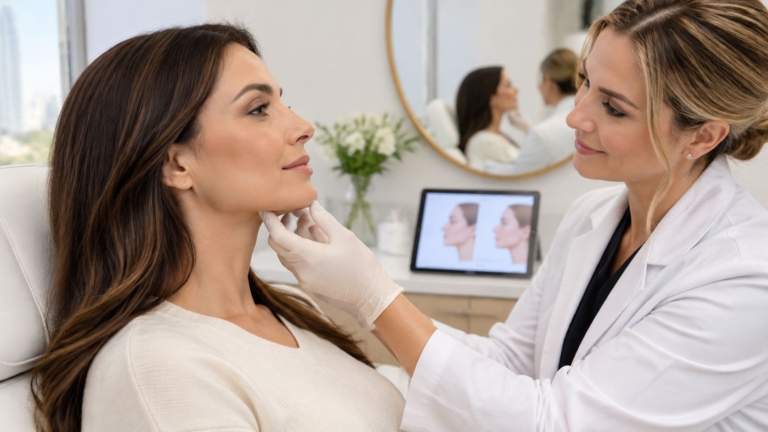
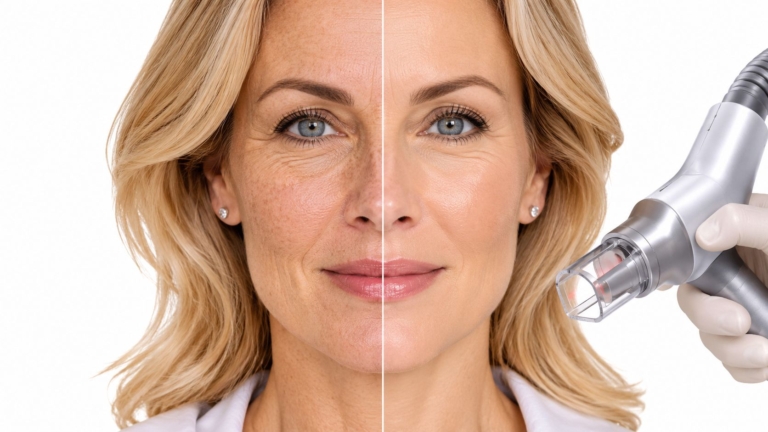
A medical-grade facial is not defined by a stronger peel or a clinical-looking room. It is a skin treatment selected after assessment, using techniques, devices, or active ingredients chosen for a particular concern, such as pigmentation, acne, photoaging, or impaired hydration.
Skin does not respond uniformly. A clinical report on skin barrier function and hydration describes differences in these measures among patients, underscoring why the same protocol may not suit everyone.
The phrase “medical-grade” can sound like a promise of stronger products, minimal downtime, or reliable results. It is none of those by itself. The term is not a regulated strength grade, and the name alone does not tell you who assesses the skin or supervises the treatment.
A friend's facial may leave their cheeks looking brighter, but copying the same menu item may not suit your skin. Active acne, a weakened barrier, or a tendency to develop pigmentation after irritation can change which treatment is appropriate. The useful questions are who assesses you, what product or device is used, what it is intended to do, and whether it fits your concern.
Table of Contents
- What a Medical Grade Facial Actually Means
- How a Medical Grade Facial Works From Start to Finish
- Treatments Inside a Medical Grade Facial and Their Downtime
- Realistic Results and How Many Sessions You Need
- Who Medical Grade Facials Suit and When to Wait
- Confirm the Facial Is Medical Before You Book
What a Medical Grade Facial Actually Means
A medical-grade facial goes past basic cleansing and moisturizing. A trained provider uses clinically selected techniques, devices, or active ingredients for a defined concern such as photoaging, uneven texture, acne, pigmentation, or impaired hydration. A clinical report on barrier function and hydration makes the case for tailoring: skin response changes with barrier condition and hydration, so an identical protocol is a poor default.
Medical here means the assessment, the treatment choice, contraindication screening, and clinical oversight. It does not live in the word facial. There is no single standardized procedure. Common pieces include professionally supervised chemical exfoliation, microdermabrasion, energy-based treatments, microneedling, and evidence-based topical regimens. A visit may still include cleansing, extraction, and hydration. The foundation is an individualized decision, not a fixed spa sequence.
The label does not certify the treatment
Medical-grade is not a regulated or standardized category. It does not guarantee stronger ingredients, clinical supervision, or better outcomes. The FDA's page on microneedling devices draws a useful line. Authorized devices have evidence supporting a reasonable assurance of safety and effectiveness only for specified uses, such as improving facial acne scars and wrinkles in adults aged 22 or older. A medical setting does not make every add-on proven for every concern, and it does not make the visit risk-free or prescription-strength. If you only want cleansing, hydration, and an hour of quiet, a well-designed spa facial can be the better choice. Our HydraFacial versus a regular facial comparison is a practical place to see that split in plain terms.
| Factor | Medical-Grade Facial | Spa Facial |
|---|---|---|
| Who performs it | Licensed medical professional, or an esthetician working under medical supervision | Licensed esthetician |
| Starting point | Clinical skin assessment and contraindication screening | Consultation focused on skin feel and relaxation |
| Goal | Treat a defined concern such as pigmentation, acne, or photoaging | Cleanse, hydrate, and relax |
| Tools and actives | Chemical peels, microdermabrasion, microneedling, energy devices, clinically tested topicals | Cleansing, steam, extraction, masks, and everyday-strength products |
| Typical downtime | A day of redness after light exfoliation, or up to about two weeks after a deeper peel | Usually none |
| How results are judged | Measurable endpoints tracked across a series of sessions | Temporary radiance and softness |
If the provider can't name the concern being treated and explain why this treatment fits it, the appointment is closer to a routine spa facial.
Before you book anything that includes microneedling, radiofrequency, lasers, or acids, verify five things: who is in the room, which device or product is used, whether that device is authorized for your indication, what screening happens first, and what the written plan is if your skin reacts.
How a Medical Grade Facial Works From Start to Finish
The sequence is what separates a clinical facial from a relaxation appointment. Think of it as a clinician-supervised resurfacing protocol, not one recipe. It may combine a chemical peel or microdermabrasion with cleansing, extraction, hydration, and photoprotection afterward. At ProMD Health, specialists start by assessing your skin, listening to your concerns, and recommending personalized treatments and skincare.
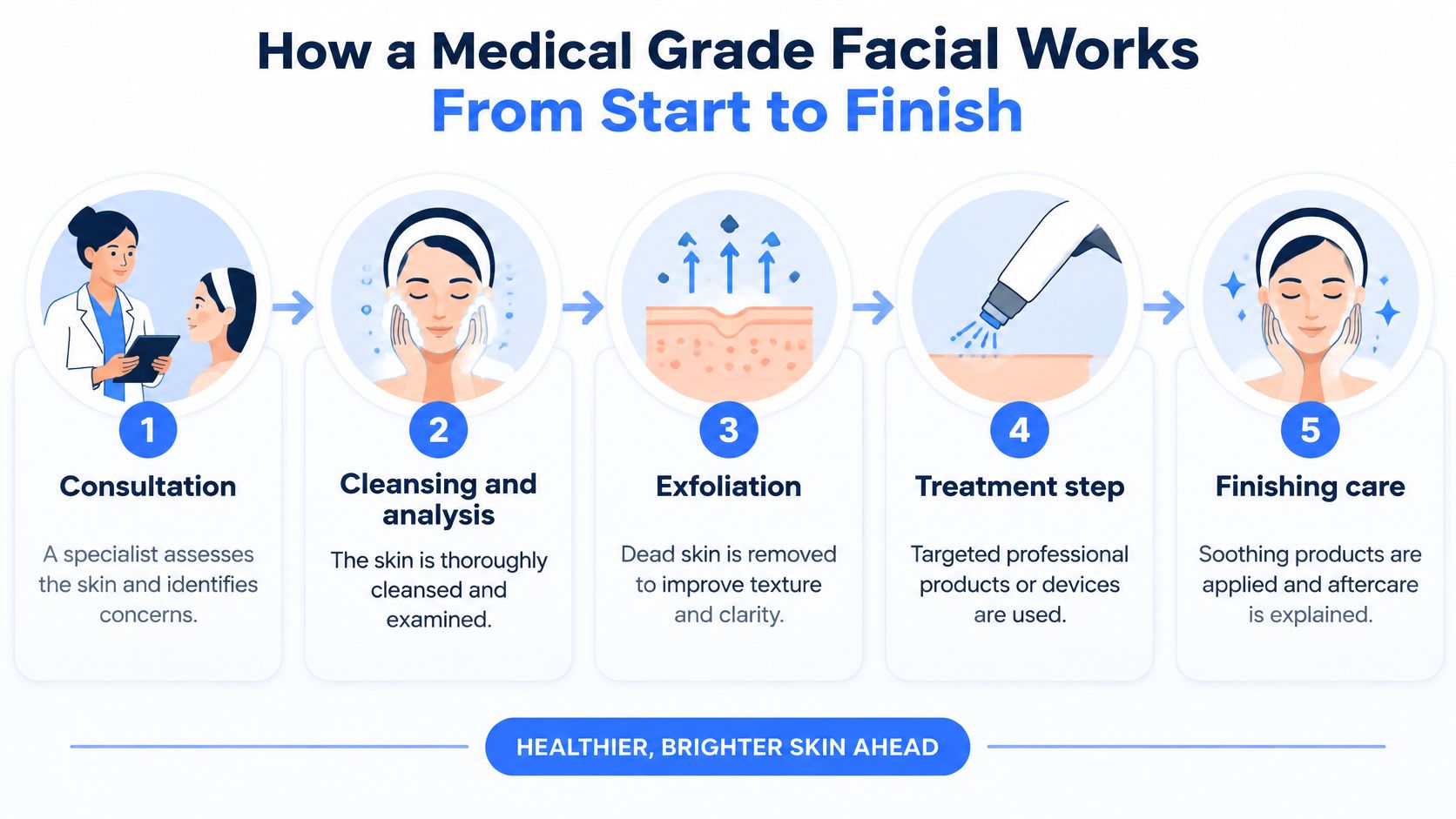
- Consultation. A specialist looks at your skin, hears what bothers you, and sketches a plan aimed at that concern. This step exists so the visit isn't chosen from a menu photo.
- Screening. Medications, pregnancy status, active infection, acne activity, pigment history, recent isotretinoin use, and photosensitizing drugs get reviewed before anything touches your face. A missed item here is how a routine exfoliation turns into weeks of dark marks.
- Treatment selection. Modality and depth follow acid choice, concentration, contact time, and skin phototype, along with dermatitis, infection, and pigment risk. The American Academy of Dermatology's chemical peel overview states that peels should be done under a licensed, trained provider because unsupervised products have caused serious injuries.
- Treatment. Cleansing comes first, then exfoliation or a device pass, extraction where pores need it, then hydration and targeted products. Intensity is not the goal. Fit is.
- Aftercare. You leave with a written plan for sunscreen, expected redness, and when to call the clinic. Healing is part of the treatment, not an afterthought.
A chemical peel works by a controlled injury. It removes or alters part of the epidermis and, depending on depth, can reach the papillary or reticular dermis. The wound-healing response is what can improve uneven color, photoaging, acne, and superficial texture. Outcomes depend more on matching the person and the peel than on pushing strength. Prolonged redness, darker or lighter patches, sensitivity, and rarely scarring are real adverse effects.
Home gadgets make this easy to underestimate. Reading personal microderm device reviews from Finding Favourites shows how consumers judge pressure, grit, and irritation on their own faces, which is exactly the judgment a clinic should make with calibrated settings and a stop rule. Prep matters too. Our guide on how to prepare for a facial covers what to pause beforehand so the visit starts on calm skin.
No two visits should look identical. Depth, acid, and device settings change with the person in the chair.
Treatments Inside a Medical Grade Facial and Their Downtime
A facial's name cannot tell you how thoroughly it treats the skin. Ask what the treatment targets, which product or device is used, and what recovery it may involve. Superficial peels stay within the epidermis and are generally used for dullness and mild texture. Medium-depth peels reach the papillary dermis, while deep peels reach the mid-reticular dermis and are more intensive procedures than typical facial add-ons. A review of chemical peel depth explains how depth affects treatment intensity and recovery.
| Treatment | What It Targets | Depth and Downtime | Typical Series |
|---|---|---|---|
| Superficial chemical peel | Dullness, mild texture, uneven tone | Epidermis only; little to no downtime | Single or repeated sessions |
| Medium chemical peel | Deeper pigmentation, photoaging, acne marks | Into the papillary dermis; about 7 to 14 days to heal | Usually one session with a healing period |
| Microdermabrasion | Superficial roughness, dullness, uneven tone | Removes surface layers mechanically; low downtime | Series of sessions |
| Microneedling | Fine lines, texture, acne scars, laxity | Controlled micro-injury to the dermis; a few days of redness | A planned series of sessions |
| Energy-based device | Wrinkles, tightening, texture | Often a day or two of redness; change builds over months | Series, with results building over months |
| Medically guided topical regimen | Hydration, barrier support, maintenance | None | Ongoing use between treatments |
Microdermabrasion mechanically removes some of the outermost skin cells. It differs from dermabrasion and laser resurfacing, and has limited capacity to improve scars located deep in the dermis, according to a comparative review of microdermabrasion. A split-face comparison found no significant overall improvement by physician assessment with either 20% glycolic acid peeling or microdermabrasion; patients preferred glycolic acid and found microdermabrasion more comfortable. These treatments are better suited to superficial roughness, dullness, or uneven tone than deep acne scars or marked laxity.
The FDA warning on unsupervised chemical peels describes risks from high-concentration peels containing trichloroacetic, glycolic, salicylic, or lactic acid, including burns, infection, pigment changes, and scarring. The acid, concentration, number of passes, and contact time all affect the treatment. At ProMD Health, chemical peels are customized to the customer's skin concerns. A SkinMedica peel is one option to discuss after an assessment.
For example, someone concerned about sun spots and fine lines may be considered for a superficial peel if it suits their skin and they can follow sun-protection guidance. Deep rolling scars call for a different assessment and treatment approach. Light-based devices are another category, with uses that depend on the device and the concern; the NYC Laser Hair Removal laser treatment overview describes laser treatment for skin smoothing. Ask which device is being considered, what it is intended to treat, and what downtime to expect.
Realistic Results and How Many Sessions You Need
A single visit shows an early reading, not final results. A systematic review of microneedling for facial rejuvenation identified 346 studies and included 21 studies involving 723 patients. According to the microneedling rejuvenation review, 72% of participants were women, and their average age was 48 years. The review found that studies most often assessed wrinkles, followed by skin texture, photoaging, and skin laxity.
The number of sessions matters. Multiple sessions were used in 90% of the studies in the review. The pooled patient-satisfaction rate was 83% (95% confidence interval 76% to 88%), and adverse-event rates were described as low. These figures summarize selected study protocols. They do not predict what one person will experience after a single appointment.
What one facial can and can't carry
A medical-grade facial may improve hydration and superficial texture, or give skin a short-lived radiance. Some surface pigment may lighten gradually when the treatment series and home care suit the concern.
Results depend on the treatment chosen and the concern being addressed. Deep wrinkles, dermal scars, substantial laxity, and pigment disorders require a diagnosis and a treatment approach suited to it. The label “medical-grade” alone does not establish what a treatment can achieve. A 2025 survey by the American Society for Dermatologic Surgery found that 70% of more than 3,500 surveyed U.S. consumers were considering a cosmetic procedure.
Use consistent photos to track changes over time:
- Baseline photos: Take them before the first session in the same light and from the same angles, without a filter.
- Session review: Compare those angles after each visit. Record redness, flaking, and any dark marks.
- Three-month reassessment: Review changes in texture and tone after a series has had time to show a pattern.
A series is common in the microneedling studies reviewed, but the right schedule depends on the treatment and the individual. Track progress against the original concern, rather than judging the result by a mirror check the next day.
Who Medical Grade Facials Suit and When to Wait
Good candidates are adults with photoaging, uneven tone, acne that is under control, texture irregularity, or dehydrated skin who want a plan built from a clinical look at the skin, not a relaxation hour.
Skin type changes the risk math. A review of facial-laser complications identified post-inflammatory hyperpigmentation as the most frequent complication, particularly in Fitzpatrick skin types IV–VI, and higher risks of scarring and infection with ablative lasers. If you have a darker skin tone or a history of dark marks after acne, bug bites, or peels, pigment counseling comes before any device or acid. People who form keloids need extra caution with needling, energy devices, and deeper peels.
When waiting is the safer plan
Postpone, or pick a different option, if any of these are true:
- Active infection: Cold sores, impetigo, or a fresh skin infection can spread with exfoliation or needling.
- Uncontrolled inflammatory acne: Peels and devices on angry cysts often worsen pigment and swelling.
- Recent isotretinoin use: Wound healing can be altered, so timing is a medical decision.
- Impaired wound healing: Diabetes that is poorly controlled, or a history of poor healing, raises scar risk.
- Photosensitizing medication: Certain antibiotics and other drugs make light-based treatments riskier.
- Pregnancy-related restrictions: Many acids, devices, and topicals are deferred until after pregnancy and nursing plans are clear.
A dermatologist visit is the right detour when you don't yet have a diagnosis. A gentler hydrating facial is the right detour when you want comfort while a medication course finishes. The same peel can be appropriate for one client and a poor idea for the next. Screening is the service.
Confirm the Facial Is Medical Before You Book
The phrase “medical grade” is not a regulated standard, so the label alone cannot tell you who will perform your treatment or what it involves. Ask specific questions before booking.
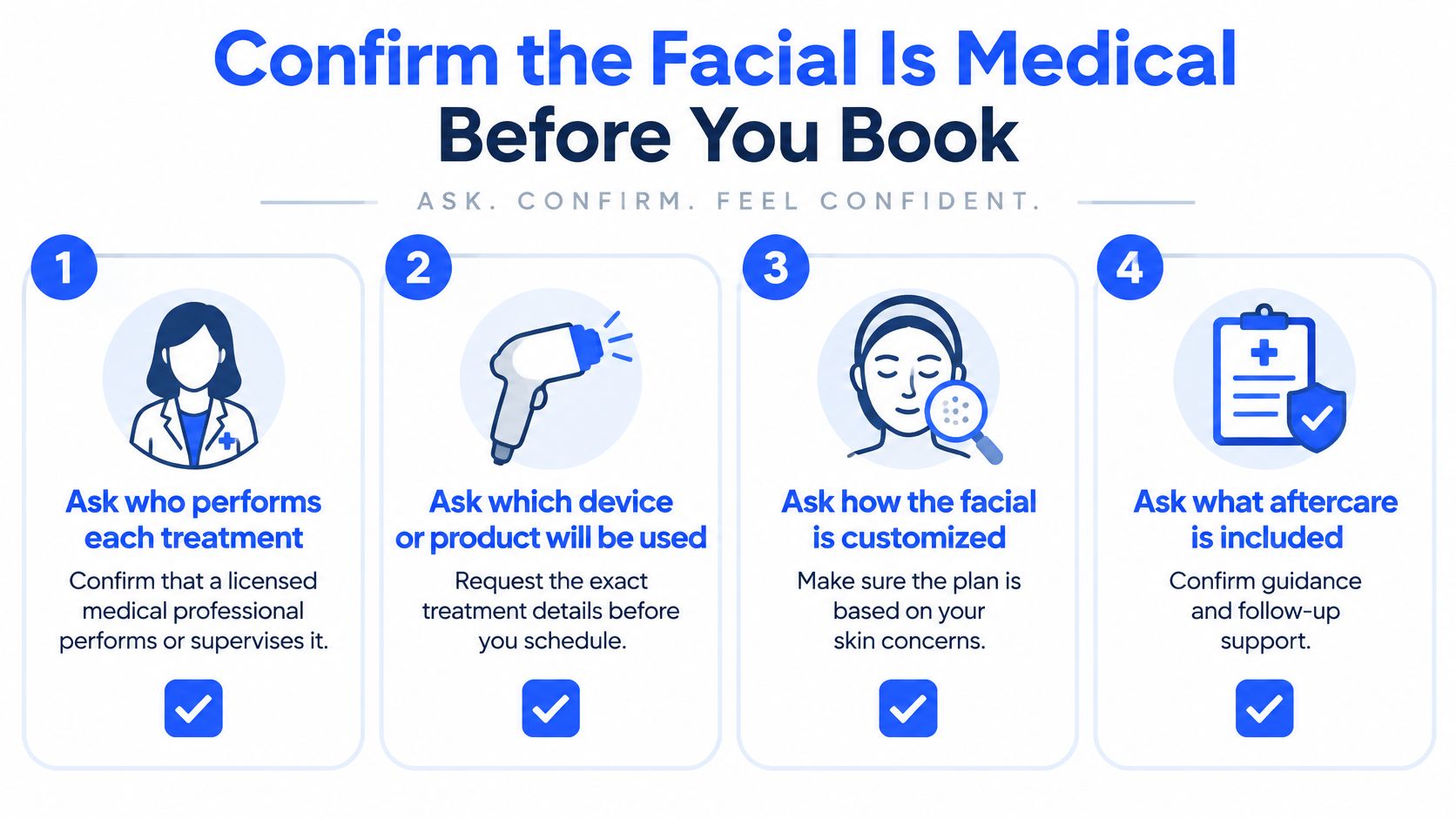
- Ask who performs each treatment. Confirm whether a licensed medical professional performs it or supervises it. At ProMD Health, all treatments are performed by or under the supervision of licensed medical professionals.
- Ask which device or product the treatment uses and what it is authorized to do. Request the specific device or product name and a clear explanation of its intended use.
- Ask how the proposed treatment addresses your concern. Have the provider explain why the treatment is appropriate for the issue you want to address, such as acne scars, uneven tone, or enlarged pores.
- Ask how your skin will be assessed before treatment. Find out what information the provider will consider before recommending an acid or device treatment.
- For a peel, ask about its depth, concentration, and contact time. These details help explain how the peel is applied and what level of treatment to expect.
- Ask about sanitation, aftercare, sun protection, and the plan for a reaction. Know whom to contact if you have a concern after the appointment.
- Ask how many sessions are recommended and what follow-up is included. Clarify the proposed course of treatment before agreeing to a series.
Booking rule: Confirm that the specific treatment is offered at your chosen office before committing to a series. Availability can differ by location.
ProMD Health offers a complimentary aesthetic consultation. Ask the office about pricing, payment options, and package terms before booking. For facials, chemical peels, microdermabrasion, or HydraFacial treatments, a consultation can help match the option to your skin concerns. Book a consultation with ProMD Health.