CO2 laser results come from remodeling the outer layers of the skin. Over time, this softens fine lines, evens out uneven tone, smooths rough texture, and improves certain scars. Most people notice change building across a series of sessions rather than after a single visit. Where you end up depends on your starting skin, the settings your provider uses, and how well you look after your skin afterward.
Table of Contents
- What CO2 Laser Results Actually Look Like
- The Concerns It Addresses
- Why Outcomes Vary From Person to Person
- Setting Realistic Expectations
- Where Improvement Tends to Show Most
- Why Tone Evens Out Gradually
- How to Read Results Realistically
- Keeping Expectations Grounded
- How Many Sessions You May Need
- When Results Become Visible
- Understanding the Cost and Payment Structure
- Keeping Results Protected as a Habit
- Your Verification Checklist
- Following the Healing Sequence
- Why Pigment Changes Deserve Attention
- Protecting Your Skin During Healing
- When to Contact Your Provider
- What Shapes Candidacy
- Why Pigment Risk Matters for Everyone
- Matching the Approach to Your Skin
- Questions to Bring to Your Consultation
- How Long Do the Results Last?
- Is Laser Resurfacing Painful?
- Will I See Results Right Away?
- How Do I Choose Between Fractional and Non-Ablative Options?
- What Does a Realistic Outcome Look Like?
What CO2 Laser Results Actually Look Like
Picture a sculptor working on a block of marble. They don't carve the final shape with one dramatic strike. Instead, they remove thin layers, step back, and check the shape before going further.
Your skin responds in a similar way. Each treatment triggers collagen remodeling, and that process keeps going for months after the session ends. That's why results tend to feel gradual rather than instant, and why two people with the same concern can end up looking quite different.
The realistic goal of laser resurfacing is gradual, measurable change, not overnight perfection.
The Concerns It Addresses
Laser resurfacing is often described as a multi-concern treatment because it can work on several issues at once. The table below gives a quick overview of what usually improves and what influences each result.
Common Concerns and What Shapes Laser Resurfacing Results
| Common Concern | Typical Direction of Improvement | Factors That Shape the Outcome |
|---|---|---|
| Fine lines and wrinkles | Softening and smoothing | Energy settings, treatment depth |
| Uneven pigmentation | More uniform tone | Skin type, sun exposure history |
| Rough texture and large pores | Smoother, more refined surface | Number of sessions, aftercare |
| Acne and surgical scars | Reduced visibility | Scar severity, healing response |
| Overall dullness | Brighter, fresher appearance | Skincare routine, maintenance |
Think of this table as a map rather than a promise. It shows the general direction of change, and your own path will depend on the details below.
Why Outcomes Vary From Person to Person
The table shows direction, not guarantees. Your results depend on the laser settings your provider chooses, your skin type, how much sun exposure your skin has absorbed over the years, and how closely you follow aftercare instructions.
Consider two people. Someone with mild sun damage and lighter skin may see faster, more visible change than someone treating deep acne scars on a more melanin-rich complexion. Neither outcome is a failure. They simply start from different places.
Setting Realistic Expectations
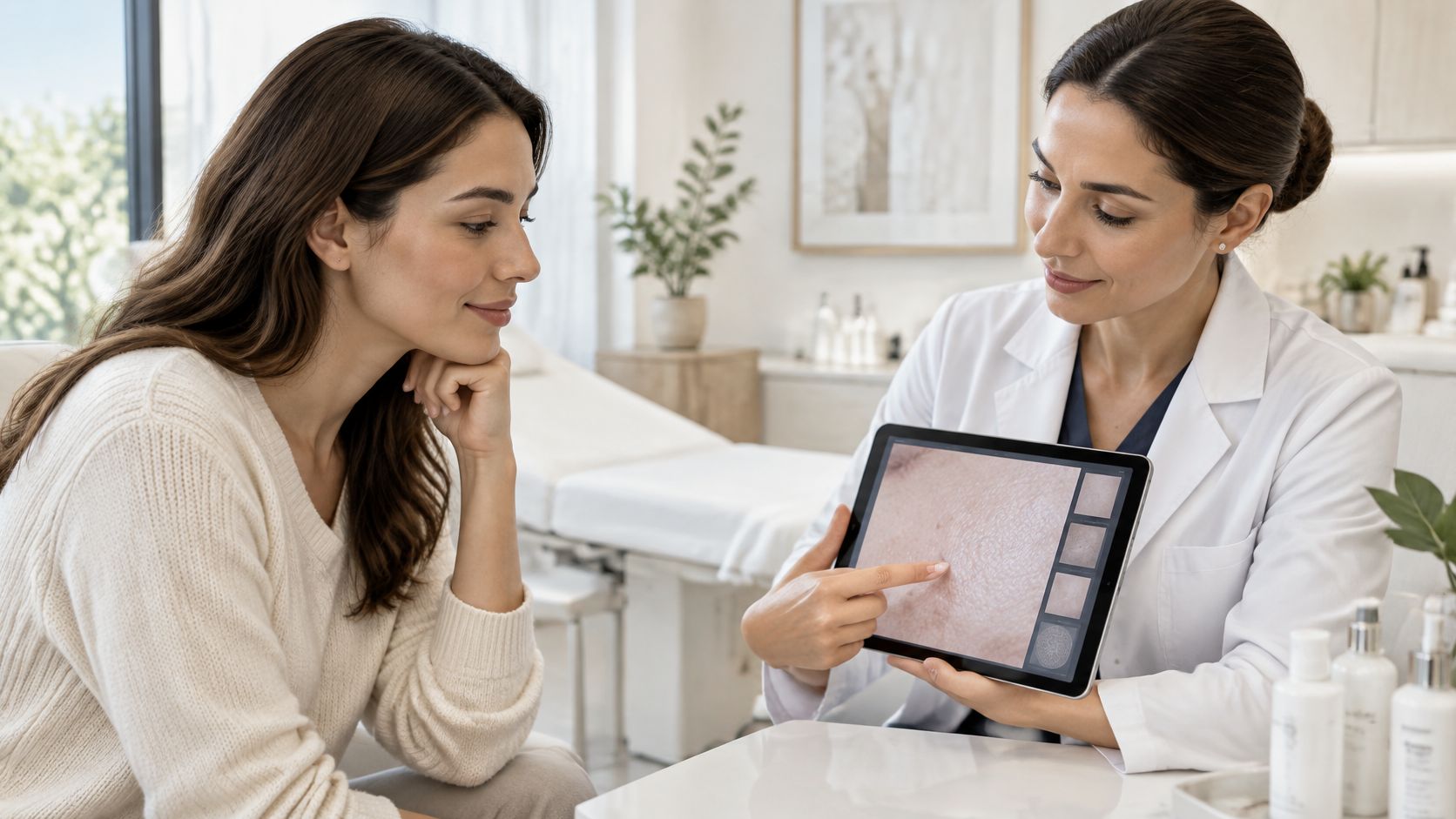
The most satisfied patients usually decide on their goals before treatment begins. A medically supervised consultation is the best place to do this. A provider can assess your skin, explain which laser approach fits your goals, and outline a realistic session plan.
It helps to arrive prepared. A few useful steps include:
- Writing down the concerns that bother you most
- Asking how many sessions are typically needed for your goals
- Confirming the aftercare steps before you leave the office
One practical note: laser and treatment availability may vary by office, so confirm which resurfacing treatments your chosen ProMD Health location offers before planning your visit. ProMD Health's confirmed resurfacing options include Halo hybrid fractional laser, BBL, Moxi, and Laser Genesis. Halo uses hybrid fractional technology, which is different from traditional CO2 resurfacing.
Readers who want to explore the clinic's current options can start with ProMD's laser skin resurfacing overview.

Think of an old photograph being carefully restored. Nothing is painted over. The haze lifts a little at a time, and color and contrast slowly come back into balance. That is often how laser resurfacing results unfold as collagen rebuilds underneath.
Which is why many clinicians call it a multi-concern treatment. One thoughtful plan can soften fine lines, smooth rough texture, tighten the look of enlarged pores, and even out pigmentation together.
Where Improvement Tends to Show Most
Wrinkle reduction is one of the best-documented effects. In a well-known prospective study, researchers actually measured wrinkle width and depth instead of relying on patient opinions alone.
That kind of objective tracking matters. How you feel about your skin counts, but numbers show what really shifted.
The pattern was pretty clear:
- The cheeks showed the strongest improvement
- The eye area improved too, just not quite as dramatically
Evaluators also rated the improvement in mottled pigmentation as significant. That is encouraging if your main frustration is a blotchy, uneven tone.
Why Tone Evens Out Gradually
Pigment fades on a different timeline than wrinkles. As fresh skin forms and the surface turns over, dark patches blend into the surrounding tone rather than vanishing overnight.
Each session layers on the last. Most change builds over weeks and months, which is why it is better to judge the full course than a single visit.
The realistic goal is measurable improvement, not perfect correction.
How to Read Results Realistically
Think of study findings as a compass, not a promise. They reflect controlled settings, so your outcome could be a little less, a little more, or just different.
Before you start, ask how progress will be tracked. A few helpful questions:
- Will before and after photos be taken in the same lighting?
- Which concerns — wrinkles, texture, pigment — will you follow?
- When will you sit down together to review them?
If pigment is your top concern, ProMD's pigmentation laser treatment page outlines the options. Availability varies by office, so check before you plan.
Keeping Expectations Grounded
It helps to frame CO2 laser results as visible, trackable progress. Not erasing every line or spot.
You will compare photos, talk through what is changing, and fine-tune as you go.
Ask for a written plan that lists the concerns you are watching. When goals are clear, real change is much easier to spot — and trust — over time.
Good planning starts before the first session. Knowing how many visits to expect helps you set realistic timing and budget.
How Many Sessions You May Need
Most resurfacing plans involve a series of treatments spaced several weeks apart. A gardener makes a useful comparison here. They return every few weeks to prune and feed a plant, and each visit builds on the growth from the last one.
The number of sessions depends on three factors:
- Your goal: Softening fine lines usually follows a different plan than treating deep scars.
- Depth of the concern: Deeper lines and scars often need more passes or extra visits.
- Your skin's response: How well your skin heals between visits helps your provider decide what comes next.
Consider two people. Someone refreshing overall texture may need fewer visits than someone working on deep acne scars. Neither path is a setback. They're simply different routes toward different goals.
Your provider may adjust the plan between visits based on how your skin looks.
When Results Become Visible
Early on, the changes may look less impressive than you'd hope. Redness and swelling are normal, and they usually fade over the first few weeks. The real improvement tends to arrive later, because collagen keeps remodeling for months. That means some changes show up gradually rather than all at once.
Patience is part of the plan. Compare photos taken in the same lighting every few weeks instead of day to day, since small daily changes are hard to judge.
Understanding the Cost and Payment Structure
ProMD Health operates on a cash-pay model, and services are not covered by insurance. Review the total cost and session structure before you commit.
Ask about these in writing:
- The price per session and the estimated total for the full plan
- Any follow-up visits or products included in the quote
- How far apart sessions are spaced and how that fits your schedule
Clear numbers make it easier to compare plans and avoid surprises halfway through.
Keeping Results Protected as a Habit
Maintenance is a lot like caring for a well-kept car. It keeps running smoothly because of regular checkups, not because of one good service years ago. Your skin responds the same way to ongoing care.
Three habits make the biggest difference:
- Daily sun protection: Wear a broad-spectrum sunscreen every day, even indoors, since UVA rays pass through windows.
- A gentle skincare routine: Choose soothing, fragrance-light products that support your skin barrier.
- Follow-up visits: Keep the appointments your provider recommends so progress can be checked.
Keep a simple log of your routine, your sunscreen use, and any changes you notice. It makes follow-up visits more productive and helps you spot patterns early.
Sun protection is the habit that protects your results most.
Your Verification Checklist
Before booking, work through this list:
- Confirm the treatment is offered at your chosen location, since availability varies by office
- Ask which laser approach is recommended and why
- Request a written session plan
- Ask how progress will be assessed
Going through this list before your first visit sets clear expectations. It also gives you a plan you can trust.
Bring these notes to your next consultation so nothing important slips through the cracks. Revisit the plan if your goals change.

Recovery is easier to understand as a sequence than as a single event. Each stage shapes how your resurfacing results eventually look. Knowing what usually comes next takes some of the surprise out of the process.
Most people notice redness and swelling first. Once those start to settle, the skin begins to peel and feels surprisingly fragile. Only later does it calm down as the new skin matures.
Following the Healing Sequence
Redness, peeling, and sensitivity can hang around for several weeks. For some people, they linger for up to three months. Planning your downtime matters just as much as choosing the treatment itself.
Here is a rough picture of how the days and weeks usually unfold for ablative resurfacing, along with the care priorities that help.
General Laser Resurfacing Recovery Timeline
| Recovery Stage | What Typically Happens | Care Focus |
|---|---|---|
| Days 1 to 3 | Redness and swelling appear | Cool compresses, gentle cleansing |
| Days 3 to 7 | Peeling begins and skin feels tight | Thick, fragrance-free moisturizer |
| Weeks 2 to 4 | Skin is fragile and sensitive | Strict sun protection, no picking |
| Weeks 4 to 12 | Pinkness fades as new skin forms | Continued sunscreen, gentle routine |
| Months 3 and Beyond | Skin settles and matures | Follow-up visits, daily maintenance |
Individual timelines vary, so think of these stages as a loose guide rather than a strict schedule. Hybrid fractional options like Halo typically involve less downtime than fully ablative CO2 treatment.
Why Pigment Changes Deserve Attention
Pigment changes are the risk worth understanding most. Darker spots, known as post-inflammatory hyperpigmentation, often appear soon after treatment.
Earlier studies found that this discoloration was common right after treatment but faded considerably over time. For some people, though, it did not clear up right away.
Certain skin types are more prone to these changes. The same settings simply do not suit every complexion, which is why a provider adjusts the plan to your skin.
Sun protection is the single most important part of recovery.
Protecting Your Skin During Healing
New skin is thin and reactive, so even brief sun exposure can set off pigment changes. Wear a broad-spectrum sunscreen every day, and stay out of direct sun whenever you can.
Gentle care matters just as much. Skip harsh scrubs and strong actives, and resist picking at flaking skin, since irritation can slow healing. Small deviations from your aftercare instructions can change how your skin responds, so follow them closely.
A few habits make the biggest difference:
- Strict sun protection: Shield healing skin from UV rays.
- Gentle skincare: Use soothing, fragrance-light products.
- Careful aftercare: Follow every instruction your provider gives.
When to Contact Your Provider
Some swelling and redness are normal. Severe pain, blistering, or signs of infection, however, deserve a prompt call. Reporting concerns early lets the team adjust your care before small issues grow.
Think of recovery as a bridge rather than a finish line. Each stage supports the next, and patience is what gets you across.
A simple photo log taken in the same lighting can also reveal gradual progress that daily mirror checks might miss. Bring your questions to every follow-up visit so your plan stays on track.
Age is the first thing most people think about when they consider laser treatment, but it is rarely the deciding factor. Candidacy depends on several details that work together.
Think of a tailor fitting a garment. The same measurements don't work for every body, and the same laser settings don't suit every complexion.
What Shapes Candidacy
Your provider will look at several areas before recommending a plan:
- Skin type: How your skin reacts to heat and light
- Pigment history: Any past darkening, dark spots, or patches
- Acne activity: Whether breakouts are active or were recently treated
- Sun exposure: How much UV damage has built up over the years
- Medications: Certain prescriptions can affect healing
- Realistic expectations: What you hope to change and how soon
Why Pigment Risk Matters for Everyone
Pigment changes come up more often in patients with deeper skin tones. That's why a thorough medical assessment matters for everyone, not just for that group.
A careful evaluation looks past the surface. It considers how your skin has responded to heat, light, or injury in the past, because that history often predicts how it will respond next time.
The safest plan starts with an honest look at your skin, not a one-size-fits-all protocol.
Matching the Approach to Your Skin
Some people do better with gentler, non-ablative treatments. These work below the surface layer of skin and produce a subtle refresh with little downtime. They often suit younger patients or anyone whose goal is a light improvement rather than a dramatic change.
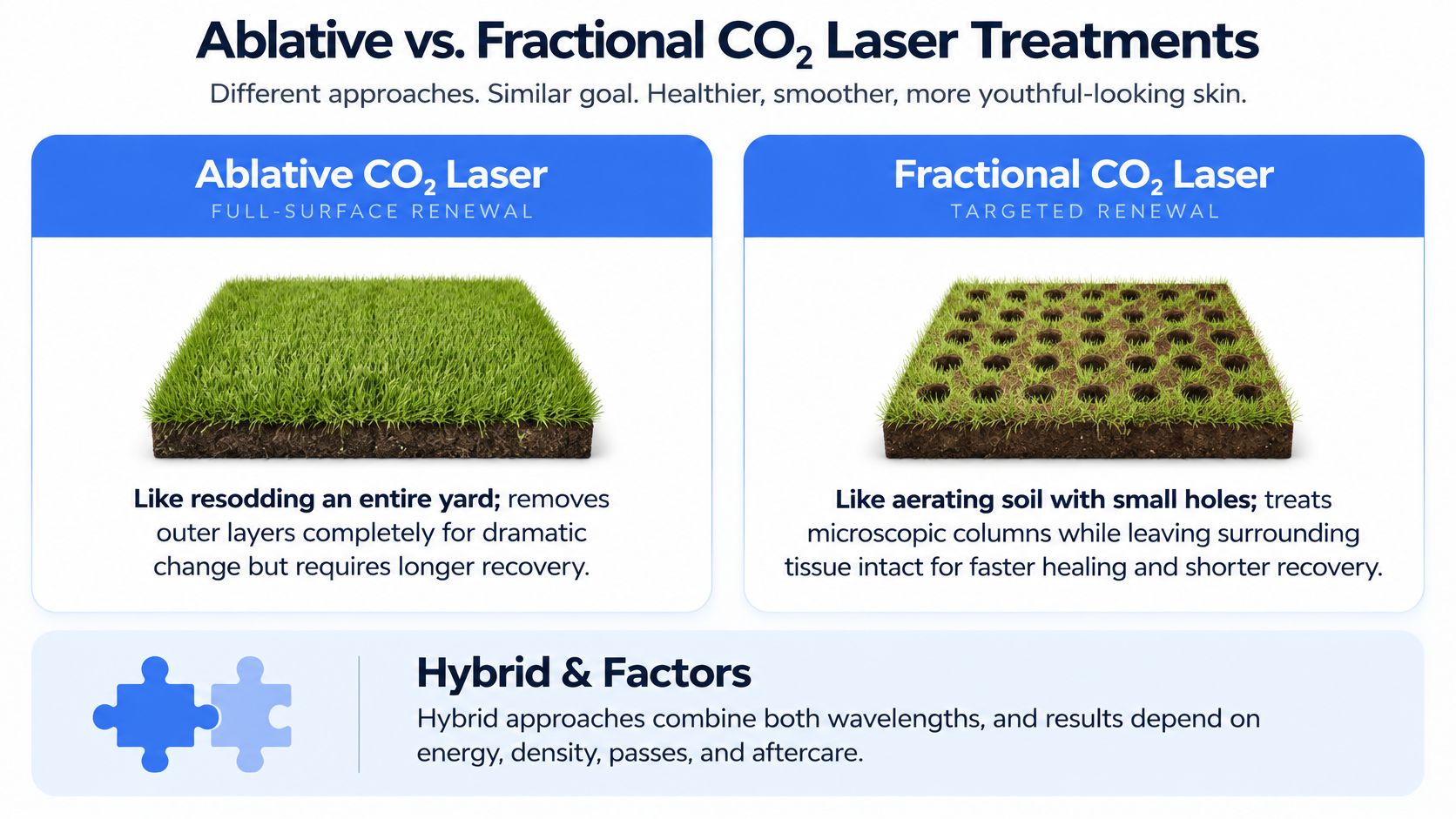
Others may benefit from a hybrid or fractional approach, which combines ablative and non-ablative energy. Think of it as choosing between a light sanding and a more thorough resurfacing. A provider can explain whether that balance fits your goals and how much downtime you can realistically accept. At ProMD Health, Halo hybrid fractional resurfacing is a confirmed option to discuss.
Questions to Bring to Your Consultation
Writing down your questions helps you leave with clear answers. Consider asking:
- Have you treated patients with skin similar to mine?
- What adjustments would you make for sensitivity?
- How would you reduce the risk of pigment changes in my case?
- Which approach would you recommend for my goals, and why?
Your history is the most useful information you can share. Tell your provider about any previous laser treatments, peels, or procedures, even ones that seemed minor at the time.
With that full picture, the team can determine a safe and appropriate plan for your skin. Sharing it early saves time and helps prevent surprises once treatment planning begins. Write it down before you go, so nothing important slips your mind.
How Long Do the Results Last?
It really comes down to aging, sun habits, and upkeep. The new collagen sticks around and keeps skin smoother, but it doesn't freeze time.
Daily sunscreen, a simple routine, and check-ins with your provider make the biggest difference. Someone who wears SPF every morning will hold onto that fresh, even look far longer than someone who skips it. Many people also plan a touch-up every few years to keep things refreshed.
Is Laser Resurfacing Painful?
Most clinics use numbing and cooling to keep you comfortable. How it feels depends on the depth, the area treated, and your own sensitivity.
Some describe light warmth or tingling. Others feel more sting around thinner spots like the upper lip or under-eyes. Mention any past issues with pain beforehand so your provider can adjust the plan and walk you through comfort options.
Will I See Results Right Away?
Not really, and that's normal. The first week or two is mostly swelling and redness, which can mask what's happening underneath.
Real change shows up gradually over weeks and months as collagen rebuilds. Try not to judge day to day. Photos in the same lighting every few weeks give you a much truer picture of progress.
How Do I Choose Between Fractional and Non-Ablative Options?
It usually boils down to three factors:
- Your goals: Deeper wrinkles and acne scars often need a more intensive setting.
- Your downtime tolerance: Fractional treatments typically mean more recovery days.
- Your skin type: Pigment risk and how you heal will guide safe settings.
Think of fractional like aerating a lawn. It treats tiny columns and leaves the skin around them intact to speed healing. Your provider can lay the options side by side and match them to your history and what you want to fix.
What Does a Realistic Outcome Look Like?
Expect skin that looks smoother, more even, and refreshed both in person and in photos. It won't erase every single line or spot.
Realistic expectations lead to better satisfaction.
Talk through what success means for your skin before you start. Having that clear benchmark makes it much easier to judge your CO2 laser results fairly once healing is done.
ProMD Health offers medically supervised, non-surgical aesthetic care. Confirm which treatments are available at your chosen location, then schedule a consultation to talk through your goals. Bring every question, and leave with a plan you fully understand. Explore ProMD Health's treatment options.