The FDA defines “permanent hair reduction” as a long-term, stable decrease in regrowing hairs measured at six, nine, and twelve months after a treatment regimen, not guaranteed permanent removal. Facial hair often needs maintenance because hormonal activity can stimulate regrowth.
That distinction matters because laser hair removal on the face is frequently marketed as a one-time solution. Clinically, it's better understood as a process that gradually reduces the number, thickness, and speed of regrowing hairs. Facial follicles also tend to respond less consistently than follicles on many body areas, partly because facial hair follows an approximately six-month growth cycle and partly because hormones can activate follicles that weren't previously visible. Clinical evidence on facial laser hair reduction supports durable improvement, but not guaranteed eradication of every hair.
Table of Contents
- What Facial Laser Hair Removal Actually Does
- How Lasers Target Facial Hair Follicles
- Comparing Alexandrite, Diode, and Nd:YAG Lasers for the Face
- Candidacy by Skin Tone and Hair Type
- Hormones, PCOS, and the Paradoxical Hair Growth Risk
- Preparing For and Recovering From Each Session
- Session Counts, Timeline, and Maintenance
- Common Questions Before Booking
What Facial Laser Hair Removal Actually Does
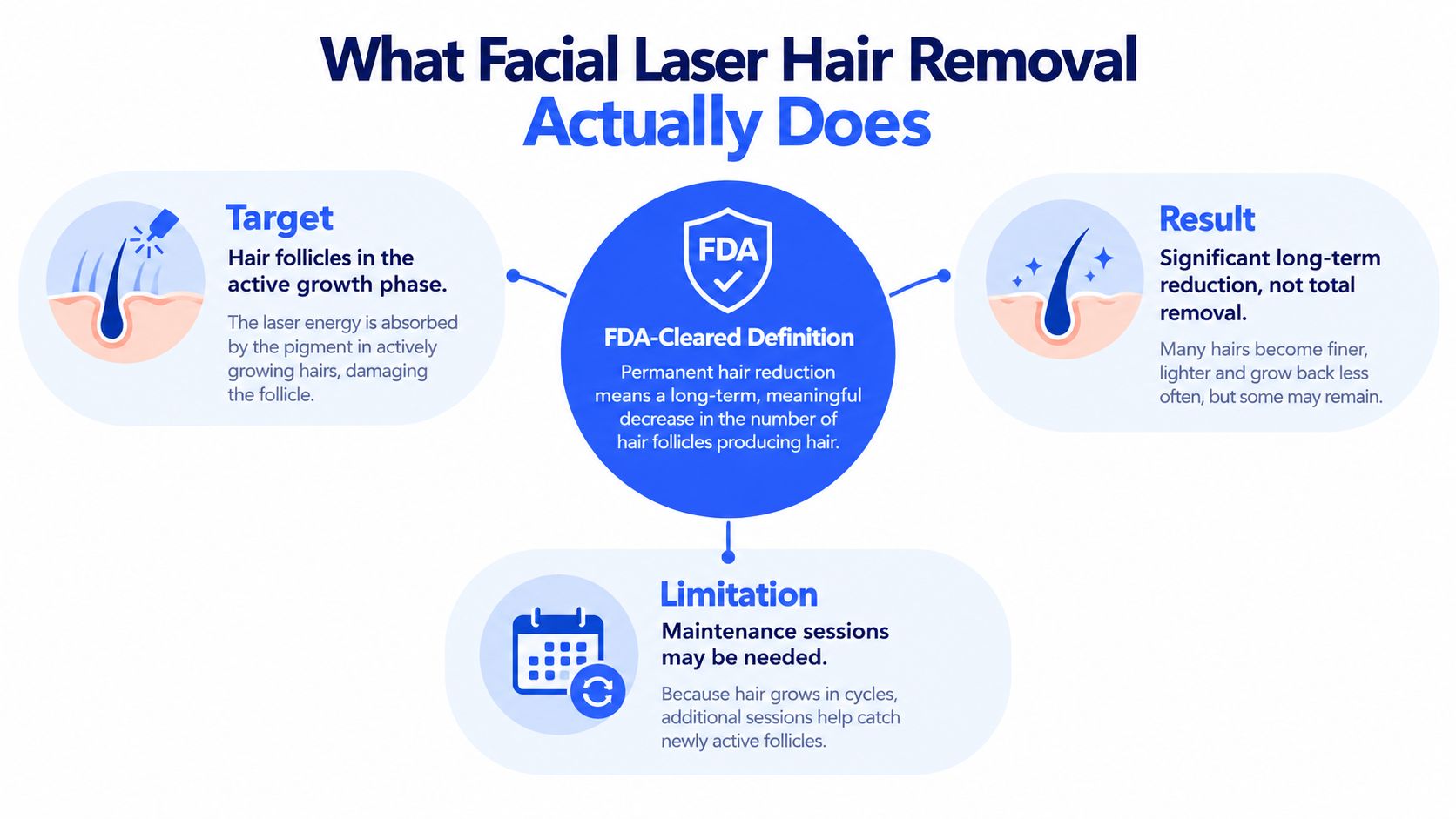
The FDA-cleared definition of permanent hair reduction sets a more realistic target: a long-term, stable decrease in the number of hairs that regrow after a completed treatment regimen, assessed at six, nine, and twelve months. The phrase describes reduced regrowth, not the permanent disappearance of every follicle or protection against new facial hairs. FDA device documentation explains the definition of permanent hair reduction.
Facial laser hair removal is therefore a hair-biology problem as much as a cosmetic treatment. Facial follicles commonly pass through an approximately six-month growth cycle, so one appointment reaches only some follicles at a responsive stage. Hormonal signals may later activate additional follicles, especially around the chin, upper lip, jawline, and sideburns. A successful course can leave the area much less dense while still requiring maintenance.
The result is cumulative
One appointment can affect actively growing follicles, but it cannot treat every follicle in the area equally. Later sessions catch different follicles as they enter an active growth phase, so changes usually appear progressively. Regrowth may become slower, finer, or less dense rather than stopping everywhere at once.
Evidence from repeated alexandrite or diode treatments found partial long-term reduction, without evidence of complete, persistent facial hair removal. The evidence review in the British Journal of Dermatology supports describing the outcome as durable reduction in regrowth, rather than promising 100 percent removal.
Practical rule: Any provider promising that every facial hair will disappear permanently is overpromising. A responsible consultation explains expected reduction, limitations, maintenance, and possible risks before treatment begins.
How Lasers Target Facial Hair Follicles
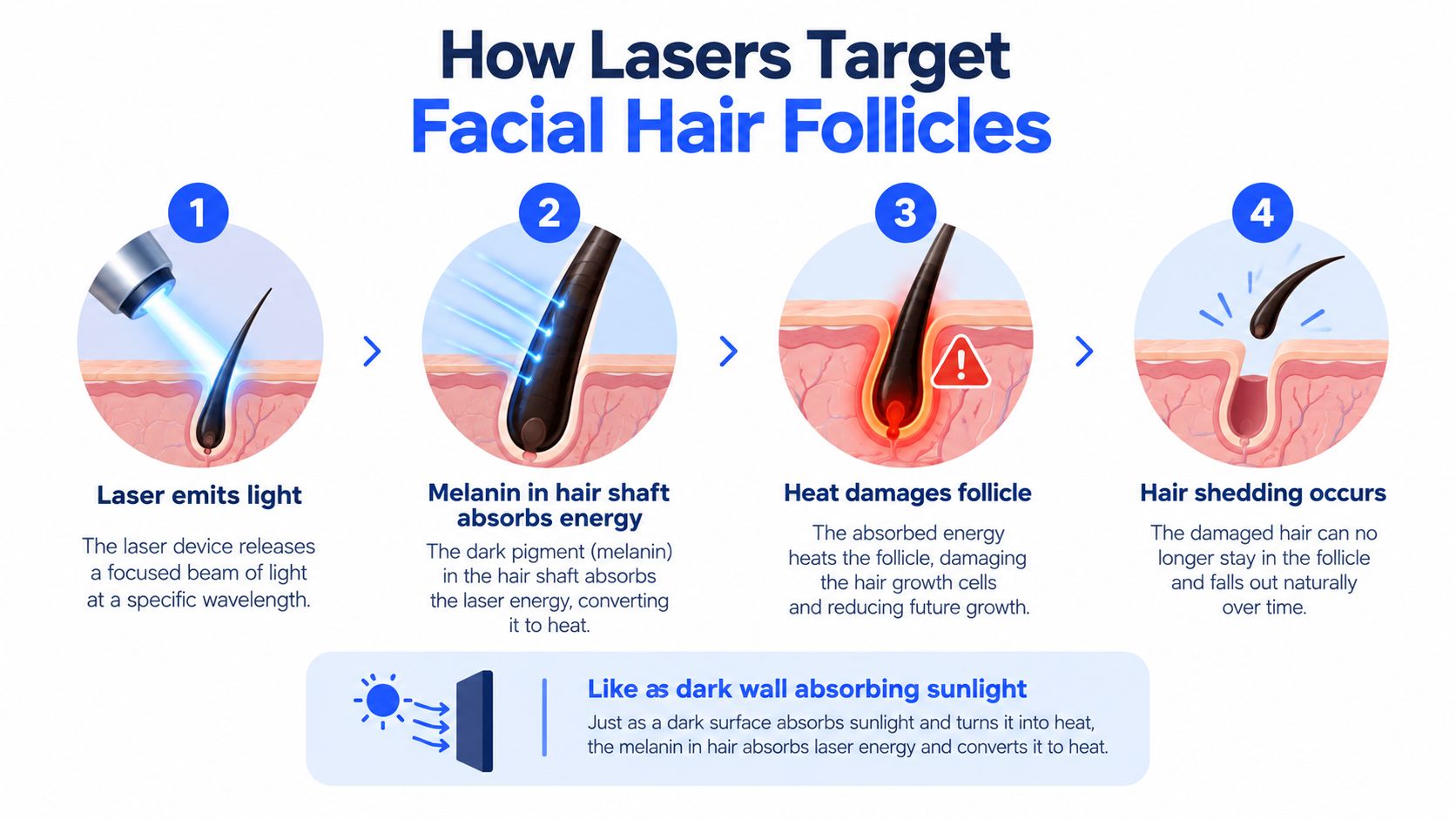
Laser hair removal is based on selective photothermolysis, meaning light is chosen to heat a specific target while limiting exposure to nearby skin. Hair melanin serves as that target. Like dark fabric warming faster than pale fabric in sunlight, pigmented hair absorbs more laser energy than surrounding tissue. The heat travels from the shaft toward follicular structures involved in producing the hair.
The laser does not merely burn the surface. Light enters the skin at a selected wavelength, melanin absorbs it, and the resulting heat disrupts the follicle's ability to generate another hair. Pulse duration matters because the energy must remain concentrated long enough to affect the follicle, without spreading excessive heat into the epidermis. The StatPearls clinical overview explains wavelength selection and selective photothermolysis.
Why contrast affects the result
Light skin and dark terminal hair usually provide the clearest target. The hair absorbs the treatment energy while the epidermis absorbs less of it. Blonde, white, gray, and red hair may contain too little of the relevant pigment for conventional laser systems to treat reliably, as the American Academy of Dermatology's patient guidance explains.
Fine vellus hair presents a separate challenge. It may lack enough pigment or structure to absorb a damaging amount of energy. That makes broad treatment of fine facial hair less predictable than treatment of coarse, dark hairs on areas such as the chin or upper lip.
Why wavelength selection matters
The skin itself contains melanin, so it can compete with the hair for the laser's energy. In darker Fitzpatrick V–VI skin, clinicians generally select longer wavelengths, cautious settings, and effective cooling to reduce the risk of burns or pigment changes. Alexandrite uses 755 nanometers and generally suits lighter skin types I–III. Diode systems and 1064-nanometer Nd:YAG systems are often selected when epidermal melanin is higher.
Ask more than the device's brand name. A sound consultation should explain which wavelength, pulse settings, cooling method, and test-spot approach match your skin and hair. This patient-facing overview of wavelength and cooling for all tones can help you prepare for that discussion.
Comparing Alexandrite, Diode, and Nd:YAG Lasers for the Face
No device type is universally superior. The appropriate choice depends on skin phenotype, hair caliber, pigment, recent tanning, treatment area, hormonal status, and operator judgment. Facial studies are limited and variable, so published ranges describe groups, not a guaranteed result for one person.
| Device | Wavelength | Reported long-term reduction | Best fit | Key caveat |
|---|---|---|---|---|
| Alexandrite | 755 nm | 35% to 84% | Lighter skin types with dark hair | Epidermal melanin competes more strongly as skin becomes darker, so conservative use matters |
| Diode | Varies by system | 32% to 69% | Many skin and hair combinations when settings are individualized | Results change with pulse duration, fluence, spot size, and hair characteristics |
| Nd:YAG | 1064 nm | 30% to 74% | Skin with higher epidermal melanin | Lower ranges in some studies may reflect patient selection and different safety priorities |
A 2021 evidence-based review reported these ranges and cautioned that the underlying studies were small. It did not establish one device as universally better. The review compares long-term facial reduction by laser type.
Diode findings also vary. A separate clinical overview reports approximately 65% to 75% reduction three months after one to two treatments, while one study reported 75% reduction in 91% of participants eight months after three to four treatments at 40 J/cm². These results show why treatment history, settings, and follow-up timing matter. They are not a promise for every face. The clinical reference discusses diode outcomes and treatment variables.
How to interpret the comparison
Alexandrite may suit lighter skin with coarse, dark hair because its wavelength is strongly absorbed by melanin. Diode systems can provide flexibility across different skin tones and hair thicknesses, but the system and settings matter. Nd:YAG penetrates more deeply and is often selected for darker skin because its longer wavelength reduces the proportion of energy absorbed by epidermal melanin.
The safest choice is the device the clinician can configure for your biology, not just the one with the highest published range. Ask how settings will change as hair becomes finer, how the clinic manages pigment risk, and whether it uses a test spot when appropriate. This overview of wavelength and cooling for all tones can help you prepare for that conversation.
Candidacy by Skin Tone and Hair Type
Facial laser hair removal can be considered across skin tones, but the settings cannot be identical. Melanin is present in both the hair and the epidermis, so treatment must heat the follicle while limiting heat absorbed by surrounding skin. Inexperienced treatment can cause burns, blisters, infection, dark spots, and, particularly in darker skin, keloids.
A practical candidacy matrix
| Skin and hair pattern | Likely approach | Why it matters |
|---|---|---|
| Fitzpatrick I–III with coarse dark hair | Alexandrite or diode may be considered | Hair-to-skin contrast is often favorable |
| Fitzpatrick III–IV with dark facial hair | Diode or individualized alexandrite settings may be considered | Increasing epidermal melanin requires greater caution |
| Fitzpatrick V–VI with coarse dark hair | Long-wavelength Nd:YAG or diode with strong cooling | Longer wavelengths and conservative fluence can limit epidermal exposure |
| Any skin tone with fine, diffuse facial hair | Cautious evaluation, and sometimes no laser | Fine vellus hair may absorb too little energy and respond unpredictably |
| Any skin tone with blonde, white, gray, or red hair | Conventional laser may be ineffective | These hairs generally lack enough target pigment |
The matrix is a starting point, not a verdict. Fitzpatrick classification describes how skin tends to respond to ultraviolet exposure, yet recent tanning, self-tanner, a history of pigmentation, and medication use can alter the risk assessment. The consultation should also examine hair thickness, distribution, and whether the pattern may reflect hormonal influence.
What darker skin needs from a consultation
Darker skin is not automatically unsuitable for treatment. It needs a provider who understands Fitzpatrick classification, selects an appropriate wavelength, uses effective cooling, accounts for ultraviolet exposure, and sets fluence conservatively. A test spot can show how the skin reacts before a larger area is treated.
Ask whether the clinic regularly treats your skin tone. Ask how it handles post-treatment darkening, what sun-protection instructions it provides, and whether settings will change as the hair becomes finer. ProMD Health offers further information about laser treatment for darker skin for patients preparing for this discussion.
Coarse terminal hairs on the chin, jawline, or upper lip are generally more suitable targets than soft, diffuse cheek fuzz. A coarse hair has more pigment and a thicker shaft, giving the laser a clearer route to the follicle. Fine hair presents a weaker target.
Hair that is fine or changing rapidly deserves extra caution. Discuss the risk of paradoxical growth and non-laser alternatives before treating an entire area just to smooth its surface.
Hormones, PCOS, and the Paradoxical Hair Growth Risk
Facial hair can reflect changing androgen activity, not only a cosmetic concern. A sudden increase in coarse hair, especially alongside irregular periods, acne, scalp hair thinning, or other hormone-related changes, warrants medical discussion before you increase laser intensity or schedule more sessions.
One risk needs a clear conversation: paradoxical hypertrichosis, or new or increased hair growth after laser or intense pulsed light treatment. A systematic review and meta-analysis of 9,733 patients found this occurred in about 3% overall. It was associated with facial or neck treatment and occurred in only 0.08% of non-face and non-neck cases. The review and meta-analysis describe the distribution of this risk.
Why facial vellus hair can be different
Low or subtherapeutic heating may leave a follicle intact and, in some circumstances, stimulate further growth. Reports have identified greater risk in darker skin and Mediterranean populations. The Endocrine Society recommends discussing this possibility with Mediterranean and Middle Eastern women who have facial hirsutism. The Endocrine Society's hirsutism guideline addresses photoepilation and paradoxical hypertrichosis.
The practical response is not just demanding the highest setting. First, ask whether the area is a suitable target. A test spot, a wavelength matched to the skin and hair, appropriate fluence, effective cooling, and careful sun protection all belong in the plan. Daily sun protection was associated with lower paradoxical-hypertrichosis incidence in a 2024 study, with an odds ratio of 0.41. The same Endocrine Society guideline discusses this protective association and measures that may reduce risk.
Treating coarse chin or upper-lip hair is a different decision from treating a broad area of fine cheek fuzz. Fine vellus hair offers the laser a weaker target, so smoothing it can carry a less favorable trade-off.
When to seek medical evaluation
Hormonal treatment and laser may work together, but laser does not correct the endocrine signal that activates follicles. If PCOS or another cause of androgen excess is possible, medical evaluation can address the underlying driver while laser reduces existing coarse hair. A plain-language resource on what is PCOS treatment can help you prepare questions for a qualified clinician.
Pause before treatment if facial hair has changed suddenly, unexplained symptoms are present, or a proposed plan covers fine fuzz without discussing paradoxical growth. A careful provider should be willing to recommend a smaller treatment zone, medical workup, or a different hair-removal method when those options offer better safety.
Preparing For and Recovering From Each Session
Your preparation affects both comfort and pigment safety. Follow the treating clinic's instructions if they differ, because medication and skin history can change the plan.
Before the appointment
Avoid direct sun exposure and self-tanner for approximately two weeks before treatment. Recent tanning increases the amount of competing melanin in the epidermis, which can raise the risk of burns or unwanted pigment changes. Stop retinoids and exfoliating acids on the treatment area for several days if your clinician advises it, and disclose any new medications, including potentially photosensitizing antibiotics.
Shave rather than wax, thread, or pluck. The laser needs the follicle beneath the skin, while a long hair above the surface can increase discomfort and absorb energy where it isn't wanted. Many clinics ask patients to shave within 24 hours of the visit, but follow the specific timing you receive.
You can use the ProMD Health preparation guidance for laser hair removal as a checklist when discussing your appointment. Tell the provider about a history of cold sores around the mouth, pigment changes after procedures, keloids, recent tanning, and all prescription or over-the-counter products.
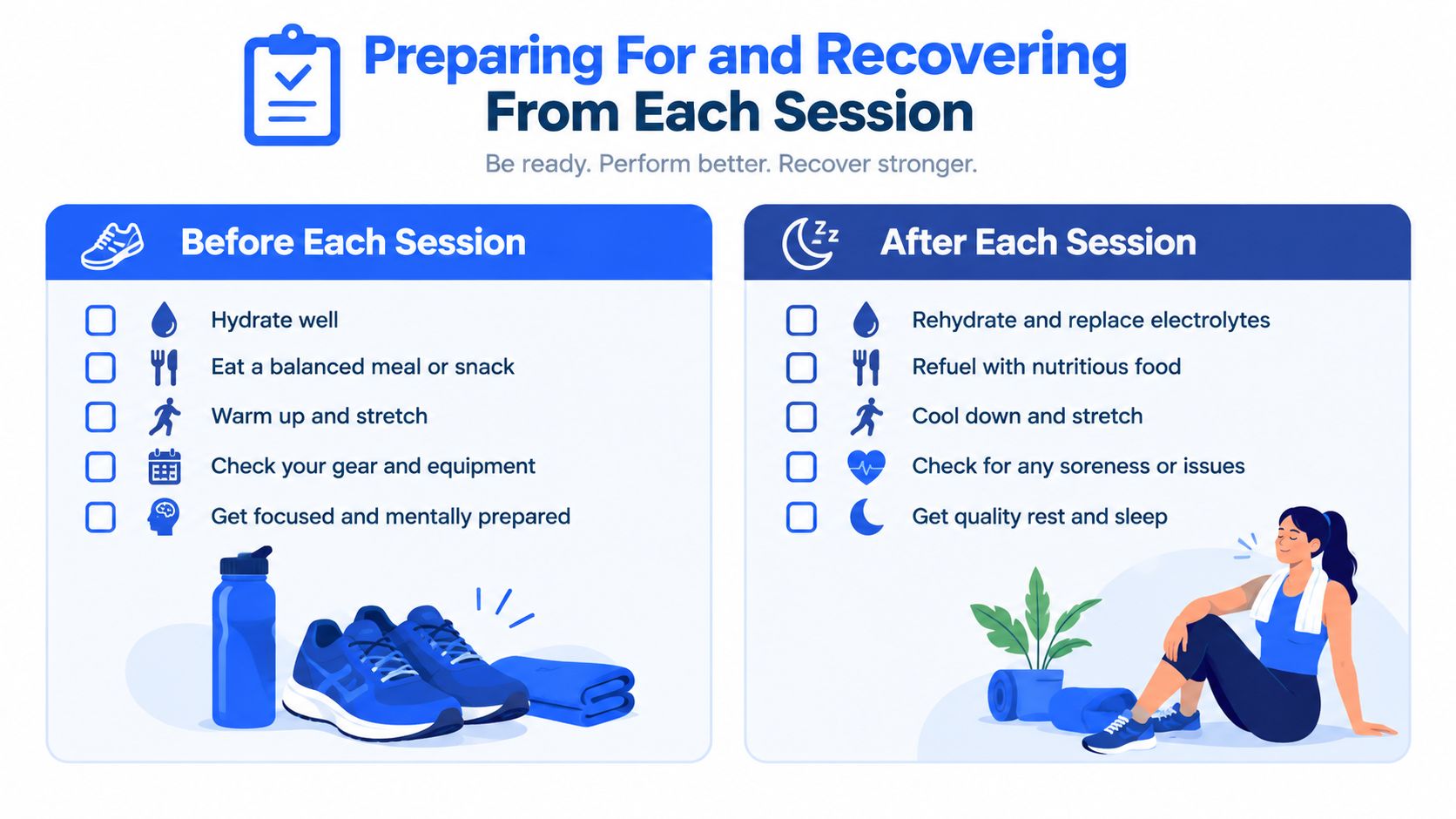
During and after treatment
Expect warmth, mild stinging, or a snapping sensation. Protective eyewear is essential for facial treatment because the eyes are close to the treatment field. The eyebrows, eyelids, and immediately surrounding areas are generally avoided because laser exposure can cause serious eye injury.
For the first 72 hours, keep the routine simple:
- Cool the area: Use a cool compress for temporary heat, swelling, or discomfort.
- Clean gently: Use a mild cleanser and avoid scrubbing.
- Moisturize carefully: Choose a fragrance-free moisturizer without irritating actives.
- Protect from ultraviolet light: Use mineral SPF 30 or higher and reapply every two hours when exposed.
- Avoid extra heat: Skip hot yoga, saunas, hot tubs, and intense heat exposure.
- Pause exfoliation: Don't use exfoliating acids, scrubs, or other irritating products until the skin has settled.
Mild redness, swelling, and sensitivity can be normal. Blistering, severe pain, spreading discoloration, crusting, or worsening symptoms require prompt contact with the treating clinic.
Session Counts, Timeline, and Maintenance
Facial laser hair removal usually requires approximately six sessions, spaced four to eight weeks apart. The reason is biological: follicles take turns entering the growth phase that makes them more responsive to laser energy. Treatment timing therefore depends on the facial area, hair cycle, device, and your response. Learn more about how many laser hair removal sessions are typically needed and how clinicians individualize the schedule.
Results accumulate gradually. In one diode-laser study, two repeated treatments produced 34% to 53% reduction at an average follow-up of 20 months, compared with 28% to 33% after one treatment. Another study found that, one year after treatment, more than 50% reduction persisted in 40% of areas treated five times, while no reduction persisted in untreated control areas or areas treated only once. The systematic review reports these cumulative-treatment findings.
A realistic progress pattern
Early appointments may cause shedding and slower regrowth rather than an immediately smooth face. Across the first year, responsive hairs may grow back thinner and less densely. Other follicles can become visible later because they were previously resting or were not sufficiently pigmented for treatment.
Facial hair influenced by hormones is less predictable than stable, coarse body hair. A touch-up does not automatically mean the original course failed. Hormonal signals can activate additional follicles after the initial series, much like new bulbs switching on in a row of lights.
A useful maintenance plan defines expected touch-ups and warning signs. Rapid return, increasing coarseness, or growth spreading beyond the original area should prompt a clinical review, rather than more frequent sessions chosen without assessment.
Common Questions Before Booking
Is facial laser hair removal covered by insurance?
Elective cosmetic laser hair removal generally falls outside insurance coverage. ProMD Health operates on a cash-pay model, so you shouldn't assume insurance reimbursement or medical-necessity coverage applies. Ask the clinic directly about its current treatment pricing and payment process rather than relying on general online estimates.
Can the eyebrows or eyelids be treated?
Those areas are generally avoided because the eyes are vulnerable to serious laser injury. A careful provider should define a safe boundary around the brow and explain which nearby facial areas can be treated instead.
Can blonde, gray, white, or red hair be removed?
Conventional laser systems can't effectively target these hair colors because they contain too little of the relevant pigment. If your facial hair is lightly pigmented, ask about alternatives rather than expecting a laser to produce the same result as it would on coarse, dark hair.
What should I look for at consultation?
Look for Fitzpatrick-aware skin assessment, a review of tanning and medications, discussion of hair caliber and hormonal changes, test spots when appropriate, clear eye-safety boundaries, and an honest maintenance plan. Be cautious if a provider promises permanent eradication, treats diffuse fine facial hair without discussing paradoxical growth, or can't explain why the selected wavelength fits your skin.
ProMD Health offers laser hair removal for unwanted facial hair, including areas such as the upper lip, chin, sideburns, cheeks, and forehead, with treatment planning based on your skin tone, hair pattern, and history. Visit ProMD Health to request an evaluation and discuss whether a medically supervised reduction plan is appropriate for you.