If you're reading this, you're probably tired of the same cycle. You shave, the stubble comes back fast, waxing feels like an appointment you have to recover from, and tweezing turns into a maintenance job that never really ends. At some point, most patients stop asking whether laser hair removal is worth considering and start asking a more practical question: How do you prepare for laser hair removal so you get the safest treatment and the best result?
Preparation is more critical than often realized. Laser hair removal isn't just a beauty appointment. It's a medical aesthetic treatment that works best when the skin is calm, the hair follicle is available for the laser to target, and your provider has a clear plan for your skin tone, hair pattern, and treatment area. Good prep reduces avoidable irritation, helps your session stay on schedule, and gives your provider the cleanest setup for an effective treatment.
Table of Contents
- Your Journey to Smooth Skin Starts Here
- The Initial Consultation 4 to 6 Weeks Before
- Your Pre-Treatment Countdown 2 to 4 Weeks Out
- Final Preparations The Week of Your Appointment
- On the Day of Your Laser Hair Removal Treatment
- Aftercare Prep and Frequently Asked Questions
Your Journey to Smooth Skin Starts Here
The appeal of laser hair removal is simple. You want less daily upkeep, fewer ingrown hairs, and a more durable solution than shaving or waxing. That goal is reasonable, but the path to it works best when you treat the process like a treatment plan, not a one-time quick fix.

Laser hair removal is designed for long-term hair reduction. The laser targets pigment in the hair follicle, which is why timing, skin condition, and hair removal habits before treatment all matter. If you come in with recent sun exposure, freshly waxed follicles, or irritated skin from active skincare, you're making the treatment harder than it needs to be.
What proper preparation actually does
Preparation isn't busywork. It serves three practical purposes:
- Improves safety by reducing the chance of excess irritation from avoidable triggers like tanning or harsh topical products
- Supports effectiveness because the follicle needs to be present and the skin needs to be treatment-ready
- Sets expectations early so you understand that laser hair removal is a series, not a single appointment with instant final results
Patients often focus on the treatment day and overlook the weeks before it. In practice, those earlier choices matter just as much. The patient who stops waxing on time, protects the area from sun, and follows shaving instructions usually has a much smoother experience than the patient who tries to squeeze in one last wax or arrives with self-tanner still on the skin.
Practical rule: The best laser session starts well before you walk into the clinic.
If you're considering laser hair removal at ProMD Health, think of the process as a timeline. There are decisions to make several weeks ahead, a shorter list of essential steps as the appointment gets closer, and a few day-of details that can make the visit more comfortable.
The mindset that works best
A good candidate doesn't need perfect skin or a perfect routine. You just need to be consistent and honest with your provider. Mention recent sun exposure, new medications, active breakouts, or any history of irritation. That kind of transparency helps your provider adjust the plan instead of pushing through a session your skin isn't ready for.
Come at this with a clinic mindset, not a spa mindset. Ask questions. Follow the prep instructions closely. Give the treatment the conditions it needs to work well.
The Initial Consultation 4 to 6 Weeks Before
The consultation is where laser hair removal becomes personalized. Before anyone treats an area, your provider needs to know what kind of hair you're treating, how your skin responds, whether you have any active skin issues, and whether the timing is right. This is the step that prevents avoidable mistakes.
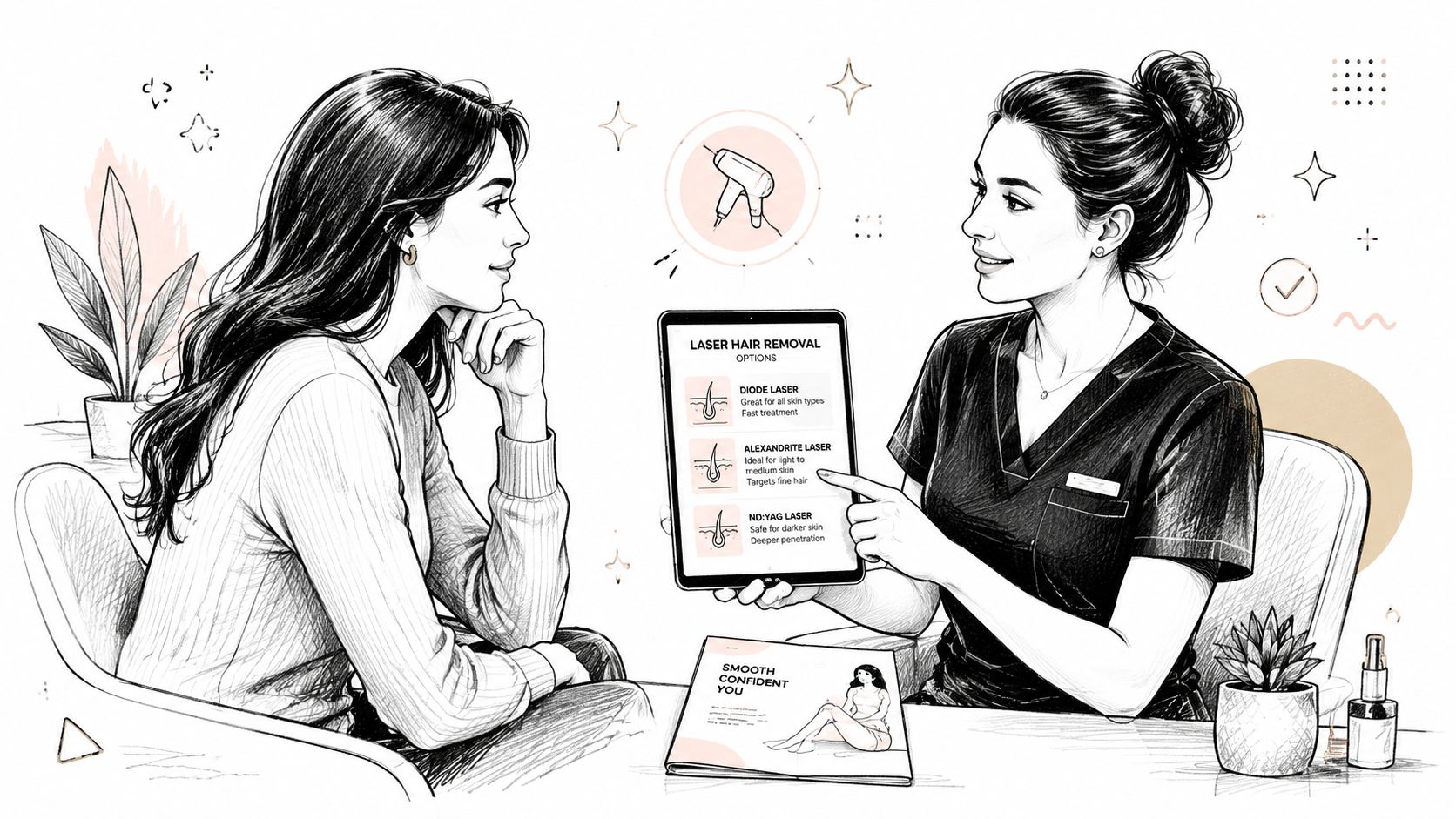
Some patients come in person right away. Others start with a virtual conversation through ProMD Connect, which can be useful when you want to review the process, talk through candidacy, or get clear on logistics before scheduling an in-office treatment visit. Either way, the value of the consultation is the same. It helps match the treatment plan to the person instead of forcing every patient into the same template.
What your provider is evaluating
A proper consultation isn't only about where the hair is. It's also about how your skin and hair characteristics affect treatment planning.
Your provider may review:
- Hair color and coarseness because darker, coarser hair often responds differently than very light, fine hair
- Skin tone and sensitivity history so settings and precautions can be selected appropriately
- Recent hair removal methods especially waxing, plucking, or threading
- Current skincare routine including retinoids, exfoliating acids, and acne products
- Medical context such as pregnancy, active infections, healing concerns, or medications that may increase light sensitivity
This is also the right time to review realistic expectations. Laser hair removal is not the same as never seeing hair again. What most patients want, and what most treatment plans aim for, is a meaningful reduction in growth and less maintenance over time.
A quick consultation can save you from showing up excited for treatment and leaving rescheduled because of something that could have been caught earlier.
Questions worth asking at the consultation
Many patients don't know what to ask, so they leave with only half the information they need. Bring your questions with you, or keep this short list on your phone:
- Am I a strong candidate for this treatment area?
- Are any of my medications or skincare products a concern?
- What should I stop doing before my first session?
- When should I shave, and how close should the shave be?
- What side effects are normal for me to expect afterward?
- What would make you delay or reschedule treatment?
If you want a fuller sense of what makes a safe practice a smart choice, this guide on choosing your laser hair removal clinic is a useful next read.
Discuss payment early, not at checkout
This part is often glossed over elsewhere, but it shouldn't be. Laser hair removal is an aesthetic self-pay treatment. It isn't covered by insurance in this care model, so the consultation is the right time to talk plainly about cost, package structure, and payment options.
That conversation is easier when it's upfront. You can decide which areas to prioritize, how to schedule sessions realistically, and whether you want to treat one area first or build a broader plan over time. Patients usually feel much more comfortable when the financial side is clear before the first treatment is booked.
Your Pre-Treatment Countdown 2 to 4 Weeks Out
This is the phase where preparation becomes non-negotiable. The goal isn't to do more. It's to stop doing the few things that interfere with the treatment.
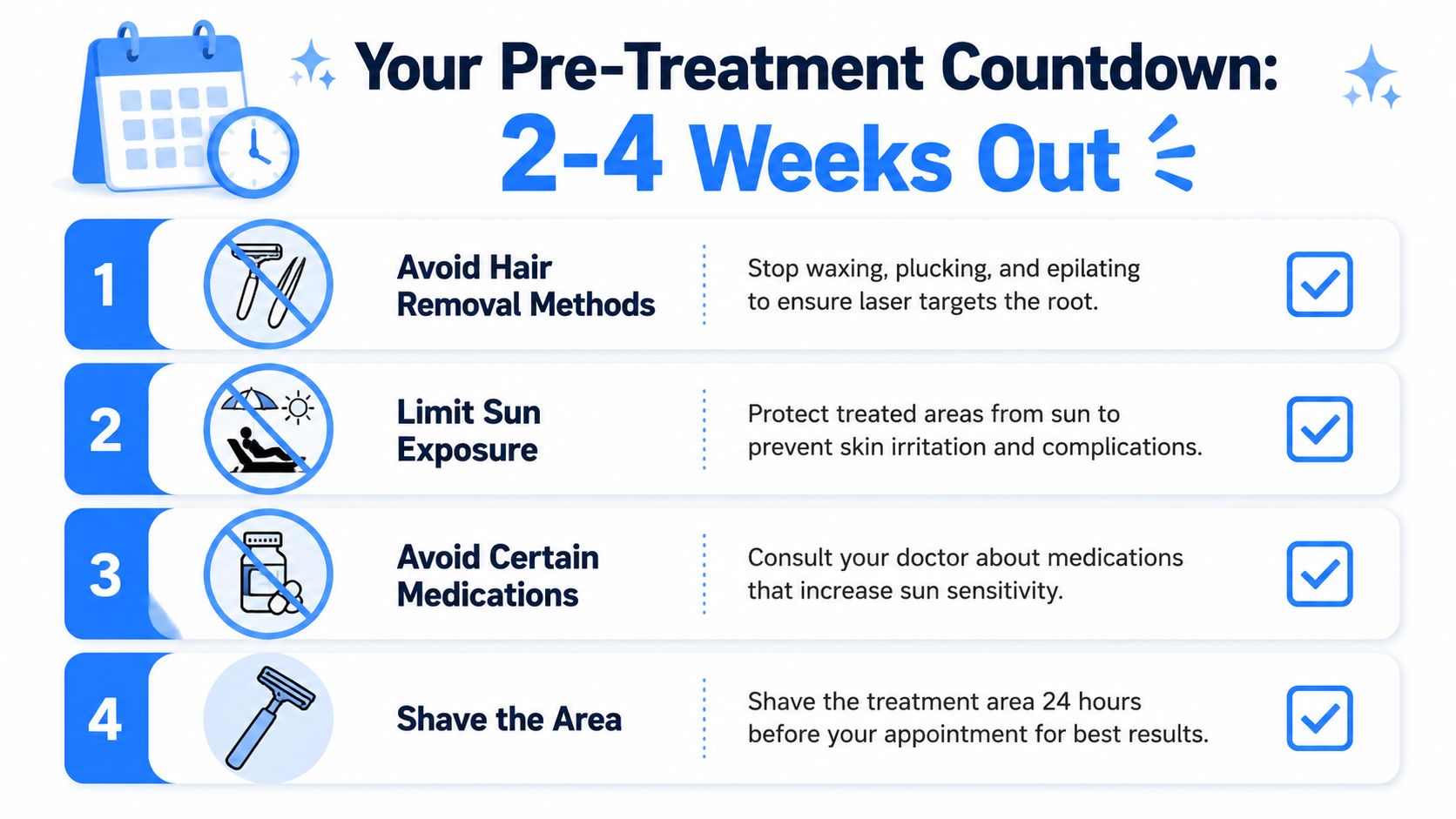
If patients ask me what most often disrupts a first laser appointment, the answer is usually one of three issues: the follicle has been removed, the skin has been tanned, or the area is irritated from products or medications that should've been reviewed earlier.
Stop removing hair from the root
Waxing, plucking, and threading have to pause before treatment. The reason is straightforward. The laser needs a hair follicle to target. If you've pulled the hair out from the root, you've removed the target.
Here's the practical version:
- Waxing is out
- Tweezing is out
- Threading is out
- Epilating is out
Shaving is different because it removes hair at the surface while leaving the follicle in place. That's why shaving is usually the preferred method between sessions and before treatment.
Keep your skin at its normal tone
Sun exposure changes the treatment setup. Recently tanned skin can be more reactive, and it can make the distinction between hair pigment and skin pigment less clean. That's not the time to push forward casually.
Avoid:
- Direct tanning whether it's from outdoor sunbathing or extended incidental sun on the area
- Tanning beds because they create the same core problem
- Self-tanner since pigment on the skin can interfere with treatment planning
If you're asking how do you prepare for laser hair removal in the safest way possible, this is one of the biggest answers. Protect the area from sun and let your provider see your natural skin tone.
Freshly tanned skin and laser treatment are a poor combination. If your color has changed recently, say so before the session starts.
Review products and medications
Patients sometimes encounter issues because they assume topical products don't count. They do. So do certain medications. If something makes your skin more reactive to light or more easily irritated, your provider needs to know.
Use this period to review:
| Item to review | Why it matters |
|---|---|
| Retinoids | Can increase irritation in the treatment area |
| Exfoliating acids | May leave skin more sensitive than usual |
| Acne treatments | Some formulas can dry or inflame the skin |
| Photosensitizing medications | May increase the chance of a stronger skin reaction |
Don't stop prescription medications on your own. Ask the prescribing clinician and your laser provider how to handle them safely.
What does not help
Patients sometimes overprepare in ways that don't improve results. Aggressive scrubbing, trying new brightening products, or attempting to “thin out” hair beforehand usually creates more problems than benefits. Calm skin responds better than overworked skin. In the weeks before treatment, boring is good.
Final Preparations The Week of Your Appointment
The week of treatment should feel simple. If you handled the earlier steps correctly, there isn't much left to manage. At this point, the main job is to arrive with the treatment area properly shaved, your skin calm, and your logistics handled.
Shave, but don't wax
The most important task this week is shaving the area about a day or two before your appointment. That timing usually works well because it removes hair above the skin while leaving the follicle available beneath the surface.
If you shave too far in advance, visible regrowth may be present by treatment day. If you shave too close to the appointment and irritate the skin, the area may feel more sensitive than necessary. A clean, close shave with a fresh razor is usually the safest approach.
Keep the skin boring and quiet
This isn't the week to experiment with peels, active scrubs, fragranced body products, or “deep clean” treatments on the area. Your skin doesn't need to be polished. It needs to be stable.
A few practical habits help:
- Hydrate normally because well-cared-for skin tends to tolerate treatment better than dry, neglected skin
- Avoid friction if the area is prone to irritation from tight waistbands, rough fabrics, or repetitive rubbing
- Check your calendar so you aren't scheduling treatment right before an event where temporary redness would bother you
Confirm the visit details
Patients often focus so much on the treatment itself that they forget the simple issues that create stress. Make sure you know your appointment time, your clinic location, and whether you need to arrive early for paperwork or prep.
If anything has changed during the week, say so before the visit. That includes a sunburn, rash, open cut, new medication, active cold sore in a facial treatment area, or any sign of infection. A short message ahead of time is better than arriving and finding out the session needs to be postponed.
The week-of goal is calm skin, a clean shave, and no surprises.
On the Day of Your Laser Hair Removal Treatment
Treatment day should feel routine. You don't need an elaborate ritual. You need clean skin, comfortable clothing, and a clear sense of what the visit will feel like.
Arrive with nothing on the treatment area
The skin should be free of residue. That means no lotion, oils, creams, deodorant, makeup, perfume, or sunscreen on the area being treated. Product buildup can interfere with a clean treatment surface and may increase the chance of irritation.
A simple checklist for the morning of your appointment:
- Clean the skin
- Skip leave-on products over the treatment area
- Wear loose clothing if the treated site may feel warm or sensitive afterward
- Bring questions if it's your first session and you want to review aftercare before you leave
If you're treating the underarms, don't wear deodorant to the visit. If you're treating the face, come with a clean face and no makeup over the area. If you're treating the bikini line or legs, soft clothing makes the trip home more comfortable.
What the treatment usually feels like
Most patients want to know one thing before they sit down: does it hurt? The honest answer is that it can be uncomfortable, but it's typically manageable. Many people describe the sensation as a quick snap against the skin, followed by brief warmth.
For patients who are anxious about discomfort, it's reasonable to ask about comfort strategies in advance. If you want a general overview of how topical numbing products are used and what to consider, MEDISTIK's ultimate pain relief guide offers helpful background reading.
What to expect in the room
The visit itself is usually straightforward. Your provider confirms the treatment area, checks the skin, reviews any last-minute changes, and proceeds only if the area looks appropriate for treatment. High-quality clinics don't guess their way through a session. If something looks off, they pause and address it.
During the appointment, speak up if anything feels unusually sharp, if an area was shaved poorly and needs attention, or if you've had a recent change that wasn't discussed yet. Good treatment depends on good communication.
Aftercare Prep and Frequently Asked Questions
Good preparation doesn't end when the laser turns off. The first part of aftercare is really preparation for healing and for your next session. Treated skin often does best when you keep things cool, simple, and low-friction for the rest of the day.
Avoid excess heat on the area right after treatment. Hot tubs, saunas, long hot showers, and intense workouts can make recently treated skin feel more irritated. Skip harsh exfoliation and strong active products until the skin feels settled again, and protect the area from sun while it recovers.
If you're concerned about marks, irritation, or healing, it's worth reading more about laser hair removal and scars, especially if you have a history of sensitive skin or post-inflammatory pigment changes.
Common questions patients still ask
Is laser hair removal permanent?
Think in terms of long-term reduction, not an absolute guarantee that no hair will ever return. Many patients see a major drop in growth, finer regrowth, and much less routine maintenance.
How many sessions will I really need?
That depends on the area, your hair cycle, hair density, and how consistently you follow the schedule your provider recommends. Treatment works as a series, so expecting a complete result from one visit usually leads to frustration.
Who isn't a good candidate right now?
Patients with very light blond, white, or gray hair may not be ideal candidates because there may not be enough pigment for the laser to target well. Active skin infections, open irritation in the treatment area, and pregnancy are also common reasons to delay or reconsider treatment.
Healing well after one session puts you in a better position for the next one. That's part of preparation too.
The best laser hair removal experiences usually aren't the ones where patients do the most. They're the ones where patients do the right things, at the right times, and let the treatment plan work as intended.
If you're ready to plan your laser hair removal timeline, ProMD Health offers aesthetic and wellness care across approved clinic locations, with virtual support through ProMD Connect for appropriate consultations. Start with a professional evaluation, get clear on your self-pay treatment plan, and prepare the right way before your first session.