
You've taken the same photo in the same bathroom light for weeks, hoping the dark marks on your cheek will finally look lighter. Then you search for laser treatment for hyperpigmentation before and after images and see dramatic, perfectly even complexions. Those photographs can be useful, but they don't show the full treatment story: the diagnosis, skin tone, device settings, session spacing, sun exposure, and months of healing that shape the result.
A more honest comparison asks different questions. Was the pigment caused by acne inflammation, melasma, sun exposure, or another condition? Was the improvement partial or complete? Did the skin temporarily darken before it became more even? Understanding those details helps you judge results without expecting one treatment or one photograph to represent everyone.
Table of Contents
- What Laser Treatment for Hyperpigmentation Can and Cannot Do
- Understanding Hyperpigmentation Types and Laser Options
- Curated Before and After Case Examples With Timelines
- Your Treatment Journey From Consultation to Recovery
- Risks Realistic Expectations and How to Reduce Them
- Planning Your Next Steps With ProMD Health
What Laser Treatment for Hyperpigmentation Can and Cannot Do
A person treating post-acne marks may see gradual fading after a carefully selected laser session. Someone with melasma may improve, then notice pigment return when hormonal or environmental triggers remain active. Pigment around the eyes can respond over several months, while deeper skin tones may call for a more conservative plan to lower the risk of treatment-related color change.
These outcomes fit together. Hyperpigmentation is a description of excess pigment, not one single diagnosis. Pigment may sit at different depths and arise from different causes. Laser energy can break up or reduce unwanted pigment, yet the inflammation created by treatment may also stimulate new pigment in susceptible skin.
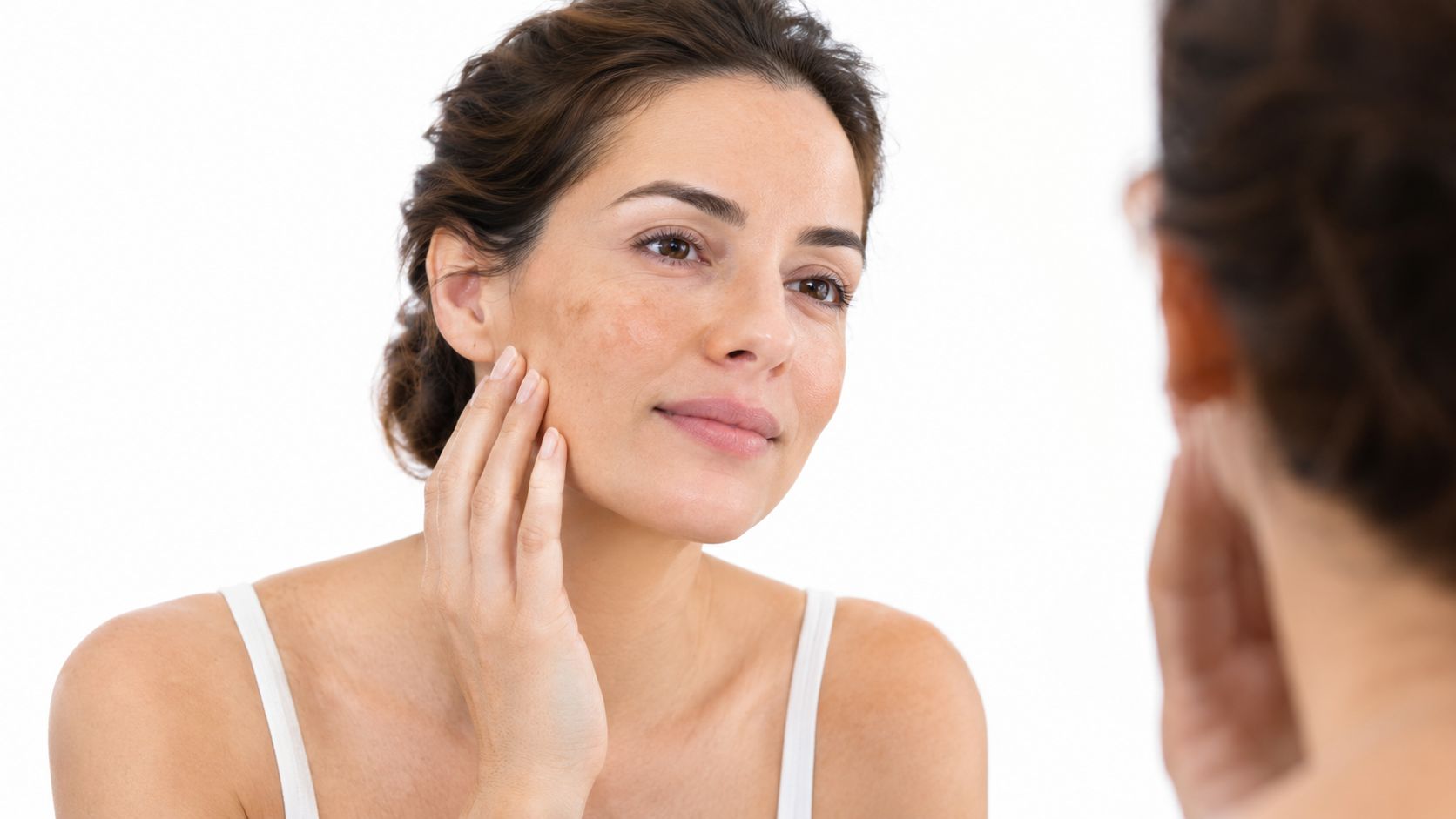
Why one photograph doesn't tell the whole story
Before-and-after images can change your impression of improvement because of lighting, camera exposure, makeup, facial angle, and the timing of the follow-up image. A photo taken soon after inflammation may make pigment appear worse than it looks later. Softer light can make remaining discoloration less noticeable.
Published evidence supports setting expectations over a series of visits. A 2024 systematic review of laser treatment for post-inflammatory hyperpigmentation in skin of color included 227 laser-treated participants. The subgroup with follow-up data averaged 4 sessions and had a mean resolution time of 140 days. The review reported 26% complete resolution, 66% partial pigment reduction, and 33% no response. Laser produced complete resolution in at least one subgroup among the interventions reviewed. Read the systematic review of treatment for post-inflammatory hyperpigmentation in skin of color
Those findings cannot predict your personal result. They do show that partial improvement is a common and legitimate outcome, with meaningful change often developing across multiple appointments rather than after one treatment.
How to evaluate a gallery responsibly
Look for photographs taken with matching lighting and angles. The gallery should identify the diagnosis, session count, interval between treatments, and time before the final image. Ask whether pigment-control skincare and consistent sun protection were used, since both can affect fading and recurrence.
ProMD Health offers aesthetic services that include laser treatment options, but specific laser availability can vary by office and should be verified before scheduling. A consultation should determine whether laser fits your pigmentation type and risk profile. Treating every dark spot as the same concern can lead to the wrong plan.
Understanding Hyperpigmentation Types and Laser Options
The same brown patch can look similar in a photograph while requiring a different clinical approach. Post-inflammatory hyperpigmentation often follows acne, irritation, injury, or another inflammatory event. Melasma commonly appears as broader, uneven patches and can fluctuate with heat, light, and hormonal influences. Sun-induced pigment tends to present as more defined spots, while periorbital hyperpigmentation around the eyes may reflect several contributing factors rather than pigment alone.
The depth and trigger matter because laser treatment creates controlled energy in the skin. Wavelength, fluence, cooling, pulse pattern, and the interval between treatments can influence how much pigment is targeted and how much inflammation follows. Reviews focused on skin of color emphasize that dyspigmentation is an important risk consideration, and pigmentary complications are among the frequent longer-term concerns after laser and energy-based procedures. Review guidance on laser treatment considerations for skin of color
A practical comparison
| Pigment Concern | Common Laser Considerations | Key Caution |
|---|---|---|
| Post-inflammatory hyperpigmentation | A conservative, nonablative approach may be considered after the original inflammation is controlled | New inflammation can create additional pigment |
| Melasma | Treatment may require careful energy selection and a maintenance strategy alongside other care | Pigment can recur when triggers remain active |
| Sun-induced pigment | Targeted light or laser approaches may be evaluated for defined spots | Surrounding skin can also react if settings are too aggressive |
| Periorbital hyperpigmentation | The provider must assess whether pigment, shadowing, thin skin, or anatomy contributes to the appearance | The eye area requires specialized technique and protection |
Nonablative and ablative approaches
Nonablative treatments heat targeted tissue without removing the full outer skin layer. They may involve less recovery, but that doesn't mean they're risk-free, especially in skin that is prone to post-inflammatory pigment. Some nonablative approaches, including long-pulsed 1064-nm Nd:YAG and fractional photothermolysis, are often considered in treatment planning for resistant pigment in skin of color, depending on the diagnosis and provider assessment.
Ablative lasers remove or vaporize portions of the outer skin and can create more intensive resurfacing. They may also involve longer recovery and a greater concern for pigment complications, so a stronger treatment isn't automatically a better treatment for discoloration.
If you're comparing light-based options, ProMD Health's educational material on IPL versus laser treatment can help clarify why these categories aren't interchangeable. The useful consultation question isn't “Which device is most powerful?” It's “Which approach matches my pigment depth, skin response, and tolerance for recovery?”
Curated Before and After Case Examples With Timelines
Before-and-after examples become more informative when each image has a treatment context. The following scenarios are evidence-based illustrations of how timelines can differ, not promises of a particular result. Individual treatment plans should be selected after an examination, especially when pigment is recurrent or the skin is prone to color change.
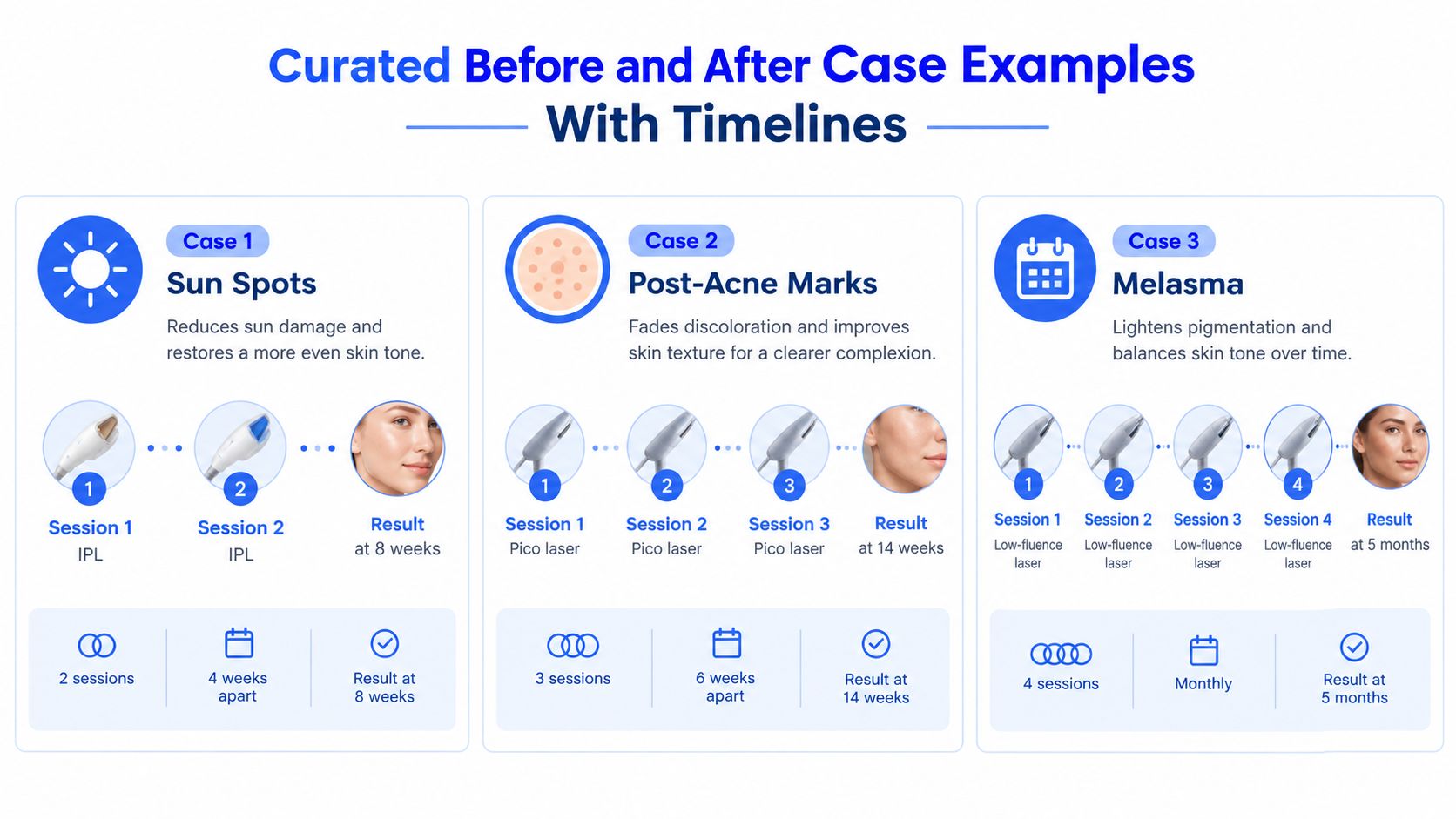
Case example one, defined sun-related spots
A person with clearly defined sun-related pigment might be evaluated for a light-based approach directed at visible spots. The treatment plan shown in the visual guide uses 2 IPL sessions, 4 weeks apart, with the photographed result at 8 weeks. In a real gallery, the reader should check whether the spots were photographed under the same lighting and whether new sun exposure occurred between the images.
This type of example can look more dramatic than melasma because the pigment is often more localized. It still doesn't mean every spot will respond identically. Some marks may fade more than others, and the provider may decide that a broader or more conservative approach is appropriate after assessing the surrounding skin.
Case example two, post-acne marks
Post-acne discoloration often exists alongside active acne, redness, or textural changes. Treating the pigment while new inflammation continues can make the before-and-after comparison difficult, because fresh marks may appear as older ones fade.
The visual guide presents 3 Pico laser sessions, 6 weeks apart, with the result photographed at 14 weeks. The interval creates time for the skin to settle and for the patient and provider to assess the response before another session. A useful gallery should show whether the patient's acne and skincare routine were also being managed, because the laser doesn't remove the underlying tendency to develop marks after inflammation.
Case example three, melasma and fractionated nonablative treatment
Melasma illustrates why a technically measurable change may still look modest in a photograph. A 2023 prospective cohort evaluating fractionated, nonablative 1927 nm laser treatment for melasma and actinic pigment found the strongest effect at 1 month, with unwanted pigment improving 9% from baseline. At 3 months, the improvement remained statistically significant at 3%, indicating that some benefit persisted but that pigment could move back toward baseline. Review the 1927 nm laser cohort and its follow-up findings
The timeline graphic uses 4 low-fluence laser sessions, monthly, with the result assessed at 5 months. That example reinforces a key point: melasma care often involves maintenance planning rather than a one-time clearance goal. A patient may prefer a modest, controlled improvement if a stronger treatment would create more inflammation and increase risk.
Case example four, periorbital pigment
Periorbital hyperpigmentation needs careful interpretation because darkness around the eyes may include pigment, visible vessels, thin skin, or shadowing from facial structure. A systematic review of laser therapy reported 43.35% excellent responses and 26.27% good responses after 4 to 6 months, with 2.76% poor responses and patient satisfaction of 76.4%. Review outcomes for laser therapy for periorbital hyperpigmentation
These results support a longer follow-up window than a quick post-treatment selfie. If you're comparing your own images with a before-and-after gallery, focus on the stated diagnosis, follow-up period, and treatment details rather than the brightness of the final photograph alone.
Your Treatment Journey From Consultation to Recovery
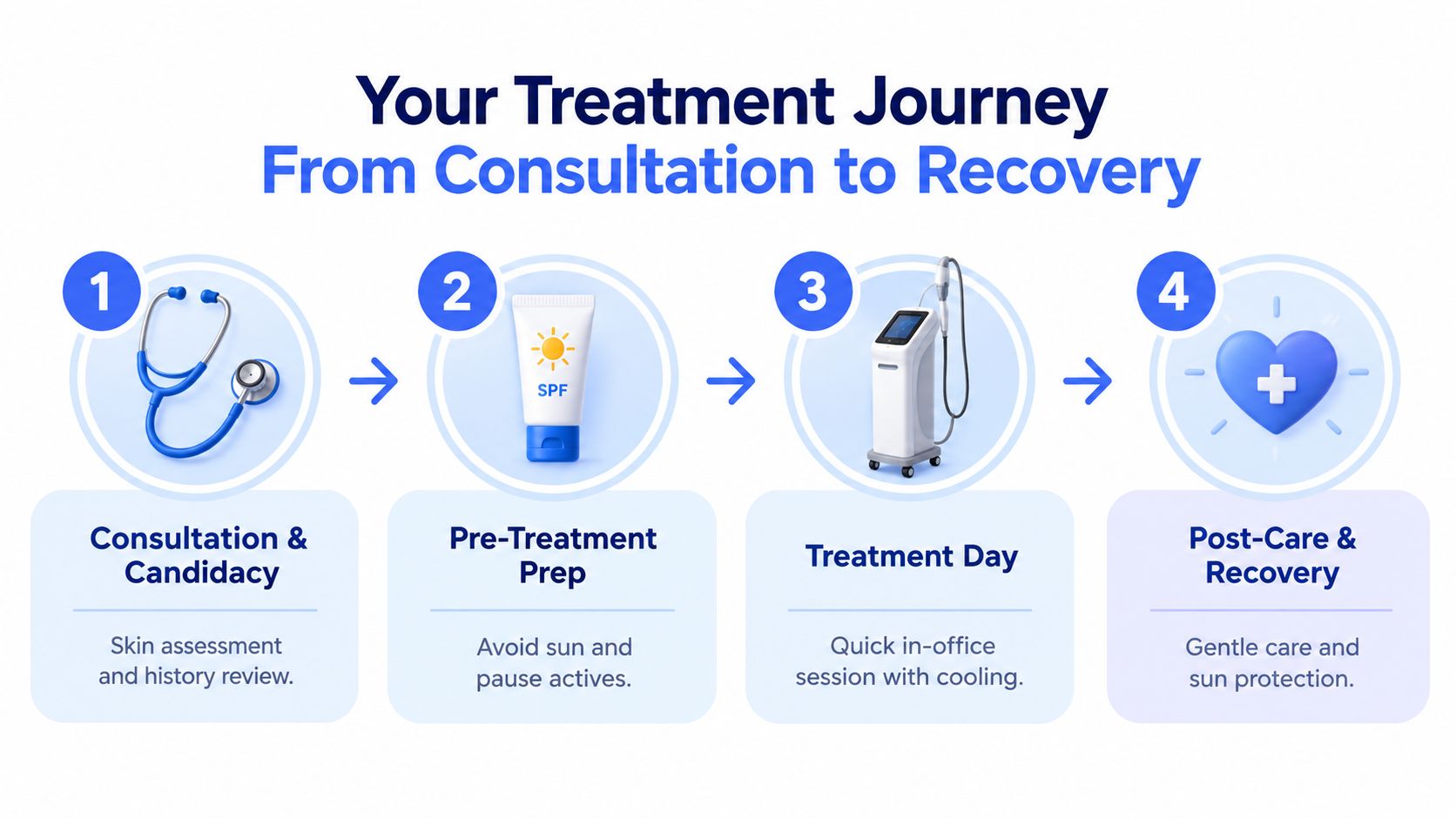
A responsible treatment journey begins before the laser touches your skin. During consultation, the provider should examine the pigment, review your history, discuss previous reactions, and identify active acne, irritation, tanning, medication considerations, or conditions that may affect healing. The goal is to determine whether laser makes sense now, later, or not at all.
You should also discuss the desired outcome in practical terms. “Clear skin” can mean a lighter spot, more even overall tone, fewer visible marks, or improvement that still requires maintenance. Defining that target helps prevent a mismatch between a realistic clinical result and an edited-looking online photograph.
Preparing the skin
Your provider may ask you to limit sun exposure and use consistent broad-spectrum sun protection before treatment. You may also be asked to pause irritating active products or delay treatment if the skin barrier is inflamed. Don't make medication or skincare changes without discussing them with the treating professional.
Arrive with clean skin if instructed, and tell the provider about recent procedures, new products, rashes, cold sores, or changes in pigmentation. A calm, stable skin surface gives the provider a safer starting point for selecting settings.
Treatment day and early recovery
During treatment, you may feel warmth, snapping, or brief discomfort, depending on the device and settings. Cooling may be used to improve comfort and limit heat-related inflammation. Your provider should explain what redness, swelling, darkening, flaking, or sensitivity could look like for your specific treatment.
Afterward, use only the products recommended for recovery. Gentle cleansing, barrier support, avoiding picking, and strict sun protection help reduce unnecessary irritation. Contact the practice if you develop symptoms that concern you, rather than trying to manage a significant reaction from online advice.
Timing the next session
The commonly recommended interval between laser sessions is 6 to 8 weeks, while intervals of up to 6 months may be suggested for nevus of Ota. The appropriate schedule depends on the indication, treatment intensity, skin response, and risk of complications, so shorter spacing isn't automatically better. Clinical guidance on laser treatment intervals
Take standardized photographs in the same location, lighting, angle, and distance. Record the date, treatment area, products used, sun exposure, and any reaction. That record gives you and your provider more reliable information than memory or daily mirror checks.
Risks Realistic Expectations and How to Reduce Them
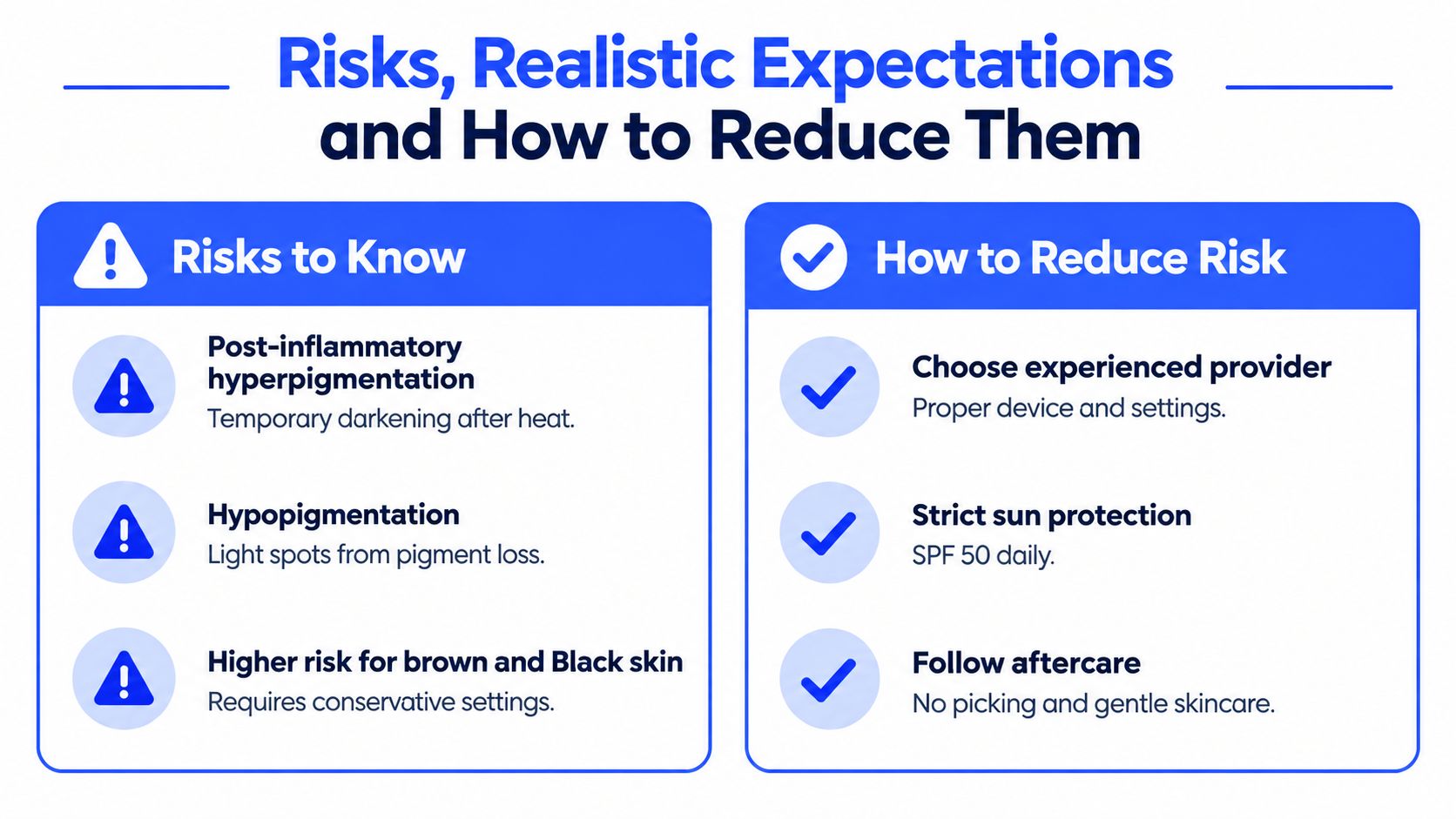
Laser treatment can lighten unwanted pigment, but it can also make treated skin temporarily darker or lighter. Post-inflammatory hyperpigmentation means new or intensified darkening after inflammation, while postinflammatory hypopigmentation describes lighter areas caused by pigment loss. Brown and Black skin carries a higher risk of longer-lasting color change, so skin tone should influence the treatment plan rather than being treated as an afterthought. Laser resurfacing risks and pigment changes
Inflammation can increase melanin production, and pigment can also accumulate after melanocyte injury. In many cases, treatment-related discoloration resolves within about 3 to 4 months, but the timeline depends on the skin and the nature of the reaction. Mechanisms and course of post-inflammatory hyperpigmentation
What the safety evidence means
A 2022 systematic review and meta-analysis of nonablative laser and energy-based treatments in Fitzpatrick IV to VI skin found post-inflammatory hyperpigmentation was the most common adverse event, with a pooled prevalence of 8.1% across treated subjects. The same review reported prolonged erythema in 0.6% of cases and found that PIH rates were significantly higher with diode and erbium-doped lasers than with intense pulsed light and radiofrequency. Review of adverse events in Fitzpatrick IV to VI skin
Those figures describe groups, not your personal probability. They do explain why device selection, fluence, cooling, operator experience, and treatment intervals deserve detailed discussion.
A risk-reduction checklist
- Confirm the diagnosis: Don't treat an unexplained or changing lesion as routine pigmentation.
- Discuss your skin response: Tell the provider if you develop dark marks after acne, cuts, waxing, or other procedures.
- Review settings and device choice: Ask why the proposed wavelength and energy level fit your skin and concern.
- Protect the skin from light: Follow the practice's sun-protection instructions before and after treatment.
- Respect the interval: Wait for the recommended healing period instead of scheduling sessions too close together.
- Delay when appropriate: Postpone treatment if the area is sunburned, irritated, actively inflamed, or otherwise unstable.
- Ask about prevention: Peri-procedural strategies are increasingly being evaluated, including tranexamic acid and topical corticosteroids, but these options require individualized medical guidance.
For some pigment types, lasers remain second-line to topical treatment because response can vary and complications can be difficult to reverse. A thoughtful plan may use layered care rather than presenting laser alone as the entire solution.
Planning Your Next Steps With ProMD Health
The most useful consultation starts with a specific concern and an honest timeline. Bring photographs taken in consistent lighting, list the products and procedures you've used, and describe how your skin reacts after acne, sun exposure, or irritation. Ask what level of improvement is realistic, how many visits may be considered, what recovery could look like, and what the plan would be if the pigment temporarily worsens.
ProMD Health offers approved service themes that include laser treatments, laser hair removal, tattoo removal, chemical peels, microneedling, Hydrafacial, and medical-grade skincare. Laser and treatment availability can vary by office, so verify the service with the location before booking. Approved ProMD Health locations include Annapolis, Arlington, Ashburn, Bel Air, Bethesda, Columbia, Easton, Fort Lauderdale, Hutto, Lafayette, Lewes, Timonium, Tox Bar in Baltimore City, Tysons Corner, Washington, DC, Wellington, and Westminster.
ProMD Health operates on a cash-pay model, so you shouldn't assume insurance coverage for aesthetic services. Treatment plans, imagery, and published content also require appropriate review, and real lifestyle, treatment-room, and patient-style imagery should be used instead of AI-generated provider photos.
ProMD Health can help you discuss laser options, complementary skin treatments, and medical-grade skincare for hyperpigmentation with a plan built around your skin and goals. Visit ProMD Health to review available services and request the next consultation step at an approved location.


