
What should your lips do after filler, look fuller, hold a sharper border, show more pink at rest, or balance an uneven smile? Different lip filler shapes are treatment goals, not fixed templates. The right plan may prioritize volume, contour, projection, movement, Cupid's bow definition, a lift-like proportion, contemporary dimension, or asymmetry correction.
A qualified ProMD provider should assess your lip anatomy, facial proportions, smile dynamics, existing volume, and expectations before recommending a technique. The lips contain 24 distinct intralabial compartments, arranged across the upper and lower lips in anterior and posterior planes, and their structure helps explain why different placement patterns produce different visible outcomes (2024 anatomy study). Before-and-after photographs are useful, but compare images with similar anatomy, lighting, facial expression, and healing stage. They're examples of planning, not guarantees. A general overview of lip filler considerations is also available from Cape Cod Plastic Surgery's dermal filler guide.
Table of Contents
- 1. Full, Voluminous Lips
- 2. Enhanced Lip Border Definition
- 3. Gradient or Ombré Lips
- 4. Cupid's Bow Enhancement
- 5. Lip Flip With Subtle Volume
- 6. Structural Lip Lift With Filler Support
- 7. Asymmetry Correction and Lip Balance
- 7-Point Lip Filler Shape Comparison
- Choose the Shape That Fits Your Anatomy
1. Full, Voluminous Lips
Full, voluminous lips are the clearest choice when the primary request is more overall fullness. Filler is distributed through the upper and lower lip structure to restore lost volume or create a more prominent appearance, while the provider protects the relationship between lip size, mouth width, chin projection, cheeks, and midface. This isn't a matter of adding as much product as possible. A balanced result depends on where volume is needed and how the lips look at rest, while speaking, and while smiling.
This style often suits adults with age-related deflation, naturally thin lips, or a broader facial rejuvenation plan that includes cheek or midface contouring. It can also work for someone who wants a visible enhancement, provided the desired fullness still fits the rest of the face.
Practical rule: Start conservatively. If you want more after swelling settles, a staged approach is easier to control than correcting an overfilled result.
The 24-compartment anatomy model gives providers a structural reason to vary placement rather than treating the lips as one undifferentiated space (anatomy research on lip compartments). HA filler results are temporary and measured in months, not years. One clinical review reported a median effect duration of 92 days for blinded evaluators and 183 days for subjects, while other studies found meaningful fullness through 9 to 12 months in some patients (clinical review of HA lip filler duration).
Bring reference photos to your consultation, but use them to describe your preferred degree of fullness rather than to request an identical result. Allow time for swelling to subside before an important event, follow your provider's aftercare instructions, and ask whether medical-grade lip care from The Skin Shoppe fits your routine.
2. Enhanced Lip Border Definition
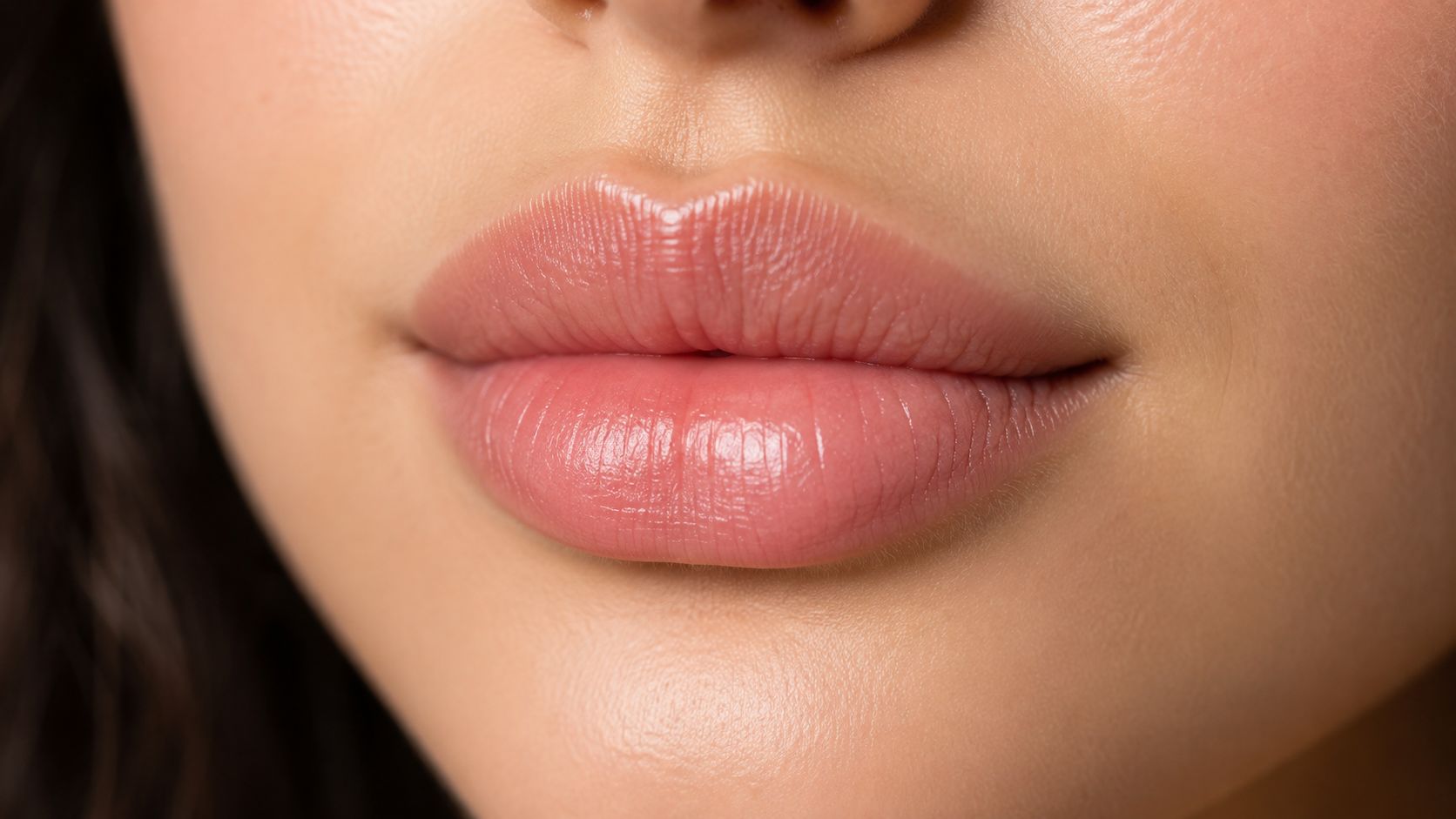
A defined lip contour focuses on the vermillion border, the visible transition between the lip tissue and surrounding skin. This approach can restore a border that has softened with age or create a cleaner outline without making the entire mouth look substantially larger. It's often a strong fit for someone who wants polished refinement rather than obvious augmentation.
A provider may concentrate on the upper border, lower border, or selected areas where definition has faded. The assessment should also include vertical lines around the mouth, lip movement, and whether the border is naturally even. Filler can sharpen the outline, but it won't automatically erase every perioral line or change horizontal smile width. A dermal filler overview from ProMD Health explains how filler planning can address facial volume and contour concerns.
What contour can and cannot change
Border definition can make lipstick application look cleaner and can improve the visual architecture of the mouth. It may also support subtle symmetry correction. It can't reproduce a surgical lip lift, replace a missing structural foundation, or guarantee that every fine line disappears.
For mature patients, a combined plan may include a neurotoxin such as Botox, Dysport, or Daxxify when dynamic movement contributes to vertical lip lines. That combination should be discussed carefully because relaxing muscles changes movement, while filler changes structure.
- Choose this style for: A sharper outline, modest enhancement, or age-related border blurring.
- Use restraint when: The lips already project strongly or the border is naturally prominent.
- Plan maintenance around: Your provider's assessment of product, placement, movement, and how quickly definition softens.
Avoid applying lip liner or other irritating cosmetics immediately after treatment, and follow the specific recovery guidance from your injector. Review healed photographs, not only immediately post-treatment images, before deciding how crisp you want the final contour to appear.
3. Gradient or Ombré Lips
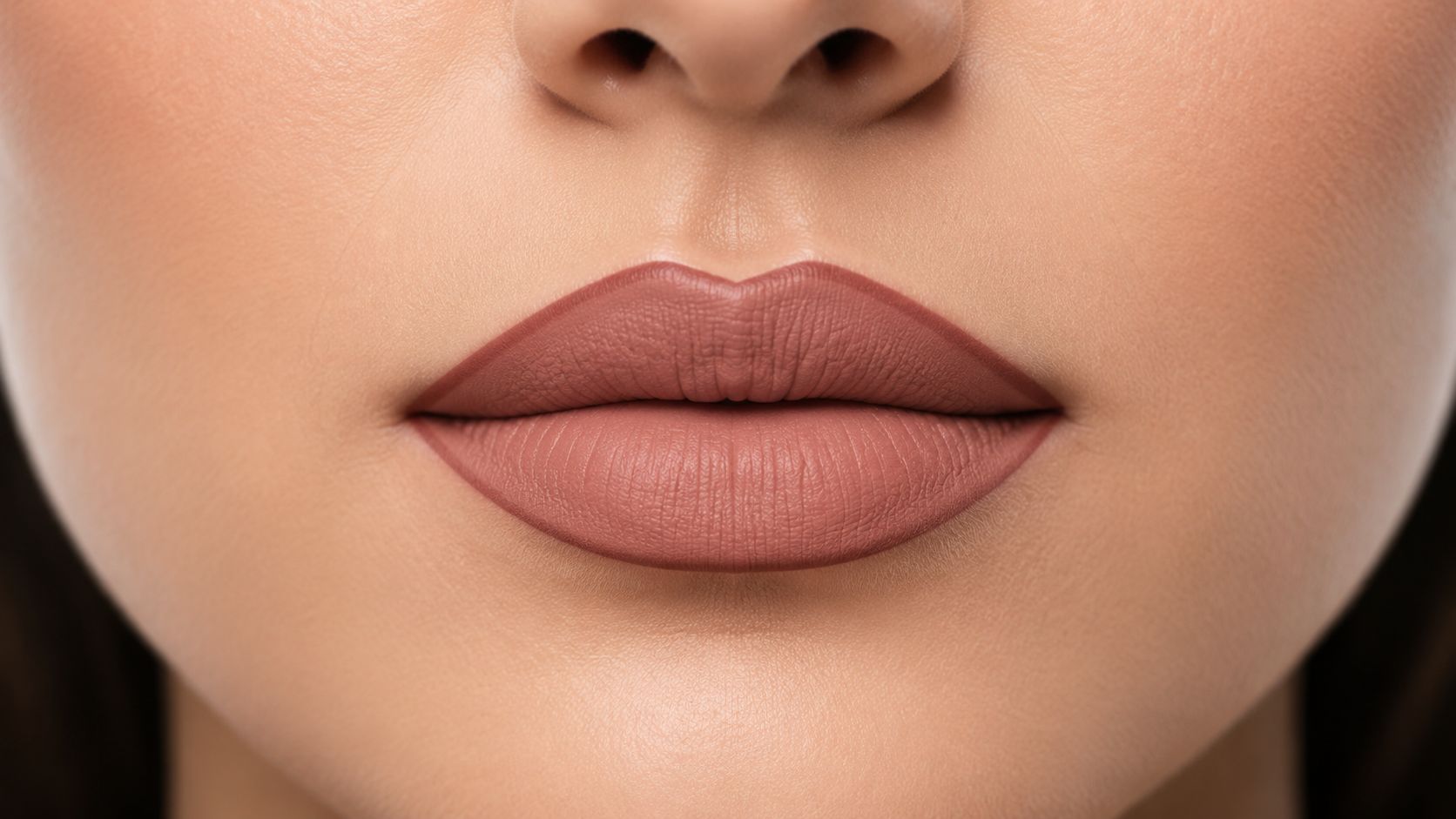
Gradient or ombré lips are a dimension-focused approach. Instead of making every part of the lips equally full, the provider plans subtle differences in projection and contour so the center appears more prominent while the edges remain softer. Makeup can reinforce the effect with darker outer color and lighter central color, but the injectable plan should be based on anatomy, not pigment alone.
This style may appeal to young professionals, patients drawn to editorial aesthetics, or anyone who wants a contemporary look without uniform, rounded fullness. It can also complement broader facial filler work when the lips need to hold their own visually against enhanced cheeks or a more defined lower face.
The trade-off is precision
A gradient effect requires careful control of placement. If too much filler is concentrated centrally, the lips can look heavy in the middle. If the outer border receives too much product, the intended transition disappears. The provider should evaluate the upper and lower lips separately, then check the result during speech and smiling.
Shape should be judged in motion, not only in a still, closed-mouth photograph.
Bring makeup references to the consultation and describe what you like about the transition, not just the color. Do you want a softly fuller center, a more noticeable editorial contrast, or merely a hydrated appearance with gentle dimension? Those requests lead to different plans.
A professional makeup artist can help reinforce the visual gradient after healing, while products from The Skin Shoppe may support a consistent lip-care routine. Plan photography or major events only after your provider has allowed enough time for swelling and tenderness to settle. The effect will soften as filler changes over time, so maintenance should be based on the returning shape rather than an automatic calendar.
Gradient lips won't suit every anatomy. A narrow lip with limited tissue may need staged enhancement, while a naturally full lip may require only subtle central definition. The safest plan prioritizes proportion and movement over copying a trend.
4. Cupid's Bow Enhancement
Cupid's bow enhancement targets the M-shaped curve of the upper lip. The purpose is definition, not necessarily dramatic fullness. A provider may emphasize the central peaks, support the surrounding upper lip, or restore a shape that has flattened with aging, while keeping the lower lip and mouth width in proportion.
This option suits patients who notice that their upper lip looks less structured than it once did, as well as people who want a small but visible change. It can also be combined with broader volume enhancement when the upper lip needs both structure and fullness.
Definition needs balance
A sharper Cupid's bow can draw attention to the center of the mouth, but excessive emphasis may make the upper lip look overly segmented or disconnected from the lower lip. The best plan considers the philtrum, vermilion height, dental show, facial expression, and how the Cupid's bow changes during a smile.
A clinical morphologic assessment found that lip filler can improve upper and lower vermilion height, lip protrusion to the E-line, smile index, and upper and lower lip indices, while intercommissural width and buccal corridor width did not change (clinical assessment of lip morphology after filler). In practical terms, filler can reshape vertical display and projection more reliably than it can widen the smile.
Ask to see healed photographs where the Cupid's bow remains natural during expression. You can also discuss whether a neurotoxin is appropriate for upper lip lines, but that is a separate movement-based decision. Medical-grade skincare may help support the surrounding skin, yet no topical product can substitute for accurate structural planning.
5. Lip Flip With Subtle Volume
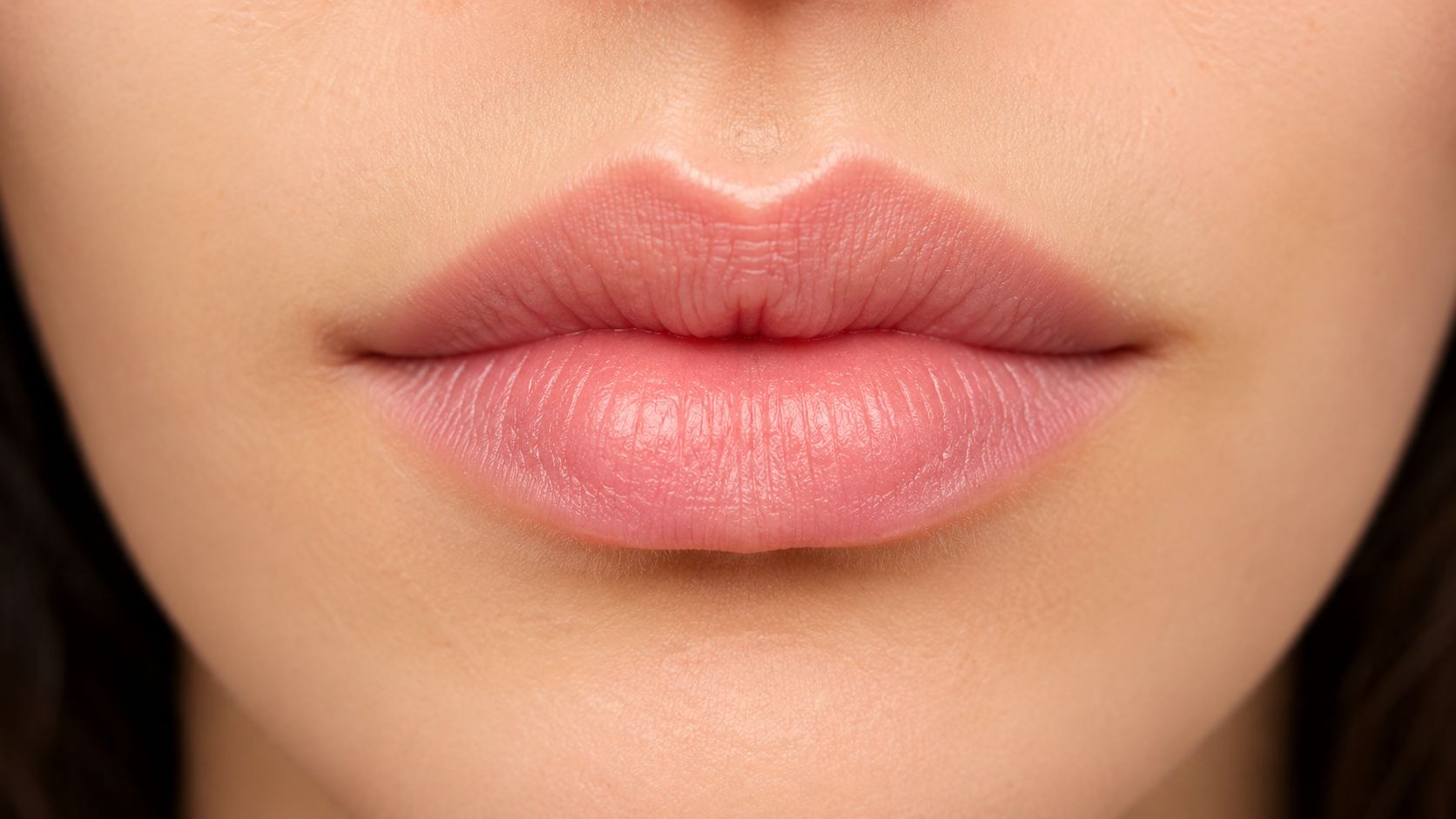
A lip flip with subtle volume combines a neurotoxin, such as Botox, Dysport, or Daxxify, with a conservative amount of dermal filler. The neurotoxin relaxes selected upper-lip muscles so the lip may roll outward slightly, while filler adds modest structure or volume. The visual change comes from combining movement and support rather than relying on filler alone.
This can suit professionals who want refinement without a strongly augmented appearance, patients with early volume loss, or people whose upper lip tends to curl inward during smiling. It may also help someone who wants more visible pink lip without asking for substantial forward projection.
ProMD Health's explanation of a subtle lip flip provides additional context for this combination approach. The treatment isn't interchangeable with filler. A lip flip changes muscle activity, while filler changes tissue volume and contour.
Combination treatment has limits
A lip flip won't create the same structural fullness as a volumizing filler plan. It may also affect how the upper lip moves, so your provider should discuss speaking, drinking, smiling, and other functional considerations. Conservative filler can support the result, but adding more product won't necessarily improve an outcome if the main issue is muscle position.
Ask one practical question: Is the concern insufficient volume, inward rolling, excessive movement, or a combination of these?
Treatment timing matters before photographs or events because both components need time to settle. Maintenance schedules may differ, and the provider should explain how product selection and dosage relate to your goals. Bring a natural-expression photograph as well as a smiling photograph. The difference between those views often helps clarify whether a lip flip, filler, or staged combination makes sense.
6. Structural Lip Lift With Filler Support
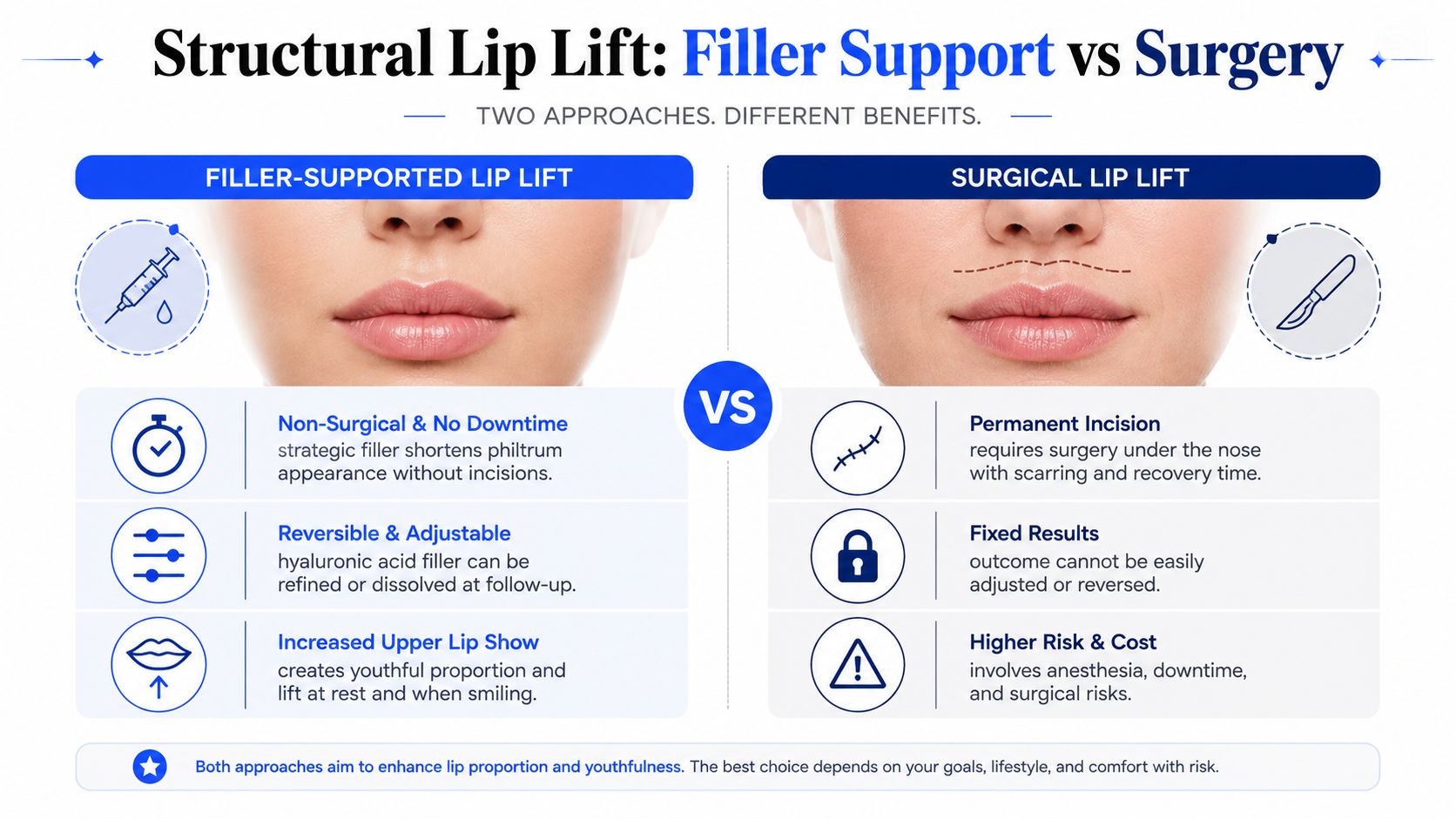
A structural lip lift with filler support aims to create a lift-like visual effect without surgery. Carefully placed filler along the upper lip border and nearby philtral area may increase upper-lip show at rest and improve the apparent relationship between the nose and mouth. The result depends heavily on existing anatomy, so this approach isn't a substitute for an actual surgical lip lift.
It may suit a mature patient with upper-lip thinning, a longer-looking philtral area, or reduced vermilion show. Some patients also consider it as part of broader facial rejuvenation involving the midface and lower face. The provider should evaluate the entire face because changing the lip-to-face relationship can expose imbalance elsewhere.
Proportion matters more than the label
A filler-supported lift can enhance the upper lip, but it cannot physically shorten tissue or reposition the nose. If a patient has significant skin excess or a structural concern that filler can't correct, a surgical consultation may be more appropriate. A non-surgical plan should include clear limits before treatment begins.
Use a consultation to compare the upper-lip show at rest, during speech, and while smiling. Ask how much of the effect comes from border support, central definition, philtral placement, or complementary treatment. A follow-up appointment allows the provider to assess healing and decide whether refinement is appropriate.
The lip region deserves particular caution because it sits close to oral bacterial flora, and reviews identify complications including vascular compromise, infection, delayed nodules, migration, and asymmetry as clinically important even when many complications are mild. Ask about injection planes, product choice, warning signs, and the provider's response plan before consenting.
7. Asymmetry Correction and Lip Balance
Asymmetry correction treats the lips as two sides of a face, not as a template that should receive identical amounts of filler. One side may have less upper-lip volume, a different Cupid's bow peak, a lower corner that sits differently, or a variation caused by prior trauma or surgery. The provider may place product selectively to improve balance while preserving the features that make your mouth look like yours.
This is often the most individualized of the seven goals. A patient with a thinner upper lip on one side may need a small, targeted correction, while someone with substantial asymmetry may benefit from a phased plan. The objective isn't perfect mathematical sameness. Faces move, and natural asymmetry can look more authentic than an overcorrected result.
Evaluate the correction from several angles
Bring photographs that show your usual expression, not only an idealized reference. During consultation, ask the provider to identify the specific difference between sides and explain whether filler can address it. Review the lips at rest, during speech, and while smiling, because asymmetry may appear differently in each position.
- Look for: Upper and lower vermilion height, corner position, Cupid's bow peaks, and side-to-side projection.
- Discuss: Whether correction should happen in one session or be staged.
- Plan for: Follow-up assessment after swelling resolves and maintenance coordinated with other facial treatments.
Filler can improve balance, but it can't correct every cause of asymmetry. Muscle activity, dental relationships, scar tissue, skeletal structure, and facial habits may all contribute. A qualified provider should explain what is realistically changeable before treatment rather than promising perfect symmetry.
7-Point Lip Filler Shape Comparison
| Technique | Implementation complexity | Resource requirements | Expected outcomes | Ideal use cases | Key advantages |
|---|---|---|---|---|---|
| Full, Voluminous Lips | Moderate–High, layered placement, proportion control | Moderate–High filler volume; experienced injector; follow-up visit | Noticeable overall volume and projection; immediate visible results, settles in ~2 weeks | Thin or age-deflated lips; patients wanting prominent fullness; complementing midface work | Dramatic rejuvenation; reversible with HA fillers; complements other injectables |
| Enhanced Lip Border Definition (Lip Contour) | Moderate, precision along vermillion border | Low–Moderate filler volume; high injector precision | Sharper lip outline and perceived fullness without added bulk | Early border blurring; professionals seeking refined, subtle enhancement | Requires less filler; polished look; improves lipstick definition |
| Gradient or Ombré Lips | High, layered, differential placement for graded effect | Moderate filler volume; experienced injector; aesthetic visualization tools helpful | Central fullness with tapered edges creating dimensional, photogenic look | Fashion-forward patients; editorial/photography-focused clients; young professionals | Sophisticated, contemporary appearance; dimension without heavy augmentation |
| Cupid's Bow Enhancement | High, precise small-area placement for symmetry | Low–Moderate filler volume; very skilled injector | Restored M-shaped upper lip, subtle lift and defined central contour | Patients with flattened Cupid's bow or seeking targeted lift | Significant visual impact with conservative volume; natural function preserved |
| Lip Flip with Subtle Volume | Moderate, coordination of neurotoxin + filler timing | Low filler volume + neurotoxin product; scheduling for staged effects | Slight upper-lip outward flip with subtle added volume; progressive full effect in 2–4 weeks | Early volume loss; professionals preferring discreet results | Natural-looking enhancement using less filler; lower perceived maintenance cost |
| Structural Lip Lift with Filler Support | Very High, advanced anatomical technique mimicking surgical lift | High filler volume; expert injector; careful planning and follow-up | Increased upper-lip show and shortened philtrum perception; dramatic non-surgical lift | Mature patients with long philtrum or significant upper-lip thinning; surgical alternatives seekers | Dramatic, non-surgical improvement; adjustable and reversible if HA used |
| Asymmetry Correction and Lip Balance | Very High, individualized assessment and corrective placement | Variable filler volume; extended consultation time; expert technique | Balanced, harmonious lip proportions tailored to unique anatomy | Patients with congenital or post-trauma asymmetry; those seeking natural individualized results | Personalized, identity-preserving outcomes addressing functional and aesthetic concerns |
Choose the Shape That Fits Your Anatomy
The best choice among different lip filler shapes depends on the effect you want to see in the mirror and in motion. Choose overall fullness when volume restoration is the priority. Choose sharper borders when the outline has blurred. Choose central definition for Cupid's bow emphasis, subtle movement for a lip flip with limited filler, lift-like proportion for more visible upper lip at rest, contemporary dimension for a gradient effect, or asymmetry correction when one side doesn't match the other.
Those goals can overlap. A patient may need border definition and a small amount of volume, or asymmetry correction alongside a lip flip. The provider's role is to translate your preference into a placement plan that respects the 24-compartment structure of the lips, facial proportions, tissue thickness, movement, and the limits of the selected product.
Bring reference images, but compare them thoughtfully. Look for similar facial structure, lip anatomy, expression, lighting, and healed timing. Ask to review conservative and staged options before choosing a more noticeable change. You should also discuss whether the practice uses products selected for contour, definition, hydration, or volume, and how the plan may change if your lips need refinement rather than additional fullness.
A 2023 FDA milestone expanded RHA 3 for use in the vermillion body, vermillion border, and oral commissures in adults aged 22 and older. In the supporting clinical study cited by the FDA, visible effects were reported in about 78% of patients at 12 weeks, 61% at 36 weeks, and 48% at one year, illustrating why placement and duration matter alongside volume (FDA-related clinical material). The same material noted common injection-site reactions in 95% of patients, including bruising, swelling, firmness, pain, redness, lumps, skin color change, or itching. Your provider should review expected reactions, less common complications, and when to seek help.
ProMD Health offers dermal filler treatments for facial contouring and lip enhancement, along with neurotoxin services that may be relevant to combination planning. Visit the practice's website to review available services, prepare your questions, and arrange a consultation focused on your anatomy and realistic goals.
ProMD Health provides lip filler and other non-surgical aesthetic treatments through its medical practice, with product and technique selection based on individual assessment. Visit ProMD Health to explore dermal filler and neurotoxin services, then request a consultation to discuss which lip enhancement goal best fits your proportions, movement, and expectations.


