Wrinkle reduction treatment: Ultimate Guide 2025
Why Understanding Your Wrinkle Treatment Options Matters
Wrinkle reduction treatment has evolved far beyond a one-size-fits-all approach. With options ranging from muscle-relaxing injectables to collagen-rebuilding laser therapies, understanding what’s right for your skin is the key to achieving smoother, more youthful results.
Quick Guide to Wrinkle Treatments That Work:
- Neurotoxins (Botox, Dysport, Daxxify) – Block muscle movement to smooth dynamic wrinkles; results last 3-6 months
- Dermal Fillers (Juvederm, Restylane, Sculptra) – Restore volume and fill static wrinkles; results last 6+ months
- Laser Resurfacing – Stimulates collagen production for improved texture; results last up to 5 years
- Chemical Peels & Microneedling – Exfoliate and trigger skin renewal; minimal downtime
- Topical Retinoids & Vitamin C – Support collagen production and protect against sun damage; daily use required
Injectables are the most popular non-surgical anti-aging treatment, with over 4 million procedures performed in 2020 alone. The challenge isn’t finding a treatment—it’s finding the right one for your skin type, wrinkle pattern, and goals.
What doesn’t work? Most at-home remedies offer limited results compared to professional procedures. While a healthy lifestyle helps prevent new wrinkles, it typically can’t reverse existing ones.
This guide breaks down the science behind each major wrinkle reduction treatment to help you understand your options. I’m Scott Melamed, President and CEO of ProMD Health. My background in biotechnology and clinical research from Johns Hopkins informs our evidence-based approach, ensuring we recommend the most effective solutions for every patient.
Understanding the Root Causes of Facial Wrinkles
To choose the most effective wrinkle reduction treatment, it helps to know what causes wrinkles in the first place. Your skin ages through two main processes: intrinsic and extrinsic aging.
Intrinsic aging is the natural decline of collagen and elastin—the proteins that keep skin firm and smooth. Starting in our late 20s, we lose about 1% of our collagen each year, causing skin to become thinner and less elastic over time.
Extrinsic aging is caused by external factors that accelerate this process. The biggest culprit is sun exposure (photoaging), which breaks down collagen and elastin. Other factors include smoking, which restricts blood flow and slows collagen production, and diet. Even repetitive facial expressions, like smiling or frowning, can eventually create permanent creases as skin loses its ability to bounce back.
Understanding these root causes allows for a strategic approach to wrinkle reduction treatment. Learn more about comprehensive ways to refresh your appearance on our page about skin rejuvenation.
Dynamic vs. Static Wrinkles
Not all wrinkles are the same, and they require different treatments. Knowing the difference is key to getting the results you want.
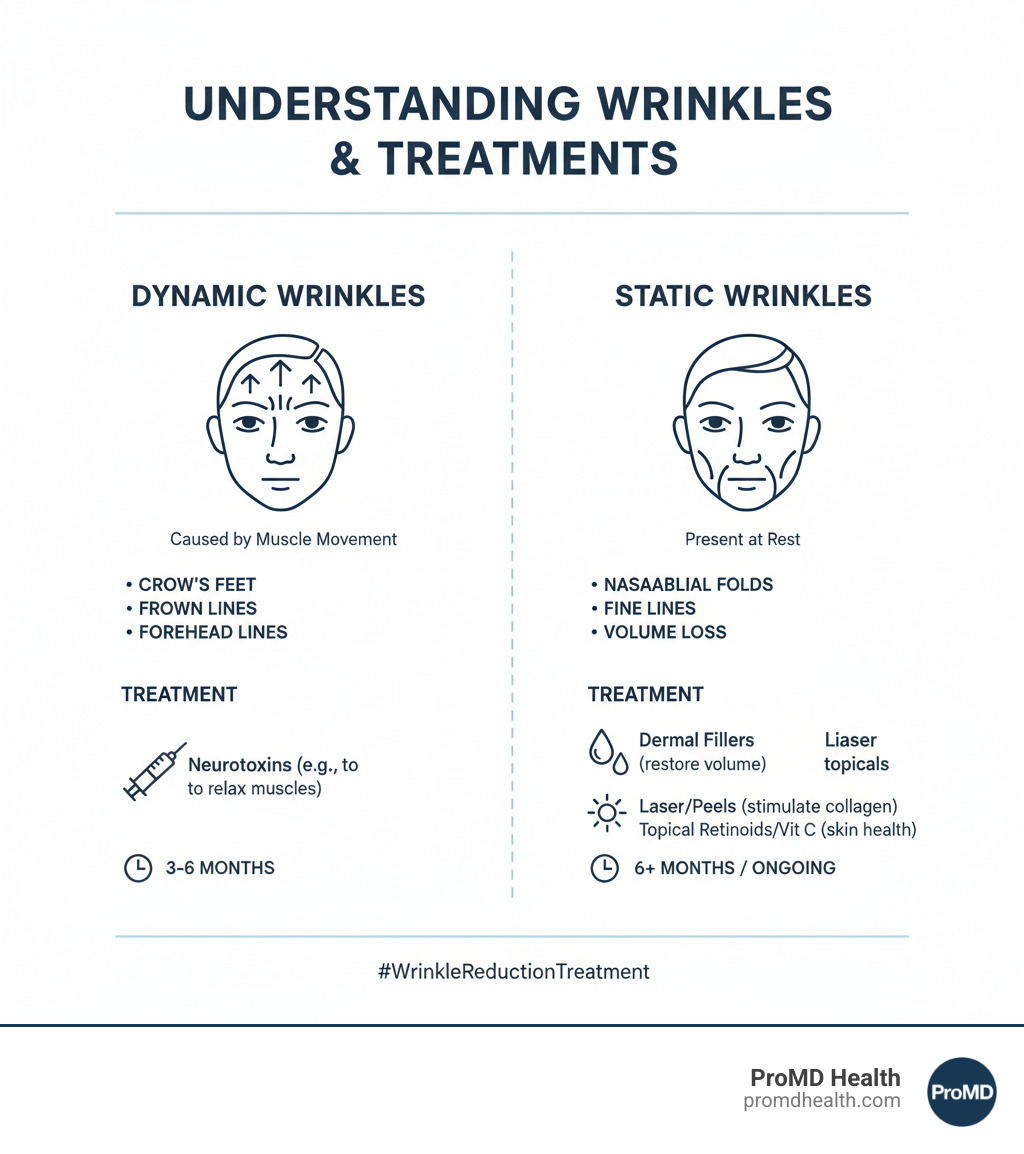
Dynamic wrinkles are caused by muscle movement and appear when you make facial expressions. Examples include crow’s feet, frown lines, and forehead lines. Over time, these can become permanent.
Static wrinkles are visible even when your face is at rest. They result from volume loss, collagen decline, and gravity. Common examples are nasolabial folds (lines from the nose to the mouth) and marionette lines.
This distinction is crucial: dynamic wrinkles respond best to treatments that relax muscles, while static wrinkles need treatments that restore volume or rebuild collagen. Modern wrinkle reduction treatment offers targeted solutions for both. Curious if Botox can help with existing wrinkles? Find out here: Does Botox Erase Existing Wrinkles?
Professional Wrinkle Reduction Treatment: Injectables
Injectables are a leading choice for effective wrinkle reduction treatment. These minimally invasive, FDA-approved procedures offer powerful solutions for both dynamic and static wrinkles with minimal downtime. They are the most popular non-surgical anti-aging treatment, with millions performed annually.
Injectables fall into two main categories: neurotoxins and dermal fillers. Neurotoxins relax the muscles that cause expression lines, while dermal fillers restore lost volume to fill in static wrinkles and hollows. Most procedures take just minutes, providing significant improvement without surgery or a lengthy recovery. At ProMD Health, we create personalized treatment plans to help you achieve a refreshed, natural look. For a general overview, see our page on What are Dermal Fillers?.
Neurotoxins for Dynamic Wrinkles (Botox, Dysport, Daxxify)
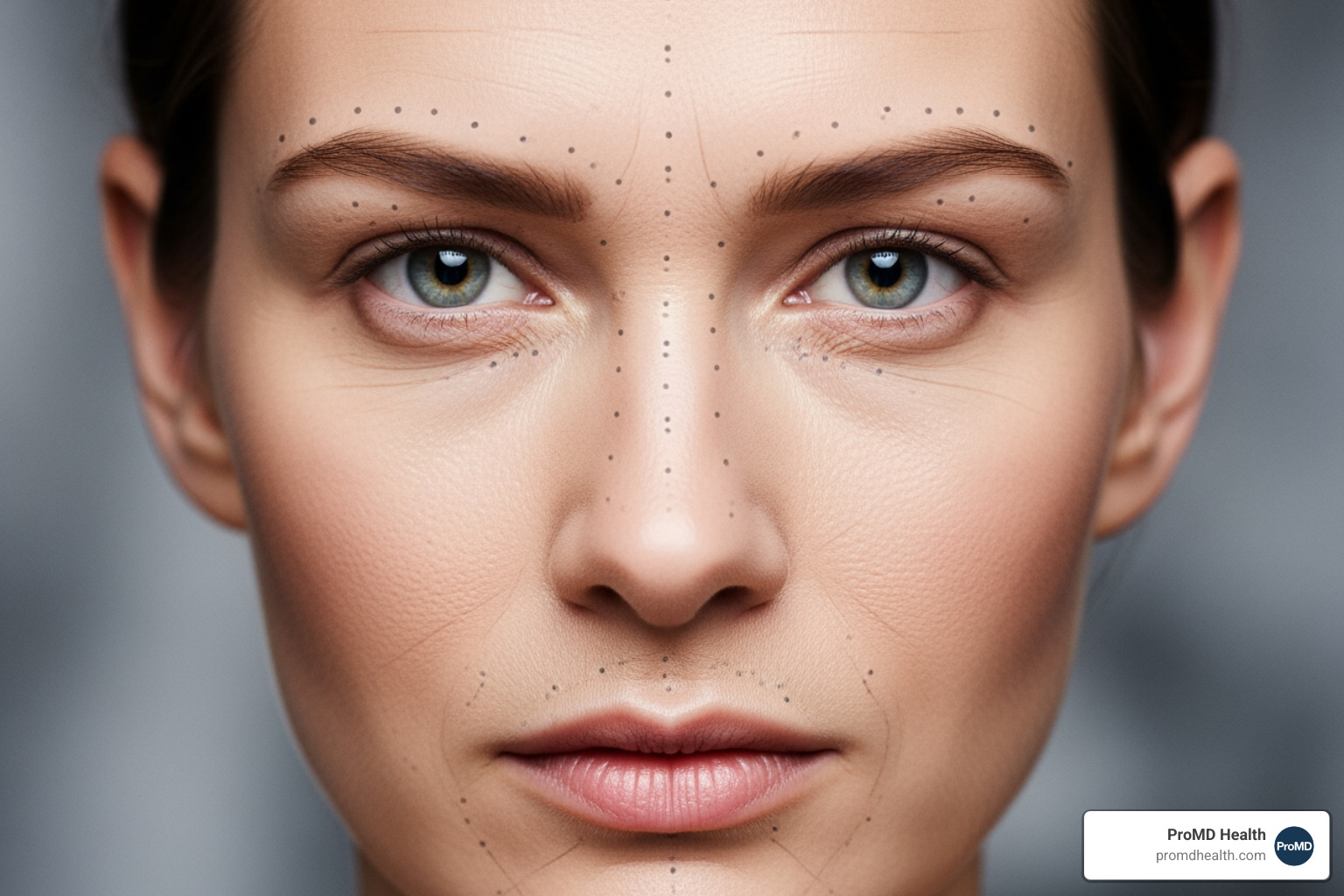
Neurotoxins like Botox, Dysport, and Daxxify are the gold standard for dynamic wrinkles caused by facial expressions. They work by temporarily blocking nerve signals to specific muscles, preventing them from contracting. This smooths the overlying skin and helps prevent new creases from forming.
Common treatment areas include forehead lines, glabellar lines (frown lines), and crow’s feet. The procedure offers natural-looking results with minimal downtime, though mild, temporary side effects like redness or bruising can occur. Results from Botox and Dysport typically last 3-4 months, while the newer Daxxify can last up to 6 months or more. The choice between products depends on the treatment area and your provider’s recommendation. For a detailed comparison, see What’s the Difference Between Botox and Dysport?.
Explore all our neurotoxin options at Featured Service: Botox, Daxxify, Dysport.
Dermal Fillers for Static Wrinkles and Volume Loss
Dermal fillers are the solution for static wrinkles and age-related volume loss. They work by replenishing substances like hyaluronic acid and collagen that diminish over time.
- Hyaluronic Acid (HA) Fillers (Juvederm, Restylane): These gel-like fillers attract water to add volume and hydration. They are ideal for softening lines, plumping lips, and restoring volume to areas like the cheeks. Results typically last 6 to 18 months.
- Poly-L-Lactic Acid (PLLA) Fillers (Sculptra): This type of filler is a collagen stimulator. It prompts your body to produce its own collagen over several months, leading to gradual, natural-looking results that can last up to two years. It’s excellent for restoring overall facial volume in areas like the cheeks and temples.
Fillers are versatile and can be used to treat cheeks, lips, marionette lines, and nasolabial folds. Side effects are usually mild, such as temporary swelling or bruising. To learn which fillers might be best for you, visit What are the Best Fillers for the Face?. You can also see our full range of options at Featured Service: Dermal Fillers.
Advanced Skin Resurfacing and Rejuvenation Therapies
Beyond injectables, a range of non-injectable wrinkle reduction treatment options can transform your skin from within. These advanced therapies focus on improving skin texture, tone, and natural collagen production through a process called collagen induction therapy. They are excellent for addressing concerns like rough texture, sun damage, and large pores, and can be combined with injectables for comprehensive rejuvenation. While some involve recovery time, the results are often worth it. Compare your options at Facelift vs. Non-Surgical Facial Rejuvenation in Washington, DC.
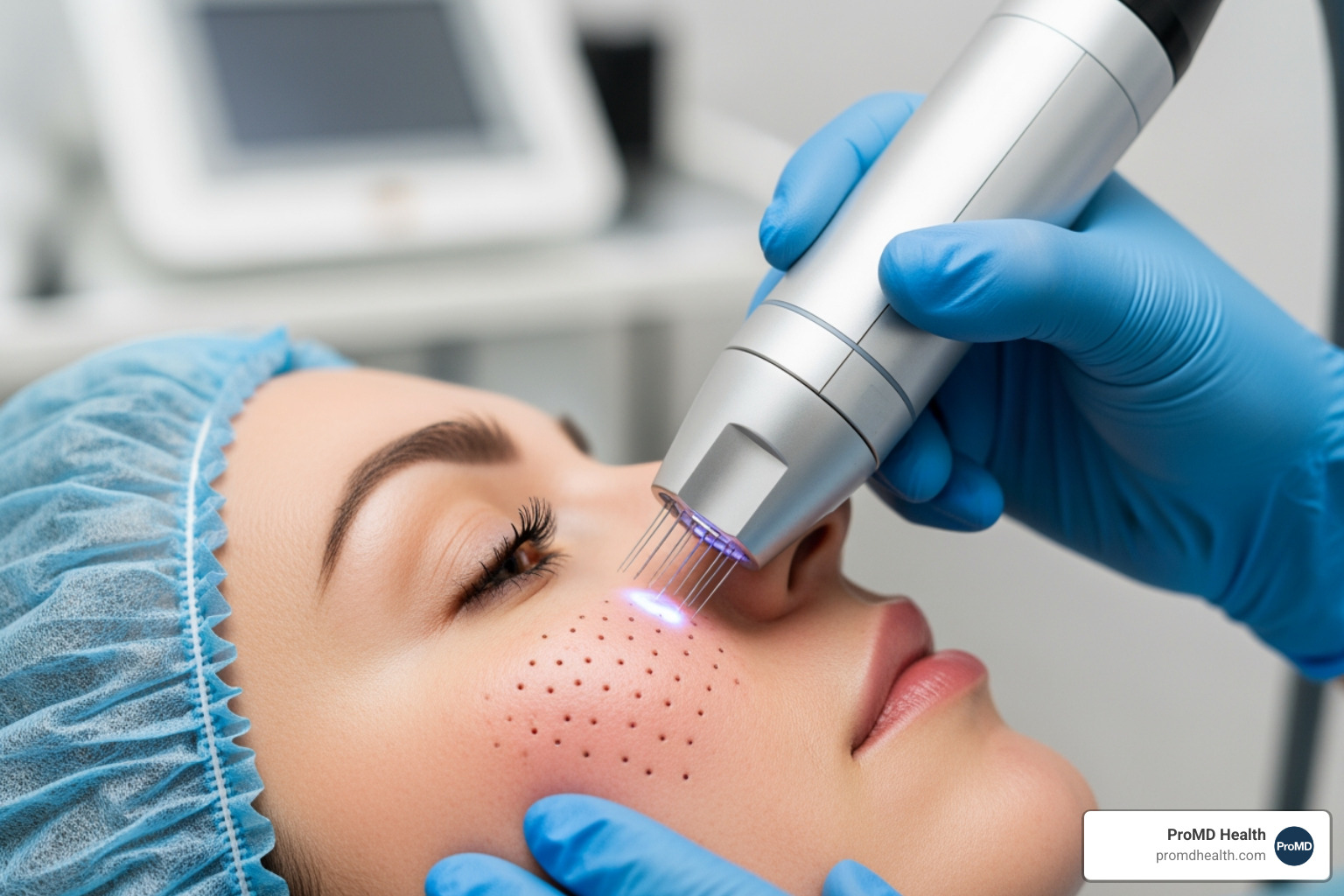
Laser Therapy and Light Treatments
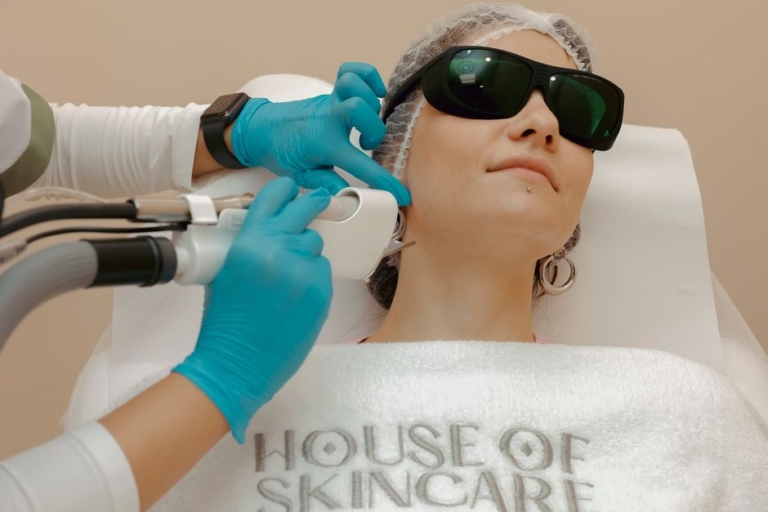
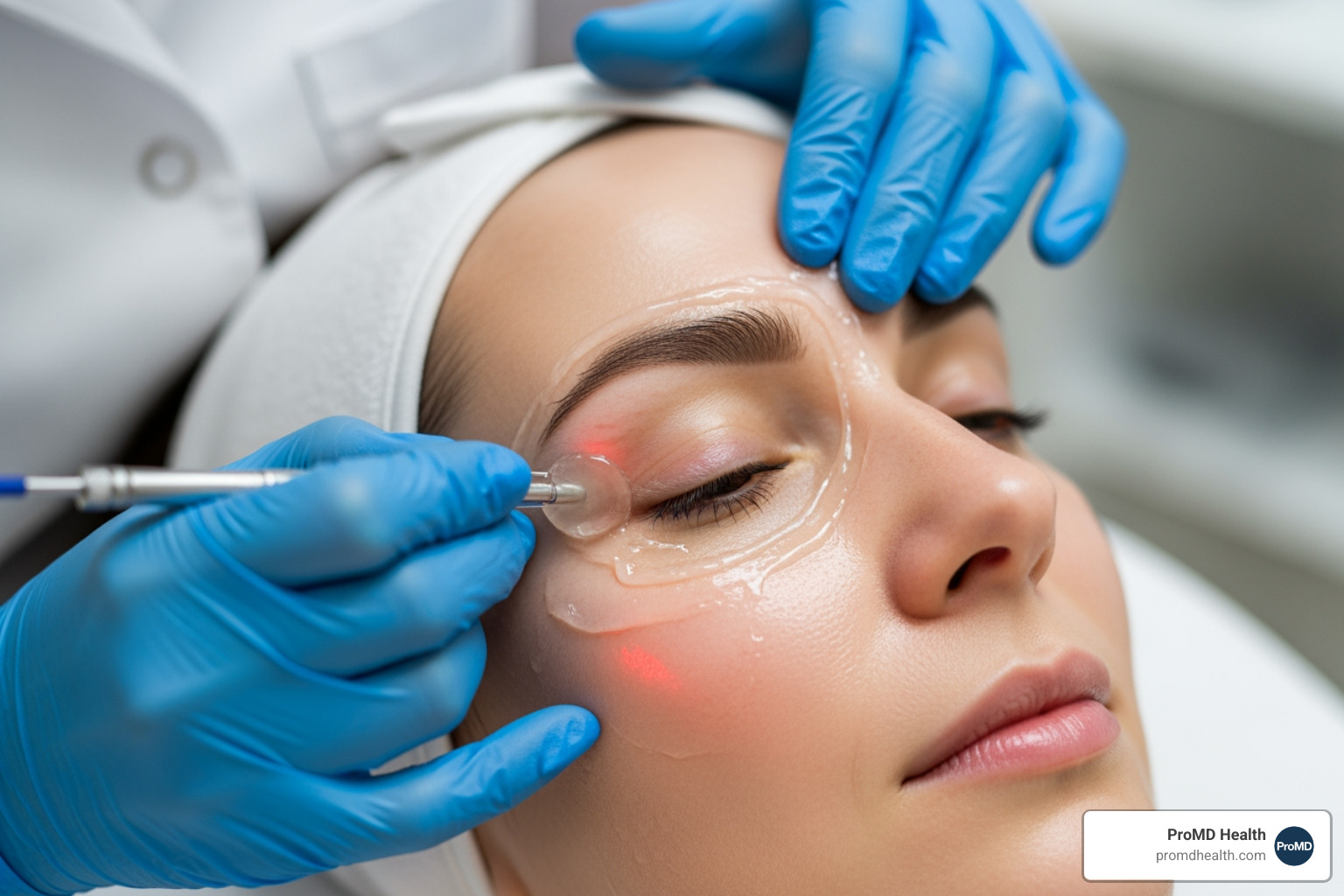
Laser and light-based treatments use concentrated energy to renew the skin by stimulating collagen and elastin production. They can tackle fine lines, wrinkles, pigmentation, and uneven texture with results that can last for years.
- Laser Resurfacing: This customizable treatment can be adjusted in intensity to match your concerns and recovery preferences. Results can last up to five years.
- CoolPeel: A modern laser treatment that resurfaces the skin with minimal downtime, reducing wrinkles and stimulating collagen.
- Forever Young BBL: This treatment uses intense pulsed light to target sunspots, freckles, and uneven tone while improving overall texture. Learn more at Treat Pigmented Facial Skin: Forever Young BBL Treatments.
Recovery typically involves temporary redness and swelling, similar to a sunburn. More intensive treatments may require 1-3 weeks for peeling and healing. Working with an experienced provider is crucial to minimize risks.
Microneedling, Chemical Peels, and Fat Grafting
These treatments offer powerful, complementary approaches to skin rejuvenation.
- Microneedling: This procedure uses fine needles to create controlled micro-injuries, triggering the body’s healing response to produce new collagen and elastin. It improves fine lines, scars, and pore size with minimal downtime (1-3 days of redness). For more details, visit What is Micro Needling?.
- Chemical Peels: A specialized solution exfoliates damaged outer skin layers, revealing healthier skin and stimulating collagen. Peels range from superficial (no downtime) to deep (1-3 weeks recovery), addressing fine lines, discoloration, and sun damage.
- Fat Grafting: This innovative technique uses your body’s own fat to restore volume and improve skin quality. Fat is harvested, purified, and reinjected into the face. It offers natural, long-lasting results, with about one-third of the volume remaining permanently. Recovery involves several days to a couple of weeks of swelling and bruising. Explore this option at Services: Micro/Nano Fat Grafting.
At-Home Care and Lifestyle: Prevention and Support
While professional wrinkle reduction treatment delivers dramatic changes, your daily habits are the foundation for lasting results. Combining in-office procedures with consistent at-home care is the most effective anti-aging strategy.
The Role of Topical Skincare
Only a few skincare ingredients are scientifically proven to be effective for wrinkle reduction.
- Retinoids: These vitamin A derivatives (including retinol and prescription Retin-A) are the champions of anti-aging. They accelerate cell turnover and boost collagen and elastin production, reducing fine lines and improving texture. Initial use may cause temporary redness or dryness, and daily sunscreen is essential as they increase sun sensitivity.
- Vitamin C Serums: This potent antioxidant protects skin from environmental damage, supports collagen synthesis, and helps repair sun damage. A 2022 clinical trial on collagen and ascorbic acid showed that vitamin C improved crow’s feet, pigmentation, and skin sagging.
A routine of retinoids at night and vitamin C in the morning, paired with sunscreen, is a powerful trio for extending the benefits of professional treatments.
The Impact of Lifestyle and Natural Remedies
Healthy habits are essential for preventing wrinkles and maintaining skin health, though they can’t reverse deep wrinkles like professional treatments can.
- Sun Protection: This is the most important anti-aging step. Sun exposure causes up to 80% of visible facial aging. Apply broad-spectrum sunscreen with SPF 30+ daily. For more guidance, see this resource on wearing sunscreen.
- Healthy Diet: What you eat affects your skin. Research from 2018 on diet and wrinkles links healthier eating to fewer wrinkles. Focus on antioxidant-rich foods. Learn more about skin-supporting nutrients at Vitamins Found in Food That Support Healthy Skin.
- Hydration, Sleep, and Not Smoking: Staying hydrated keeps skin plump. Avoiding smoking prevents premature aging caused by restricted blood flow. Sleeping on your back can help prevent “sleep lines.”
- Natural Remedies: At-home remedies like aloe vera, facial massage, or essential oils may offer temporary moisturizing or mild benefits, but scientific evidence for significant wrinkle reduction is lacking. They cannot match the corrective power of professional wrinkle reduction treatment.
Frequently Asked Questions about Wrinkle Reduction Treatment
Choosing the right wrinkle reduction treatment can be overwhelming. Here are answers to the most common questions we hear from patients.
How do I know which wrinkle treatment is right for me?
The best treatment depends on your unique skin, wrinkle type (dynamic or static), and aesthetic goals. A consultation with a qualified provider is essential. During your visit, we’ll assess your skin, discuss your concerns, and use advanced technology like AI simulation to help you visualize potential outcomes. We create a personalized plan, which often involves combining treatments—like neurotoxins for forehead lines and fillers for cheek volume—to achieve the most natural and effective results.
What is the recovery time for wrinkle treatments?
Recovery time varies by procedure:
- Neurotoxins (Botox, Daxxify): Virtually no downtime. You may see mild, temporary redness.
- Dermal Fillers & Microneedling: Minimal downtime, with 1-3 days of possible mild swelling, redness, or bruising.
- Chemical Peels & Laser Resurfacing: Varies from no downtime (for light peels or CoolPeel) to 1-3 weeks of recovery for more intensive treatments.
- Fat Grafting: Swelling and bruising in the treated and donor areas can last for several days to a couple of weeks.
Your provider will give you detailed post-treatment instructions for your specific procedure.
Are wrinkle treatment results permanent?
Most non-surgical wrinkle reduction treatment options provide long-lasting but temporary results, requiring maintenance to preserve the effects as your skin continues to age.
- Neurotoxins: Last 3-6 months.
- Dermal Fillers: Last 6 months to 2 years, depending on the type.
- Laser Resurfacing: Results can last up to 5 years, as they stimulate your own collagen.
- Fat Grafting: Offers some of the longest-lasting results, with a portion of the transferred fat remaining permanently.
Think of these treatments as an ongoing investment in your appearance. Regular maintenance sessions are key to preserving your refreshed, youthful look.
Your Path to Smoother, Youthful Skin
Navigating wrinkle reduction treatment options is an empowering journey toward revealing your most confident self. At ProMD Health, we believe your treatment plan should be as unique as you are.
Our expert providers create personalized plans by thoroughly assessing your skin, wrinkle type, and aesthetic goals. We often use combination therapy—strategically pairing treatments like neurotoxins, dermal fillers, and laser therapy—to achieve comprehensive, natural-looking rejuvenation. This integrated approach ensures every aspect of your skin’s aging is addressed for a harmonious outcome.
We are committed to integrating the latest innovations in wrinkle reduction treatment, from longer-lasting injectables like Daxxify to advanced laser therapies like CoolPeel and AI simulation technology that lets you preview potential results. This ensures you have access to the safest, most effective options available.
Your journey is a partnership. We’re here to guide you, answer your questions, and help you feel more confident. Ready to begin your personalized path to radiant skin? Contact us today for a consultation. To learn about other advanced treatments, Explore advanced plasma skin rejuvenation options and find how we harness your body’s natural healing power for remarkable results.