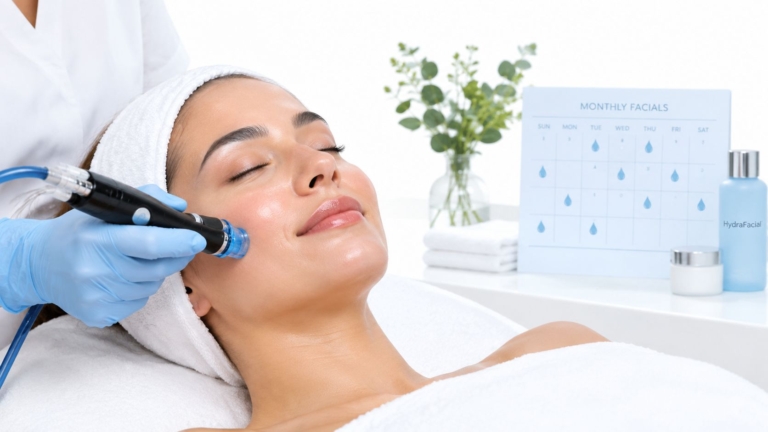
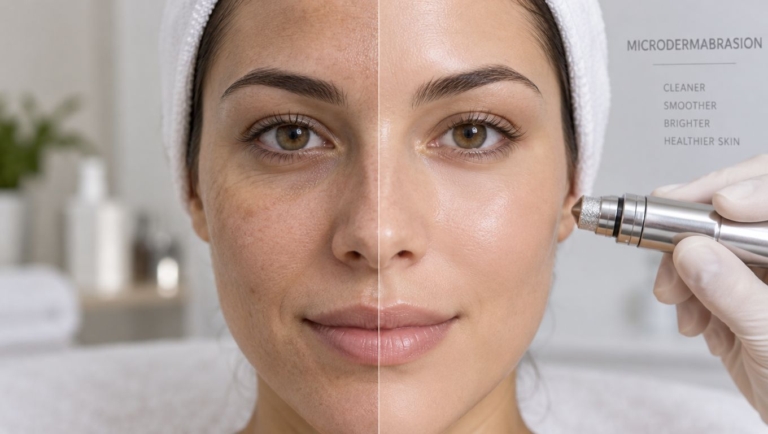
HydraFacial is a 30 to 45 minute hydradermabrasion facial that cleanses, exfoliates, extracts, and infuses hydration in one device-driven treatment, often with no downtime and an immediate glow. It has grown from 3.2 million treatments worldwide in 2019 to roughly 5 million treatments per year by 2025, which helps explain why so many people now ask about it before a wedding, photos, travel, or a skin reset (HydraFacial device growth and treatment volume).
If your skin looks tired, feels rough, or seems clogged even after you wash it well, you're in the same spot as many first-time facial clients. A lot of people aren't dealing with one dramatic problem. They're dealing with a mix of little things at once: dullness, blackheads around the nose, uneven texture on the cheeks, and skin that feels dry and oily at the same time.
That's where confusion starts. People hear “facial” and assume something relaxing but temporary. Then they hear “device-based treatment” and worry it must be harsh. HydraFacial sits in the middle. It's gentler than many people expect, but it's also more structured than a traditional spa facial.
Table of Contents
- Introduction to What a Hydrafacial Treatment Really Is
- How Hydrafacial Technology Works Under the Skin
- What Happens During a Hydrafacial Step by Step
- Benefits and Skin Concerns Hydrafacial Helps Most
- Results Timeline Downtime and How Long Glow Lasts
- Who Is a Good Candidate and Who Should Wait
- Next Steps to Book Your Hydrafacial at ProMD Health
Introduction to What a Hydrafacial Treatment Really Is
A useful way to think about what a HydraFacial treatment is starts with what it is not. It's not deep resurfacing. It's not a manual extraction session where skin is left red and irritated. It's not a collagen-building procedure designed to change deeper skin structure.
It is a professional hydradermabrasion treatment that combines several skin-care steps into one appointment. The device moves through a sequence anyone can understand easily: loosen what's sitting on the surface, clear what's trapped in pores, then flood the skin with hydration.
Why people book it in real life
Most clients don't walk in asking for “stratum corneum management.” They say things like:
- My skin looks flat: Makeup isn't sitting well, and the surface feels rough.
- My pores look busy: The nose and chin look congested even with regular cleansing.
- I want glow without peeling: They want refreshed skin, but they don't want visible recovery time.
- I need a reset before an event: They want skin to look cleaner, smoother, and more hydrated quickly.
That combination is why HydraFacial has become so common in aesthetic settings. The treatment has moved into the mainstream with more than 35,000 devices installed worldwide and providers reportedly performing about 1.5 treatments every second globally (global HydraFacial adoption figures).
Practical rule: HydraFacial works best when you want visible polish and pore cleanup with minimal interruption to your week.
Where it fits in a skin plan
In a professional spa menu, HydraFacial usually sits alongside treatments like chemical peels, dermaplaning, and medical-grade skincare plans. It's often a maintenance treatment, not a stand-alone answer for every concern.
If you've been wondering whether it's worth booking, the question isn't “Is HydraFacial good?” The better question is, “Is this the right tool for my skin concern, my timeline, and my tolerance for downtime?” That's what makes the rest of the details matter.
How Hydrafacial Technology Works Under the Skin
HydraFacial belongs to the category of hydradermabrasion. That term sounds technical, but the idea is simple. Instead of relying on dry abrasion alone, the treatment combines exfoliation with fluid movement across the skin.
Think of it less like sanding and more like a controlled rinse-and-polish system. The goal is to remove surface buildup while keeping the skin supported with hydration.
The wand and the vortex effect
The treatment is delivered through a handheld wand with different tips or passes. Independent clinical-trial language describing the Syndeo and Elite MD systems says they use patented Vortex Fusion Technology to cleanse, exfoliate, and hydrate in about 30 to 45 minutes (clinical trial system description).
The easiest analogy is a gentle power wash followed by a nourishing rinse. The “vortex” idea refers to the way the device helps lift debris while delivering solution onto the skin. That matters because the treatment isn't only pulling things out. It's also helping move hydrating ingredients in.
What the treatment is actually doing
At the skin level, the primary action is fairly surface-focused:
- Exfoliation of the stratum corneum: This is the outermost layer of dead skin cells.
- Pore clearing: Congestion, oil, and debris are loosened and removed.
- Hydration support: Humectants and moisturizers help the skin feel softer and look fresher.
The same clinical description notes a light peel followed by infusion of a booster blend containing growth factors, humectants, and moisturizers (HydraFacial procedural description). In plain language, that means the skin is prepped, swept clean, and then treated with ingredients chosen to support water content and smoothness.
HydraFacial is mainly a surface-renewal and hydration treatment. It isn't meant to create deep dermal remodeling the way more intensive procedures aim to do.
Why that distinction matters
People often overestimate what one facial can change. HydraFacial can make the skin feel cleaner, look brighter, and appear more refined. It can also be a good fit for comedonal acne, oily skin, dullness, and mild texture issues because those concerns live closer to the surface and around the pore opening.
A person with deeper scarring, significant laxity, or a goal of stronger collagen remodeling usually needs a different treatment plan. HydraFacial can still complement that plan, but it shouldn't be mistaken for the same type of intervention.
What Happens During a Hydrafacial Step by Step
The technology sounds polished, but the appointment itself usually feels straightforward. Many individuals are surprised by how comfortable it is. There's no numbing cream in the standard flow, and the sensation is often described as cool, wet, lightly suctioned, and very manageable.
The appointment flow in the treatment room
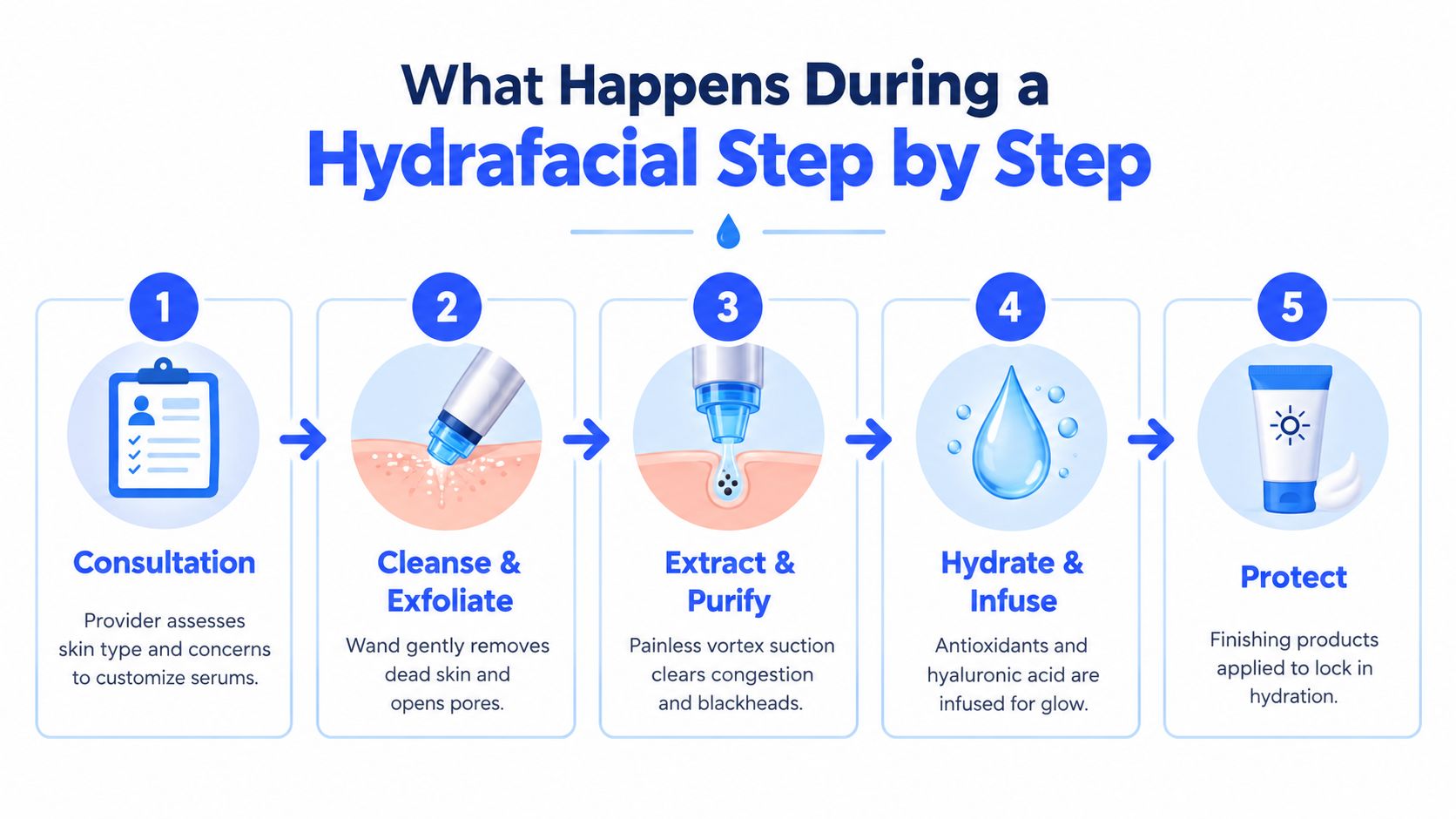
Most visits follow a sequence like this:
-
Skin assessment first
Your provider or esthetician looks at oiliness, congestion, sensitivity, breakouts, and dehydration. This step shapes how aggressive or conservative the treatment should feel. -
Cleanse and exfoliate pass
The first pass removes surface buildup and starts loosening dead skin cells. Many clients notice the skin already feels smoother. -
Extraction phase
Instead of manual squeezing, the device uses a gentle suction-style pass to lift congestion from the pores. It's often why HydraFacial appeals to people who want cleaner pores without the soreness they associate with traditional extractions. -
Hydration and infusion
Serums and boosters are delivered after the skin has been cleared and prepped. This is usually when the skin starts to look more reflective and freshly moisturized. -
Finish and protect
The visit typically ends with calming or protective products, especially sun protection.
What it feels like and what it doesn't
HydraFacial usually doesn't feel sharp or abrasive. If you've never had a device facial before, the best comparison is a small wand moving across the face with a combination of liquid glide and mild vacuum sensation.
Patients don't need recovery time because the treatment is designed around gentle exfoliation rather than aggressive injury. That's one reason it's often scheduled before work events, travel, or social plans.
For a practical pre-appointment checklist, how to prepare for a facial helps set expectations about skin prep, products, and timing.
After the appointment
Right after treatment, skin often feels cleaner and more hydrated than it did going in. Many clients describe it as the “my face feels smooth when I touch it” effect.
A provider may also recommend a home routine with medical-grade skincare to help maintain that freshly treated feel between appointments. That part matters more than people think. A good in-office treatment can reset the skin, but the daily routine influences how quickly roughness, congestion, or dehydration return.
Benefits and Skin Concerns Hydrafacial Helps Most
A lot of patients ask a smart question at this point. What is this treatment best for, and what is it not built to do?
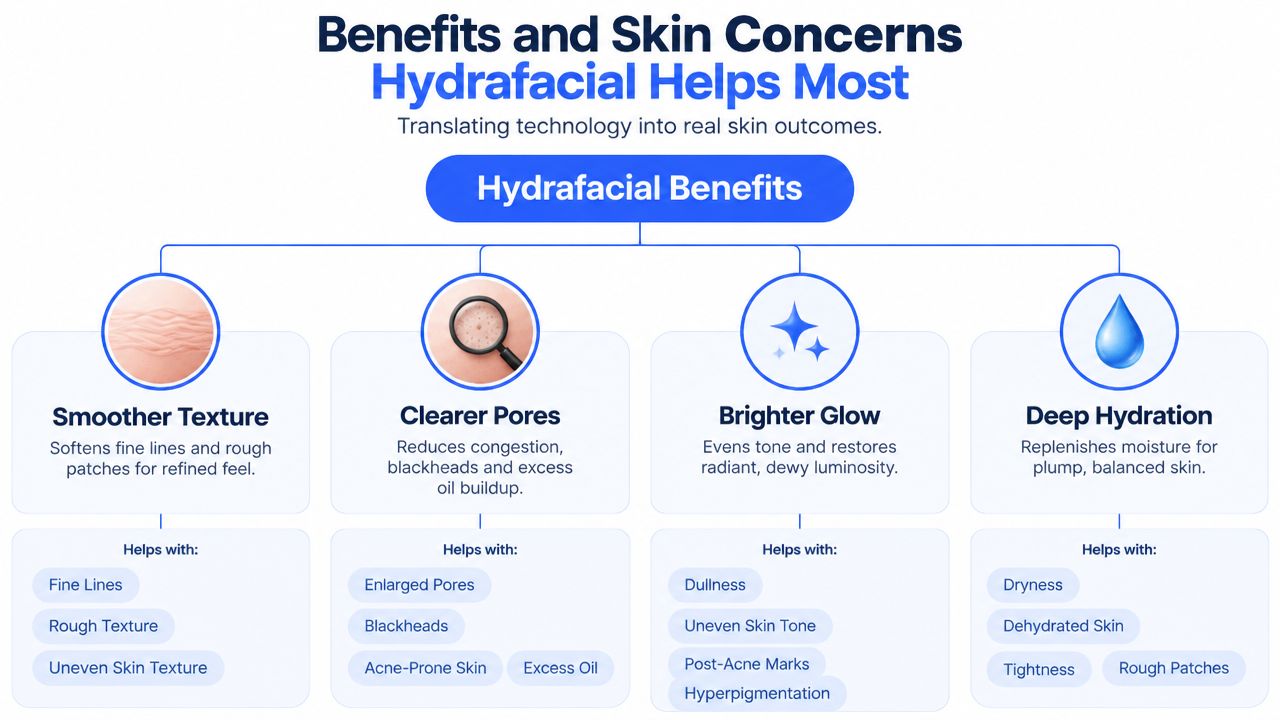
HydraFacial works best as a hydradermabrasion treatment for skin that needs a cleaner surface, better hydration, and a more polished look without downtime. The device uses Vortex Fusion Technology to loosen debris, clear congested pores, and deliver hydrating solutions in the same session. That combination is why the skin often looks brighter right away.
The easiest way to understand the benefits is to separate immediate glow from longer-term change. The immediate glow usually comes from three simple things: surface exfoliation, removal of excess buildup, and fresh hydration sitting where light can reflect more evenly. Durable change is more modest. With repeated treatments and the right home care, some patients see better control of congestion and a smoother overall skin feel, but this is still a maintenance-focused facial, not a deep remodeling procedure.
The skin concerns it matches best
HydraFacial is often a good fit for concerns that live at the surface or inside the pore opening, including:
- Blackheads and whiteheads: Suction and exfoliation can help clear compacted oil and debris.
- Oily or congestion-prone skin: The treatment helps remove excess surface oil and clean out areas that feel clogged.
- Dullness: Fresher exfoliated skin reflects light more evenly, so the complexion looks less tired.
- Mild rough texture: Skin can feel softer and more even after the outer buildup is removed.
- Dehydrated-looking skin: Infused hydrating steps can give the skin a fuller, smoother finish.
Patients sometimes confuse all texture concerns with the same problem. They are not. Roughness from buildup often improves with HydraFacial. Deeper acne scars, laxity, and concerns tied to collagen loss usually need a different treatment category.
That distinction matters if you are choosing between exfoliating options. A comparison of HydraFacial vs chemical peel helps clarify why one treatment may suit sensitive, event-prep, or maintenance goals better, while another may be chosen for stronger resurfacing.
What the published evidence shows
Published research on HydraFacial is still limited, but there is some encouraging early data. One peer-reviewed 12-week study of 20 patients with acne reported improvement after a series of six clarifying treatments. Investigators and patients both reported clearer skin by the end of the study, and the treatment was generally well tolerated (peer-reviewed acne study on HydraFacial).
Here is the practical takeaway. The evidence supports HydraFacial most clearly as a treatment for short-term improvement in smoothness, pore congestion, and hydration, especially for acne-prone or maintenance-minded patients. It does not place HydraFacial in the same category as procedures used for significant tightening, deep scar revision, or major collagen stimulation.
Where it fits in a broader aesthetic plan
In a clinic setting, HydraFacial often serves as a routine skin-reset service. It can help keep the canvas cleaner and more hydrated between other medically directed treatments.
At ProMD Health, that role matters because services are selected through a cash-pay model and matched to the concern being treated. HydraFacial fits best within the practice's approved aesthetic services for maintenance, refresh, and pore-focused care. It is a useful option when the goal is visible refinement with little interruption to daily life.
Results Timeline Downtime and How Long Glow Lasts
The biggest reason HydraFacial gets repeat interest is simple. You usually see something right away. Skin often looks fresher the same day, and it typically feels smoother as soon as you touch it.
That immediate payoff is real, but it's also where many people get confused. The visible “glow” doesn't mean the skin has undergone deep structural change. It usually means the surface is cleaner, better hydrated, and reflecting light more evenly.
What to expect right after treatment
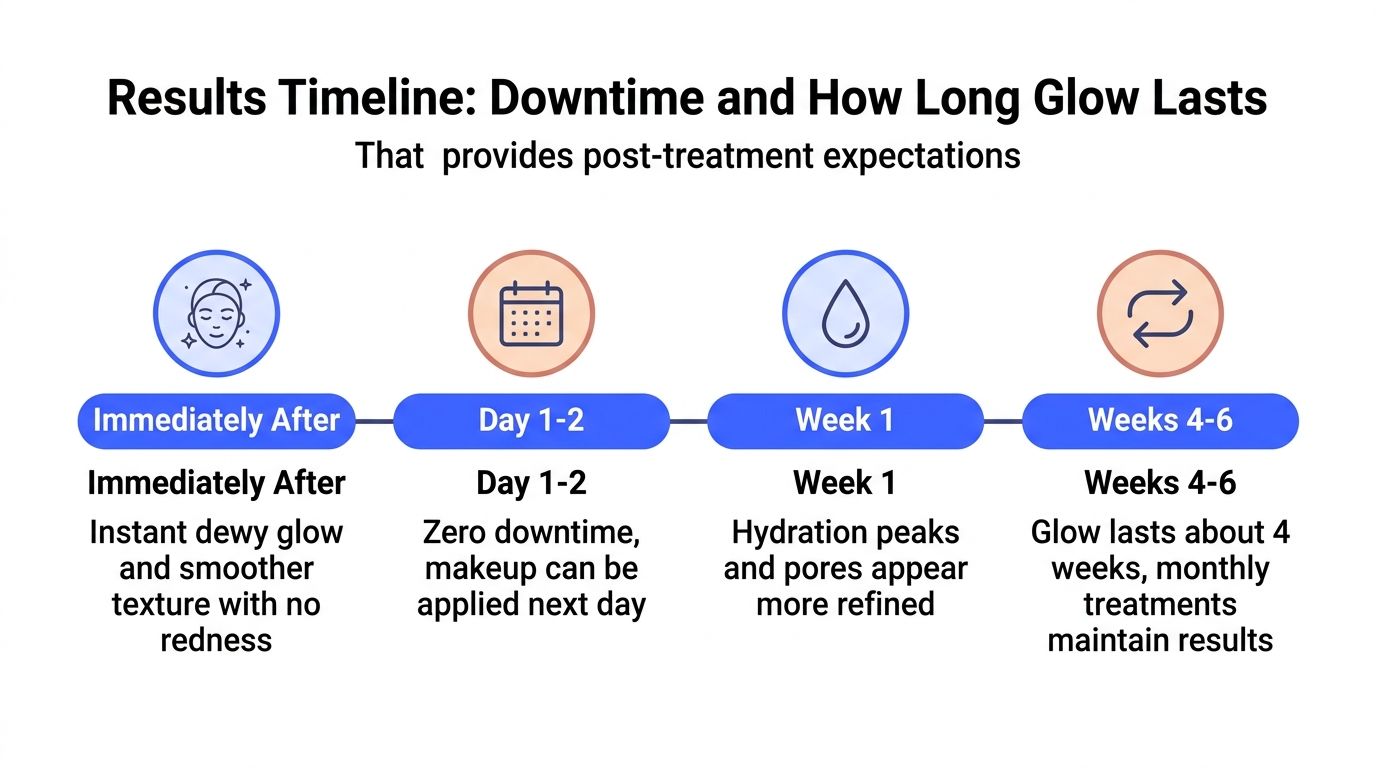
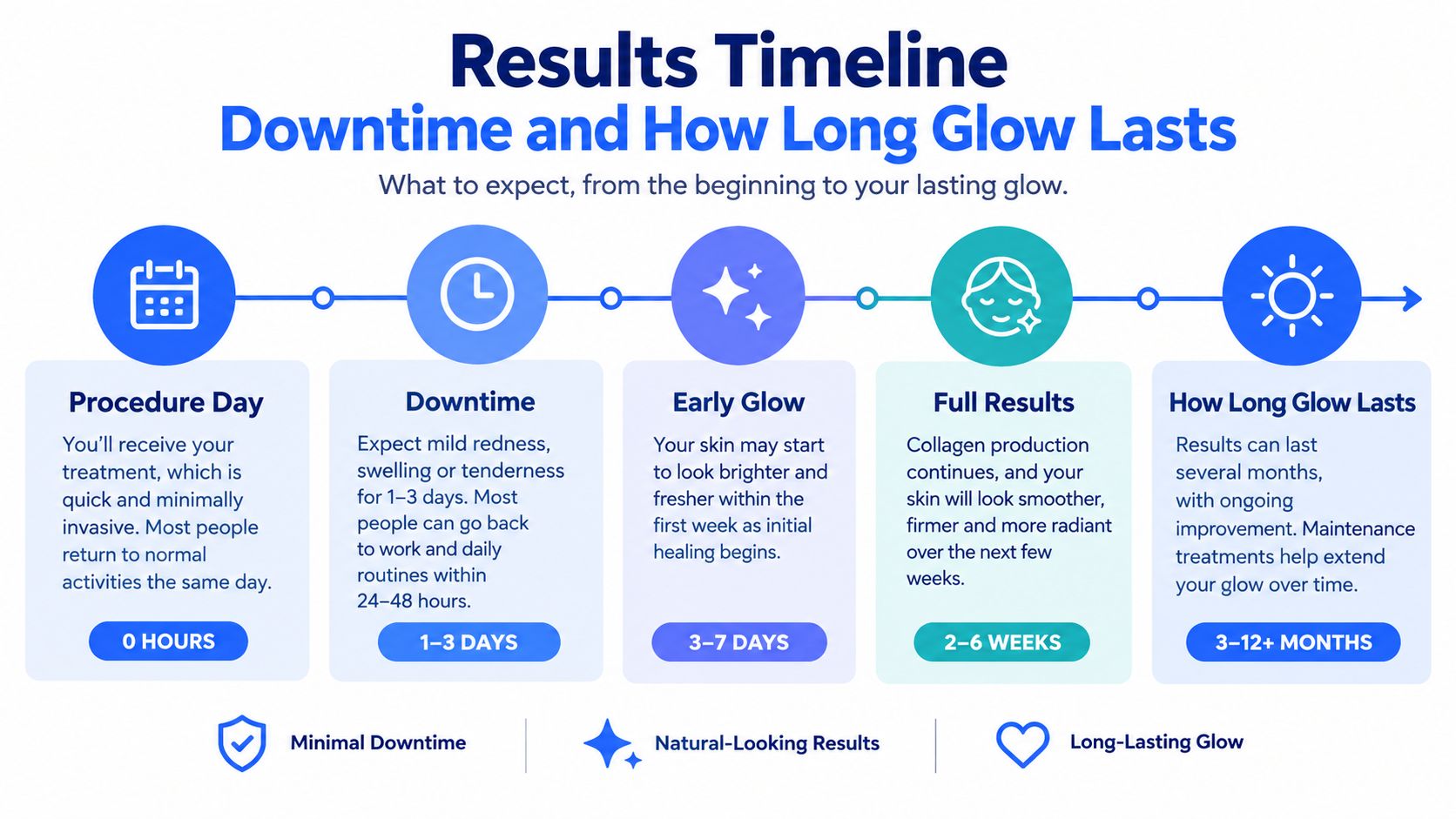
For many clients, the timeline looks something like this:
- Same day: Skin appears dewier and feels smoother.
- Shortly after: Clients go back to normal activity without extended downtime.
- Following days: The skin can continue to look polished if the home routine stays gentle and hydrating.
Because the treatment is low-downtime, it's often scheduled before events when someone wants skin to look refreshed without peeling or obvious recovery.
If you're planning aftercare, what you should avoid after a Hydrafacial can help you protect that fresh post-treatment finish.
What we still don't know well enough
This is the part many marketing pages skip. Public content often explains HydraFacial well as a gentle, multi-step exfoliation and extraction facial, but the durability question is harder to answer.
Independent summaries note that the published human evidence base is extremely small, with only a few clinical studies and no randomized HydraFacial comparison against sham treatment, manual facials, or other devices. The same review notes that one 2024 study found microscopic skin changes after treatment, but those changes were no longer visible at a 2-week follow-up (independent review of HydraFacial evidence limits).
That doesn't mean the treatment isn't useful. It means the most defensible expectation is short-term visible improvement, with ongoing maintenance if you like how your skin looks and feels afterward.
How to schedule it realistically
If your goal is event prep, don't think of HydraFacial as a once-in-a-lifetime skin transformation. Think of it as a reliable polishing treatment. It's best for when you want your skin to look cleaner, calmer, and more hydrated on a near-term timeline.
That mindset helps you judge the treatment fairly. You're not paying for deep remodeling. You're choosing a low-downtime service designed to improve surface quality and pore clarity.
Who Is a Good Candidate and Who Should Wait
A good candidate for HydraFacial is usually someone who wants visible refreshment without taking time away from work, parenting, travel, or events. The best-fit client often has congestion, blackheads, oily areas, dullness, or mild uneven texture and wants a treatment that feels active without being intense.
It can also be a comfortable entry point for someone new to professional skin treatments. If stronger resurfacing feels intimidating, HydraFacial is often easier to tolerate because the treatment is controlled and generally gentle.
A simple self-check
You may be a good fit if these sound like you:
- You want low downtime: You'd like to return to normal activities the same day.
- Your main concerns are surface-level: Rough texture, clogged pores, excess oil, and tired-looking skin are the focus.
- You prefer gradual maintenance: You're looking for a repeatable facial, not a one-time aggressive correction.
- You like guided skincare: You're open to pairing treatments with a home regimen to keep results going.
When it makes sense to wait
Some situations call for postponing treatment. Independent dermatology guidance commonly lists these reasons to avoid HydraFacial:
- Active skin infections or lesions: Broken or infected skin should be evaluated first.
- Sunburn: Recently burned skin is already inflamed.
- Uncontrolled rosacea flare: Skin that is actively flaring may react poorly.
- Recent isotretinoin use: One dermatology source specifies a 6-month waiting period unless a provider clears you sooner (HydraFacial side effect and contraindication guidance).
The device itself also has a regulatory use profile. HydraFacial MD has been FDA cleared for use in clearing blackheads, whiteheads, and oily skin, tied to the device's ability to combine exfoliation, extraction, and hydration in one procedure (HydraFacial FDA-cleared uses overview).
If your skin is actively irritated, infected, or medically unstable, the smartest choice is usually to pause and get cleared first.
Practical booking notes
If you're considering HydraFacial through a multi-location practice, verify that the service is available at your chosen office before booking. Specific devices, protocols, and spa offerings can vary by location.
Payment expectations matter too. For this service category, assume a cash-pay model unless your clinic tells you otherwise in writing. Don't assume aesthetic facial services are covered by insurance.
Next Steps to Book Your Hydrafacial at ProMD Health
By this point, the definition should feel much clearer. HydraFacial is a device-driven hydradermabrasion treatment designed to cleanse, exfoliate, extract, and hydrate in a single appointment. It's best understood as a surface-renewal and hydration facial with fast visible payoff, not a deep remodeling procedure.
That distinction helps with decision-making. If your goals are cleaner pores, smoother texture, brighter skin, and a fresh look without downtime, HydraFacial makes sense. If your goals involve major scar revision, tightening, or deeper structural change, you'll likely need a different category of treatment or a combination plan.
How to book carefully
Before scheduling, keep these basics in mind:
- Choose an approved location: ProMD Health location targeting should stay within its active markets, including Annapolis, Arlington, Ashburn, Bel Air, Bethesda, Columbia, Easton, Fort Lauderdale, Hutto, Lafayette, Lewes, Timonium, Tox Bar in Baltimore City, Tysons Corner, Washington, DC, Wellington, and Westminster.
- Confirm service availability: HydraFacial may be offered through spa services, but exact treatment options can vary by office.
- Expect cash-pay service: Don't plan around insurance reimbursement for this type of visit.
- Expect real clinic imagery: Brand standards favor actual lifestyle photography, treatment rooms, and provider-approved media rather than AI-generated provider images.
A consultation is still the best next move if you're deciding between HydraFacial, a peel, dermaplaning, or a broader skincare plan. A good provider will look at your skin in person, ask about sensitivity and breakouts, and help you match the treatment to the result you want.
If you're also building an at-home routine, provider-curated skincare from a medical-grade skin shop can make the in-office result last longer and look more consistent between appointments.
ProMD Health offers HydraFacial within its spa services, along with chemical peels, dermaplaning, and provider-curated skincare that can support smoother, clearer-looking skin between visits. If you want help deciding whether HydraFacial fits your skin goals and which location offers it, visit ProMD Health to request a consultation or explore your options.