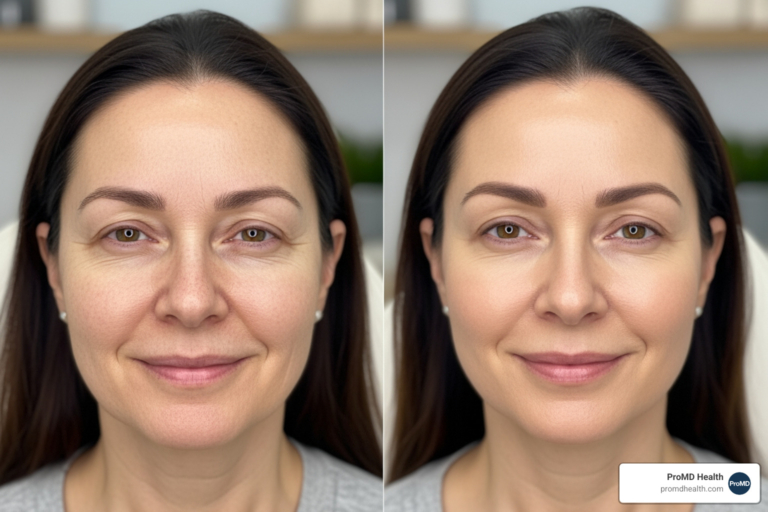
Tear Trough Fillers: Ultimate 2025 Refresh
Understanding the Basics of Tear Trough Rejuvenation
Tear trough fillers are non-surgical injectable treatments that use hyaluronic acid to restore volume to the hollow area beneath your lower eyelids. This reduces the appearance of dark circles and creates a more refreshed, youthful look by smoothing the transition between the under-eye area and cheek.
Quick Facts About Tear Trough Fillers:
- What they treat: Hollowness, shadows, and dark circles under the eyes
- How they work: Injectable hyaluronic acid gel restores lost volume
- Procedure time: 30-60 minutes
- Results last: 9-18 months on average
- Downtime: Minimal (usually 24-48 hours of mild swelling)
- Cost: $684-$1,500 per treatment
- Reversible: Yes, with hyaluronidase enzyme
If you feel you look tired despite getting enough sleep, the cause may be your tear trough—the groove between your lower eyelid and upper cheek. Volume loss in this area from genetics, aging, or weight loss creates shadows that look like dark circles.
Tear trough fillers offer a practical solution. By strategically injecting hyaluronic acid gel, practitioners can instantly fill this hollowness, soften shadows, and help you look as rested as you feel with immediate, natural-looking results and minimal downtime.
I’m Scott Melamed, President and CEO of ProMD Health. Our expert injectors have helped thousands of patients achieve natural-looking results with tear trough fillers. My background in biotechnology and healthcare management reinforces our commitment to combining scientific understanding with personalized care for the best outcomes.
Understanding Tear Troughs: More Than Just Tired Eyes
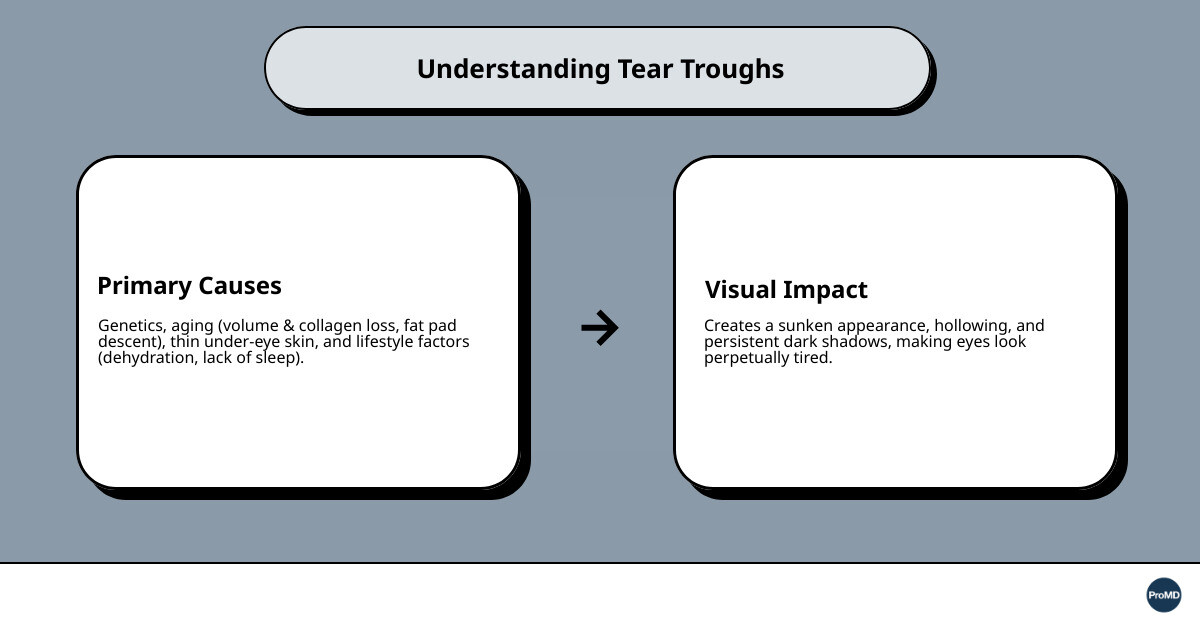
That delicate groove running between your lower eyelid and upper cheek is your tear trough. When it becomes more pronounced, it creates shadows that look like dark circles, even when you’re well-rested. These shadows are optical illusions caused by hollowing and volume loss, creating a sunken appearance known as a tear trough deformity.

The underlying cause is typically a combination of volume loss and skin laxity. As supportive structures change, the once-smooth transition from eye to cheek becomes a visible valley. For a detailed explanation, an excellent anatomy and treatment review explains the structural changes happening beneath the surface.
What Causes Tear Troughs?
Understanding why tear troughs develop can help you make sense of what you’re seeing in the mirror.
Genetics play a significant role. If your parents had prominent tear troughs, you might have inherited a similar facial structure or fat distribution. Some people are simply born with deeper grooves that become more noticeable with age.
The aging process is the biggest contributor. As we get older, our bodies produce less collagen, the protein that keeps skin firm. The thin under-eye skin becomes even thinner, making underlying structures more visible.
Simultaneously, the fat pads that provide youthful fullness begin to shrink or shift downward. This fat pad descent creates a hollow where volume used to be, making the tear trough more apparent. The combination of thinning skin and disappearing fat is the perfect recipe for shadows and hollowing.
Lifestyle factors can worsen existing tear troughs. Dehydration can make skin look dull, while a chronic lack of sleep can cause puffiness that draws more attention to the area. Significant weight loss can also reduce facial fat, including the padding around your eyes.
Fortunately, because we understand the causes, we can address them effectively with tear trough fillers, which restore lost volume without surgery or extended downtime.
How Tear Trough Fillers Refresh Your Under-Eyes
The secret ingredient in most tear trough treatments is hyaluronic acid (HA), a naturally occurring substance in your skin that acts as nature’s moisturizer. This gel-like substance can hold up to 1,000 times its weight in water.
When a practitioner injects HA filler beneath the skin of your tear trough, it works in three ways:
- It restores volume to hollow spaces, lifting the sunken area and softening deep creases.
- It attracts hydration, improving skin quality from within and giving your under-eye area a subtle, healthy glow.
- It smooths the transition between your lower eyelid and cheek. The sharp drop-off that creates shadows is replaced by a gentle, natural slope.
The result is a refreshed, well-rested appearance that looks completely natural. You achieve these results with minimal downtime, and most people return to normal activities within a day or two.
The Key Benefits of Tear Trough Fillers
Here’s what makes this treatment so appealing:
- Immediate results: You’ll see a difference as soon as you leave your appointment. The hollowness is reduced, and your eyes look brighter right away.
- Reduced dark circles: Many dark circles are actually shadows caused by hollowing. By filling these hollows, the shadows disappear, and the under-eye area looks naturally brighter.
- Youthful appearance: Addressing volume loss in the tear trough area, one of the first places to show age, can make you look years younger.
- Boosted confidence: When you’re not worried about looking tired, you can feel more confident in your daily interactions.
- Long-lasting but not permanent: Results typically last 9 to 18 months, offering a long-term solution without a permanent commitment.
- Reversible: Hyaluronic acid fillers can be completely dissolved with an enzyme called hyaluronidase, providing a crucial safety net and peace of mind.
The Tear Trough Filler Procedure: From Consultation to Recovery
The process is designed to ensure you get the results you want, starting with a thorough consultation and ending with a refreshed, natural look.
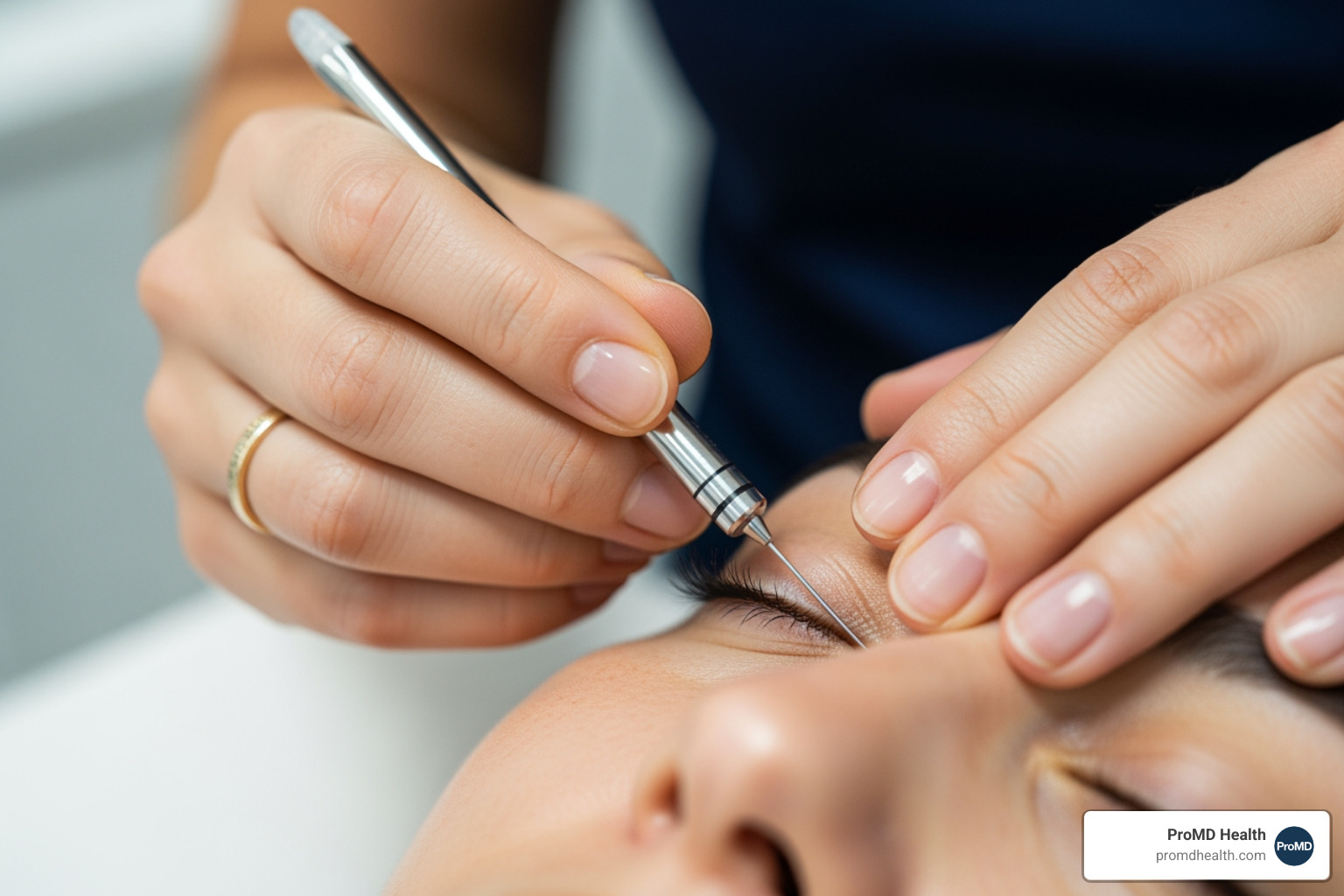
Your initial consultation is a crucial conversation. At ProMD Health, our practitioners perform a detailed facial assessment, examining your skin quality, tear trough depth, and overall facial structure. We listen to your goals to create a personalized treatment plan, explaining the type of filler, the amount needed, and the results you can expect.
The actual procedure is quick and comfortable. We first apply a numbing cream to the area. For the injection technique, we often prefer a cannula—a blunt-tipped tool that is gentler on the delicate under-eye tissue and significantly reduces the risk of bruising and swelling. The entire procedure duration is typically 30 to 60 minutes, with most patients feeling only minimal pressure or a slight pushing sensation.
Before and After Your Treatment: Do’s and Don’ts
Following pre- and post-care instructions helps minimize side effects and maximize your results.
Before your appointment, for about a week, avoid blood thinners like aspirin, ibuprofen, vitamin E, and fish oil. Also, avoid alcohol for 24-48 hours beforehand. Arrive with a clean, makeup-free face and inform your practitioner of all medications and allergies.
After your treatment, for the first 48 hours, apply ice packs intermittently to reduce swelling and sleep with your head liftd. For at least 48-72 hours, avoid strenuous exercise, excessive sun or heat (saunas, hot tubs), and putting pressure on the area. Wait at least 48 hours before applying makeup. We’ll schedule a follow-up appointment about two weeks later to assess your results and perform any necessary touch-ups.
Potential Risks and Side Effects
While tear trough fillers are very safe with an experienced practitioner, all medical procedures have risks.
Common side effects are mild and temporary, including bruising, swelling, redness, and tenderness at the injection sites. These typically resolve within a week.
Less common complications include the Tyndall effect (a bluish tint under the skin if filler is placed too superficially), lumps or bumps, or slight asymmetry. These issues can usually be corrected by massage or by dissolving the filler with hyaluronidase.
The most rare but serious risk is vascular occlusion, where filler is accidentally injected into a blood vessel. This can lead to serious complications, including tissue death or vision problems. This risk is exceptionally rare when your treatment is performed by a skilled injector with extensive knowledge of facial anatomy, which is why your choice of practitioner is so important. We adhere strictly to FDA guidance on dermal fillers to ensure your safety. If you experience severe pain, vision changes, or worsening skin discoloration after treatment, contact your practitioner immediately.
Is This Treatment Right for You? Candidacy and Alternatives
Tear trough fillers are a personal choice and not suitable for everyone. A thorough consultation ensures the treatment aligns with your goals.
Ideal candidates generally have mild to moderate hollowness under their eyes, good skin elasticity, and realistic expectations. The goal is to refresh your appearance, not completely transform it. You should be in good physical health and free from conditions that could complicate the procedure.
Conversely, fillers may not be the best solution if you have severe under-eye bags or excess skin, as adding volume can worsen the appearance. Very thin skin can also increase the risk of visible lumps or the Tyndall effect. We postpone treatment for anyone with active skin infections, certain autoimmune diseases, or bleeding disorders, as well as those who are pregnant or breastfeeding.
Comparing Tear Trough Fillers to Other Options
It’s helpful to see how fillers stack up against other treatments for the under-eye area.
| Treatment Option | Mechanism of Action | Downtime | Longevity | Cost (Approx.) | Risks |
|---|---|---|---|---|---|
| Tear Trough Fillers | Injectable Hyaluronic Acid (HA) restores volume | Minimal (1-3 days) | 9-18 months | $684 – $1,500 | Bruising, swelling, redness, Tyndall effect, lumps, rare vascular occlusion |
| Lower Eyelid Surgery | Surgical removal of excess skin/fat (Blepharoplasty) | 1-2 weeks | Permanent | $3,000 – $7,000+ | Infection, adverse anesthesia reaction, prolonged swelling, scarring, ectropion (eyelid turning out) |
| Fat Transfer (Fat Grafting) | Autologous fat injected to restore volume | 1-2 weeks | Long-lasting/Semi-permanent | $2,000 – $5,000+ | Swelling, bruising, infection, uneven absorption, fat necrosis, less precise than HA fillers |
| Topical Treatments | Creams/serums with active ingredients (Retinol, Vit C) | None | Ongoing use required | $50 – $200+ | Irritation, allergic reaction, limited effectiveness for significant hollowness |
| Laser Treatments | Stimulates collagen, tightens skin | 1-7 days | Several months to years | $500 – $2,000+ | Redness, swelling, hyperpigmentation, scarring |
| Skin Boosters | Injectable non-cross-linked HA hydrates skin | Minimal (1-2 days) | 6-9 months | $300 – $800 | Bruising, swelling, redness |
Note: Costs are approximate and can vary by location and practitioner.
Tear trough fillers hit a sweet spot: noticeable results with minimal downtime, moderate cost, and the safety of being reversible.
Advanced Approaches and Combination Therapies
Often, the best results come from combining treatments. We can create a custom plan to address all aspects of under-eye aging.
- Skin boosters deeply hydrate and improve skin quality without adding volume.
- Microneedling boosts collagen and improves skin texture and fine lines.
- Mid-face fillers like Juvederm Voluma or Restylane Defyne can lift the cheeks, providing support to the under-eye area for a smoother transition.
- Botox relaxes muscles to soften crow’s feet and other expression lines.
- Polynucleotides are bio-stimulators that promote cell renewal and improve skin elasticity.
- Tixel Thermal Fractional Rejuvenation, BBL Facial Rejuvenation, and Halo Laser Skin Resurfacing are advanced options to tighten skin and improve tone and texture.
Longevity, Cost, and Finding a Qualified Practitioner
Understanding the longevity, cost, and how to find the right provider are key steps in your decision-making process.

How Long Do the Results of Tear Trough Fillers Typically Last?
Tear trough fillers offer lasting but not permanent results. Most patients enjoy their refreshed appearance for 9 to 18 months. Your body gradually and safely absorbs the hyaluronic acid over time.
Several factors influence longevity, including your individual metabolism, the specific type of filler used (like Juvederm Volbella XC, which is FDA-approved for this area), and your lifestyle. Good skincare and sun protection can help prolong the effects.
The Average Cost of Tear Trough Fillers
The cost of tear trough fillers typically ranges from $684 to $1,500. The American Society of Plastic Surgeons reports an average cost of $684 per syringe, and most patients require one to two syringes.
This price reflects several factors:
- Practitioner experience: Highly skilled injectors with specialized training ensure safety and superior results.
- Geographic location: Costs can vary between our offices in major cities like Washington D.C. and smaller communities.
- Number of syringes: This depends on your individual anatomy and goals.
During your consultation, we provide a clear, personalized quote. As a cosmetic procedure, tear trough fillers are not covered by health insurance.
How to Choose the Right Injector
Choosing the right injector is the most important decision you will make. The under-eye is an anatomically complex area that requires an expert hand.
- Look for credentials: Seek out board-certified professionals like dermatologists, plastic surgeons, or highly trained aesthetic nurses. You can use resources from the American Board of Cosmetic Surgery, the American Society of Plastic Surgeons, or the American Academy of Dermatology.
- Ask about experience: Inquire specifically about their experience with tear trough fillers. Ask how many procedures they have performed.
- Review their work: Look at before and after photos to ensure their aesthetic style aligns with your goal of a natural, refreshed look.
- Read patient reviews: See what others say about their experience and results.
- Trust the consultation: A qualified practitioner will conduct a thorough evaluation, discuss risks and realistic outcomes, and answer all your questions without rushing you.
At ProMD Health, our reputation is built on expertise, transparency, and personalized care. Our team of expert injectors understands the art and science of tear trough fillers, and we are committed to providing the safest, most effective treatment possible.
Frequently Asked Questions about Tear Trough Fillers
Here are straightforward answers to the questions we hear most often at ProMD Health.
Does getting tear trough filler hurt?
Most patients report minimal discomfort. We use a strong topical anesthetic cream before the procedure to numb the area. Additionally, many modern fillers contain lidocaine, a local anesthetic, which provides further numbing from within during the injection.
You may feel a slight pinch or a pressure sensation, but the procedure is not typically described as painful. The quick treatment time (30-60 minutes) also means any discomfort is brief.
Can tear trough fillers be dissolved?
Yes. This is a key safety feature of hyaluronic acid-based fillers. If you are unhappy with the result or experience a complication, we can inject an enzyme called hyaluronidase to dissolve the filler. The enzyme works quickly, usually within 24 to 48 hours, completely reversing the treatment.
This reversibility provides peace of mind, knowing that you are not locked into a permanent change and that most issues can be easily corrected.
Will I look unnatural after getting under-eye filler?
Our philosophy is to create natural-looking results. The goal is for you to look refreshed and well-rested, not “done.” A skilled injector avoids an overfilled or puffy appearance by using a conservative approach, starting with a small amount of filler and adding more only if necessary.
We focus on creating a smooth, gradual transition from the lower eyelid to the cheek, eliminating the shadow without creating unnatural volume. By using precise techniques, often with a cannula, we ensure the filler is placed correctly for a subtle, beautiful improvement. You should look like the best version of yourself—just with the benefit of a great night’s sleep.
Conclusion
Tear trough fillers offer a remarkable non-surgical solution for those seeking to refresh their under-eye area and banish the tired look caused by hollows and dark shadows. By restoring lost volume with hyaluronic acid, these fillers provide immediate, natural-looking results that can significantly boost your confidence and leave you looking as vibrant as you feel.
The journey to a refreshed appearance begins with understanding the causes of tear troughs, the benefits and process of filler treatment, and the importance of choosing a highly qualified practitioner. While the treatment is generally safe and effective, being aware of potential risks and appropriate aftercare is crucial for optimal outcomes.
At ProMD Health, we are dedicated to helping you “Look Younger and Feel Younger” through personalized, advanced aesthetic care. Our expert team, serving locations like Annapolis, Arlington, and Washington D.C., is committed to providing you with the highest standard of treatment and ensuring your experience is both safe and satisfying.
Are you ready to say goodbye to tired-looking eyes and accept a more rested, radiant you?
Book your personalized consultation today at ProMD Health and let us help you explore how tear trough fillers can transform your appearance.