Plasma pen for dark spots: 1 Crucial 2025 Warning
What You Need to Know About Plasma Pen for Dark Spots
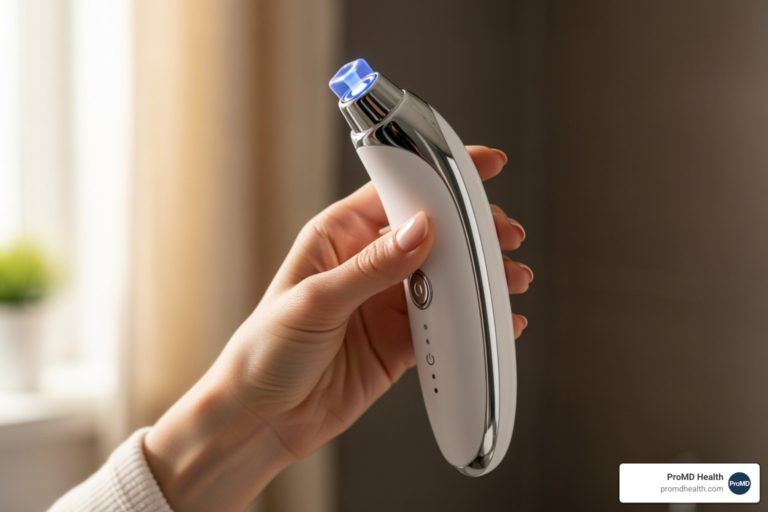
Plasma pen for dark spots is a treatment that uses a handheld device to create a controlled electrical arc, vaporizing the top layer of skin to potentially reduce hyperpigmentation. Here’s what you need to evaluate:
Quick Answer:
- What it does: Removes the surface layer of skin containing excess melanin through a process called sublimation.
- Best candidates: Lighter skin tones (Fitzpatrick types I-III) with specific types of dark spots.
- Major risk: Can actually cause worse dark spots, especially on darker skin.
- Professional vs. at-home: Professional treatment is strongly recommended due to high risk of burns, scarring, and pigmentation issues.
- Results timeline: 8-12 weeks for full results after scabs heal.
- Cost: Typically $500-$1,500+ depending on treatment area.
Key Consideration: This treatment is not FDA-approved for dark spot removal and is banned in Canada due to health risks. Many dermatologists do not recommend it for treating hyperpigmentation.
The technology sounds impressive—a tiny plasma arc that targets dark spots with precision and stimulates collagen without surgery. However, the reality is more complicated than the marketing suggests. The market is flooded with at-home devices, and the aesthetic community remains divided on its safety and efficacy for pigmentation, with many warning it can make the problem worse.
I’m Scott Melamed, President and CEO of ProMD Health. My background in biotechnology and clinical research from Johns Hopkins has taught me to look beyond marketing claims. At ProMD Health, we evaluate emerging technologies like the plasma pen for dark spots through the lens of patient safety and evidence-based results, especially when significant risks are involved.
Understanding Plasma Fibroblast Therapy: The Science Behind the Pen
If you’re considering a plasma pen for dark spots, it helps to understand the science. The plasma pen creates a tiny bolt of controlled electricity—a plasma arc—that jumps from the device to your skin. It does this by ionizing the atmospheric gas around its tip, creating a miniature, precise lightning strike.
When this plasma arc contacts your skin, it turns solid skin directly into gas. This process is called sublimation. The pen vaporizes microscopic dots on your skin’s surface, creating a controlled micro-injury. Your body is excellent at healing this type of damage. It triggers a natural healing response, calling in fibroblast cells.
Fibroblasts are your skin’s workhorses, responsible for producing collagen (for structure) and elastin (for flexibility). By creating these micro-injuries, the plasma pen stimulates fibroblasts to ramp up collagen production, which is why the treatment is popular for skin tightening and wrinkle reduction.
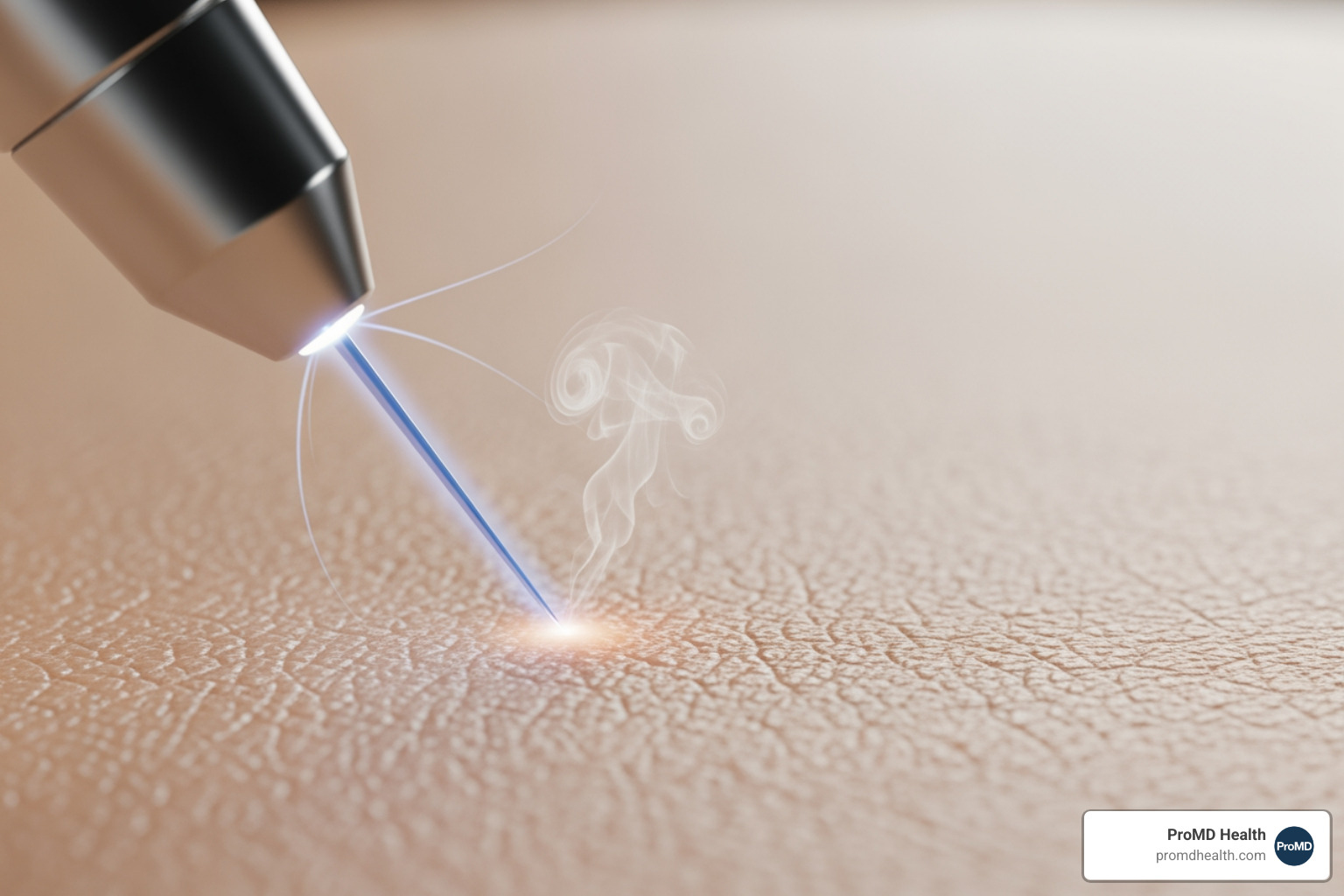
How a Plasma Pen Works on Dark Spots
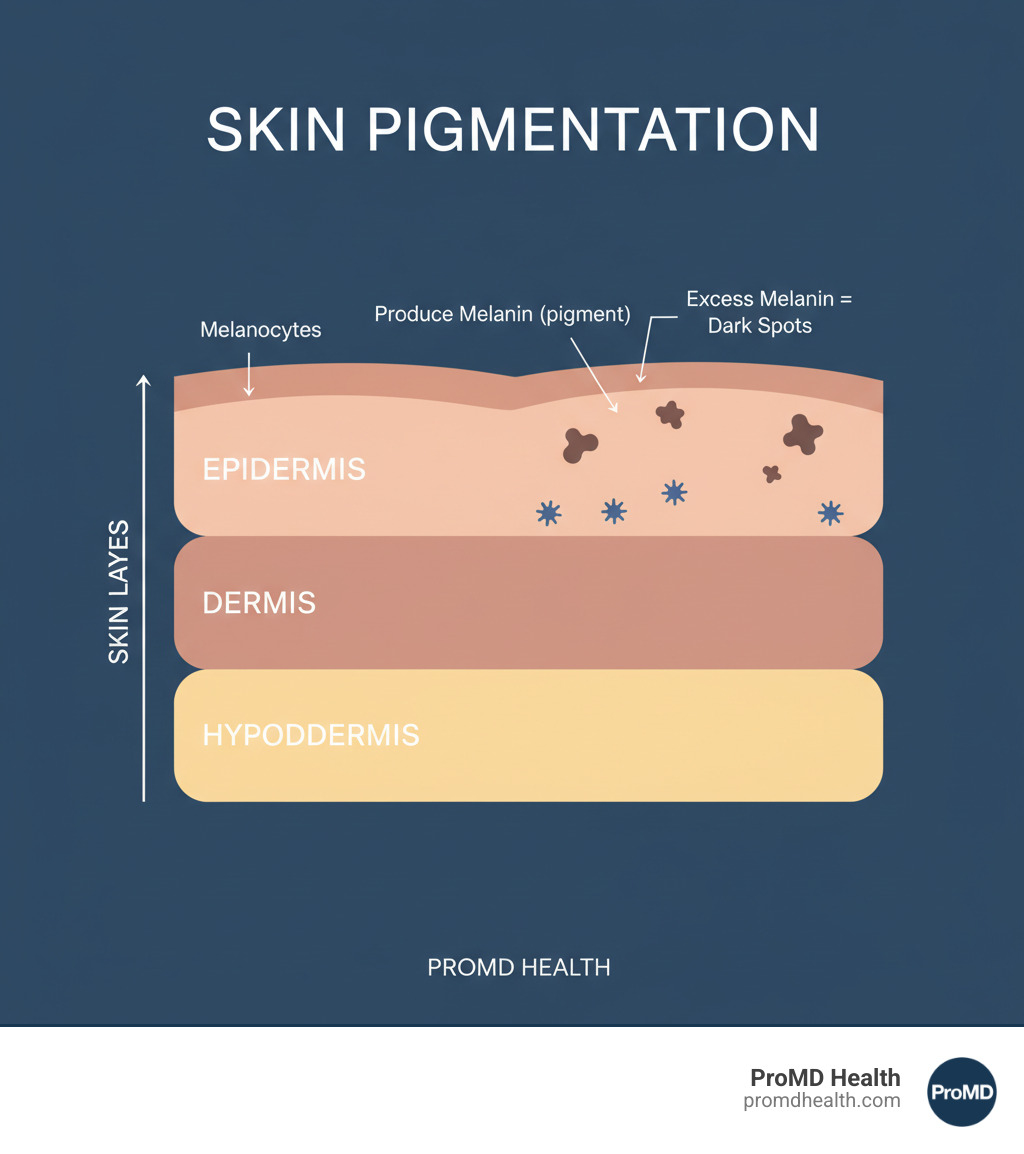
For dark spots, the goal is slightly different. Dark spots are areas of excess melanin, the pigment produced by cells in your epidermal layer. The theory is simple: if the excess pigment is in the top layer of skin, removing that layer should remove the spot.
The plasma arc vaporizes the surface skin where concentrated melanin is stored. As your skin heals, a process of skin regeneration begins. New skin cells grow to replace the removed ones. Ideally, these new cells have a more even melanin distribution, matching the surrounding skin tone. However, the healing process itself can sometimes trigger more melanin production, especially in darker skin tones, creating a new dark spot. This controversy is why understanding the risks is so important.
For a look at how we approach skin concerns safely, explore our skin rejuvenation services.
Benefits Compared to Surgical Options
The plasma pen is non-surgical and minimally invasive, with no scalpels or stitches. This is a major advantage for those wary of surgery.
Its precision targeting is another key benefit. The pen can treat tiny, specific areas—like a single dark spot—without affecting surrounding tissue. This level of control is difficult to achieve with other treatments.
Finally, there’s reduced downtime compared to surgery. While there is a healing period with scabs and potential swelling, it’s generally shorter and less intensive than recovering from an operation. However, “better than surgery” doesn’t mean it’s the right choice for dark spots if the treatment worsens your pigmentation. Your candidacy, especially your skin type, is the most critical factor.
The Great Debate: Is a Plasma Pen for Dark Spots Effective and Safe?
The aesthetic community is split on whether a plasma pen for dark spots is a good idea. While some practitioners use it successfully, many avoid it for hyperpigmentation cases due to significant risks.
The treatment works by creating tiny, controlled burn marks that form carbon crusts. The biggest risk is post-inflammatory hyperpigmentation (PIH), where the trauma from the treatment triggers your skin to produce even more melanin, creating a new dark spot. Hypopigmentation, where treated areas become permanently lighter, is also a risk.
The situation is complicated by the wide range of devices available. Professional-grade pens offer controlled energy, but at-home devices are largely unregulated, with inconsistent quality and safety. This is why results and risks vary so dramatically.
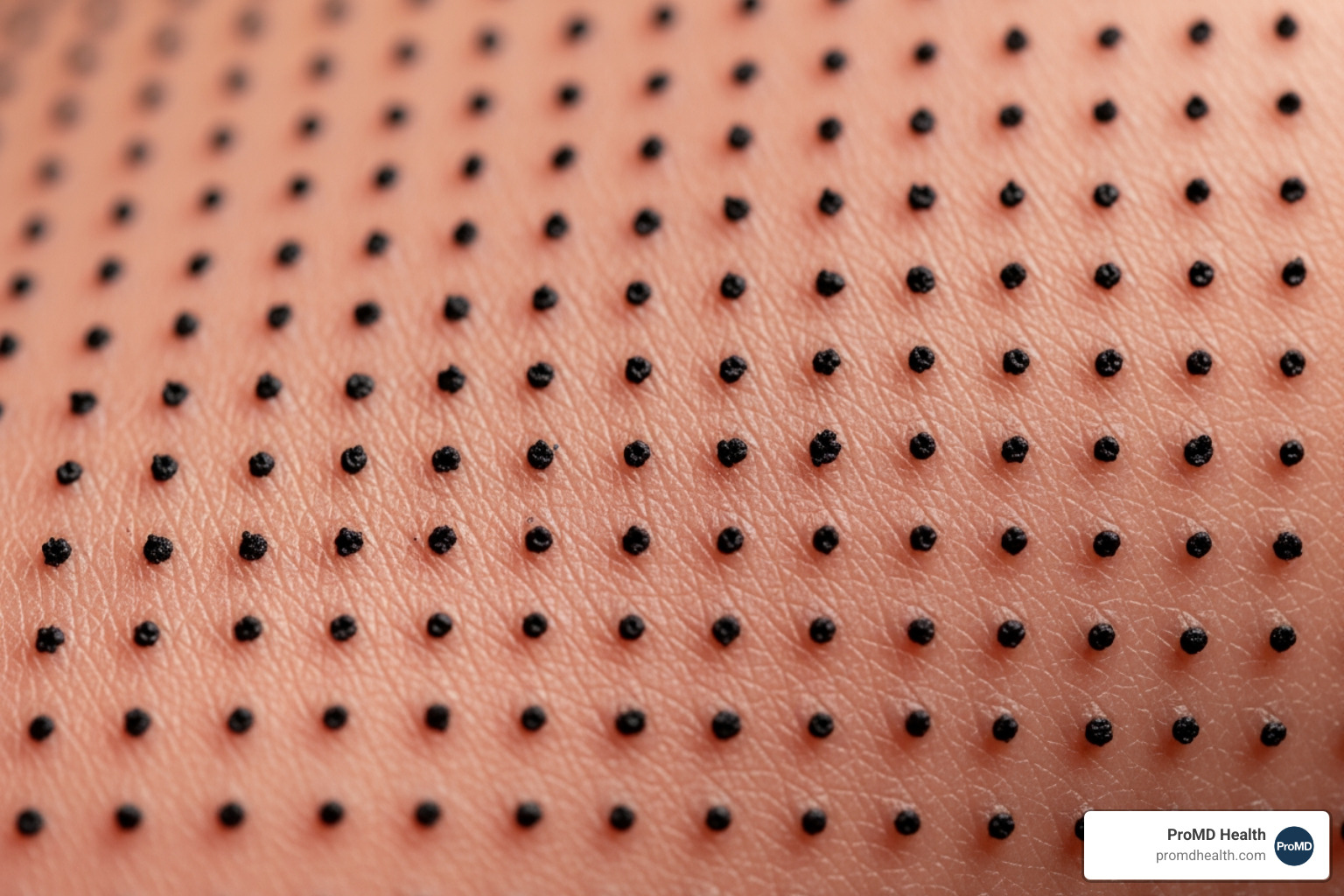
Skin Type Suitability and Pigmentation Risks
Your skin type, assessed using the Fitzpatrick Scale, is crucial. This scale categorizes skin based on its reaction to the sun.
Lighter skin tones—Fitzpatrick Types I through III—are generally safer candidates. Their skin produces less melanin, making it less likely to overreact to the treatment’s controlled injury.
For darker skin tones (Types IV through VI), the risk is much higher. Their skin has more active melanocytes, so any inflammation can trigger significant pigmentation changes, either darker or lighter. These changes can be irreversible. A test spot in a hidden area is essential for these skin types. It’s worth noting that Canada has issued a Health Canada advisory on plasma pen risks, banning the devices due to these safety concerns.
The Importance of a Professional vs. At-Home Pens
At-home plasma pens, often sold cheaply online, are dangerous. They lack the safety controls and precision of medical-grade equipment and are used by untrained individuals.
The risks of using these devices are severe: burns from aggressive settings, scarring from poor technique or picking at scabs, infection from non-sterile use, and worsening hyperpigmentation from uncontrolled energy delivery.
The effectiveness and safety of plasma pen treatments depend entirely on the provider’s expertise. They must correctly judge spot size, pulse duration, dot density, and treatment depth. This is why we strongly discourage at-home use. A certified provider can assess if you’re a good candidate, use medical-grade equipment, and perform the treatment with the precision needed to minimize risks. When dealing with facial pigmentation, expertise is non-negotiable.
At ProMD Health, our teams across Maryland, Virginia, Florida, Texas, Louisiana, and Delaware are trained to recommend the safest approach. We offer a range of professional facial treatments that prioritize your safety.
The Treatment Journey: From Consultation to Recovery
Deciding to get a plasma pen for dark spots treatment is the start of a journey that begins with a consultation and extends well beyond the procedure. What happens after the treatment is just as important as the treatment itself for achieving good results.
The Procedure: What to Expect During Treatment
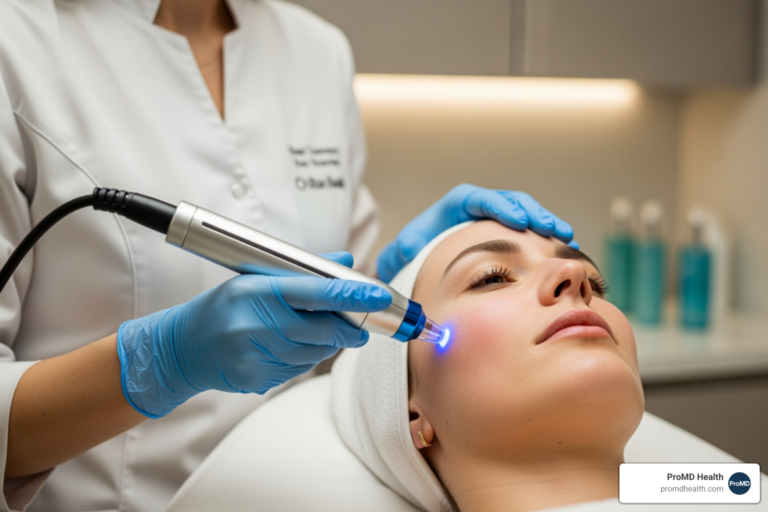
After a consultation confirms you’re a good candidate, the procedure begins. First, the treatment area is thoroughly cleansed. A topical numbing cream is then applied and left on for 20-30 minutes to ensure your comfort, though some mild discomfort may still be felt.
Once you are numb, the provider will begin. They hold the plasma pen a tiny distance from your skin—it never touches—and create a series of small dots in a grid-like pattern over each dark spot. Each dot is a microscopic burn that vaporizes the superficial skin cells containing excess melanin.
Immediately, you will see small, dark brown carbon crusts form where each dot was created. This is a normal and expected part of the process. The procedure is quick, typically lasting 15 to 30 minutes, depending on the size and number of spots being treated.
The Healing Process and Aftercare Essentials
This is where your discipline is crucial. Proper healing after a plasma pen for dark spots treatment is key to preventing new pigmentation issues.
For the first 1-3 days, expect swelling and redness similar to a sunburn. The carbon crusts will remain for 5-10 days. Do not pick at them. Picking is the fastest way to cause scarring or infection. When the crusts fall off naturally, they will reveal delicate, new pinkish skin.
Your aftercare responsibilities are critical:
- Keep the area clean and dry as instructed.
- Avoid all sun exposure during initial healing.
- Use a high-SPF, broad-spectrum sunscreen daily for several months afterward. Sun protection is essential to prevent post-inflammatory hyperpigmentation.
- Do not wear makeup until the crusts have fallen off.
- Avoid harsh skincare products, exfoliants, and active ingredients like retinoids until your provider gives you the okay.
For more guidance on maintaining healthy skin, explore our other complexion treatments.
Seeing Results: How Long Does It Take for a plasma pen for dark spots?
This treatment does not offer instant gratification. While you’ll see some improvement once the carbon crusts fall off, the full story takes longer to unfold. The real results come from the collagen remodeling phase, a biological process that occurs over weeks and months.
The realistic timeline for full results on skin texture and tone is eight to twelve weeks, sometimes longer. This allows your skin to complete its healing and remodeling cycle. Patience is required to see the best outcome.
Plasma Pen vs. Other Dark Spot Treatments
When exploring ways to reduce dark spots, a plasma pen for dark spots is just one of many tools. At ProMD Health, we offer several proven treatments that target hyperpigmentation through different mechanisms.
Chemical Peels use acids to exfoliate the outer skin layers, encouraging cell turnover and revealing brighter skin. They are effective for a wide range of pigmentation issues and can be customized in strength.
Halo Laser Skin Resurfacing uses targeted light energy to break down melanin clusters, which the body then eliminates. It’s highly effective for sunspots and improving overall tone.
Microneedling creates micro-channels in the skin to jumpstart the natural healing response, boosting collagen and making skin more receptive to pigment-reducing serums. It’s great for acne scars and mild hyperpigmentation.
Here’s how these treatments compare:
| Treatment Type | Mechanism | Best For | Downtime | Key Risks |
|---|---|---|---|---|
| Plasma Pen | Creates a plasma arc that vaporizes superficial skin cells, removing pigmented layers and stimulating collagen | Specific, localized dark spots; skin tightening | 5-10 days for carbon crusts to fall off, 1-3 weeks for redness to fade, 8-12 weeks for full results | Post-inflammatory hyperpigmentation (especially on darker skin tones), hypopigmentation, scarring, burns, infection |
| Chemical Peels | Applies acidic solutions to exfoliate outer skin layers, promoting cell turnover and revealing brighter skin | Wide range of hyperpigmentation, uneven tone, texture, fine lines | Varies by depth: light peels have minimal downtime; medium peels need 3-7 days; deep peels require weeks of recovery | Redness, peeling, sensitivity, infection, scarring, post-inflammatory hyperpigmentation if not properly matched to skin type |
| BBL/Laser | Uses targeted light energy to break down melanin, which your body then absorbs, or resurfaces skin layers | Sunspots, age spots, freckles, melasma, overall tone | Varies by device: BBL has minimal downtime with some redness; non-ablative lasers need 1-3 days; ablative lasers require 1-2 weeks with possible months of redness | Post-inflammatory hyperpigmentation, hypopigmentation, burns, blistering, scarring, prolonged redness, infection |
| Microneedling | Creates controlled micro-channels to stimulate collagen and elastin, improving texture and allowing better absorption of topical treatments | Acne scars, texture, fine lines, mild hyperpigmentation (often combined with PRP or serums) | 1-3 days of redness and swelling | Redness, swelling, bruising, infection, scarring, allergic reaction to topicals, post-inflammatory hyperpigmentation (less common than plasma pen or laser) |
The truth is, there’s no one-size-fits-all solution for dark spots. Your specific skin concerns, your Fitzpatrick skin type, your lifestyle, and even your tolerance for downtime all play a role in determining which treatment will work best for you. A plasma pen might be ideal for targeting a few isolated spots on lighter skin, while someone with more widespread sun damage might see better results with a series of chemical peels or laser treatments.
What’s most important is working with a qualified provider who can assess your individual situation and guide you toward the safest, most effective option. At ProMD Health, we take the time to understand your goals and your skin before recommending any treatment path.
Frequently Asked Questions about Using a Plasma Pen for Dark Spots
We know that considering any aesthetic treatment brings up questions—especially one as nuanced as the plasma pen for dark spots. Here are answers to some common concerns.
Can a plasma pen be used for other skin concerns besides dark spots?
Yes, the technology is quite versatile. Its ability to stimulate collagen makes it effective for several other applications. Practitioners often use it for skin tightening, especially for non-surgical eyelid lifts (blepharoplasty) and reducing sagging skin on the jawline and neck. It’s also used for wrinkle reduction around the eyes and mouth, scar revision for acne or surgical scars, and removing benign skin tags and certain types of moles.
If you’re interested in exploring other advanced treatments that can improve your skin’s overall appearance, you might want to learn more about our PRP treatments for improving skin tone and texture.
What is the typical cost of a professional plasma pen treatment?
The cost varies based on the size of the treatment area, your geographic location, and the provider’s experience. Treating a few small spots might cost a few hundred dollars, while larger areas or full-face treatments can exceed $1,000-$1,300 per session. This price reflects the provider’s expertise, the use of medical-grade equipment, and comprehensive aftercare support—factors not included with cheap at-home devices.
At ProMD Health, we believe in transparency. During your consultation at any of our locations—whether you’re in Annapolis, Arlington, Ashburn, Bel Air, Bethesda, Columbia, Easton, Fort Lauderdale, Hutto, Lafayette, Lewes, Timonium, Tysons Corner, Washington, Wellington, or Westminster—we’ll give you an accurate cost estimate based on your specific needs and goals.
Are at-home plasma pens a good idea for dark spots?
In short: No, at-home plasma pens are not a good idea. The risks are too serious to ignore. These devices are often unregulated and lack the precision and safety controls of professional equipment. Using one without training can lead to devastating consequences:
- Burns from uncontrolled heat and improper technique.
- Permanent scarring from overtreatment or infection.
- Worsening hyperpigmentation, creating a bigger problem than you started with.
- Infection from a non-sterile environment and poor aftercare.
Health Canada has banned these devices entirely due to potential health risks, underscoring how dangerous they can be in untrained hands. Your skin is too precious to risk for potential savings. Please consult a qualified professional.
Conclusion: Making an Informed Decision for Your Skin
After exploring plasma pen for dark spots together, I hope you feel better equipped to make a decision that’s right for your unique skin. This isn’t a simple yes-or-no technology. It’s a treatment that requires careful consideration, honest conversation, and expert guidance.

Let’s recap the key points. The plasma pen vaporizes the top layer of skin to remove excess melanin and trigger collagen production. While it can be effective for some people with lighter skin tones (Fitzpatrick I-III), the risk of post-inflammatory hyperpigmentation or permanent skin lightening is too high for many individuals with darker complexions. This is why the treatment is banned in Canada and why many dermatologists advise against it for pigmentation.
At-home devices amplify these risks, introducing the danger of burns, scarring, and infection due to a lack of safety controls and user training. Furthermore, the healing journey requires patience, with final results taking months to appear and strict sun protection being essential to prevent new dark spots.
The good news is that you have safer, proven options. Chemical peels, laser treatments, and microneedling all offer effective pathways to clearer skin. At ProMD Health, we don’t push a single treatment. Our experienced aesthetic clinicians in Annapolis, Arlington, Ashburn, Bel Air, Bethesda, Columbia, Easton, Fort Lauderdale, Hutto, Lafayette, Lewes, Timonium, Tysons Corner, Washington, Wellington, and Westminster will help you choose the safest and most effective approach for your unique skin.
If you’re curious about professional plasma-based treatments and want to explore what might work best for your skin, we invite you to learn more about our comprehensive Plasma Skin Rejuvenation options. Let’s start a conversation about your skin’s future.