
You put on a fitted top, turn to check the side view, and the same area catches your eye again. The fullness along the bra line. The puffing near the back of the armhole. The roll that shows up even when your weight hasn't changed much.
That frustration is common, and it's one of the reasons people ask about non surgical body contouring for bra fat. The good news is that this concern usually has a more specific explanation than “I need to lose weight.” The better news is that treatment works best when you understand exactly what area you're trying to improve, what non-surgical devices can treat, and where expectations need to stay realistic.
Table of Contents
- The Frustrating Reality of Bra and Back Fat
- Understanding What Bra Fat Actually Is
- Emsculpt NEO The Dual Action Solution
- Other Effective Non Surgical Treatments
- Are You a Good Candidate for Treatment
- Begin Your Body Contouring Journey at ProMD Health
The Frustrating Reality of Bra and Back Fat
A pattern shows up often in consultation rooms. Someone is eating well, exercising regularly, and feels generally good in their body. Then one specific area refuses to cooperate. It bunches at the bra band, interrupts the line of a dress, or creates a crease under fitted fabric that makes clothing feel less flattering than it should.
That's why this area feels so discouraging. It doesn't behave like overall weight gain. It behaves like a localized pocket.
Why this area feels so stubborn
Bra and back fullness tends to stand out because the skin and soft tissue in that region compress easily under straps, seams, and tighter clothing. A small amount of tissue can look more dramatic there than it would on the abdomen or thigh.
Exercise can help posture and muscle tone, but it won't spot-reduce a single pocket of subcutaneous fat. That disconnect is what frustrates people most. They're doing the right things, but the mirror keeps pointing back to the same place.
Practical rule: If the issue is highly specific and keeps showing up in the same clothing lines, you're usually dealing with contour, not a general fitness failure.
What patients usually want
Those inquiring about this typically don't want a dramatic transformation. They want smoother transitions across the upper back and flanks. They want bras to sit flatter. They want sleeveless and fitted clothing to look cleaner from behind.
That's exactly where non surgical body contouring for bra fat can help, as long as the treatment is aimed at the correct anatomy and matched to the right candidate. The trade-off is important. Non-surgical options can improve contour, but they are not the same as surgery, and they shouldn't be sold that way.
A thoughtful plan starts with a simple question. Is this mostly fat, mostly skin laxity, or a mix of both? The answer shapes everything that follows.
Understanding What Bra Fat Actually Is
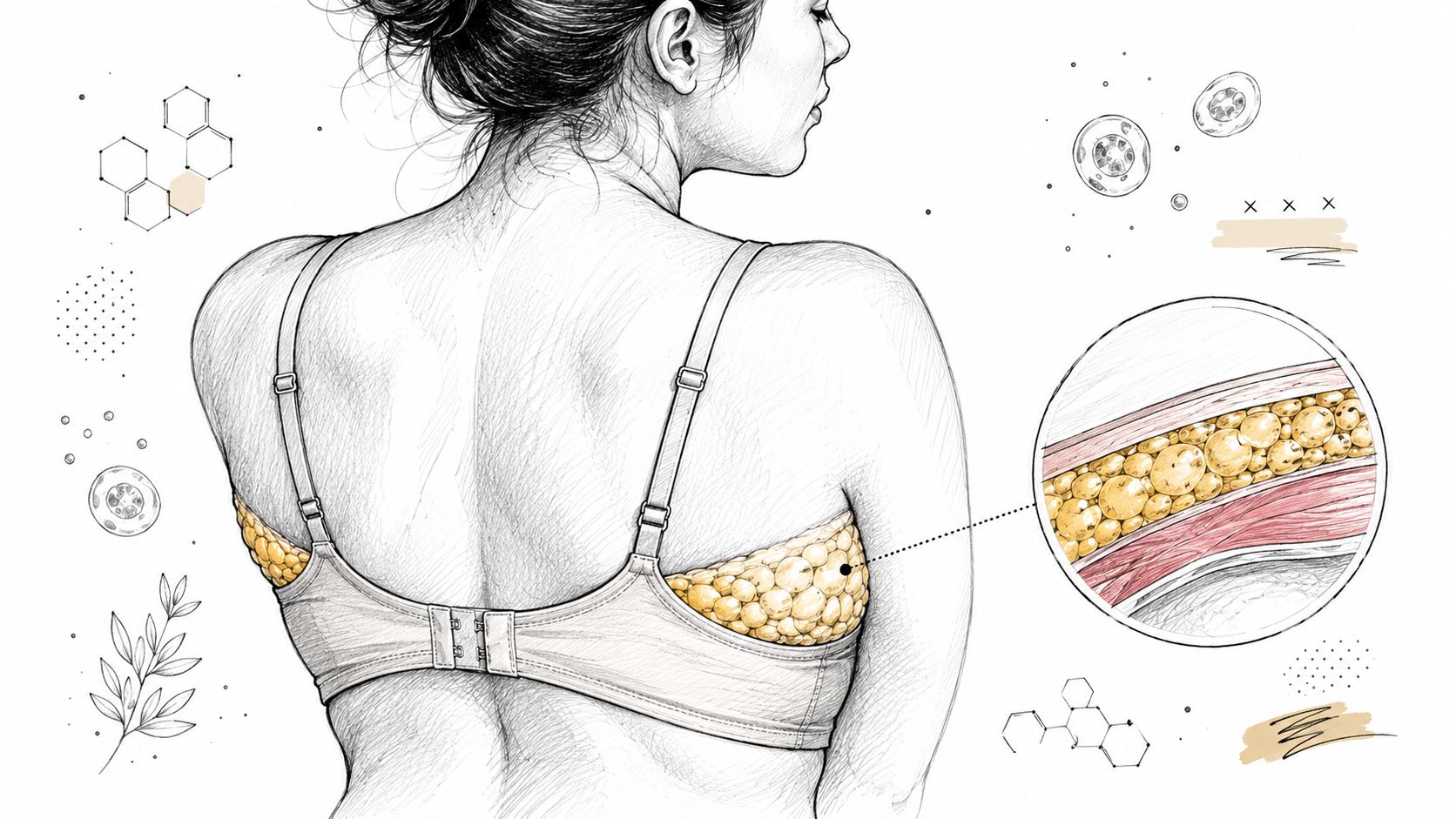
“Bra fat” isn't a formal medical diagnosis. It's a catch-all term people use for fullness around the upper back, posterior underarm area, and flanks. In many cases, what you're noticing is subcutaneous fat, the layer that sits under the skin and above the deeper structures.
Why this area gets mislabeled
Patients often point to the side of the chest and call it breast fat. That's where confusion starts. The most important regulatory and safety point is this: the FDA has not cleared or approved any non-invasive body contouring devices for treating the breasts themselves. Treatments for “bra bulge” target the surrounding chest wall, upper back, or flank areas, as explained in the FDA guidance on non-invasive body contouring technologies.
That distinction matters because treatment only works when the provider is targeting tissue the device is meant to address. If the fullness is breast tissue or glandular tissue, a non-invasive fat-reduction device isn't the right tool.
For people who want a broader understanding of how body composition works, OneTwenty's body fat guide is a useful plain-language resource. It helps separate overall body fat discussions from the very localized contour issue that bra-line concerns usually represent.
What can be treated and what cannot
When I explain this area clinically, I break it into three possibilities:
- Pinchable back or flank fat: This is the most treatable presentation for non-surgical contouring.
- Skin laxity with only a small fat layer: These patients may need tightening more than fat reduction.
- Glandular or breast-related fullness: This requires a different evaluation and should not be lumped into standard “bra fat” marketing language.
The most accurate treatment plans start by asking where the fullness actually sits, not by assuming every bra bulge is the same.
That's also why generic online advice often misses the mark. It lists body contouring devices as if every upper-body bulge responds equally. It doesn't. If the target is the upper back or flank, non-surgical options may help. If the concern is breast tissue itself, that's a different conversation.
Emsculpt NEO The Dual Action Solution
Among non-surgical options, the most useful approach for this region is often the one that addresses more than fat alone. Emsculpt NEO combines fat reduction with muscle stimulation, which makes it especially relevant for the upper back and flank transition areas.
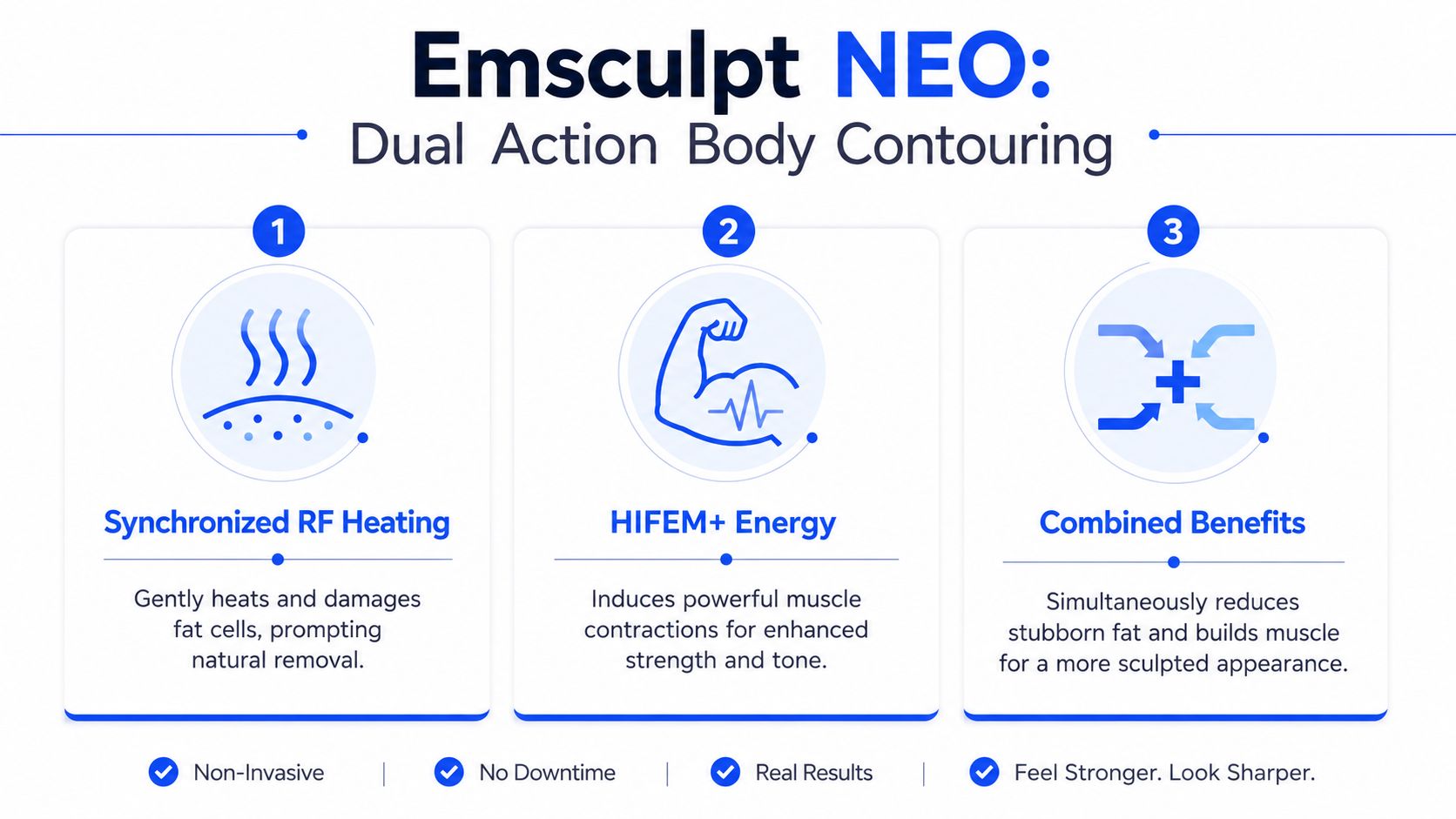
A core practical detail matters here. Emsculpt NEO is a non-invasive procedure offered at ProMD Health that simultaneously builds muscle and reduces fat, with sessions lasting just 30 minutes and requiring no downtime, as described on the Emsculpt NEO treatment page. If you want a fuller overview of the treatment itself, the ProMD Emsculpt NEO page is the right place to start.
Why muscle matters in this area
The bra-line region doesn't only show excess fat. It also reflects posture, muscular support, and how firmly tissue sits against the body. A treatment that works only on the superficial fat layer may help, but it may not create the smoother shape patients expect if the underlying support remains weak.
That's the advantage of a dual-action platform. Radiofrequency energy targets fat, while electromagnetic muscle stimulation contracts and strengthens the underlying musculature. For someone whose concern is a soft transition from the upper back into the flank, that combination often makes more sense than chasing fat alone.
What a session is like
Treatment is brief. There's no incision, no scar, and no recovery period that forces you to clear your schedule. The sensation is often described as unusual rather than painful. You feel heat and strong muscle engagement, but you get up and return to normal activity right after.
The convenience is part of the appeal, but it shouldn't overshadow the main point: results still require patience. This category of treatment improves contour gradually, not overnight.
Here's where expectations should stay grounded:
- Best for: Localized fullness with room for contour improvement through both fat reduction and muscle tone
- Less useful for: Significant loose skin, broad weight-loss goals, or fullness that isn't subcutaneous fat
- Strongest benefit: Better shape, not a dramatic scale change
In the upper back and bra-line region, improving the base under the tissue can matter almost as much as reducing the tissue itself.
That's why Emsculpt NEO tends to stand out in this conversation. It addresses a common gap in treatment planning. Patients think they only need less fat. Often, they also need a better structural contour under that area.
Other Effective Non Surgical Treatments
Emsculpt NEO isn't the only option. Some patients do better with a more targeted injectable approach, while others need skin tightening to make the area look smoother. The right plan depends on whether the problem is a small pocket, loose skin, or both.
When injectables make sense
For a very small, localized area, Kybella may be part of the conversation. It's best known for submental fullness, but experienced injectors may use it selectively for small pockets where precision matters more than broad-area treatment.
This isn't the first choice for everyone. It's not ideal for wide zones of back fullness, and it won't build muscle or improve posture. But for the right anatomy, it can help refine a focused bulge.
Good candidates for a small-area injectable approach usually have:
- A defined pocket: The fullness is easy to identify and isolate.
- Reasonable skin quality: The skin can contract well after fat reduction.
- Patience for a staged result: Refinement may require time and follow-up assessment.
Why skin tightening can change the result
Sometimes the issue isn't only fat. The area looks heavier because the skin has lost firmness. That's common after weight changes, pregnancy, or normal aging. In those cases, tightening can make a meaningful difference even when the fat layer is modest.
Non-surgical skin tightening using energy-based devices like radiofrequency triggers neocollagenesis by heating deeper skin layers, causing new collagen production over 2–6 months. Most patients require 3–5 treatments with minimal downtime, as explained on the ProMD non-surgical skin tightening page.
If you're exploring broader treatment categories, the ProMD non-invasive body contouring page gives a helpful overview of the kinds of non-surgical options available.
A simple way to think about the treatment mix is this:
| Concern | What often helps most |
|---|---|
| Small isolated pocket | Injectable fat reduction |
| Soft fullness plus weak contour | Emsculpt NEO |
| Crepey or loose skin | Radiofrequency skin tightening |
| Mixed concern | Combination planning |
The biggest mistake is trying to force one treatment to do everything. It won't. Good outcomes usually come from matching the tool to the tissue.
Are You a Good Candidate for Treatment
Successful candidates for non-surgical contouring generally share a similar profile. They're close to their preferred weight, they have a specific area that bothers them, and they want improvement without surgery.
Who usually does well
This point needs to be clear. Patients seeking non-surgical fat reduction must be close to their desired weight for optimal results, as these methods are not solutions for significant weight loss and offer disappointing outcomes for individuals with a high BMI, according to the clinical review in the medical literature.
That doesn't mean you need a “perfect” body to qualify. It means these treatments are contouring tools, not primary weight-loss tools.
The strongest candidates usually have these characteristics:
- Localized concern: You can point to one specific area, rather than wanting total-body change.
- Stable habits: Your weight and routine are fairly consistent.
- Realistic goals: You want a smoother silhouette, not a surgical-level reduction.
- Some skin resilience: The skin can respond well after volume decreases.
If you're looking into options for reducing a defined pocket of fat, the ProMD non-invasive fat reduction page is a useful next read before a consultation.
A practical treatment comparison
Here's a simple framework patients can use before coming in:
| Option | Best fit | What it won't do |
|---|---|---|
| Emsculpt NEO | Fat plus muscle-tone concerns | It won't remove large-volume fat like surgery |
| Kybella | Small, focused pockets | It won't treat broad upper-back fullness efficiently |
| RF skin tightening | Loose or lax skin | It won't replace fat reduction when volume is the main issue |
The right candidate isn't the person who wants the biggest change. It's the person whose anatomy matches what the treatment can actually deliver.
A consultation matters because a mirror can't always tell you whether you're seeing fat, laxity, or tissue outside the treatment zone. That's where an in-person exam helps. At that stage, tools like imaging and visual simulation can also help ground expectations in something more concrete than wishful thinking.
One other practical point. These treatments should be discussed with payment transparency. ProMD Health operates on a cash-pay model, so services aren't covered by insurance. Specific pricing depends on the plan, area, and number of sessions.
Begin Your Body Contouring Journey at ProMD Health
If bra-line fullness has been bothering you for a while, the most useful next step isn't guessing which device sounds trendy. It's getting the area assessed correctly. The difference between upper-back fat, flank fullness, skin laxity, and breast-related tissue changes the treatment plan completely.
The encouraging part is that non-surgical options can create visible improvement for the right candidate. Clinical studies show non-surgical body contouring can achieve mild to moderate circumference reductions of 2 to 4 cm, and results develop gradually over 2 to 6 months as the body naturally eliminates destroyed fat cells, as summarized in this review of non-invasive body contouring outcomes.
What to do next
A consultation helps answer the questions that matter most:
- Where is the fullness located
- Is the issue fat, skin laxity, or both
- Would a muscle-building approach improve the contour
- Would a small-area treatment make more sense
- How much change is realistic without surgery
If you want a broader consumer-friendly overview of why people pursue this category of treatment, this summary of the benefits of body sculpting is a helpful companion read.
For patients who want in-person evaluation, ProMD Health offers care across approved locations including Annapolis, Bethesda, Arlington, Fort Lauderdale, Columbia, Washington, DC, and Westminster, among others. If visiting a clinic isn't convenient, ProMD Connect offers a virtual starting point so you can discuss goals, candidacy, and likely options before planning treatment.
The best results usually start with a more accurate question. Not “How do I get rid of bra fat?” but “What exactly is causing this contour, and what treatment matches it?”
Schedule a personalized consultation with ProMD Health to discuss body contouring options for bra-line, back, and flank fullness. Whether you visit a local office or start through ProMD Connect, the goal is the same: identify the anatomy correctly, choose the right non-surgical plan, and set expectations you can feel good about.


