
Emsculpt NEO may be worth it for a near-goal adult seeking localized refinement, but its measurable effects are modest: one randomized trial reported a 20.5% reduction in abdominal fat thickness and a 21.5% increase in rectus abdominis muscle thickness after one month. It isn't a weight-loss shortcut, and the value depends on your candidacy, expectations, budget, and willingness to maintain the result.
The popular advice often reduces the decision to “fat loss plus muscle gain without surgery.” That description is incomplete. The more useful question is whether a localized change in body composition justifies a premium cash-pay treatment when exercise, medical weight management, or surgery may better address a different goal.
Emsculpt NEO is most defensible as a refinement tool. It can make sense when you're already close to your desired weight, have a specific treatment area, and want modest contouring with no surgical recovery. It makes less sense if you want substantial weight loss, dramatic skin removal, or a permanent substitute for training.
Table of Contents
- Why the Worth Question Needs a More Precise Answer
- How Emsculpt NEO Works
- What the Clinical Evidence Really Shows
- Comparing Emsculpt NEO With Other Paths
- Who Is the Best Treatment Candidate
- Understanding Cost, Sessions, and Durability
- How ProMD Connects Contouring and Wellness
- The Practical Recommendation
Why the Worth Question Needs a More Precise Answer
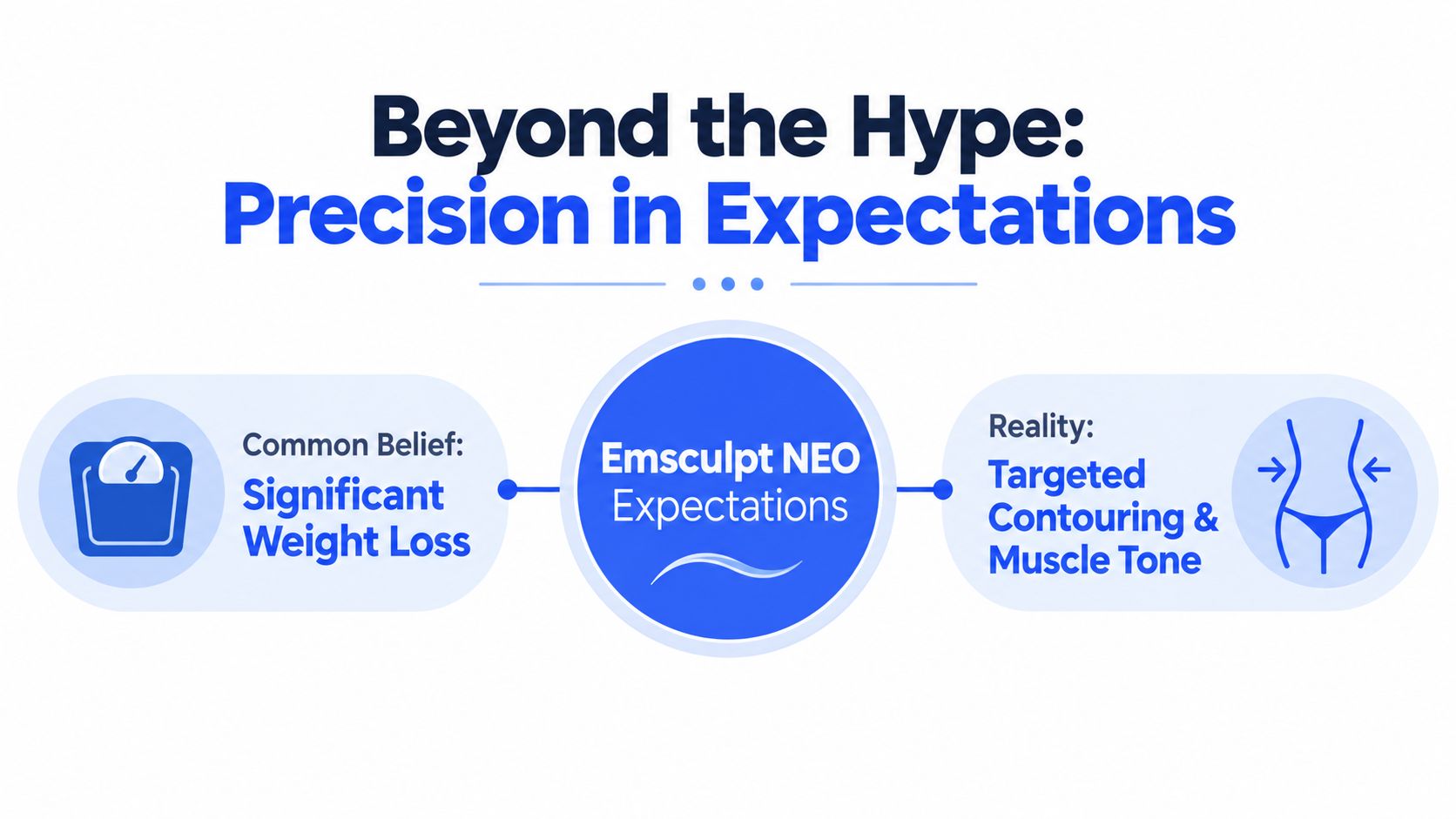
“Is Emsculpt NEO worth it?” sounds like a yes-or-no question, but the answer changes depending on what you want the treatment to accomplish. Localized fat reduction, muscle conditioning, skin tightening, cellulite improvement, and whole-body weight loss are different objectives. A device can influence one without solving the others.
The clinical evidence supports measurable changes in treated areas, not a broad transformation of total body weight. A sham-controlled randomized trial found the active group had a 20.5% reduction in adipose tissue thickness at one month and a 21.5% increase in rectus abdominis muscle thickness at the same follow-up, with the active treatment outperforming separate HIFEM and radiofrequency treatments in that study (clinical trial evidence). Those findings matter, but they don't mean the treatment replaces a calorie deficit, resistance training, or medical weight management.
The value depends on the starting point
A person with stable weight and a stubborn abdominal area may notice a worthwhile contour change. Someone with substantial overall weight to lose may see little value because the device doesn't address the main driver of their concern, systemic fat mass.
The same treatment can therefore feel successful to one patient and disappointing to another. The difference may have less to do with the technology than with whether the goal matched the tool.
Practical rule: If you'd be satisfied with a subtle, localized improvement, Emsculpt NEO may deserve consideration. If you expect a major change on the scale or a surgical-looking result, choose a different first conversation.
A four-session course isn't a guarantee
A typical course is commonly described as four treatments, but a course length doesn't predict an identical outcome for every person. Study averages can hide variation in baseline muscle, fat distribution, adherence, and follow-up habits. The appropriate financial question isn't "Does it work?" It's "What measurable change would make the total investment worthwhile to me?"
That shift prevents a common mistake. People often judge a premium treatment against an imagined dramatic transformation, even though the evidence points toward modest, area-specific contouring.
How Emsculpt NEO Works
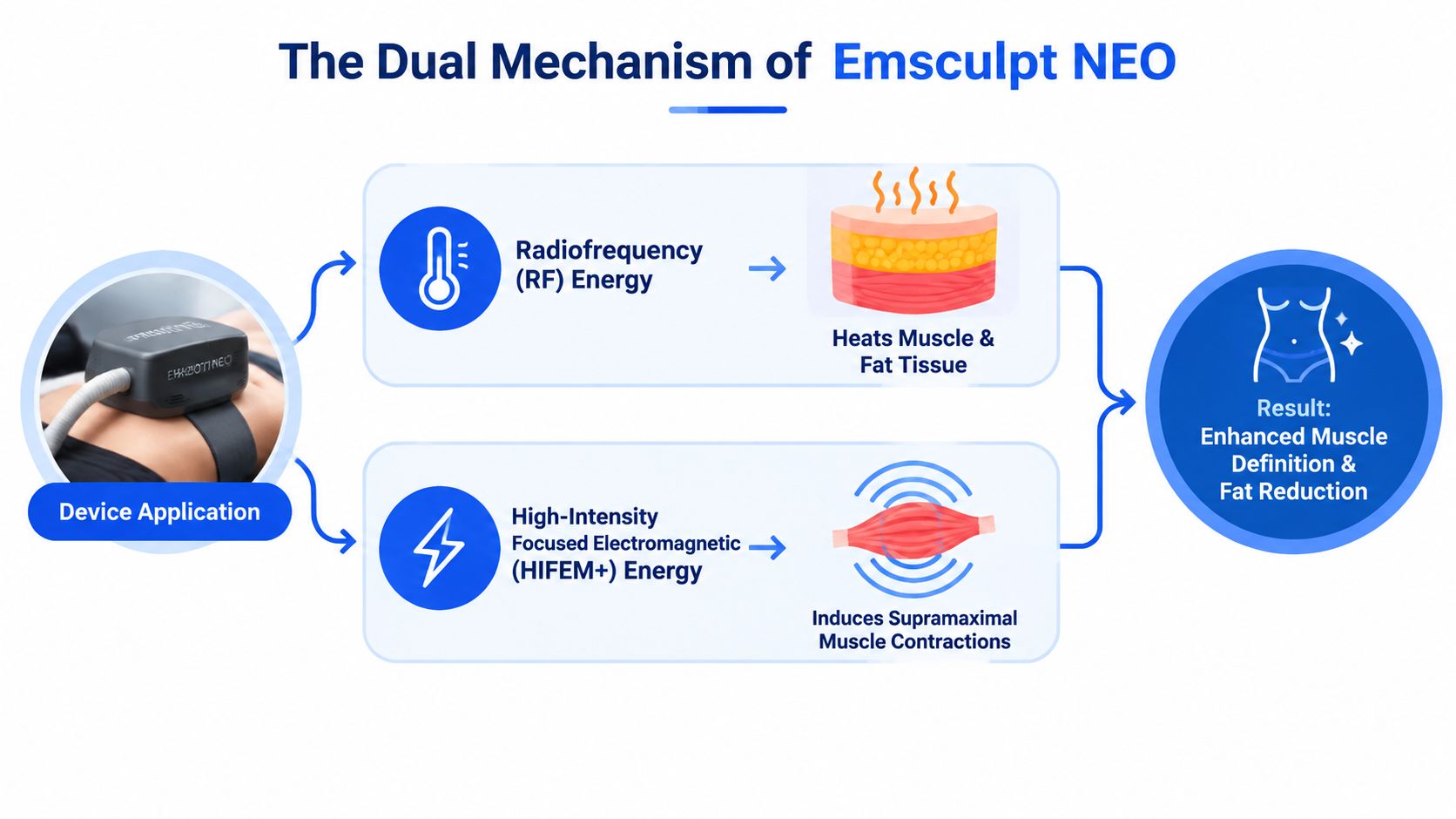
Emsculpt NEO combines radiofrequency heating with high-intensity focused electromagnetic energy. The two mechanisms act on different aspects of the treated area, which is why the device is positioned as a body-composition treatment rather than a conventional heat-based or fat-focused procedure.
Radiofrequency energy heats tissue in the treatment zone. High-intensity focused electromagnetic energy produces powerful muscle contractions that aren't achievable through ordinary voluntary movement. The combined approach is designed to affect subcutaneous fat while activating muscle, but the mechanism shouldn't be confused with the final outcome. Intense contractions during a session don't automatically create lasting muscle development without ongoing use.
What happens during treatment
The applicator is placed over the selected body area. RF energy warms the tissue, while HIFEM energy drives repeated contractions. The patient may feel strong tightening and a warming sensation, but the treatment is non-surgical and generally designed to avoid the recovery period associated with invasive procedures.
The device is used for areas such as the abdomen, buttocks, thighs, arms, and calves under its cleared indications. One FDA-clearance summary lists non-invasive lipolysis of the abdomen and thighs, along with muscle conditioning of the abdomen, buttocks, thighs, calves, and arms, with an aesthetic BMI limit of up to 35 (FDA-clearance summary).
For treatment details and candidacy questions, readers can review ProMD Health's Emsculpt NEO body contouring information.
Mechanism isn't the same as weight loss
RF-related fat-cell disruption is local. It doesn't create the systemic energy deficit responsible for overall fat loss. Likewise, electromagnetic stimulation may support muscle conditioning in the treated zone, but it won't build a balanced full-body strength program.
Patients should also disclose relevant medical history before treatment. Metal implants, pregnancy, pacemakers, and certain cardiac conditions can affect eligibility, so a provider needs to review the person's history and the treatment area rather than relying on a generic online checklist.
What the Clinical Evidence Really Shows
The strongest way to evaluate Emsculpt NEO is to separate what was measured from what marketing language implies. Imaging can assess fat thickness or muscle thickness. Waist measurements capture circumference, but they don't identify exactly which tissue changed. Patient surveys reveal satisfaction, but satisfaction isn't the same as an independently measured biological outcome.
A randomized trial reported abdominal fat and muscle changes at different follow-up points, while a separate MRI-based multicenter study reported changes that remained present at a later follow-up. The literature also includes prospective studies and reviews, but the evidence base remains dominated by relatively small studies and short follow-up periods rather than large, long-term randomized comparisons (independent review).
| Outcome Metric | Reported Average | Measurement Method | Follow-Up Window |
|---|---|---|---|
| Abdominal adipose tissue thickness | 20.5% reduction | Imaging-based assessment | 1 month |
| Rectus abdominis muscle thickness | 21.5% increase | Imaging-based assessment | 1 month |
| Abdominal adipose tissue thickness | 28.3% reduction | Imaging-based assessment | 3 months |
| Abdominal muscle thickness | 24.2% increase | Imaging-based assessment | 3 months |
| Waist circumference | 4.37 cm reduction | Circumference measurement | Month 3 |
| Abdominal appearance improvement | About 91% of patients | Patient-reported assessment | Month 3 |
| Patient satisfaction | 92% | Patient-reported assessment | Month 3 |
| Subcutaneous abdominal fat | 30.8% reduction | MRI-based assessment | 3 months |
| Muscle thickness | 26.1% increase | MRI-based assessment | 3 months |
The figures in the table come from the supplied clinical evidence and published medical reporting, including the randomized trial and MRI-based findings (PubMed trial report, medical-journal summary).
What the studies support
The evidence supports a plausible and measurable dual effect in treated areas. It also supports the idea that Emsculpt NEO isn't merely a subjective cosmetic experience, since some studies used imaging-based endpoints and controlled comparisons.
The evidence doesn't establish that every patient will reach the reported averages. It also doesn't prove that the changes remain unchanged indefinitely. The duration of benefit depends on follow-up length, lifestyle, baseline composition, and whether the patient receives later maintenance.
Why averages require caution
The historical market claims have been more expansive than the narrower randomized data. A launch report described seven clinical studies with average claims of 30% fat reduction and/or 25% muscle increase, while later review material summarized averages of 30% less fat, 25% more muscle, and up to 5.9 cm of waist reduction across more than 500 patients and 30 investigators (market and clinical history).
Those numbers can help frame the range of reported outcomes, but they shouldn't become a promise. The most rational interpretation is that Emsculpt NEO can produce measurable localized changes, while the certainty around durability and individual response remains limited.
Comparing Emsculpt NEO With Other Paths
The right comparison isn't “Which treatment is best?” It's “Which tool matches the problem?” Emsculpt NEO occupies a narrow middle ground. It offers non-surgical muscle stimulation and localized fat reduction, but it won't match surgery for large tissue removal or medical weight management for systemic weight change.
People who want to understand the broader objective of losing fat while preserving or building muscle can also review these 2026 body recomposition strategies. The useful principle is straightforward: body composition goals require a different plan from a single-area contouring procedure.
| Option | Primary Goal | Invasiveness | Downtime | Sessions | Outcome |
|---|---|---|---|---|---|
| Emsculpt NEO | Localized fat reduction and muscle conditioning | Non-surgical | Typically no recovery period | Usually a planned course | Modest area-specific contouring |
| Structured strength training | Muscle development and functional strength | Non-invasive | Recovery depends on training load | Ongoing | Broader strength and composition benefits |
| Cryolipolysis | Localized fat reduction | Non-surgical | Usually limited activity interruption | May require more than one treatment area or course | Fat reduction without direct muscle stimulation |
| Liposuction or abdominoplasty | Larger-scale reshaping and tissue removal | Surgical | Surgical recovery | Procedure-based | More dramatic reshaping, with greater risk and recovery |
| Medical weight management | Systemic weight loss and metabolic support | Medical, non-surgical or prescription-based | Depends on program and medication | Ongoing care | Whole-body weight and health management |
Where Emsculpt NEO fits
Emsculpt NEO's advantage is the combined target. A patient who wants a modest fat-layer reduction and improved muscle definition in the same area may prefer it over a treatment focused only on fat.
Its limitation is equally important. It can't reproduce the volume removal of surgery, the whole-body effects of a medical weight-management program, or the broad conditioning developed through progressive exercise. It also doesn't directly solve loose skin or every form of cellulite texture.
The cost and maintenance tradeoff
Exercise has a low procedural cost but requires consistent effort and time. Surgery can create a more dramatic change but involves anesthesia or operative care, recovery, and surgical risk. Medical weight management addresses a different biological level and may require ongoing clinical oversight.
Emsculpt NEO may be reasonable when avoiding surgery matters and the desired change is narrow. Readers looking for local treatment planning can explore ProMD Health's non-invasive body contouring options, then ask whether the proposed treatment addresses the actual source of their concern.
Who Is the Best Treatment Candidate
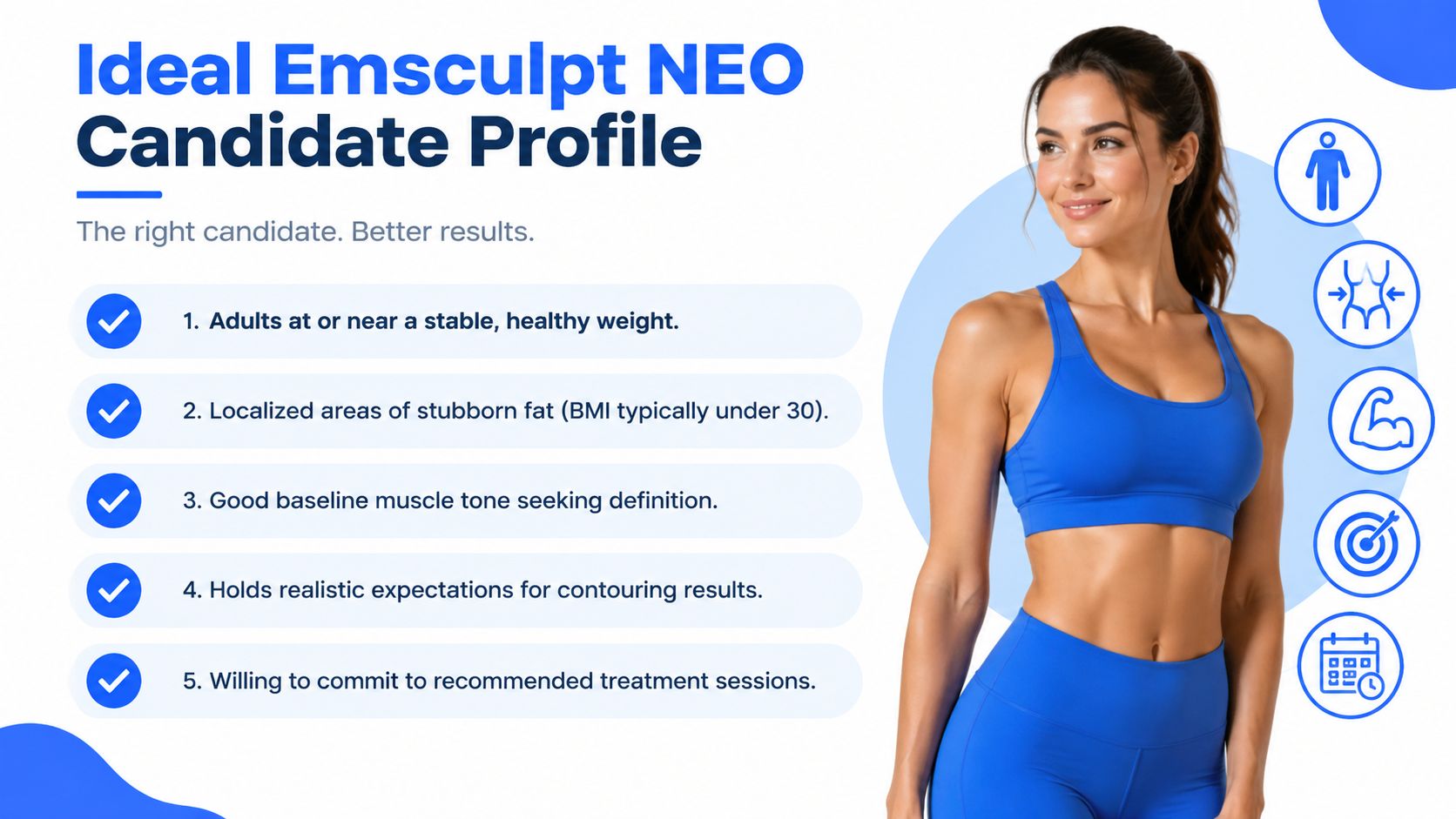
The strongest candidate usually isn't someone searching for a shortcut. It's an adult whose weight is relatively stable, whose concern is localized, and who understands that the likely result is refinement rather than transformation.
A person with visible but limited abdominal or gluteal concerns may be more satisfied than someone with substantial visceral fat or a broad need for weight reduction. Baseline muscle also matters because a treatment intended to improve definition has more practical value when the patient already has a foundation to reveal.
A useful self-screen
Before booking, answer these questions:
- Goal: Do you want localized contouring, or are you primarily trying to lose weight?
- Stability: Has your body weight been reasonably stable, or is it still changing substantially?
- Area: Is the concern concentrated in a zone the device is intended to treat?
- Health: Could pregnancy, an implant, a pacemaker, or a cardiac condition affect safety?
- Habits: Will you continue movement, nutrition, and resistance training after the course?
- Budget: Can you pay for the proposed course without expecting insurance reimbursement?
- Expectations: Would a modest visual improvement still feel worthwhile?
BMI can be part of screening, but it isn't a complete candidacy assessment. The device's aesthetic clearance summary lists a BMI limit of up to 35, while clinical suitability still depends on fat distribution, health history, treatment goals, and the provider's examination (clearance information).
For readers concerned about a specific area near the bra line, ProMD Health also provides information about non-surgical body contouring for bra fat.
Who should pause
People seeking substantial weight loss should address that goal first through lifestyle support, medical management, or another appropriate pathway. Pregnant patients and people with relevant implants or unstable health conditions need medical clearance before considering treatment. A consultation should clarify whether the visible concern is subcutaneous fat, visceral fat, loose skin, muscle weakness, or a combination.
Candidacy often determines value more than the device itself.
Understanding Cost, Sessions, and Durability
Public pricing summaries commonly place Emsculpt NEO around $750 to $1,000 per session, with a typical four-session course totaling approximately $3,000 to $4,000. Prices vary by clinic, treatment area, package structure, and whether more than one area is included.
Those figures should be treated as planning ranges, not a quotation. A clinic should explain whether the price applies to one area, whether follow-up is included, and whether maintenance is priced separately.
| Item | Typical Range | Notes |
|---|---|---|
| Single session | $750 to $1,000 | Public reviews commonly cite this range |
| Typical course | About $3,000 to $4,000 | Often described as a four-session course |
| Maintenance | Varies | Ask whether later treatments are expected |
| Insurance payment | Not applicable to the cash-pay model | Confirm the clinic's current policy directly |
What you're paying for
The investment buys a localized treatment protocol, not a guarantee of a particular waist measurement or muscle percentage. It may improve the treated muscle and fat layer, but it won't reliably change overall body weight, remove loose skin, or correct every cellulite concern.
The cost-per-result question is more revealing than the session price. If a patient wants a small refinement before an event and has the budget, the purchase may feel rational. If the same patient expects lasting whole-body change without lifestyle participation, the cost is likely to feel disproportionate.
Durability remains the unresolved issue
The strongest open-access reviews emphasize that long-term evidence is limited and that follow-up windows are often short. The literature doesn't establish a universal maintenance schedule or prove that every reported improvement persists beyond the study period.
That uncertainty should be part of the consultation. Ask how the clinic measures results, when it reassesses them, and what it recommends if the initial change fades. A provider who discusses repeat treatment, lifestyle support, and uncertainty is giving you more useful information than one who treats a single result photo as a forecast.
How ProMD Connects Contouring and Wellness
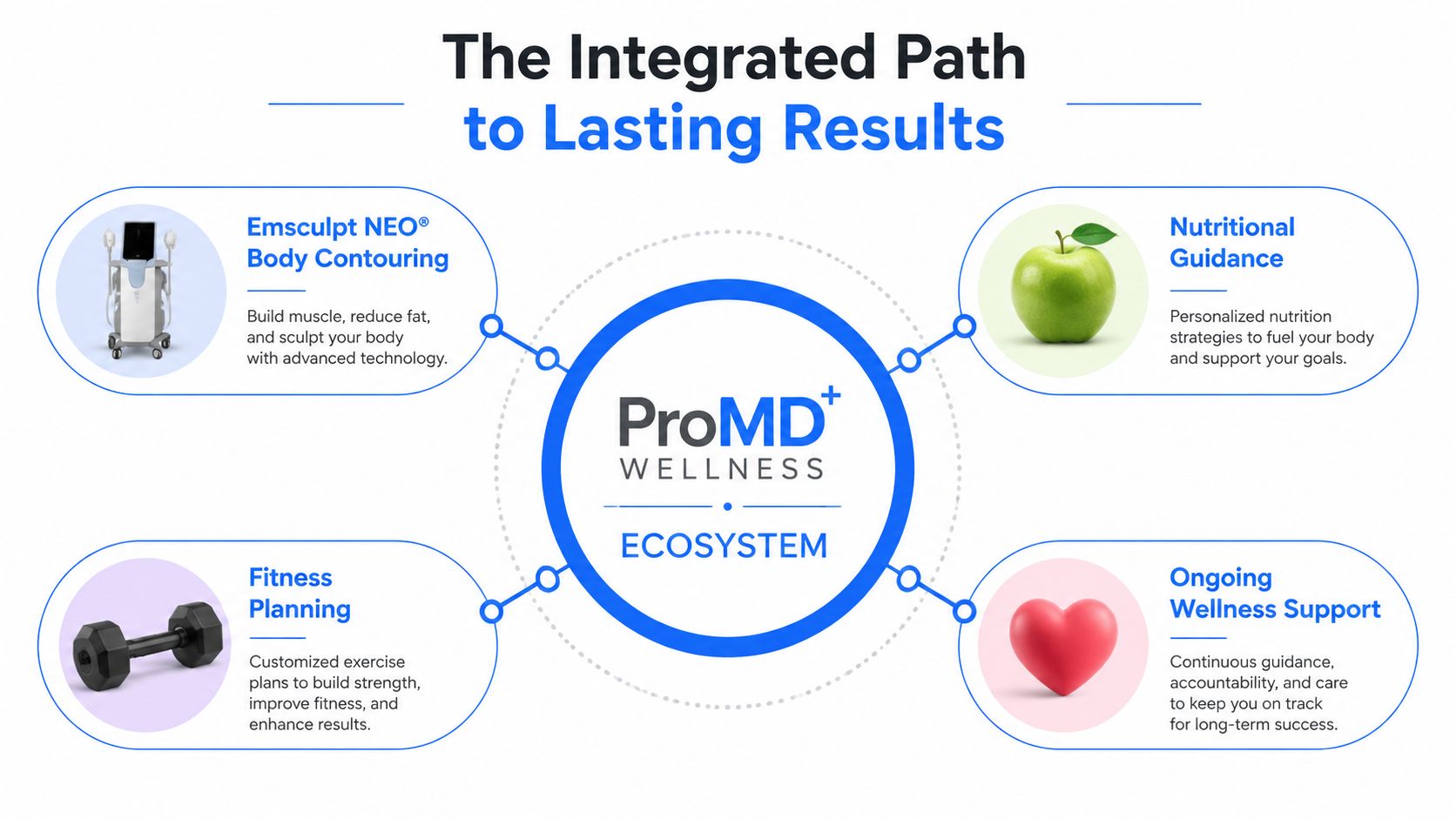
Emsculpt NEO has greater practical value when it fits into a broader plan. A patient may need help with weight management, nutrition, movement, hormones, recovery, or expectations before a localized contouring procedure becomes the right next step.
ProMD Health offers Emsculpt NEO alongside integrated wellness services that include medically guided weight management, hormone optimization, menopause management, and longevity-focused care. That model can help clinicians distinguish a local contouring concern from a wider body-composition or metabolic issue, although treatment availability and recommendations still need to be confirmed during consultation.
The sequence matters
Someone actively losing weight may benefit from stabilizing that process before judging a localized contouring result. Another person may use body contouring as a targeted complement while continuing strength training and nutrition work.
The advantage of integration isn't a promise of better outcomes. It's a way to ask better clinical questions:
- Is the concern driven mainly by local subcutaneous fat?
- Would weight management address more of the problem?
- Is there enough muscle development for definition to become visible?
- What habits will support the result after treatment?
- Does the treatment area and device availability match the patient's needs?
This approach keeps the procedure in its proper role. It may be one component of care, not the entire body-composition strategy.
The Practical Recommendation
Emsculpt NEO is worth discussing when you're near a stable weight, have a clearly localized concern, want modest improvement in muscle definition or fat reduction, and can accept a premium cash-pay cost. It's a poor substitute for medical weight management, progressive exercise, or surgery when those are the interventions that match your primary goal.
Before committing, verify:
- Provider qualifications: Confirm who evaluates candidacy and performs treatment.
- Device and protocol: Ask which areas are treated and what course is recommended.
- Evidence: Request before-and-after documentation involving similar body types.
- Full pricing: Clarify the total course price and potential maintenance costs.
- Follow-up: Ask how results will be assessed and what happens if the response is limited.
The most reliable answer to “is Emsculpt NEO worth it” comes from matching the tool to the goal, not from a universal rating. Treat the consultation as a decision test, not a sales form.
If you're considering localized fat reduction or muscle conditioning, visit ProMD Health to learn about Emsculpt NEO and the practice's broader aesthetic and wellness services. Use a consultation to clarify candidacy, treatment goals, total cost, and how body contouring could fit within your existing health plan.


