
You can do everything “right” and still wake up tired. You sleep more, cut back on caffeine, try to eat better, and promise yourself you'll get back on track, yet the heavy, dragging feeling doesn't lift. That's when many people start wondering whether hormone imbalance and fatigue are connected, and why rest alone hasn't fixed it.
Fatigue is common, but that doesn't make it normal when it lingers. A 2024 systematic review and meta-analysis found chronic fatigue had an average global prevalence of 7.7%, general fatigue was 24.2%, adults reported fatigue at about 15.1%, and fatigue was 1.4 times more common in females than males (systematic review and meta-analysis). That matters because endocrine problems often show up first as vague tiredness, not a dramatic single symptom.
Table of Contents
- Why Your Fatigue Might Be More Than Just Poor Sleep
- How Different Hormone Systems Drive Fatigue
- Recognizing Symptom Patterns by Hormone Type
- Essential Diagnostic Tests and What They Reveal
- When Fatigue Is Not Actually a Hormone Problem
- Treatment Options from Medical to Lifestyle Interventions
- When and How to Seek Professional Evaluation
Why Your Fatigue Might Be More Than Just Poor Sleep
A woman can go to bed earlier, put away late-night scrolling, and still feel like she is running on fumes by midmorning. A man can add more caffeine, push through work, and assume stress is the only explanation, only to notice the exhaustion keeps coming back. When that pattern repeats, the better question is whether sleep is the problem, or whether the hormone systems that control energy are sending the signal first.
Hormones are chemical messengers. They help regulate metabolism, sleep timing, stress response, blood sugar, and reproductive function, so when one system drifts off course, fatigue is often the earliest clue. That is why persistent tiredness can feel so frustrating. The body is sending a signal, but it does not always point to one obvious diagnosis.
Practical rule: fatigue that stays despite better sleep habits deserves a broader look, not just more willpower.
A useful example is thyroid dysfunction. In treated hypothyroidism, a survey of patients found a mean FACIT-F fatigue score of 20.5, and 89% met criteria for abnormal fatigue (treated hypothyroidism survey). That kind of pattern shows why fatigue deserves clinical attention even after a thyroid condition has already been identified.
If you want a broader women's health perspective on how hormonal shifts can affect energy, the overview on hormone balance for women gives a helpful starting point. The main takeaway is simple, fatigue can be a symptom of a hormone system, not just a sign that you need more coffee.
How Different Hormone Systems Drive Fatigue
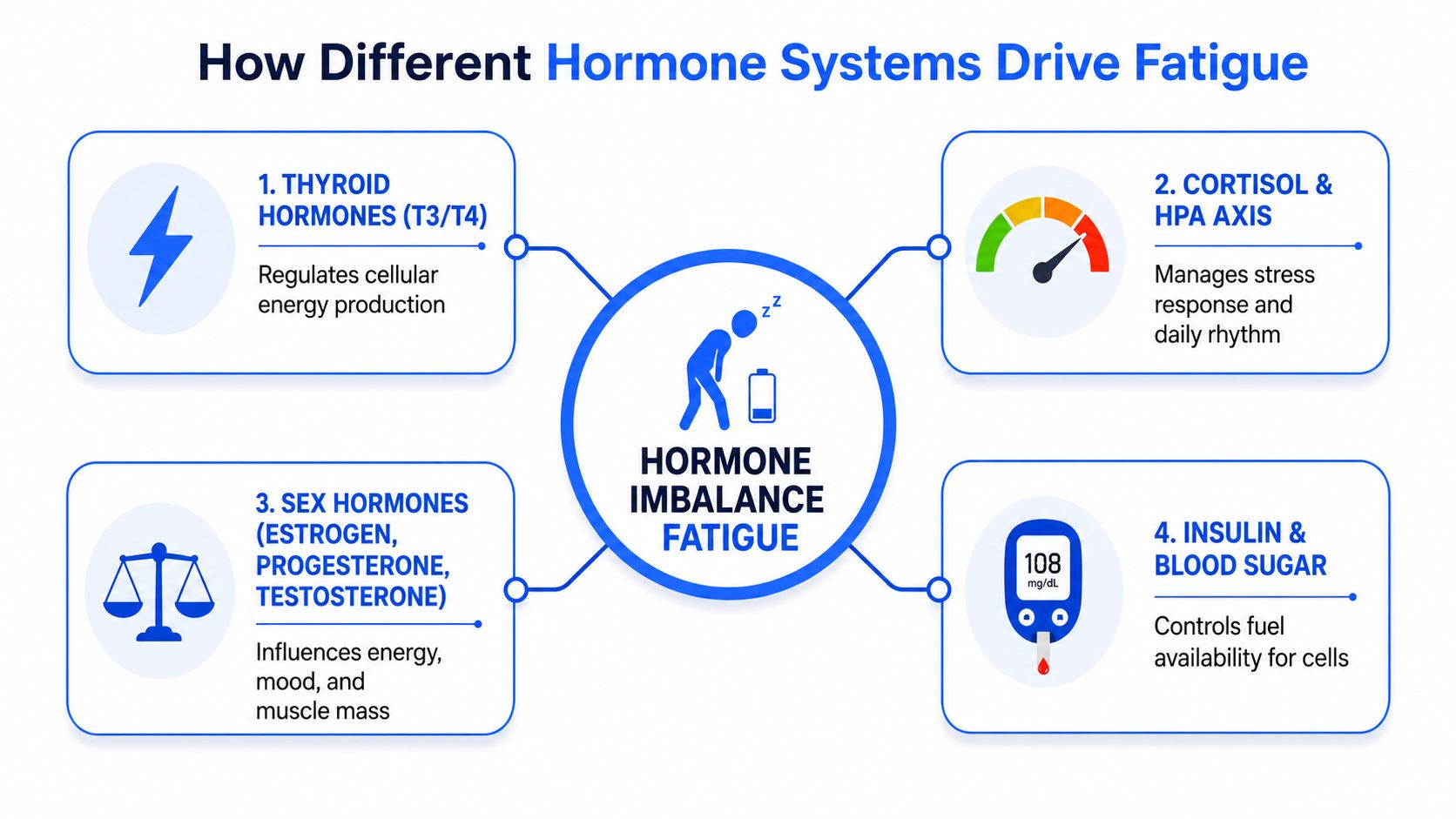
A patient may describe fatigue as “I'm sleeping, but I still feel drained.” That complaint can point to more than one hormone system, and the pattern of symptoms often gives the first clue about which system deserves closer attention. Thyroid, stress, sex hormones, and insulin each affect energy in different ways, so the diagnostic process works best when those patterns are separated rather than lumped together.
Thyroid hormones slow energy production
Thyroid hormones, mainly T3 and T4, set the pace for metabolic activity in nearly every tissue. When thyroid output is low, basal metabolic rate falls and cellular ATP production drops. That helps explain why people with hypothyroidism often describe heaviness, slow thinking, and low stamina. Fatigue linked to thyroid dysfunction often feels less like sleepiness and more like the body is operating in slow motion.
The clue is not just tiredness. In studies of thyroid-related fatigue, fatigue scores have tracked with TSH and free T4, which supports the idea that a hypothyroid biochemical pattern can show up as low energy even when the symptom feels nonspecific (thyroid markers and fatigue study). A clinical overview of thyroid fatigue also emphasizes the common pairing of fatigue with slowed bodily function, which is why persistent exhaustion plus other thyroid clues should prompt thyroid testing instead of being written off as stress.
Cortisol and the HPA axis shape rhythm and resilience
Cortisol follows a daily rhythm, and the HPA axis helps the body respond to stress. When that rhythm is dysregulated, sleep can become fragmented, stress tolerance can drop, and a person may feel wired at night but depleted during the day. The pattern is a bit like a thermostat that keeps overshooting, then undershooting. The result is not steady output, but an energy system that never quite settles.
A review of chronic fatigue biology links fatigue to HPA-axis hypoactivity, autonomic changes, and immune abnormalities, and it notes that hypocortisolemia may reflect reduced hormone synthesis, receptor downregulation, or stronger negative feedback sensitivity (neuroendocrine and immune review). That matters clinically because stress-related fatigue can look different from thyroid fatigue. One person may have trouble falling asleep and feel internally revved. Another may feel flat, unmotivated, and slow to recover after ordinary demands.
Sex hormones affect sleep, mood, and muscle
Estrogen, progesterone, and testosterone do more than influence reproduction. They also affect sleep quality, mood stability, and muscle maintenance, all of which shape how energized someone feels during the day. When these hormones shift, fatigue may show up with brain fog, sleep disruption, irritability, or reduced physical resilience.
In midlife, that pattern is easy to misread as ordinary aging. It often overlaps with cycle changes, hot flashes, lighter sleep, or a loss of drive that does not match the person's usual baseline. For readers who want a clearer framework for the estrogen side of the picture, estrogen deficiency symptoms can help show how low estrogen may present alongside fatigue rather than as an isolated complaint.
Insulin controls fuel availability
Insulin helps move glucose into cells. When insulin signaling becomes less efficient, cells do not get fuel as smoothly, and the result can be sluggishness, energy crashes, and trouble staying steady after meals. In practice, insulin imbalance often feels like the body is running out of usable fuel too quickly, even when food intake has not changed much.
This is one reason meal timing and symptom timing matter during evaluation. Fatigue that worsens after a high-carbohydrate meal, follows long gaps between meals, or comes with shakiness and hunger can point toward a blood sugar problem rather than a primary thyroid or cortisol issue. The same complaint of “tired all the time” can come from very different physiology, so the next step is matching the pattern to the likely hormone system instead of guessing.
Hormone-related fatigue usually does not come from one system alone. Sleep disruption, fuel instability, and stress physiology often overlap, and each one can make the others harder to recognize.
Recognizing Symptom Patterns by Hormone Type
Some people assume all hormone-related fatigue feels the same. It doesn't. The symptom pattern helps narrow which system is most likely involved, and that changes which tests deserve priority.
| Hormone System | Fatigue Pattern | Associated Symptoms | Common Triggers |
|---|---|---|---|
| Thyroid hormones | Slow, heavy, persistent exhaustion | Cold intolerance, constipation, dry skin, unexplained weight gain, brain fog | Worsening over time, less tolerance for cold, missed thyroid follow-up |
| Cortisol and HPA axis | Either wired-but-tired or flat, drained fatigue | Sleep disruption, afternoon crashes, stress intolerance, trouble recovering from busy days | Prolonged stress, poor sleep, irregular schedule |
| Sex hormones | Fatigue that tracks with cycle changes or midlife transitions | Mood shifts, hot flashes, sleep disruption, lower motivation | Perimenopause, menopause transition, cycle-related shifts |
| Insulin and blood sugar | Crashes after meals, shaky low-energy spells | Sugar cravings, brain fog, irritability, hunger soon after eating | High-carb meals, long gaps between meals, inactivity |
Thyroid fatigue often comes with clues like cold intolerance or constipation, which is why persistent fatigue plus those symptoms should prompt thyroid testing rather than a stress-only explanation. General thyroid fatigue guidance from endocrine specialists also emphasizes that tiredness can be part of a broader thyroid pattern, not a stand-alone complaint. Cortisol-related fatigue tends to be more pattern-based, with some people feeling alert late at night and wiped out in the afternoon.
Sex hormone fatigue is where people often get confused. A person may blame poor sleep, but the timing tells the story. Symptoms may worsen during the cycle, during perimenopause, or in menopause. For a deeper look at estrogen-related symptoms, the internal guide on estrogen deficiency symptoms is a useful reference point.
Insulin-related fatigue is different again. The body may feel fine in the morning, then crash after lunch or start craving quick sugar to stay alert. That pattern points more toward fuel regulation than a primary sleep problem.
Essential Diagnostic Tests and What They Reveal
Testing works best when it follows the symptom pattern instead of guessing. A tired person doesn't need every panel under the sun, but they do need a structured workup that checks the most likely endocrine pathways and avoids false reassurance from incomplete labs.
Start with the thyroid, because it's often the first endocrine clue
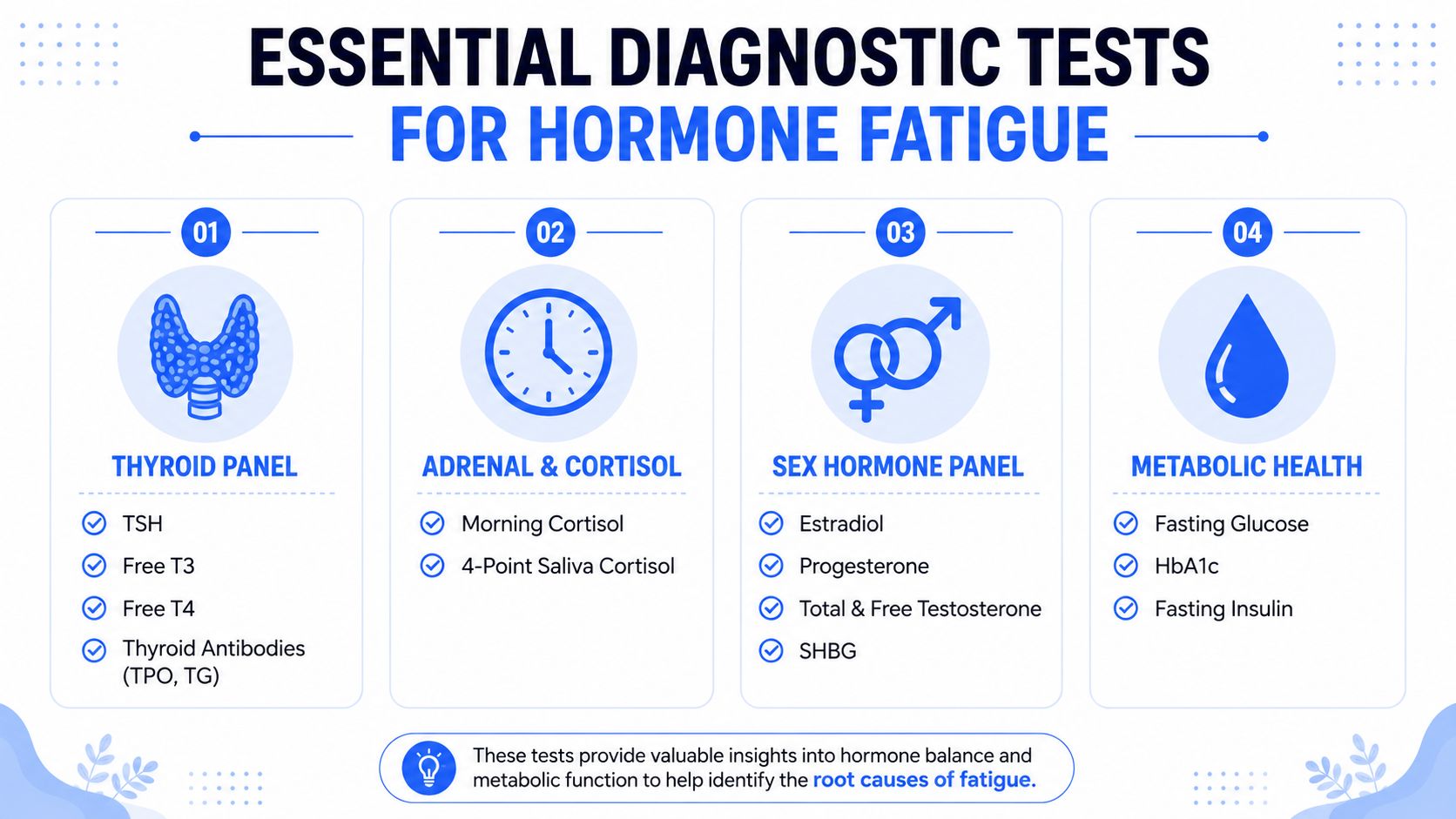
A basic thyroid workup usually includes TSH, free T4, free T3, and thyroid antibodies such as TPO and TG antibodies. TSH can look “normal” while symptoms persist, especially if free T3 is low or conversion is impaired, so a narrow test can miss part of the picture. The goal isn't to chase a number in isolation, it's to see whether the symptom pattern fits the chemistry.
Match the hormone test to the body clock
Cortisol testing works best when timing is respected, because cortisol follows a daily rhythm. Sex hormones also need timing context, since estradiol and progesterone shift by cycle phase, and FSH or LH can help clarify whether a person is moving through perimenopause or another reproductive transition. Testing at the wrong time can make a meaningful pattern look flat.
Clinical shortcut: if fatigue changes by time of day, stress load, or menstrual phase, the timing of the lab matters as much as the label on the tube.
Add metabolic markers when the energy problem looks like fuel instability
If symptoms include crashes after meals, hunger swings, or brain fog that improves temporarily after eating, metabolic markers deserve attention. That often means fasting insulin, fasting glucose, and HbA1c. The point is to identify whether the problem is limited hormone output, poor hormone signaling, or a broader fuel-regulation issue.
When a full picture is needed, a clinician may also look at the broader hormone optimization framework described in the internal guide on how hormone optimization works. The key is not ordering every test automatically, it's choosing the tests that fit the story the body is telling.
When Fatigue Is Not Actually a Hormone Problem
Many people get misdirected. Fatigue can be caused by hormone imbalance, but it can also come from sleep disorders, anemia, iron deficiency, vitamin B12 or vitamin D deficiency, depression, anxiety, chronic infection, autoimmune disease, or other medical problems that need their own workup. Jumping straight to “balance your hormones” can delay the accurate diagnosis.
A broad differential diagnosis matters because fatigue is a symptom, not a diagnosis. The endocrine literature is explicit that thyroid testing may be only the first step, not the final answer, and that metabolic problems like hypo- or hyperglycemia and gonadal dysfunction can also contribute (broad differential diagnosis of fatigue). That's why a careful clinician asks about sleep quality, mood, medications, bleeding history, infection risk, and autoimmune symptoms before narrowing the search.
For people looking for a practical starting point on the non-hormonal side, the guide on how to cure chronic fatigue naturally can help organize the basics of sleep, recovery, and lifestyle support. Still, natural strategies shouldn't replace a medical evaluation when red flags are present.
Seek prompt care if fatigue comes with chest pain, fainting, major shortness of breath, unexplained weight change, severe mood disturbance, or heart palpitations.
A good rule is simple, if the fatigue is persistent and the story doesn't fit one obvious hormone pattern, the workup should widen before treatment narrows.
Treatment Options from Medical to Lifestyle Interventions

Treatment has to match the system
A treatment plan only works when it matches the hormone system driving the fatigue. Thyroid-related fatigue may improve with levothyroxine, and in some cases a clinician may discuss combination T3/T4 therapy if the pattern suggests a conversion issue rather than a simple shortage. Nutrition still matters here, because low intake of the cofactors that support hormone pathways can make recovery feel slower and less predictable. The key question is whether the issue is true hormone deficiency, poor conversion, or something else that needs a different response.
Cortisol-related fatigue is often approached by restoring sleep, steadier daily rhythm, and stress reduction that fits the person's life. Some people need more structure around wake time, meals, and light exposure, while others need a closer look at anxiety, insomnia, or shift-work strain that is keeping the stress system stuck in overdrive. If the pattern is severe or complicated, prescription treatment may be part of the plan, but only after a proper evaluation shows that the adrenal or stress-response picture really fits.
Sex hormone fatigue during perimenopause or menopause may be treated with hormone therapy or non-hormonal options, depending on symptoms and medical history. For readers who want a broader safety lens on this topic, the internal hormone replacement therapy safety guide is a useful companion piece. The right choice is the one that fits the symptom pattern, the risks, and the person's goals, not a one-size-fits-all prescription.
A clearer plan starts with the question, which system is driving the tiredness? ProMD Health explains how hormone optimization works in a way that connects testing, symptom patterns, and treatment choices, which can help patients understand why one person needs thyroid support while another needs a different approach.
Lifestyle still matters, but it works best as support
Sleep hygiene, regular exercise, protein-adequate meals, and consistent stress management can make medical treatment work better. They do not replace treatment when a hormone deficiency is present, but they can reduce symptom swings and help the body respond more predictably. Tracking patterns helps too, because fatigue that worsens after meals or during certain weeks of the month gives the clinician a clearer picture of what to treat and when.
If you are exploring a broader program approach, ProMD Health offers hormone optimization and menopause management within its wellness care model, which may include telehealth through ProMD Connect. For some patients, that kind of structured follow-up is what turns a vague fatigue complaint into a workable care plan.
For people who like to track how treatment is changing over time, the article on how to track peptide regimens shows how organized monitoring can support a clinician-led plan. The bigger point is that fatigue rarely improves from one isolated intervention. It usually responds when the hormonal, metabolic, and lifestyle pieces are handled together.
When and How to Seek Professional Evaluation
A persistent fatigue pattern deserves a medical evaluation when it has lasted more than a few weeks, interferes with work or family life, or shows up with weight changes, mood shifts, palpitations, or sleep disruption. The most useful visit starts with details you can observe. Bring a symptom timeline, note the times of day the fatigue feels worst, and record whether it changes after meals, under stress, or across your menstrual cycle. Those patterns often point toward a hormone system long before a single lab result does.
A good clinician should compare the likely hormone systems rather than treating every tired patient the same way. Thyroid testing, metabolic markers, and a discussion of whether sex hormones or cortisol fit the picture can help sort out whether the issue looks more like low thyroid function, blood sugar instability, adrenal signaling changes, or another medical problem. Ask how the clinician decides between hormone treatment, sleep treatment, nutritional correction, or a broader workup. That answer usually shows whether the fatigue is being examined carefully or waved off too quickly.
If you are thinking about hormone therapy, the internal hormone replacement therapy safety guide can help you prepare better questions for that conversation. It is also reasonable to ask what monitoring will look like, how side effects are tracked, and how the plan changes if symptoms do not match the lab pattern. A thoughtful evaluation does not guess first and explain later. It connects the symptoms, the labs, and the next step.


