
You may notice fullness beneath your chin in a photo, or see it when you tilt your head down in the mirror. It's natural to wonder whether an injection can sharpen that area. The answer depends less on the name of the treatment than on what's creating the fullness in the first place.
Table of Contents
- What a Double Chin Reduction Injection Actually Does
- How Deoxycholic Acid Works Under the Skin
- Who Is a Good Candidate for the Injection
- What Happens During a Treatment Visit
- How Many Sessions You Will Probably Need
- Side Effects, Swelling, and Recovery Realities
- Comparing Injections With Coolsculpting, Emsculpt NEO and Surgery
- Choosing a Provider and Planning Your Next Step
What a Double Chin Reduction Injection Actually Does
Submental fullness is the clinical term for fullness beneath the chin. It can come from a pocket of fat, loose skin, deeper anatomy, or a combination. A double chin reduction injection usually refers to deoxycholic acid, sold as Kybella, an FDA-approved prescription treatment for reducing the appearance of submental fat in adults.

The treatment has a specific purpose: it targets fat beneath the chin. It doesn't remove excess skin, tighten the neck muscles, or change the shape of the jaw. That distinction matters because an injection may help when localized fat is the main concern, but it may disappoint if skin laxity or underlying structure is responsible for the contour.
Deoxycholic acid became the first FDA-approved pharmacologic treatment specifically intended to improve the appearance of submental fat in 2015. The approval followed two trials involving adults with moderate to severe fullness, establishing a regulated option distinct from unapproved injection-lipolysis approaches (FDA labeling and approval information).
Before deciding, it helps to understand what the injection does, how clinicians assess candidacy, how treatment is delivered, what recovery can involve, and which alternatives address different anatomy. ProMD Health also describes injectable and device-based approaches on its page about non-invasive fat reduction. By the end, you should be better prepared to discuss whether an injection matches your concern, or whether another approach makes more sense.
How Deoxycholic Acid Works Under the Skin
Deoxycholic acid is a bile acid that helps the body handle dietary fat. In this treatment, a manufactured form is injected into subcutaneous fat, the layer just beneath the skin. It disrupts fat-cell membranes, and the body then clears the damaged cells and their contents through inflammatory and phagocytic processes.
A useful analogy is a carefully marked treatment area rather than a single “fat-melting” shot. The provider places small injections across a mapped grid so the medicine reaches the intended fat compartment. If injections are too superficial, they can injure the skin; careful placement and depth control are important parts of treatment safety.
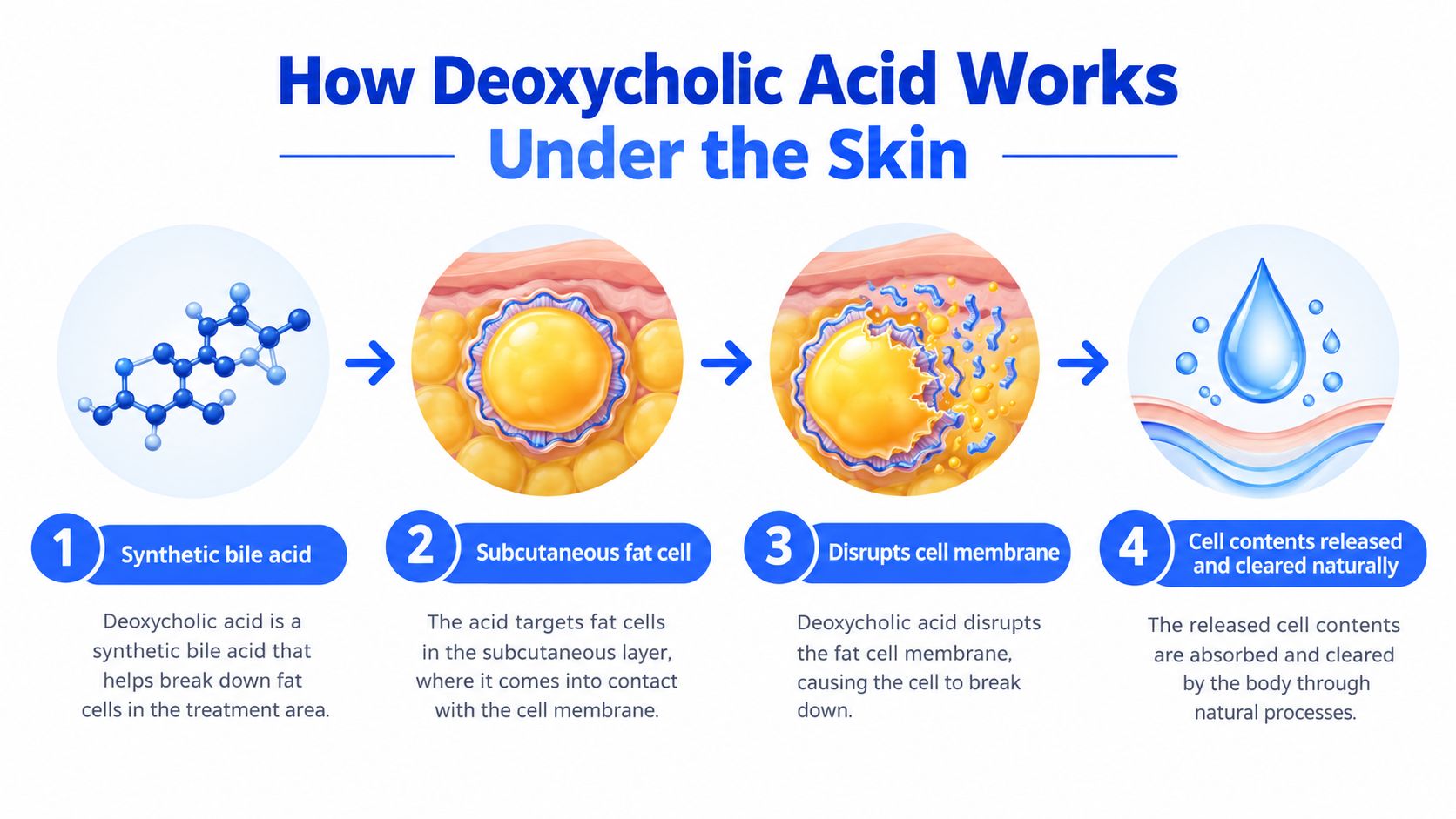
Why the injection pattern matters
The FDA-labeled protocol uses an area-adjusted dose of 2 mg/cm², delivered as 0.2 mL injections spaced 1 cm apart. A session is limited to 50 injections or 10 mL, and treatments may be repeated at intervals of at least one month, for up to six sessions (FDA prescribing information).
These measurements aren't a template for self-treatment. They describe a clinician-administered protocol in which the provider assesses the treatment area, marks the injection grid, and targets the fat layer. A dose or placement that ignores anatomy can raise the risk of tissue injury without guaranteeing a better result.
The body needs time to clear affected cells and for the tissue response to settle. That's why the treatment is staged rather than designed as an instant, one-visit correction. The number of visits and the amount of visible change depend on the person's anatomy and response, not only on how many injections are given at one appointment.
Who Is a Good Candidate for the Injection
A visible double chin doesn't automatically mean there's injectable fat to treat. A clinician needs to distinguish superficial fat in front of the platysma muscle from deeper fat, loose skin, muscle features, or structural fullness that may make the area look less defined. The strongest rationale for deoxycholic acid is localized superficial subcutaneous fat as the main cause.
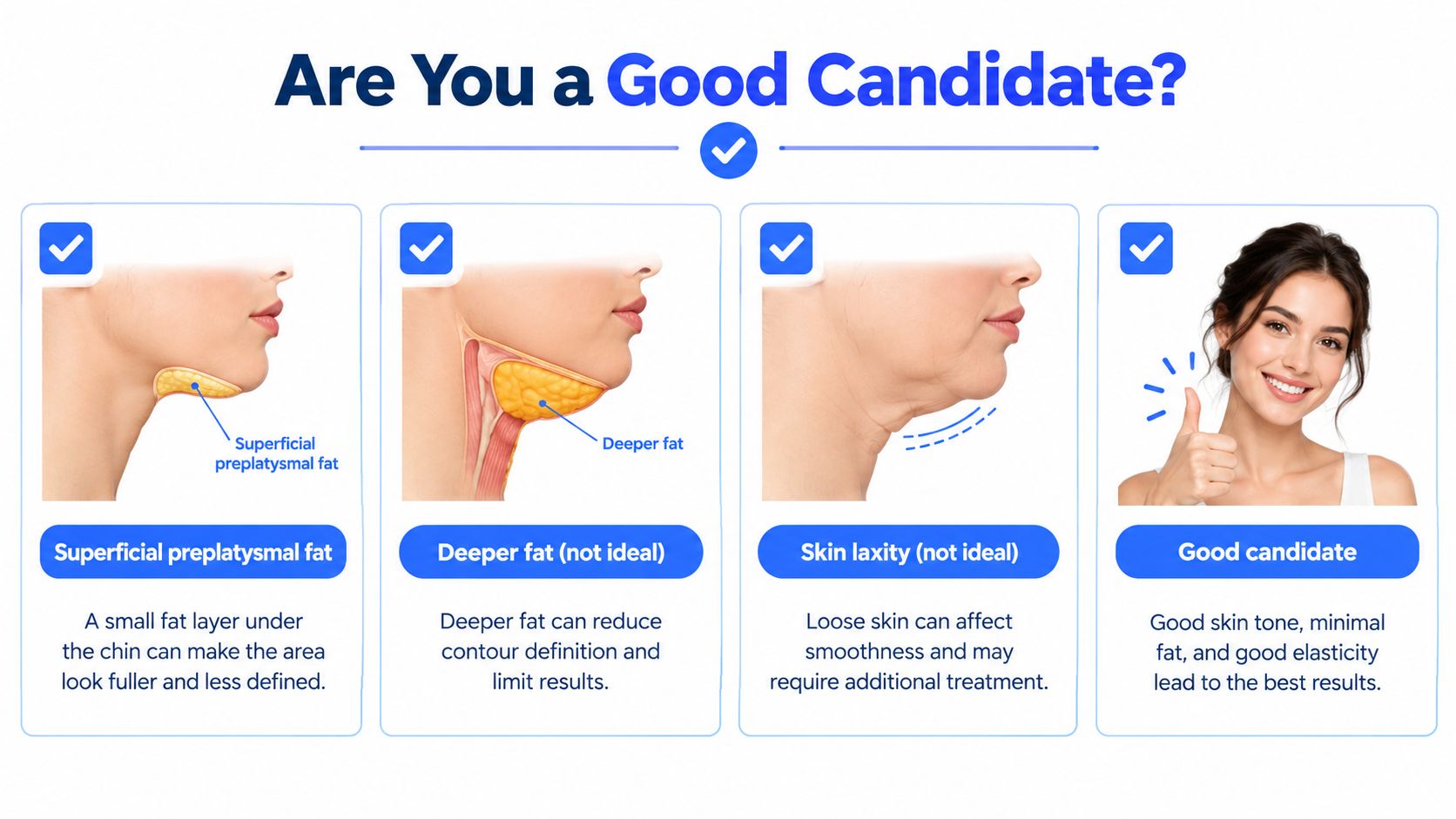
What the clinician should assess
Candidacy is a clinical judgment, not a checklist that can confirm your eligibility at home. Some features may make a fat-targeting treatment more appropriate:
- Localized fullness: The concern appears to come mainly from a pinchable pocket of fat beneath the chin.
- Moderate fullness and realistic goals: The patient understands that treatment can reduce fat without guaranteeing a sharply sculpted jawline.
- Skin that can adapt: Reasonable skin recoil may help the area settle after fat reduction.
- Stable overall health and weight: The provider can assess whether changes in weight or health could affect the plan.
Significant skin laxity may remain after fat reduction, because the injection doesn't tighten skin. Deeper fullness or muscle and skeletal features may also call for a different discussion. A very high body weight, prior neck surgery, or expectations of complete elimination should prompt careful assessment, not an assumption that treatment is suitable or unsuitable without an exam.
A practical question for the consult: “Is the fullness you're seeing mostly superficial fat, loose skin, or a mix?”
The provider should examine the area from different angles, discuss what the treatment can and can't change, and explain alternatives before drawing an injection grid. If the main issue isn't superficial fat, proceeding with injections may not deliver a satisfying contour.
What Happens During a Treatment Visit
A treatment appointment starts with a conversation and an examination, not with the syringe. The provider reviews your goals, checks the anatomy beneath your chin, and confirms that the planned area is appropriate for treatment. They then mark the treatment grid, using the area and the approved injection pattern to guide placement.
Comfort measures vary. A provider may use topical anesthetic, cooling, or injected lidocaine, depending on the clinical plan and patient needs. Once the area is prepared, the clinician gives a series of small injections across the marked grid. Patients may feel stinging, pressure, or tenderness during the injections, and the experience varies.
Before you leave
The injection portion may take around 15 to 30 minutes after mapping, though the full visit can take longer depending on consultation and preparation. Ice may be used after treatment, and the provider can recommend keeping the head raised to help manage swelling.
Expect the area to feel tender, numb, firm, or swollen before you leave. Follow your provider's specific aftercare instructions. These may include avoiding strenuous exercise for a short period and sleeping with your head raised. Since swelling can be noticeable, it's sensible to plan around work, photographs, or social events rather than scheduling on the assumption that the area will look unchanged immediately afterward.
Your provider should tell you when to contact the office and what symptoms warrant prompt evaluation. Ask for those instructions in writing if you're unsure how to distinguish expected recovery from a concern.
How Many Sessions You Will Probably Need
A small pocket of fat beneath the chin and a broader area of fullness do not call for the same treatment plan. Session count depends partly on how much fat is present and where it sits, as well as how the area responds after each treatment. Improvement develops over time.
In a three-dimensional imaging study of submental volume change, patients received an average of 3.4 treatment rounds, with a standard deviation of 1.19 rounds. Measured reductions in submental volume ranged from 4.91 to 49.26 mL, and the reduction was statistically significant in the study. The same research recorded an average temporary 8.68% increase in submental volume during the immediate recovery period, consistent with swelling. The area can look fuller before it begins to look smaller.
For patients who needed more than three rounds, an average of 92.8% of their eventual volume reduction had been achieved after the first three sessions. That finding describes the study group, not a guarantee about an individual's result.
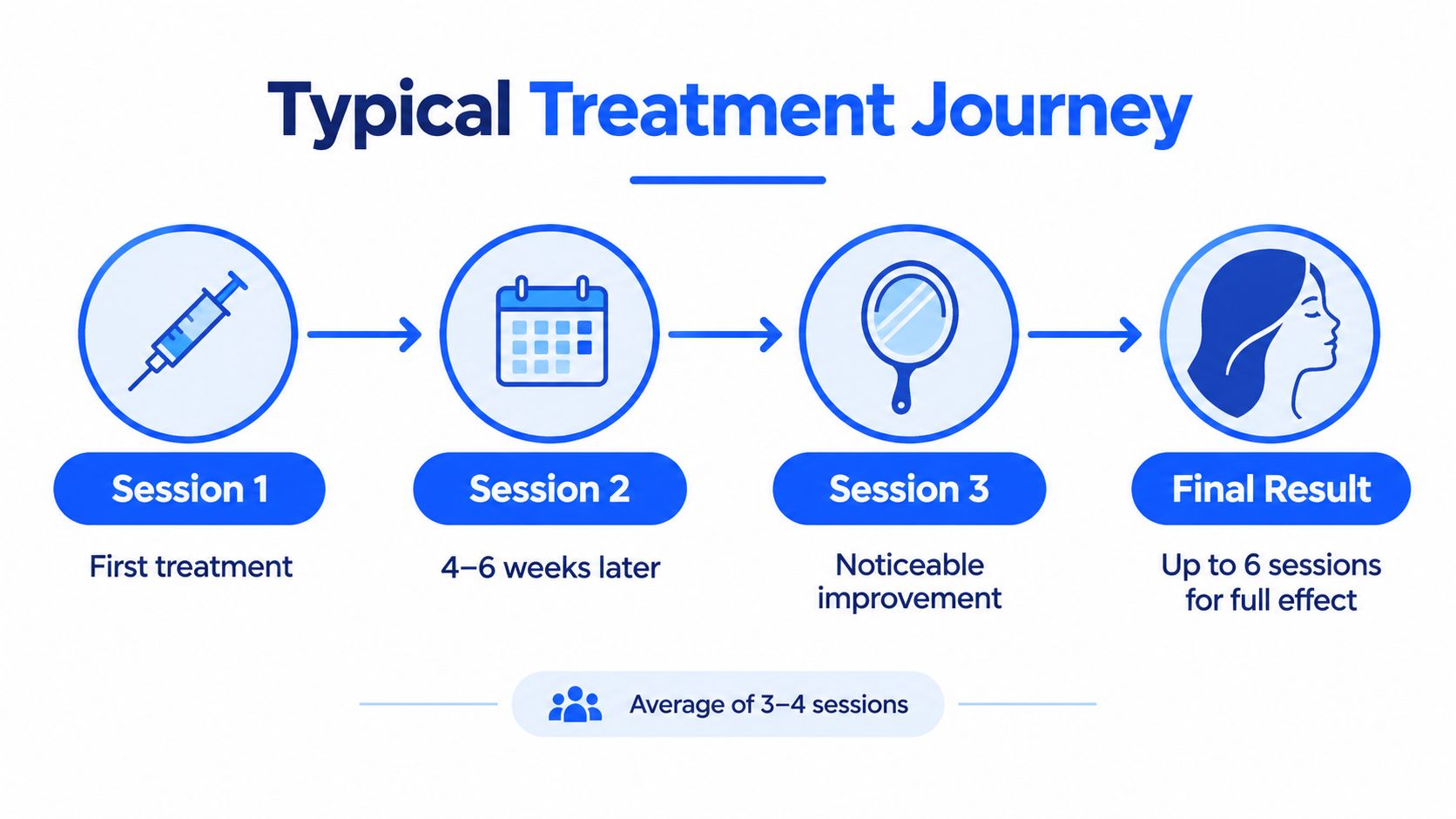
What the study results do and don't mean
Your clinician considers the amount and location of fat, your response to each session, and how the area looks as it recovers. If fullness is mainly caused by loose skin or another feature of your anatomy, injections may not address the main concern. Some patients may need fewer visits; the FDA regimen allows up to six sessions, spaced at least one month apart. This is a defined treatment course, not a promise of a one-visit result (FDA prescribing information).
The trial endpoint also needs context. FDA labeling reports that MRI showed at least a 10% reduction in submental fat volume in 43% of treated subjects, compared with 5% receiving placebo. These figures describe fat-volume change among trial participants, not guaranteed elimination of a double chin or correction of loose skin (FDA trial results).
Plan for stages, not a reveal the next morning. Early swelling can hide a change, so a follow-up assessment gives a more useful view of the contour than judging it during recovery.
Side Effects, Swelling, and Recovery Realities
The treatment works by disrupting fat cells and triggering a local response, so discomfort and visible changes in the treated area are part of the experience for many patients. Common reactions include pain, bruising or hematoma, numbness, redness, firmness, and swelling. They're generally temporary, but their intensity and duration differ from person to person.
Some sensory changes can last beyond 30 days, so don't assume that every lingering patch of numbness will resolve immediately. Follow the aftercare plan, and contact your provider if a symptom is worsening, persists longer than expected, or concerns you. The provider can assess whether the change fits the expected healing pattern.
When to call the provider
Seek advice promptly if you notice significant asymmetry, persistent or worsening nerve-related symptoms, skin injury, or hardness that isn't improving. Contact the clinic urgently for signs of a serious problem, such as rapidly worsening pain, spreading redness, drainage, or difficulty swallowing or breathing. These symptoms don't mean a complication has occurred, but they deserve timely professional assessment.
Swelling can temporarily mask contour improvement, so avoid making a final judgment while the area is still reacting. If you're also researching injectable treatments for weight management, this overview of evidence for Wegovy and Mounjaro can help distinguish a systemic weight-management discussion from a localized cosmetic procedure. The two address different concerns, and one shouldn't be treated as a substitute for the other.
Comparing Injections With Coolsculpting, Emsculpt NEO and Surgery
The right comparison starts with the problem being treated. A fat-reduction approach may help with localized fat, but it won't tighten loose skin or correct muscle banding. Surgery can address more than fat, depending on the procedure, but brings a different level of intervention and recovery.
| Option | What it treats | Typical sessions | Downtime | Best fit |
|---|---|---|---|---|
| Deoxycholic acid injection | Localized submental fat, not loose skin | Up to six sessions, spaced at least one month apart | Swelling, tenderness, and bruising may affect plans | A suitable patient whose main concern is superficial fat |
| CoolSculpting-style fat reduction | Fat targeted with a non-invasive device, not loose skin | Varies by treatment plan | Usually less recovery than surgery, but local effects may occur | A patient whose anatomy and goals fit device-based fat reduction |
| Emsculpt NEO | Muscle building and fat reduction in treated areas; not a skin-tightening procedure | Varies by treatment plan | Typically no surgical recovery | Body-contouring goals suited to the device and treatment area |
| Submentoplasty or neck lift | Depending on the procedure, fat, loose skin, and muscle | Often a surgical treatment plan rather than a series of injection visits | Anesthesia and recovery are involved | More pronounced skin or muscle concerns, or a need to address multiple structures |
A non-invasive device option and an injection both require realistic expectations about the treatment target. Neither should be described as a way to tighten loose skin. Surgery may address skin and muscle as well as fat, but it involves anesthesia and recovery, and a qualified clinician needs to determine which procedure fits the anatomy.
Evidence doesn't establish a universal winner among non-invasive options, especially where direct comparisons are limited. That makes an anatomy-led consultation more useful than a promise that one method works better for everyone. ProMD Health describes Emsculpt NEO body contouring as an option for muscle building and fat reduction, but a clinician should confirm whether it's relevant to the area and goal being discussed.
People researching medical weight-management injections can also find telehealth GLP-1 treatment details. That's a separate care pathway from treating a localized pocket beneath the chin. The key question is whether the concern comes from fat, skin, muscle, or more than one of these factors.
Choosing a Provider and Planning Your Next Step
Use a consultation to test the quality of the plan, not just to ask whether you can get an injection.
- Anatomy: Does the provider explain whether your fullness comes from fat, skin, or both?
- Timeline: Do they discuss staged treatment and recovery, rather than promising a single visit?
- Alternatives: Do they explain what injections won't change and when another approach may fit better?
FAQ: What about payment and insurance? ProMD Health operates on a cash-pay model, so its services aren't covered by insurance. Confirm the current payment details directly with the practice before booking.
Can I confirm candidacy by pinching the area? A pinch may give you a rough sense of superficial fullness, but it can't assess deeper fat, skin quality, or structural factors. An in-person examination is needed.
What if swelling seems prolonged? Contact your provider for guidance rather than assuming it's normal or trying to treat it yourself. ProMD Health's overview of non-surgical neck rejuvenation treatments can also help you compare concerns and options before a consultation.
If you're considering treatment, bring your goals and questions to a clinician who can assess your anatomy and talk through realistic endpoints. A consult should leave you with a clear explanation of whether an injection is appropriate, and what alternatives may suit you better.
ProMD Health offers Kybella for submental fullness, along with other non-surgical aesthetic treatments that may fit different concerns. Visit ProMD Health to explore its services and request a consultation to discuss whether a double chin reduction injection suits your anatomy.


