Morpheus8 Skin Tightening Guide for Youthful Results
Maintaining skin firmness and structural definition is one of the most common aesthetic goals we discuss with patients in our clinical practice. As natural aging progresses, intrinsic biological shifts alter the underlying architecture of facial and body tissues. Beginning in early adulthood, endogenous collagen synthesis declines by approximately one percent annually, accompanied by a progressive breakdown of elastin fibers and changes in the subcutaneous fat compartments. Over time, these cellular changes manifest visibly as skin laxity, softening of the jawline, deepening nasolabial folds, and crepey texture across the neck and décolletage.
While surgical procedures such as facelifts and neck lifts remain the benchmark for addressing severe tissue descent, many individuals seek noticeable structural improvement without surgical incisions, general anesthesia, or prolonged recovery periods. In our practice, we utilize radiofrequency (RF) microneedling, and specifically the Morpheus8 platform, to bridge the gap between superficial aesthetic treatments and invasive surgical repositioning. This guide explores the scientific mechanisms, clinical applications, procedural experience, and post-treatment timelines of Morpheus8, helping prospective patients understand how subdermal adipose remodeling restores firmness and vitality to aging skin.
The Science of Morpheus8: Dual-Action Subdermal Remodeling
Morpheus8 represents a sophisticated evolution in non-surgical tissue tightening. Traditional aesthetic therapies often treat skin concerns in isolation; mechanical microneedling addresses superficial surface texture, while bulk heating devices warm broader tissue volumes from the outside in. Morpheus8 integrates these two approaches into a unified, synergistic platform that simultaneously addresses textural irregularities and deep structural laxity.
Mechanical Percutaneous Collagen Induction
The mechanical component of the treatment relies on a matrix of ultra-fine, medical-grade microneedles that penetrate the skin at precisely calibrated depths. As these needles enter the tissue, they produce microscopic physical channels known as micro-injuries. This controlled micro-trauma initiates the body’s natural wound-healing cascade without damaging the surrounding tissue architecture.
During the wound-healing response, platelets release essential growth factors that stimulate fibroblasts—the primary cells responsible for extracellular matrix synthesis. As documented in a clinical review published by the National Institutes of Health, this biological activation leads to robust neocollagenesis (the production of new structural collagen) and elastogenesis (the creation of elastic fibers), progressively reinforcing the dermal matrix from within.
Fractionated Radiofrequency Energy Delivery
The distinguishing advantage of Morpheus8 lies in its delivery of fractionated bipolar radiofrequency thermal energy directly through the tips of the microneedles. Unlike surface-applied energy devices that must traverse the protective epidermal barrier—risking surface burns or pigmentary alterations—Morpheus8 utilizes insulated needle shafts that channel thermal energy exclusively into targeted subdermal depths.
When radiofrequency energy is delivered to tissue, the natural electrical resistance of the dermal and subdermal layers converts that energy into controlled heat (typically between 60°C and 70°C). This localized thermal reaction produces two distinct clinical effects:
- Immediate Protein Contraction: The thermal energy causes existing collagen triple-helix fibers to contract, creating an immediate, subtle tightening effect within the structural support framework of the skin.
- Subdermal Adipose Remodeling (SARD): At deeper penetration settings, the thermal energy reaches the fibroseptal network and the superficial adipose layer. This controlled coagulation allows clinicians to contour minor localized fat deposits, such as submental fullness under the chin, while tightening the fibrous connective bands that anchor skin to underlying tissues.
By simultaneously stimulating superficial dermal repair and remodeling deep connective tissues, this dual-action mechanism delivers multi-layer tissue tightening that traditional microneedling cannot achieve alone.
Key Treatment Areas and Clinical Indications
Because Morpheus8 offers customizable needle depths—ranging from 1 millimeter for delicate, thin skin up to 4 millimeters on the face and 7 to 8 millimeters on designated body handpieces—our clinicians adapt the treatment to treat diverse anatomical areas.
- Note: The platform’s adjustable depth parameters allow practitioners
- to target superficial dermal texture, intermediate fibrous bands, and
- deeper subdermal fat within a single comprehensive treatment session.
(Diagrammatic concept: Multilevel penetration enables targeted clinical treatment across multiple anatomical layers.)
Lower Face and Submental Contouring
Mild to moderate laxity along the lower third of the face is among the primary reasons patients seek consultation. As soft tissue descends and skin loses tensile elasticity, the crisp contour of the jawline softens, leading to early jowl formation and submental fullness (often referred to as a double chin). Clinicians frequently employ deeper energy settings across the submentum and jawline to firm the fibroseptal network, refine the mandibular border, and smooth the transition from the chin to the upper neck.
Mid-Face and Perioral Rejuvenation
Volume shifts in the cheek fat pads frequently contribute to the deepening of nasolabial folds (smile lines) and melomental folds (marionette lines). By delivering radiofrequency energy into the mid-dermal layers of the cheeks and lower face, Morpheus8 stimulates collagen synthesis to restore dermal thickness. Around the mouth, conservative depths help minimize vertical lip rhytids, commonly called perioral lines, without altering natural facial expressions.
Periorbital Tightening and Brow Support
The skin surrounding the eyes is the thinnest on the human body, making it particularly vulnerable to early crepiness and fine lines. Using specialized, shallow needle depths, clinicians can treat the lower eyelid region and the area just below the brow bone. This micro-resurfacing improves under-eye skin elasticity, smooths crow’s feet, and reduces delicate crepey wrinkling.
Neck and Décolletage Restoration
The neck and upper chest frequently show accelerated signs of photoaging due to chronic ultraviolet exposure and thinner dermal architecture. Morpheus8 addresses horizontal neck rings (“tech neck” lines), vertical chest crinkling, and generalized skin looseness across the décolletage, harmonizing the appearance of the neck and chest with a refreshed facial complexion.
Body Contouring and Scar Remodeling
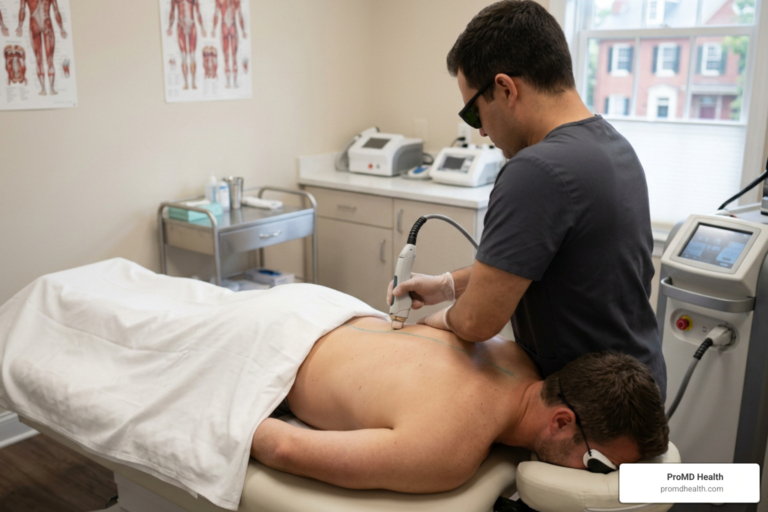
Beyond facial rejuvenation, Morpheus8 Body handpieces provide deeper subdermal remodeling for non-facial zones. Patients frequently discuss treatment for loose abdominal skin following childbirth or weight loss, skin laxity above the knees, crepey skin on the upper arms, and deep surgical or traumatic scars. Additionally, the localized heat helps remodel stubborn atrophic acne scarring by softening fibrous anchor scars and stimulating dermal filling from below.
Morpheus8 Compared to Alternative Rejuvenation Modalities
When exploring aesthetic rejuvenation, patients often weigh radiofrequency microneedling against standard microneedling, fractional laser resurfacing, and surgical intervention. Each modality possesses distinct clinical characteristics, benefits, and recovery considerations.
The American Society of Plastic Surgeons overview of energy-based skin rejuvenation highlights how different energy types address aging tissues at varying anatomical levels. Optical lasers focus predominantly on water absorption in the superficial and papillary dermis, whereas radiofrequency energy is non-chromophore dependent, distributing therapeutic heat safely through all phototypes without being preferentially absorbed by melanin.
The following table summarizes the comparative attributes of these leading clinical approaches:
| Treatment Modality | Primary Mechanism | Target Tissue Depth | Typical Downtime | Best Suited For |
|---|---|---|---|---|
| Morpheus8 RF Microneedling | Mechanical micro-injury plus fractionated RF thermal energy | Deep dermis and subdermal fat (1 mm to 8 mm) | 2 to 4 days of erythema and mild edema | Mild to moderate skin laxity, jowling, submental contouring, and acne scars across all skin tones |
| Traditional Microneedling | Pure mechanical micro-puncture (no thermal energy) | Epidermis to papillary dermis (0.5 mm to 2.5 mm) | 1 to 2 days of mild pinkness | Superficial texture, enlarged pores, and fine surface lines without significant tissue laxity |
| Fractional CO2 Laser Resurfacing | Ablative optical thermal vaporization of skin columns | Epidermis and upper to mid-dermis (0.2 mm to 1.5 mm) | 7 to 14 days of peeling, oozing, and prolonged redness | Deep sun damage, advanced rhytids, and severe actinic changes; requires caution in darker skin tones |
| Surgical Facelift / Neck Lift | Surgical incision, tissue mobilization, SMAS repositioning, and skin excision | Deep SMAS layer, platysma muscle, and cutaneous excess | 2 to 4 weeks of social downtime, bruising, and incision healing | Significant skin redundancy, severe jowling, and extensive structural descent requiring surgical correction |
For patients wishing to examine the differences between minimally invasive energy treatments and surface-focused optical therapies, exploring our practice’s [laser and energy-based skin rejuvenation services](/aesthetic-lasers) can provide additional perspective on which technology matches specific clinical presentations.
Candidate Selection: Determining Suitability for Treatment
Selecting appropriate candidates is essential for achieving optimal aesthetic outcomes and ensuring patient satisfaction. Morpheus8 is well-suited for individuals seeking noticeable skin firming who maintain realistic expectations regarding non-surgical outcomes.
Ideal Patient Characteristics
Clinicians typically assess the following clinical criteria when evaluating prospective patients:
- Mild to Moderate Skin Laxity: Individuals noticing early jowl formation, slight sagging along the jawline, or loss of resilience in the neck often experience the most noticeable improvements.
- Textural and Structural Irregularities: Patients presenting with atrophic acne scars, enlarged pore architecture, or crepey sun-damaged tissue benefit significantly from collagen stimulation.
- All Fitzpatrick Skin Types (I through VI): Because radiofrequency energy bypasses epidermal melanin, Morpheus8 has a lower incidence of post-inflammatory hyperpigmentation (PIH) compared to certain ablative lasers, making it a viable option for darker skin tones when applied with conservative parameters.
- Maintenance Following Surgery: Patients who have previously undergone surgical procedures, such as a facelift, frequently choose Morpheus8 years later to maintain collagen density and skin tone.
When Alternative or Surgical Approaches May Be Indicated
During an initial evaluation, clinicians also determine when radiofrequency microneedling may not meet a patient’s aesthetic goals. Individuals with pronounced skin redundancy, substantial muscle banding in the neck (platysmal bands), or severe tissue ptosis generally achieve more complete correction through surgical lifting. Furthermore, active bacterial or viral skin infections, open wounds, active inflammatory acne breakouts, pregnancy, and the presence of implanted electrical devices (such as pacemakers) are primary contraindications for radiofrequency treatments.
Patients interested in learning more about complementary treatments for structural facial balance can review our [advanced facial aesthetics procedures](/facial-aesthetics) to discover how non-surgical modalities integrate into a comprehensive care plan.
The In-Office Treatment Journey: What Patients Can Expect
Understanding what occurs during a Morpheus8 appointment helps alleviate procedural anxiety and prepares patients for a smooth clinical experience.
- 1. Clinical Assessment & Photography
- 2. Topical Cleansing & Anesthetic Application (45 to 60 minutes)
- 3. Systematic Grid Treatment with Real-Time Energy Modulation
- 4. Application of Soothing Post-Treatment Barrier Formulations
Preparation and Comfort Management
Patient comfort is a central focus of modern aesthetic protocols. Because Morpheus8 delivers therapeutic thermal energy deep into nerve-dense tissues, thorough topical numbing is essential. Upon arrival, the treatment area is thoroughly cleansed, and a medical-grade topical anesthetic cream (such as a compounded lidocaine, tetracaine, and prilocaine mixture) is applied for 45 to 60 minutes. In certain cases, clinicians may also incorporate localized nerve blocks or self-administered nitrous oxide analgesia to maximize relaxation throughout the procedure.
The Procedural Workflow
Once the skin is fully prepped and cleansed with an antiseptic agent, the clinician systematically guides the sterile handpiece across the mapped treatment zones. The device operates in a stamping motion; upon contact, the micro-pins deploy into the skin at the preselected depth, deliver a rapid pulse of radiofrequency energy in milliseconds, and immediately retract before moving to the adjacent site.
Clinicians frequently employ multi-pass protocols:
- First Pass (Deeper Layer): Targets the subdermal fat layer and fibroseptal network (e.g., 3 mm to 4 mm on the lower face) to initiate deep structural tightening and adipose remodeling.
- Second Pass (Mid-Dermal Layer): Administered at an intermediate depth (e.g., 2 mm) to stimulate robust neocollagenesis within the reticular dermis.
- Third Pass (Superficial Layer): A light, non-insulated or shallow pass (e.g., 1 mm) addresses superficial fine lines, enlarged pores, and surface texture.
A typical full-face and neck session generally requires 30 to 45 minutes of active device application.
Recovery Timelines and Post-Procedure Protocols
Recovery following Morpheus8 is generally well tolerated, with minimal disruption to daily routines. However, because the procedure creates thousands of microscopic epidermal punctures combined with deep thermal heating, standard post-treatment care must be respected to foster optimal re-epithelialization and avoid complications.
As emphasized in the American Academy of Dermatology guidance on skin tightening, non-invasive and minimally invasive energy treatments initiate tissue changes that evolve over several months, requiring patience, diligent sun protection, and proper skin barrier support throughout the recovery window.
Immediate Post-Procedure: Hours 1 to 24
Directly following the session, the skin appears uniformly flushed, resembling a moderate-to-severe sunburn, accompanied by mild to moderate edema (swelling) and localized warmth. Clinicians typically apply a soothing peptide serum, hyaluronic acid gel, or regenerative post-procedure balm.
Standard clinical guidelines for the initial 24 hours include:
- Avoiding makeup, sunscreen, and active skincare ingredients (such as retinoids, alpha hydroxy acids, and vitamin C serums).
- Cleansing only with lukewarm water and a gentle, non-foaming, fragrance-free cleanser.
- Refraining from strenuous cardiovascular exercise, saunas, steam rooms, and hot tubs to prevent excessive vasodilation and increased swelling.
- Sleeping slightly elevated on an extra pillow to encourage lymphatic drainage and minimize morning facial edema.
Days 2 to 4: The Acute Healing Phase
By the second and third days, bright erythema typically transitions to a subtle pink tone, and underlying swelling begins to subside. Patients often observe a fine grid-like pattern on the surface of the skin, characterized by pinpoint crusting or tiny micro-scabs where the needles penetrated.
Clinicians advise patients to allow these microscopic crusts to shed naturally; picking, scrubbing, or exfoliating the skin prematurely can lead to localized hyperpigmentation or micro-scarring. Mineral-based broad-spectrum sunscreen (containing zinc oxide or titanium dioxide) can usually be introduced at this stage, alongside gentle barrier-repair moisturizers.
Days 5 to 14: Dermal Recovery and Cellular Renewal
Within five to seven days, the majority of surface crusting has resolved, revealing smooth, fresh skin. Most patients feel entirely comfortable returning to full social schedules and professional engagements without visible signs of treatment. Light mineral makeup may be applied once the epidermal barrier is intact. Active cosmeceuticals, such as prescription retinoids and exfoliating acids, are typically reintroduced around day seven to ten, following clinician guidance.
Results Timeline and Treatment Frequency
Understanding the physiological timeline of collagen synthesis ensures realistic expectations regarding aesthetic progress.
- Treatment Day: Immediate micro-trauma and thermal protein contraction
- Weeks 2 – 4: Re-epithelialization complete; early textural glow
- Weeks 6 – 12: Robust neocollagenesis and fibroseptal remodeling
- Months 3 – 6: Peak tensile skin tightening and structural refinement
When Do Results Become Visible?
While patients often report an early “post-treatment glow” and subtle tissue tightness within the first two to three weeks—partially attributable to early wound-healing edema and immediate collagen contraction—true structural transformation takes time. Biological neocollagenesis and remodeling of the extracellular matrix require several weeks to develop.
Noticeable improvements in skin firmness, jawline crispness, and scar softening typically emerge between six and eight weeks post-treatment, with cumulative lifting and remodeling continuing to progress for three to six months following the final session.
Recommended Number of Sessions
For optimal clinical outcomes, Morpheus8 is rarely performed as a single, isolated treatment. Most aesthetic protocols involve a foundational series of three sessions spaced roughly four to six weeks apart. This staged cadence allows each layer of the dermis to heal and lay down successive lattices of new collagen fibers, building structural support gradually.
Longevity and Maintenance Protocols
Once an initial treatment series is completed, the newly synthesized collagen remains integrated within the dermal architecture. However, because natural biological aging and environmental ultraviolet exposure persist, clinicians generally recommend a single maintenance session every 9 to 12 months to sustain dermal density and prevent recurrent tissue laxity.
Patient Safety and Provider Expertise
While Morpheus8 is a minimally invasive technology, it is a medical-grade device capable of delivering high-intensity thermal energy into deep anatomical planes. Safe and effective treatment requires deep knowledge of facial anatomy, including the precise depth of facial nerve branches, vascular networks, and superficial fat compartments. Delivering excessive radiofrequency energy at inappropriate depths risks inadvertent fat atrophy, permanent scarring, or prolonged dyschromia.
For this reason, aesthetic procedures should always be guided by qualified, board-certified physicians and experienced clinical specialists who assess skin thickness, health history, and anatomical landmarks before initiating therapy.
Taking the Next Step Toward Skin Firmness
Non-surgical tissue tightening has advanced significantly over the past decade. By combining physical micro-channeling with deep radiofrequency thermal remodeling, Morpheus8 provides a scientifically substantiated path for individuals seeking firmer, tighter, and smoother skin without the recovery demands of extensive surgery.
Because every patient’s facial anatomy, dermal thickness, and aesthetic goals are entirely individual, treatment parameters must be customized to each person. We invite you to [schedule an individualized consultation](/contact) with our clinical team, where we can evaluate your skin’s health, review your aesthetic priorities, and design a personalized treatment plan tailored to your lifestyle.