Why Brazilian Laser Hair Removal Is Worth Understanding Before You Book
Brazilian laser hair removal is a cosmetic treatment that uses concentrated light energy to permanently reduce hair across the entire intimate area – including the mons pubis, labia, and perianal region.
Quick answers:
- What it is: Laser treatment that targets and disables hair follicles in the full bikini zone
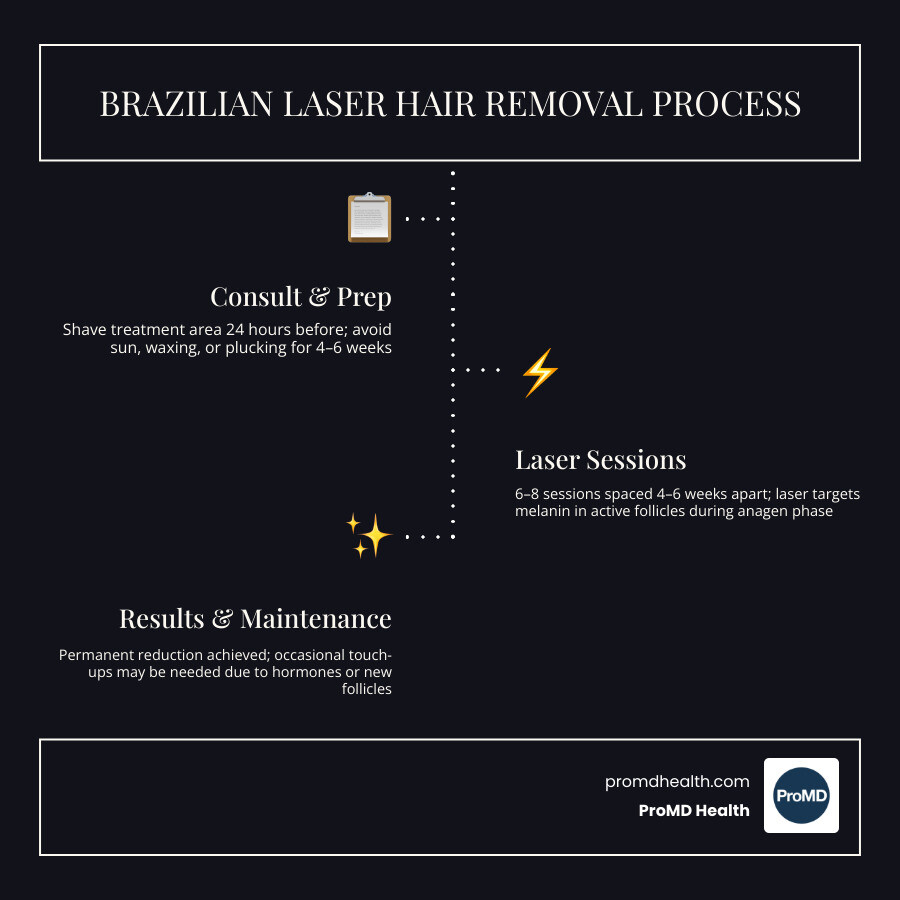
- How many sessions: Most people need 6-8 sessions, spaced 4-6 weeks apart
- Does it hurt: Most describe it as a quick snapping sensation with mild heat – modern cooling systems reduce discomfort significantly
- How long results last: Results are long-lasting with possible occasional maintenance; often called “permanent hair reduction”
- Who it works best for: Those with darker hair and lighter to medium skin tones – though modern Nd:YAG technology has expanded options for darker skin tones
- Average cost: Roughly $100-$400 per session depending on location, technology, and provider
If you’re tired of the cycle of shaving, waxing, and dealing with ingrown hairs in sensitive areas, this guide covers everything you need to make a confident, informed decision.
At ProMD Health, our team helps patients across multiple locations achieve long-term results with Brazilian laser hair removal through personalized, clinically guided treatment plans. Under the clinical leadership of George Gavrila, MD, Founder and Medical Director of ProMD Health, our approach focuses on evidence-based aesthetics, patient safety, and realistic expectations.
What Brazilian Laser Hair Removal Means
A Brazilian treatment goes beyond basic bikini cleanup. In most cases, it refers to hair reduction across the full intimate area, including:
- Mons pubis
- Labia
- Perianal area
- Along the bikini line
Some people want full removal. Others prefer partial shaping or a small strip left in place. Both are common. The point is customization, not a one-style-fits-all approach.
This is one reason brazilian laser hair removal keeps growing in popularity. It can simplify grooming, reduce razor bumps, and cut down on the constant calendar reminders for waxing appointments. Your razor may take this personally.
Brazilian laser hair removal vs bikini line treatment
A bikini line treatment usually targets only the hair that would show outside underwear or a swimsuit. A Brazilian covers much more territory.
Here is the practical difference:
- Bikini line: outer edges only
- Extended bikini: more coverage, but not full intimate treatment
- Brazilian: full front and usually the labia and perianal region as well
At ProMD Health, we always discuss coverage before treatment starts. We can tailor the plan based on your comfort level, modesty preferences, and grooming goals. If you want more background on treatment areas and options, see our laser hair removal services.
Who chooses brazilian laser hair removal
People choose this treatment for different reasons, but a few themes come up again and again:
- Recurring ingrown hairs
- Razor burn and bumps
- Skin irritation after shaving
- Frustration with waxing
- Desire for smoother skin with less maintenance
- Convenience before travel, sports, or daily life
- More confidence in intimate grooming
It is not only about aesthetics. For many patients, it is also about comfort, time savings, and less skin drama.
How Brazilian Laser Hair Removal Works
Laser hair removal works by sending concentrated light into the hair follicle. The pigment in the hair, called melanin, absorbs that light. The energy then turns into heat, which damages the follicle enough to slow or stop future growth.
Because the laser targets pigment, hair color and skin tone matter. In general, darker hair responds best. That said, newer systems and better parameter selection have expanded safe treatment options for a wider range of skin tones.
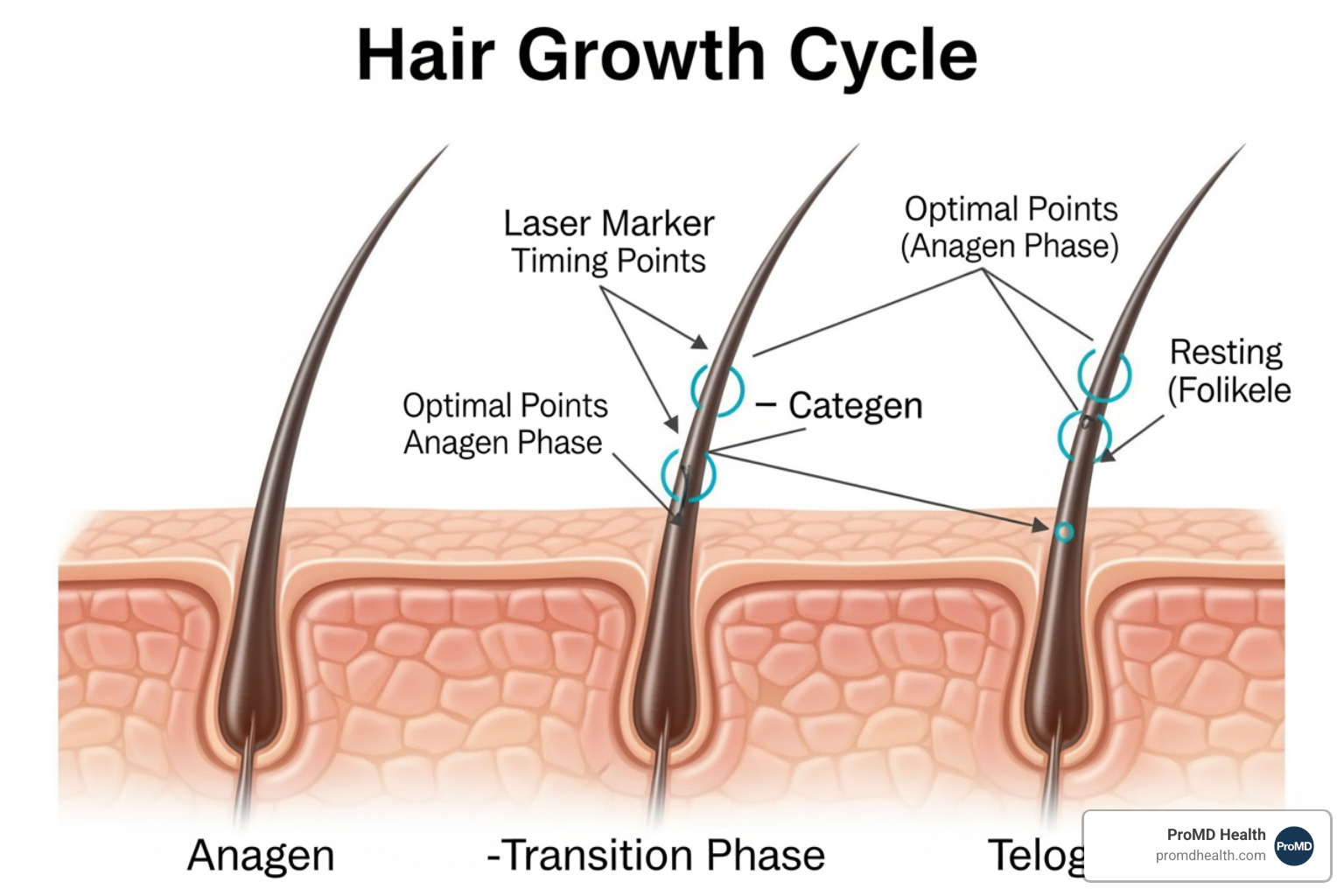
Laser treatment also depends on hair growth cycles. Not every follicle is active at the same time. The laser is most effective during the anagen, or active growth, phase. That is why one session is never enough.
How brazilian laser hair removal targets hair follicles
Each pulse treats follicles in a very precise area. Over the next days and weeks, treated hairs gradually shed. They do not usually vanish on the table right after treatment.
Why multiple sessions are needed:
- Hair grows in cycles
- Only a portion of follicles are treatable at each visit
- Coarser, darker hair often responds faster
- Hormones can influence regrowth over time
This is also why shaving is allowed before treatment, but waxing and plucking are not. The follicle needs to be present for the laser to find its target.
Laser technology used for intimate areas
For intimate-area treatment, technology choice matters. Common laser types include:
- Alexandrite 755 nm
- Diode lasers
- Nd:YAG 1064 nm
In broad terms:
- Alexandrite is often effective for lighter skin tones with dark hair
- Nd:YAG is commonly used for darker skin tones because it penetrates deeper and is less readily absorbed by epidermal melanin
- Diode systems are widely used and can be effective across a range of skin types depending on device design
Cooling is also a big deal, especially in sensitive areas. Modern devices may use:
- Contact cooling
- Cryogen spray
- Air cooling
- Chilled tips
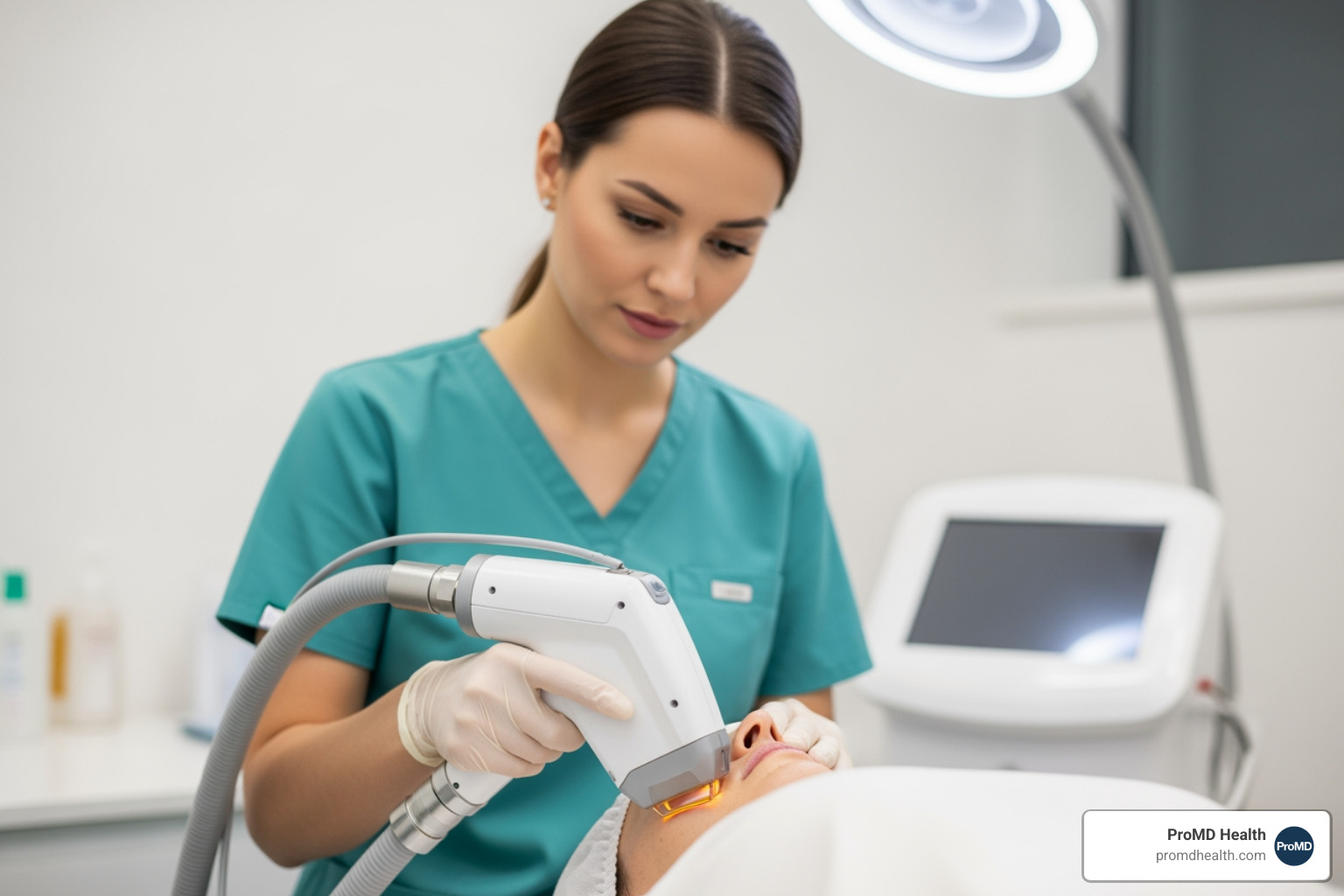
Those features improve comfort and help protect the skin. Safe intimate-area treatment should always involve customized settings, proper skin assessment, and experienced medical oversight. To learn more about available options through ProMD Health, see our laser hair removal services.
Sessions, Results, and Maintenance
Most people will not be hair-free after one appointment, and anyone promising that is selling fantasy, not laser physics.
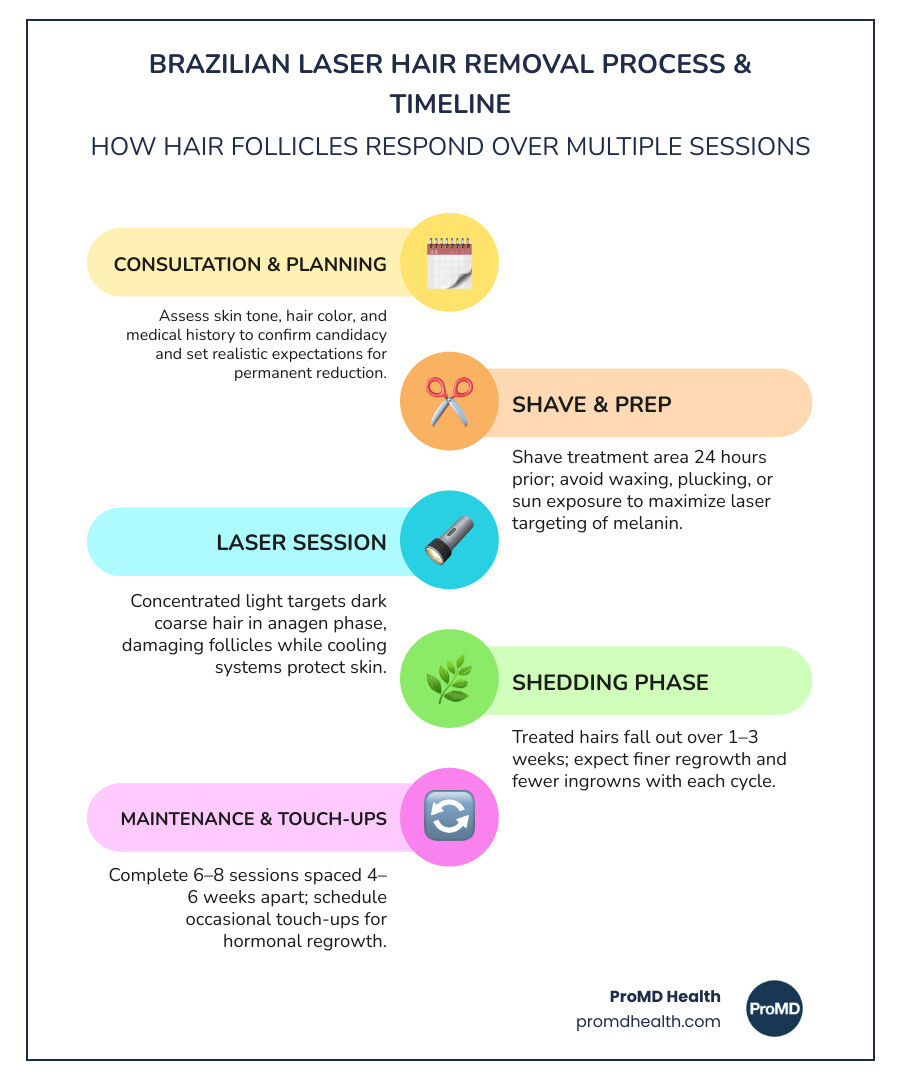
Research across medical and clinical sources consistently shows that most patients need multiple treatments. Common ranges include:
- 4 to 8 treatments for best results
- 6 to 8 sessions for Brazilian areas
- 3 to 7 sessions for significant long-term reduction in some patients
- 7 to 10 treatments in some cases to reach very high clearance levels
For Brazilian areas, spacing sessions every 4 to 6 weeks is typical.
How many sessions does brazilian laser hair removal usually take
For most patients, we recommend planning for about 6 to 8 sessions initially. The exact number depends on:
- Hair density
- Hair thickness
- Hair color
- Skin tone
- Hormonal influences
- Consistency with treatment timing
- Laser technology used
Coarse dark hair in the Brazilian area often responds well because it contains more pigment for the laser to target. Fine, light, blonde, red, gray, or white hair tends to be much harder to treat effectively.
A good consultation should cover realistic expectations and package planning up front, rather than leaving you to guess halfway through the process.
How permanent are the results
Laser hair removal is best described as permanent hair reduction, not guaranteed permanent total removal forever.
That distinction matters.
What most patients can expect:
- Much less hair overall
- Finer and softer regrowth
- Slower regrowth
- Fewer ingrown hairs
- Less need for shaving or waxing
Some follicles may recover over time, and hormonal changes can trigger new growth. Maintenance visits are common, especially for intimate areas affected by normal hormone shifts.
A realistic long-term pattern is:
- Initial series of treatments
- Strong reduction over several months
- Occasional touch-ups as needed
If you want to compare long-term approaches, our guide to permanent hair removal solutions is a helpful next read.
Pain, Side Effects, and Safety
The question almost everyone asks is: “Does it hurt?”
Honest answer: usually yes, a little. But for most people, it is manageable and much quicker than expected.
Many patients describe the feeling as:
- A rubber-band snap
- Brief heat
- Tiny fast zaps
The Brazilian area is sensitive, so discomfort can be more noticeable than on areas like the legs. Still, modern cooling systems make a major difference.
What treatment feels like during and after
During treatment, you can expect:
- Cleansing and prep of the area
- Protective eyewear
- A series of quick laser pulses
- Cooling before, during, or after each pulse depending on the device
Immediately after treatment, you may notice:
- Mild redness
- Temporary swelling around follicles
- A warm or sunburn-like feeling
- Skin sensitivity for a few hours
In the following days to weeks:
- Treated hairs begin to shed
- Skin usually settles quickly
- The area may feel smoother as shedding progresses
Some people are surprised when hair appears to “grow” after treatment. Usually, that is shedding, not new growth.
Risks, side effects, and who should avoid treatment
When performed correctly, laser hair removal is generally safe. But it is still a medical aesthetic treatment, not a casual spa shortcut.
Possible side effects include:
- Redness
- Swelling
- Tenderness
- Temporary irritation
- Folliculitis-like bumps
- Temporary hyperpigmentation or hypopigmentation
Less common but more serious risks include:
- Burns
- Blistering
- Crusting
- Scarring
- Lasting pigment changes
Risk tends to rise when the wrong laser or settings are used, especially in darker skin tones or recently tanned skin. That is why provider expertise matters so much.
You may need to delay or avoid treatment if you have:
- Active skin infection in the area
- Open wounds
- Significant recent sun exposure or sunburn
- Use of photosensitizing medications
- Certain pigment disorders
- A history that requires medical clearance
Pregnancy questions should always be discussed case by case with your medical provider. For broader medical safety guidance, see this Laser hair removal guidance from Mayo Clinic.
Cost, Candidacy, Preparation, and Aftercare
Pricing, suitability, and proper prep often matter just as much as the laser itself.
How much Brazilian laser hair removal costs
Cost varies widely by location, provider experience, device type, and whether you pay per visit or buy a package.
Numbers commonly cited across the industry include:
- About $389 average cost per session according to the American Society of Plastic Surgeons in 2020
- Roughly $100 to $400 per session for many clinics
- Lower per-session rates when sessions are bundled
- Membership or unlimited-treatment models in some practices
Common pricing structures include:
- Single-session pricing
- Package pricing for 6 or more visits
- Monthly memberships
- Financing or payment plans
When comparing prices, do not look only at the sticker number. Ask:
- What laser technology is used?
- Is the provider experienced with intimate areas?
- Are touch-ups included?
- Is the consultation separate?
- Are settings customized to skin tone and hair type?
A very low price can sometimes mean older equipment, less customization, or less medical oversight.
Who is a good candidate
Good candidates usually include people who:
- Want long-term reduction rather than endless upkeep
- Have dark blonde, brown, or black hair
- Struggle with ingrown hairs or razor bumps
- Can follow a treatment schedule consistently
- Understand that several sessions are needed
It can work on a broad range of skin tones when the right technology is used. Modern Nd:YAG systems have improved safety for darker skin tones significantly.
There are still limitations. Laser is generally less effective on:
- Blonde hair
- Red hair
- Gray hair
- White hair
- Very fine, low-pigment hair
Why? These hairs contain too little target pigment for the laser to heat effectively.
Patients with hormonal conditions such as PCOS can still be good candidates, but they may need more sessions or ongoing maintenance because hormones can drive continued regrowth.
How to prepare and care for skin afterward
Preparation makes a real difference in both safety and results.
Before treatment:
- Shave the area the day before or 1 to 2 days before, based on our instructions
- Do not wax, pluck, or use epilators for several weeks beforehand
- Avoid tanning and heavy sun exposure before treatment
- Tell us about medications, skin products, and recent procedures
- Skip irritating topicals if advised
- Arrive with clean skin and no lotions or self-tanner on the area
After treatment:
- Use cool compresses if needed
- Wear loose, breathable clothing
- Avoid hot tubs, saunas, and very hot baths for about 48 hours
- Avoid intense friction or heat on the area
- Use gentle skincare only
- Protect any sun-exposed treated skin with SPF 30 or higher
- Do not pick, scrub, or tweeze shedding hairs
We cover these steps in more detail in our articles on Brazilian laser hair removal in Annapolis and beyond and your body laser hair removal journey.
Frequently Asked Questions About Brazilian Laser Hair Removal
Is Brazilian laser hair removal worth it compared with waxing or shaving?
For many people, yes. The upfront cost is higher than razors or waxing appointments, but the long-term value can be strong.
Compared with shaving, laser often means:
- Less stubble
- Fewer ingrown hairs
- Less daily or weekly maintenance
- Reduced razor irritation
Compared with waxing, laser often means:
- Fewer repeated painful appointments
- Less waiting for regrowth between sessions
- Longer-lasting reduction
- Better control of folliculitis and bumps
Electrolysis remains a useful alternative, especially for lighter hairs that laser cannot target well. It can be more truly permanent hair by hair, but it is slower and often less practical for larger areas like a full Brazilian.
Does Brazilian laser hair removal work on darker skin tones?
Yes, it can, when the right technology and settings are used.
This is where device choice and provider experience matter most. Nd:YAG lasers are commonly used for darker skin tones because they reduce the risk of excess heating in surface pigment compared with some other wavelengths.
The key is not just “having a laser.” It is choosing a provider who can:
- Assess your skin tone accurately
- Match the wavelength appropriately
- Adjust fluence and pulse duration safely
- Use effective cooling
- Test and monitor your response
Safety first, always.
Can men get Brazilian-style intimate laser hair removal too?
Absolutely. Men also seek intimate-area hair reduction for hygiene, grooming, athletics, comfort, and confidence.
Treatment plans can be customized based on anatomy, hair density, and grooming preferences. Some men want a full reduction, while others want partial shaping or cleaner borders.
If this applies to you, explore our guide to hair removal for men.
Conclusion
Brazilian laser hair removal can be a smart option if you want smoother skin, fewer ingrown hairs, and less dependence on shaving or waxing. The best results come from realistic expectations, appropriate technology, and a treatment plan tailored to your skin tone, hair type, and goals.
At ProMD Health, we believe intimate-area laser treatment should feel professional, comfortable, and personalized from the first consultation onward. Under the clinical leadership of George Gavrila, MD, Founder and Medical Director of ProMD Health, our team focuses on safe protocols, advanced technology, and honest guidance so you can make the decision that is right for you.
Ready to learn more? Explore our laser services to take the next step.