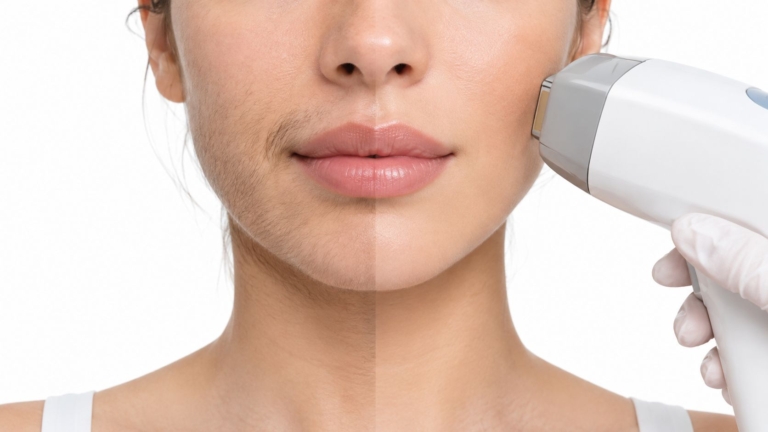
Scarring after laser hair removal is rare, and a large cohort of 16,900 patients reported a total complication rate of 0.69%, with permanent scarring making up only a minute fraction of that rate. In practice, laser hair removal scars are usually a preventable complication tied to improper settings, poor technique, or treating skin that wasn't a good candidate that day.
If you're reading this because your skin feels tender, looks darker than expected, or you've noticed a raised or indented mark after treatment, your concern is valid. Most post-laser reactions are temporary. But true scarring can happen, and when it does, the difference between a short-term setback and a permanent mark often comes down to fast recognition, correct aftercare, and getting the right diagnosis.
People often assume scars are an inherent risk of laser hair removal itself. That's not the right way to think about it. The laser technology is designed to target the follicle. Problems start when heat spreads into surrounding skin, when skin tone and laser settings aren't properly matched, or when treatment is done over inflamed, injured, or unstable tissue.
Table of Contents
- Does Laser Hair Removal Cause Scars
- How a Safe Procedure Can Lead to Scars
- Your Guide to Preventing Laser Hair Removal Scars
- Evidence-Based Treatments for Scarring
- When You Need a Specialist's Diagnosis
- Achieve Smooth Skin Safely with ProMD Health
Does Laser Hair Removal Cause Scars
Yes, laser hair removal can cause scars. But it's uncommon, and that distinction matters.
Clinical discussion around this topic often gets distorted by fear-based anecdotes. A more grounded perspective comes from a large-scale review of 16,900 patients showing a 0.69% total complication rate, with permanent scarring representing only a minute fraction of that rate. That doesn't mean risk is zero. It means laser hair removal scars are unusual when treatment is done well.
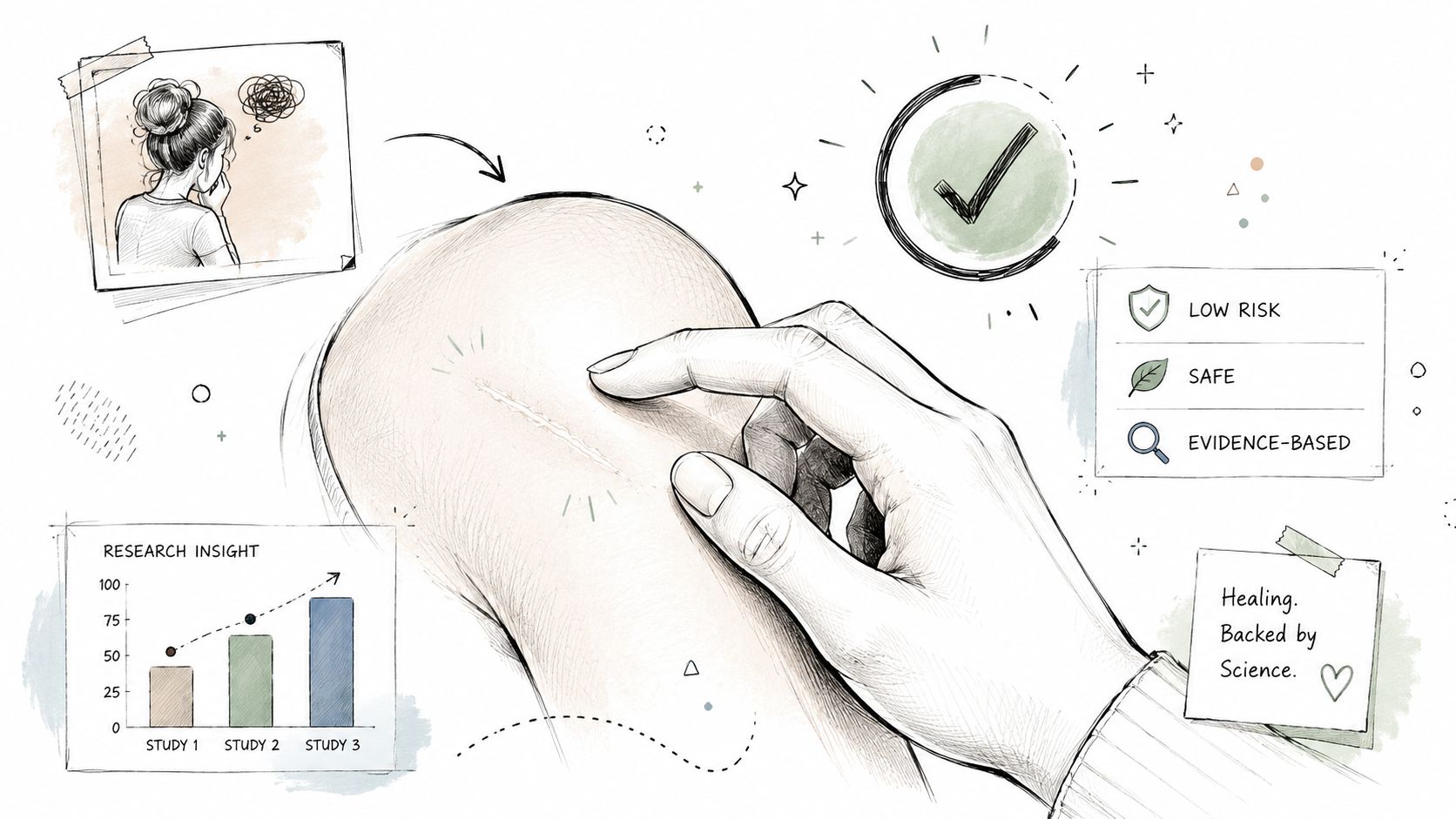
Most patients seeking laser hair removal treatment don't end up with scars. They may see redness, mild swelling around follicles, temporary sensitivity, or short-lived pigment change. Those reactions can look alarming if you weren't prepared for them, but they aren't the same as scar formation.
What actually separates a reaction from a scar
A scar usually means the skin sustained enough thermal injury to disrupt normal healing deeper in the tissue. That's very different from expected post-treatment irritation.
Signs that deserve closer attention include:
Blistering rather than redness
A blister suggests a burn, not a routine laser response.Persistent texture change
Raised, indented, or firm areas can signal abnormal healing.Darkening or lightening that doesn't fade normally
Pigment change can be temporary, but it can also become long-lasting if early care is delayed.
Practical rule: If your skin looks burned, treat it like a burn and get it assessed early. Waiting to “see what happens” is how minor injury becomes a lasting mark.
Why the fear is bigger than the actual risk
Many online discussions treat all bad outcomes as proof that laser hair removal is unsafe. That's not accurate. The more useful question is whether the treatment was appropriate for the skin, the provider used the right parameters, and the patient followed aftercare. When those pieces line up, scarring isn't expected.
That's the reassuring part. However, safety isn't automatic. It comes from medical judgment, careful settings, and respecting the skin in front of you.
How a Safe Procedure Can Lead to Scars
Laser hair removal works through selective photothermolysis. In plain English, the device is supposed to send heat into pigment within the hair structure so the follicle is damaged without injuring the surrounding skin.
When that energy stays on target, the treatment does what it should. When it doesn't, skin can burn.
The real mechanism behind laser hair removal scars
The clearest explanation comes from this clinical review of laser-tissue interaction and wound healing, which notes that the primary cause of scarring is misdirected laser energy targeting epidermal melanin instead of the hair follicle, especially in Fitzpatrick skin types III and IV. That collateral heat injury disrupts normal healing and can lead to dyspigmentation and textural change.
Imagine using a kitchen torch to caramelize the top of a dessert. If the flame stays where it belongs, you get a controlled result. If it lingers too long or hits the wrong area, you scorch the surface.
That's why operator judgment matters so much. The device isn't “bad.” The issue is where the heat lands, how much heat is used, and whether the skin could safely tolerate it that day.
What normal looks like and what doesn't
Expected short-term responses after treatment can include warmth, perifollicular swelling, and redness. Those signs usually mean the follicle absorbed energy.
Concerning signs look different:
- Pain that feels intense or keeps escalating
- Blisters, crusting, or open skin
- A sharply outlined burn pattern
- Color change paired with tenderness or delayed healing
A true scar doesn't start as “nothing.” It usually starts as an injury that was underestimated.
Why some skin is more vulnerable
The laser looks for pigment. Hair pigment is the intended target, but epidermal pigment can compete for that energy. That's why darker skin tones require careful device selection, conservative parameter choices, and stronger cooling support.
A few situations raise concern quickly:
| Situation | Why it matters |
|---|---|
| Recently tanned skin | More epidermal pigment can absorb unwanted heat |
| Active inflammation | Already stressed skin is easier to injure |
| Incorrect fluence | Too much energy increases burn risk |
| Poor overlap control | Heat can stack in the same area |
A safe procedure becomes unsafe when precision drops. That's the point patients should remember. Scars don't happen because laser hair removal itself is destructive. They happen when heat control fails.
Your Guide to Preventing Laser Hair Removal Scars
Prevention starts before the first pulse. By the time a burn appears, your best chance to avoid laser hair removal scars has already narrowed.
The most effective protection is a combination of provider selection, honest screening, patch testing, and disciplined aftercare. If any of those are missing, risk goes up.
Know when treatment should pause
Scarred skin isn't all treated the same way. Guidance on laser treatment over scars notes that keloid scars are strictly contraindicated, while other stable scars require a mandatory spot test before full treatment.
That means a proper consultation shouldn't just ask where you want hair removed. It should also ask:
- Do you form keloids
- Is there a raised or unstable scar in the area
- Any active rash, ingrown hair, folliculitis, or healing wound
- Recent sun exposure or visible tan
- Use of medications that may increase skin sensitivity
If those questions aren't being asked, the safety process is incomplete.
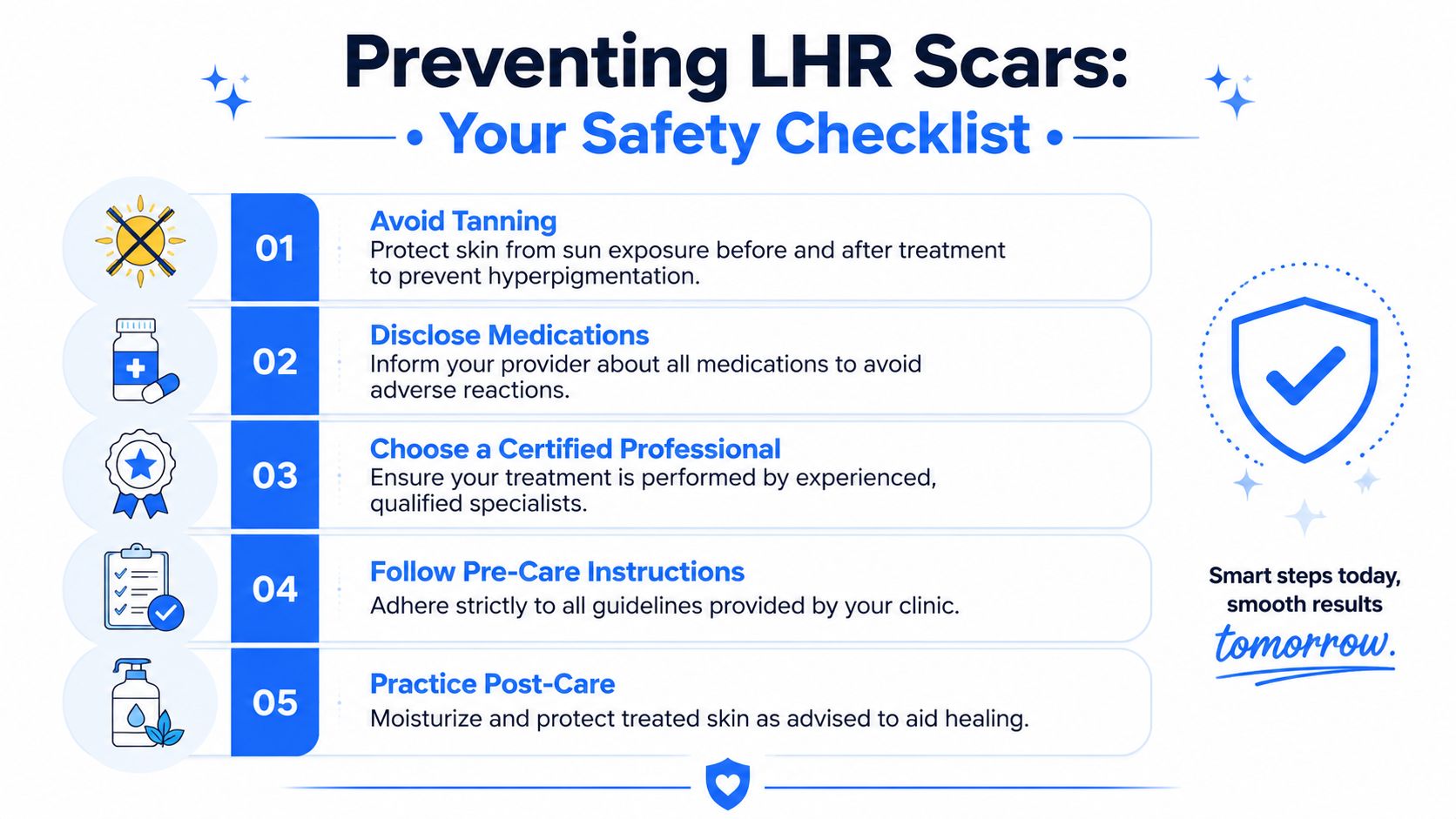
A smart patient checklist
The systems that prevent cosmetic complications are similar to the systems that reduce mistakes in medicine more broadly. The Simbie AI guide to preventing medical errors is a useful reminder that outcomes improve when teams use checklists, verify details, and avoid assumptions. That same mindset applies here.
Use this checklist before any laser session:
Choose medical oversight
You want a clinic that understands skin pathology, not just machine operation.Disclose everything
Mention tanning, retinoids, antibiotics, supplements, active breakouts, and past laser reactions.Ask for a patch test when risk is higher
This is especially important over stable scars, in darker skin tones, or after a prior bad response.Delay treatment on irritated skin
Fresh inflammation changes the skin's tolerance to heat.Follow the clinic's pre and post care treatment instructions
Aftercare isn't cosmetic fluff. It directly affects how the skin heals.
One choice matters more than any cream: don't let anyone laser skin that is sunburned, inflamed, actively breaking out, or freshly scarred.
The aftercare details people ignore
The Cleveland Clinic notes that laser hair removal can cause burns, scars, and permanent skin discoloration, and also advises avoiding sun exposure for six weeks after treatment while using SPF 30+ daily to reduce hyperpigmentation risk and help minimize scarring. It also states that most patients need 6 to 8 treatments spaced 6 to 8 weeks apart and may see 10% to 25% reduction in hair growth after the first treatment, with longer-term reduction lasting months to years. The Mayo Clinic similarly describes scarring as uncommon and affecting only a small minority of patients, while emphasizing that hair reduction is significant but not permanent and often needs follow-up treatment over time according to Cleveland Clinic guidance on laser hair removal.
That advice is practical, not optional. Sun, friction, heat, and picking at irritated skin all make a borderline injury heal worse.
Evidence-Based Treatments for Scarring
If you already have a mark after treatment, the next step is matching the treatment to the type of injury. There isn't one universal fix for laser hair removal scars because not every scar is the same. Some are mostly pigment. Some are textural. Some are a mix of both.
The biggest mistake is trying to treat every post-laser problem with one product and too much patience.
Start with early wound support and topicals
When the skin has been burned but is still healing, immediate care matters more than aggressive correction. Clinical guidance on laser injury management supports cold compresses, clean wound care, prompt medical evaluation, topical retinoids such as tretinoin, occlusive silicone dressings, and SPF 30+ sun protection to reduce ongoing inflammation and support better remodeling.
For milder residual changes, the most useful starting options are:
Silicone-based therapy
Best for raised healing areas where you want to limit excess collagen deposition.Tretinoin-based treatment
Often useful when texture or pigment turnover needs support.Strict sun protection
Essential if hyperpigmentation is part of the picture.
These don't erase every scar, but they can improve healing conditions and reduce worsening.
In-office options for texture and discoloration
Once the skin is stable, treatment becomes more targeted. The right choice depends on whether the problem is superficial discoloration, a depressed area, thickened scar tissue, or mixed damage.
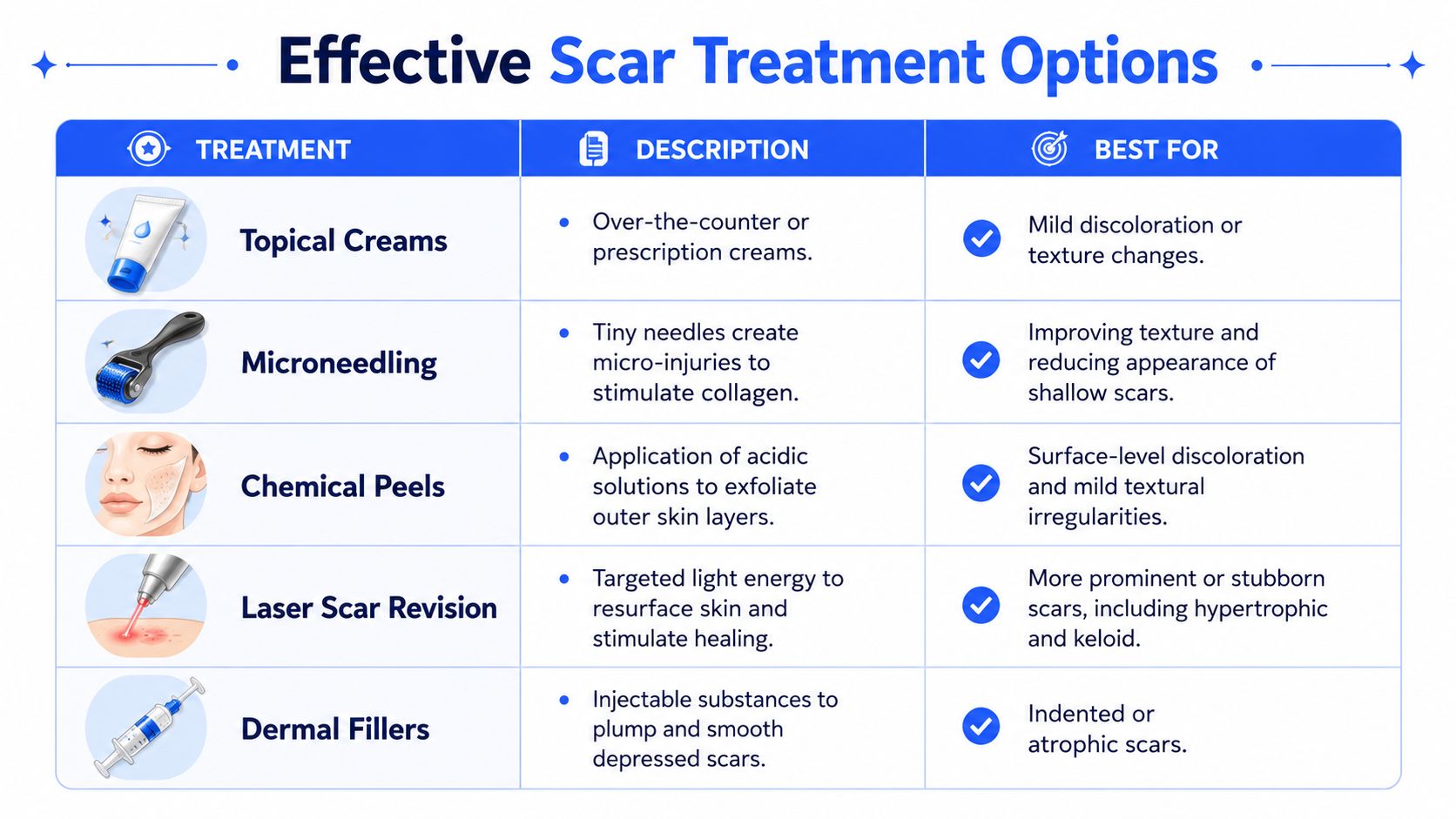
A practical comparison looks like this:
| Treatment approach | Best fit |
|---|---|
| Topical medical skincare | Mild pigment change or subtle texture shifts |
| Microneedling | Shallow textural irregularity and collagen remodeling |
| Chemical peels | Surface-level discoloration in carefully selected skin |
| Laser scar revision | More stubborn textural or pigment issues |
| Fillers or volume restoration | Atrophic or indented scars |
For patients exploring medical treatment pathways, scar revision and management options often combine more than one modality because scars rarely improve from a single intervention alone.
The best scar plan is layered. Calm the inflammation first, correct pigment second, and remodel texture over time.
Where regenerative approaches fit
Advanced care can make a meaningful difference, especially for scars that haven't responded to standard silicone-and-SPF advice.
Emerging research suggests that stem cell therapy combined with photobiomodulation can improve post-traumatic hyperpigmentation and scarring by 60% to 70% in higher Fitzpatrick skin types in this discussion of advanced regenerative options. That's important because darker skin tones often face a more difficult recovery path when pigment change follows thermal injury.
In a modern aesthetics setting, regenerative medicine may include platelet-rich plasma, biologic stimulation, and volume-restoring approaches that support better tissue quality rather than only sanding down the surface. More advanced protocols can also include ADSCG/SVF-based volume restoration, which is especially relevant when the scar is atrophic, tethered, or associated with visible contour loss.
What works poorly
Some patients lose time with the wrong strategy. Common dead ends include:
- Repeating the same laser hair removal settings over injured skin
- Using harsh exfoliants on skin that's still inflamed
- Treating pigment as if it were only dryness
- Waiting too long after a burn before getting assessed
A related point matters here. Research from laser tattoo removal, another high-energy laser procedure, showed 0.28% hypertrophic scarring and 0.00% keloid formation in 1,041 patients when protocol-based settings were used in this study of quality-switched Nd:YAG laser outcomes. That isn't the same procedure, but it reinforces a practical lesson clinicians already know. Protocol matters. Standardized technique keeps permanent scarring rare.
When You Need a Specialist's Diagnosis
Not every painful bump, dark mark, or thickened area after laser hair removal is a scar from the laser itself.
That's the blind spot. Patients often assume the treatment failed, when in fact, the treatment revealed or aggravated an underlying skin condition that hadn't been diagnosed.
Red flags that need medical evaluation
Seek prompt medical assessment if you develop:
- Blistering or open skin
- Severe pain that doesn't settle
- Drainage, crusting, or signs of infection
- Firm nodules, boils, or repeated flare-ups in the same area
- Raised scarring that keeps enlarging
Those patterns don't all point to one problem. Some signal burn injury. Others suggest folliculitis, hidradenitis suppurativa, or another medical skin disorder.
When “scarring” isn't really scarring
Data suggests that 30% to 40% of cases described as failed laser hair removal or scarring actually involve undiagnosed skin conditions such as hidradenitis suppurativa. That changes the next step completely.
If someone has recurrent boils, painful underarm lumps, draining lesions, or thick scars that seem disproportionate to the treatment, repeating cosmetic laser sessions may worsen the situation. That patient needs diagnosis first, not another round of settings adjustments.
If the skin keeps flaring in cycles, think beyond “bad laser outcome.” Recurrent disease behaves differently than a one-time burn.
Why diagnosis changes treatment
A scar specialist or medically trained provider can separate three very different problems:
| Problem | Typical next step |
|---|---|
| Thermal injury from treatment | Burn care and scar prevention |
| Post-inflammatory pigment change | Pigment-safe recovery plan |
| Underlying disease | Medical management, not repeat cosmetic treatment |
That distinction protects both the skin and the patient's time. It also prevents the common cycle of retreating a problem that was never caused by the laser in the first place.
Achieve Smooth Skin Safely with ProMD Health
Laser hair removal scars are uncommon, but they deserve respect. The core message isn't fear. It's precision. Safe treatment depends on correct candidate selection, proper settings, careful aftercare, and fast intervention if a burn occurs.
For anyone who already has a mark, there are real options. Mild changes may respond to silicone, tretinoin, and disciplined sun protection. More established scars often need in-office correction. The most complex cases benefit from advanced regenerative strategies, especially when contour loss or stubborn pigment change is part of the picture.
ProMD Health approaches this from both sides of the problem. The practice offers laser hair removal as an active service, and it also provides scar revision, laser treatments, regenerative medicine, and Vital Cell Volume Restoration using ADSCG and SVF for patients who need more than basic topical care. That combination matters because prevention and correction shouldn't live in separate worlds.
ProMD Health serves patients in approved locations including Annapolis, Arlington, Ashburn, Bel Air, Bethesda, Columbia, Easton, Fort Lauderdale, Hutto, Lafayette, Lewes, Timonium, Tox Bar Baltimore City, Tysons Corner, Washington DC, Wellington, and Westminster. Services are cash-pay, not insurance-based, and any new blog or patient-facing educational content should follow approved service, location, payment, and brand standards before publication.
If you're concerned about laser hair removal scars, or you want treatment from a team that can both prevent complications and address them with advanced medical aesthetics and regenerative options, schedule a consultation with ProMD Health.