
Why Hair Loss Matters and What You Can Do About It
Hair loss therapy includes a range of treatments designed to slow, stop, or reverse thinning hair. The best approach depends on identifying the underlying cause—be it genetic, hormonal, stress-related, or nutritional—and creating a custom treatment plan.
Quick Overview: Key Hair Loss Treatment Options
- Topical Minoxidil (Rogaine): Stimulates hair growth; results in 6-12 months
- Oral Finasteride (Propecia): Blocks DHT hormone in men; effective in about 4 months
- Anti-Androgens (Spironolactone): For women with hormonal hair loss; 40% success rate
- Platelet-Rich Plasma (PRP): Uses your own growth factors; results in 3-6 months
- Low-Level Laser Therapy (LLLT): FDA-approved for hereditary hair loss
- Nutritional Support: Iron, zinc, and biotin (when deficiency is confirmed)
Hair loss is remarkably common, affecting about one-third of women in their lifetime and up to two-thirds of postmenopausal women. For many, thinning hair isn’t just an aesthetic issue; it can significantly impact self-esteem and quality of life.
The good news is that modern medicine offers more solutions than ever. From FDA-approved medications to regenerative treatments like PRP, effective options exist for many types of hair loss. The key to success is understanding why you’re losing hair.
I’m George Gavrila, MD, Founder and Medical Director of ProMD Health. We specialize in non-surgical aesthetic and wellness solutions, and I’ve seen how personalized hair loss therapy can restore not just hair, but confidence and well-being.
This guide will walk you through the types of hair loss, when to seek professional help, and the most effective treatments available today.
Understanding Hair Loss: Why It Happens and When to See a Doctor

Before treating hair loss, we must understand its root cause. A proper diagnosis is the crucial first step in any successful hair loss therapy, which is why a professional consultation is essential for creating a plan that works for you.
The Different Faces of Alopecia
Hair loss, or alopecia, manifests in various forms. Understanding the differences is key to effective treatment.
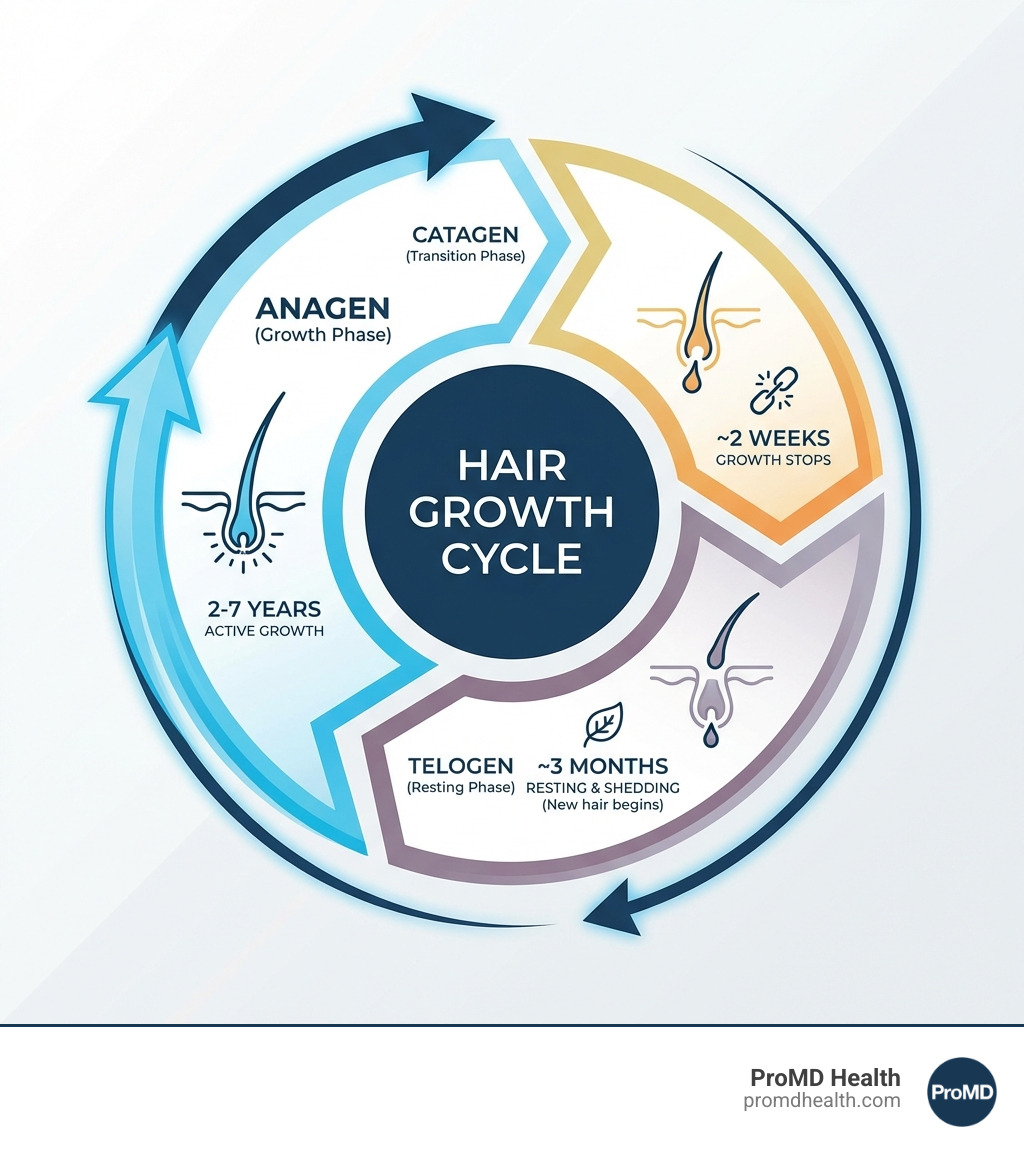
Androgenetic Alopecia (Pattern Hair Loss): The most common type, this is genetic and hormone-related. In men, it causes a receding hairline and thinning crown. In women, it typically appears as a widening part line and diffuse thinning. This condition involves a shortening of the hair’s growth phase and the shrinking of hair follicles, which then produce shorter, thinner hairs.
Alopecia Areata (Autoimmune): This autoimmune condition causes patchy hair loss when the immune system attacks hair follicles. While hair can regrow on its own, treatments like corticosteroid injections are effective for persistent cases. Studies show over 80% of patients treated with injections regrew at least half their hair within 12 weeks.
Telogen Effluvium (Stress-induced shedding): This temporary shedding is triggered by a significant stressor (e.g., childbirth, surgery, severe illness, or emotional distress) that pushes hair into the resting phase. Shedding begins a few months after the event, and hair usually regrows once the stressor is resolved.
Traction Alopecia (Hairstyle-related): Caused by prolonged tension from tight hairstyles like braids or ponytails, this can damage follicles and lead to permanent hair loss. Avoiding these styles can prevent further damage and allow for regrowth in early stages.
Common Culprits Behind Thinning Hair
Several factors can contribute to hair thinning:
- Genetics: The primary cause of pattern hair loss.
- Hormonal Changes: Conditions like Polycystic Ovary Syndrome (PCOS), pregnancy, and menopause can trigger thinning.
- Medical Conditions: Thyroid disorders, scalp infections, and autoimmune diseases are common culprits.
- Nutritional Deficiencies: A lack of essential nutrients like iron, zinc, or biotin can lead to hair loss.
- Stress: Significant physical or emotional stress can disrupt the hair growth cycle.
- Medication Side Effects: Some drugs for cancer, arthritis, depression, and heart problems can cause hair loss.
The Importance of a Professional Diagnosis
When should you see a doctor? Seek professional help sooner rather than later, especially if you notice:
- Sudden or extensive hair loss
- Patchy bald spots
- Scalp pain, itching, or redness
- No results from over-the-counter treatments after several months
A dermatologist can accurately identify the cause of your hair loss. At ProMD Health, our founder and Medical Director, George Gavrila, MD, emphasizes a thorough evaluation. The diagnostic process may include a physical exam, review of medical history, blood tests, a hair pull test, or a scalp biopsy. Understanding your specific type of hair loss is the first step toward a real solution. For more information, consult resources like the Mayo Clinic’s guide on Hair loss – Diagnosis and treatment – Mayo Clinic.
Proven Medical Hair Loss Therapy Options
Once the cause of hair loss is identified, we can explore proven medical hair loss therapy options. These FDA-approved treatments, administered under medical supervision, can be highly effective.
Topical Solutions: How Minoxidil Works
Minoxidil (Rogaine) is an over-the-counter topical treatment that has been a cornerstone of hair loss therapy for years.
- Mechanism of Action: Minoxidil is thought to work by widening blood vessels, improving blood flow and nutrient delivery to hair follicles. This can awaken dormant follicles and encourage existing hairs to grow thicker.
- Application: Available as a liquid, foam, or shampoo, it’s applied directly to a dry scalp, typically once daily for women and twice for men.
- Expected Results: Patience is key. It can take at least six months to prevent further loss and start regrowth, with significant results taking up to a year. Minoxidil manages, but does not cure, hair loss; if you stop, regrown hair will likely fall out.
- Potential Side Effects: Most common side effects are localized scalp irritation, dryness, or itching. An initial shedding phase is common and indicates the treatment is working. Unwanted facial hair growth can occur in rare cases.
For more details, the American Academy of Dermatology offers excellent resources like their guide on How to treat hair loss. You can also find usage guidelines on pages like Minoxidil Topical Solution or Foam.
Oral Medications for Hair Regrowth
Oral medications offer another powerful tool in hair loss therapy.
- Finasteride for Men (DHT Blocker): This daily prescription pill treats male pattern hair loss by blocking the formation of DHT, a hormone that shrinks hair follicles. It slows hair loss and can stimulate new growth, with results starting around four months. It may be less effective for men over 60.
- Spironolactone for Women (Anti-Androgen): An anti-androgen medication for female pattern hair loss, spironolactone blocks the effects of male hormones that cause thinning. It’s effective for about 40% of women, with results appearing after about four months.
- Corticosteroids for Alopecia Areata: For autoimmune hair loss, corticosteroids suppress the immune system’s attack on hair follicles. They can be administered as highly effective injections into bald patches, topical creams, or oral medication for more extensive cases.
Weighing the Risks and Benefits of Medical Hair Loss Therapy
Understanding the risks and benefits is crucial. Your safety is our priority at ProMD Health.
- Need for Ongoing Use: Most medical treatments for hereditary hair loss, like minoxidil and finasteride, require continuous use to maintain results. They manage the condition, not cure it. Stopping treatment will likely cause hair loss to resume.
- Potential Side Effects: Finasteride can have sexual side effects in a small number of men. Spironolactone may cause dizziness or menstrual irregularities in women. Long-term use of oral corticosteroids carries systemic risks, while injections have more localized effects.
- Importance of Medical Supervision: Given the potential side effects, medical supervision is essential. A qualified provider like our founder, George Gavrila, MD, will assess your health, discuss risks, and monitor your progress to ensure your safety throughout your hair loss therapy journey.
Exploring Advanced and Alternative Treatments
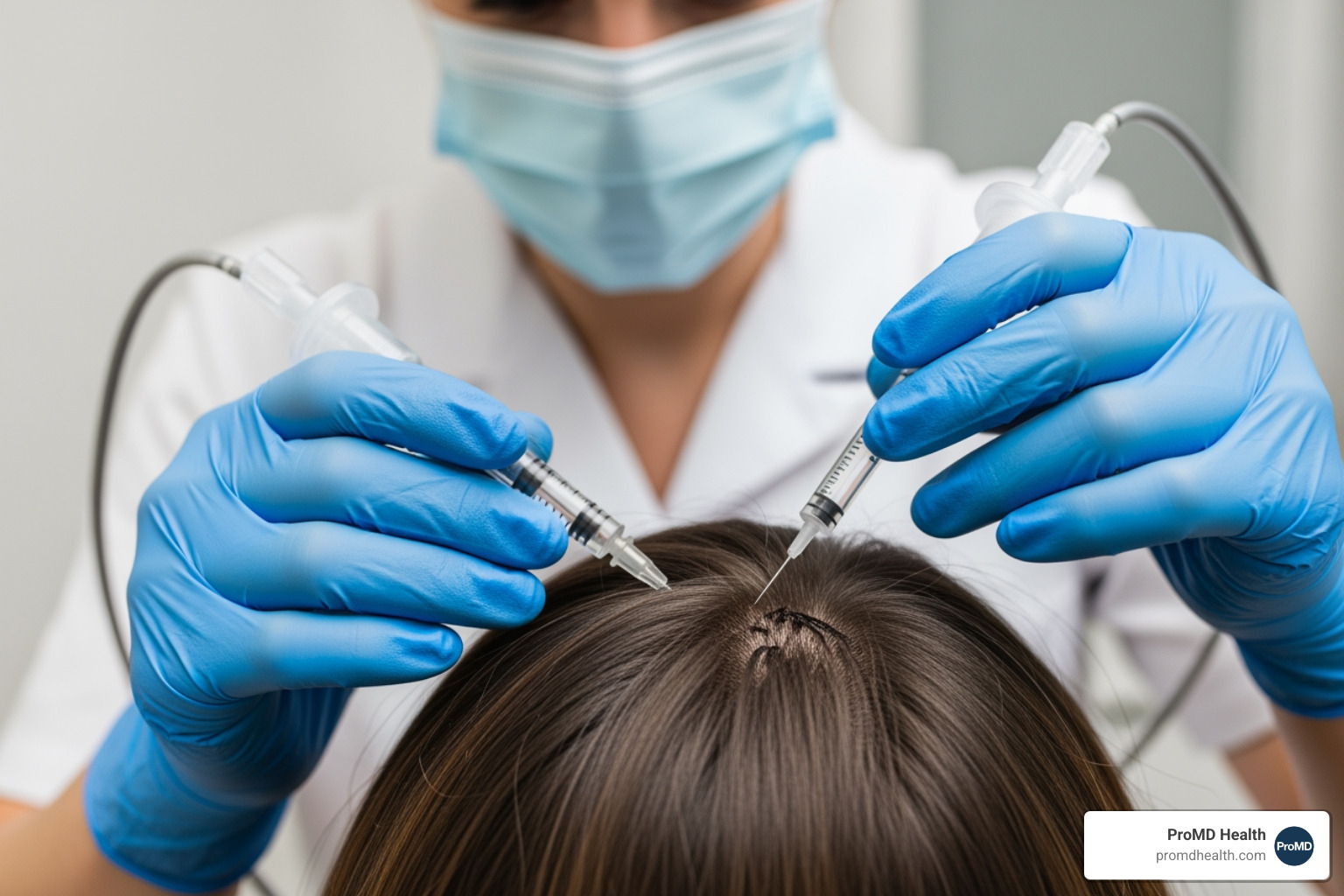
Beyond traditional medicine, advanced and alternative therapies can significantly improve hair restoration. These options often use regenerative medicine to support your body’s natural healing, complementing our comprehensive approach to hair loss therapy.
Regenerative Treatments: PRP and PRF
Platelet-Rich Plasma (PRP) and Platelet-Rich Fibrin (PRF) are cutting-edge treatments that use your body’s own healing components to stimulate hair growth.
- How it Works: Both treatments start with a simple blood draw. The blood is spun in a centrifuge to concentrate its healing components—platelets, growth factors, and in the case of PRF, stem cells and white blood cells. PRF uses a slower spin, creating a fibrin matrix that releases growth factors more gradually for potentially superior, sustained results.
- Procedure Overview: The resulting PRP or PRF is injected into the scalp where hair is thinning. The growth factors stimulate dormant follicles, improve blood supply, and extend the hair’s growth phase.
- Expected Results Timeline: Results are gradual. Improvements may be seen within a few months, with full results after 3-6 months. A series of initial treatments is usually required, followed by maintenance sessions every 3-6 months. PRP effects can last up to 18 months, and PRF up to 12 months.
At ProMD Health, we offer these innovative solutions. Learn more on our PRP Treatment for Hair page and explore all your options by reading What are my options for hair restoration?.
Low-Level Laser Therapy (LLLT)
Low-Level Laser Therapy (LLLT), or red light therapy, is a non-invasive hair loss therapy that uses light to stimulate hair follicles.
- Mechanism: LLLT uses specific wavelengths of light to penetrate the scalp. This is thought to energize follicle cells, improve circulation, and reduce inflammation, all of which can encourage hair growth.
- Devices: LLLT is available in convenient at-home devices like combs and caps, as well as more powerful in-office treatments.
- Evidence: LLLT devices are FDA-approved for treating hereditary hair loss. Studies suggest it can improve hair density, but it may require several treatments a week for many months to see results.
Supplements, Lifestyle, and Home Remedies
Proper nutrition and a healthy lifestyle are crucial for supporting any hair loss therapy.
- Key Nutrients: A balanced diet rich in protein is essential. Deficiencies in nutrients like biotin, iron, and zinc can cause hair loss. However, it’s crucial to confirm a deficiency with a blood test before taking supplements, as excessive amounts can be harmful. For more on this, see The truth about Biotin for hair loss.
- Gentle Hair Care: Avoid harsh chemical treatments, excessive heat, and tight hairstyles that pull on the hair (traction alopecia).
- Stress Reduction: Chronic stress can contribute to hair loss. Practices like yoga, meditation, and regular exercise can help manage stress-related shedding.
Frequently Asked Questions About Hair Restoration
When starting a hair loss therapy journey, it’s natural to have questions. Here are answers to some common inquiries to help manage your expectations.
How long does it take to see results from hair loss treatments?
Hair regrowth is a slow process, and results from hair loss therapy take time. Timelines vary by treatment and individual response, but noticeable results typically appear after three to six months of consistent use.
Here’s a general overview of expected timelines:
| Treatment | Time to Noticeable Results | Time to Significant Growth | Notes |
|---|---|---|---|
| Minoxidil | 2-4 months | 6-12 months | Must be used continuously; initial shedding may occur. |
| Finasteride | ~4 months | Up to 1 year | For men only; requires continuous use. |
| Spironolactone | ~4 months | 6-12 months | For women; requires continuous use. |
| PRP/PRF Therapy | 3-4 weeks (noticeable) | 3-6 months (full results) | Requires initial series and maintenance; PRP results can last up to 18 months, PRF up to 12 months. |
| Corticosteroid Injections (for Alopecia Areata) | 12 weeks | Varies | Over 80% regrowth within 12 weeks for patchy alopecia areata. |
| LLLT | Several months | Varies | Requires consistent use for many months; more long-term studies needed. |
These are general guidelines, and your personal response may vary.
Can different types of hair loss therapy be combined for better results?
Yes. In many cases, combining different types of hair loss therapy can lead to more comprehensive and effective results. This is known as combination therapy.
For example:
- Minoxidil and Finasteride: A common and effective strategy for men, as they work through different mechanisms.
- PRP/PRF with Medical Treatments: Regenerative treatments can improve the effects of minoxidil or oral medications by creating a healthier scalp environment.
- LLLT with Topical Solutions: Using an at-home LLLT device alongside minoxidil can provide a multi-pronged approach.
- Supplements and Lifestyle Changes: A healthy lifestyle supports any medical or advanced therapy.
At ProMD Health, we create personalized hair loss therapy plans based on your specific needs. A specialist can guide you in finding the right combination of treatments. To see if you are a candidate, explore Are You a Candidate for Hair Restoration?.
Is hair loss curable, or is it a lifelong management issue?
For most common types, like hereditary hair loss, it’s a lifelong management issue, not a cure.
- Management, Not Cure: Treatments like minoxidil and finasteride slow hair loss but don’t eliminate the underlying cause. If you stop treatment, hair loss will likely resume.
- Continuous Use Required: To maintain benefits, consistent use is necessary, similar to managing any chronic condition.
- Exceptions for Temporary Hair Loss: Some types, like telogen effluvium (stress-induced shedding) or loss from nutritional deficiencies, can be resolved once the underlying cause is addressed. In these cases, hair often regrows fully.
Conclusion: Your Path to Hair Regrowth Starts Here
Navigating hair loss can be overwhelming, but we hope this guide has illuminated the effective hair loss therapy options available. The key takeaway is clear: a proper diagnosis is the bedrock of any successful treatment. While hair loss is complex, there are numerous pathways to regaining your hair and confidence.
Whether you’re dealing with genetic thinning, hormonal changes, or stress-related shedding, solutions exist. From proven medical interventions like minoxidil and finasteride to innovative regenerative treatments like PRP and PRF, a custom approach makes all the difference. Consistency and patience are your allies on this journey.
At ProMD Health, we are dedicated to helping you “Look Younger and Feel Younger” with personalized, non-surgical aesthetic and anti-aging treatments. With locations in Annapolis, Arlington, Ashburn, Bel Air, Bethesda, Columbia, Easton, Fort Lauderdale, Hutto, Lafayette, Lewes, Timonium, Tysons Corner, Washington, Wellington, and Westminster across Maryland, Virginia, Florida, Texas, Colorado, Delaware, and the District of Columbia, our team, led by George Gavrila, MD, is here to guide you. We use advanced technology and a comprehensive approach to help you achieve your goals, including effective hair loss therapy.
Don’t let hair loss define you. Take the first step towards renewed self-assurance.
Ready to explore your hair restoration options? Learn more about our Hair Loss services.


