
Sustainable fat loss: Master 2025 Success
Why Sustainable Fat Loss Matters More Than Quick Fixes
Sustainable fat loss is the process of losing body fat gradually through lasting lifestyle changes—not quick fixes or extreme diets—so you can maintain your results for life. Here’s what you need to know:
- Rate of Loss: Aim for 1-2 pounds per week for safe, lasting results
- Key Components: Balanced nutrition, regular physical activity, and behavioral changes
- Success Factor: Focus on food quality (whole foods, vegetables, lean protein) over strict macronutrient ratios
- Maintenance Strategy: Combine dietary changes with 150+ minutes of weekly exercise to preserve muscle mass and prevent weight regain
- Long-Term Reality: Studies show 50%+ of people regain weight within 5 years—sustainable approaches address this challenge
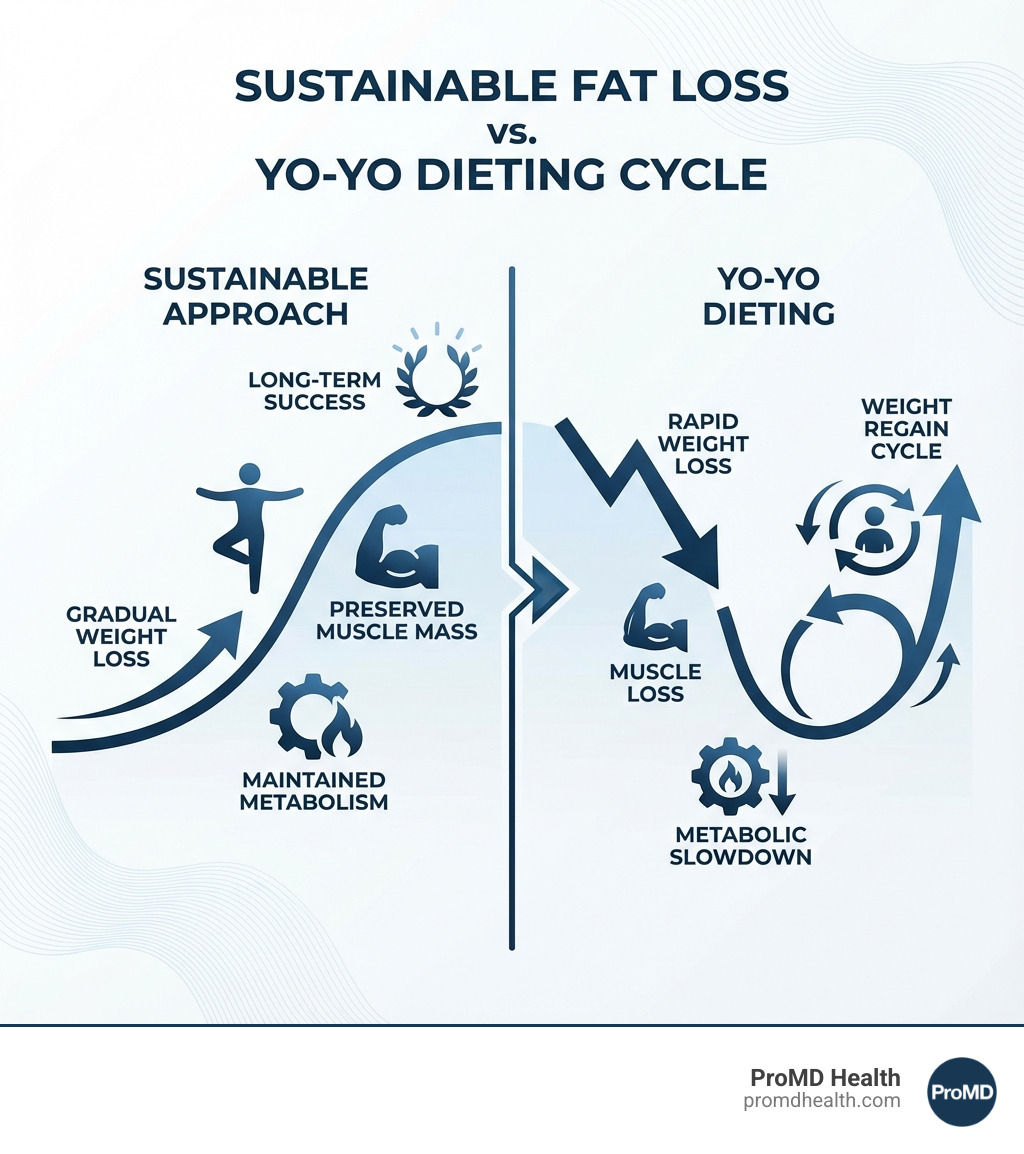
The truth is, most weight loss attempts fail in the long run. Research shows that only 1-3% of people who lose weight successfully maintain that loss over time. The reason? Fad diets don’t work for life.
When you lose weight too quickly or through extreme restriction, your body fights back. You lose valuable muscle mass along with fat—sometimes up to 40% of weight loss comes from muscle. Your metabolism slows down, making it harder to keep weight off. This is why “yo-yo dieting” is so common and potentially harmful, linked to higher blood pressure, cholesterol issues, and even gallbladder disease.
The good news? Sustainable fat loss is absolutely achievable when you understand the fundamentals. It’s not about perfection or deprivation—it’s about finding an approach you can maintain for life. This means eating nutritious whole foods you enjoy, moving your body regularly in ways that feel good, managing stress, getting adequate sleep, and building supportive habits that stick.
As Scott Melamed, President and CEO of ProMD Health, I’ve spent my career studying how the body works—from researching metabolic health at Johns Hopkins to helping thousands achieve their wellness goals. Sustainable fat loss isn’t just about the number on the scale; it’s about optimizing your energy, confidence, and long-term health through evidence-based strategies that actually work.
The Foundation: Nutrition for Lasting Results

When we talk about sustainable fat loss, nutrition is often the first thing that comes to mind. But what kind of nutrition? Low-fat? Low-carb? The truth, as revealed by the groundbreaking DIETFITS study, is more nuanced and, frankly, liberating.
The DIETFITS (Diet Intervention Examining the Factors Interacting with Treatment Success) study, published in 2018, involved 609 overweight and obese individuals, with 481 completing the year-long program. Participants were divided into two groups: a healthy low-fat diet group and a healthy low-carb diet group. For the first month, everyone ate as usual. Then, for eight weeks, the low-fat group aimed for 20 grams of fat per day, and the low-carb group aimed for 20 grams of carbohydrates per day. After this initial restrictive phase, participants were encouraged to find a sustainable intake level for their assigned diet.
The main finding? Both groups lost an average of 12 pounds over the year. What’s more, the study found no significant difference in weight loss outcomes between the two diets. While the low-fat group saw a greater reduction in LDL (bad cholesterol) and the low-carb group experienced a greater increase in HDL (good cholesterol), the overall impact on weight and most health markers was remarkably similar. Interestingly, the study also suggested that genetic makeup and insulin sensitivity did not significantly influence the effectiveness of either diet.
This tells us something crucial: focusing on rigid macronutrient ratios might be less important than the overall quality of our food choices. The core message of the DIETFITS study, and indeed for sustainable fat loss, is that the “best diet” is the one we can maintain for life. This means prioritizing whole, nutritious foods and significantly limiting processed items.
A balanced approach to nutrition, often exemplified by a Mediterranean diet, has also been linked to greater long-term weight loss and a lower Body Mass Index (BMI). This pattern emphasizes plant-based foods, healthy fats, and lean proteins, offering a delicious and sustainable way to eat.
Principles of Nutrition for Sustainable Fat Loss
The DIETFITS study beautifully illustrates that there isn’t a one-size-fits-all “best” diet. Instead, the common principles of healthy eating emphasized by this study and other sources consistently point us toward a few key takeaways for sustainable fat loss:
- Focus on Food Quality: Prioritize high-quality, nutritious whole foods. Think vibrant vegetables, fresh fruits, lean proteins, and healthy fats. These foods are packed with nutrients and generally lower in calories for their volume, helping us feel full and satisfied.
- Minimally Processed Foods: Limit anything processed. This includes avoiding trans fats, added sugars, and refined carbohydrates like white flour. These items often contribute to excess calorie intake without providing much nutritional value, making sustainable fat loss an uphill battle. Preparing food ourselves at home gives us control over ingredients and portion sizes, which is a powerful tool for weight management.
- Limiting Added Sugar: Sugar-sweetened beverages, in particular, are strongly linked to greater weight gain and higher BMI levels. By opting for unsweetened choices, we can drastically cut down on empty calories.
- Limiting Refined Grains: Research indicates that eating whole grains may promote weight loss compared to refined grains, likely due to their higher fiber content which boosts fullness and helps control blood sugar. Conversely, diets high in refined grains are associated with increased belly fat over time.
To give you a clearer picture, here’s a simplified comparison of the core principles of healthy low-fat and healthy low-carb diets, based on the DIETFITS study’s approach:
| Principle | Healthy Low-Fat Diet | Healthy Low-Carb Diet |
|---|---|---|
| Focus Foods | Lean proteins, fruits, vegetables, whole grains | Non-starchy vegetables, lean proteins, healthy fats |
| Foods to Limit | High-fat meats, full-fat dairy, fried foods, processed snacks | Sugary drinks, refined grains, starchy vegetables, most fruits |
| Emphasis | Calorie reduction through fat restriction | Calorie reduction through carbohydrate restriction |
| Goal for Sustainability | Finding a fat intake level that can be maintained long-term | Finding a carbohydrate intake level that can be maintained long-term |
Power-Up Your Plate: Key Food Groups and Nutrients
To truly fuel sustainable fat loss, we need to understand which food groups and nutrients give us the most bang for our buck.
- High-Protein Diet Benefits: Protein is a superstar for weight management. It’s incredibly satiating, meaning it helps us feel full for longer, reducing overall calorie intake. Furthermore, it helps preserve lean muscle mass during weight loss and can even boost our metabolism. The Dietary Guidelines for Americans recommend that adults get 10% to 35% of their daily calories from protein. Studies show that a higher protein ratio, or staying at the upper end of this range, is linked to greater weight loss. For more on this, we can look at clinical evidence and mechanisms of high-protein diet-induced weight loss.
- Fiber Intake: Think of fiber as your digestive system’s best friend and a powerful ally for sustainable fat loss. Soluble fiber, found in foods like oats, beans, apples, and citrus fruits, absorbs water and moves slowly through our digestive tract, helping us feel full for longer. A 2020 review found that increasing soluble fiber intake significantly decreased body weight and belly fat, independent of calorie intake. The Dietary Guidelines for Americans recommend consuming 28 grams of fiber for adult females and 34 grams for adult males. You can find these recommendations and more in the Dietary Guidelines for Americans.
- Whole Grains vs. Refined Grains: Choosing whole grains over refined grains is another smart move. A 2021 review found that eating whole grains may promote weight loss compared to eating refined grains. This is likely due to their high fiber content, which helps promote feelings of fullness, reduces hunger, and controls blood sugar. Conversely, studies associate diets high in refined grains with increased belly fat over time. So, swap that white bread for whole wheat, and enjoy quinoa, oats, and brown rice!
- Healthy Fats: Don’t fear fats entirely! Healthy fats, like those found in olive oil, avocados, nuts, and seeds, are crucial for overall health and can contribute to satiety. A 2023 review found that a Mediterranean diet rich in healthy fats related to greater long-term weight loss and a lower BMI. Just remember, fats are calorie-dense, so moderation is key.
- Unsweetened Beverages: This is a simple but impactful change. Sugar-sweetened beverages are a major source of empty calories and are strongly linked to greater weight gain and higher BMI levels. Alcohol, too, is high in calories and associated with a higher risk of excess belly fat, potentially lowering inhibitions and increasing overeating. Sticking to water, sparkling water, and unsweetened teas is a fantastic way to support fat loss without even thinking about it.
Strategic Habits and Helpers
Beyond what we eat, how and when we eat can also play a significant role in sustainable fat loss.
- Intermittent Fasting Approaches: Intermittent fasting (IF) involves cycling between periods of eating and fasting. Different approaches exist, such as the 16/8 method (16 hours of fasting with an 8-hour eating window). A 2024 review found that intermittent fasting may help lower body fat percentage, body weight, fat-free mass, waist circumference, and visceral fat. For more detailed insights, you can review this 2024 review on intermittent fasting. It’s not for everyone, so find an approach that fits your lifestyle and consult with a healthcare professional before starting.
- Probiotics: Our gut health plays a surprisingly large role in our overall weight. Adding probiotics to our diet, through supplements or fermented foods like yogurt, kefir, tempeh, and kimchi, may offer benefits. A 2024 review found that taking Bifidobacterium probiotics helped reduce body fat percentage, visceral fat, and waist circumference.
- Coffee and Metabolism: Good news for coffee lovers! Research suggests that drinking caffeine may help reduce body weight, fat mass, and BMI. The caffeine in coffee stimulates our central nervous system, which may increase metabolism and help boost the breakdown of fats. It has even been shown to improve fat burning during aerobic exercise, particularly for those who are untrained or sedentary. Just remember to keep it unsweetened!
- Hydration: While often overlooked, proper hydration is fundamental. Drinking enough water supports metabolism, can help us feel fuller, and is essential for overall bodily functions that contribute to weight management.
The Engine: Physical Activity for Fat Loss and Body Composition

When it comes to sustainable fat loss, diet often gets the spotlight, but physical activity is equally crucial. In fact, a combination of diet changes and getting more active has been shown to be more effective than just changing what we eat. Physical activity plus diet produces better results than either diet or physical activity alone. Moreover, weight regain is significantly less likely when physical activity is combined with any other weight-reduction regimen.
Exercise isn’t just about burning calories in the moment; it’s about building and preserving lean muscle mass, which is our body’s metabolic engine. More muscle means a higher resting metabolic rate, helping us burn more calories even when we’re at rest. For maintaining weight loss, activity that uses 1,500 to 2,000 calories per week is recommended. Some research even suggests a weekly goal of 2,000 to 3,000 kcal of added activity may be necessary for long-term weight maintenance.
The Role of Aerobic Exercise
Aerobic exercise, often called cardio, is fantastic for heart health, calorie expenditure, and reducing overall body fat.
- Moderate vs. Vigorous Intensity: The Physical Activity Guidelines for Americans recommend getting at least 150 to 300 minutes of moderate-intensity aerobic exercise weekly, or 75 minutes of high-intensity exercise. This translates to about 40 minutes of moderate to vigorous physical activity at least 3 to 4 times per week. The NHS, for example, recommends 150 minutes of moderate-intensity activity, like cycling or brisk walking, a week. You can find these guidelines and more in the Physical Activity Guidelines for Americans.
- Brisk Walking, Cycling, and HIIT: These are all excellent choices. Brisk walking and cycling are accessible moderate-intensity options. For those looking to maximize their time, High-Intensity Interval Training (HIIT) is a powerful tool. A 2023 review of 36 studies found that HIIT may help reduce body fat percentage, improve body composition, and preserve fat mass, which could help with long-term weight management.
- Reducing Belly Fat: Aerobic exercise is particularly effective at targeting visceral fat, the dangerous fat stored around our organs. A 2022 review of 15 studies tied increased aerobic exercise to decreased waist circumference in middle-aged women, a key indicator of reduced belly fat.
Why Strength Training is Non-Negotiable
While cardio burns calories, strength training is our secret weapon for building and maintaining the muscle that drives our metabolism.
- Building Muscle Mass: Strength training helps us build and retain lean muscle mass. This is crucial during sustainable fat loss, as we want to lose fat, not muscle.
- Increasing Resting Metabolic Rate: Muscle tissue burns more calories at rest than fat tissue. By increasing our muscle mass, we effectively increase our resting metabolic rate, making our bodies more efficient fat-burning machines 24/7.
- Body Fat Percentage Reduction: Resistance training is highly effective at reducing body fat. A 2021 review of 58 studies found that resistance training for at least 4 weeks may help decrease body fat by an average of 1.46%. You can explore this 2021 review on resistance training. A small 2023 study in 16 women also found that combining aerobic exercise with resistance training helped lower body fat percentage, body weight, and cardiometabolic markers.
- Recommended Sessions: The Physical Activity Guidelines for Americans recommend doing at least two sessions of strength training weekly.
- Compound Exercises: Incorporating compound exercises like squats, deadlifts, presses, and rows works multiple muscle groups simultaneously, maximizing efficiency and results.
The Blueprint: Behavioral Strategies for Sustainable Fat Loss
Achieving sustainable fat loss is as much a mental game as it is a physical one. It requires a fundamental mindset shift, moving away from temporary fixes towards consistent, healthy behaviors. This isn’t about perfection; it’s about progress and building habits that stick.
One of the most powerful tools we have is self-monitoring. Keeping a food diary or tracking our physical activity isn’t about judgment; it’s about awareness. Self-monitoring of food intake is often associated with a relatively immediate reduction in food intake and consequent weight loss. The majority of participants in the National Weight Control Registry, individuals who have successfully maintained significant weight loss, report making permanent changes in their behavior, including portion control, low-fat food selection, 60 or more minutes of daily exercise, self-monitoring, and well-honed problem-solving skills. By understanding our patterns, we can identify triggers and build healthier habits.
Setting Realistic Goals for Sustainable Fat Loss
Setting ourselves up for success means setting goals that are both challenging and achievable. We recommend using SMART goals: Specific, Measurable, Achievable, Relevant, and Time-bound.
- Recommended Rate of Weight Loss: For sustainable fat loss, slow and steady wins the race. Losing no more than 1/2 to 2 pounds per week is recommended. Aiming to lose 1 to 2 pounds (0.5 to 1 kilogram) a week over the long term is a realistic and healthy goal. Research suggests that gradual weight loss may be more beneficial for improving body composition, reducing body fat, and preserving resting metabolic rate. Losing weight slowly may also reduce the risk of putting it back on again later.
- Initial Goal of 5% Weight Loss: If we have a lot of weight to lose, the idea of reaching our “ideal” weight can feel overwhelming. A great starting point is to aim to lose 5% of our current weight. Losing just 5% of our current weight can significantly lower our risk of some long-term health conditions, making it a powerful and achievable first step.
- Focusing on Process Goals: While outcome goals (like “lose 10 pounds”) are motivating, process goals (also known as action goals) are what actually drive behavior. An action goal is a healthy action we’ll take to lose weight (e.g., “Walk 30 minutes every day”). An outcome goal is the healthy result we aim for (e.g., “Lose 10 pounds”). By focusing on the actions, we build the habits that lead to the outcomes.
- Celebrating Non-Scale Victories: The scale doesn’t tell the whole story. Celebrating improved energy levels, better sleep, clothes fitting differently, or increased strength keeps us motivated and reminds us that sustainable fat loss is about overall well-being.
Mastering Your Mind: Stress, Emotions, and Support
Our mental and emotional well-being are deeply intertwined with our weight. Addressing stress and emotional eating is vital for sustainable fat loss.
- Stress Management Techniques: Stress can trigger unhealthy eating patterns. Finding effective ways to manage stress—whether it’s through exercise, meditation, spending time in nature, or therapy—is crucial. By addressing emotional issues that can lead to unhealthy eating, we can create a more supportive environment for our weight management journey.
- Emotional Eating: Many of us turn to food for comfort, boredom, or stress relief. Identifying these triggers and developing alternative coping mechanisms is key. Instead of reaching for a snack, we might take a walk, call a friend, or practice mindfulness.
- Building a Support System: We don’t have to do this alone! Building a strong support system can make all the difference. This could involve friends and family who encourage our efforts, or professional help from dietitians or therapists. Accountability partners or groups can provide motivation and shared experiences. Almost any weight-management program is likely to be more successful if accompanied by support services. At ProMD Health, we understand the importance of comprehensive support and offer various programs to help you achieve your goals. Learn more about getting started with weight management and the benefits of weight management. We also offer medically supervised weight loss for lasting results. Find all your weight management options with us.
The Importance of Sleep
Good sleep is not a luxury; it’s a non-negotiable component of sustainable fat loss.
- Sleep Deprivation Effects: When we don’t get enough sleep, our bodies don’t function optimally. Research indicates that a lack of sleep may contribute to fat mass and overall weight gain in several ways. Sleep deprivation can disrupt hunger hormones like ghrelin (which increases appetite) and leptin (which signals fullness), leading to increased cravings and calorie intake. A 2023 review also found that getting 6 hours or less of sleep was linked to greater visceral fat levels.
- CDC Sleep Recommendations: The Centers for Disease Control and Prevention (CDC) recommends that adults get at least 7 hours of sleep per night to support weight management and overall good health. You can read more about sleep recommendations from the CDC.
- Improving Sleep Hygiene: To maximize our chances of hitting that 7-hour mark, we can practice good sleep hygiene: stick to a consistent sleep schedule, create a dark and cool sleep environment, limit screen time before bed, and avoid caffeine and heavy meals late in the evening.
Frequently Asked Questions about Fat Loss
What is the main takeaway from the DIETFITS study?
The DIETFITS study found no significant difference in weight loss between healthy low-fat and healthy low-carb diets over 12 months. The key takeaway is that the best diet is a personalized, high-quality one you can stick to long-term, focusing on whole foods and limiting processed items, added sugars, and unhealthy fats. It’s about finding a sustainable eating pattern that works for your lifestyle.
What are the risks of ‘yo-yo dieting’?
Weight cycling, or yo-yo dieting, is associated with several health risks, including potential increases in blood pressure, high cholesterol, and gallbladder disease. It can also lead to muscle loss and a slower metabolism, making it harder to lose weight in the future and increasing the likelihood of regaining more fat. While some studies suggest that weight cycling doesn’t permanently affect the body’s ability to burn fuel or lose weight again, the health risks associated with the process itself are significant.
How much exercise is needed to maintain weight loss?
For maintaining weight loss, a higher level of activity is often recommended. This typically involves expending 1,500 to 2,000 calories per week through physical activity, which translates to about 60 minutes of moderate-intensity exercise most days of the week. A combination of aerobic and strength training is most effective to preserve muscle mass and keep our metabolism humming.
Conclusion: Your Journey to Lifelong Health
Achieving sustainable fat loss is a profound journey towards a healthier, happier you. It’s not about fleeting results from restrictive diets, but about embracing a lifestyle that nourishes your body and mind for the long haul. We’ve seen that diet quality, consistent and varied exercise, and strong behavioral strategies are the core principles. The importance of patience, self-compassion, and viewing this as a continuous journey, not a destination, cannot be overstated.
At ProMD Health, located in Annapolis, Arlington, Ashburn, Bel Air, Bethesda, Columbia, Easton, Fort Lauderdale, Hutto, Lafayette, Lewes, Timonium, Tysons Corner, Washington, and Westminster, Maryland, Virginia, Florida, Texas, Colorado, Delaware, and the District of Columbia, we are dedicated to helping you “Look Younger and Feel Younger.” Our comprehensive approach to wellness and weight management leverages advanced science and personalized care to guide you toward your goals.
Ready to start on your journey to lifelong health and sustainable fat loss? Let us help you open up your full potential.
For more information about our wellness services, visit our website: More info about wellness services.


