PRP treatment for face: Unlock 3 Steps to Radiant Skin
Understanding PRP Treatment for Face: A Natural Path to Youthful Skin
PRP treatment for face is a minimally invasive cosmetic procedure that uses your own blood’s healing properties to refresh your skin. Also known as the “vampire facial,” this treatment harnesses platelets from your blood to stimulate collagen production, reduce wrinkles, and improve overall skin texture and tone.
Quick Overview: What You Need to Know
- What it is: A procedure where your blood is drawn, processed to concentrate platelets, and reinjected or applied to your face
- How it works: Platelets release growth factors that trigger collagen and elastin production for natural skin regeneration
- Benefits: Reduces fine lines, improves texture, treats acne scars, evens skin tone, and restores a youthful glow
- Treatment plan: Typically 3+ sessions spaced 6-8 weeks apart for optimal results
- Results duration: 12-18 months with proper maintenance
- Recovery: Minimal downtime, with mild redness or swelling lasting 3-7 days
- Cost: $250-$1,500 per session (not covered by insurance, but financing options like CareCredit are often available)
Despite its dramatic nickname, PRP facial treatments are far less intimidating than they sound. The procedure is generally well-tolerated, uses your own biological material, and carries minimal risk of allergic reactions. Many patients report high satisfaction rates, with improvements visible within weeks and full results appearing over 3-6 months.
As Scott Melamed, President and CEO of ProMD Health with a Master’s in Biotechnology from Johns Hopkins University, I’ve witnessed how PRP treatment for face transforms patients’ confidence through science-backed regenerative medicine. My background in novel drug development and clinical research helps our team deliver safe, effective aesthetic solutions that harness your body’s natural healing capabilities.
What is PRP and How Does It Refresh Your Skin?
Your body already has an incredible ability to heal itself. Platelet-Rich Plasma (PRP) simply gives that natural process a powerful boost, especially when it comes to refreshing your face.
Think of PRP as concentrated healing power drawn from your own blood. Your blood contains several components: red blood cells, white blood cells, plasma (the liquid part), and platelets. Those tiny platelets do more than just help wounds clot. They’re packed with growth factors—special proteins that tell your body to kick its healing and regeneration into high gear.
When we create PRP for your facial treatment, we’re essentially concentrating those helpful platelets to levels much higher than what normally circulates in your bloodstream. The result? A golden-colored serum that’s like a rejuvenation cocktail custom-made by your own body.
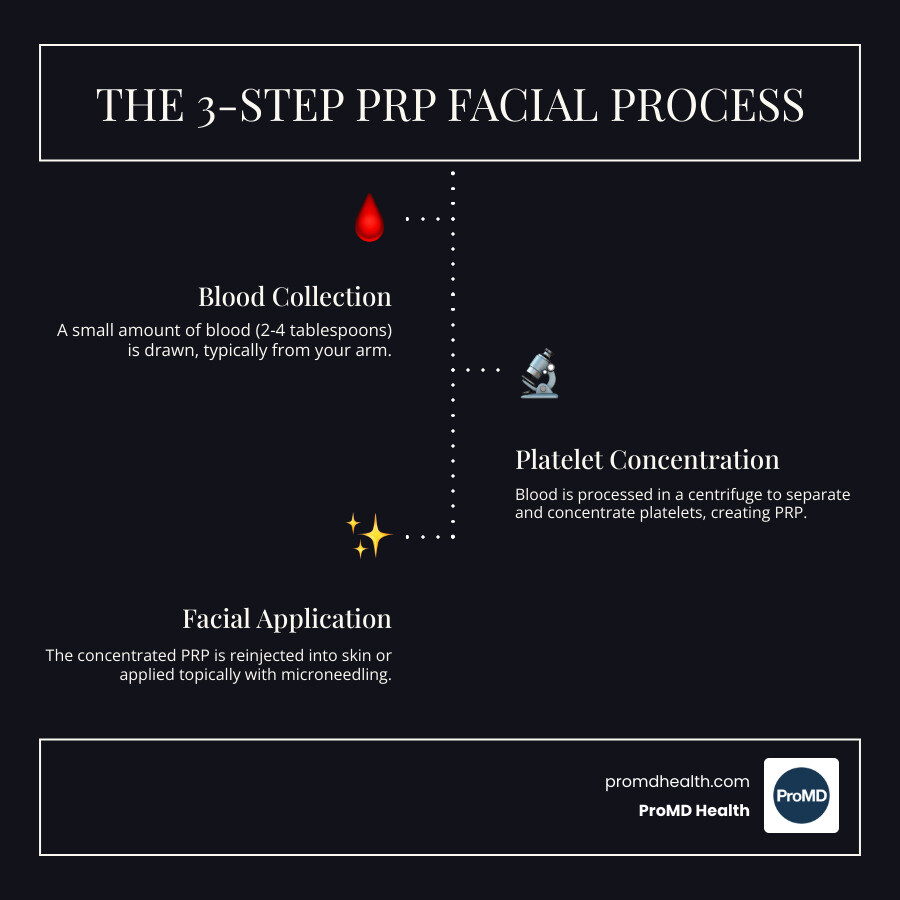
The process is surprisingly simple. We start by drawing a small amount of blood from your arm, just like a routine lab test—usually about 2 to 4 tablespoons. This blood goes into a centrifuge, a specialized machine that spins it at high speeds for about 10 to 15 minutes. This spinning separates the blood into layers based on density. The heavier red and white blood cells sink to the bottom, while the plasma rises to the top, now richly concentrated with platelets and growth factors.
We carefully collect this Platelet-Rich Plasma, and it’s ready to work its magic on your skin.
Once the PRP is applied to your face—whether through injections or topically with microneedling—those concentrated platelets release their treasure trove of growth factors. This is where the real change begins. These growth factors signal your skin cells to spring into action, triggering collagen stimulation and elastin production. Collagen and elastin are the proteins that keep your skin firm, smooth, and youthful-looking.
The growth factors also promote cell regeneration and tissue repair at a cellular level. Essentially, your skin gets the message to renew itself from the inside out. It’s like giving your face a biological refresh button using your body’s own resources. No synthetic chemicals, no foreign substances—just your own healing power amplified.
If you’re curious about the deeper mechanics of how this treatment delivers results, our detailed guide on How Does a PRP Shot Work? walks you through every step of the science.
What is the difference between a PRP Facelift and a PRP Facial?
You’ve probably heard both terms thrown around, and they can sound confusingly similar. While both treatments harness the power of Platelet-Rich Plasma to refresh your skin, they work in different ways and target different concerns. At ProMD Health, we offer both options and help you choose the right approach for your unique goals.
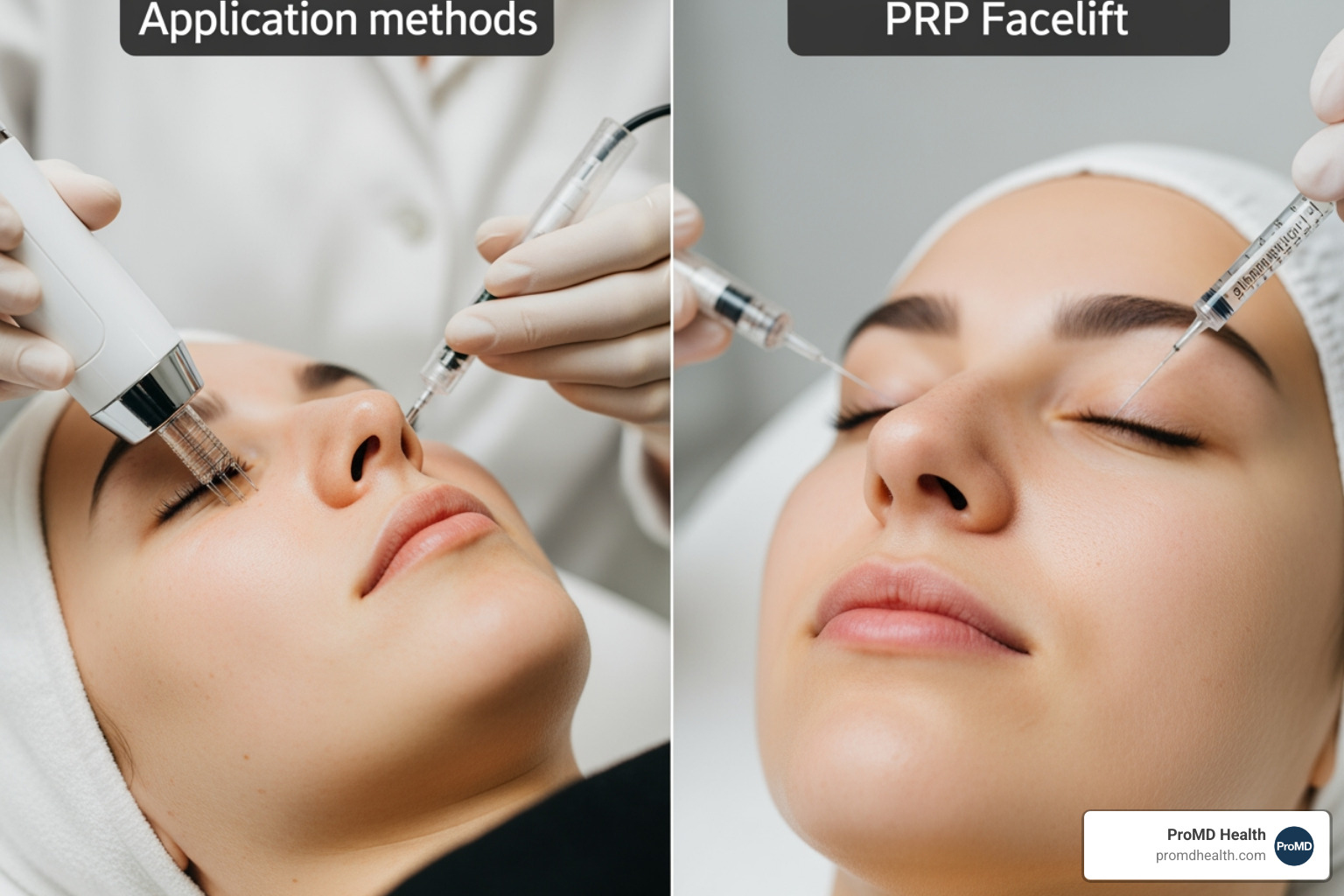
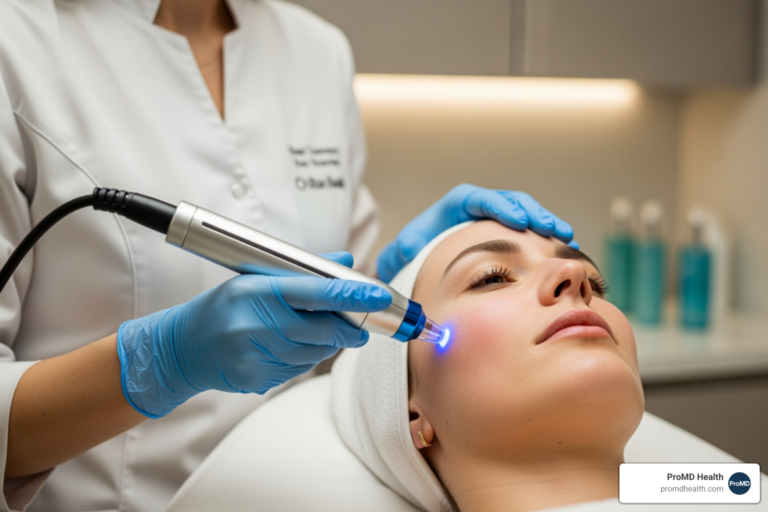
A PRP Facial (yes, the famous “Vampire Facial”) focuses on your skin’s surface. We typically combine the PRP with microneedling, a treatment that creates thousands of tiny, controlled micro-injuries across your skin. These microscopic channels do two things: they trigger your skin’s natural healing response, and they create pathways for the PRP to absorb much deeper than it could otherwise.
This combination is perfect for refreshing your complexion and addressing surface-level concerns. You’ll see improvements in your overall skin texture and tone, with fine lines and superficial wrinkles becoming less noticeable. It’s excellent for minimizing acne scars, shrinking enlarged pores, and giving your face that healthy, radiant glow. Think of it as a comprehensive skin quality upgrade.
A PRP Facelift takes things a step further. This treatment combines PRP injections with hyaluronic acid fillers for a more dramatic change. First, we strategically place the hyaluronic acid fillers to restore lost volume, lift areas that have begun to sag, and sculpt your facial contours. Then we inject the PRP into targeted areas.
The fillers give you immediate results—you’ll see that volume restoration and contouring right away. The PRP then goes to work on a deeper level, with its growth factors stimulating long-term collagen production and improving your skin’s underlying structure. This approach addresses more significant aging concerns like volume loss in your cheeks, temples, or under-eyes, along with deeper wrinkles and folds. It provides a non-surgical lift that tackles both the structure and quality of your skin.
In simple terms: the PRP Facial polishes and perfects your skin’s surface, while the PRP Facelift rebuilds volume and structure from within. Both deliver beautiful results, just through different pathways. Our team at ProMD Health will help you decide which treatment—or combination of treatments—will best achieve the refreshed, youthful look you’re after. For more information about these transformative options, visit our page on vampire facial info.
The Science-Backed Benefits of PRP Treatment for Face
When you’re considering any facial treatment, you want to know it actually works. The good news? PRP treatment for face isn’t just hype—it delivers real, measurable improvements that patients can see and feel. At ProMD Health, we’ve witnessed countless changes as this natural treatment harnesses your body’s own healing power to refresh and refresh your complexion.
So what can you actually expect from PRP treatment for face? Let’s break down the specific benefits that make this treatment so appealing.
First, there’s wrinkle reduction and fine line smoothing. PRP stimulates your skin to produce fresh collagen and elastin—the proteins that keep skin plump and smooth. This is particularly effective around the mouth, eyes (goodbye, crow’s feet!), and forehead. Clinical studies have documented significant reductions in both wrinkle volume and count after PRP treatments.
Your overall skin texture improves dramatically as well. By promoting cell turnover and collagen synthesis, PRP creates a noticeably smoother, more refined surface. Many patients tell us their skin feels softer and looks more polished after their treatment series.
If enlarged pores bother you, you’ll appreciate how pore size visibly diminishes with PRP. As collagen production increases, your skin becomes firmer and more elastic, which naturally helps minimize the appearance of those frustrating enlarged pores.
Acne scars respond particularly well to PRP’s regenerative properties. The treatment aids in tissue repair and remodeling, gradually smoothing and diminishing the appearance of indented or textured scars. It’s not an overnight fix, but the progressive improvement can be remarkable.
For those dealing with sun damage, PRP helps manage the effects of years of UV exposure. It bolsters skin resilience, improves the appearance of sun-damaged areas, and can reduce pigmented spots caused by sun exposure. Your skin tone becomes more even and balanced—what we call improved skin homogeneity.
Perhaps one of the most appreciated benefits is the improvement in mild skin sagging. By boosting collagen and elastin production, PRP improves skin firmness and elasticity, which can lead to a subtle lifting effect. While it’s not a replacement for a surgical facelift, it’s perfect for addressing early signs of gravity’s pull.
At the cellular level, the most fundamental benefit is increased collagen density. PRP actively stimulates fibroblasts—the cells responsible for producing collagen—leading to measurable increases in dermal collagen density. This internal strengthening translates to firmer, more resilient skin that looks healthier from the inside out.
These aren’t just superficial changes we’re talking about. This is genuine cellular rejuvenation that contributes to healthier, more vibrant skin. To learn more about the broader applications and advantages of this remarkable treatment, visit The Benefits of PRP Treatment.
Is prp treatment for face effective? The Scientific Evidence
It’s one thing to hear about benefits—it’s another to see the science backing them up. While PRP treatment for face initially gained popularity through celebrity endorsements and word-of-mouth, there’s now a solid foundation of scientific research supporting its effectiveness. Our team at ProMD Health stays current with the latest findings to ensure we’re offering treatments that are both innovative and genuinely evidence-based.
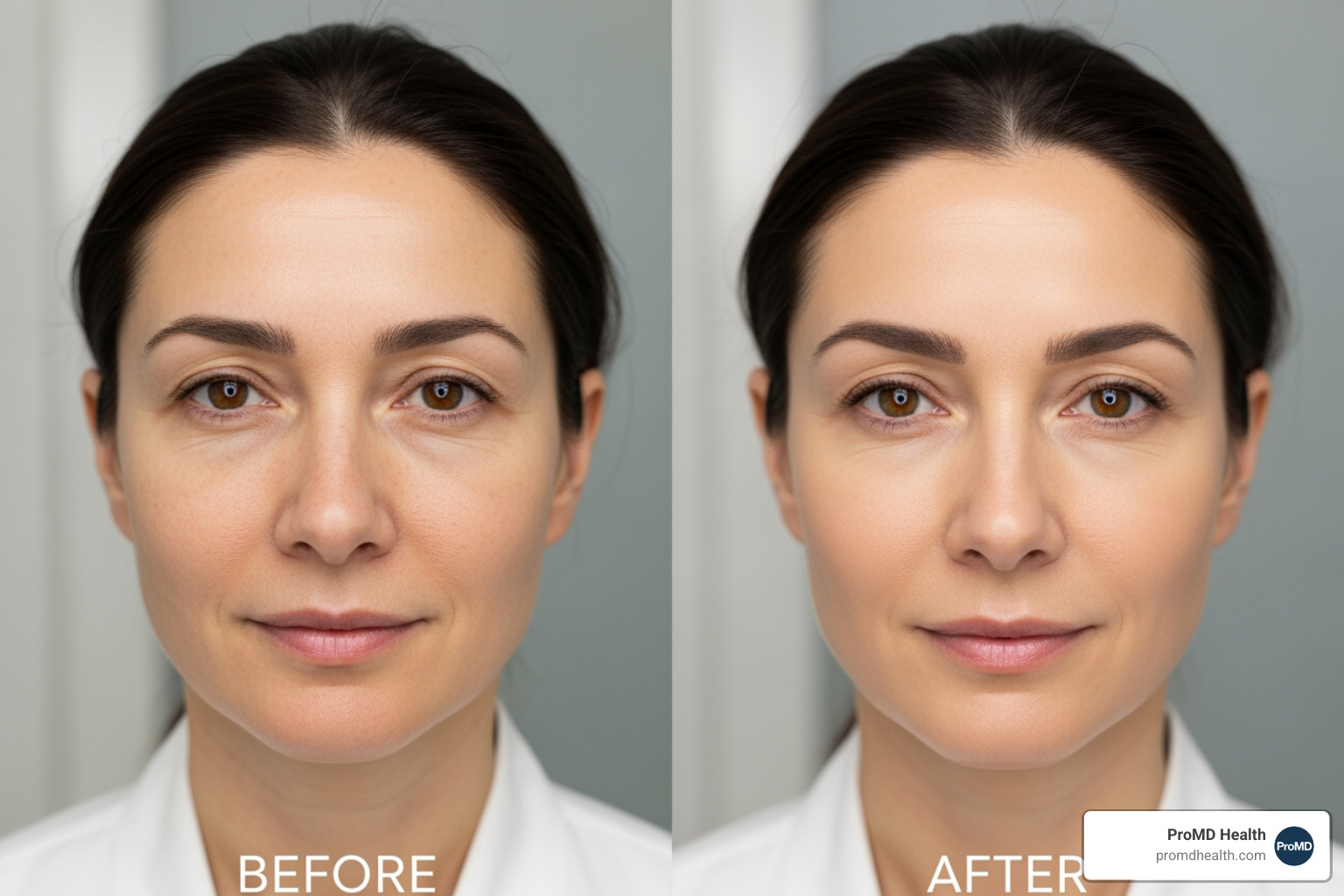
A comprehensive review analyzing 11 studies involving 382 patients revealed something encouraging: PRP treatment for face led to significant improvements in multiple facial parameters after just one to three sessions. These weren’t just patients saying they felt prettier—these were objective measurements using standardized clinical tools.
For instance, researchers using the Wrinkle Severity Rating Scale (WSRS) documented significant decreases in wrinkle scores after PRP treatment. Even more impressive, when scientists looked under the microscope, they found actual evidence of new collagen formulation using PRP. One study showed an 89.05% improvement in collagen optical density compared to pre-treatment levels. That’s not subtle—that’s transformative at the cellular level.
Patient satisfaction scores consistently run high, too. Many studies report satisfaction rates exceeding 90% at six-month follow-ups after completing a treatment series. Patients regularly report improvements in skin quality, texture, and overall facial appearance. When both the microscope and the mirror show improvement, you know you’re onto something real.
Here’s something important to understand: PRP isn’t an instant fix. The full effects take time to manifest because collagen regeneration is a gradual, natural process. Maximum collagen regeneration typically occurs around three months after treatment. This progressive improvement is actually one of the treatment’s strengths—you look naturally refreshed, not suddenly different. For more on how PRP can improve your complexion, visit Improve Skin Tone & Texture with PRP.
How PRP Compares to Other Rejuvenation Treatments
The world of facial rejuvenation offers plenty of options, and navigating your choices can feel overwhelming. At ProMD Health, we believe in helping you find the best solution for your unique concerns. While PRP treatment for face stands out for its natural, regenerative approach, it’s helpful to understand how it stacks up against other popular treatments.
PRP Facial is minimally invasive and non-surgical, typically causing minimal to mild downtime—think redness, swelling, or bruising for one to three days. The treatment works by having platelets release growth factors that stimulate collagen, elastin, and cell regeneration. It’s often combined with microneedling to improve absorption. This makes it ideal for addressing fine lines, wrinkles, skin texture and tone issues, mild acne scars, and enlarged pores.
Microneedling alone (without PRP) is also minimally invasive with similar mild downtime. It creates micro-channels in the skin to stimulate collagen and elastin through your body’s natural wound-healing response. It targets similar concerns to PRP but without the added growth factor boost.
Chemical Peels range from superficial to deep, with downtime varying from minimal for light peels to one to two weeks for deeper treatments. They work by applying a chemical solution that removes damaged outer skin layers, revealing fresher skin beneath. Peels are particularly effective for sun damage, hyperpigmentation, uneven tone, and acne scars, though deeper peels require more recovery time.
Laser Resurfacing can be ablative (more invasive) or non-ablative (less invasive), with downtime ranging from a few days to two weeks depending on the intensity. Lasers use focused light energy to remove damaged skin or heat deeper layers to stimulate collagen. They’re excellent for deep wrinkles, significant sun damage, scars, and pigmentation issues, though they typically cost more and require longer recovery than PRP.
What sets PRP treatment for face apart is its use of your own biological material, which minimizes the risk of allergic reactions or complications. It’s a middle ground—more regenerative than microneedling alone, gentler than aggressive lasers or deep peels, and it works from within to create lasting improvements. The choice ultimately depends on your specific concerns, skin type, tolerance for downtime, and budget. Our experts at ProMD Health can help you weigh these factors during your consultation.