Best Solution for Thinning Hair 2026: Unlock Hope
Why Finding the Right Solution Matters
The best solution for thinning hair depends on what’s causing your hair loss in the first place. Here’s a quick overview of the most effective options:
- Minoxidil (Rogaine) – FDA-approved topical treatment that stimulates hair follicles (3-6 months for results)
- Finasteride (Propecia) – Prescription pill that blocks DHT, a hormone linked to hair loss (primarily for men)
- Platelet-Rich Plasma (PRP) Therapy – Uses your body’s growth factors to stimulate dormant follicles
- Low-Level Laser Therapy (LLLT) – FDA-cleared light treatment that promotes hair growth
- Hair Transplant Surgery – Permanent solution that relocates hair from dense areas to thinning spots
Thinning hair is different from normal hair shedding. While losing up to 100 strands per day is completely normal, thinning hair is a gradual process where your hair follicles shrink over time, producing finer, shorter strands until they eventually stop growing altogether.
The good news? Many types of hair loss are treatable, especially when caught early. Whether your thinning is caused by genetics, hormones, stress, or lifestyle factors, understanding the root cause is the critical first step toward regrowth.
As Scott Melamed, President and CEO of ProMD Health, I’ve worked with countless patients seeking the best solution for thinning hair through our comprehensive aesthetic and wellness services. Our team combines FDA-approved treatments with advanced procedures to create personalized plans that address each patient’s unique needs.
Understanding the Roots of Hair Thinning
Before we can find the best solution for thinning hair, we need to understand why it’s happening. Hair thinning isn’t just about losing strands; it’s often a sign that something deeper is at play. This can range from genetic predispositions to daily habits and underlying health conditions.

Primary Causes in Men and Women
Hair thinning manifests differently depending on your gender, but some core mechanisms are often involved.
- Androgenetic Alopecia (Pattern Hair Loss): This is the most common cause of hair thinning in both men and women. It’s largely genetic and hormonal.
- Male Pattern Baldness: Often characterized by a receding hairline and thinning at the crown. Finasteride, for instance, works by reducing scalp dihydroxytestosterone (DHT) levels by approximately 60% to 70%, a hormone strongly linked to this type of hair loss.
- Female Pattern Hair Loss: Women typically experience diffuse thinning over the top of the scalp, leading to a widening part, rather than bald spots. It’s common and increases with age.
- Hormonal Changes: Beyond androgenetic alopecia, other hormonal shifts can trigger thinning.
- Postpartum Hair Loss: Many women experience significant hair shedding a few months after giving birth due to plummeting estrogen levels. This is usually temporary.
- Menopause: As women enter menopause, hormonal fluctuations can lead to increased hair thinning.
- Medical Conditions: A variety of health issues can contribute to hair loss, including thyroid disorders, autoimmune diseases (like alopecia areata), and skin conditions affecting the scalp.
- Stress (Telogen Effluvium): Significant physical or emotional stress can push a large number of hair follicles into a resting phase prematurely. Researchers believe that cortisol, a stress hormone, may disrupt the hair growth cycle. This often results in widespread thinning, but hair usually regrows once the stressor is managed.
- Nutritional Deficiencies: A lack of essential vitamins and minerals can impact hair health. We’ll dig deeper into this later, but deficiencies in iron, zinc, or biotin can hinder healthy hair growth.
- Lifestyle Factors & Hair Care Practices: How we live and how we treat our hair can also play a significant role.
The Impact of Lifestyle on Hair Health
Our daily routines and choices have a profound effect on the health of our hair. What we put into our bodies and how we manage external factors can either support luscious locks or contribute to thinning.
- Diet and Hair: A balanced diet is crucial for overall health, including the health of our hair.
- Protein Intake: Hair is primarily made of protein, so ensuring adequate protein intake is fundamental.
- Iron Deficiency: Iron is vital for transporting oxygen to hair follicles. An iron deficiency can lead to hair loss.
- Other Micronutrients: There may be an association between hair loss and a lack of micronutrients like riboflavin, selenium, and zinc. Folic acid, a type of vitamin B important for new cell generation, has also been linked to some types of hair loss when deficient.
- Hair-Healthy Foods: Incorporating foods rich in these nutrients, such as lean meats, eggs, fish, nuts, seeds, and leafy greens, can make a difference.
- Stress and Cortisol: We’ve touched on stress, but it bears repeating. Chronic stress can significantly impact your hair. How stress causes hair loss is a complex process involving the stress hormone cortisol, which can prematurely push hair follicles into their resting phase. Finding healthy ways to manage stress, such as exercise, meditation, or hobbies, can be beneficial.
- Smoking’s Negative Effects: While you may have heard of the negative effects of smoking throughout the entire body, smoking also has a connection to hair loss. Overall, smoking may worsen hair loss because of its inflammatory effects in the body. Researchers from a 2021 review also believe that smoking can disrupt the growth cycle of your hair and even lead to color loss.
- Harsh Hair Treatments: Over-treating hair with chemical processes (like color treatments, perms, or relaxers), excessive heat styling, or constantly wearing tight hairstyles (like braids or ponytails) can cause traction alopecia, damaging follicles and leading to thinning. Gentle hair care practices are essential to maintain hair integrity.
FDA-Approved and Clinically-Proven Medications
When it comes to finding the best solution for thinning hair, FDA-approved medications are often the first line of defense we consider. These treatments have undergone rigorous testing to prove their safety and effectiveness. Consistency is key with these options, and results typically take several months—often three to six months—to become noticeable.
Minoxidil: The Topical Approach
Minoxidil is perhaps the most widely recognized over-the-counter treatment for hair thinning. We often recommend it as a foundational treatment.
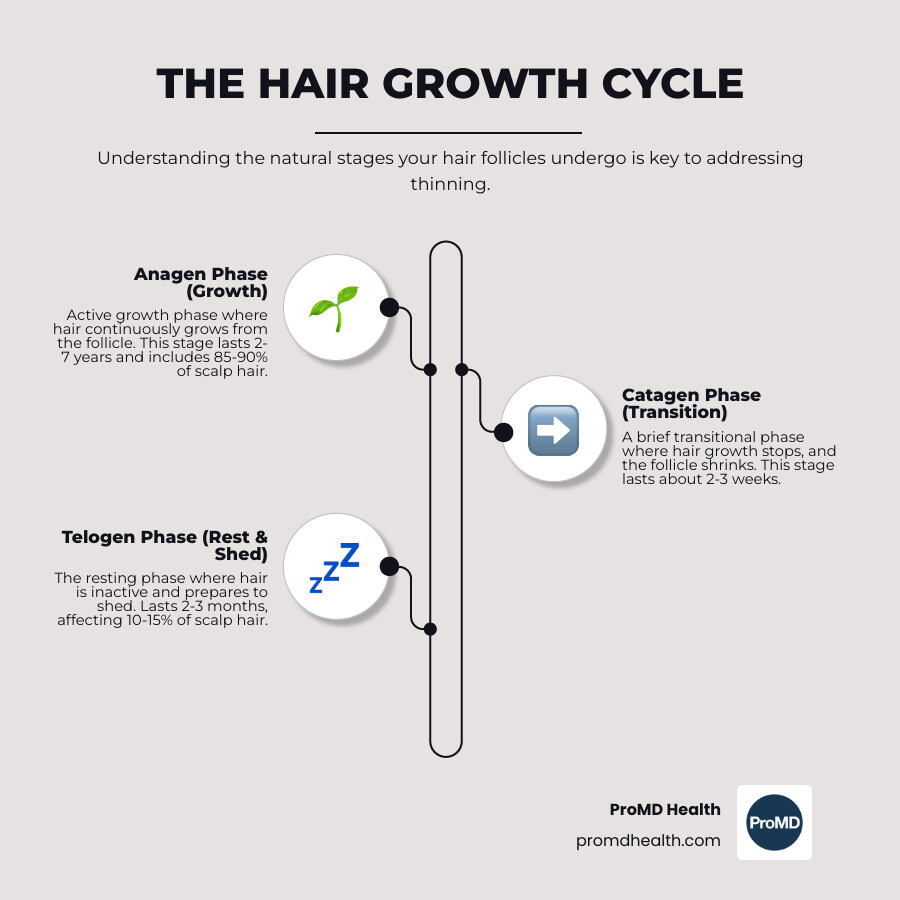
- How it Works: Minoxidil’s exact mechanism is not fully understood, but it’s believed to work by widening blood vessels, which increases blood flow to the hair follicles. This stimulates telogen follicles (resting phase) to enter the anagen phase (growth phase), promoting hair regrowth. It may also enlarge miniaturized hair follicles.
- Concentrations and Forms: It’s available in 2% and 5% solutions and 5% foam. A meta-analysis found that topical minoxidil was effective and safe for treating female pattern hair loss, with no significant difference in efficacy and safety between different concentrations. For men, 5% minoxidil foam increased the hair count and improved hair loss compared with placebo.
- For Men and Women: Minoxidil is FDA-approved for treating both male and female pattern hair loss.
- Side Effects: The most common side effect is scalp irritation, which can include itching, redness, or dryness. continuous use is necessary to maintain results; if you stop using it, any regrown hair will likely fall out within three months.
Finasteride and Other Oral Medications
For many men, finasteride is a cornerstone of their hair thinning treatment plan.
- How it Works: Finasteride is a prescription oral medication that primarily works by blocking the action of an enzyme called 5-alpha reductase, which converts testosterone into dihydrotestosterone (DHT). By reducing DHT levels in the scalp by approximately 60% to 70%, finasteride helps to prevent further hair loss and can stimulate new hair growth. Finasteride has been shown to increase the hair count, physician-assessed hair coverage, and hair mass compared with placebo.
- Primarily for Men: Finasteride is FDA-approved for treating male pattern hair loss. Many men taking finasteride experience a slowing of hair loss, and some may show new hair growth.
- Off-Label Use for Postmenopausal Women: While not FDA-approved for women for pattern baldness, studies have shown that it may be an effective treatment for postmenopausal females. It is generally not recommended for premenopausal women due to potential risks during pregnancy.
- Potential Side Effects: For men, potential side effects can include decreased libido, erectile dysfunction, and gynecomastia. If you’re interested in understanding more about hormonal balance, we encourage you to explore more info about Hormone Replacement Therapy.
Here’s a quick comparison of these two popular medications:
| Feature | Minoxidil | Finasteride |
|---|---|---|
| Mechanism | Increases blood flow, stimulates follicles | Blocks DHT production |
| Use Case | Male and female pattern hair loss | Primarily male pattern hair loss (off-label for postmenopausal women) |
| Application | Topical solution or foam | Oral pill (once daily) |
| Efficacy | Prevents loss, promotes regrowth | Prevents loss, promotes regrowth |
The Best Solution for Thinning Hair: Advanced & In-Office Procedures at ProMD Health
Sometimes, over-the-counter treatments and even oral medications aren’t enough to achieve the desired results. That’s when we explore advanced, in-office procedures that can offer more targeted and powerful solutions. At ProMD Health, we pride ourselves on offering personalized treatment plans utilizing cutting-edge technology and techniques.
Platelet-Rich Plasma (PRP) Therapy at ProMD Health
Platelet-Rich Plasma (PRP) therapy is a groundbreaking non-surgical option that harnesses your body’s natural healing abilities to stimulate hair growth.
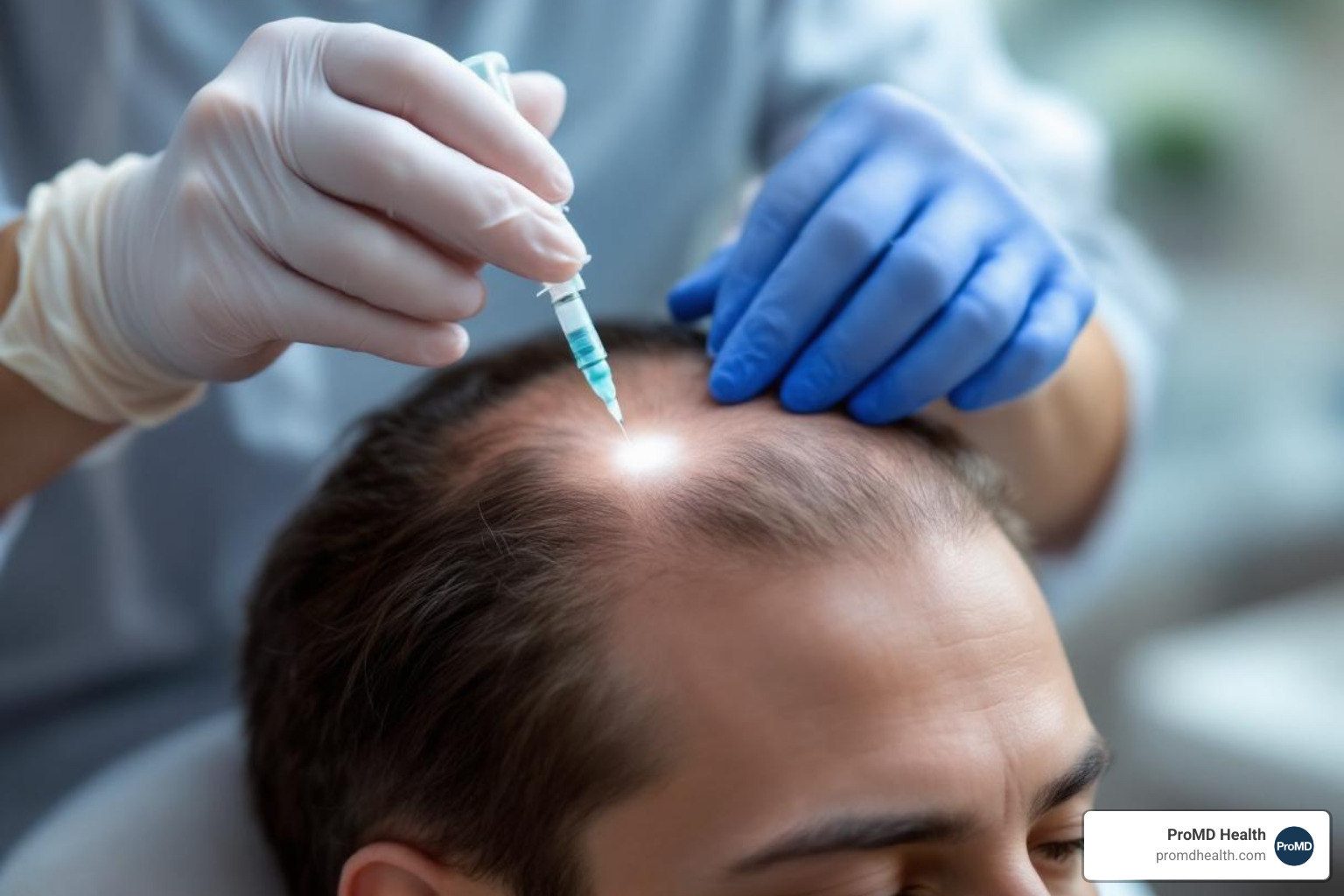
- How it Works: We begin by drawing a small amount of your blood. This blood is then placed in a centrifuge, which spins it at high speed to separate the platelet-rich plasma from other components. This concentrated plasma, packed with growth factors, is then injected directly into the thinning areas of your scalp.
- Stimulates Dormant Follicles: The growth factors in PRP stimulate dormant hair follicles, prolong the anagen (growth) phase of existing hair, and can improve the overall health and thickness of your hair. We’ve seen remarkable results with PRP, making it a highly sought-after treatment. You can find more info about PRP Treatment for Hair on our website. For a deeper dive into the science, you can read more about Platelet-rich plasma (PRP) therapy explained.
Low-Level Laser Therapy (LLLT) at ProMD Health
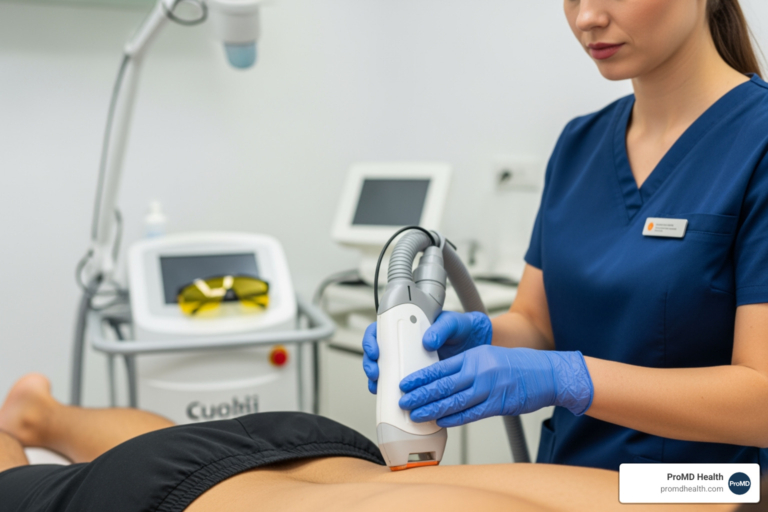
Low-Level Laser Therapy (LLLT), also known as red light therapy, is an FDA-cleared treatment that uses light energy to stimulate hair follicles.
- FDA-Cleared Devices: The FDA has approved low-level laser devices as a treatment for hereditary hair loss in men and women.
- How it Works (Photobiomodulation): LLLT works through a process called photobiomodulation, where specific wavelengths of light penetrate the scalp and are absorbed by the cells within the hair follicles. This energy stimulates cellular activity, increases blood flow, and reduces inflammation, encouraging hair growth and improving hair density.
- Options Available: At ProMD Health, we offer both in-office LLLT sessions and guidance on professional-grade at-home devices. At-home laser therapy for hair may help regrow hair while also making it thicker.
- Treatment Schedule: Consistency is crucial with LLLT, with regular sessions over several months typically needed to see optimal results. For comprehensive information on how we approach this, please visit our page on more info about Hair Restoration.
Surgical Hair Restoration at ProMD Health
For individuals with advanced hair loss or those seeking a more permanent solution, surgical hair restoration remains a viable option.
- Hair Transplant Surgery: This procedure involves relocating healthy hair follicles from a donor area (usually the back or sides of the head) to thinning or balding areas. The two primary techniques are Follicular Unit Transplantation (FUT) and Follicular Unit Extraction (FUE).
- Benefits: The main benefit is the permanent nature of the results, as the transplanted follicles are genetically resistant to hair loss.
- Drawbacks: Surgical hair restoration is more invasive and costly than other treatments. It involves a recovery period and potential scarring, though modern techniques minimize this. While it restores hair to balding areas, it does not stop the progression of hair loss in untreated areas, meaning ongoing medical therapy might still be necessary. We will discuss these options with you during your personalized consultation.
Natural Supplements and At-Home Remedies
While medical treatments and in-office procedures offer powerful solutions, supporting your hair health from within and through gentle at-home care can significantly complement these efforts. It’s about building a holistic approach to hair wellness.
Supporting Hair Health with Supplements
Supplements can play a role in addressing nutritional deficiencies that might contribute to thinning hair. However, it’s crucial to manage expectations and understand that supplements are generally most effective when a deficiency exists.
- Biotin’s Role: Biotin is an essential B vitamin often touted for hair growth. While a biotin deficiency can cause hair loss, taking megadoses isn’t scientifically proven to prevent or treat hair loss if you’re not deficient. If you’re wondering, is biotin as good as advertised? The answer is: it depends on your individual needs.
- Zinc for Hair Health: Zinc is another vital mineral that plays a role in hair tissue growth and repair. Zinc deficiency can lead to hair loss, so ensuring adequate intake is important.
- Iron: As mentioned earlier, iron deficiency is a common cause of hair loss, particularly in women. A blood test can determine if your iron levels are low.
- Folic Acid: Folic acid, a B vitamin, is important for new cell generation, including those in hair follicles. Some studies suggest a link between folate deficiency and certain types of hair loss.
- Comprehensive Review: For a deeper understanding of the role of vitamins and minerals in hair loss, we encourage further reading.
- Hair-Healthy Foods: The best way to get these nutrients is often through your diet. Incorporate:
- Salmon and other fatty fish (Omega-3s)
- Eggs (Biotin, protein)
- Spinach and other leafy greens (Iron, Folic Acid)
- Nuts and seeds (Zinc, Omega-3s)
- Legumes (Protein, Iron, Zinc)
Exploring Essential Oils and Scalp Massage
Natural remedies can offer complementary support, often by improving scalp health and circulation.
- Rosemary Oil: Some research suggests rosemary oil may be as effective as 2% minoxidil for hair growth, possibly by improving circulation to the scalp.
- Lavender Oil: Animal research from 2016 supports the hair growth-promoting effects of lavender oil, though human studies are necessary. Some people combine lavender with other oils like rosemary and thyme.
- Peppermint Oil: Similar to rosemary, peppermint oil is thought to increase circulation to the scalp.
- Carrier Oils: Always dilute essential oils in a carrier oil (like jojoba, coconut, or almond oil) before applying them to your scalp. This prevents irritation.
- How to Perform a Patch Test: Before applying any essential oil mixture to your entire scalp, perform a patch test on a small, inconspicuous area of skin (e.g., behind your ear or on your inner forearm). Wait 24 hours to check for any adverse reactions like redness, itching, or irritation.
- Scalp Massage Benefits: Gently massaging your scalp, with or without essential oils, increases blood flow to the hair follicles. This can help deliver more nutrients and oxygen, potentially stimulating hair growth and improving overall hair health. It’s a simple, relaxing practice you can incorporate into your daily routine.
When to Consult a Professional
While at-home remedies and over-the-counter options are accessible, there are clear signs that indicate it’s time to seek professional medical advice. Self-treatment has its limitations, and an accurate diagnosis is the cornerstone of finding the best solution for thinning hair.
- Sudden or Patchy Hair Loss: If you notice hair loss occurring rapidly, or if you develop distinct bald patches, it’s crucial to see a doctor. These could be signs of underlying medical conditions like alopecia areata or other inflammatory issues.
- Excessive Shedding: Losing more than 100 hairs per day consistently is a red flag. While some shedding is normal, persistent, heavy shedding warrants a professional evaluation.
- Importance of a Correct Diagnosis: Many causes of hair loss mimic each other. A healthcare professional, especially a dermatologist, can accurately diagnose the specific type of hair loss you’re experiencing, which is essential for effective treatment. As George Gavrila, MD, Founder and Medical Director of ProMD Health, always emphasizes, “The key to effective hair restoration begins with a precise diagnosis. Without understanding the root cause, treatments can be ineffective. We tailor our approach based on a thorough understanding of each patient’s unique situation.”
What is the best solution for thinning hair? A ProMD Health Perspective
At ProMD Health, we approach hair thinning with a comprehensive and personalized strategy. Your initial consultation will involve a thorough evaluation to pinpoint the exact cause of your hair loss.
- Physical Exam: We’ll examine your scalp and hair to assess the pattern and extent of thinning.
- Medical History Review: We’ll discuss your general health, family history of hair loss, and any medications you’re currently taking.
- Blood Tests: These can help uncover underlying medical conditions that might cause hair loss, such as nutritional deficiencies (iron, vitamin D), thyroid issues, or hormonal imbalances.
- Scalp Biopsy: In some cases, a small sample of scalp tissue may be taken for microscopic examination to diagnose inflammatory or autoimmune conditions.
- Light Microscopy: Examining hair strands under a microscope can reveal abnormalities in hair shaft structure.
Based on this comprehensive assessment, we will then create a personalized treatment plan custom to your specific needs and goals. We offer a range of advanced services, from medical treatments to in-office procedures, all designed to help you achieve thicker, healthier hair. Learn more about our specialized Hair Loss services.
Frequently Asked Questions about Thinning Hair
We understand you likely have many questions when facing hair thinning. Here are some of the most common ones we encounter.
Can thinning hair grow back?
Yes, in many cases, thinning hair can grow back, but it largely depends on the underlying cause. Thinning hair can grow back if the cause is temporary and addressed effectively. For instance:
- Temporary Conditions: Hair loss due to nutrient deficiencies, stress, pregnancy, or certain medications often sees regrowth once the underlying issue is resolved.
- Genetic Conditions: For conditions like androgenetic alopecia, while hair may not fully “grow back” to its original density without intervention, treatments like minoxidil, finasteride, PRP, and LLLT can effectively stimulate existing follicles to produce thicker, healthier strands and slow down further thinning.
The key is early intervention and consistent treatment.
How long does it take to see results from treatments?
Patience and consistency are absolutely crucial when treating hair thinning. Hair growth is a slow biological process, and results are rarely immediate.
- Medications (Minoxidil, Finasteride): It typically takes at least three to six months of consistent use to see noticeable results. For minoxidil, it may take even longer, up to 16 weeks, for visible effects. Many men taking finasteride experience a slowing of hair loss, and some may show new hair growth within this timeframe.
- PRP Therapy: While some patients report improvements after a few sessions, a series of treatments (often 3-4 initially, followed by maintenance) over several months is usually recommended for optimal results. You might start seeing changes in hair texture or reduced shedding sooner, but significant regrowth takes time.
- LLLT: Similar to other treatments, LLLT requires regular treatments for several months before you notice improvements. On average, expect to start seeing results after three to six months.
Surgical hair restoration, while offering more immediate structural change, still requires several months for the transplanted hair to grow in fully.
What is the difference between treatments for men and women?
While some treatments like minoxidil and LLLT are effective for both sexes, there are key differences in how we approach hair thinning treatments for men versus women, primarily due to hormonal factors and patterns of hair loss.
- Finasteride Use: Finasteride is primarily prescribed for men with male pattern baldness. It is generally not recommended for premenopausal women due to the risk of birth defects. However, it may be used off-label for postmenopausal women after careful consideration by a physician.
- Hormonal Considerations: For women, hormonal imbalances can be a significant factor. Antiandrogen agents like spironolactone (which may cause headaches, dizziness, and other side effects) are often effective treatments in women with female pattern hair loss and are useful in combination with minoxidil. One treatment strategy for female-pattern hair loss is to start with either 5% topical minoxidil twice a day or a low dose of oral minoxidil and escalate the latter if no unacceptable side effects occur.
- Different Patterns of Hair Loss: Men typically experience a receding hairline and crown thinning, while women often see diffuse thinning and a widening part. This means the application of topical treatments or placement of surgical grafts might differ to best address these specific patterns. Our personalized plans take these nuances into account.
Take the Next Step Towards Thicker Hair
Navigating hair thinning solutions can feel overwhelming, but we hope this guide has shed some light on the many effective options available. There isn’t a single “best” solution for everyone because the ideal approach is always a personalized one, custom to your specific cause of hair loss, lifestyle, and goals.
At ProMD Health, we are dedicated to helping you achieve the thicker, healthier hair you desire. We combine expertise, advanced technology, and a compassionate approach to create a treatment plan that’s right for you. The first and most important step on this journey is a professional consultation.
Ready to understand your hair loss and explore the most effective treatments? Take the Next Step with Hair Regrowth Treatments by scheduling a consultation with our team. We’re here to help you look and feel your absolute best.