Treat hyperpigmentation: Unlock Bright Skin in 2025
Why Addressing Uneven Skin Tone Matters for Your Confidence
Treat hyperpigmentation effectively with these proven approaches:
- Professional Treatments: Chemical peels, laser therapy (IPL, Q-switched, fractional), and microdermabrasion offer faster results for persistent discoloration
- Topical Ingredients: Retinoids, vitamin C, azelaic acid, niacinamide, and tranexamic acid lighten dark spots over time
- Sun Protection: Daily broad-spectrum SPF 30+ sunscreen prevents new spots and stops existing ones from darkening
- Combination Approach: Most effective results come from pairing professional treatments with consistent at-home care
Hyperpigmentation—darker patches on the face, hands, or body—affects people of all skin tones. It’s especially common in darker complexions, where it ranks as the second most frequent skin concern. While not physically harmful, these dark spots can significantly impact your confidence.
The good news is that effective treatments offer real solutions. Whether you’re dealing with sun damage, hormonal changes, or marks from acne, there are proven ways to reduce discoloration. From powerful topicals to advanced laser treatments, the path to brighter skin is clearer than ever.
Understanding the causes and treatments for these dark spots is the first step toward making an informed choice. While some see results with over-the-counter products and sun protection, others benefit from professional procedures that deliver faster, more dramatic improvements.
As Scott Melamed, President and CEO of ProMD Health, with a background in biotechnology and clinical research from Johns Hopkins, I’ve seen how personalized approaches to treat hyperpigmentation transform both skin and confidence. This guide breaks down what you need to know to choose the right strategy for your unique situation.

Understanding Hyperpigmentation: The Science Behind Dark Spots
Hyperpigmentation occurs when your skin produces too much melanin, the pigment that gives skin its color. This process is controlled by specialized cells called melanocytes. When these cells are stressed or damaged, they can produce excess melanin, resulting in patches of skin that are noticeably darker than the surrounding areas.
Several factors can trigger this melanin overproduction. Sun exposure is the primary cause; your skin produces extra melanin to protect against UV rays, which can leave behind lasting dark spots. Hormonal changes from pregnancy, birth control, or hormone therapy are another major factor. Inflammation from acne, eczema, cuts, or even picking at your skin can also leave a dark mark long after the original issue heals. Less commonly, certain medications or health conditions can contribute to skin darkening.
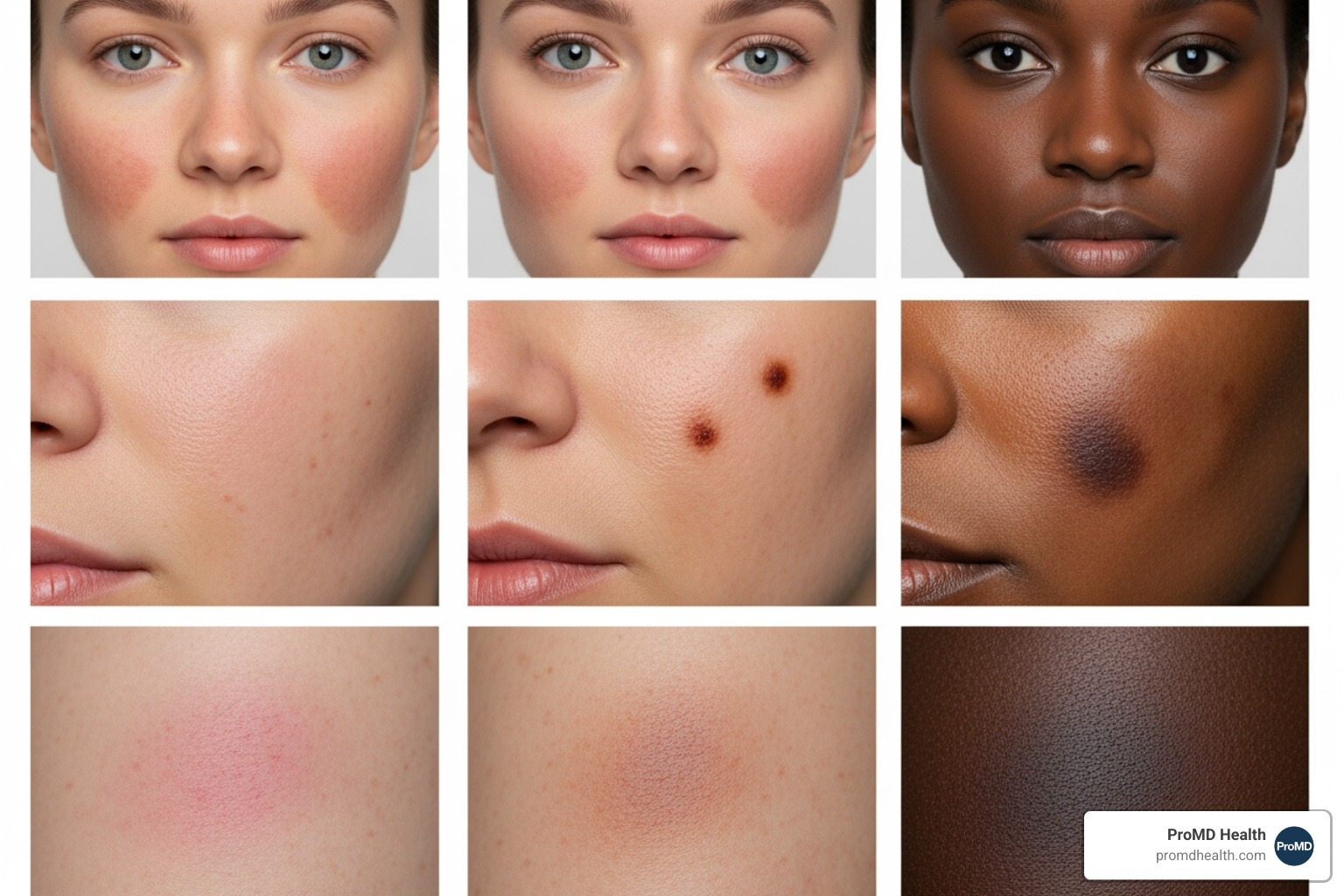
Common Types of Hyperpigmentation
Understanding which type you have helps you choose the right approach to treat hyperpigmentation effectively.
Melasma appears as symmetrical brown or grayish-brown patches on the cheeks, upper lip, forehead, and chin. It’s strongly linked to hormones and is often called the “mask of pregnancy.” Women are far more likely to develop melasma, and it can be triggered by birth control or hormone therapy, especially with sun exposure.
Post-Inflammatory Hyperpigmentation (PIH) is a dark spot left behind after skin trauma like an acne breakout, eczema flare-up, scratch, or burn. The discoloration appears where the original inflammation occurred. People with darker complexions are particularly prone to PIH.
Sunspots (solar lentigines or age spots) are flat brown or black spots on sun-exposed areas like the face, hands, and shoulders. They are a direct result of long-term sun exposure and tend to increase with age.
Freckles are small, genetic brownish spots that darken with sun exposure in the summer and fade in the winter.
How It Affects Different Skin Tones
While anyone can develop hyperpigmentation, it is more common and often harder to treat in darker skin tones. Discoloration is the second most common skin concern among Black and Hispanic populations in the U.S. This is because melanocytes in darker skin are more active and sensitive to triggers, increasing susceptibility to PIH and melasma. In fact, melasma affects up to 50% of certain darker-skinned populations.
Treating skin of color requires expertise, as some treatments suitable for lighter skin can cause further pigmentation issues or even hypopigmentation (lightened patches). This makes it crucial to work with a provider who understands the nuances of diverse skin types to ensure safe and effective treatment. For more scientific research on hyperpigmentation in darker skin, you can explore additional resources that dive deeper into these considerations.
Professional Ways to Treat Hyperpigmentation
When at-home care isn’t enough, professional treatments offer faster, more dramatic results. At ProMD Health, we begin with a personalized consultation to assess your skin and create a custom treatment plan. This custom approach is key to helping you treat hyperpigmentation safely and effectively.

Chemical Peels: Benefits and Risks
A chemical peel uses an acidic solution—like glycolic acid, salicylic acid, or trichloroacetic acid (TCA)—to remove old, pigmented layers of skin, revealing a fresher, more even-toned surface. Peels accelerate cell turnover, helping to fade dark spots and improve skin texture. Glycolic and salicylic acids are particularly effective for post-inflammatory hyperpigmentation and melasma.
Expect some redness and peeling after a treatment, with intensity depending on the peel’s strength. Your skin will be more sun-sensitive, making sunscreen essential. For darker skin tones, there’s a risk of post-inflammatory hyperpigmentation, so choosing an experienced provider is critical. Most people need a series of three to six sessions for lasting results. A consultation will help determine if this is the right choice for you. You can find more detailed information on the potential complications of chemical peels if you want to dive deeper into the research.
Laser Therapy and Light Treatments
Laser and light treatments are advanced tools that use specific wavelengths of light to target and break down melanin, which your body then clears away.
Intense Pulsed Light (IPL) uses broad-spectrum light to address overall pigmentation, sunspots, and redness. The American Society for Dermatologic Surgery notes it’s best for fair skin, as it carries higher risks for deeper complexions without careful adjustment by an expert.
Q-switched lasers deliver intense, short pulses of light that shatter melanin pigments. They excel at treating sunspots and certain types of melasma. Low-fluence Q-switched lasers are often a safer choice for darker skin tones.
Fractional lasers create microscopic treatment zones to trigger your body’s healing response and generate new, healthy skin. At ProMD Health, we offer Lutronic Ultra Laser Resurfacing, a versatile treatment safe for all skin types and colors, even in the summer. It rebuilds glowing skin with minimal downtime, often described as a warm sunburn sensation. While you’ll see results after one treatment, we typically recommend three or more sessions per year for lasting improvement.
Choosing the right laser depends on your pigmentation type and skin tone, highlighting the importance of working with an experienced provider. The ASDS provides additional information on laser and light therapy if you’d like to learn more.
Microdermabrasion for a Brighter Complexion
Microdermabrasion is a gentler, non-invasive option that buffs away the outermost layer of dead skin cells, making it effective for mild, superficial hyperpigmentation. The quick, painless procedure uses a diamond-tipped wand or fine crystals to exfoliate the skin, with no downtime required. While skin looks brighter immediately, a series of three to six sessions is needed to significantly fade dark spots. Microdermabrasion is generally safe for most skin types, including darker complexions, but diligent sun protection is crucial after treatment to prevent new pigmentation.
At-Home Strategies for Managing Discoloration
For at-home treatment, consistency is key. While professional treatments provide a jumpstart, your daily routine is what maintains progress. Patience is essential, as it typically takes 8 to 12 weeks to see significant changes with topical products. Sticking with the right products will help your complexion brighten and even out over time.

Key Ingredients to Treat Hyperpigmentation at Home
When scanning ingredient lists, look for these powerhouse compounds known to fade dark spots.
- Retinoids (tretinoin, adapalene): These vitamin A derivatives speed up cell turnover and inhibit melanin production. Prescription tretinoin is most potent, while adapalene is available over the counter (e.g., Differin Gel). Start slowly to minimize irritation.
- Vitamin C (L-ascorbic acid): A potent antioxidant that brightens skin, calms inflammation, and blocks the enzyme needed to produce melanin.
- Azelaic acid: A gentle option that targets overactive melanocytes, making it great for melasma, PIH, and acne, even on sensitive skin.
- Niacinamide (vitamin B3): Prevents melanin from reaching the skin’s surface, reduces inflammation, and strengthens the skin barrier. Excellent for all skin tones.
- Tranexamic acid: A popular ingredient for stubborn melasma that blocks a key pathway in melanin production. Studies show it can be as effective as hydroquinone with fewer side effects.
- Kojic acid: Derived from fungi, it inhibits melanin synthesis but can cause contact allergies in some people.
- Hydroquinone alternatives: Due to concerns about hydroquinone, ingredients like cysteamine and thiamidol are gaining traction. Studies show 5% cysteamine cream can be as effective as 4% hydroquinone for melasma.
Daily Do’s and Don’ts to Treat Hyperpigmentation
Your daily habits play a huge role in whether dark spots fade or persist.
- DO wear sunscreen daily. Use a broad-spectrum SPF 30+ and reapply every two hours when outdoors. UV rays penetrate clouds and windows.
- DO be gentle with your skin. Avoid aggressive scrubbing, which can cause irritation and worsen pigmentation. Pat skin dry.
- DO use products consistently. Give any new product at least three months to work before giving up.
- DON’T pick at spots. Picking is a primary cause of post-inflammatory hyperpigmentation.
- DON’T over-exfoliate. This can irritate the skin and worsen pigmentation, especially if you’re already using a retinoid.
- DON’T expect overnight results. Fading hyperpigmentation is a marathon, not a sprint. It can take six months or longer.
- DON’T use DIY home remedies. Ingredients like lemon juice are irritating and can make skin more sensitive to the sun, causing more harm than good.
Treating hyperpigmentation is a marathon, not a sprint. A combination of the right ingredients, consistent use, and diligent sun protection is the path to success. Professional treatments can help accelerate your progress along the way.
The Cornerstone of Prevention: Sun Protection
At ProMD Health, we stress that no treatment is effective without diligent sun protection. It is the single most important step to treat hyperpigmentation and prevent its return. Sunlight is fuel for dark spots; UV rays signal your skin to produce more melanin, which can create new spots and darken existing ones. Even on cloudy days or indoors, your skin is exposed to UV rays and visible light, which can trigger pigmentation, especially melasma.
Consistent protection is simple. Start with a broad-spectrum sunscreen that shields against both UVA (pigmenting) and UVB (burning) rays. We recommend SPF 50+ for maximum protection. The biggest mistake is not reapplying. Sunscreen breaks down, so reapply every two hours when outdoors, or more if swimming or sweating.
For those with melasma, consider a tinted sunscreen containing iron oxide. It blocks visible light, which standard sunscreens do not, and provides immediate cosmetic coverage.
The evidence is striking: one study found that consistent use of a broad-spectrum SPF 50+ sunscreen every two hours reduced the incidence of pregnancy-related melasma from 53% to just 2.7%. Proper sun protection makes a dramatic difference.
Beyond sunscreen, use a layered approach: wear wide-brimmed hats, UV-blocking sunglasses, and seek shade during peak sun hours (10 AM to 4 PM). Make sun protection a non-negotiable daily habit. Without it, other treatments are fighting a losing battle.
When to See a Professional for Hyperpigmentation
Sometimes at-home care isn’t enough. It’s time to see a professional when:
- Over-the-counter treatments aren’t working. After several months of consistent use with no improvement, an expert can offer stronger, more effective solutions.
- Your discoloration is worsening or spreading. This could signal a more aggressive issue that needs prompt attention to treat effectively.
- You have sensitive skin. A professional can guide you to gentle yet effective options and supervise stronger treatments to minimize irritation.
- You want faster, more dramatic results. Professional procedures like lasers and peels can deliver improvements in weeks, not months. At ProMD Health, we use advanced technology, including AI simulation, to show you personalized results before you even begin.
- Dark spots are affecting your confidence. The emotional impact of skin concerns is valid. Professional treatment can help you feel comfortable in your skin again.
- A spot changes in size, shape, or color. See a dermatologist immediately to rule out more serious conditions like melanoma.
Our team at ProMD Health, with locations in Annapolis, Arlington, Ashburn, Bel Air, Bethesda, Columbia, Easton, Fort Lauderdale, Hutto, Lafayette, Lewes, Timonium, Tysons Corner, Washington, Wellington, and Westminster across Maryland, Virginia, Florida, Texas, Colorado, Delaware, and the District of Columbia, creates personalized treatment plans that respect your unique skin. Cookie-cutter approaches don’t work for hyperpigmentation.
Conclusion
Dealing with dark spots and uneven skin tone can be frustrating, but effective solutions exist. Whether you have melasma, sunspots, or post-breakout marks, there are proven ways to treat hyperpigmentation and achieve a clearer complexion.
The path to brighter skin involves understanding the cause—excess melanin triggered by sun, hormones, or inflammation—and choosing the right approach. This may mean professional treatments like chemical peels or laser therapy, a dedicated at-home routine with ingredients like retinoids and vitamin C, or a combination of both.
However, prevention is your most powerful tool. The simple, daily act of applying broad-spectrum sunscreen is the foundation of any successful treatment plan. It stops new spots from forming and makes all other efforts more effective and long-lasting.
Consistency and patience are also crucial. Results take months, not weeks. Sticking with your routine is what turns initial improvements into lasting change.

At ProMD Health, we understand every person’s skin is different. Our teams across all our locations—from Annapolis to Wellington—create personalized treatment plans using cutting-edge technology, including AI simulation, to help you reach your goals.
You don’t have to figure this out alone. If you’re frustrated with at-home results or simply want to explore what’s possible with professional care, we’re here for you.
Ready to take the next step toward the clear, radiant skin you’ve been dreaming about? Take the first step to brighter skin with our aesthetic services. Your journey to looking younger and feeling younger starts today.