Why Hair Loss Treatment Matters
Hair loss treatment includes a range of solutions designed to slow thinning, stimulate regrowth, or restore the appearance of fuller hair. Whether you’re experiencing pattern baldness, sudden shedding, or thinning from stress, effective options exist.
Quick Answer: Your Main Hair Loss Treatment Options
| Treatment Type | Examples | Best For | Timeline for Results |
|---|---|---|---|
| Topical | Minoxidil (Rogaine) | Pattern baldness, general thinning | 2-6 months |
| Oral Medication | Finasteride (men), Spironolactone (women) | Hormonal hair loss, male pattern baldness | 3-6 months |
| In-Office Procedures | PRP/PRF injections, Hair transplant, LLLT | More advanced hair loss, scalp rejuvenation | 3-6 months |
| Cosmetic Solutions | Scalp Micropigmentation, Wigs, Styling | Immediate visual improvement | Instant |
| Supplements & Lifestyle | Biotin, Iron, Rosemary oil, Diet changes | Supporting overall hair health | Varies |
Hair loss affects millions and can significantly impact self-esteem. While losing 50 to 100 hairs daily is normal, excessive shedding, bald spots, or progressive thinning is a valid concern.
The good news is that advances in dermatology offer more solutions than ever, from FDA-approved medications to regenerative therapies. The key is finding the right approach for your specific situation.
The most important step is understanding the cause. Hereditary pattern baldness, hormonal imbalances, nutritional deficiencies, stress, and illness can all trigger hair loss. Each cause requires a different strategy, which is why an accurate diagnosis is essential.
As George Gavrila, MD, Founder and Medical Director of ProMD Health, I’ve helped countless patients on their hair loss treatment journey, combining evidence-based medical approaches with advanced regenerative procedures. This guide will walk you through everything you need to know to make informed decisions about your hair health.
Understanding Hair Loss: The Crucial First Step
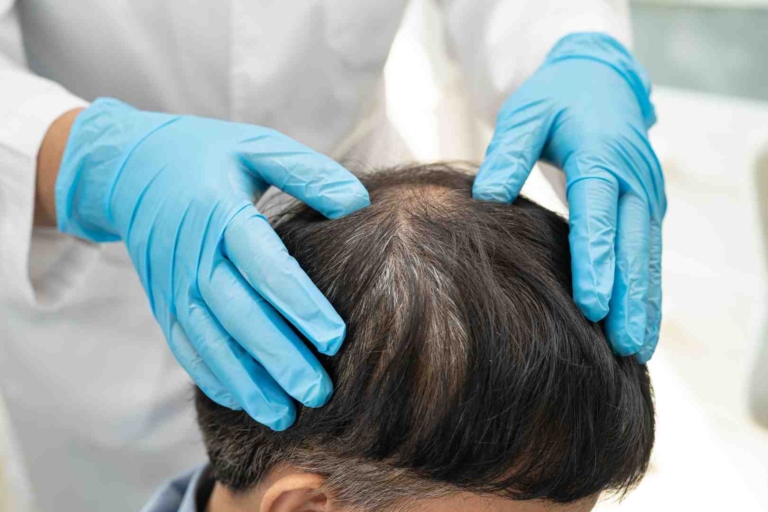
Before diving into hair loss treatment, an accurate diagnosis is the foundational step. A comprehensive evaluation helps pinpoint the underlying causes, guiding us toward the most effective solutions. Our team, led by George Gavrila, MD, is dedicated to crafting individualized plans that address your unique needs.

When to See a Doctor for Hair Loss
While some daily hair shedding is normal, certain signs indicate it’s time to seek professional medical advice. Consult a doctor or dermatologist if you notice:
- Sudden hair loss: Losing hair rapidly or in large clumps could indicate an underlying medical condition.
- Patchy hair loss: Distinct bald patches, especially circular ones, warrant medical attention.
- Hair loss with pain or itching: If your scalp is inflamed or painful, it’s important to get it checked.
- Worry or distress: If your hair loss is causing significant emotional distress, we encourage you to seek support and discuss treatment options.
As the NHS advises, seeing a GP or dermatologist is the best first step if you’re worried about your hair loss. They can determine the cause and recommend appropriate action.
Common Causes and Diagnostic Tests
Hair loss stems from a variety of factors. Understanding these is key to finding the right hair loss treatment.
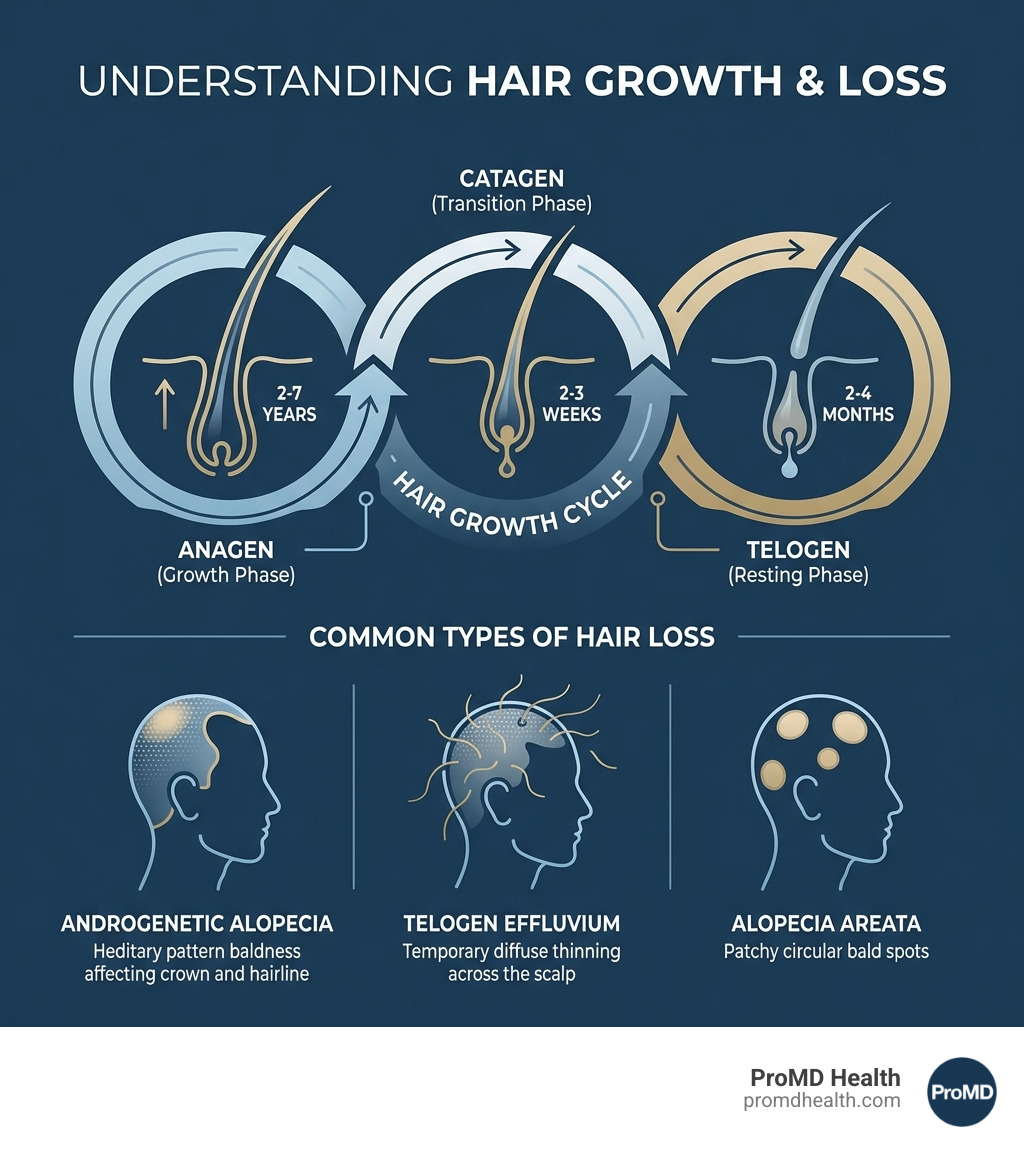
- Hereditary Hair Loss (Androgenetic Alopecia): The most common cause, known as male or female pattern baldness. It’s genetic and hormone-driven, with dihydrotestosterone (DHT) shrinking hair follicles. It causes a receding hairline and crown thinning in men, and generalized thinning on top of the scalp for women.
- Hormonal Changes: Fluctuations during pregnancy, menopause, or due to conditions like PCOS can trigger hair loss. Thyroid issues can also disrupt the hair growth cycle.
- Medical Conditions: These include Alopecia Areata (an autoimmune condition), scalp infections like ringworm, skin disorders like psoriasis, and Anemia (iron deficiency).
- Stress and Illness (Telogen Effluvium): Significant physical or emotional stress, major surgery, severe illness, or rapid weight loss can cause widespread, temporary hair shedding several months later.
- Medications: Some drugs for cancer, arthritis, depression, and high blood pressure can have hair loss as a side effect.
- Nutritional Deficiencies: A lack of essential nutrients, particularly iron, zinc, and certain B vitamins, can impair hair growth.
To diagnose the cause, a doctor will likely perform an evaluation, which may include:
- Physical Exam and History: Examining your scalp and asking about your diet, routine, and family history.
- Blood Tests: To uncover conditions like thyroid problems, iron deficiency, or hormonal imbalances.
- Pull Test: Gently pulling on hairs to gauge the extent of shedding.
- Scalp Biopsy: Taking a small skin sample to diagnose conditions like alopecia areata.
- Light Microscopy: Examining hair shafts for structural abnormalities.
Clinically-Proven Hair Loss Treatment Options
Once the root cause is identified, we can explore clinically-proven hair loss treatment options. From at-home medical treatments to advanced in-office procedures, our goal is to create a clear path to slow thinning, stimulate regrowth, or restore density. The American Academy of Dermatology offers a great overview of available treatments.
What are your options for hair restoration?
Here’s a quick comparison of some popular, effective treatments:
| Treatment Type | Effectiveness | How it Works | Best For | Timeline for Results | Cost Estimate (Varies) |
|---|---|---|---|---|---|
| Minoxidil | Helps many regrow hair or slow loss | Widens blood vessels, increases follicle size | Pattern baldness (men & women) | 2-6 months | Low to moderate (OTC) |
| Finasteride | Slows loss, some new growth | Blocks DHT (hormone linked to hair loss) | Male pattern baldness | 3-6 months | Moderate (prescription) |
| PRP/PRF | Stimulates growth factors, refreshs follicles | Uses patient’s own blood components | Thinning hair, early-stage hair loss | 3-6 months | Moderate to High (multi-session) |
| LLLT | Some studies show improved density | Stimulates follicles with red light | Mild to moderate hereditary hair loss | 6-12 months | Moderate (device purchase) |
Topical Treatments: What You Apply to Your Scalp
Topical treatments are often the first line of defense against pattern baldness and general thinning.
Minoxidil (Rogaine)
Minoxidil (Rogaine) is an over-the-counter topical foam or solution that has been a staple in hair loss treatment for decades. It is believed to work by widening blood vessels, increasing blood flow and nutrients to hair follicles. The FDA has approved minoxidil for hereditary hair loss in men and women, as it can help regrow hair or slow the rate of loss.
Application and Results: Minoxidil is applied to a dry scalp daily. Consistency is key. It takes 2 to 4 months of use to see improvement, with full results assessed at 6 months. If you stop using it, the regrown hair will usually fall out within 3 months. Potential side effects include scalp irritation and unwanted facial hair growth if the product drips.
Oral Medications: A Systemic Approach
Oral medications offer a systemic approach, working from within to address underlying causes.
Finasteride (Propecia)
Finasteride is a prescription medication for male pattern baldness. It works by blocking the hormone DHT, which shrinks hair follicles. This can prevent further hair loss and stimulate new growth. Like minoxidil, it must be taken continuously to maintain results. Potential side effects are uncommon but can include decreased libido and erectile dysfunction. These usually resolve after stopping the medication but can persist in rare cases. Finasteride is generally not prescribed for women.
Spironolactone for Women
For women with hair loss due to high androgen levels, spironolactone may be prescribed. It is an anti-androgen that can help slow hair loss and promote regrowth. As a prescription medication, it requires careful monitoring by a healthcare provider.
In-Office Procedures for Hair Restoration
For more significant results, in-office procedures offer advanced solutions for hair loss treatment.
Hair Transplant Surgery (FUT vs. FUE)
Hair transplant surgery is a highly effective, permanent solution for advanced hereditary hair loss. It moves hair follicles from a dense donor area to thinning areas. The two main methods are FUT (strip method), which leaves a linear scar, and FUE (individual extraction), which leaves nearly invisible dot scars. While transplanted hairs are permanent, loss may continue in non-transplanted areas.
Low-Level Laser Therapy (LLLT)
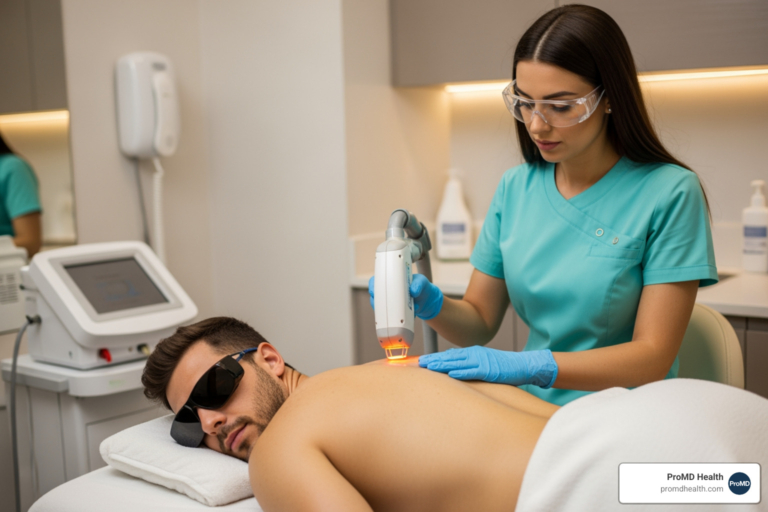
LLLT, or red light therapy, is a non-invasive treatment using light to stimulate hair follicles. The FDA has approved several LLLT devices for hereditary hair loss, and some studies show improved density. However, evidence on long-term effectiveness is still developing, and we often view it as a supportive therapy.
Platelet-Rich Plasma (PRP) and Platelet-Rich Fibrin (PRF) Therapy
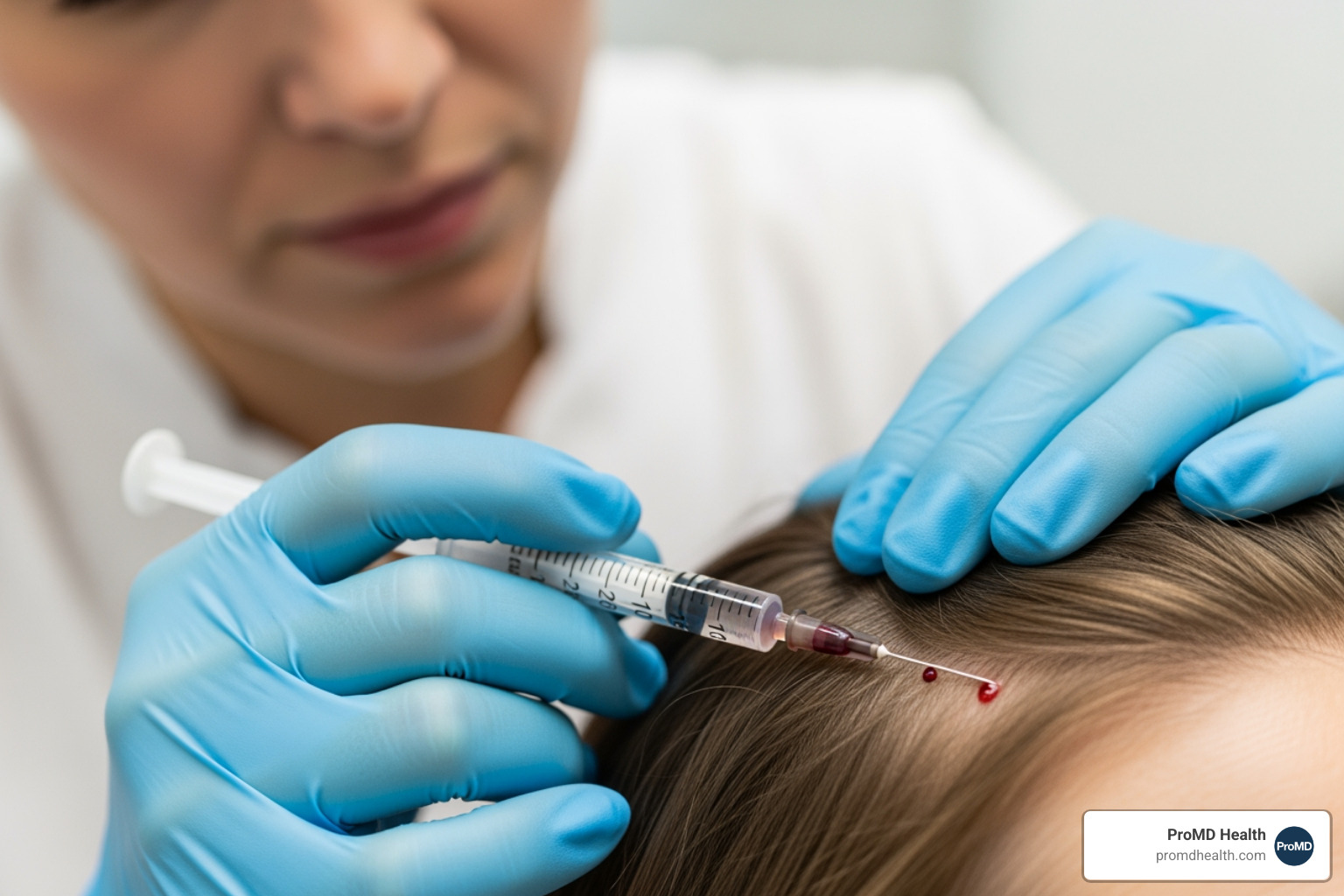
PRP and PRF are regenerative treatments that use your body’s own healing powers. A small blood sample is processed to concentrate platelets (PRP) or platelets, white blood cells, and fibrin (PRF). This solution, rich in growth factors, is injected into the scalp to stimulate dormant follicles and improve hair thickness.
- PRP (Platelet-Rich Plasma): Releases growth factors upon injection.
- PRF (Platelet-Rich Fibrin): A next-generation treatment that provides a slower, more sustained release of growth factors for potentially longer-lasting results.
Results for PRP/PRF typically appear within a few months, and maintenance treatments are recommended.
What is PRP? What is the downtime after PRP hair treatment?
Supplements, Lifestyle, and Natural Hair Loss Treatment
Beyond medical interventions, a holistic approach incorporating supplements, lifestyle adjustments, and natural remedies can support your hair loss treatment journey and contribute to overall hair health.
Can Supplements Like Biotin Really Help?
Supplements are often marketed for hair loss, but it’s important to understand the science behind them.
Biotin: This B vitamin is vital for hair health. However, true biotin deficiency is rare, and studies have not conclusively shown that extra biotin helps hair loss in non-deficient individuals.
Iron and Vitamin D: Deficiencies in these nutrients can contribute to hair loss. If blood tests reveal a deficiency, supplementation under medical guidance can be an effective part of your hair loss treatment.
Comprehensive Supplements: Some products, like Nutrafol, contain a blend of vitamins, minerals, and botanicals designed to address factors like stress and nutritional gaps that contribute to thinning. Always consult a healthcare professional before starting any new supplement.
Hair Restoration Washington DC – Nutrafol
Natural Remedies and Essential Oils
Certain essential oils and lifestyle changes may offer benefits by improving scalp health and reducing stress.
- Rosemary Oil: Some research suggests it may be as effective as minoxidil in promoting hair growth, possibly by improving scalp circulation.
- Peppermint Oil: Has been studied for its potential to stimulate hair follicles.
Important Note: Always dilute essential oils with a carrier oil (like jojoba or coconut oil) before applying to the scalp to prevent irritation.
Lifestyle Changes to Support Hair Health:
- Balanced Diet: A diet rich in protein, vitamins, and minerals is fundamental for healthy hair.
- Stress Management: Chronic stress can trigger temporary hair loss. Activities like yoga, meditation, and exercise can be beneficial.
- Gentle Hair Care: Avoid harsh chemical treatments, excessive heat, and tight hairstyles that pull on the hair.
- Adequate Sleep: Rest is crucial for your body’s overall health, including your hair.
Cosmetic and Emerging Solutions for Thinning Hair
Sometimes, the goal is to improve the appearance of fullness. Cosmetic and emerging solutions offer innovative ways to address thinning hair, providing immediate visual improvements.
Scalp Micropigmentation (SMP): The Hair Tattoo
Scalp Micropigmentation (SMP) is a non-surgical cosmetic tattoo that creates the illusion of fuller hair. Using fine micro-needles, practitioners deposit tiny pigment dots into the scalp, mimicking the appearance of individual hair follicles.
How it addresses hair thinning:
- For a shaved head look: SMP can create the appearance of a closely shaved, full head of hair.
- For thinning areas: It can add visual density, making existing hair appear thicker.
- Camouflaging scars: SMP is also excellent for concealing scars from surgery or injuries.
Pros and Cons:
- Pros: Non-invasive, immediate results, low maintenance, and suitable for various stages of hair loss.
- Cons: It’s a cosmetic solution that doesn’t grow hair and requires touch-ups over time as the pigment fades.
Other Considerations: BBL and Hair
It’s also important to understand how other aesthetic procedures relate to hair. BroadBand Light (BBL) therapy, a popular skin rejuvenation treatment, is not a hair loss treatment. In fact, BBL can cause unwanted hair loss in treated areas because the light energy targets pigment in hair follicles, similar to laser hair removal. It’s crucial to discuss this with your provider to ensure precise application that avoids unintended hair reduction.
Frequently Asked Questions about Hair Loss Treatments
We know you’ll have questions, and we’re here to provide clear answers about hair loss treatment.
How long does it take to see results from a hair loss treatment?
The timeline for results varies by treatment and individual response. Consistency is key, as skipping applications can delay or negate results.
- Minoxidil: 2 to 4 months for initial improvement, 6 to 12 months for full results.
- Finasteride: 3 to 6 months to see a reduction in hair loss and signs of new growth.
- PRP/PRF Therapy: 3 to 6 months for full results to become apparent.
- Low-Level Laser Therapy (LLLT): 6 to 12 months for visible improvements.
Hair grows slowly, so it takes time for any treatment to make a visible difference. Once you stop treatments like minoxidil or finasteride, any regrown hair will likely fall out within a few months.
Are hair loss treatments permanent?
Most treatments for hereditary hair loss are designed to manage the condition, not cure it.
- Hereditary Hair Loss: This is a progressive condition. Treatments like minoxidil and finasteride must be used continuously to maintain benefits.
- Hair Transplants: The transplanted hair is generally permanent, but hair loss can still progress in non-transplanted areas. You may still need other treatments to protect existing hair.
- Temporary Hair Loss: If hair loss is due to a temporary cause like stress (telogen effluvium) or nutritional deficiencies, it is often reversible once the underlying issue is addressed.
Managing hair loss often requires an ongoing commitment.
Are hair loss treatments covered by insurance?
Generally, hair loss treatment is considered cosmetic and is not covered by health insurance. This includes most medications, in-office procedures like PRP/PRF, and hair transplants.
There are rare exceptions:
- Underlying Medical Conditions: If hair loss is a symptom of a covered medical condition (e.g., thyroid disorder), the treatment for that condition might be covered.
- Chemotherapy-Induced Hair Loss: Some plans may offer partial coverage for wigs or scalp cooling devices.
Costs vary widely. We recommend discussing costs and payment options with our team during your consultation.
Take the Next Step Towards Healthier Hair
Navigating hair loss treatment can feel overwhelming, but we hope this extensive guide has provided you with clarity and confidence. The key message remains: an accurate diagnosis is your crucial first step. Once we understand the unique factors contributing to your hair loss, a world of effective options opens up.
Whether you’re exploring topical solutions, oral medications, advanced regenerative therapies like PRP/PRF, or even cosmetic improvements like Scalp Micropigmentation, a personalized approach is always best. We believe in empowering you with the knowledge and tools to make informed decisions about your hair health.
At ProMD Health, with locations in Annapolis, Arlington, Ashburn, Bel Air, Bethesda, Columbia, Easton, Fort Lauderdale, Hutto, Lafayette, Lewes, Timonium, Tysons Corner, Washington, and Wellington, Westminster, we are dedicated to helping our patients “Look Younger and Feel Younger” by combining evidence-based treatments with advanced technology. We’re here to guide you through every step of your hair restoration journey.
Are you ready to find the possibilities for a fuller, healthier head of hair?
Are you a candidate for hair restoration?