Managing Hormones for Weight Loss: Reclaim Health 2025
Why “Calories In, Calories Out” Isn’t the Whole Story
Managing hormones for weight loss is often the missing piece for those who struggle with their weight despite a healthy lifestyle. While calories matter, your hormones are the chemical messengers controlling appetite, metabolism, and fat storage.
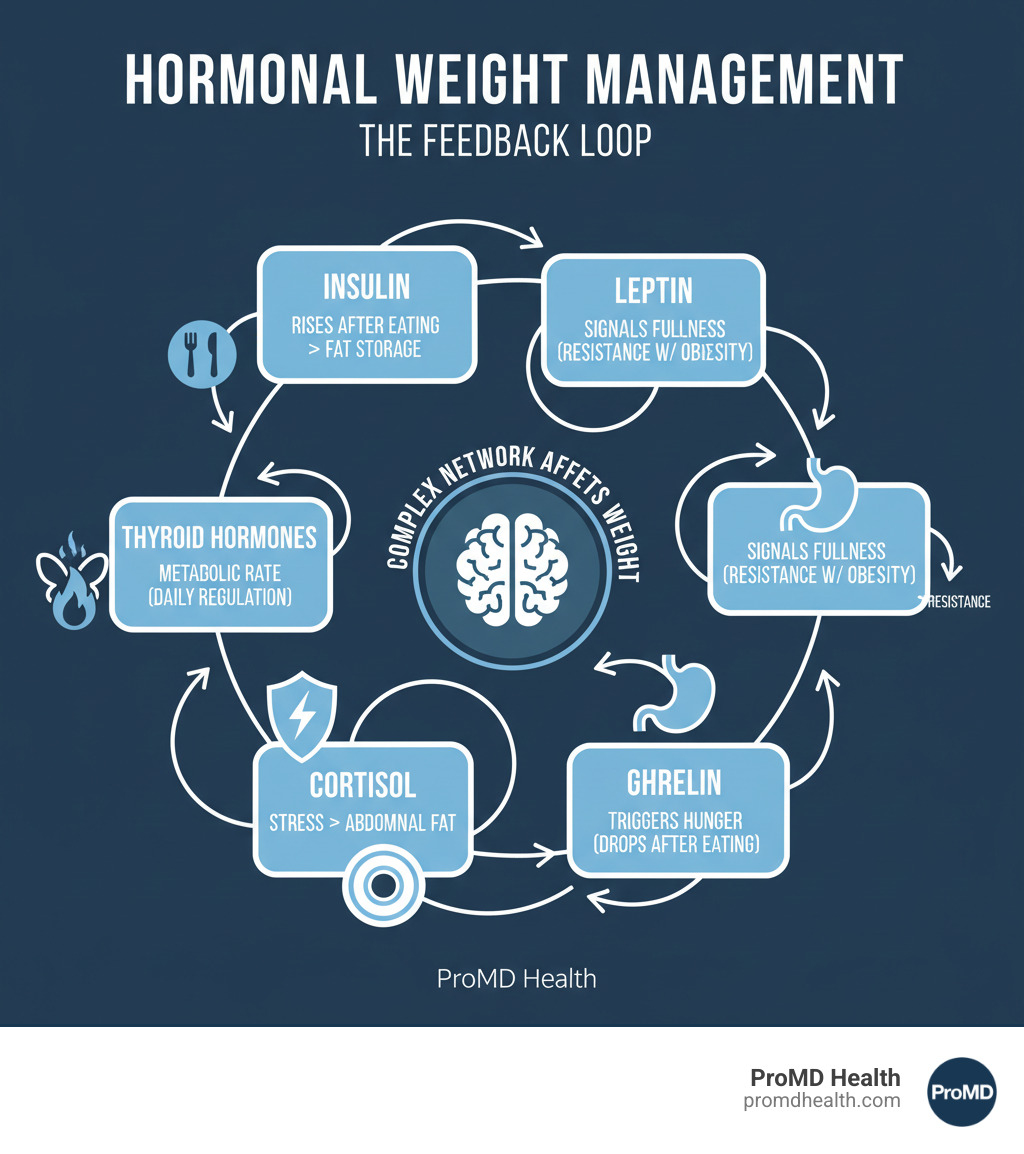
Key hormones that affect weight loss:
- Insulin – Regulates blood sugar and fat storage; insulin resistance leads to weight gain
- Leptin – Signals fullness to your brain; leptin resistance causes overeating
- Ghrelin – Triggers hunger; imbalances increase appetite
- Cortisol – The stress hormone that promotes belly fat storage
- Thyroid hormones (T3/T4) – Control your metabolic rate; low levels slow metabolism
- Estrogen/Testosterone – Shape body composition; imbalances change fat distribution
The numbers are compelling. Hypothyroidism, a major cause of weight-loss resistance, affects one in five women and one in ten men. Meanwhile, with U.S. adult obesity rates over 40%, costing the nation nearly $173 billion annually, it’s clear that hormonal imbalances often render traditional diets ineffective.
The good news is you can influence these hormones. A high-protein diet helps regulate appetite, exercise improves insulin sensitivity, quality sleep balances hunger hormones, and stress management keeps cortisol in check.
I’m Scott Melamed, President and CEO of ProMD Health. My background in biotechnology from Johns Hopkins University and healthcare experience has shown me the power of managing hormones for weight loss. My focus is on translating complex biology into practical strategies for real results.
The Key Hormones Dictating Your Weight
Your hormones have far more influence over your weight than you might realize. They are the chemical messengers pulling the strings behind the scenes, determining your hunger, metabolism, and fat storage. Let’s look at the key players.
Insulin, Leptin, and Ghrelin: The Appetite Trio
This trio works together to regulate your hunger, fullness, and how your body uses food.
Insulin: Your Body’s Fat Storage Switch
When you eat carbs, your pancreas releases insulin to move glucose into cells for energy. However, insulin is also a primary fat storage hormone. High insulin levels lock your body in storage mode. The real problem is insulin resistance, where cells ignore insulin’s signal. Your pancreas overcompensates, creating chronically high insulin levels that keep your body in a constant state of fat storage, making weight loss feel impossible. This cycle of insulin resistance and obesity triggers more hunger and cravings, especially for the foods that spike insulin in the first place.
Leptin: The Fullness Signal Your Brain Might Be Ignoring
Produced by fat cells, leptin is the satiety hormone that tells your brain you’re full. However, many people with excess weight develop leptin resistance. Their brain ignores the “full” signal, leading to persistent hunger because it mistakenly thinks the body is starving. How leptin resistance can affect appetite is profound; you may feel constantly hungry and struggle with portion control, as your brain never gets the message to stop eating.
Ghrelin: The Hunger Alarm That Won’t Shut Off
If leptin signals fullness, ghrelin is the hormone that signals hunger. It rises before meals to stimulate appetite and should fall after you eat. In many people struggling with weight, ghrelin doesn’t drop properly after meals, leaving them feeling hungry even when they’ve eaten enough. This disrupted appetite regulation is often tied to poor sleep, stress, and insulin resistance.
Cortisol: The Stress Hormone’s Impact on Belly Fat

Chronic stress keeps your cortisol levels liftd. This fight-or-flight response hormone, released by your adrenal glands, increases appetite, drives cravings for sugary foods, and signals your body to store calories, particularly as visceral fat around your midsection. This deep belly fat surrounds internal organs, is metabolically active, and significantly increases your risk for heart disease and type 2 diabetes. Lifestyle factors and cortisol levels are deeply linked, with poor sleep and processed-food diets keeping cortisol high.
Thyroid Hormones: Your Body’s Metabolic Thermostat
Your thyroid gland is your body’s thermostat, producing T3 and T4 hormones that control your metabolic rate—the speed at which you burn calories. With hypothyroidism (an underactive thyroid), your metabolism slows to a crawl, causing true weight-loss resistance, fatigue, and sensitivity to cold. This common condition affects about one in five women and one in ten men.
Estrogen and Testosterone: The Body Composition Shapers
Sex hormones play a crucial role in where your body stores fat and builds muscle.
Estrogen’s Shifting Influence
For women, estrogen influences body composition. As levels fluctuate and decline during perimenopause and menopause, fat distribution changes. Storage often shifts from the hips and thighs to the abdomen, increasing dangerous visceral fat.
Testosterone’s Role in Body Composition
Vital for both sexes, testosterone helps maintain muscle mass. As levels decline with age (during male andropause or post-menopause for women), muscle mass loss can occur. Since muscle burns more calories than fat, a loss of muscle slows your metabolism, making it easier to gain weight. These hormonal shifts with age require a more sophisticated approach than just counting calories.
Your Action Plan for Managing Hormones for Weight Loss

Understanding hormones is the first step; taking action is where change begins. Your daily choices in diet, exercise, sleep, and stress management directly influence your hormonal system, giving you more control than you think.
Eating for Hormonal Balance: What’s on Your Plate?
Your fork is one of your most powerful tools for hormonal balance. Every bite sends a signal to your body.
- Prioritize protein. Aiming for about 30% of your calories from protein boosts satiety hormones like GLP-1 and PYY, which signal fullness to your brain. This helps control appetite and keep the hunger hormone ghrelin in check.
- Incorporate healthy fats. Your body needs them to produce hormones. Omega-3 fatty acids, found in fatty fish and flaxseeds, are especially good for improving insulin sensitivity. Avoid trans fats and limit saturated fats, which can worsen insulin resistance.
- Choose carbs wisely. Focus on fiber-rich, low-glycemic carbs like vegetables, legumes, and whole grains. They release sugar slowly, preventing the insulin spikes that trigger fat storage.
- Adopt a Mediterranean-style eating pattern. This approach is an excellent model, emphasizing whole foods while limiting processed foods and added sugars that disrupt cortisol and estrogen. While meal timing is flexible, eating at regular intervals can help manage ghrelin and prevent extreme hunger.
The Role of Exercise in Managing Hormones for Weight Loss

Exercise isn’t just about burning calories; it’s about changing your hormonal environment.
- Improve insulin sensitivity. Both moderate and high-intensity exercise dramatically improve how your cells respond to insulin, allowing them to use glucose more effectively and reducing fat storage.
- Reset leptin levels. Consistent activity helps reset leptin sensitivity, so your brain can once again recognize fullness signals, which is key for long-term appetite control.
- Lower stress hormones. While intense workouts temporarily raise cortisol, regular moderate exercise lowers chronic cortisol reduction over time, reducing stress-related belly fat.
- Build muscle. Resistance training is non-negotiable. Muscle burns more calories at rest, boosts metabolism, improves insulin sensitivity, and supports healthy testosterone levels.
Sleep and Stress: The Overlooked Keys to Managing Hormones for Weight Loss
Do not overlook sleep and stress. Many people sabotage their diet and exercise efforts by neglecting these two critical areas.
Sleep is when your hormones reset. Sleep deprivation increases the hunger hormone ghrelin and decreases the fullness hormone leptin, a combination that drives overeating and insulin resistance. Prioritize 7-9 hours of quality sleep per night on a consistent schedule to keep your circadian rhythm and cortisol levels balanced.
Chronic stress undermines weight loss. You can’t eliminate stress, but you can manage your response to it. Practices like mindfulness, meditation, yoga, and even simple deep breathing exercises are proven to lower cortisol levels by activating your body’s “rest and digest” nervous system.
At ProMD Health, we know managing hormones for weight loss requires a comprehensive approach. It’s about making consistent, sustainable changes across your life to create an environment where your hormones can finally work with you, not against you.
Recognizing Imbalances and When to See a Doctor
If you’re doing everything right—eating well, exercising, and managing stress—but the scale won’t move, your hormones could be the issue. When lifestyle changes aren’t enough, it’s a sign that a deeper imbalance may need professional attention. Your body communicates through symptoms; learning to recognize them is the first step to getting answers.
Common Signs of a Hormonal Imbalance
Hormonal imbalances often present as a cluster of persistent symptoms. Look for these common red flags:
- Persistent weight gain or difficulty losing weight despite a healthy lifestyle
- Chronic fatigue that rest doesn’t solve
- Mood swings, irritability, or anxiety
- Sleep disturbances like insomnia or non-restorative sleep
- Intense cravings for sugar or high-carb foods
- Low libido
- Irregular periods or changes in your cycle
- Increased belly fat
- Hair loss, skin issues, or temperature sensitivity
Conditions like hypothyroidism, insulin resistance, and the hormonal shifts of menopause can make weight loss feel impossible and often require medical intervention.
Taking the Next Step: Professional Consultation
When lifestyle changes fall short, seeking professional help is a proactive step toward taking control of your health. A healthcare provider can identify the root cause through a comprehensive evaluation, including a symptom review and lab tests.
Blood tests and saliva tests can measure key hormones like thyroid, insulin, cortisol, estrogen, and testosterone to pinpoint imbalances. An endocrinologist or a wellness specialist with an integrated approach can provide the expertise you need.
At ProMD Health, with locations across Maryland, Virginia, Florida, Texas, Delaware, and Washington D.C., we specialize in personalized plans for managing hormones for weight loss. We use advanced diagnostics to find the specific imbalances holding you back and create a custom plan to address them.
Professional diagnosis and treatment can regulate your hormones, opening the door to successful weight management. Explore our wellness services to find the support you need.
Frequently Asked Questions about Hormones and Weight Loss
Let’s tackle the most common concerns people have when they suspect their hormones are working against their weight loss goals.
Can hormonal weight gain be reversed?
Yes, hormonal weight gain can be reversed. The key is to identify and address the root cause of the specific imbalance. This starts with targeted lifestyle changes in diet, exercise, sleep, and stress management. When needed, medical treatments like bio-identical hormone replacement therapy or medications for insulin resistance can provide additional support. Consistency is the most critical factor for success.
How long does it take to balance hormones for weight loss?
The timeline varies for each individual, depending on the specific imbalance and its severity. While some people feel better in a few weeks, it typically takes several weeks to months to see significant changes. A general guideline is to expect meaningful improvements within three to six months. Patience is essential, as your body needs time to heal and recalibrate.
What is the single best food for balancing hormones?
There is no single “magic” food for hormonal balance. Instead, focus on a whole-food diet built around three key components:
- Protein (fish, chicken, eggs, legumes) to regulate fullness hormones.
- Healthy fats (salmon, walnuts, flaxseeds) to support hormone production and insulin sensitivity.
- Fiber-rich carbohydrates (vegetables, fruits, whole grains) to stabilize blood sugar.
Cruciferous vegetables like broccoli are also excellent for supporting healthy estrogen metabolism. Just as important is limiting processed foods, added sugars, and refined grains that cause hormonal disruption.
At ProMD Health, we help patients develop personalized nutrition plans that support their specific hormonal needs, because the best approach is the one that’s right for you.
Conclusion: Reclaim Your Health by Balancing Your Hormones
As we’ve seen, managing hormones for weight loss is about more than just counting calories. Your hormones are powerful chemical messengers, and when they are out of sync, weight loss can feel impossible. By understanding how they work, you gain the power to influence them through your daily choices.
This power lies in sustainable daily habits: eating for hormonal balance, moving your body consistently, prioritizing sleep, and managing stress. These actions work together to create an internal environment that supports, rather than fights, your weight loss efforts.
When lifestyle changes aren’t enough, professional support is key. Comprehensive hormone testing can identify specific imbalances, and targeted treatments—from bio-identical hormone therapy to other medical interventions—can provide the help your body needs.
At ProMD Health, with locations across Maryland, Virginia, Florida, and more, we see this every day. Our approach to wellness is built on helping you feel vibrant and balanced from the inside out. Our personalized anti-aging and wellness plans combine hormone optimization with evidence-based strategies for real life.
Your journey to hormonal balance requires patience and consistency, but the rewards—sustainable weight management, more energy, and overall vitality—are worth it.
Ready to see what balanced hormones can do for you? Explore our wellness services and let’s create a plan to help you reclaim your health.