Hrt side effects: 5 Critical Risks
Why Understanding HRT Side Effects Matters for Your Health Journey
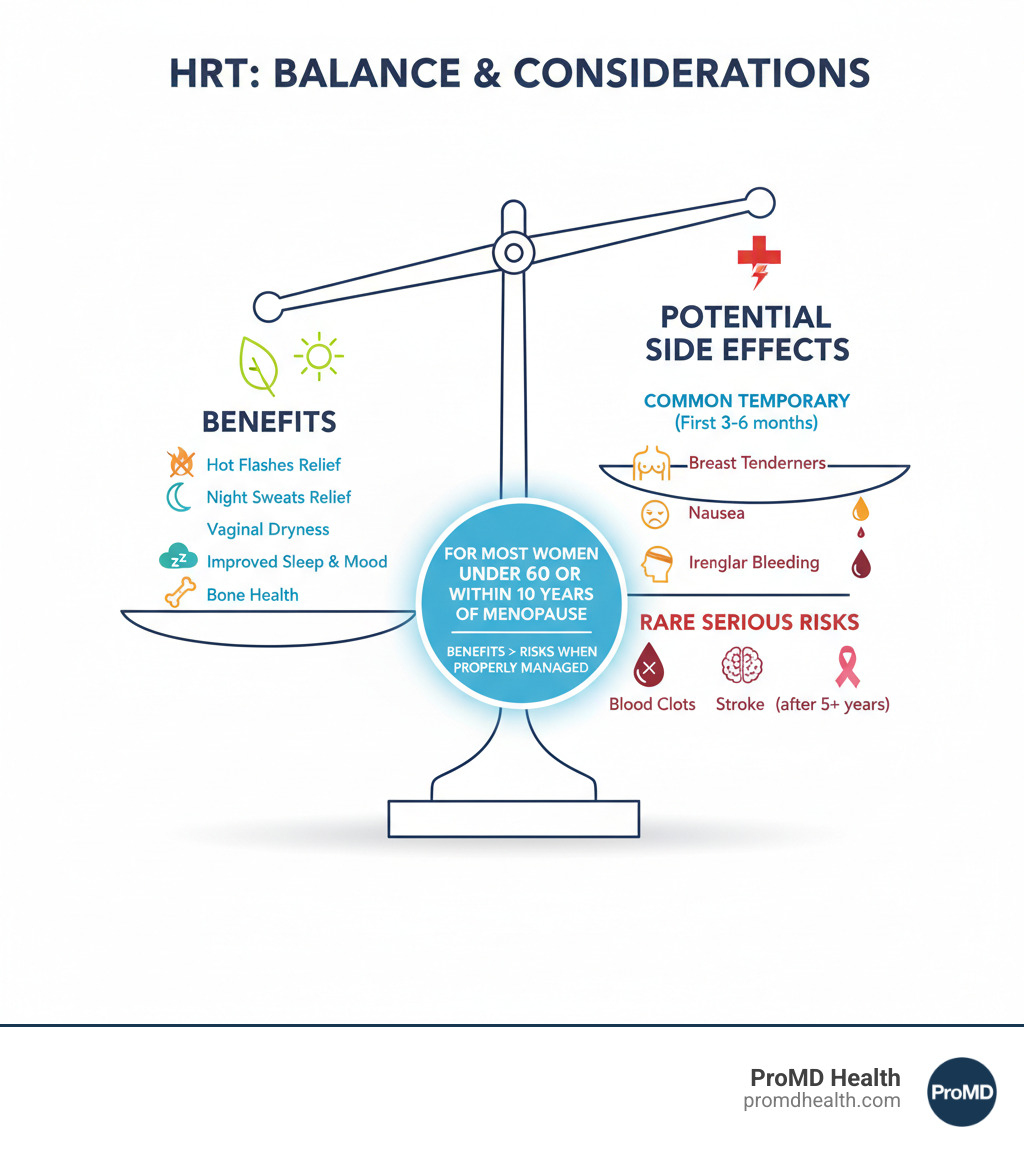
HRT side effects can range from common, temporary issues like breast tenderness and nausea to rarer, more serious risks like blood clots. Here’s a quick overview:
Common Side Effects (Usually Temporary):
- Breast tenderness, headaches, nausea, bloating
- Mood changes
- Irregular vaginal bleeding (first 3-6 months)
- Leg cramps
Serious Risks (Rare but Important):
- Blood clots (mainly with oral HRT)
- Stroke (risk increases if started after age 60)
- Breast cancer (small increased risk with combined HRT after 5+ years)
- Gallbladder disease
Most side effects improve within three months, and the actual risks are often lower than feared, depending on your age, health, and the type of HRT used.
If you’re struggling with menopause symptoms, you’ve likely encountered conflicting information about hormone replacement therapy (HRT). Once routinely prescribed, its use declined after large clinical trials raised safety concerns. Today, medical understanding has evolved. We now know that for many women—especially those under 60 or within 10 years of menopause—the benefits of properly customized HRT often outweigh the risks.
“Properly customized” is key. HRT is not a one-size-fits-all solution. Your potential side effects and risks depend on your age, medical history, and the specific type, dosage, and delivery method (pills vs. patches) of hormones you use. Understanding these factors is crucial for making an informed decision.
This guide will break down HRT side effects, from common initial symptoms to rare but serious risks, helping you work with your healthcare provider to find the right balance.
I’m Scott Melamed, President and CEO of ProMD Health. With a background in biotechnology and clinical research, I’ve dedicated my career to helping people make evidence-based health decisions. Our team has guided thousands of patients through complex choices like HRT, ensuring their treatment aligns with their health goals.
Common and Temporary Side Effects: What to Expect Initially
Starting hormone replacement therapy involves an adjustment period as your body adapts to new hormone levels. During this transition, you might experience some HRT side effects, but the good news is that most are temporary. They typically improve or disappear within the first three months as your body acclimatizes.
The Difference Between Estrogen and Progestogen Side Effects
If you have a uterus, your HRT will likely include both estrogen and progestogen, each with potential side effects. Understanding the source can help you and your doctor fine-tune your treatment.
- Estrogen side effects often mimic early pregnancy symptoms: bloating, nausea, headaches, breast tenderness, and leg cramps. Taking estrogen with food or before bed can often reduce nausea.
- Progestogen side effects can resemble PMS: mood swings, irritability, anxiety, acne, and fluid retention.
These effects are usually mild and fade with time. If they are severe or persist, talk to your provider about adjusting your dosage or formulation. For more on different hormone types, explore our resources on bio-identical hormone replacement therapy.
HRT and Changes in Your Body
Many women fear HRT causes weight gain, but evidence doesn’t support this. Weight gain during menopause is common with or without HRT due to metabolic changes. You might experience temporary fluid retention, but this usually resolves. By relieving symptoms like fatigue, HRT can boost your energy for activity, which helps with weight management.
Vaginal bleeding patterns can also change. With continuous combined HRT, breakthrough bleeding or spotting is common in the first 3-6 months. With sequential HRT, a regular withdrawal bleed is normal. However, if irregular bleeding continues beyond six months, becomes heavy, or starts unexpectedly, consult your doctor.
Less common side effects include skin changes or hair loss. While HRT often improves skin and hair, some reactions may signal that your formulation needs adjustment.
How HRT Can Affect Your Mood
Menopause can disrupt emotional well-being, and HRT is often prescribed to stabilize mood. While most women find it helps, some experience mood changes as an initial HRT side effect, particularly from progestogen. You might feel more anxious or irritable at first.
However, the overall impact of HRT on mental health is often profoundly positive. By managing physical symptoms like hot flashes and night sweats, HRT improves sleep and reduces exhaustion, allowing your natural emotional balance to return. If mood changes persist or worsen, don’t just endure them. Talk with your provider about adjusting your treatment. For comprehensive approaches to menopausal symptoms, learn more about treating menopause with bio-identical hormone replacement.
Navigating the Potential HRT Side Effects and Risks
Let’s address the more serious risks associated with HRT. While these can feel scary, it’s important to know that they are rare, and modern medical understanding helps us minimize them effectively. Recent evidence shows that the risks of serious HRT side effects are much lower than previously thought, and older warnings are now considered outdated.

Context is crucial when discussing risk. For example, for every 1,000 women taking combined HRT for 5 years, there are about 4 additional cases of breast cancer compared to non-users. This is a real but small increase. The Benefits and risks of hormone replacement therapy (HRT) from the NHS offers more detailed statistics.
Understanding the Risk of Blood Clots and Stroke
Blood clots (VTE) and stroke are serious risks, but the type of HRT you use makes a significant difference.
- Oral HRT (tablets) can slightly increase the risk of blood clots and stroke. However, the absolute risk remains very low, especially for women under 60. This risk is lower than that associated with pregnancy or the contraceptive pill.
- Transdermal HRT (patches, gels, and sprays) does not increase the risk of blood clots or stroke. This is why transdermal options are often preferred, particularly for women with risk factors like obesity or a history of smoking.
Your personal risk factors are key. If you are over 60, have obesity, or smoke, your doctor will likely recommend transdermal HRT to ensure the safest approach.
The Link Between HRT and Breast Cancer
The connection to breast cancer is a major concern, but the risk varies significantly by HRT type.
- Combined HRT (estrogen and progestogen) is associated with a small increase in breast cancer risk, typically after more than 5 years of use. This risk declines after stopping HRT.
- Estrogen-only HRT (for women without a uterus) shows little to no increased risk of breast cancer. Some studies even suggest a slight reduction in cases.
Your duration of use is a key factor, and your provider will review your treatment annually to ensure the benefits continue to outweigh the risks. If you have a strong family history of breast cancer, this will be a central part of the discussion. Regardless of HRT use, regular mammograms are essential. Understanding your overall hormone imbalance can also provide valuable context.
When to Seek Immediate Medical Attention
While serious HRT side effects are rare, knowing the warning signs is vital. Go to the nearest emergency department if you experience:
- Signs of a blood clot: Sudden, severe pain, swelling, or redness in your calf; sudden shortness of breath or chest pain.
- Signs of a stroke: Sudden numbness or weakness (especially on one side), confusion, trouble speaking, vision problems, dizziness, or a severe, sudden headache.
- Signs of a heart attack: Crushing chest pain or pressure, pain spreading to your arm, back, or jaw, shortness of breath, or cold sweats.
- Other serious signs: Unusually intense headaches, jaundice (yellowing skin/eyes), heavy or unexpected vaginal bleeding, or a new lump in your breast.
These symptoms are uncommon, but prompt recognition is critical for your safety.
How Risks and Benefits Change: Key Factors to Consider
There is no one-size-fits-all approach to HRT. The balance of risks and benefits is unique to you, shaped by your age, health history, and symptoms. A 52-year-old starting HRT for severe hot flashes has a different risk profile than a 65-year-old considering it for the first time. Understanding these nuances is key to making the right choice. If you’re wondering if HRT is for you, find more information on being a good candidate for hormone replacement.
Systemic vs. Local HRT: Different Profiles for Different Needs
The way hormones enter your body matters.
-
Systemic HRT (pills, patches, gels, sprays) delivers hormones throughout your body. It’s highly effective for widespread symptoms like hot flashes, night sweats, and mood swings. This whole-body approach carries the small systemic risks discussed earlier, which for many women are outweighed by the significant quality-of-life improvements.
-
Local HRT (vaginal creams, rings, tablets) delivers a very low dose of hormones directly to the vaginal tissue. It’s a targeted solution for symptoms like vaginal dryness, painful intercourse, or urinary issues. Because very little hormone is absorbed into the bloodstream, local HRT does not carry the same systemic risks and is an excellent option for women with only localized symptoms.
The Impact of Age and Timing
When you start HRT is a critical factor in the risk-benefit calculation.
Starting HRT under 60 or within 10 years of menopause is known as the “window of opportunity.” During this period, the benefits typically far outweigh the risks. For women who experience early menopause (before age 40), HRT is strongly recommended to protect against the long-term health risks of estrogen deficiency, such as osteoporosis and heart disease.
Starting HRT after age 60 or more than 10 years post-menopause changes the equation, as the risks of heart disease and stroke are higher. While not an absolute contraindication, it requires a more careful evaluation with your provider to weigh the potential benefits against these increased risks.
The Role of HRT in Bone Health
Beyond symptom relief, HRT offers powerful protection for your bones. Menopause accelerates bone density loss, significantly increasing the risk of osteoporosis and debilitating fractures.
Estrogen therapy is highly effective at preventing this bone loss, maintaining bone density, and reducing fracture risk. This is a crucial benefit, especially for women with early menopause. HRT isn’t just about feeling better now—it’s also an investment in your future health, helping to protect your bones and maintain your independence as you age.
Managing Side Effects and Exploring Supportive Strategies
If you’re dealing with HRT side effects, you are not stuck with them. Many can be managed or eliminated with the right approach. At ProMD Health, we work with patients to fine-tune their therapy, often using a combination of medical adjustments and supportive lifestyle changes.

Close communication with your healthcare provider is key to finding the perfect balance for your body.
Minimizing your risk of HRT side effects
If side effects are bothersome, your doctor has several strategies. A simple tweak can often make a significant difference:
- Adjusting the dosage: Lowering the dose can often eliminate issues like breast tenderness or bloating while still providing symptom relief.
- Changing the HRT type: If you’re sensitive to a particular progestogen, switching to a different one can resolve mood-related side effects.
- Switching the delivery method: Moving from oral HRT to a patch, gel, or spray can bypass the digestive system, eliminating nausea or headaches. This also removes the blood clot risk associated with pills.
- Adjusting the timing: Taking your medication with food can prevent stomach upset. Some women prefer taking HRT at night to sleep through any initial side effects.
Regular follow-ups, especially within the first three months, are essential to ensure your treatment plan is working for you.
Supportive Approaches for Menopause Relief
HRT works best when combined with a healthy lifestyle. Consider these supportive strategies:
- Diet: A balanced diet can stabilize energy levels. Some women find that reducing caffeine and spicy foods helps with hot flashes.
- Exercise: Regular physical activity helps manage weight, improves mood, reduces hot flashes, and strengthens bones. Even a daily 30-minute walk is beneficial.
- Stress Management: Yoga, meditation, or deep breathing can reduce anxiety and improve sleep.
- Sleep Hygiene: A cool, dark room and a consistent sleep schedule can dramatically improve sleep quality.
- Vaginal Health: For vaginal dryness, over-the-counter moisturizers and lubricants provide excellent relief, either alone or with HRT.
If something isn’t working, speak up. Your provider can help you find a personalized approach that maximizes benefits while minimizing side effects.
Frequently Asked Questions about HRT Side Effects
At ProMD Health, we often hear the same important questions about HRT side effects. Here are some honest, straightforward answers.
Does HRT cause permanent weight gain?
No, the evidence shows that HRT does not cause significant long-term weight gain. The metabolic changes of menopause itself are what make weight management more challenging. Your metabolism slows and your body stores fat differently, regardless of hormone use.
You might notice a few pounds when you first start HRT, but this is typically temporary fluid retention that resolves within a few months. In the long run, by relieving fatigue and improving mood, HRT can give you more energy to stay active, which actually helps with weight management.
How long do HRT side effects last?
Most common side effects are temporary and improve significantly within the first three months. This includes issues like breast tenderness, nausea, headaches, and bloating. Your body needs this time to adjust to the new hormone levels.
Irregular vaginal bleeding or spotting can also occur during the first three to six months, which is normal as your body adapts.
If side effects persist beyond this initial period or are severe, talk to your healthcare provider. Discomfort is not something to just endure. A simple adjustment to your dose, hormone type, or delivery method can often resolve the issue.
Can you take HRT for life?
This is an individual decision, and guidance has evolved beyond the old “lowest dose for the shortest time” rule. While that’s still a reasonable starting point, there is no magic cutoff date for stopping HRT.
For women who continue to experience bothersome symptoms or who rely on HRT for its bone-protective benefits, long-term use can be appropriate under careful medical supervision. The key is ensuring the benefits continue to outweigh any potential risks for your specific situation.
At ProMD Health, we work with many patients who thrive on long-term HRT. The decision is always personal and based on your symptoms, health history, and regular reviews with your doctor to ensure the treatment continues to meet your health goals.
Conclusion: Making the Right Choice for Your Health
Understanding HRT side effects is a crucial step in making an informed decision about your health. We hope this guide has clarified that HRT is a medical tool that, when used thoughtfully, is remarkably safe and effective for many women.
Common side effects are typically temporary, and serious risks are rare, especially when HRT is started at the right time (before age 60 or within 10 years of menopause) and with the right delivery method. Your age, health history, and the type of HRT you use all matter—which is why a personalized approach is essential.
This isn’t a one-time decision. Your relationship with HRT and your healthcare provider should be ongoing, with regular check-ins to ensure the benefits—like better sleep, fewer hot flashes, and stronger bones—continue to outweigh any risks.
If menopausal symptoms are affecting your quality of life, you don’t have to simply endure them or fear treatment. You need good information and a trusted medical partner. At ProMD Health, we’re committed to helping you “Look Younger and Feel Younger” by providing evidence-based guidance and compassionate care.
Taking control of your menopausal journey means being informed and engaged. We’re here to support you every step of the way.