Female Hormones: 3 Key Ways to Thrive
Understanding the Power of Female Hormones
Female hormones are chemical messengers from your endocrine system that regulate nearly every aspect of your health and well-being.
The Three Key Female Hormones:
- Estrogen – Controls sexual development, menstrual cycles, bone health, and skin elasticity
- Progesterone – Prepares your body for pregnancy and regulates your menstrual cycle
- Testosterone – Supports muscle mass, bone density, energy levels, and sex drive
Where They Come From:
- Ovaries (primary source)
- Adrenal glands
- Fat tissue
What They Control:
- Menstrual cycles and fertility
- Mood and energy levels
- Bone and muscle strength
- Metabolism and weight
- Skin health and aging
- Sexual desire and function
From puberty through menopause, these hormones orchestrate major changes. When balanced, you feel energized and healthy. When imbalanced, you might experience irregular periods, mood swings, fatigue, weight changes, or low libido.
Many women between ages 45 and 55 notice hormonal shifts, but imbalances can happen at any age due to stress, medical conditions, or lifestyle factors. The average age of menopause in the United States is 52, though symptoms often begin years earlier during perimenopause.
I’m Scott Melamed, President and CEO of ProMD Health. My background in biotechnology and endocrine research provides deep insight into how female hormones shape women’s health. In this guide, we’ll explore how these messengers work, what happens when they’re imbalanced, and how you can support your hormonal health.
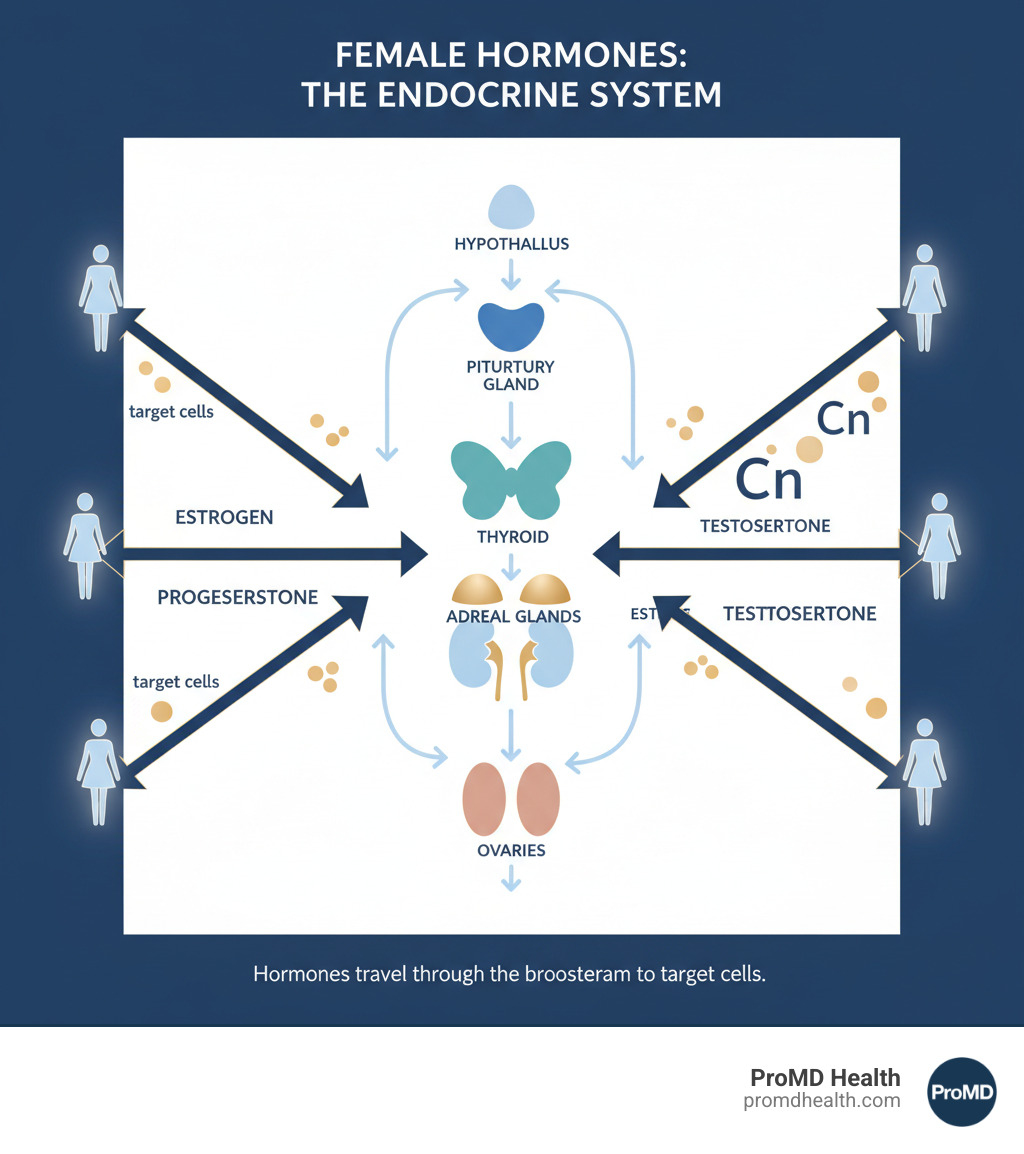
The Three Key Female Hormones and Their Functions
Your body produces three main female hormones that work together as a team. Each has a special job, but they also support and balance each other to maintain your health.
These hormones are primarily made in your ovaries, though your adrenal glands and fat cells pitch in too. They control everything from your development during puberty to how you feel daily. Learning about reproductive hormones can help you understand how these vital messengers work.
Estrogen: The Architect of Feminine Traits
When people think of female hormones, estrogen often comes to mind first. However, estrogen isn’t a single hormone but a family of three related hormones.
Estradiol is the strongest form during your reproductive years. Estrone becomes the main player after menopause. And estriol is the star during pregnancy, rising to much higher levels.
Estrogen kick-starts puberty, triggering breast development, the menstrual cycle, and shaping your body’s curves. But its influence goes beyond appearance.
This hormone keeps your bones strong, protecting you from osteoporosis. It helps control cholesterol, supports healthy circulation, and influences your mood, memory, and mental sharpness.
Estrogen also maintains skin elasticity, which is why many women notice complexion changes when its levels shift. The hormone keeps vaginal tissue healthy and lubricated and regulates the uterine lining throughout your menstrual cycle.
Want to see all the amazing things estrogen does? Check out this helpful infographic on what does estrogen do?. If you’re noticing skin changes related to hormonal shifts, our services: complexion treatments can help.
Progesterone: The Regulator and Nurturer
Progesterone is all about preparation and balance.
Your ovaries produce progesterone, especially from the corpus luteum that forms after ovulation. Your adrenal glands make some too, and during pregnancy, your placenta becomes a major progesterone factory.
Progesterone’s main job is preparing your uterine lining for a potential pregnancy. After ovulation, it thickens the endometrium into a nutrient-rich environment where a fertilized egg can implant.
During pregnancy, progesterone is essential. It supports the growing baby by maintaining the uterine lining, creating a protective mucus plug, and preventing early labor contractions.
Even when you’re not pregnant, progesterone is vital for your menstrual cycle balance. It counterbalances estrogen’s effects and helps regulate your monthly cycle. Low progesterone can cause heavy or irregular periods, difficulty getting pregnant, or increase miscarriage risk.
Many women also notice progesterone’s calming effect on mood and sleep, as it has a naturally soothing quality.
For more detailed information, take a look at the physiology of progesterone. We also understand the unique hormonal needs during pregnancy, which is why we offer guidance on skincare during pregnancy.
Testosterone: The Unsung Hero in Women’s Health
Testosterone isn’t just a male hormone; women need this androgen in smaller amounts. It’s often overlooked but is vital for female health.
Your ovaries and adrenal glands produce testosterone throughout your life. While you have much less than men, the amount you have matters for your health and vitality.
Testosterone helps build and maintain your muscle mass and supports strong bone density. This is crucial for staying active and preventing fractures as you age. It also fuels your energy levels and helps you feel motivated.
Testosterone is well-known for supporting a healthy libido. Many women notice a drop in sex drive when its levels fall, particularly during menopause.
This hormone also helps with red blood cell production, which carries oxygen throughout your body. Some research suggests it may help protect your heart health.
When testosterone is too high, you might see symptoms like excess facial or body hair, acne, or irregular periods. When it’s too low, you might experience fatigue, reduced sex drive, and weakening bones. Balance is key.
Learn more about testosterone for women and how this hormone affects your wellbeing. If you’re experiencing symptoms of low testosterone, our expertise in the power of testosterone therapy can help you explore your options.
The Hormonal Lifecycle: From Puberty to Menopause
Your hormonal story unfolds across decades. From puberty to menopause, female hormones are constantly working, shaping who you are and how you feel. Your pituitary gland acts as the conductor, releasing luteinizing hormone (LH) and follicle-stimulating hormone (FSH) to signal your ovaries when to produce their hormones. This communication between your brain and ovaries creates your hormonal life’s natural rhythm.
Puberty and the First Period (Menarche)
Puberty marks the beginning of your hormonal journey, typically starting between ages 8 and 13. This transition prepares your body for its reproductive years. Your pituitary gland releases FSH and LH, which tell your ovaries to start producing estrogen and progesterone.
These rising hormones trigger visible changes. Your breasts develop, pubic and underarm hair appears, and your hips widen. The key milestone is menarche—your first menstrual period. Most girls experience this between ages 10 and 16, with the average age being around 12.4 years old.
These physical changes follow a predictable pattern that doctors track using the Tanner stages of puberty. While timing varies, the sequence is consistent as your body adjusts to the influence of female hormones.
The Menstrual Cycle’s Hormonal Dance
Once your periods begin, you enter a monthly rhythm that continues until menopause. The menstrual cycle, a hormonal dance lasting 24 to 38 days, involves a carefully choreographed rise and fall of hormones.
The cycle begins with the follicular phase. Your pituitary gland releases FSH, stimulating follicles in your ovaries to grow. These follicles produce estrogen, which steadily increases. When estrogen peaks, it triggers an LH surge, and ovulation happens. A mature egg is released and travels down the fallopian tube.
After ovulation comes the luteal phase. The empty follicle becomes the corpus luteum, which produces progesterone to prepare your uterine lining for a possible pregnancy. If no fertilized egg implants, estrogen and progesterone levels drop, signaling your body to shed the uterine lining, and your period begins. These fluctuations can trigger PMS symptoms like mood swings, bloating, and breast tenderness before your period.
Understanding this rhythm helps you know what’s normal for your body. For a detailed breakdown, check out your menstrual cycle explained from the Office on Women’s Health.
Hormonal Shifts During Pregnancy
Pregnancy brings the most dramatic hormonal change. When a fertilized egg implants, the developing placenta becomes a hormone-producing powerhouse, creating what you and your baby need.
One of the first hormones to appear is human chorionic gonadotropin (hCG)—this is what pregnancy tests detect. hCG tells the corpus luteum to keep producing progesterone and estrogen, which are essential for early pregnancy. Progesterone levels climb throughout all three trimesters, thickening your cervix with a protective mucus plug and preventing contractions until labor.
Estrogen levels also skyrocket, sometimes increasing up to 100 times their normal amounts. This surge supports your growing uterus and prepares your breasts for nursing. Other key players include human placental lactogen (hPL), which helps regulate your metabolism, and relaxin, which softens pelvic ligaments for childbirth and promotes healing.
Every hormone serves a purpose in this process. To explore these changes, read more about the physiology of pregnancy.
Navigating Perimenopause and Menopause
In your late 40s and early 50s, your body begins the transition to menopause. Perimenopause is the bridge, lasting several years before your periods stop completely. Menopause is officially reached when you’ve gone 12 consecutive months without a period. The average age for this is 52.
During this time, your ovaries gradually produce less estrogen and progesterone. These declining female hormones create a range of symptoms, including hot flashes, night sweats, vaginal dryness, mood swings, sleep disruptions, and changes in libido.
Beyond immediate symptoms, lower estrogen after menopause affects long-term health. Your risk for osteoporosis increases because estrogen protects bone density. Heart disease and stroke risk also rise, since estrogen plays a protective role in cardiovascular health. These realities make proactive health management even more important during this stage of life.
Knowledge is power when it comes to menopause. Start with the basics at menopause basics. At ProMD Health, we specialize in helping women steer this transition with our comprehensive services: menopause management, offering personalized solutions.
Understanding and Identifying a Hormonal Imbalance
While some hormonal shifts are natural, imbalances can occur when you have too much or too little of a hormone. These changes can ripple through your body, making you feel “off” without knowing why. Hormonal imbalances are common, and recognizing the signs early is key to feeling like yourself again.
Our services: hormone imbalance are designed to help you steer these challenges with expert guidance and personalized care.

Signs and Symptoms of Imbalanced Female Hormones
When female hormones are imbalanced, your body sends signals in surprising ways. You might experience sudden acne or persistent exhaustion, regardless of how much you sleep.
Irregular periods are a common red flag, including heavy, unpredictable, or missed periods. You might notice adult-onset acne that doesn’t respond to skincare, or hirsutism, which is excess hair growth on your face or body. Thinning hair or hair loss can also occur.
Unexplained weight gain can be frustrating, especially without changes in diet or exercise. This often accompanies persistent fatigue that leaves you dragging through your days. Your emotional world might feel different too, with mood swings, irritability, anxiety, or depression that feel out of character.
Your intimate life can also be affected, with low libido or vaginal dryness making intimacy uncomfortable. Hot flashes and night sweats, common in your 40s and 50s, can disrupt sleep and daily life.
Other signs include bloating and breast tenderness, difficulty sleeping or insomnia, and frustrating brain fog. These symptoms can impact your comfort, focus, work, and relationships.
If several of these symptoms sound familiar, your hormones may need attention. You can find more insights in our common questions about a hormonal imbalance guide.
Common Causes of Hormonal Disruption
What causes hormonal imbalances? The answer is complex, as hormones respond to many aspects of life. While natural transitions like puberty, pregnancy, and menopause bring expected changes, imbalances can also arise from other conditions and lifestyle factors.
Polycystic Ovary Syndrome (PCOS) is one of the most common culprits. This endocrine disorder creates an imbalance of reproductive hormones, often leading to high androgen levels and irregular periods.
Thyroid issues are another major player. An overactive (hyperthyroidism) or underactive (hypothyroidism) thyroid can affect menstrual cycles and fertility. Women are five to eight times more likely than men to develop thyroid problems.
Chronic stress is a major factor. When you’re constantly stressed, liftd cortisol levels can throw estrogen and progesterone off balance, creating a domino effect throughout your body.
Daily habits also matter. A poor diet loaded with sugar and inadequate sleep (most adults need 7-9 hours) can create hormonal chaos. Certain medications can also interfere with hormone function.
For women in their 40s and 50s, perimenopause is a natural cause of hormonal fluctuation. Conditions like diabetes or autoimmune diseases can also disrupt hormonal harmony.
It’s also important to know that sometimes symptoms are rooted in lifestyle choices, like stress and daily habits, rather than a true hormonal disease. This highlights why a comprehensive, holistic approach to diagnosis and treatment is so valuable.
How Imbalances Are Diagnosed
If you suspect a hormonal imbalance, a proper diagnosis can clarify what’s happening in your body.
The process starts with a conversation. Your healthcare provider will ask about your symptoms, medical history, and lifestyle. A physical exam can reveal external signs of hormonal changes. This discussion is crucial, as the details you share help create a complete picture.
Blood tests are the gold standard for measuring levels of estrogen, progesterone, testosterone, FSH, LH, and thyroid hormones, giving a clear snapshot of your hormonal landscape.
In some situations, saliva tests offer valuable insights, while urine tests can track hormone metabolites over 24 hours, providing a broader view of hormone production and breakdown.
Once we understand your hormonal profile, we can create a personalized plan. This evaluation helps determine if options like hormone replacement therapy are right for you. Learn more by visiting hormone replacement therapy: am I a good candidate?.
At ProMD Health, we believe in treating the whole person, not just test results. Your hormones are complex, but understanding them doesn’t have to be.
Achieving and Maintaining Hormonal Balance
Finding your way back to hormonal balance—and staying there—is absolutely possible. At ProMD Health, we believe in a comprehensive approach that supports your body’s natural wisdom while providing medical interventions when needed. The path to balanced female hormones isn’t one-size-fits-all, but the right combination of lifestyle choices and targeted treatments can help you feel like yourself again.
Lifestyle Changes for Hormonal Harmony
Your daily habits have significant power over your hormones. Many women find relief by making intentional changes to their diet, exercise, and self-care routines.
Nourishing your body with a diet rich in whole foods—vegetables, fruits, quality proteins, and healthy fats—gives your body the building blocks for hormone production. Fiber is particularly important for eliminating excess hormones. Conversely, processed foods and excessive sugar can throw your system off balance.
Moving your body regularly is about more than weight—it’s about hormone regulation. Exercise improves insulin sensitivity, helps manage stress hormones like cortisol, and supports endorphin production. Find movement you enjoy, whether it’s a brisk walk, strength training, or yoga, and aim for a mix of activities.
Managing stress is a critical piece of the puzzle. Chronic stress floods your system with cortisol, which can interfere with other hormones. Finding what calms your nervous system—meditation, deep breathing, or time in nature—can have profound effects on your hormonal health.
Prioritizing quality sleep is non-negotiable, as your body does most of its hormonal regulation and repair work while you rest. Adults need 7-9 hours of restful sleep. Create a dark, cool, and quiet bedroom, stick to a consistent sleep schedule, and put your phone away an hour before bed.
If you’re looking for comprehensive support, our weight management program takes a holistic approach that addresses both weight and hormonal balance.
Medical Treatments for Support
Sometimes, lifestyle changes aren’t enough, and your body needs additional support. Medical treatments can complement healthy habits.
Bioidentical hormone replacement therapy (BHRT) is one of the most effective approaches we offer. Bioidentical hormones are molecularly identical to the ones your body produces, so your body recognizes and uses them just as it would its own. This often means fewer side effects compared to synthetic alternatives.
BHRT can be life-changing for women in perimenopause and menopause, relieving symptoms like hot flashes, night sweats, brain fog, mood swings, and low libido caused by declining hormones. When hormones are replaced at a customized dosage and monitored closely, you can experience significant improvements with minimal risk.
We often use hormone pellet therapy, which involves inserting tiny, custom-compounded bioidentical hormone pellets under your skin. The pellets release a steady dose of hormones over 3-4 months, mimicking your body’s natural rhythm without daily pills. Many patients notice symptoms fading within weeks, reporting they feel more alert, energetic, and refreshed.
The key to successful hormone therapy is personalization. We take the time to understand your symptoms, test your hormone levels, and create a treatment plan customized to your body’s needs.
Ready to explore whether hormone therapy could help you? Learn more about how we help women hormone replacement therapy: feel better naturally, or find the benefits of hormone optimization therapy. Our goal is to help you feel like yourself again—energized, balanced, and ready to enjoy life fully.
Conclusion
Female hormones—estrogen, progesterone, and testosterone—are powerful conductors of your health, shaping everything from your reproductive system to your energy, mood, bones, and skin from your first period through menopause.
Throughout this guide, we’ve walked through the journey these hormones take you on, from the changes of puberty and the rhythm of the menstrual cycle to the transitions of pregnancy and menopause. We’ve also explored what happens when things fall out of balance—the fatigue, mood swings, and other symptoms that can make you feel unlike yourself.
Your body is always communicating. Symptoms like persistent exhaustion, weight changes, or low libido are signals asking for attention, not something to simply push through.
The good news is that you have more control than you might think. The path to hormonal harmony can start with lifestyle shifts like nourishing your body, moving regularly, managing stress, and prioritizing sleep. Other times, you might need additional support through treatments like Bioidentical Hormone Replacement Therapy, which can gently restore what your body needs.
At ProMD Health, we believe knowledge is power. When you understand how your female hormones work, you can make confident decisions about your health. You don’t have to accept feeling “off” as a normal part of aging. You deserve to feel vibrant and energized at every stage of life.
We’re here to partner with you, offering personalized care that addresses your unique hormonal needs. Whether you’re navigating perimenopause, recovering from pregnancy, or simply want to optimize your well-being, we have the expertise to help.
Ready to reclaim your energy and vitality? Learn more about hormone optimization therapy and find how we can help you feel like yourself again—or perhaps even better than before.