Why Finding the Right Hair Restoration Doctor Matters
A Hair restoration doctor can be the difference between a natural-looking, confidence-boosting change and a disappointing outcome that leaves you with visible scarring or unnatural results. Finding a qualified specialist requires understanding their credentials, experience, and approach to your unique hair loss situation.
Quick Guide to Finding a Qualified Hair Restoration Doctor:
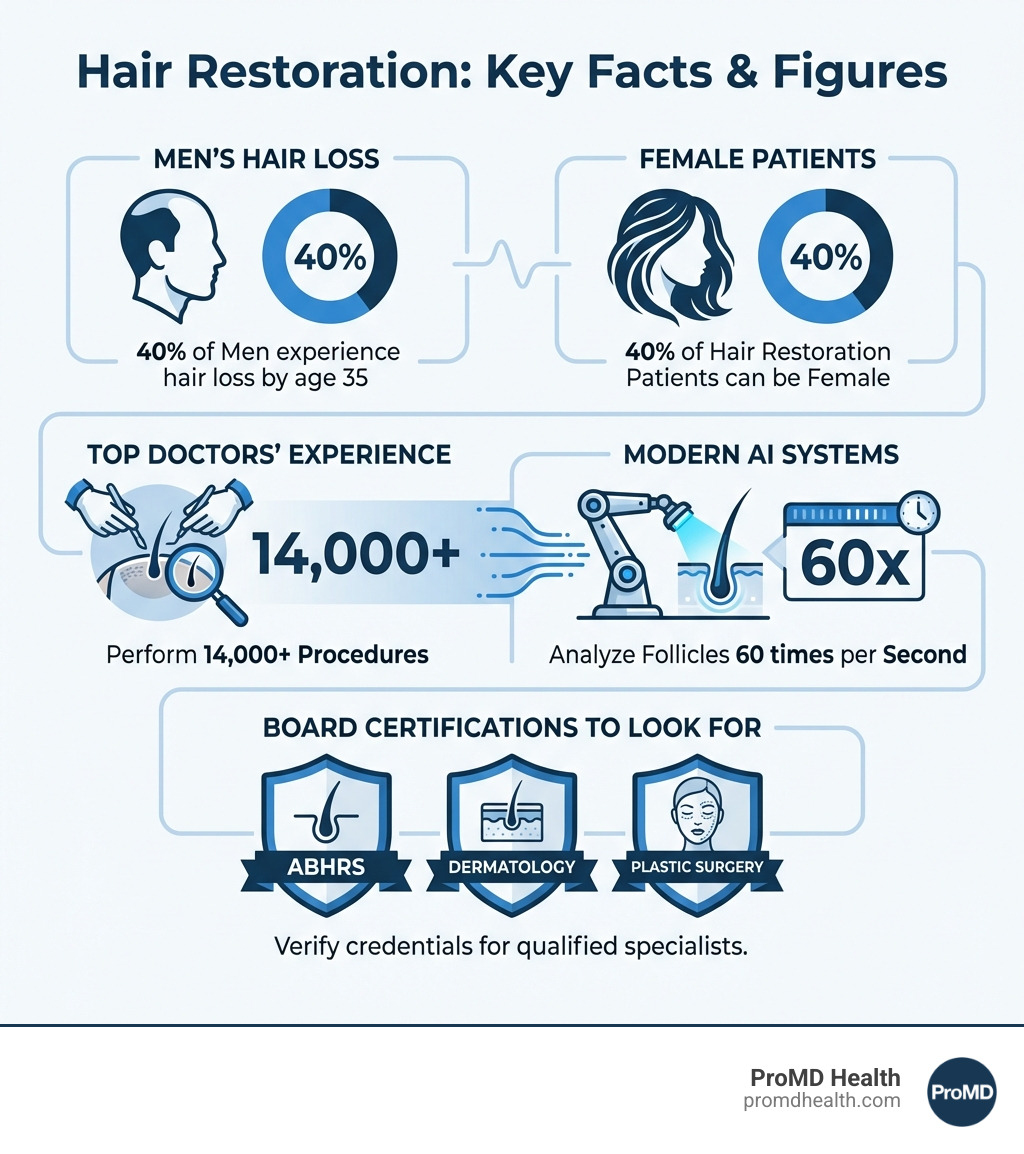
- Verify board certification in dermatology, plastic surgery, or hair restoration surgery (ABHRS)
- Check their experience – look for doctors who have performed thousands of procedures
- Review their before-and-after portfolio to assess natural-looking results
- Ensure they offer multiple techniques (FUE, FUT, non-surgical options)
- Schedule consultations with 2-3 specialists to compare approaches
- Ask about their complication rates and how they handle unsatisfactory results
- Confirm they perform the procedure themselves rather than delegating to technicians
Hair loss affects millions of people worldwide. Approximately 40% of men experience noticeable hair loss by age 35, while women make up a significant portion of hair restoration patients—some specialists report that 40% of their patients are female. Whether you’re dealing with androgenetic alopecia (pattern baldness), thinning due to hormonal changes, or hair loss from other causes, the right doctor will diagnose your specific condition and create a personalized treatment plan.
The field has evolved dramatically. Modern hair restoration doctors now use advanced technologies like AI-assisted robotic systems that analyze each hair follicle sixty times per second, ensuring precision that was impossible just years ago. Top surgeons have performed over 14,000 procedures and treated nearly 35,000 patients, bringing both technical expertise and an artistic eye to creating natural-looking hairlines.
But experience alone isn’t enough. The best hair restoration doctors operate on only one patient per day to ensure focused attention on every detail. They’re board-certified specialists who dedicate their entire practice to hair restoration rather than offering it as one service among many. They’re published researchers, educators, and pioneers who’ve developed the very techniques—like Follicular Unit Transplantation (FUT) and Follicular Unit Extraction (FUE)—that define modern hair restoration.
As Scott Melamed, President and CEO of ProMD Health, I’ve worked alongside leading hair restoration doctors and understand what separates exceptional specialists from the rest in this rapidly advancing field. My background in biotechnology and healthcare leadership has given me deep insight into the technologies and medical expertise that drive successful hair restoration outcomes.
Understanding Hair Restoration: From Basics to Breakthroughs
Hair loss can feel like a sneak thief, slowly stealing your confidence and leaving you feeling less like yourself. But the good news is, we live in an era of incredible advancements in hair restoration. No longer limited to older, less natural-looking methods, today’s options offer sophisticated solutions custom to individual needs. At ProMD Health, we understand that finding the right approach, whether surgical or non-surgical, is key to regaining not just your hair, but your self-assurance.
George Gavrila, MD, Founder and Medical Director of ProMD Health, often emphasizes the importance of a comprehensive approach. “Hair restoration isn’t just about moving hair; it’s about understanding the underlying causes of hair loss and creating a long-term strategy for hair health,” he explains. This means looking at everything from your genetics to your lifestyle, and then deciding on the best course of action.
What is Hair Restoration Surgery?
At its core, hair restoration surgery is a procedure designed to treat hair loss by moving hair follicles from one part of the scalp, known as the “donor area,” to bald or thinning areas, called the “recipient area.” Think of it as carefully relocating healthy, robust hair to where it’s needed most. These donor hairs are typically taken from the back or sides of your head because they are genetically programmed to resist the effects of dihydrotestosterone (DHT), the primary hormone responsible for common male and female pattern baldness (androgenetic alopecia).
The goal is always to achieve natural-looking, permanent results that blend seamlessly with your existing hair. A successful hair transplant can accommodate any hairstyle and can even be used to conceal permanent hair loss resulting from injuries like burns, scalds, or surgical scars. The procedure is usually performed as an outpatient treatment under local anesthesia, meaning you’re awake but comfortable during the process.
Surgical vs. Non-Surgical: Exploring Your Options
When it comes to hair restoration, we have a diverse toolkit. The best approach for you will depend on the extent of your hair loss, your goals, and various other factors.
Surgical Procedures: These are generally considered for more advanced hair loss and offer permanent solutions. The two main surgical techniques we’ll dive into shortly are Follicular Unit Extraction (FUE) and Follicular Unit Transplantation (FUT).
Non-Surgical Treatments: These options are often recommended for early-stage hair loss, to prevent further thinning, or to improve the results of surgical procedures.
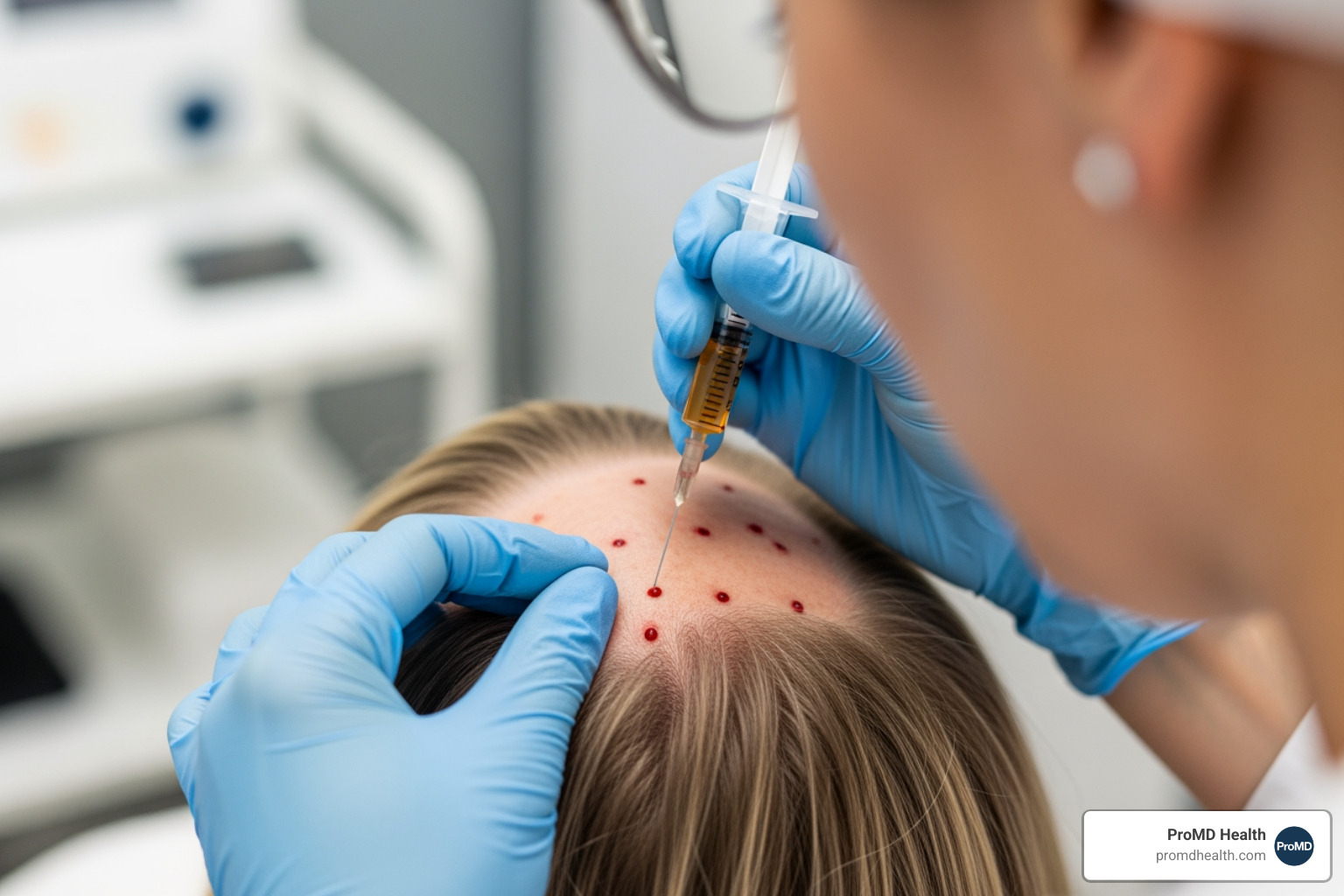
- Platelet-Rich Plasma (PRP) Therapy: This involves drawing a small amount of your blood, processing it to concentrate the platelets (which are rich in growth factors), and then injecting this plasma into your scalp. PRP stimulates natural hair regrowth, increases hair thickness and density, and reduces hair loss. It’s particularly effective for patients in the early stages of hair loss or as an adjunct to surgery.
- Low-Level Laser Therapy (LLLT): LLLT devices, often in the form of caps or combs, use specific wavelengths of light to stimulate hair follicles. This can help slow hair thinning and miniaturization by increasing blood flow to the scalp and activating the metabolism of hair follicles.
- Medications:
- Minoxidil: Available over-the-counter as a topical solution or foam, minoxidil can stimulate hair growth and slow hair loss.
- Finasteride: This oral medication is primarily for men (though sometimes prescribed off-label for women) and works by blocking the conversion of testosterone into DHT, the hormone largely responsible for pattern baldness.
- Natural Supplements: While not a standalone solution, certain vitamins and supplements can support overall hair health. These may include specific vitamins (like Biotin or Vitamin D), minerals, and botanical extracts. A personalized nutritional assessment can help determine which supplements might be beneficial for you.
FUE vs. FUT: A Head-to-Head Comparison
The two primary surgical techniques for hair transplantation are Follicular Unit Extraction (FUE) and Follicular Unit Transplantation (FUT), sometimes referred to as the “strip method.” Understanding their differences is crucial for making an informed decision.
| Feature | Follicular Unit Extraction (FUE) | Follicular Unit Transplantation (FUT) |
|---|---|---|
| Scarring | Minimal, tiny, circular scars spread across the donor area, often imperceptible, especially with short hair. | A single linear scar in the donor area, typically at the back of the head, which can be concealed by longer hair. |
| Recovery Time | Generally faster, with donor area healing in a few days. Less post-operative discomfort. | Slightly longer, as a linear incision needs to heal. More initial discomfort and tightness. |
| Hairstyle Flexibility | Allows for shorter hairstyles in the donor area without visible scarring. | Requires longer hair in the donor area to cover the linear scar. |
| Ideal Candidate | Patients who prefer short hair, those with limited donor hair, or those who want to avoid a linear scar. | Patients who need a large number of grafts, have good scalp laxity, and don’t mind wearing their hair longer. |
| Procedure Method | Individual follicular units (1-4 hairs) are extracted directly from the scalp using a micro-punch tool. | A strip of scalp tissue containing follicular units is surgically removed, and then dissected into individual grafts. |
The Future is Now: Advanced Technologies in Hair Restoration
The field of hair restoration is constantly evolving, and we are proud to offer cutting-edge technologies that improve precision, naturalness, and patient comfort. The latest advancements go beyond manual techniques, integrating sophisticated tools for superior outcomes.
One of the most exciting innovations is AI-assisted FUE, often utilizing robotic systems like the ARTAS iX. These systems bring unparalleled precision to the hair transplant process:
- Automated Harvesting: Robotic arms, guided by high-definition stereoscopic vision systems, can carefully analyze and extract individual follicular units. This precision minimizes damage to existing healthy hair and ensures consistent graft quality. Some systems can analyze each hair sixty times per second.
- Reduced Human Error: The robot’s lack of fatigue translates to consistent accuracy throughout the procedure, which can last for several hours. This often leads to better graft survival rates.
- Automated Site Making: Robotic systems can also create recipient sites (the tiny incisions where grafts are placed) with extreme accuracy, controlling depth, angle, and direction to mimic natural hair growth patterns. This is crucial for achieving an undetectable result.
- Improved Planning: AI simulation allows for detailed pre-operative planning, enabling the doctor to visualize the final outcome and adjust the hairline design and density to meet patient expectations.
- Faster Recovery: With robotic precision, trauma to the scalp is minimized, often leading to quicker healing and less post-operative discomfort.
These advanced technologies are changing hair restoration, making it more efficient, precise, and capable of delivering truly stunning, natural-looking results.
The Timeline to a Fuller Head of Hair
Understanding the journey to a fuller head of hair is essential for managing expectations. Hair restoration is not an instant fix; it’s a process that unfolds over several months.
- Immediate Post-Procedure (Days 1-7): You’ll typically experience some redness, swelling, and small scabs in the recipient area. The donor area will also begin to heal.
- Initial Shedding Phase (Weeks 2-4): Don’t panic! It’s completely normal for the transplanted hairs to shed during this period. This is a natural part of the hair growth cycle as the follicles enter a resting phase before new growth begins.
- New Hair Growth (Months 3-6): Around three months post-surgery, you’ll start to see new, fine hairs emerging. These will gradually thicken and become more noticeable.
- Significant Progress (Months 6-12): This is when you’ll see the most dramatic changes. The transplanted hair will continue to grow, thicken, and blend with your existing hair.
- Final Results (Months 12-18): By 12 to 18 months, you’ll typically see the full, mature results of your hair transplant. The hair will be fully grown in, and you’ll be able to style it as desired.
Patience is key. Your hair restoration doctor will provide detailed post-operative care instructions to optimize your healing and growth.
Are You a Candidate? Benefits, Risks, and Candidacy
Deciding if hair restoration is right for you involves careful consideration. It’s not a one-size-fits-all solution, and a good hair restoration doctor will help you understand if you’re a suitable candidate, what benefits you can realistically expect, and what potential risks are involved.
Who is a Good Candidate for Hair Restoration?
The ideal candidate for hair restoration surgery typically shares a few key characteristics:
- Pattern Baldness: The most common candidates are those experiencing male or female pattern baldness (androgenetic alopecia). This type of hair loss is predictable and often leaves a stable donor area.
- Sufficient Donor Hair: You need a healthy supply of hair in the donor area (usually the back and sides of the head) that can be transplanted to the thinning or bald areas. Without adequate donor hair, the procedure won’t achieve satisfactory density.
- Good Overall Health: Candidates should be in good general health, without underlying medical conditions that could complicate surgery or healing.
- Age Considerations: While there’s no strict age limit, younger patients (under 25-30) might be advised to wait, as their hair loss pattern may not yet be fully established. A hair restoration doctor will assess your individual situation carefully.
When might you not be a good candidate? Individuals with diffuse hair loss (thinning evenly across the entire scalp) or certain autoimmune conditions causing hair loss may not have a suitable donor area or may experience continued loss even after transplantation. For instance, women with diffuse hair loss are generally not good candidates due to insufficient quality hair on the back of the head.
Hair Restoration for Men and Women
Hair loss affects both men and women, but the patterns, causes, and treatment goals often differ. A skilled hair restoration doctor understands these distinctions.
- Male Pattern Baldness: Men typically experience a receding hairline, thinning at the crown, or complete baldness in these areas. The primary goal for men is often to restore a natural-looking hairline and increase density in balding regions.
- Female Pattern Hair Loss: Women often experience diffuse thinning across the top of the scalp, with the frontal hairline usually remaining intact. Complete baldness is less common. For women, the focus is usually on improving overall density and camouflaging thinning areas. It’s noteworthy that approximately 40% of patients seeking hair restoration can be female, highlighting the significant impact hair loss has on women. Hormonal factors, such as those related to Polycystic Ovary Syndrome (PCOS) or menopause, are frequently contributing causes for hair loss in women, requiring a doctor who understands these nuances.
Weighing the Pros and Cons
Like any medical procedure, hair restoration comes with both significant benefits and potential risks.
Benefits:
- Increased Confidence and Self-Esteem: This is perhaps the most profound benefit. Restoring a fuller head of hair can dramatically improve how you feel about your appearance.
- Youthful Appearance: A natural hairline and increased density can make you look years younger.
- Permanent Results: Transplanted hair is typically resistant to balding, offering a long-lasting solution.
- Natural Look and Feel: Modern techniques ensure the transplanted hair grows naturally and can be styled like your existing hair.
- Low Maintenance: Once the transplanted hair is established, it requires no special care beyond regular washing and styling.
Potential Risks and Complications:
While generally safe, hair restoration surgery does carry some potential risks:
- Infection: As with any surgery, there’s a small risk of infection at the donor or recipient sites.
- Scarring: While FUE minimizes visible scarring, FUT leaves a linear scar. Even with FUE, tiny white dots can be visible if the donor area is shaved very short.
- Unnatural Results: Inexperienced surgeons can create an unnatural-looking hairline or improper hair direction. This is why choosing a highly qualified hair restoration doctor is paramount.
- Poor Growth or Failed Grafts: Not all transplanted grafts may survive, though skilled surgeons aim for high survival rates.
- Swelling and Bruising: Temporary swelling and bruising around the eyes and forehead are common.
- Numbness or Itching: Temporary numbness or itching in the donor or recipient areas can occur.
Discussing these risks and having realistic expectations is a vital part of your consultation with a qualified hair restoration doctor.
Your Guide to Finding a Qualified Hair Restoration Doctor
Choosing the right hair restoration doctor is the single most important decision you’ll make on your journey to a fuller head of hair. It’s not just about the procedure; it’s about entrusting your appearance and confidence to a medical professional. We want you to feel empowered and informed when making this choice.
Credentials to Look For in a Top Hair Restoration Doctor
When vetting potential doctors, credentials speak volumes. Look for a hair restoration doctor who possesses the following:
- Board Certification: This is non-negotiable. Look for board certification in fields like Dermatology or Plastic Surgery. Even more specialized and highly respected is certification by the American Board of Hair Restoration Surgery (ABHRS). This signifies a doctor has met rigorous standards of knowledge and experience specifically in hair restoration.
- Professional Memberships: Membership in reputable organizations like the International Society of Hair Restoration Surgery (ISHRS) or the International Alliance of Hair Restoration Surgeons (IAHRS) indicates a commitment to the field and ongoing education. Many leading doctors achieve “Fellow” status within the ISHRS (FISHRS), a mark of significant experience and contribution.
- Specialization: The best hair restoration doctor often dedicates their entire practice to hair restoration, rather than offering it as one service among many. This singular focus allows for deep expertise and mastery of techniques.
- Ongoing Education and Training: The field of hair restoration is dynamic. A top doctor will actively participate in conferences, workshops, and research to stay abreast of the latest advancements. Look for doctors who publish articles, author textbook chapters, or teach other physicians. For instance, some pioneering doctors have published over seventy articles and co-authored textbooks on FUT and FUE, demonstrating their profound impact on the field.
Red Flags to Avoid When Choosing Your Hair Restoration Doctor
Just as there are indicators of excellence, there are also warning signs that should make you pause:
- Lack of Specialization: If a clinic offers hair restoration alongside a vast array of unrelated cosmetic procedures, the doctor may not have the focused expertise needed for optimal results.
- High-Pressure Sales Tactics: A reputable clinic will prioritize patient education and informed consent, not push you into a decision.
- Vague Answers or Evasiveness: A good doctor will be transparent about the procedure, potential risks, and expected outcomes. If they can’t clearly explain the process or answer your questions, it’s a red flag.
- No Before-and-After Portfolio: A picture is worth a thousand words. Insist on seeing a comprehensive portfolio of their own patients’ results, ideally with diverse hair types and stages of hair loss.
- One-Size-Fits-All Approach: Every patient is unique. A doctor who only offers one technique or doesn’t tailor the treatment plan to your specific needs might not be the right fit.
- Delegating Key Parts of the Procedure: While technicians assist, the hair restoration doctor should be performing the critical steps of the surgery themselves, such as recipient site creation and graft implantation. Some of the most respected doctors operate on only one patient a day to ensure their full attention.
- Limited Experience: While individual statistics vary, look for doctors with extensive experience. Some top surgeons boast over 14,000 hair transplant surgeries and have treated nearly 35,000 patients, showcasing a robust track record.
What to Expect During Your Consultation
Your initial consultation is your opportunity to interview the hair restoration doctor and their team. It’s a crucial step in building trust and confidence.
Here’s what you should expect:
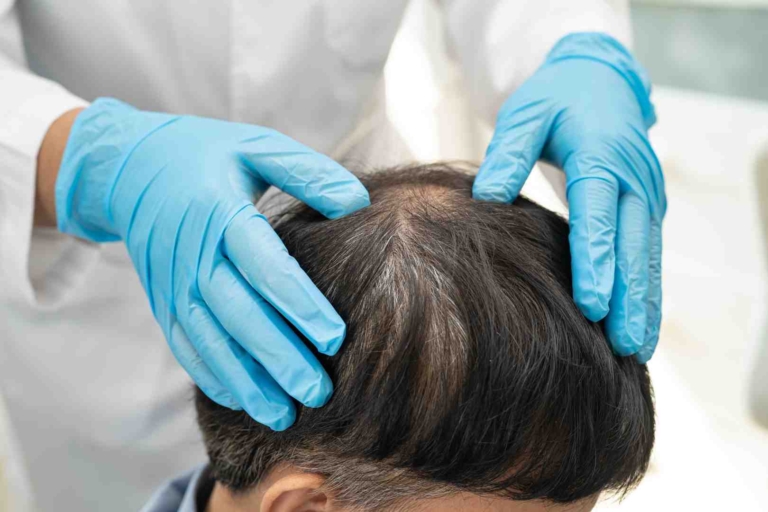
- Thorough Scalp Examination: The doctor will carefully examine your scalp, assess your hair loss pattern, and evaluate the quality and density of your donor area. This might involve using specialized tools like dermoscopy to get a closer look at your follicles.
- Hair Loss Diagnosis: The doctor will discuss the likely cause of your hair loss, whether it’s androgenetic alopecia, traction alopecia, or another condition. They may also review your medical history and lifestyle factors.
- Discussion of Goals and Expectations: This is where you communicate what you hope to achieve. The doctor will provide an honest assessment of what’s realistically possible, using AI simulation or other tools to help you visualize potential outcomes.
- Personalized Treatment Plan: Based on their assessment and your goals, the hair restoration doctor will recommend a specific treatment plan, outlining the techniques (FUE, FUT, non-surgical), the number of grafts needed, and the overall strategy.
- Cost Breakdown: You should receive a clear, detailed breakdown of the costs involved, including the procedure fee, anesthesia, and any post-operative medications.
- Opportunity to Ask Questions: This is your time to clarify any doubts. Don’t hesitate to ask about the doctor’s experience, their team, recovery process, potential complications, and what kind of support you’ll receive.
- Building Rapport: Pay attention to how you feel during the consultation. A good hair restoration doctor will be empathetic, listen attentively, and make you feel comfortable and understood. This rapport is essential for a successful patient-doctor relationship.
At ProMD Health, we believe in a human-centered approach, ensuring that your journey is guided by respect, personalized care, and cutting-edge expertise.
The Financial Investment in Your Confidence
Understanding the financial aspects of hair restoration is an important part of your decision-making process. While it’s an investment, many patients find the boost in confidence and quality of life to be priceless.
Understanding the Cost of Hair Restoration
The cost of hair restoration surgery can vary significantly based on several factors:
- Technique Used (FUE vs. FUT): FUE often tends to be more expensive per graft due to its labor-intensive nature, but the overall cost depends on the number of grafts.
- Number of Grafts: The extent of your hair loss directly impacts the number of grafts required, which is a primary determinant of cost. More grafts mean a higher price.
- Surgeon’s Experience and Reputation: Highly experienced and renowned hair restoration doctors, especially those with numerous accolades and a strong track record, typically charge more for their services. For example, some clinics quote around $6,500 per session, but this can fluctuate widely.
- Geographic Location: Costs can vary depending on the city or region where the clinic is located. Clinics in major metropolitan areas like Washington D.C., Annapolis, or Fort Lauderdale might have different pricing structures compared to other regions.
- Included Services: Some clinics offer all-inclusive packages that cover pre-operative consultations, the surgery itself, post-operative care, and medications, while others might itemize these.
It’s important to get a detailed, itemized quote during your consultation so you know exactly what you’re paying for.
Is Hair Restoration Covered by Insurance?
Generally, hair restoration procedures are considered cosmetic and are therefore not covered by health insurance. Insurance companies typically classify these procedures as elective, rather than medically necessary.
However, there can be rare exceptions, such as hair loss due to burns, trauma, or certain medical conditions that cause scarring alopecia. In such cases, it’s worth checking with your insurance provider, though coverage is still uncommon.
Because insurance rarely covers these costs, many clinics, including ProMD Health, offer:
- In-house financing plans: These allow you to pay for the procedure over several months or years.
- Third-party medical credit options: Companies like CareCredit specialize in financing elective medical procedures, offering various payment plans with competitive interest rates.
We encourage you to discuss these options with your chosen hair restoration doctor‘s office to find a payment solution that works for your budget.
Conclusion
Choosing the right hair restoration doctor is a significant decision that impacts not only your appearance but your confidence and overall well-being. We’ve explored the nuances of modern hair restoration, from the differences between FUE and FUT to the exciting advancements in AI-assisted technology. We’ve also highlighted the importance of understanding candidacy, weighing benefits against risks, and navigating the financial investment.
Remember to prioritize credentials like board certification, seek out doctors with extensive experience and a dedicated focus on hair restoration, and always review their patient portfolios. Your consultation is a critical step to ensure your goals align with the doctor’s expertise and approach. By following these steps, you can confidently select a hair restoration doctor who will help you achieve natural-looking, life-changing results.
At ProMD Health, we are committed to helping our patients “Look Younger and Feel Younger” through personalized, advanced aesthetic and anti-aging treatments. We believe in empowering you with the knowledge to make the best choices for your health and appearance.