Better sleep quality: Unlock 4 Pillars for Relief
Why Better Sleep Quality Matters for Your Health and Vitality
Better sleep quality is essential for looking younger, feeling energized, and maintaining optimal health. Achieving it involves aiming for 7-9 hours of sleep, keeping a consistent schedule, optimizing your bedroom, limiting caffeine and screens before bed, and getting morning sunlight.
Tossing and turning, waking up in a sweat, or staring at the ceiling at 3 AM—if this sounds familiar, you’re not alone. Poor sleep affects millions, increasing the risk for obesity, heart disease, and diabetes. It also accelerates aging, drains energy, and hinders weight management.
The good news is that restorative sleep is achievable. Quality sleep isn’t just about hours in bed; it’s about creating the right conditions for your body to repair, balance hormones, and wake up refreshed.
I’m Scott Melamed, President and CEO of ProMD Health, where we help people optimize their wellness and vitality. With a background in biotechnology from Johns Hopkins and years of clinical experience, I’ve seen how better sleep quality transforms energy, health, and the aging process.
The Foundations of Restorative Sleep
Sleep isn’t just downtime—it’s when your body performs crucial maintenance. When you consistently get quality sleep, the benefits are profound. Your brain performance improves, leading to clearer thinking and better memory. Your mood gets a boost, making you less irritable and better equipped to handle stress. Physically, good sleep strengthens your immune system, kicks your body’s repair processes into high gear, and reduces your risk of chronic diseases like heart disease and diabetes. Research consistently shows how vital sleep is for overall well-being.
Understanding Sleep Quantity and Quality
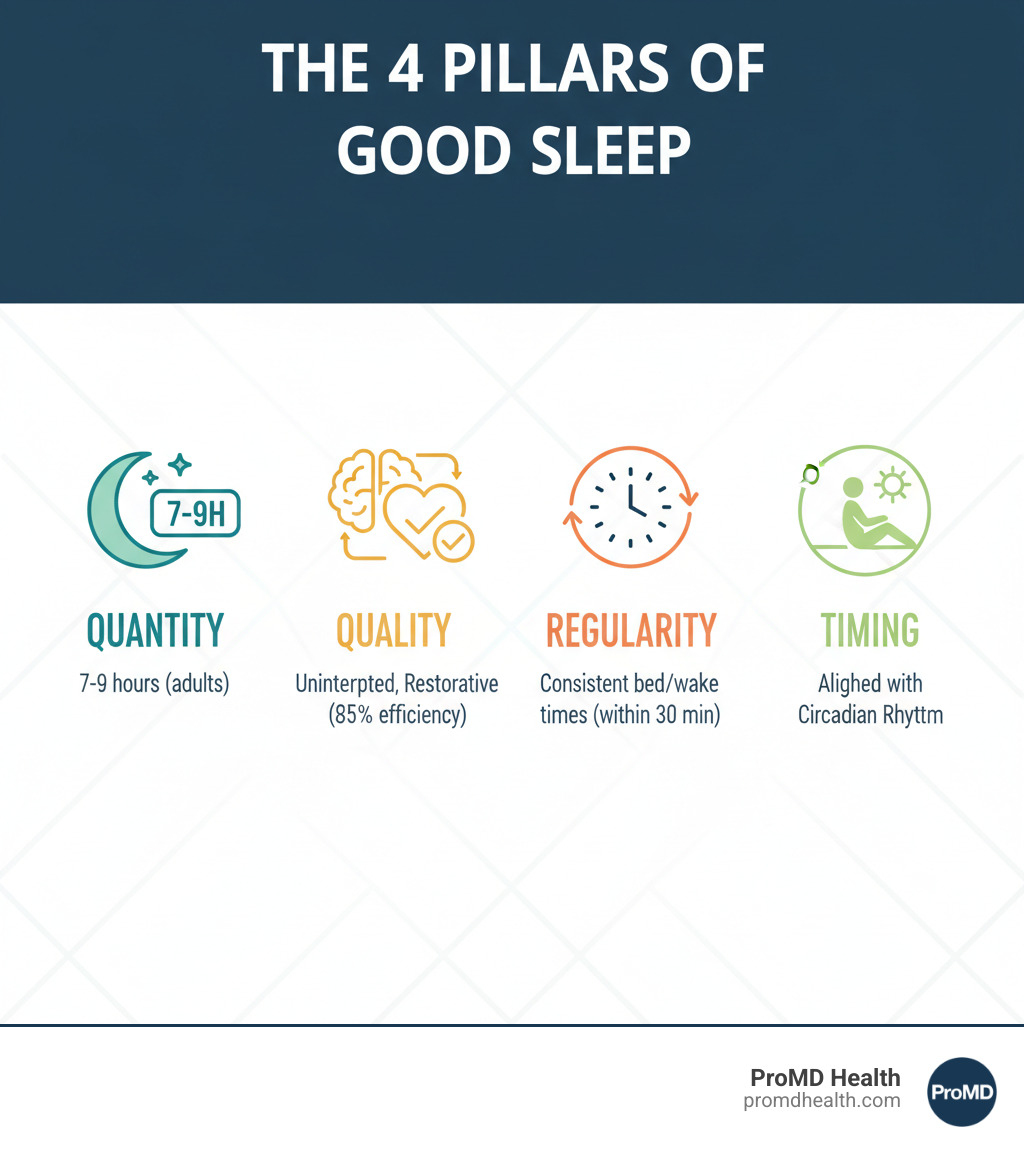
When we talk about better sleep quality, we’re referring to both how much sleep you get and how good it is. For most adults, the target is 7 to 9 hours per night, the time your body needs for its repair cycles. But just being in bed isn’t enough; quality matters just as much as quantity. High-quality sleep is uninterrupted, allowing you to cycle smoothly through all sleep stages. The true test is waking up feeling refreshed, not groggy. Experts measure this with sleep efficiency—the percentage of time you’re actually asleep while in bed. The goal is at least 85% efficiency. Signs of poor quality sleep include trouble falling or staying asleep, waking too early, or feeling exhausted even after a full night in bed.
The Importance of Regularity and Timing
Your body thrives on routine. Going to bed and waking up at roughly the same time every day—even on weekends—is one of the most powerful things you can do for better sleep quality. Aim for a consistent schedule within a 30-minute window. This regularity supports your body’s internal clock, the circadian rhythm, which regulates your sleep-wake cycle, hormones, and digestion. When you stick to a schedule, your body learns when to expect sleep, making it easier to fall asleep and wake up naturally. While your chronotype—whether you’re a morning person or a night owl—is partly genetic, maintaining that consistent rhythm is what matters most. Studies continue to show that people with regular sleep patterns enjoy better sleep quality and overall health.
Your Blueprint for a Sleep-Inducing Sanctuary and Routine
Think of your bedroom as a retreat dedicated to rest. At ProMD Health, we’ve seen how optimizing your sleep environment and rituals—a practice known as “sleep hygiene”—can transform restless nights into restorative sleep. These habits signal to your body and mind that it’s time to rest, supporting better sleep quality night after night.

Optimizing Your Bedroom Environment
Your bedroom should be a cool, dark, and quiet cave. These three factors are game-changers for sleep.
- Temperature: Your body naturally cools down for sleep. Keeping your bedroom around 67°F (19.4°C) supports this process. A room that’s too warm can cause tossing and turning.
- Darkness: This is essential for producing melatonin, the sleep hormone. Even a small amount of light can be disruptive. Invest in blackout curtains or a comfortable eye mask for total darkness.
- Quiet: Sudden noises can jolt you awake. Use earplugs or a white noise machine to mask disruptions like traffic or a barking dog.
One more tip: reserve your bed for sleep and sex only. When your brain associates your bed exclusively with rest, falling asleep becomes much easier.
The Power of Light: Day vs. Night
Light is the master switch for your internal clock. Getting bright sunlight during the day is just as important as avoiding light at night. Exposing yourself to natural daylight in the morning helps set your circadian rhythm for the day. Aim for 15-30 minutes of morning sun. Research shows that daytime light exposure is crucial for healthy sleep patterns.
In the evening, the opposite is true. Dim your lights and, most importantly, avoid the blue light from screens. Phones, tablets, and TVs trick your brain into thinking it’s still daytime, suppressing melatonin. We recommend avoiding electronics for 1-2 hours before bed. If you must use a screen, enable “night mode” or wear blue-light-filtering glasses, but complete avoidance is best.
Practical Sleep Hygiene for Better Sleep Quality
A consistent wind-down routine creates a buffer between your busy day and a restful night. Try incorporating these calming activities:
- A warm bath or shower: The subsequent drop in body temperature mimics the natural process of falling asleep.
- Relaxation techniques: Deep breathing, gentle stretching, or meditation can calm a racing mind.
- Reading a physical book: This is a classic way to relax without the stimulating blue light of a screen.
- Soft music or a calming podcast: Create a soothing atmosphere with instrumental music or nature sounds.
- Journaling: Writing down worries or to-do lists can help clear your mind.
Consistency is key. These rituals become powerful signals that tell your body it’s time for rest, which is the foundation of truly better sleep quality.
How Lifestyle Choices Impact Your Nightly Rest
The choices we make throughout the day—from our morning coffee to our evening workout—have a powerful impact on how well we sleep. At ProMD Health, we often see how small adjustments to daily habits can transform someone’s ability to achieve better sleep quality. Your sleep doesn’t start when you hit the pillow; it begins the moment you wake up.

Fueling for Sleep: Diet, Caffeine, and Alcohol
What you consume throughout the day matters. Avoid large meals 2-3 hours before bed so your digestive system isn’t working overtime. If you’re hungry, a light snack is fine.
Caffeine and alcohol are two of the biggest sleep disruptors. Caffeine lingers in your system for hours; consuming it even six hours before bed can reduce your total sleep time by as much as 45 minutes. We recommend avoiding caffeine at least 8 hours before bed (no coffee after 2 PM for a 10 PM bedtime). Alcohol is also deceptive. It may make you drowsy, but it disrupts your sleep architecture, especially REM sleep. This results in fragmented, lower-quality rest and feeling less refreshed. Also, try to taper off liquids in the evening to avoid nighttime bathroom trips (nocturia).
Move Your Body, Rest Your Mind: The Role of Exercise
Regular physical activity is incredibly effective for improving better sleep quality. It helps reduce stress and promotes deeper sleep. Aim for at least 150 minutes of moderate physical activity per week (like a brisk 30-minute walk, five days a week).
Timing is important. Avoid vigorous workouts within 90 minutes of bedtime, as they raise your core body temperature and activate your nervous system. Morning workouts are often ideal as they can be paired with morning sunlight to help set your circadian rhythm. If you must exercise in the evening, finish any intense activity a couple of hours before bed.
Managing Stress and a Racing Mind
A racing mind is a common barrier to sleep. When you’re stressed, your body releases fight-or-flight hormones like cortisol, which keep you alert. You can train your mind to quiet down with simple practices:
- Mindfulness and meditation: Even 5-10 minutes a day can help you become less reactive to stressful thoughts.
- Deep breathing exercises: Slow, deep breaths activate your body’s relaxation response. Try inhaling for four counts, holding for four, and exhaling for six.
- Mental walk visualization: This mental walk technique is effective at distracting your mind from anxious thoughts by having you imagine a peaceful scene in vivid detail.
Finding a technique that works for you and making it part of your routine is key to calming your mind for sleep.
When to Seek Help: Sleep Disorders, Night Sweats, and Solutions
Sometimes, even with the best habits, better sleep quality remains out of reach. This can signal a more significant issue, like a sleep disorder or hormonal imbalance. At ProMD Health, we know that addressing these underlying problems is crucial. If you consistently struggle with sleep, experience excessive daytime sleepiness, or have other concerning symptoms, it’s time to consult a healthcare provider. Keeping a sleep diary can provide valuable insights for your doctor.
Common Sleep Disorders: Insomnia and Sleep Apnea
Sleep disorders are more common than you might think. Insomnia, characterized by difficulty falling or staying asleep, is a chronic condition for at least 10% of adults. Sleep apnea is another major concern, involving repeated pauses in breathing during sleep that prevent restorative rest. It affects up to 33.9% of men and 17.4% of women and is linked to loud snoring, fatigue, and increased risk for heart issues. You can find more information on sleep apnea from reputable health sites (https://www.nhlbi.nih.gov/health/sleep-apnea). Other disorders like Restless Legs Syndrome (RLS) and Narcolepsy also severely disrupt sleep. A proper diagnosis is the first step toward treatment.
The Link Between Hormones and Better Sleep Quality
One often-overlooked factor in poor sleep and night sweats is hormonal balance. For women, the fluctuating estrogen and progesterone during perimenopause and menopause are a primary cause of hot flashes and night sweats that interrupt sleep. Men can also experience sleep issues due to hormonal changes, like declining testosterone. At ProMD Health, we specialize in these complex interactions. For many of our patients experiencing persistent night sweats and poor sleep, hormone therapy can be a game-changer. By assessing and balancing hormone levels, we can often alleviate symptoms like night sweats, leading to a significant improvement in better sleep quality and overall vitality.
Natural Aids and Supplements for Sleep
While lifestyle changes are primary, certain natural aids can offer support for better sleep quality. Always consult a healthcare professional before starting any new supplement, as we at ProMD Health can help guide you on safe options. Commonly discussed aids include:
- Melatonin: A hormone that helps regulate sleep-wake cycles, useful for short-term issues like jet lag.
- Magnesium: A mineral that can help calm the nervous system.
- Valerian Root: An herb with mild sedative properties.
- Chamomile: A tea known for promoting relaxation.
- Lavender: A scent used in aromatherapy for its calming effects.
Supplements are meant to supplement, not replace, good sleep hygiene and a healthy lifestyle.
Frequently Asked Questions about Better Sleep Quality
At ProMD Health, we get a lot of questions about sleep. Here are answers to some of the most common ones to help you achieve better sleep quality.
Can I “catch up” on sleep over the weekend?
Unfortunately, you can’t truly “catch up” on sleep. While sleeping in feels good, it doesn’t erase the sleep debt you’ve built up. Worse, it throws off your body’s internal clock (circadian rhythm). You might sleep in on Saturday and Sunday, only to find it hard to fall asleep Sunday night, starting the week exhausted. Research shows that weekend catch-up is not an effective recovery method. Consistency is far more effective than catching up. Sticking to a regular sleep schedule, even on weekends, is the best foundation for restorative sleep.
What if I wake up in the middle of the night and can’t get back to sleep?
This is a common frustration. If you find yourself wide awake, follow this rule: don’t stay in bed for more than 20 minutes. Lying there tossing and turning can train your brain to associate your bed with wakefulness and anxiety. Instead, get up and go to another room. Do something quiet and relaxing in dim light, like reading a physical book (not a screen) or listening to calm music. Avoid screens at all costs, as the blue light signals your brain to wake up. Return to bed only when you feel genuinely sleepy. This technique helps retrain your brain to associate your bed with sleep.
Is napping during the day a good idea?
Napping can be a double-edged sword. For some, a short nap can boost energy and focus. For others, especially those with insomnia, napping can confuse your internal clock and make it harder to fall asleep at night. If you choose to nap, follow these guidelines to protect your nighttime sleep: keep it short (20-30 minutes) and early in the afternoon (before 3 PM). This provides a cognitive boost without causing grogginess or interfering with your ability to achieve better sleep quality at night. Pay attention to how naps affect you; if you struggle to sleep at night after napping, it’s best to avoid them.
Conclusion: Your Journey to Sweet Dreams and Renewed Energy
Achieving better sleep quality is one of the most powerful anti-aging strategies available. It’s when your body repairs tissues, balances hormones, and strengthens your immune system. Start with small, consistent changes: set a regular bedtime, create a dark and cool bedroom, or cut out afternoon caffeine. By focusing on the four pillars—quantity, quality, regularity, and timing—you create the conditions for truly restorative sleep.
If you’ve tried these strategies and still battle persistent issues like night sweats, chronic insomnia, or exhaustion, it may be time to look deeper. These symptoms can point to underlying issues like a sleep disorder or a hormonal imbalance related to perimenopause, menopause, or age-related changes in men.
At ProMD Health, we specialize in identifying the root cause of your sleep challenges. Our comprehensive diagnostics and personalized wellness programs, including hormone therapy, are designed to address what’s really happening in your body, not just mask symptoms. We can help you get to the bottom of disruptive night sweats and poor rest.
Your journey to renewed energy is within reach. You deserve to wake up feeling refreshed and revitalized. Learn more about our wellness and hormone therapy services to help you feel younger and more rested. Our team is here to support you, because when you sleep well, everything else falls into place.