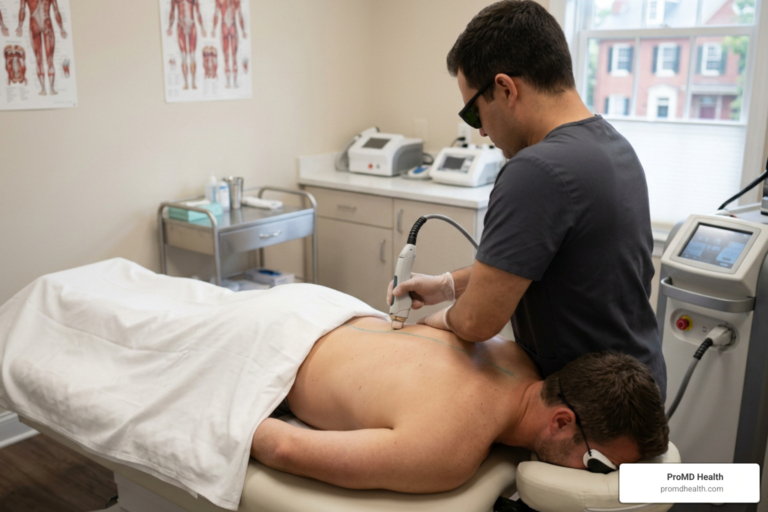
CoolSculpting Fat Freezing for Targeted Body Contouring
Body sculpting has undergone an extraordinary evolution over the past two decades. Where surgical interventions such as suction-assisted lipectomy once stood as the sole avenue for eliminating localized fat deposits, patients now have access to sophisticated non-invasive modalities. Among the most widely recognized non-surgical technologies is cryolipolysis, commercially known as CoolSculpting. Originally cleared by regulatory agencies to address isolated bulges resistant to traditional diet and fitness regimens, cryolipolysis has generated substantial public interest for individuals seeking targeted fat reduction without incisions, general anesthesia, or extensive recovery periods.
At ProMD Health, our philosophy is anchored in a comprehensive, whole-person approach to aesthetic wellness and body harmony. Patients frequently present to our clinics across Maryland, Virginia, Washington, D.C., Florida, Texas, and Colorado asking how fat freezing works, what outcomes it realistically achieves, and how it compares to alternative body contouring technologies such as Emsculpt NEO. Understanding the physiological science, targeted applications, and clinical distinctions of these modalities allows prospective patients to evaluate their options with clarity and confidence.
The Science of Cryolipolysis: Cellular Mechanism and Adipocyte Apoptosis
Cryolipolysis is rooted in a fascinating dermatologic observation: lipid-rich tissue demonstrates heightened vulnerability to cold temperatures compared to water-rich surrounding structures. This concept originated from clinical observations of cold-induced panniculitis in pediatric patients, where sustained contact with popsicles led to temporary dimpling of cheek fat without damaging overlying mucosal tissues or skin.
Biomedical researchers translated this biological phenomenon into controlled aesthetic technology. According to clinical overviews from the American Society of Plastic Surgeons, cryolipolysis selectively cools subcutaneous fat cells (adipocytes) to a temperature range that induces controlled cellular apoptosis, or programmed cell death, while preserving the viability of the overlying epidermis, dermis, peripheral nerves, and adjacent muscular structures.
- (Note: The process involves cellular degradation rather than thermal burning)
Correction on internal structuring: The biological cascade unfolds methodically through defined phases:
- Thermal Extraction: During the procedure, the cooling device extracts thermal energy from the targeted fat deposit, reducing local subcutaneous temperatures to between approximately -10 and +4 degrees Celsius, depending on the specific machine parameters and applicator design.
- Crystallization of Lipids: Because intracellular lipids crystallize at higher temperatures than water-based cellular components, the cytoplasmic lipids within the adipocytes undergo crystallization, initiating cellular injury and signaling apoptotic pathways.
- Inflammatory Resorption: Over the subsequent days and weeks, an inflammatory response develops within the subcutaneous fat layer. Macrophages and phagocytic immune cells gradually surround, digest, and envelope the apoptotic adipocytes.
- Metabolic Elimination: The degraded cellular debris and released lipid metabolites are routed through the lymphatic system and transported to the liver, where they are processed and cleared naturally through endogenous metabolic pathways, much like dietary fats.
Clinical trials published across cosmetic dermatology demonstrate that this apoptotic clearance takes place gradually over a period of two to four months, yielding a measurable reduction in subcutaneous thickness without causing systemic elevations in serum lipid profiles or liver enzyme markers.
Target Anatomical Areas for Fat Freezing
Non-surgical fat reduction is fundamentally designed for localized contouring rather than generalized weight reduction. As emphasized by clinical guidance from the Cleveland Clinic, cryolipolysis is intended for individuals at or near a stable body weight who struggle with discrete, pinchable fat pockets that persist despite dedicated physical exercise and healthy nutrition.
Over several generations of device engineering, specialized applicators have received clearance to treat specific anatomical zones across the body:
- Abdomen: Both the upper and lower abdominal zones are frequent points of concern for patients experiencing post-pregnancy changes, hormonal shifts, or stubborn genetic fat deposits.
- Flanks and Hips: Commonly termed “love handles,” the flank area contains pinchable lateral adiposity that responds well to curved vacuum applicators.
- Submental and Submandibular Regions: Unwanted fullness under the chin and along the jawline can obscure facial balance. Specialized miniature curved cups target small volumes of submental fat, defining the cervicomental angle.
- Inner and Outer Thighs: Outer thigh fullness (“saddlebags”) typically utilizes flat, non-vacuum contouring applicators, whereas inner thigh treatments employ mild vacuum applicators to reduce friction between the legs.
- Upper Arms: Subcutaneous laxity and adipose tissue along the triceps zone can be addressed to improve sleeve fit and arm silhouette.
- Bra Fat and Back Rolls: Axillary fat bulges along the bra strap line and infra-scapular fat pads along the upper and mid-back represent common contour complaints addressed via small-to-medium applicators.
- Sub-Gluteal Folds: The isolated fat deposit located directly beneath the inferior gluteal crease, colloquially referred to as the “banana roll,” is often treated to refine the transition between the buttock and posterior thigh.
During clinical assessments, aesthetic specialists evaluate tissue pliability, skin elasticity, and structural volume to verify whether the tissue presents sufficient subcutaneous pinch or whether other structural variables are at play.
Procedural Workflow: What Patients Experience During Treatment
Understanding the step-by-step clinical process helps alleviate apprehension for individuals considering non-invasive body sculpting. A typical cryolipolysis treatment protocol follows a predictable, non-surgical workflow:
Assessment and Spatial Mapping
Before treatment initiation, a clinician reviews the patient’s medical history and conducts a physical examination. The targeted fat bulge is measured, and skin markings are placed to outline the exact placement boundary for the applicator, ensuring symmetry with contralateral body structures.
Skin Barrier Application
To safeguard the epidermis and papillary dermis against freeze-related epidermal damage, the clinician applies a specialized gel pad infused with a protective anti-freeze formulation directly over the outlined area.
Applicator Placement and Vacuum Activation
The cryolipolysis applicator is positioned over the gel pad. In vacuum-based applicators, negative pressure draws the targeted fat pocket into the hollow cooling cup between two internal cooling plates. Patients typically report a distinct sensation of suction, stretching, and mild pinching during this initial mechanical step.
Thermal Cooling Phase
Once the applicator is secured, controlled thermoelectric cooling cycles activate. During the first five to ten minutes, patients describe feeling localized, intense cold, which may be accompanied by mild stinging or aching. However, as local sensory nerves experience transient cold-induced paresthesia, the treatment site becomes largely numb, allowing patients to relax, read, or rest comfortably for the remainder of the session. A single cycle generally lasts between 35 and 60 minutes per site.
Mechanical Post-Treatment Massage
Immediately upon applicator removal, the treated tissue appears temporarily elevated, firm, and molded to the shape of the cup—often described humorously as resembling a stick of frozen butter. A vital component of the treatment protocol is a firm, two-minute manual massage performed by the clinician. Research demonstrates that this manual kneading enhances cellular reperfusion and mechanical disruption of the crystalized adipocytes, significantly increasing overall treatment efficacy and fat cell clearance.
Addressing Common Patient Inquiries
Patients exploring non-surgical body contouring naturally present with practical questions regarding longevity, procedural comfort, and scheduling parameters.
Is Fat Freezing Permanent?
One of the most frequent clinical questions centers on permanence. Scientific evaluations reveal that cryolipolysis induces true apoptosis in the targeted fat cells. Once an adipocyte undergoes programmed cell death and its components are cleared by macrophage phagocytosis, that specific cell is permanently removed and cannot regenerate.
However, remaining fat cells in the treated zone and surrounding untreated tissue retain their normal biological capacity to store energy. If an individual experiences positive caloric balance and subsequent weight gain, these remaining adipocytes will expand in volume, potentially altering the contoured aesthetic outcome. Consequently, clinicians emphasize that long-term durability relies on maintaining a stable baseline weight and healthy lifestyle habits.
Does CoolSculpting Hurt?
Pain perception is subjective and varies according to individual pain thresholds and the anatomical site treated. Cryolipolysis does not require local anesthesia, oral sedation, or narcotic pain management.
During the initial minutes of cooling, patients frequently report sensations of tight pulling, stinging, cramping, or deep aching. Once cutaneous numbness sets in, procedural discomfort diminishes considerably. Following treatment, common localized side effects include temporary erythema, minor swelling, localized bruising from vacuum suction, tenderness, and lingering cutaneous numbness that typically resolves within one to four weeks.
How Many Sessions Are Required?
The number of treatment sessions depends on the starting volume of adipose tissue and the individual’s definitive contour goals. Clinical measurements indicate that a single cryolipolysis cycle typically achieves a 20% to 25% reduction in fat layer thickness within the specific zone treated.
While some patients achieve their target silhouette after a single session, many elect to undergo two or three successive cycles spaced four to eight weeks apart to achieve more comprehensive volume reduction in a given anatomical region.
CoolSculpting vs. Emsculpt NEO: Comparing Non-Surgical Contouring Modalities
While cryolipolysis remains an effective technology for reducing localized fat volume, modern non-invasive body contouring has broadened dramatically. When evaluating treatment options, patients often compare cryolipolysis with dual-modality technologies like Emsculpt NEO, which addresses body composition through both fat reduction and simultaneous muscle hypertrophy.
The following table provides a direct comparative overview of how cryolipolysis and Emsculpt NEO function across primary clinical categories:
| Clinical Feature | Cryolipolysis (CoolSculpting) | Emsculpt NEO |
|---|---|---|
| Primary Mechanism | Controlled cold-induced adipocyte apoptosis (Cryo-energy) | Synchronized Radiofrequency (RF) heating + High-Intensity Focused Electromagnetic (HIFEM) energy |
| Target Tissue Layers | Subcutaneous adipose tissue exclusively | Subcutaneous adipose tissue and underlying skeletal muscle fibers |
| Average Fat Reduction | Approximately 20% to 25% fat layer thickness per treated zone | Up to 30% reduction in localized subcutaneous adipose tissue |
| Muscle Toning Benefit | None; does not activate or stimulate muscle contractions | Induces supramaximal muscle contractions, averaging up to 25% muscle volume increase |
| Applicator Interface | Vacuum suction cups or flat surface freeze plates | Flat external surface paddles secured by ergonomic straps (no vacuum suction) |
| Treatment Sensation | Intense localized cold, suction tugging, followed by numbness | Deep muscular contractions and warm heating comparable to a hot-stone massage |
| Typical Session Duration | 35 to 60 minutes per single applicator placement | 30 minutes per treatment zone |
| Standard Treatment Series | 1 to 3 sessions per anatomical zone, spaced 4 to 8 weeks apart | Standard protocol of 4 sessions, spaced 5 to 10 days apart |
| Post-Procedure Recovery | Mild bruising, temporary numbness, localized swelling | Mild to moderate muscle soreness similar to a strenuous workout |
| Primary Clinical Focus | De-bulking localized, pinchable stubborn fat pockets | Comprehensive body sculpting, core strengthening, and simultaneous fat reduction |
Cryolipolysis acts strictly as an adipolytic tool, cooling subcutaneous fat deposits without influencing muscular tone, athletic performance, or core integrity. In contrast, dual-energy systems such as Emsculpt NEO utilize radiofrequency heating to elevate fat temperatures past 42 degrees Celsius—inducing thermal apoptosis—while synchronized HIFEM energy triggers supramaximal contractions that cannot be matched through voluntary exercise. For individuals seeking athletic definition, abdominal wall tightening, or buttock lifting alongside fat reduction, dual-modality energy provides a fundamentally different contouring response.
Prospective patients can review the full spectrum of comprehensive aesthetic and body contouring services offered within modern aesthetic practices to appreciate how diverse non-invasive technologies complement different body goals.
Safety Considerations, Contraindications, and Rare Adverse Effects
Before undergoing any medical aesthetic procedure, patients must understand regulatory classifications and established safety profiles. As outlined in consumer safety documentation by the U.S. Food and Drug Administration, non-invasive body contouring devices are classified medical systems that carry specific contraindications and potential adverse risks.
Absolute and Relative Contraindications
Cryolipolysis is not suitable for all individuals. Treatment is contraindicated in patients with underlying cold-induced systemic vascular or hematologic conditions, including:
- Cryoglobulinemia (a disorder where abnormal blood proteins gel together at cold temperatures)
- Cold urticaria (a severe allergic histamine response to cold exposure)
- Paroxysmal cold hemoglobinuria (an autoimmune condition where cold destroys red blood cells)
- Severe peripheral vascular disease or Raynaud’s phenomenon in the treatment area
- Open cutaneous lesions, active dermatologic infections, or extensive scar tissue in the targeted zone
- Marked tissue laxity where skin retraction is insufficient to accommodate underlying volume loss
Paradoxical Adipose Hyperplasia (PAH)
While standard side effects such as temporary numbness, erythema, and mild swelling are self-limiting, patients should be educated about rare, anomalous adverse events. The most notable of these is Paradoxical Adipose Hyperplasia (PAH).
Instead of undergoing apoptosis and metabolic resorption, the treated adipose tissue in rare instances experiences a localized expansion and firm hardening several months post-treatment, resulting in a visible, painless, demarcated mass resembling the rectangular shape of the applicator. The exact biological etiology remains an area of ongoing study, although male sex, large applicator use, and genetic predisposition appear to represent associated risk factors. PAH does not resolve spontaneously and typically requires surgical intervention, such as tumescent liposuction or direct excision, to correct.
Choosing an accredited medical practice overseen by experienced clinicians ensures comprehensive pre-treatment screening, appropriate anatomical assessment, and meticulous risk mitigation.
The ProMD Health Approach: Treat to Complete and Full-Body Vitality
At ProMD Health, we believe aesthetic medicine should never approach the human body as isolated segments or disconnected measurements. Our practice philosophy is grounded in our proprietary “Treat to Complete” standard. Whether evaluating facial balance or body contours, our goal is comprehensive proportion, structural integrity, and natural-looking harmony.
True aesthetic wellness frequently transcends a single machine or treatment modality. A stubborn bulge on the abdomen or flank may stem from subcutaneous fat alone, or it may involve a combination of adipose accumulation, core abdominal muscle separation (diastasis recti), visceral fat related to metabolic shifts, or cutaneous skin laxity.
When patients meet with our dedicated clinical team, providers conduct an individualized assessment that takes into account overall body composition, metabolic markers, and personal vitality goals. For patients seeking body contouring, our practice integrates leading-edge diagnostic and aesthetic solutions:
- Advanced Muscle & Fat Sculpting: Employing advanced non-invasive systems like Emsculpt NEO allows patients to target subcutaneous fat while reinforcing foundational muscle tone in the abdomen, glutes, arms, and calves.
- Predictive Aesthetic Visualization: Utilizing innovations such as the AI Simulator from Entity Med, patients can visualize potential aesthetic outcomes and post-treatment transformations before initiating their clinical journey.
- Integrative Wellness & Weight Management: Recognizing that non-invasive body contouring addresses localized subcutaneous fat rather than systemic weight, our clinical team pairs aesthetic technologies with medically supervised weight management protocols, hormone optimization, and functional wellness care.
- Volume Restoration and Structural Refinement: For areas requiring subtle restoration or skin quality improvements, our clinicians utilize complementary therapies ranging from regenerative cellular medicine and micro/nano fat grafting to advanced skin tightening modalities.
By integrating localized contouring with holistic metabolic wellness, patients achieve balanced, enduring transformations that support both appearance and physical well-being.
Exploring Your Aesthetic and Contouring Options
Navigating the spectrum of non-surgical body contouring treatments requires a clear understanding of your anatomy, health history, and aesthetic aspirations. While cryolipolysis serves as an established method for freezing away localized fat deposits, alternatives such as radiofrequency-driven fat reduction and electromagnetic muscle stimulation offer powerful solutions for those seeking combined toning and contouring.
Every human physique possesses unique architectural contours, and what proves ideal for one patient may not address the precise needs of another. An honest, thorough clinical evaluation is the foundational step toward achieving natural, balanced, and sustainable results.
To evaluate which body contouring modalities align best with your physique, health goals, and personal timeline, we invite you to schedule an individualized aesthetic consultation with the clinical team at ProMD Health today. Our medical team stands ready to design a personalized treatment blueprint tailored specifically to you.