
You might be looking at a tattoo that no longer fits your life, your work, or how you see yourself now. The problem isn't always deciding to remove it. The problem is what comes next. Many considering removal fixate on one question: how much will it hurt?
That hesitation is reasonable. Quick answers online often flatten the experience into one phrase, usually “like a rubber band snap,” while patient discussions tell a messier story. Some people describe tattoo removal pain as manageable. Others, especially with tattoos on bony or highly sensitive areas, describe a much sharper experience. That gap is exactly why this topic needs a more honest explanation.
Table of Contents
- Tattoo Regret and the Fear of Removal Pain
- How Laser Technology Breaks Down Tattoo Ink
- What Tattoo Removal Pain Actually Feels Like
- Key Factors That Influence Your Pain Experience
- How ProMD Health Prioritizes Your Comfort and Safety
- Pre and Post Care for a Smoother Recovery
- Begin Your Tattoo Removal Journey with Confidence
Tattoo Regret and the Fear of Removal Pain
A familiar version of this story plays out every week. Someone is ready to move on from an old tattoo, but they keep delaying the consultation because they've read too many horror stories. They aren't being dramatic. They're trying to protect themselves from walking into something they don't understand.
Part of the confusion comes from the fact that tattoo removal pain isn't one fixed sensation. Patient discussions show that common descriptions often leave out how much the experience can change based on tattoo location and ink composition, and some reports describe extreme pain even in people with a high pain threshold, as seen in this patient discussion on tattoo removal pain. That doesn't mean every treatment is brutal. It means broad one-line answers aren't enough.
Fear gets worse when the process feels vague
Uncertainty makes pain feel bigger before treatment even starts. That's true in medicine well beyond lasers. The same pattern shows up in other settings where people delay care because anticipation becomes worse than the event itself. If that sounds familiar, this short guide on conquering your fear of the dentist explains the same emotional cycle well.
Fear usually peaks before the first appointment, not during the treatment itself.
What helps is replacing vague warnings with specifics. Which body areas are most reactive? Why do some tattoos sting more than others? What can lower discomfort, and what only sounds reassuring?
Honest expectations are more useful than blanket reassurance
Most patients don't need false comfort. They need a realistic framework. Tattoo removal can sting. On some body areas, it can sting a lot. But it is usually brief, medically manageable, and easier to tolerate when you know why it feels the way it does.
That shift matters. When patients understand the process, they stop interpreting every sensation as a sign that something is wrong. They know what to expect, what deserves a callback, and what tools can make the experience smoother from consultation through recovery.
How Laser Technology Breaks Down Tattoo Ink
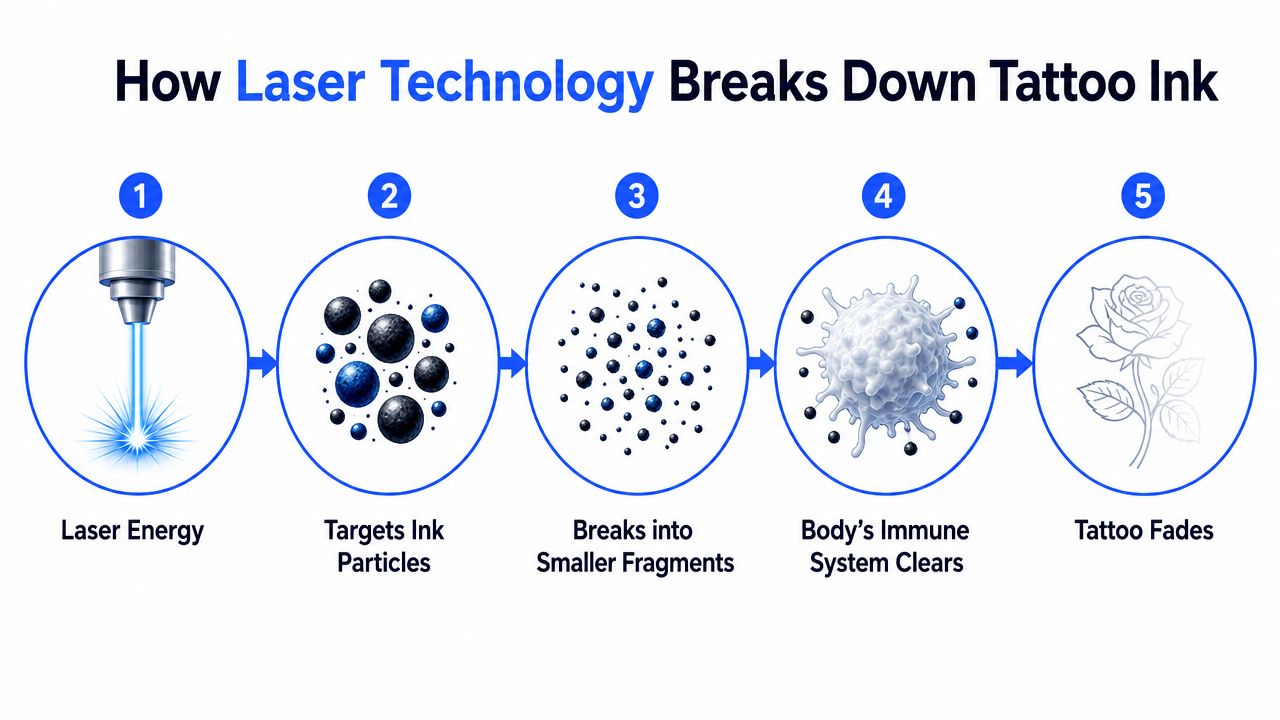
Tattoo removal feels less mysterious once you understand what the laser is doing. The treatment isn't scraping the skin and it isn't dissolving ink like a chemical peel. It uses short bursts of light energy that target tattoo pigment under the surface.
A simple analogy helps. Think of a singer hitting the exact note that cracks a glass. The goal isn't to destroy everything around it. The goal is to deliver the right kind of energy to one specific target until it breaks apart.
What the laser is actually doing
The process happens in a sequence:
- Laser impact: A calibrated wavelength is directed into the tattooed skin.
- Ink absorption: Tattoo pigment absorbs that energy more readily than the surrounding tissue.
- Fragmentation: The pigment breaks into much smaller particles.
- Immune clearing: Your body gradually removes those fragmented particles over time.
- Visible fading: The tattoo lightens as more ink is cleared between sessions.
If you're interested in a broader overview of treatment advances, ProMD Health also explains how technology has changed tattoo removal.
Why that creates sensation
The discomfort comes from two places. First, the laser delivers energy fast and precisely, which creates a sharp immediate sensation during each pulse. Second, your skin and immune system respond after treatment. That response is part of the cleanup process, but it also explains redness, warmth, swelling, and tenderness.
The treatment sensation is brief. The post-treatment soreness is your skin reacting and beginning repair.
That distinction matters because patients often blend the two together. The pulse itself is one feeling. The inflammatory response afterward is another.
Tattoo characteristics can shape how this feels in practice. Dense pigment may take more energy to treat effectively. Certain inks can behave differently. If you've ever wondered why lasers used for hair removal must avoid tattooed skin, this explanation of the risks of laser hair removal on tattoos is useful because it shows how strongly tattoo pigment absorbs laser energy.
Once you understand that, the pain makes more sense. You're not feeling random irritation. You're feeling a controlled energy event, followed by a predictable healing response.
What Tattoo Removal Pain Actually Feels Like
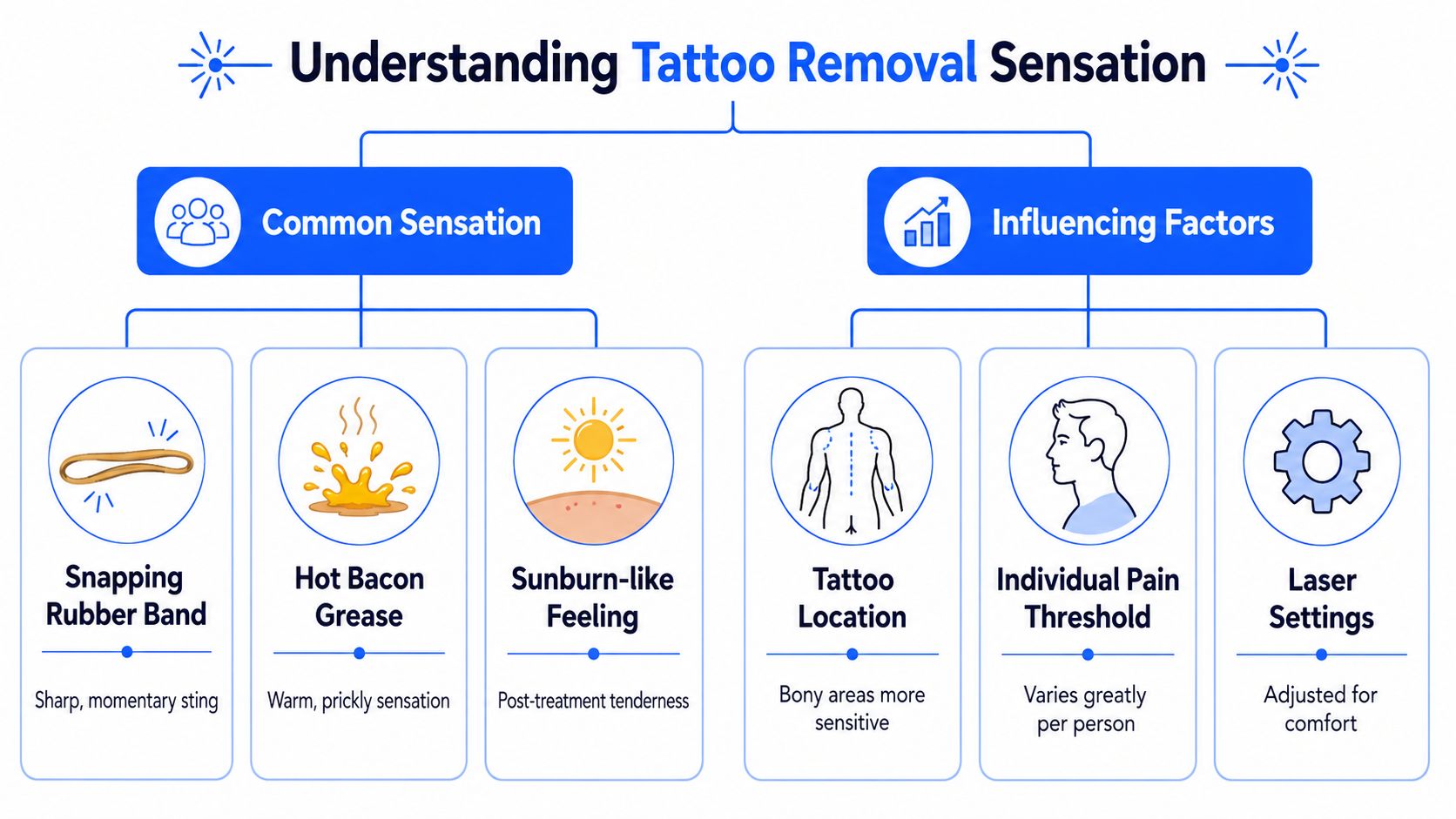
People want a plain answer, so here it is first: for many patients, laser tattoo removal feels like a sharp rubber band snap during the pulses and a bad sunburn afterward. That comparison is widely used because it captures both parts of the experience, and it aligns with this description of laser tattoo removal pain as a bad sunburn with rubber-band-like pulses.
But that answer is incomplete if it stops there.
The common description is only partly right
A tattoo on the outer upper arm doesn't usually feel the same as one on the ribs, ankle, wrist, or fingers. Areas with less padding, thinner skin, and more concentrated nerve endings tend to feel more intense. That doesn't mean treatment on those areas is unsafe. It means the “rubber band snap” line can undersell what some patients experience.
Pain language also varies by person. One patient says “annoying but quick.” Another says “hot and sharp.” Another focuses more on the lingering tenderness than the laser pulses themselves. If you like using a structured pain framework before a procedure, the pain scale guide from Pain and Sleep Therapy Center can help you describe symptoms more clearly during consultation and recovery.
Tattoo removal pain by body location
The simplest way to set expectations is to compare body areas side by side.
| Pain Level | Body Areas | Sensation |
|---|---|---|
| Lower | Outer thigh, upper arm, other fleshier areas | Sharp snapping sensation that tends to feel more tolerable because there's more soft tissue under the skin |
| Moderate | Forearm, calf, shoulder area | Noticeable sting with warmth afterward, often easier to tolerate in short sessions than patients expect |
| Higher | Wrist, ankle, spine, ribs, forehead, armpit, fingertips | Sharper, more concentrated pain with less cushion over bone or in highly sensitive skin |
The pattern matches what clinicians see in practice and what pain physiology predicts. The more exposed the nerves and the less soft tissue present, the more vivid the sensation can feel.
A small tattoo in a sensitive area can feel worse than a larger tattoo in a fleshier one.
That surprises people. They assume size alone determines pain. It doesn't. Location is often the first thing that changes the conversation.
What patients usually notice after treatment
The immediate treatment is fast. The area may then feel hot, tight, tender, or mildly swollen. Many people say the after-feeling resembles a fresh sunburn more than the laser pulses themselves. For some, that post-treatment tenderness is the main discomfort of the day.
That distinction helps with planning. If you're worried about working out, wearing tight clothing, or returning to a job with friction on the treated area, the issue is often not the minutes in the chair. It's the several hours after.
Key Factors That Influence Your Pain Experience
Two tattoos can be treated on the same day by the same provider and feel completely different. That's because tattoo removal pain isn't determined by one variable. It sits at the intersection of the tattoo, the skin, and the treatment approach.
The tattoo itself changes the experience
Some tattoos are straightforward. Others are stubborn. The difference can affect comfort.
- Ink density: Heavily packed pigment often demands a more deliberate treatment plan. Denser tattoos may create a more noticeable treatment response.
- Color and composition: Some inks respond predictably. Others don't. Metallic components can be more reactive, and patient reports often highlight them as especially uncomfortable.
- Size and coverage: A small tattoo in a sensitive area can be intense for a short burst. A larger tattoo may be less sharp per pulse but more fatiguing because more skin is being treated.
This is why “How much does tattoo removal hurt?” can't be answered well without seeing the tattoo itself.
Your skin and healing response matter too
Individual pain tolerance is real, but it's only part of the picture. Skin sensitivity, recent sun exposure, inflammation, and general healing behavior also shape the experience.
One issue deserves special attention for safety. In darker or tanned skin, high fluence laser settings can cause epidermal melanin to absorb too much laser energy, which may lead to permanent bleaching or scarring in up to 5–10% of cases, according to this review on laser treatment considerations in darker skin. That isn't just a cosmetic point. It directly affects how aggressively a provider should chase speed or intensity.
The safest plan isn't always the most aggressive plan, especially when pigmentary risk is part of the equation.
A careful consultation should account for:
- Skin tone and recent tanning: These affect how much competing pigment is present in the skin.
- Body location: Not just for pain, but for friction, healing, and post-treatment irritation.
- Your past reactions: If you've had unusual healing, blistering, or pigment changes before, that matters.
- Your goals: Complete removal, partial fading, and cover-up prep can call for different choices.
Good pain management starts with correct planning. A rushed setting choice can make treatment harsher than it needs to be.
How ProMD Health Prioritizes Your Comfort and Safety
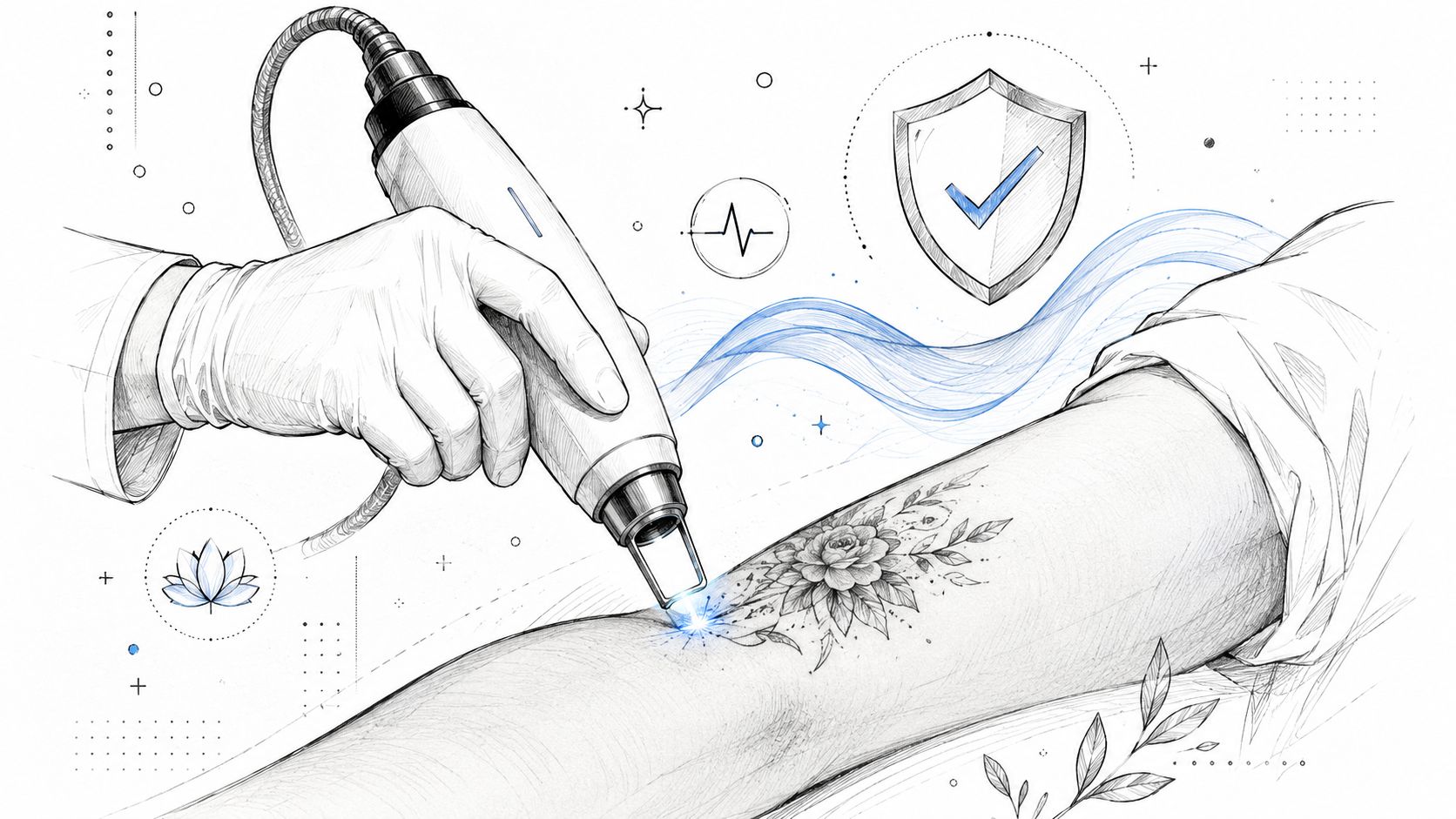
Technology and protocol make a major difference in how tattoo removal feels. Comfort isn't something to improvise once a patient is already flinching. It should be built into the treatment plan from the start.
Technology matters
Older laser platforms can remove tattoos, but the patient experience isn't identical across devices. Picosecond laser systems generate significantly less patient-reported pain than nanosecond lasers, with a statistically validated reduction of P < 0.001, as shown in this clinical comparison of picosecond and nanosecond tattoo removal systems. The reason is practical, not marketing language. Picosecond technology causes less collateral thermal damage and less MEND formation in the stratum corneum, which correlates with lower inflammatory response and lower pain intensity scores.
That matters in the room. Less unnecessary heat injury usually means a more tolerable procedure and a calmer immediate recovery.
Pain control starts before the laser fires
Preoperative pain management for tattoo removal commonly relies on topical anesthetics such as 2.5% lidocaine and 2.5% prilocaine or local injections like 2% lidocaine, which block sodium channels and reduce nerve signal transmission, as outlined in this medical review of topical and local anesthetic options. In plain terms, they help turn a sharper experience into something much more manageable.
A thoughtful comfort plan often includes:
- Topical numbing before treatment: Best for reducing the sting of laser pulses on many treatment areas.
- Cooling during treatment: This helps soothe the skin as energy is delivered and can make repeated pulses easier to tolerate.
- Pacing and communication: Sensitive areas often do better when the provider adjusts timing and checks in rather than trying to power through.
Good laser work isn't just about removing ink. It's about controlling heat, protecting skin, and keeping the patient comfortable enough to complete the treatment plan.
ProMD Health also follows a cash-pay model, which means patients should expect transparent self-pay care rather than insurance-based coverage assumptions. That's important in aesthetic medicine because treatment planning should be driven by appropriateness and safety, not by reimbursement language.
Safety and comfort are tied together
Pain control isn't separate from clinical judgment. The provider has to balance effectiveness, skin response, and the patient's ability to tolerate treatment in a given area. A laser session that is technically aggressive but poorly tolerated often isn't the smartest session.
The best experience usually comes from combining the right device, the right settings, the right numbing approach, and realistic expectations about the area being treated.
Pre and Post Care for a Smoother Recovery
The appointment is only part of the experience. What you do before and after treatment affects how your skin feels, how well it heals, and how anxious you are going into the next session.
Before your appointment
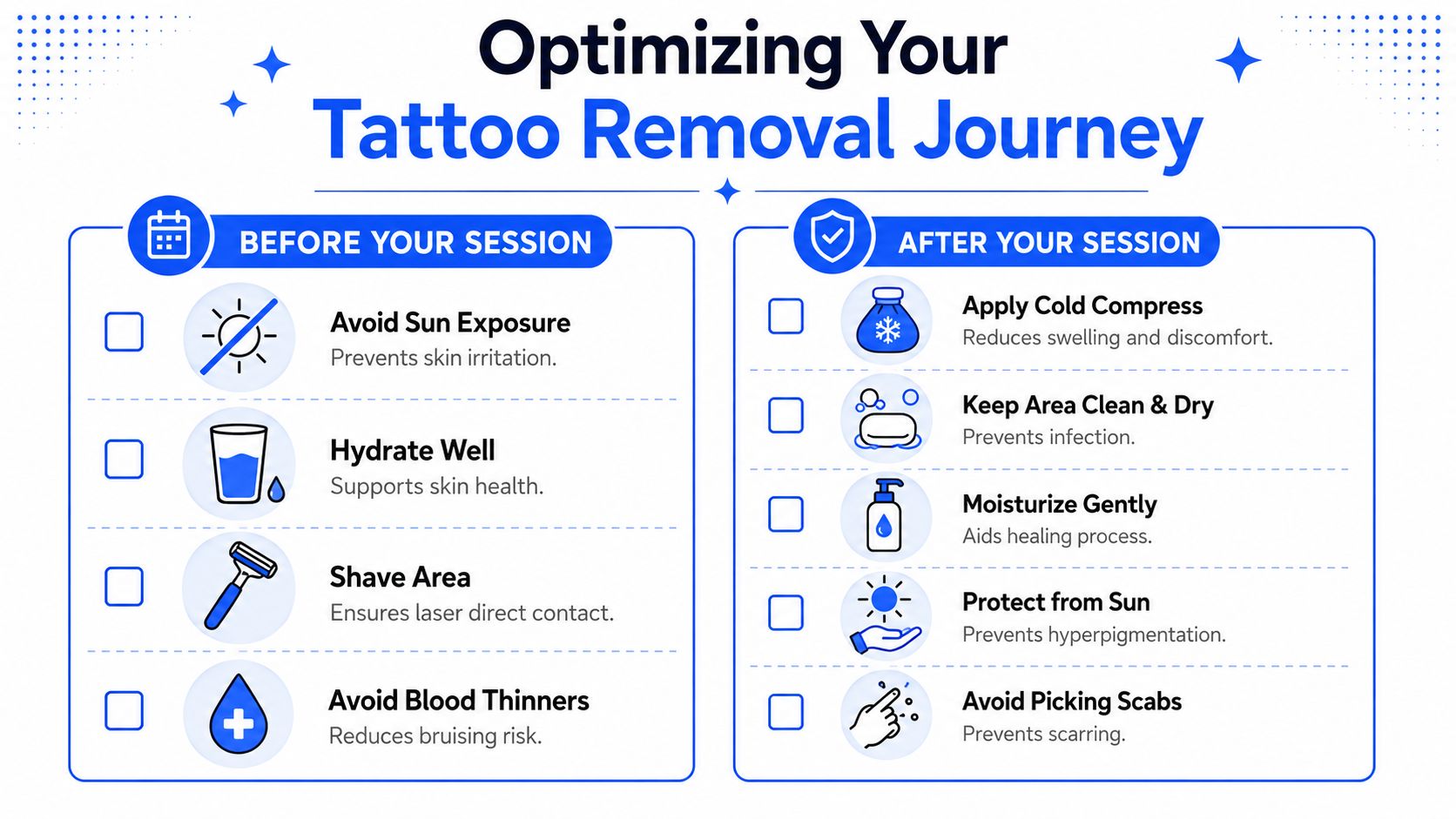
A few simple habits make the day easier.
- Avoid sun exposure: Recently tanned or irritated skin is harder to treat safely and comfortably.
- Hydrate well: Well-supported skin tends to tolerate treatment and recovery better.
- Come prepared for the area treated: Loose clothing helps if the tattoo sits where fabric normally rubs.
- Follow your provider's medication and skincare instructions: Many avoidable problems begin if these are not followed.
If you want a broader reference point for recovery planning, ProMD Health provides pre and post care treatment instructions for aesthetic procedures.
After your session
The first several hours matter most. Post-treatment discomfort typically peaks within 2–4 hours, usually subsides within 24–48 hours, and most soreness resolves within 1–2 days, with full healing occurring in about one week, according to this overview of tattoo removal discomfort and healing.
That timeline helps patients avoid two common mistakes. The first is assuming early redness means something went wrong. The second is underestimating the need to protect the area for the next several days.
A practical recovery checklist looks like this:
- Use a cold compress: Short intervals can reduce heat and swelling.
- Keep the area clean and dry: Gentle care lowers the chance of irritation.
- Moisturize only as directed: Overdoing products can backfire on freshly treated skin.
- Protect the skin from sun: Freshly treated skin is more vulnerable to unwanted pigment changes.
- Don't pick or peel: Blisters, scabs, and flaky healing skin need time.
Most recovery problems come from friction, sun, or picking, not from the laser itself.
The treatment may only take a short time, but the skin still needs a full recovery window. If patients respect that window, the next session is usually less stressful because they know the rhythm of healing.
Begin Your Tattoo Removal Journey with Confidence
Tattoo removal pain is real, but it isn't random and it isn't unknowable. Once you understand why the laser feels sharp, why certain body areas are tougher, and how proper numbing, device selection, and aftercare change the experience, the process becomes far less intimidating.
What patients usually need isn't hype or sugarcoating. They need a plan. That includes a real assessment of the tattoo, a safety-first approach to skin type, and clear instructions for recovery. That's how fear turns into confidence.
If you're considering treatment, start with a consultation and get answers specific to your tattoo, your skin, and your goals. You can explore tattoo removal at ProMD Health and discuss next steps at an approved location such as Annapolis, Arlington, Bethesda, Columbia, Washington, DC, Fort Lauderdale, or Wellington.
ProMD Health offers tattoo removal as part of its non-surgical aesthetic services across approved locations in Maryland, Virginia, Washington, DC, Florida, Texas, Colorado, and Delaware. If you're ready for a personalized consultation, visit ProMD Health to find a location and speak with a team that can evaluate your tattoo, explain expected discomfort clearly, and build a treatment plan around comfort, safety, and results.


