
Why Finding the Right Bald Hair Solution Matters
A bald hair solution can feel like a lifelong search for the more than 80 million Americans experiencing hair loss. The good news? Modern medicine and science offer real options that work.
Quick Answer: Effective Bald Hair Solutions Include:
- Over-the-Counter Treatments: Nutrafol supplements, gentle shampoos, and serums recommended by ProMD Health
- Prescription Medications: Finasteride (DHT blocker) and Spironolactone (for select patients)
- Advanced Therapies: Platelet-Rich Plasma (PRP) injections and Low-Level Laser Therapy (LLLT)
- Surgical Options: Hair transplant procedures (FUT and FUE)
- Natural Remedies: Scalp massage, essential oils, diet improvements, and stress management
- Emerging Science: PP405 molecule showing promise in clinical trials
Hair loss affects two-thirds of all men and one-fourth of all women by age 50. It’s not just about appearance. Studies show that thinning hair can trigger stress, anxiety, and depression. Whether you’re noticing a receding hairline, a widening part, or circular bald patches, the psychological impact is real.
But here’s the truth: hair loss doesn’t have to be permanent. The key is understanding what’s causing your hair loss and matching it to the right treatment. Some people see results with simple lifestyle changes and supplements. Others need prescription medications or advanced therapies like PRP. And for some, surgical options provide the most dramatic change.
The journey starts with accurate diagnosis. A dermatologist or hair restoration specialist can perform a physical exam, review your medical history, and potentially order blood tests or a scalp biopsy. These steps help identify whether your hair loss stems from genetics, hormonal imbalances, stress, aging, or medical conditions. Once you know the cause, you can choose the most effective bald hair solution for your specific situation.
From ancient remedies involving dates and dog’s paw to today’s FDA-approved treatments, humans have always sought solutions for baldness. The difference now? We have options that actually work. Recent breakthroughs, like the PP405 molecule developed by UCLA scientists, show that even more effective treatments may be on the horizon.
I’m Scott Melamed, President and CEO of ProMD Health, where we’ve helped countless patients find effective bald hair solution options through evidence-based treatments and personalized care. My background in biotechnology from Johns Hopkins University and years of healthcare leadership have shown me that the right approach combines medical expertise with genuine understanding of each patient’s unique needs.
Understanding the Roots of Hair Loss
The journey to finding an effective bald hair solution begins with understanding why your hair is thinning or falling out in the first place. This isn’t just about what you see in the mirror; it’s about uncovering the underlying causes.
When should you consult a doctor for hair loss? If you notice sudden or patchy hair loss, significant shedding, or if your hair loss is accompanied by itching, redness, or pain, it’s always best to seek professional medical advice. For many, the decision to see a doctor comes when home remedies or over-the-counter options aren’t yielding the desired results. Early intervention can often lead to more effective outcomes.
Doctors use several diagnostic methods to pinpoint the cause of hair loss. This typically starts with a thorough physical exam of your scalp and hair, where your doctor will ask about your diet, hair care routine, and your medical and family history. This initial conversation helps us gather crucial clues.
Further diagnostic steps may include:
- Blood tests: These can help uncover underlying medical conditions that might contribute to hair loss, such as thyroid issues or nutritional deficiencies.
- Pull test: During this test, a doctor gently pulls on a small section of hair to see how many strands come out. This helps determine the stage of the hair shedding process.
- Scalp biopsy: In some cases, a small sample of skin from the scalp is taken and examined under a microscope to identify infections or other scalp conditions.
- Light microscopy: Your doctor might examine hair shafts under a microscope to check for disorders of the hair structure.
We encourage our patients to be proactive and informed. You can further Explore Mayo Clinic studies to understand the diagnostic process and research advancements.
Understanding the difference between temporary and permanent hair loss is also vital, as it directly impacts treatment options. For instance, patchy hair loss (alopecia areata) can sometimes regrow on its own without treatment, while hereditary hair loss, if left untreated, tends to progress.
The main causes of baldness are varied and often interconnected:
- Genetics: This is perhaps the most common culprit. Androgenetic alopecia, often known as male or female pattern baldness, is hereditary. It affects approximately 50 million men and 30 million women in the United States. If your father experienced hair loss, you’re twice as likely to face it yourself. Male pattern baldness alone affects two-thirds of all men.
- Hormonal imbalances: Fluctuations in hormones can significantly impact hair growth. Conditions like polycystic ovary syndrome (PCOS) or even changes related to certain birth control methods can lead to hair thinning.
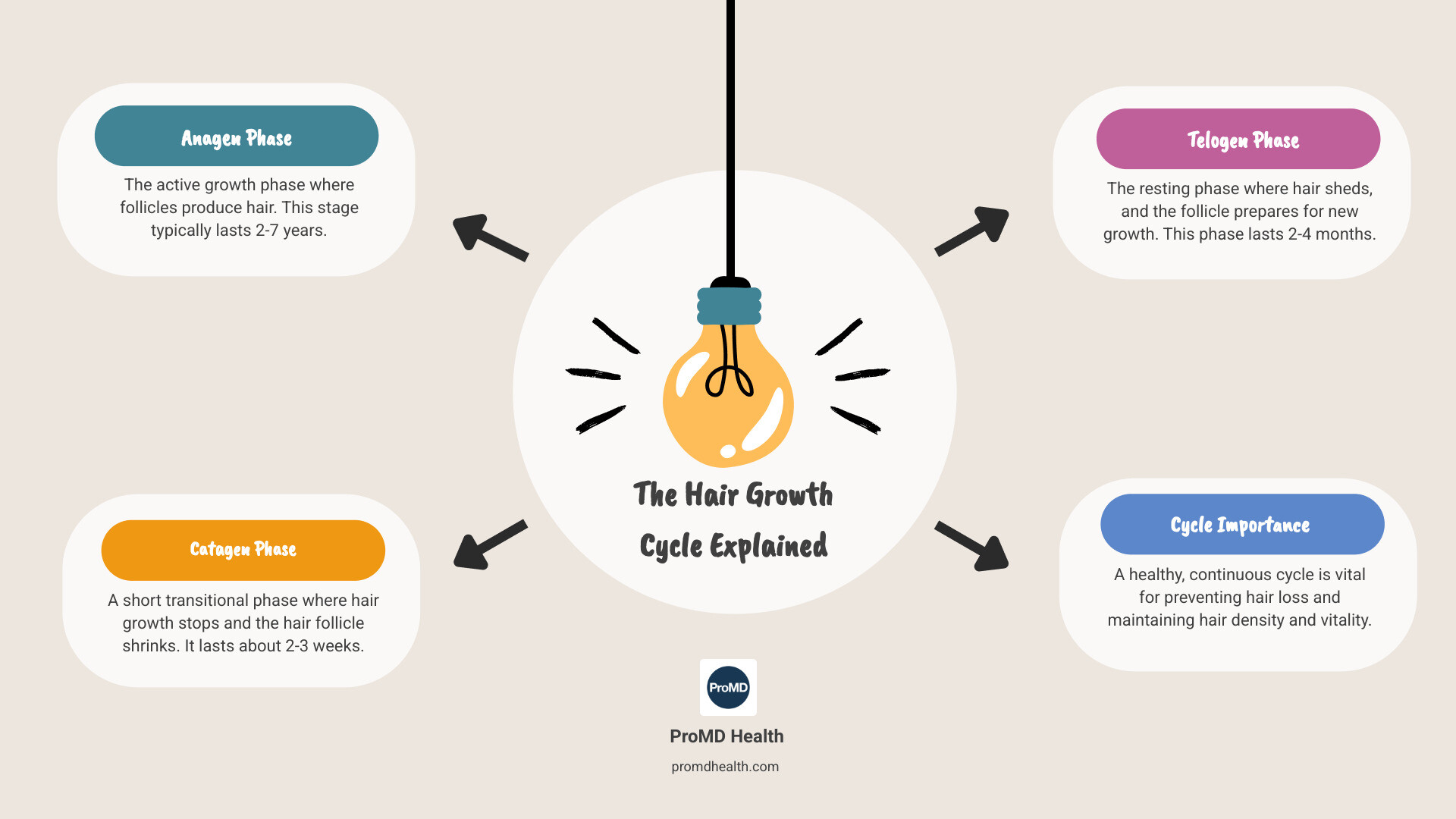
- Stress: Chronic stress can push hair follicles into a resting phase prematurely, leading to increased shedding.
- Aging: As we age, our hair follicles naturally produce thinner, finer hair, and eventually some follicles may stop producing hair altogether.
- Medical conditions: Beyond genetic predispositions, various medical conditions, including autoimmune diseases like alopecia areata, or treatments such as chemotherapy and radiation for cancer, can cause hair loss.
By thoroughly investigating these factors, we can guide you toward the most appropriate and effective bald hair solution.
At-Home and Over-the-Counter Solutions
When it comes to addressing hair loss, many individuals prefer to start with convenient at-home or over-the-counter options. These solutions can be quite effective for early stages of hair thinning or as complementary treatments. The key with these approaches is often consistency and patience.

Finding the right bald hair solution at home
At ProMD Health, we believe in a comprehensive approach to hair health. For many, a great starting point involves incorporating high-quality supplements and hair care products into their daily routine.
We often recommend Nutrafol supplements as part of a foundational hair health regimen. These supplements are formulated to target multiple root causes of hair thinning, including stress, hormones, and nutrition, aligning with our philosophy of holistic wellness. When considering a bald hair solution that starts from within, Nutrafol is a popular choice among our patients.
Alongside supplements, using ProMD Health-recommended shampoos and serums designed to support hair growth and scalp health can make a significant difference. These products often contain ingredients that nourish follicles, improve circulation, and protect existing hair. For optimal results, follow the specific application process for each product. For example, if you’re using a topical serum, ensure your scalp is clean and dry before application, and gently massage it in to ensure absorption.
Regarding the expected results timeline, it’s important to set realistic expectations. With consistent use of supplements and topical products, you might start to see noticeable improvements in hair texture and reduced shedding within 3 to 6 months. Hair growth is a slow process, and patience is a virtue here.
Vitamin support also plays a crucial role. Deficiencies in certain vitamins and minerals can contribute to hair loss. Key nutrients linked to hair growth include B-vitamins (especially biotin), Vitamin A, Vitamin C, Vitamin D, Vitamin E, iron, and zinc. However, we always advise consulting with a medical professional before starting any new supplement regimen, as excessive intake of certain vitamins can also be harmful. For example, while biotin is often touted for hair health, ensure you’re taking the right dosage and that it’s appropriate for your individual needs. To learn more about whether these treatments are right for you, explore if Are You a Candidate for Hair Restoration?
Natural Remedies and Lifestyle Adjustments
Beyond specific products, certain natural remedies and lifestyle adjustments can significantly contribute to a healthier scalp and potentially stimulate hair growth. These are often excellent complementary strategies for a holistic bald hair solution.
One simple yet effective technique is scalp massage. A vigorous scalp massage for at least 5 minutes daily can boost circulation to the hair follicles. Improved blood flow means more nutrients and oxygen reaching the follicles, which can encourage stronger, thicker hair growth.
Certain essential oils have also garnered attention for their hair-growing properties:
- Rosemary oil: Research suggests rosemary oil possesses anti-inflammatory properties and can improve circulation, making it a promising natural treatment for hair loss. You can gently rub a small amount of diluted rosemary oil onto your bald spots each night or opt for shampoos that contain rosemary oil.
- Peppermint oil: While promising results have been shown in mice studies, human research on peppermint oil for hair growth is still limited. If considering it, use it diluted and apply it to the scalp, being mindful of potential irritation.
- Aloe vera: Known for its anti-inflammatory properties and rich in enzymes, minerals, and other healthy ingredients, aloe vera may contribute to a healthy scalp environment, although its direct hair growth benefits are still being studied.
Diet and nutrition are foundational to overall health, including hair health. A balanced diet rich in proteins, vitamins, and minerals supports strong hair. Conversely, poor nutrition can exacerbate hair thinning. Focus on whole foods, lean proteins, and plenty of fruits and vegetables.
Stress management is another critical,, aspect of hair loss prevention and treatment. Chronic stress can disrupt the hair growth cycle. Incorporating stress-reducing activities like meditation, yoga, or regular exercise can help mitigate stress-induced hair shedding.
Finally, adopting gentle hair care routines can protect your existing hair and prevent further damage. Avoid harsh chemical treatments, excessive heat styling, and tight hairstyles that pull on the hair follicles. Opt for sulfate-free shampoos and conditioners.
For more information on how lifestyle factors and supplements like Nutrafol can support your hair restoration journey, visit our page on Hair Restoration Washington DC – Nutrafol.
Your Guide to Medical and Surgical Bald Hair Solution Options
When at-home remedies aren’t enough, or if your hair loss is more advanced, medical and surgical interventions offer powerful and often more dramatic solutions. At ProMD Health, under the guidance of George Gavrila, MD, Founder and Medical Director, we emphasize a personalized approach, ensuring you receive the most appropriate and effective treatment plan.

A professional consultation with Dr. Gavrila or one of our specialists is the crucial next step. We’ll conduct a thorough evaluation to determine the specific cause of your hair loss and discuss the range of available treatments. This is also where we’ll openly discuss potential side effects and risks associated with each option, ensuring you’re fully informed to make the best decision for your health and well-being.
Prescription Medications
For many forms of hair loss, particularly androgenetic alopecia, prescription medications can be a highly effective bald hair solution.
Finasteride, which can be prescribed at ProMD Health, is a widely recognized oral medication primarily used to treat male pattern baldness at the crown and in the middle of the scalp. It works by preventing the conversion of testosterone into dihydrotestosterone (DHT), a hormone linked to hair follicle miniaturization and subsequent hair loss. Many men taking finasteride experience a significant slowing of hair loss, and some even observe new hair growth. While it’s generally effective, it’s worth noting that it may be less effective for men over 60.
Regarding potential side effects of finasteride, while online discussions might suggest a decrease in libido or associations with depression, studies indicate these side effects are exceedingly rare, affecting less than two percent of men. It’s also critical to note that finasteride should not be used by pregnant individuals due to concerns about potential birth defects.
For select patients, other oral medications like Spironolactone may be considered, particularly for female pattern hair loss, as it works differently by blocking androgen receptors.
To explore our full range of hair services and discuss prescription options, please visit our Services: Hair page.
Advanced Non-Surgical Therapies
Beyond daily pills, cutting-edge non-surgical therapies offer exciting possibilities for hair restoration. These treatments leverage the body’s natural healing mechanisms to stimulate hair growth.
Platelet-Rich Plasma (PRP) therapy at ProMD Health is a popular non-surgical treatment that involves injecting a concentration of a patient’s own platelets into the scalp. These platelets are rich in growth factors that are believed to stimulate dormant hair follicles, increase blood supply to the scalp, and promote new hair growth while increasing hair thickness. The process begins with drawing a small amount of your blood, which is then processed to concentrate the platelets, and finally injected into targeted areas of the scalp. We have a detailed guide explaining how Explaining PRP Treatments: What Are They? for those interested in the science behind it.
Low-Level Laser Therapy (LLLT), also known as red light therapy, uses specific wavelengths of light to stimulate cellular activity in the scalp. The Food and Drug Administration (FDA) has approved low-level laser devices as a treatment for hereditary hair loss in both men and women. LLLT works by enhancing cell metabolism in the scalp and improving blood circulation, leading to the revitalization of follicles and encouraging hair growth. While some studies have shown LLLT to reverse pattern hair loss, especially when combined with topical treatments or after a transplant, more research is ongoing regarding its long-term effects. ProMD Health offers FDA-cleared LLLT devices to support your hair restoration journey.
Choosing a permanent bald hair solution: Surgical Options
For individuals with significant hair loss, surgical hair restoration offers the most dramatic and often permanent bald hair solution. Hair transplant surgery offered at ProMD Health involves moving healthy hair follicles from a ‘donor site’ on your scalp (typically the back or sides of the head where hair is more resistant to balding) to areas where hair is thinning or absent.
There are two primary techniques for hair transplant surgery:
| Technique | Description | Key Features |
|---|---|---|
| Follicular Unit Transplantation (FUT) | A strip of skin containing hair follicles is surgically removed from the donor site. Individual follicular units are then harvested from this strip and transplanted to the recipient area. | Allows for a large number of grafts in one session. Leaves a linear scar at the donor site, which is typically covered by surrounding hair. |
| Follicular Unit Extraction (FUE) | Individual hair follicles are directly extracted one by one from the donor site using a specialized punch tool. These individual follicles are then transplanted to the balding areas. | Less invasive, resulting in tiny, nearly undetectable dot scars rather than a linear scar. Promotes quicker recovery time and natural-looking results. Often preferred for those who wear their hair very short. |
Both FUT and FUE procedures are carefully performed to ensure natural-looking results. While the transplanted hair is permanent, it’s important to understand that hereditary hair loss in non-transplanted areas can still progress. Therefore, many patients combine surgical options with non-surgical therapies to maintain and improve overall hair density.
Success rates for hair transplants are generally high, especially when performed by experienced surgeons. However, achieving the desired density and appearance often requires patience, as the transplanted hair goes through a natural growth cycle and full results typically become visible 6 to 12 months post-procedure.
Cost considerations for hair transplant surgery vary widely depending on the technique used, the number of grafts required, and the individual clinic. While an investment, for many, the long-term results and impact on self-confidence make it a worthwhile bald hair solution.
The Future of Hair Restoration and Coping Strategies
The journey to finding an effective bald hair solution is not just about physical treatments; it’s also about hope, innovation, and emotional well-being. We understand that hair loss can be a deeply personal and often distressing experience, and we are committed to supporting our patients every step of the way.
Emerging Scientific Breakthroughs
The field of hair restoration is constantly evolving, with exciting new findies offering immense hope. One of the most promising recent breakthroughs centers around the PP405 molecule. UCLA scientists, including professors William Lowry, Heather Christofk, and Michael Jung, have identified this small molecule with remarkable potential.
The PP405 molecule works by targeting a protein in the dormant stem cells of hair follicles. By inhibiting this protein, PP405 effectively “awakens” these long-slumbering but undamaged follicles. In the first human trials conducted in 2023, the topical application of PP405 onto the scalp at bedtime for a week produced promising and statistically significant results. Researchers are optimistic that this treatment will lead to the growth of full, terminal hair, not just fine peach fuzz.
To further develop this groundbreaking bald hair solution, the UCLA scientists co-founded Pelage Pharmaceuticals. Backed by investors like Google Ventures, the company successfully raised $16.4 million in funding to shepherd further clinical trials and seek official clearances. While the FDA approval process is rigorous and takes time, the potential of PP405 to reverse pattern hair loss, which affects more than half of all men and a quarter of all women by age 50, is truly revolutionary. This research points to an exciting future for topical treatments that could offer new hope for millions.
For those interested in the broader impact of such advancements, we invite you to read about The Unexpected Benefits of Hair Restoration.
The Psychological Side of Hair Loss
Beyond the physical aspects, we recognize the profound psychological impact of hair loss. It can affect self-esteem, confidence, and overall emotional well-being. At ProMD Health, we believe that addressing the emotional side is just as important as the physical.
Developing effective coping mechanisms is crucial. This might involve accepting the situation, focusing on aspects of your appearance that you love, and embracing personal style. Many find it helpful to communicate openly with friends and family about their feelings, seeking support rather than isolating themselves. Joining support groups can also provide a valuable community where individuals can share experiences and advice.
For some, styling options can be a great way to manage the appearance of thinning hair. Working with a skilled stylist who understands hair loss can help you find cuts and styles that maximize your existing hair. Wigs and hairpieces are also excellent options, offering versatility and the ability to instantly change your look or regain a sense of fullness.
The goal is to feel confident and comfortable in your own skin. Whether that involves pursuing medical treatments, embracing a new hairstyle, or simply focusing on positivity and self-acceptance, your journey to finding a bald hair solution should empower you.
Frequently Asked Questions about Hair Loss Treatments
We understand you likely have many questions when considering a bald hair solution. Here are some of the most common inquiries we receive:
How long does it take to see results from hair loss treatments?
The timeline for seeing results can vary significantly depending on the type of treatment and individual factors.
- Nutrafol and supplements: With consistent use, you might start to notice reduced shedding and improved hair quality within 3 to 6 months.
- Finasteride: It typically takes a few months of daily use to observe a slowing of hair loss, and new growth may take 6 months or more to become apparent.
- PRP: Patients often undergo a series of initial treatments (e.g., 3-4 sessions over a few months), with visible improvements in hair thickness and growth usually appearing several months after the initial series.
- Surgery: While the transplant procedure is immediate, the transplanted hair goes through a natural cycle. Initial shedding is common, followed by new growth. Full results are typically visible 6 to 12 months after the procedure.
Regardless of the chosen method, patience and consistency are paramount. Hair growth is a slow biological process, and treatments need time to work effectively.
Are hair loss treatments permanent?
The permanence of a bald hair solution depends entirely on the specific treatment and the underlying cause of your hair loss.
- Medications and supplements: Treatments like finasteride and minoxidil, as well as nutritional supplements, require continuous use to maintain their benefits. If you stop taking these medications, the hair loss will typically resume within a few months. Minoxidil’s effects, for example, persist only as long as the treatment continues.
- Hair transplants: The transplanted hair follicles are generally permanent because they are taken from areas of the scalp genetically resistant to balding. However, it’s crucial to understand that a transplant doesn’t stop the natural progression of hair loss in the non-transplanted areas. This is why many patients combine surgery with medical therapies to preserve existing hair and improve overall density.
For a deeper dive into long-term hair regrowth strategies, consider reading our article Take the Next Step with Hair Regrowth Treatments.
What are the most common side effects of hair loss medications?
Like any medical treatment, hair loss medications can have potential side effects, though they vary by medication.
- Nutrafol and supplements: Side effects are generally rare and mild, often related to digestive upset if taken on an empty stomach.
- Finasteride: As mentioned earlier, while online discussions sometimes highlight concerns about decreased libido and depression, studies indicate these are exceedingly rare, affecting less than two percent of men. Other less common side effects can include erectile dysfunction or ejaculation disorders. This medication is not for use by women, especially those who are pregnant or may become pregnant.
- Minoxidil: The most common side effects are scalp irritation, itching, dryness, or flaking at the application site. In rare cases, some users may experience unwanted hair growth on other parts of the body, dizziness, or chest pain.
The importance of consulting a doctor cannot be overstated. Before starting any new medication, discuss your full medical history and any concerns with a qualified healthcare provider like George Gavrila, MD, or one of our specialists at ProMD Health. We can help you understand the risks and benefits specific to your situation and monitor for any adverse reactions.
Conclusion
Navigating hair loss can feel overwhelming, but as we’ve explored, a wide array of effective bald hair solution options are available today. From personalized at-home regimens featuring ProMD Health-recommended Nutrafol supplements and specialized hair care products, to advanced medical treatments like prescription finasteride and innovative non-surgical therapies such as PRP and LLLT, there’s more hope than ever before. For those seeking the most significant and lasting change, modern hair transplant techniques like FUE and FUT offer remarkable results.
The most crucial takeaway is the importance of an accurate diagnosis. Understanding the root cause of your hair loss—whether it’s genetics, hormones, stress, or other factors—is the foundational step toward choosing the most effective treatment. This leads to a truly personalized approach that considers your unique needs, lifestyle, and desired outcomes.
At ProMD Health, we are dedicated to empowering our patients. We combine cutting-edge science with compassionate care, helping you not only achieve hair regrowth but also regain confidence and emotional well-being. We believe that everyone deserves to “Look Younger and Feel Younger,” and finding the right bald hair solution is a significant part of that journey.
If you’re ready to take control of your hair loss and explore the possibilities, we invite you to connect with us. Our team, under the direction of George Gavrila, MD, is here to guide you through every option, answer your questions, and develop a custom plan just for you.


