Why Finding the Right Hair Specialist Matters for Your Health and Confidence
Finding the best hair specialist near me is a critical first step on your journey to healthier hair, and it begins with understanding what defines a top-tier provider. Your hair’s health is often a reflection of your overall well-being, and the right expert can provide not just aesthetic solutions but also crucial medical insights.
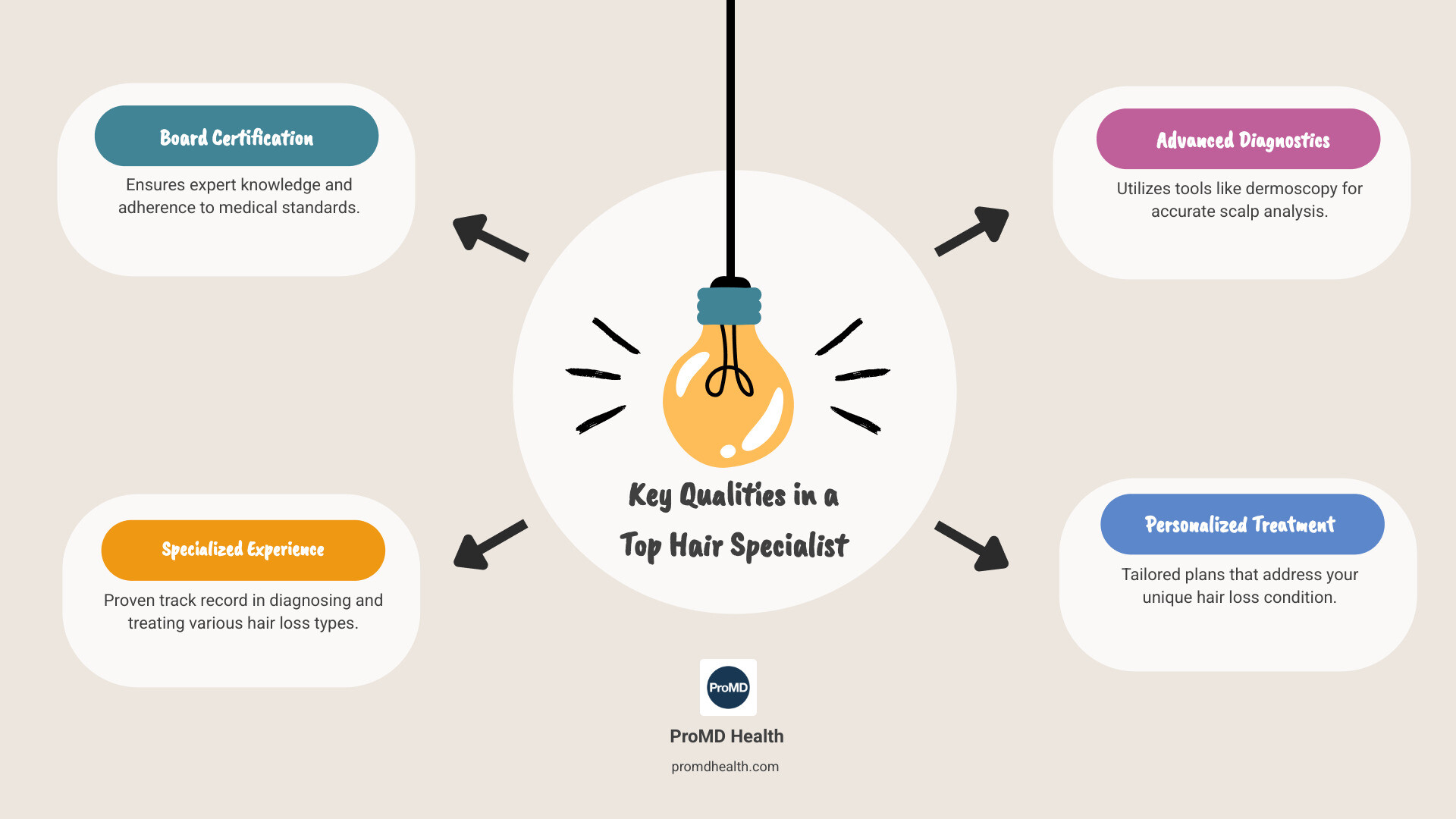
What to Look For in a Premier Hair Specialist:
- Board-Certified Dermatologist: This is the gold standard. Board certification ensures the physician has undergone rigorous training and testing in diagnosing and treating conditions of the hair, skin, and nails.
- Specialized Experience: Look for a provider or clinic that focuses specifically on hair loss. A dedicated practice means they are deeply familiar with the nuances of different conditions and the latest treatment protocols.
- Advanced Diagnostic Tools: A thorough diagnosis is non-negotiable. The best clinics use tools like digital dermoscopy for high-magnification scalp analysis and may order blood tests to check for underlying issues.
- Personalized Treatment Plans: There is no one-size-fits-all solution for hair loss. Your specialist should create a plan custom to your specific diagnosis, genetics, lifestyle, and goals.
- Positive Patient Reviews and Results: Look for authentic testimonials and a gallery of before-and-after photos. This demonstrates a track record of success and patient satisfaction.
- Clear Communication: A great specialist takes the time to listen to your concerns, answer your questions, and explain your diagnosis and treatment options in a way you can understand.
Hair loss is incredibly common, affecting approximately 50 million men and 30 million women in the U.S., with androgenetic alopecia (pattern baldness) being the most frequent cause. Yet, its impact goes far beyond the physical. Studies consistently show that people experiencing hair loss report feelings of anxiety, low self-esteem, and even depression. This emotional toll underscores why finding a compassionate and skilled specialist is so vital.
As Dr. Jerry Shapiro, a leading hair loss expert, noted: “When I started out in dermatology more than 30 years ago, no one was exclusively addressing hair loss, also known as alopecia, and good treatments were scarce.” Today, the landscape has transformed. The global hair loss treatment market is now valued at $7.9 billion and continues to grow, driven by scientific breakthroughs and a greater availability of effective, evidence-based solutions.
Whether you’re noticing gradual thinning, a receding hairline, patchy spots, or sudden shedding, a qualified specialist is your best ally. They will conduct a comprehensive diagnosis to uncover the root cause and guide you through proven treatment options that fit your unique situation.
I’m Scott Melamed, President and CEO of ProMD Health. We have built our reputation on delivering best-in-class aesthetic and wellness care. With my background in biotechnology from Johns Hopkins and years leading a mission-driven healthcare organization, I am passionate about connecting patients with the best hair specialist near me—one who provides personalized, scientifically-backed solutions to restore not just hair, but also confidence.
Understanding Hair Loss: When to See a Specialist
Hair loss can be a deeply worrying experience, and knowing when to seek professional help is the first step toward finding effective solutions. It’s not always about vanity; hair loss can be a visible sign of an underlying health issue. We’re here to help you understand the common signs and symptoms that warrant a visit to a specialist.

Common Signs and Symptoms of Hair Loss:
- Gradual Thinning: This is the most common presentation of hair loss. In women, it often manifests as a widening part line, while in men, it typically appears as a receding hairline and thinning at the crown. This pattern strongly suggests androgenetic alopecia, where a genetic sensitivity to the hormone dihydrotestosterone (DHT) causes hair follicles to shrink over time.
- Receding Hairline: Primarily seen in men, this is a classic sign of male pattern baldness where the hairline at the temples and forehead gradually moves backward, often forming a distinct M-shape.
- Patchy Hair Loss (Alopecia Areata): The sudden appearance of smooth, circular bald spots on the scalp, beard, or eyebrows can indicate alopecia areata. This is an autoimmune condition where the body’s immune system mistakenly attacks its own hair follicles. Affecting about 2% of the global population, it can range from small patches to more extensive hair loss.
- Sudden, Excessive Shedding (Telogen Effluvium): If you notice a dramatic increase in hair falling out—clogging the shower drain or filling your hairbrush—you may have telogen effluvium. This is a temporary shedding phase often triggered by a significant physical or emotional stressor. Common triggers include major surgery, high fever, childbirth, certain medications, nutritional deficiencies (like low iron), or rapid weight loss. While alarming, the hair loss is typically diffuse and reversible once the trigger is addressed.
- Scalp Itching, Flaking, or Pain: While sometimes just dandruff, persistent scalp symptoms accompanied by hair loss require a specialist’s evaluation. Conditions like seborrheic dermatitis, psoriasis, or fungal infections (tinea capitis) can cause inflammation that disrupts hair growth and leads to shedding.
Underlying Causes of Hair Loss:
Hair loss is a complex issue with a wide range of potential causes:
- Androgenetic Alopecia: The most prevalent form, affecting approximately 50 million men and 30 million women in the U.S. It is driven by a combination of genetics and hormones (specifically DHT).
- Alopecia Areata: An autoimmune disorder that causes the immune system to attack hair follicles.
- Telogen Effluvium: A temporary but significant shedding condition triggered by physical or emotional stress.
- Hormonal Imbalances: Fluctuations during pregnancy, menopause, or due to thyroid disorders can disrupt the hair growth cycle.
- Nutritional Deficiencies: Inadequate intake of key nutrients like iron, zinc, protein, and certain vitamins can impair hair follicle function and lead to shedding.
- Traction Alopecia: This type of hair loss is caused by prolonged or repetitive tension on the hair from tight hairstyles like braids, ponytails, or extensions. Early intervention can prevent permanent follicle damage.
If you recognize any of these signs, seeking prompt professional advice is crucial. Early and accurate diagnosis is the key to open uping the most effective treatment outcomes. For basic information about hair and hair loss, you may find it helpful to watch this video by Dr. Carolyn Goh.
The Different Types of Hair Specialists: Who Should You See?
When you’re searching for the best hair specialist near me, you’ll encounter different professionals with distinct areas of expertise. Understanding their roles is key to choosing the right expert for your needs, especially since the most effective journey often starts with a non-surgical approach.
Dermatologist: A dermatologist is a medical doctor (MD or DO) who specializes in conditions of the skin, hair, and nails. A board-certified dermatologist is the ideal starting point for any hair loss concern. They are trained to perform a comprehensive medical evaluation, diagnose the root cause of your hair loss—from common pattern baldness to complex autoimmune disorders—and prescribe a full spectrum of medical treatments. As a medical professional with a deep understanding of aesthetic and anti-aging medicine, Dr. George Gavrila, MD, Founder and Medical Director of ProMD Health, exemplifies the expertise needed to address hair health within the context of overall wellness.
Trichologist: A trichologist is a hair and scalp specialist who has been certified through specific training programs but is not a medical doctor in the U.S. They focus on the cosmetic and structural health of the hair and scalp from a holistic perspective. A trichologist can be a valuable resource for advice on nutrition, lifestyle changes, and hair care routines that support healthy hair. However, they cannot prescribe medications, perform medical procedures, or provide a formal medical diagnosis.
Hair Restoration Surgeon: This is a medical doctor, often a dermatologist or plastic surgeon, who has undergone additional specialized training in surgical hair restoration. Their expertise lies in performing hair transplant procedures like Follicular Unit Extraction (FUE) and Follicular Unit Transplantation (FUT). While these can be effective options for certain candidates, surgery is an invasive step with significant cost and downtime. It is typically considered only after non-surgical treatments have been thoroughly explored with a dermatologist or at a specialized hair restoration clinic.
Board-certification is the most important credential to verify. For a dermatologist, it signifies that the physician has met the highest standards of training and knowledge in their field. Experts like Dr. Jerry Shapiro have dedicated their careers to the science of hair, and seeking out a provider with this level of dedication is crucial.
While a general dermatology practice can address hair concerns, a specialized clinic like ProMD Health offers a distinct advantage. We focus exclusively on aesthetic and wellness treatments, including a deep emphasis on non-surgical hair restoration. This allows us to invest in the most advanced diagnostic tools and offer a comprehensive suite of integrated treatments custom for hair loss.
Here’s a quick comparison to help clarify the roles:
| Specialist Type | Qualifications | Focus | Common Treatments & Approach |
|---|---|---|---|
| Dermatologist | Medical Doctor (MD/DO), Board-Certified in Dermatology | Medical diagnosis and treatment of all hair, skin, and nail disorders. | Prescribes medications (e.g., Finasteride, Minoxidil), performs diagnostic tests (biopsies, blood work), and administers advanced non-surgical treatments like PRP. |
| Trichologist | Certified professional (not a medical doctor in the U.S.) | Holistic and cosmetic health of the hair and scalp. | Provides nutritional counseling, lifestyle advice, scalp treatments, and hair care recommendations. Refers to a medical doctor for diagnosis and prescriptions. |
| Hair Restoration Surgeon | MD/DO with specialized surgical training (e.g., in dermatology or plastic surgery) | Surgical hair transplantation. | Performs procedures like FUE and FUT. This is an invasive option often considered a later step for specific cases of hair loss. |