
Is a Chemical Peel for Melasma Near Me the Right Fix?
If you’re looking for a chemical peel for melasma near me, here’s the short answer:
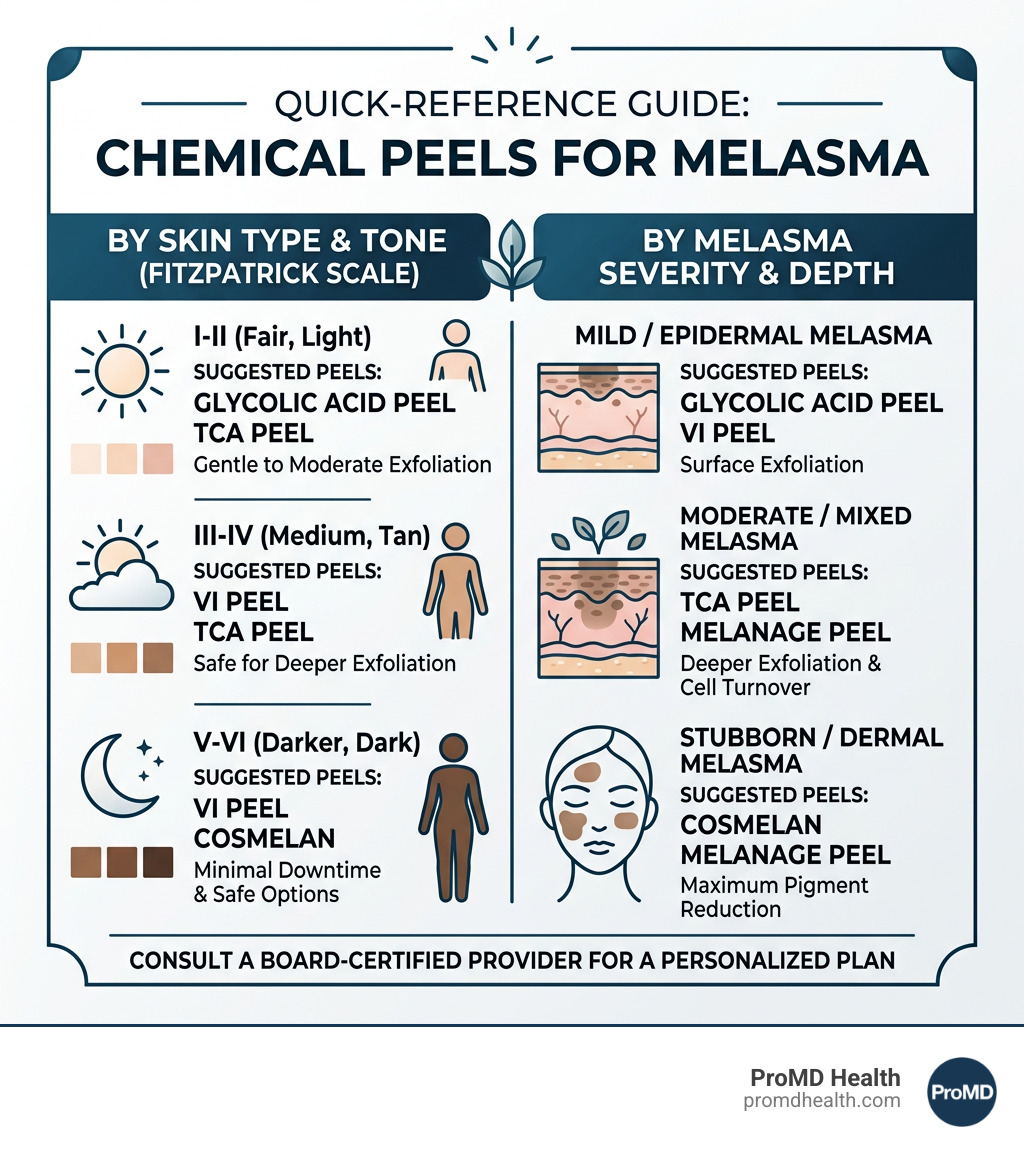
Yes, chemical peels can effectively treat melasma. The best options near you include:
| Peel Type | Best For | Key Benefit |
|---|---|---|
| Cosmelan | All skin types, stubborn melasma | Up to 95% pigment reduction |
| VI Peel | Darker skin tones | Safe, minimal downtime |
| TCA Peel | Moderate melasma | Deeper exfoliation |
| Melanage Peel | Epidermal & dermal melasma | Equivalent to 3-4 mini peels |
| Glycolic Acid Peel | Mild melasma, sensitive skin | Gentle, repeatable |
What to do next: Book a consultation with a board-certified provider who can assess your skin tone and melasma severity before recommending a peel.
Melasma is one of the most stubborn skin concerns out there. Those brown or grayish patches — most common on the cheeks, forehead, and upper lip — don’t respond to ordinary skincare products. They go deeper than that. And for many people, they chip away at confidence every time they look in the mirror.
The good news? Medical-grade chemical peels are proven to target the root of the problem, not just the surface.
This guide walks you through everything: how peels work on melasma, which types are safest for your skin tone, what recovery looks like, and how to find a qualified provider near you.
I’m Scott Melamed, President and CEO of ProMD Health, where our teams use evidence-based aesthetic treatments — including chemical peels for melasma — to help patients restore their skin and their confidence. My background spans biotechnology research at Johns Hopkins and hands-on healthcare leadership, giving me a unique lens on what actually works when it comes to finding the right chemical peel for melasma near me.
Understanding Melasma and Its Causes
To treat melasma effectively, we first have to understand what we are up against. Melasma is a chronic skin condition characterized by symmetrical, blotchy, brownish facial pigmentation. At the heart of this issue are the melanocytes—the cells in our skin responsible for producing pigment (melanin).
In a person with melasma, these melanocytes become hyperactive. Instead of producing an even glow, they dump excess pigment into the upper and middle layers of the skin. While the exact reason this happens isn’t always clear, we know it involves a complex interplay of genetics and external triggers. If you are searching for a chemical peel for melasma near me, you likely already know that standard over-the-counter brightening creams rarely cut it.
According to Scientific research on melasma and skin health, this condition is significantly more common in women than men and often requires a multi-faceted approach to manage. Because it can be so persistent, we often recommend medical-grade interventions. You can learn more about how we treat hyperpigmentation at our various locations across Maryland, Virginia, and Florida.
The Role of Hormones and Sunlight
If melanocytes are the “factory,” then hormones and UV rays are the “managers” giving the orders. Estrogen and progesterone are primary culprits. This is why melasma is frequently nicknamed the “mask of pregnancy,” as the surge in hormones during gestation often triggers these dark patches.
However, even if you aren’t pregnant, birth control pills or hormone replacement therapy can spark the same reaction. For those navigating these changes, understanding skincare during pregnancy is vital, as many aggressive treatments must be paused until after nursing.
Sunlight is the other major trigger. UV radiation doesn’t just tan the skin; it directly stimulates melanocytes to produce more pigment. Even a few minutes of unprotected sun exposure can undo months of treatment. This is why photosensitivity is a major concern for our patients. If you’re looking for a chemical peel for melasma near me, you must be prepared to commit to a strict sun-protection regimen.
How Chemical Peels Specifically Treat Melasma
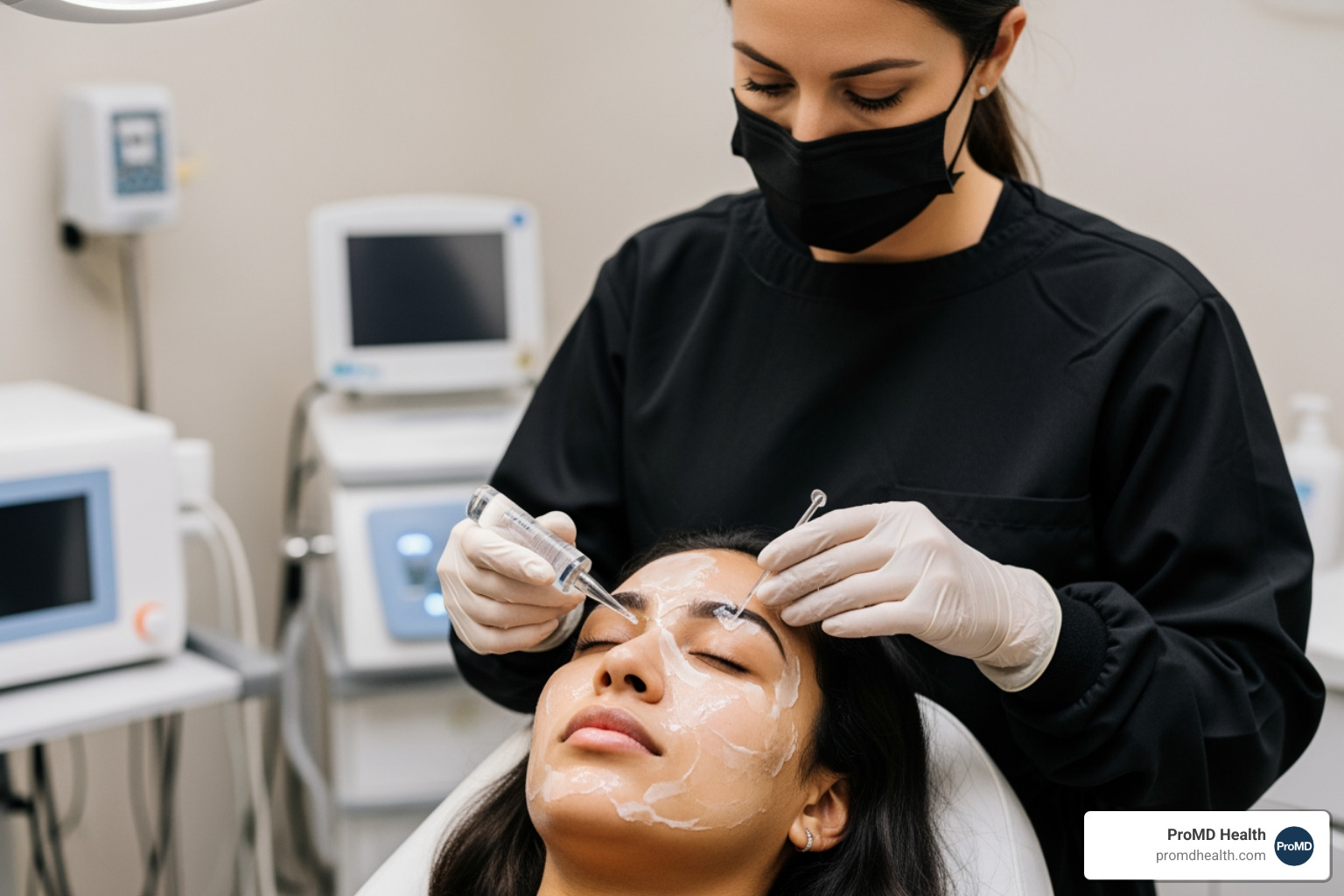
When we apply a chemical peel, we aren’t just “burning off” a layer of skin. We are performing a controlled exfoliation that signals the skin to renew itself. Chemical peels use specialized acid solutions to dissolve the “glue” that holds dead, pigmented skin cells together.
As these cells shed, they take the excess melanin with them. But the real magic happens beneath the surface. Many of the peels we use at ProMD Health contain “tyrosinase inhibitors.” Tyrosinase is the enzyme required to create melanin. By inhibiting this enzyme, the peel helps prevent new pigment from forming while the old pigment is being exfoliated away.
This process accelerates cell turnover, bringing fresh, unblemished skin to the surface faster than your body could do on its own. It’s a core component of what is skin rejuvenation—moving beyond simple facials to actual structural change in the skin’s appearance.
Mechanism of Action for Pigment Reduction
The mechanism of action for a chemical peel for melasma near me involves three main stages:
- Epidermal Shedding: The peel removes the top layers of the skin (the epidermis) where much of the melasma pigment lives.
- Melanin Suppression: Ingredients like Kojic Acid, Azelaic Acid, or Arbutin work to “quiet” the melanocytes.
- Collagen Stimulation: While the primary goal is pigment reduction, the controlled injury of a peel also stimulates the production of new collagen, improving overall skin texture.
This comprehensive approach is why peels are a cornerstone of our complexion services. By targeting both the existing pigment and the biological process that creates it, we can achieve much longer-lasting results than surface-level treatments.
Finding the Best Chemical Peel for Melasma Near Me
Not all peels are created equal, especially when it comes to melasma. Using the wrong type of peel—or one that is too aggressive for your skin tone—can actually make melasma worse by causing post-inflammatory hyperpigmentation (PIH).
Here is a comparison of the common depths used in professional skin care:
| Peel Depth | Common Ingredients | Downtime | Best For |
|---|---|---|---|
| Light (Superficial) | Glycolic, Salicylic, Lactic Acid | 1–3 days | Mild melasma, sensitive skin, maintenance. |
| Medium | TCA (Trichloroacetic Acid), VI Peel | 5–7 days | Moderate melasma, texture issues, sun damage. |
| Deep | Phenol (rarely used for melasma) | 14+ days | Severe wrinkles (not usually recommended for melasma). |
At ProMD Health, we often steer melasma patients toward specialized systems like the Cosmelan Peel or the VI Peel. These are specifically formulated to handle pigment without the high risk of “rebound” darkening that can occur with traditional high-percentage TCA peels.
Advanced Depigmentation Systems
If you want the “gold standard” for a chemical peel for melasma near me, you are likely looking for a depigmentation system.
The Cosmelan Peel is a heavy hitter in aesthetics. Statistics show that the Cosmelan peel can diminish unwanted hyperpigmentation by up to 95% with just one application of the mask. In clinical studies, patients saw their Melasma Area Severity Index (MASI) scores drop by 67% in only 90 days.
Another excellent option is the Melanage Peel. This system uses a combination of prescription-strength retinoids and arbutin. It is applied as a mask in our office and left on for several hours. It provides significant improvements in both epidermal (surface) and dermal (deeper) melasma, often providing results equivalent to a series of 3-4 smaller “mini” peels.
You can explore our full range of chemical peels to see which might be the best fit for your specific needs.
Safety, Side Effects, and Skin Tone Considerations
Safety is our absolute priority. One of the biggest myths in skincare is that people with darker skin tones (Fitzpatrick IV-VI) cannot get chemical peels. This is false, but it does require a more cautious approach.
For patients with deeper complexions, the risk of Post-Inflammatory Hyperpigmentation (PIH) is higher. If the skin is irritated too aggressively, it may respond by producing more pigment as a defense mechanism. This is why we emphasize working with experts who understand the nuances of different ethnicities.
According to Scientific research on skin care products and safety, certain ingredients like hydroquinone or specialized retinoids must be used carefully under medical supervision. We always perform a thorough skin analysis to ensure you aren’t at high risk for adverse reactions.
Managing Potential Risks
While medical-grade peels are safe when performed by our trained clinicians, you should expect some temporary side effects:
- Redness: Your skin will likely look like it has a mild to moderate sunburn.
- Swelling: Some puffiness is normal, especially around the eyes or cheeks, for 24-48 hours.
- Sensitivity: Your skin will be very tender to the touch and highly sensitive to heat and light.
To minimize these risks, we provide detailed pre and post-care treatment instructions. Following these—especially the “no picking” rule—is the difference between a great result and a potential scar.
What to Expect: The Procedure and Recovery Timeline
When you come in for a chemical peel for melasma near me, the process is straightforward but precise. We start by thoroughly cleansing your skin to remove oils. Then, the solution is applied. Depending on the peel, you might feel a tingling or “spicy” sensation. For deeper peels like the VI Peel, a numbing agent is often included in the formula to keep you comfortable.
The recovery timeline generally follows a 7-day cycle:
- Days 1-2: Skin feels tight and may look slightly bronzed or red.
- Day 3: Peeling usually begins, typically starting around the mouth and nose.
- Days 4-5: Peak peeling. This is when you must resist the urge to peel the skin yourself!
- Days 6-7: Peeling finishes, revealing brighter, smoother skin.
During this time, your only job is to moisturize and protect. We insist on a broad-spectrum SPF 30 or higher every single day—even if you’re staying indoors. You can see the dramatic shifts in our before and after gallery.
Long-Term Maintenance and Prevention
Melasma is a marathon, not a sprint. Because it is a chronic condition, a single peel is rarely a “permanent” cure. To keep those dark patches away, you need a long-term strategy.
This includes:
- Year-Round Sun Protection: This is the #1 rule. Hats, umbrellas, and high-quality zinc-based sunscreens are your best friends.
- Medical-Grade Skincare: We often prescribe maintenance creams containing Vitamin C, niacinamide, or low-dose retinoids to keep melanocytes in check between treatments.
- Maintenance Peels: Many patients find that getting a “refresh” peel every 6 to 12 months keeps their complexion even.
With locations across the Mid-Atlantic and Florida, we make it easy to stay on top of your maintenance schedule.
Frequently Asked Questions about Melasma Peels
How many sessions of a chemical peel for melasma near me are needed?
For mild cases or maintenance, one peel might suffice. However, for stubborn or deep melasma, we typically recommend a series of 3 to 6 treatments spaced about 4 weeks apart. This “slow and steady” approach is often safer and more effective for complexion issues than trying to do too much in one session.
What is the cost of a chemical peel for melasma near me?
The cost varies significantly based on the type of peel and the area being treated. A light glycolic peel may start around $150, while advanced systems like Cosmelan (which include a full kit of take-home products) can range from $800 to $1,100. The best way to get an accurate quote is to find a clinic near you for a personalized assessment.
Can I wear makeup after a chemical peel?
We generally recommend waiting at least 24 to 48 hours before applying makeup. You want to give the skin time to begin its natural barrier repair. Once you do start wearing makeup, ensure your brushes are clean and use mineral-based products that won’t irritate the fresh skin.
Conclusion
Melasma doesn’t have to be something you simply “live with” or hide under heavy foundation. By choosing a targeted chemical peel for melasma near me, you are taking a scientifically-backed step toward a clearer, more confident version of yourself.
Under the guidance of George Gavrila, MD, Founder and Medical Director of ProMD Health, our team is dedicated to providing personalized, safe, and effective aesthetic solutions. Whether you are in Annapolis, Arlington, or Fort Lauderdale, we are here to help you “Look Younger and Feel Younger.”
Ready to reveal your brightest skin? Book your chemical peel for melasma near me today and let’s start your journey to a more even complexion.


