
How can you lose tummy fat Effectively 2025?
Why Tummy Fat is More Than an Aesthetic Concern
How can you lose tummy fat effectively and safely? Here’s the quick answer:
- Create a calorie deficit through a balanced diet and regular exercise
- Engage in 150 minutes of moderate aerobic activity (like brisk walking) or 75 minutes of vigorous activity per week
- Add strength training exercises at least twice weekly
- Prioritize sleep (aim for 7+ hours per night)
- Manage stress through meditation, yoga, or other relaxation techniques
- Focus on whole foods – lean proteins, fiber-rich vegetables, and healthy fats
- Avoid sugary drinks, processed foods, and excess alcohol
One day you look down at your once-flat stomach and there it is – the dreaded stomach pooch. For many people, this moment comes as an unwelcome surprise, often striking after age 40. But the concern goes far beyond how you look in your clothes.
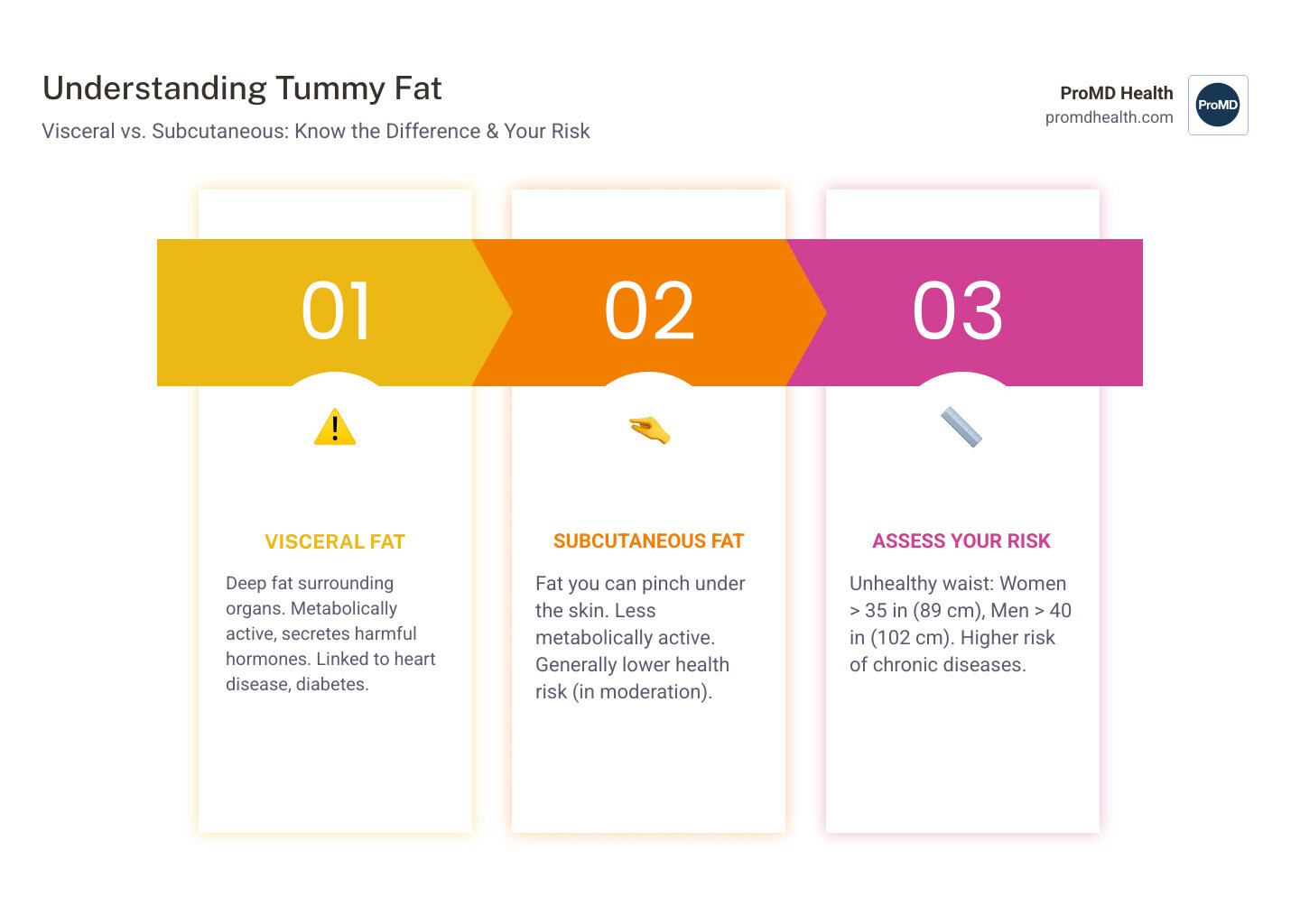
The fat lying deep within your abdomen is more perilous than the fat you can pinch with your fingers. This visceral fat, which surrounds your organs, acts as a biologically active endocrine organ, secreting hormones and molecules that can trigger inflammation throughout your body. Research shows that people who carry excess belly fat face significantly higher risks of heart disease, type 2 diabetes, stroke, and even dementia.
The good news? Visceral fat responds efficiently to the right combination of diet, exercise, and lifestyle changes. You can’t target belly fat specifically through crunches or sit-ups alone – that’s a myth. Instead, overall body fat reduction through a holistic approach is the key to trimming your waistline and protecting your health.
For women, a waist measurement over 35 inches (89 cm) signals an unhealthy amount of belly fat. For men, the threshold is 40 inches. Even more concerning, studies reveal that every 2 inches of additional waist size raises cardiovascular disease risk by 10% in healthy adults. Adults under 40 who sleep five hours or less per night accumulate significantly more visceral fat over time.
The path to losing tummy fat isn’t about quick fixes or fad diets. It requires understanding the difference between visceral and subcutaneous fat, implementing evidence-based strategies, and maintaining consistency over time. Whether through lifestyle modifications, medical interventions, or advanced body contouring treatments, sustainable solutions exist for every individual.
I’m Scott Melamed, President and CEO of ProMD Health, with a Master’s degree in Biotechnology from Johns Hopkins University and experience in clinical healthcare operations. Through my work leading one of the aesthetics industry’s most mission-driven organizations, I’ve helped thousands of patients understand how can you lose tummy fat through evidence-based, personalized treatment plans that address both health and aesthetic goals. Let’s explore the proven strategies that will help you achieve a healthier midsection and reduce your risk of chronic disease.
Understanding Visceral Fat: The Hidden Danger
When we talk about belly fat, it’s important to distinguish between two main types: visceral fat and subcutaneous fat. While both contribute to our overall body fat, their locations, appearance, and health implications are vastly different.
| Feature | Visceral Fat | ||
|---|---|---|---|
| Location | Visceral fat is found deep inside the abdomen, surrounding the organs like the liver, pancreas, and intestines. | Subcutaneous fat is located just beneath the skin. | Location |
| Location | Visceral fat is found deep inside the abdomen, surrounding the organs like the liver, pancreas, and intestines. | Subcutaneous fat is located just beneath the skin. | |
| Type | Visceral (Deep Abdominal Fat) | ||
| Appearance | This fat is located deep inside the body, surrounding the organs like the liver, pancreas, and intestines. It is firm and cannot be easily pinched. |


