Weight and managing it: Master 3 Pillars
Why Weight and Managing It Matters for Your Long-Term Health
Weight and managing it is one of the most impactful steps for your long-term health. Here’s what you need to know.
Key Components of Effective Weight Management:
- Healthy Eating – Focus on nutrient-rich foods and portion control.
- Regular Physical Activity – Aim for at least 150 minutes per week.
- Behavior Change – Develop sustainable habits, not short-term fixes.
- Adequate Sleep – Essential for metabolism and appetite regulation.
- Stress Management – Reduces emotional eating and cortisol levels.
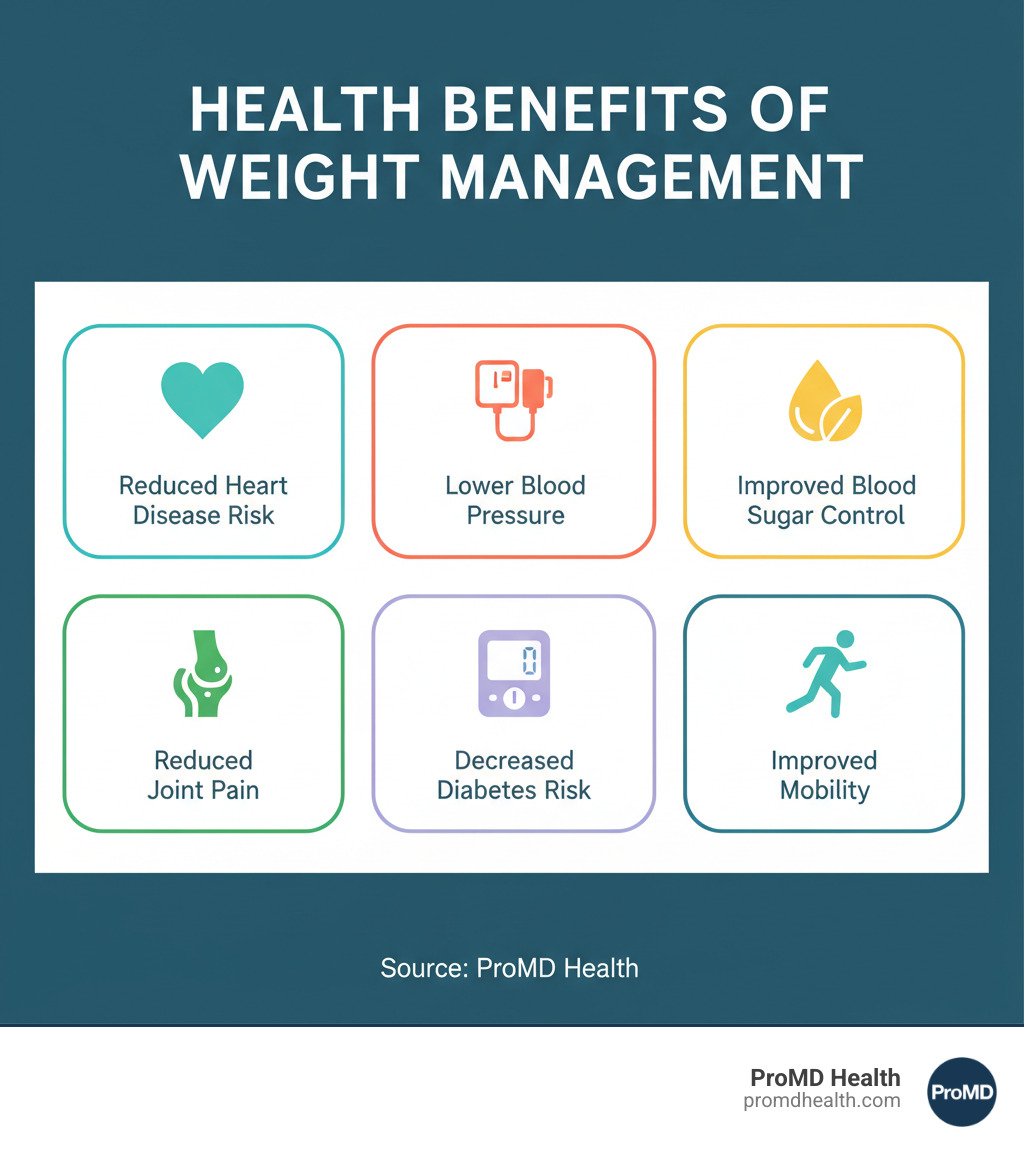
Health Benefits of Maintaining a Healthy Weight:
- Lower blood pressure and cholesterol levels
- Reduced risk of type 2 diabetes and heart disease
- Less stress on bones and joints
- Improved energy and mobility
- Even a modest 5-10% weight loss delivers meaningful health benefits.
If you’re among the 70% of American adults who are overweight or have obesity, you’re not alone. The reality is that losing weight is difficult, and keeping it off is even harder, with most people regaining lost weight within a few years.
Sustainable weight management isn’t about quick fixes; it’s about making gradual lifestyle changes. Your weight is influenced by many factors—genes, age, sex, metabolism, sleep, stress, and environment. This is why cookie-cutter plans often fail.
The key is focusing on long-term habits. Research shows that successful weight maintainers eat regular meals, stay active, monitor their weight, and don’t let small setbacks become major relapses.
As Scott Melamed, President and CEO of ProMD Health with a Master’s in Biotechnology from Johns Hopkins University and extensive research in metabolic health, I’ve dedicated my career to helping people achieve sustainable wellness. Understanding weight and managing it requires addressing diet, movement, sleep, and stress—which we’ll explore in this guide.
Understanding Your Weight: The Science Behind the Numbers

Your weight isn’t just a number on a scale; it’s deeply connected to your overall health. Carrying excess weight significantly increases your risk for serious conditions like type 2 diabetes, heart disease, and high blood pressure.
The good news is that you don’t need a “perfect” weight to see improvements. Losing just 5% to 10% of your body weight—only 10 to 20 pounds for someone weighing 200 pounds—can lead to better blood pressure, cholesterol, and blood sugar control.
But why is weight and managing it so challenging? It’s not just about willpower. Your genes, age, lifestyle, environment, and sleep quality all play a role. Understanding this helps you approach your journey with realistic expectations.
How Your Body Manages Weight and Calories
Your body constantly burns energy, even at rest. This is your basal metabolic rate (BMR). Calorie balance is the relationship between calories consumed and calories burned. Consistently eating more than you burn leads to weight gain, while burning more than you eat leads to weight loss.
Your metabolism—the process of converting food to energy—naturally slows as you age, partly due to muscle loss. Since muscle burns more calories than fat, your body may need fewer calories to maintain the same weight over time. Understanding this is foundational to effective weight management. For a deeper dive, see Metabolism and Weight Loss: How You Burn Calories.
Are You at a Healthy Weight? Tools and Metrics
To start, it helps to know your baseline. Body Mass Index (BMI) is a common screening tool that uses your height and weight to estimate body fat. You can calculate yours here: Check your Body Mass Index (BMI).
However, BMI isn’t perfect as it doesn’t distinguish between muscle and fat. Therefore, other metrics are also important.
Waist circumference is a key measurement because abdominal fat is strongly linked to health risks like heart disease and type 2 diabetes. For the most complete picture, body composition analysis breaks down your weight into fat mass and lean mass (muscle, bone, organs), giving a clearer view of your health than the scale alone. These tools help you and your provider make informed decisions.
The Pillars of Healthy Weight and Managing It

Successful weight and managing it isn’t about magic tricks. It’s about eating well, moving regularly, and making changes that stick. These three pillars create a sustainable approach for life. The goal is balance, creating a calorie deficit for weight loss or maintaining equilibrium, all while prioritizing nutrition.
Fueling Your Body: Nutrition for Weight Management
Healthy eating for weight management focuses on nutrient-dense foods—colorful vegetables, fruits, lean proteins, and whole grains. These foods provide essential nutrients and help you feel full.
Portion control is also critical. Even healthy foods can lead to weight gain if eaten in excess. Learning proper serving sizes is a game-changer. Consistency matters, too. Eating regular meals, including breakfast, helps regulate your metabolism and prevent overeating.
We recommend limiting processed foods high in unhealthy fats, sodium, and added sugars. Sugary drinks are a major source of empty calories; swapping them for water is a simple, effective change. Hydration is crucial, as water supports bodily functions, helps you feel full, and has zero calories.
For personalized guidance, the MyPlate Plan is a practical tool. Small swaps also make a big difference: choose baked or grilled foods instead of fried, whole-grain bread over white, and fresh fruits or vegetables for snacks.
Moving Your Body: The Role of Physical Activity
Physical activity is about finding movement you enjoy and can sustain. The HHS Physical Activity Guidelines for Americans recommend at least 150 minutes of moderate-intensity aerobic activity or 75 minutes of vigorous-intensity activity per week, plus muscle-strengthening exercises twice a week.
Moderate-intensity activity (like brisk walking or casual cycling) lets you talk while exercising. Vigorous-intensity activity (like running or swimming laps) makes conversation difficult.
Movement doesn’t have to happen in a gym. Incorporate it into your daily life: take the stairs, park farther away, or walk for short errands. These small choices add up. Regular activity also strengthens your heart, builds muscle, lifts your mood, and boosts energy.
The key to making physical activity work for weight and managing it is finding activities you enjoy. When it stops feeling like a chore, sustainable change happens.
Creating Your Sustainable Weight Management Plan

Success in weight and managing it comes from a solid plan, consistency, and navigating inevitable bumps. A good plan includes realistic goals, consistent habits, tracking progress, and strategies for overcoming plateaus.
How to Start Losing Weight in a Healthy Way
First, consult your doctor to ensure your plan is safe and appropriate for your health. Aim for a realistic rate of weight loss: 1 to 2 pounds per week. This gradual approach helps you lose fat instead of muscle and is more sustainable.
Start by tracking your food intake and physical activity for a few days to establish a baseline. Then, set SMART goals—Specific, Measurable, Achievable, Relevant, and Time-bound. For example, instead of “eat better,” try “I will walk for 20 minutes three times this week.” Small victories build momentum and confidence. For more on the health changes possible, read about the Benefits of Weight Management.
The Mental Game: Mindset, Habits, and Emotional Well-being
Weight and managing it is also an emotional journey. Emotional eating—using food to cope with stress, boredom, or other feelings—is common. The first step is to recognize your triggers. Once you identify these patterns, you can develop non-food stress management techniques, like deep breathing, taking a walk, or calling a friend.
Building a support system is crucial. Share your goals with people who will encourage you. It’s also important to cultivate a positive body image. Your worth is not defined by the scale. Treat yourself with kindness, as negative self-talk often backfires. For more on building healthy habits, the Guide to Behavior Change offers evidence-based strategies.
Common Myths and Facts About Weight and Managing It
Let’s clear up some common myths.
- Weight cycling (yo-yo dieting): While frustrating, research shows it doesn’t permanently damage your metabolism. It does, however, highlight the need for sustainable changes over temporary diets.
- Fad diets: They promise quick results but often lead to muscle loss, a slower metabolism, and eventual weight regain because they don’t teach sustainable habits.
- “Fat-burning” foods: No single food magically melts fat. Weight loss comes from a consistent calorie deficit achieved through balanced eating and activity.
- Metabolism myths: While metabolism varies, the principles of energy balance still apply. You can positively influence your metabolism by building muscle and staying active.
For a full breakdown, read Some Myths about Nutrition and Physical Activity. Sustainable weight management is about understanding science and building lifelong habits.
Advanced Strategies and Maintaining Your Success

Losing weight is hard, but keeping it off is even harder. Most people regain lost weight within a few years due to biological changes that increase hunger and slow metabolism. This is not a personal failure. Fortunately, proven strategies can lead to long-term success.
The Challenge of Keeping Weight Off: Strategies for Long-Term Maintenance
The National Weight Control Registry, which tracks thousands of successful weight maintainers, provides a roadmap. The most consistent habit is regular physical activity. Successful maintainers also share other key behaviors:
- They eat breakfast regularly.
- They weigh themselves regularly to catch small gains before they escalate.
- They understand that occasional slips are normal and quickly get back on track.
When you reach your goal, you’ll transition from a calorie deficit to maintenance. This involves gradually adding calories back into your diet while monitoring your weight to find the right balance for your new, healthy lifestyle.
When to Consider Professional Help for Weight and Managing It
Navigating weight and managing it alone can be overwhelming. A Registered Dietitian Nutritionist (RDN) can create a personalized, balanced eating plan that fits your life.
Medically supervised weight management programs, like those at ProMD Health, offer a comprehensive approach combining dietary counseling, exercise guidance, behavioral therapy, and medical oversight. These programs are especially valuable if you have obesity-related health conditions. Learn about the Advantages of Medically Supervised Weight Loss and what to look for in a quality program by reading Choosing a Safe and Successful Weight-Loss Program.
Medical Weight Management Options
For some, lifestyle changes alone aren’t enough. Prescription medications can help by reducing hunger or increasing fullness, working best alongside a healthy lifestyle.
A major advancement is GLP-1 medications like Semaglutide, which are FDA-approved for chronic weight management. They mimic a natural hormone that regulates appetite and blood sugar, representing a true breakthrough. Learn more about The Future of Weight Loss: Unlocking the Power of GLP-1 Medications & Metabolic Health.
Bariatric surgery remains an option for individuals with severe obesity, requiring a lifelong commitment to dietary changes. All medical options should be discussed with your healthcare provider to determine the best path for you.
Frequently Asked Questions about Weight Management
You likely have questions about weight and managing it. Here are answers to some of the most common concerns.
What is a realistic and safe rate of weight loss?
A safe and sustainable rate of weight loss is 1 to 2 pounds per week. This gradual pace helps ensure you’re losing fat, not muscle, and allows you to build habits that last. A 1-pound loss per week adds up to a 52-pound change in a year.
Do I have to give up my favorite foods to lose weight?
No, you don’t have to eliminate your favorite foods. Successful weight and managing it is about balance and moderation, not deprivation. You can incorporate treats in a controlled, mindful way while focusing on a diet of nutrient-dense foods. A sustainable plan is one you can live with happily.
Why is it so hard to keep weight off after losing it?
Weight regain is common due to real physiological changes, not a lack of willpower. When you lose weight, your metabolism can slow down, and hunger-regulating hormones can increase, making you feel hungrier. Your body essentially tries to regain the lost weight. This is why long-term maintenance strategies and professional support are so crucial for overcoming these biological challenges.
Conclusion
Your journey with weight and managing it doesn’t have to be one you walk alone. At ProMD Health, we help individuals transform their relationship with health and wellness.
Our approach is about the bigger picture: your energy, confidence, and long-term health goals. This is holistic health. Sustainable change comes from building habits you can live with, not from extreme diets. It’s about creating a lifestyle that fits your life.
Through our personalized wellness plans, we take the time to understand your unique situation. Our team provides compassionate care and advanced tools to guide you every step of the way. Whether you’re just starting, have struggled before, or need support to maintain your success, we’re here for you with services ranging from lifestyle coaching to medically supervised programs like GLP-1 medications.
Your best self is waiting. Explore our comprehensive Weight Management services to start your personalized journey.