
Andropause treatment options: Reclaim 2025 Vitality
Why Understanding Your Treatment Choices Matters
Andropause treatment options range from hormone replacement therapy to lifestyle modifications, giving men effective ways to address declining testosterone levels. Here’s what you need to know:
Primary Treatment Options:
- Hormone Replacement Therapy (HRT) – Restores testosterone through gels, injections, patches, or pellets
- Lifestyle Changes – Diet, exercise, stress management, and sleep optimization
- Combination Approach – Medical treatment paired with healthy habits for best results
Key Benefits of Treatment:
- Improved sexual function and libido
- Increased energy and reduced fatigue
- Better mood and mental clarity
- Improved muscle mass and strength
- Stronger bone density
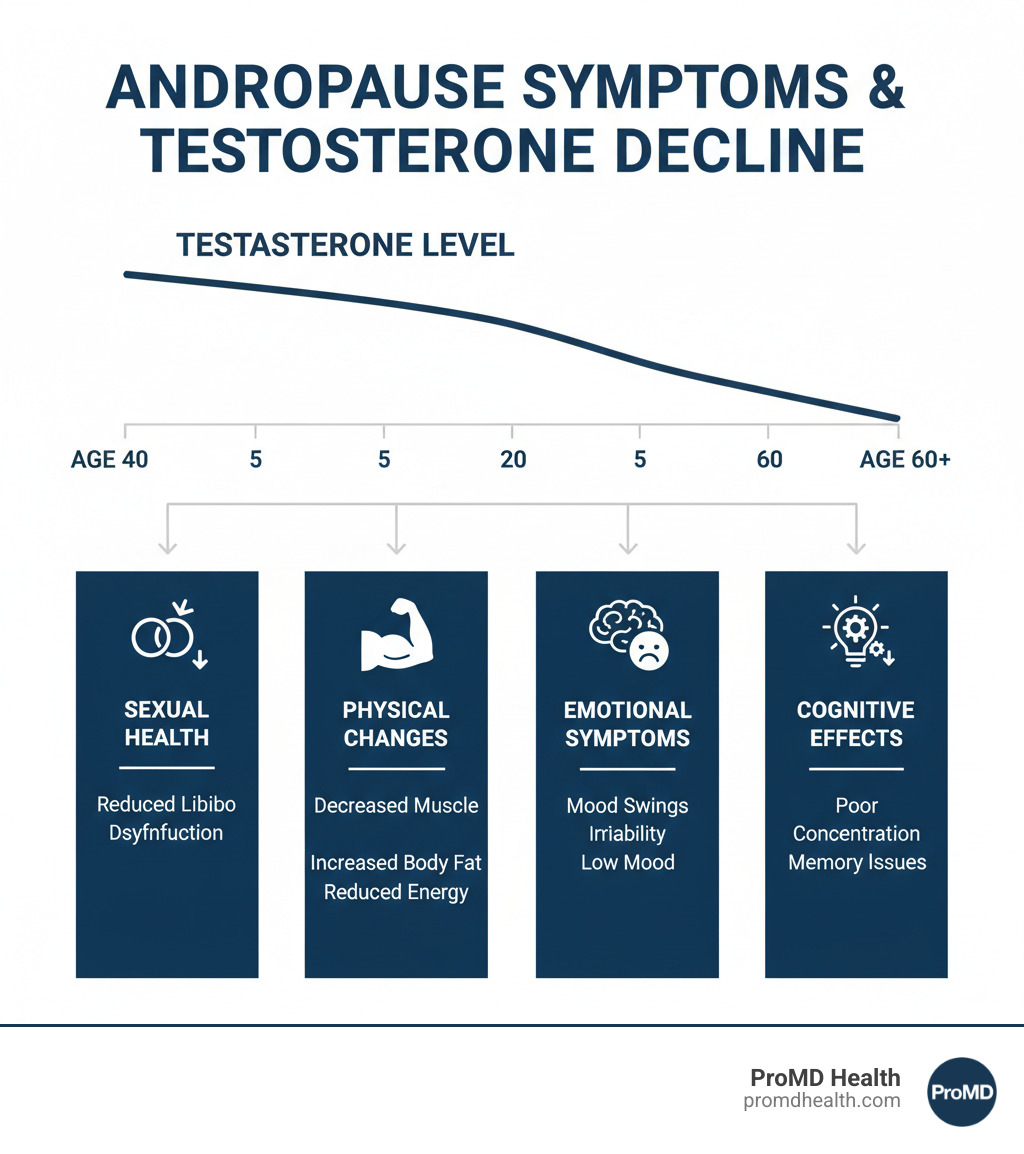
After age 40, men’s testosterone levels naturally decline by about 1% annually. This affects up to 40% of men over 45, causing symptoms like fatigue, weight gain, and low libido. While this decline is normal, you don’t have to accept a diminished quality of life.
The good news is that modern medicine offers proven treatments to help you reclaim your vitality.
I’m Scott Melamed, President and CEO of ProMD Health. My background in biotechnology from Johns Hopkins University informs our evidence-based approach to andropause treatment options. We’ve helped thousands of men achieve optimal wellness, and this guide shares what works based on clinical research and real-world results.
Understanding Andropause: Symptoms, Causes, and Diagnosis
Feeling tired, gaining weight, or losing interest in sex? Friends might say, “That’s just getting older,” but it might be more.
You could be experiencing andropause, or late-onset hypogonadism. Unlike female menopause, andropause is a gradual process where testosterone declines about 1% annually after age 40.
The slow decline makes the signs easy to miss. By age 60, about 20% of men have low testosterone, rising to 50% by age 80. When symptoms become bothersome and testosterone levels are measurably low, it’s a medical condition that needs attention. Ignoring it can lead to serious health consequences. To understand more about these risks, check out our page on What Happens If Low Testosterone Goes Untreated?.
Common Symptoms and Signs
Andropause symptoms often masquerade as other problems. You might blame fatigue on work stress or weight gain on a slowing metabolism. But when you look at the full picture, a pattern often emerges.

Physical clues often appear first. You might notice shrinking muscle mass, more belly fat, or gynecomastia (“man boobs”). As an anabolic hormone, testosterone builds and maintains muscle, so a drop changes your body composition.
Changes in your sex life are common. Erectile dysfunction and a disappearing libido are key signs that something is off hormonally.
Bone-deep fatigue that doesn’t improve with rest often drives men to seek help. Other signs include hair thinning, night sweats, and dizziness.
Low testosterone also affects your mind and emotions. You might feel irritable, lose confidence, or develop anxiety and depression. Memory and concentration can also suffer. Poor sleep can create a vicious cycle, as it further lowers testosterone.
Recognizing these symptoms is crucial, as they can strain relationships, hurt careers, and reduce your quality of life. For a more detailed look, visit our page about Common Symptoms of Low Testosterone in Men.
Key Causes of Declining Testosterone
While aging is the main cause of declining testosterone, it’s not working alone. The hypothalamic-pituitary-testicular axis becomes less efficient, with the testes producing less testosterone and brain signals weakening. However, lifestyle choices can accelerate this decline.
Obesity is a major factor. Fat cells contain aromatase, an enzyme that converts testosterone to estrogen. More body fat means less testosterone, and low testosterone makes it easier to gain fat.
A poor diet of processed foods disrupts hormone balance. Lack of exercise, especially strength training, removes a natural testosterone booster.
Chronic stress raises cortisol, which suppresses testosterone production. Your body prioritizes survival over vitality.
Medical conditions like Type 2 diabetes and sleep apnea also lower testosterone. Other factors include certain medications, excessive alcohol, and environmental toxins.
Many of these factors are within your control. Understanding what’s driving your testosterone down is the first step toward bringing it back up. For more detailed information, explore our article on What Causes Low Testosterone.
How Andropause is Diagnosed
Diagnosing andropause requires a thorough evaluation by a hormone health professional, as symptoms overlap with other conditions. The process begins with a consultation at ProMD Health to discuss your symptoms, medical history, and how they affect your life.
We may use the Androgen Deficiency in Aging Males (ADAM) questionnaire as a starting point, followed by a physical exam to assess your health and rule out other conditions.
The real diagnostic work happens with blood tests.
We first measure total testosterone. Levels below 300 ng/dL in the morning typically indicate hypogonadism. But total testosterone isn’t the whole story. Most is bound to Sex Hormone-Binding Globulin (SHBG) and is unusable. We also measure free testosterone, the active form, which can be low even with normal total testosterone, especially as SHBG rises with age.
We may also check other hormones like LH, FSH, and prolactin to pinpoint the source of low testosterone. Additional tests like a complete blood count, prostate-specific antigen (PSA), and metabolic panels may be necessary.
Timing is key; we draw blood in the morning (ideally 8:00-11:00 AM) when testosterone levels peak. A second test is required to confirm low levels before moving forward with any andropause treatment options.
If you’re wondering whether your symptoms point to low testosterone, our Do I Have Low Testosterone? page can help guide you. For more information about the symptoms that might prompt testing, visit Symptoms of Low Testosterone.
The Core of Treatment: Hormone Replacement Therapy (HRT) for Men
Once low testosterone is confirmed, the most direct and often life-changing andropause treatment option is Hormone Replacement Therapy (HRT), specifically Testosterone Replacement Therapy (TRT). Our goal with TRT is to restore your testosterone to an optimal range, helping you shed symptoms and reclaim your vitality.
Think of it as fine-tuning your body’s engine. By carefully reintroducing testosterone, we restore balance and ease the impact of andropause. Explore our page on Hormone Optimization Therapy. We believe in using The Power of Testosterone Therapy to help you feel like your best self.
The Benefits of Testosterone Therapy
Well-managed testosterone therapy can bring transformative changes, improving energy, mental sharpness, and personal life. Key benefits include improved sexual function and libido, a significant boost in energy and vitality, and better mood and mental clarity. Men often report a return of sexual desire, less fatigue, and an end to frustrating brain fog.
Physically, TRT can lead to increased muscle mass and strength, better bone density to prevent osteoporosis, and improved body composition with less belly fat. When paired with healthy habits, it may even help prevent type 2 diabetes.
These improvements can significantly improve your quality of life. For more perks, check out the Unexpected Benefits of Hormone Replacement Treatment for Men. While some guidelines, like those from the American College of Physicians, focus on sexual function, our comprehensive approach combines TRT with lifestyle strategies to address a wider range of symptoms.
Potential Risks and Side Effects
While the benefits are exciting, it’s crucial to understand the potential risks. This is why medical supervision is non-negotiable; your safety is our top priority.
Potential side effects include fluid retention, acne or oily skin, and worsening of sleep apnea, which is why we screen for it. We also monitor for erythrocytosis (increased red blood cells), which can raise clot risk. Regular blood tests allow us to manage this by adjusting your dose.
Regarding prostate health, there’s no strong evidence TRT causes prostate cancer. However, we take it seriously, conducting thorough screenings (DRE and PSA tests) before and during treatment to ensure your prostate remains healthy.
The cardiovascular risk debate has been clarified by recent large-scale studies like the TRAVERSE trial. It found no major increase in serious heart-related events for men on testosterone, though a small increase in atrial fibrillation was noted. With careful monitoring, cardiovascular risks appear lower than once thought.
Our clinical team is committed to your safety through thorough screening and vigilant monitoring. For a deeper dive, you can read more in Testosterone Replacement in Men with Andropause: An Overview.
Exploring Your Andropause Treatment Options
When it comes to andropause treatment options, we believe in a comprehensive, individualized approach. There is no one-size-fits-all solution. By combining medical treatments with lifestyle changes, we optimize results for sustained well-being and effectively address low testosterone. For more on our approach, see our pages on Treating Low Testosterone: Testosterone Therapy and How Can You Fix Low Testosterone?.
Medical Andropause Treatment Options: A Closer Look
Testosterone replacement therapy comes in various forms, and we’ll work with you to determine the best method for your lifestyle.
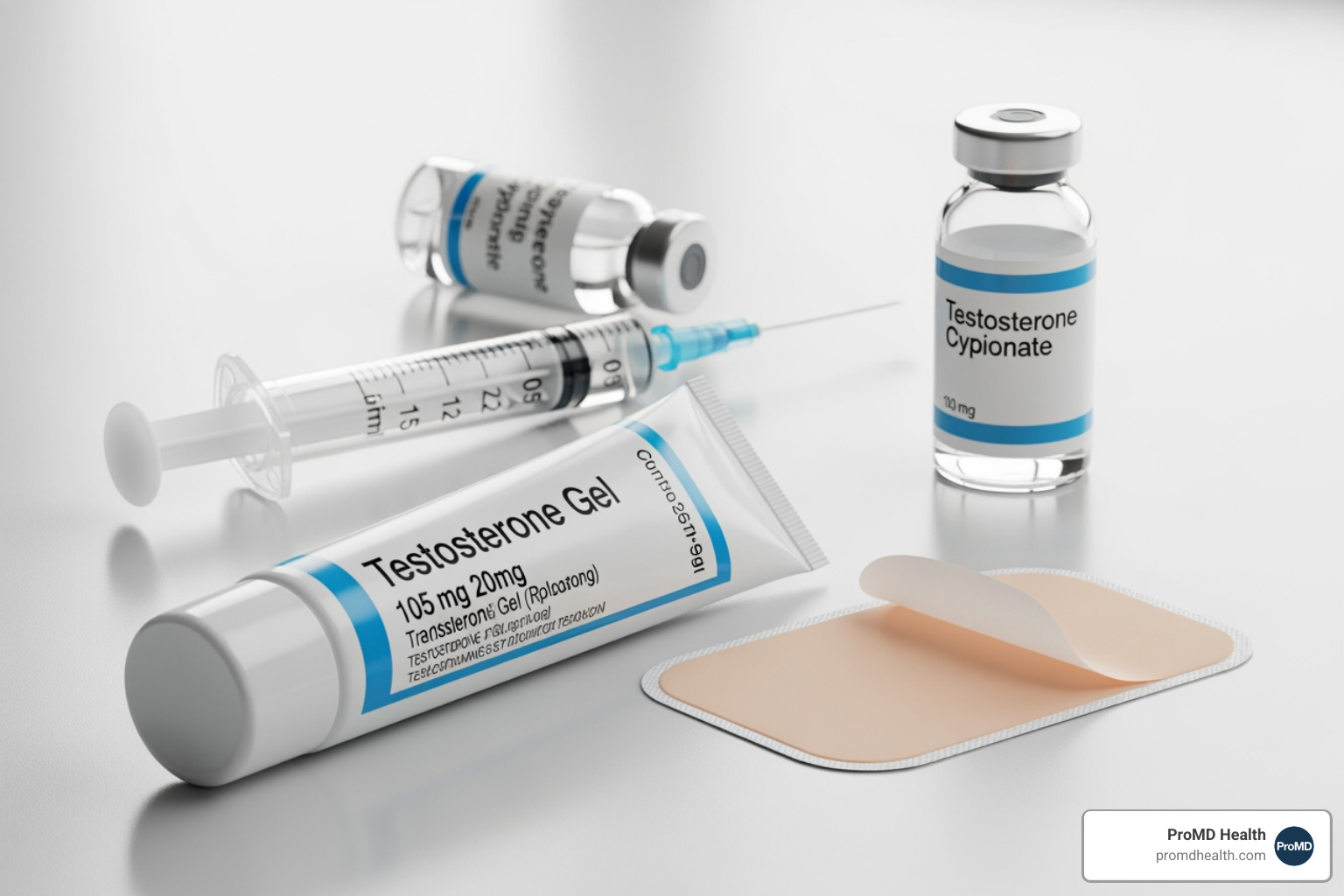
The most common medical andropause treatment options include:
-
Transdermal Gels: Applied daily to the skin, these are easy and discreet, providing steady testosterone levels. They can be pricier, and care must be taken to avoid skin-to-skin transfer to others.
-
Injections: Given every 1-4 weeks, injections are effective and budget-friendly. They can cause “peak and trough” effects, leading to fluctuations in mood or symptoms between doses.
-
Patches: Applied daily, patches offer consistent testosterone delivery but can cause skin irritation. They are often less popular than gels for aesthetic reasons.
-
Pellets: These tiny implants are placed under the skin in a minor office procedure, releasing testosterone consistently for 3-6 months. This offers long-lasting convenience but requires a procedure and has a higher upfront cost.
-
Oral Capsules: Newer formulations offer a convenient daily pill without the liver toxicity issues of older versions. They avoid the skin transfer risk of gels and are a popular choice.
We specialize in Bioidentical Hormone Replacement Therapy, using hormones chemically identical to those your body produces.
Complementary Andropause Treatment Options: Lifestyle’s Role
Medical treatments work best when supported by a healthy lifestyle. These complementary andropause treatment options improve HRT benefits and improve overall health.
-
Dietary Changes: Focus on a balanced diet of whole foods, lean proteins, and healthy fats. Reduce processed sugars and refined carbs. Ensure adequate zinc intake (from meat, nuts, seeds) and Vitamin C for hormone production.
-
Exercise: Engage in consistent exercise, combining strength training to build muscle with aerobic activity to reduce body fat and manage stress. This is a natural testosterone booster.
-
Stress Management: High cortisol from chronic stress suppresses testosterone. Practice meditation, mindfulness, or relaxing hobbies to manage stress levels.
-
Adequate Sleep: Aim for 7-9 hours of quality sleep nightly. Poor sleep disrupts hormone regulation and lowers testosterone.
-
Limiting Alcohol: Excessive alcohol consumption hinders testosterone production, so moderation is key.
Embracing these lifestyle changes is a cornerstone of our holistic approach, as detailed in our Services: Longevity & Functional Medicine.
Your Personalized Path to Wellness: The Treatment Journey
At ProMD Health, we know the journey to wellness is personal. For andropause treatment options, there’s no one-size-fits-all answer. Our specialists create a custom treatment plan for your unique body, lifestyle, and goals.
If you’re curious whether hormone replacement therapy could be right for you, our page Hormone Replacement Therapy – Am I a Good Candidate? offers great starting points. We’re also ready to explain How Does Hormone Optimization Work?.
Developing a Personalized HRT Plan
Your path to wellness begins with a thorough process to ensure your plan is perfectly aligned with your needs.
-
Initial Consultation: We listen to you, discussing your symptoms, medical history, lifestyle, and treatment goals in a comfortable setting.
-
Comprehensive Health Assessment: We perform a physical exam and use advanced lab testing to analyze your hormone levels (total/free testosterone, SHBG, etc.). This data is crucial for an accurate diagnosis.
-
Considering Your Preferences: We discuss the pros and cons of each delivery method (gels, injections, pellets, etc.) to find what fits your life.
-
Setting Realistic Goals: Together, we set clear, achievable targets for symptom improvement, ensuring your plan is truly custom-made.
Our knowledge of 3 Things to Know About Bio-Identical Hormone Replacement Therapy helps us craft unique plans.
Monitoring Progress and Adjusting Treatment
Your journey doesn’t end once treatment begins. Consistent monitoring is essential for safety and effectiveness.
We schedule regular follow-up appointments and perform regular blood work to monitor your symptoms, side effects, and key health markers like testosterone, PSA, and hematocrit. We typically test levels one month after starting, then every 3-6 months for the first year, and annually thereafter.
We continuously track symptom improvement against your goals. Based on your feedback and lab results, we may adjust your dosage or delivery method to maximize results and minimize side effects. For example, we pause therapy if hematocrit exceeds 54% or re-evaluate if sexual function doesn’t improve after a year.
This careful monitoring ensures safety and efficacy, keeping your testosterone levels in an optimal range to reduce risks and help you feel your best.
You might be wondering How Long Does Hormone Optimization Therapy Take to Work?. While responses differ, many men see improvements in energy and mood within weeks, with more significant changes appearing over several months.
Frequently Asked Questions about Andropause Treatment
It’s natural to have questions when considering andropause treatment options. Here are clear, straightforward answers to common concerns.
How long until I see results from testosterone therapy?
While responses vary, most men notice improvements quickly. Increased energy, better mood, and improved sleep often occur within 3 to 6 weeks.
Improvements in sexual function and libido typically appear over 3 to 6 months. More foundational changes like increased muscle mass, strength, and bone density can take 6 to 12 months or more. We track your progress and will reassess your plan if results aren’t as expected.
Is hormone replacement therapy for men safe?
When managed by experienced professionals, andropause treatment options like HRT are generally considered safe. Recent large-scale studies like the TRAVERSE trial found no significant increase in major adverse cardiovascular events or prostate cancer rates, offering significant reassurance.
However, potential side effects like increased red blood cell count (erythrocytosis), fluid retention, or worsening of sleep apnea can occur. At ProMD Health, we mitigate these risks through rigorous screening and ongoing monitoring of your blood work (testosterone, PSA, hematocrit) to ensure your safety.
Will I have to be on TRT for the rest of my life?
TRT is often a long-term commitment because it addresses a natural, age-related hormone decline. If you stop therapy, your testosterone levels will likely return to their pre-treatment low, and symptoms may reappear.
However, the decision to continue is personal and made with your provider. We continually evaluate the benefits against any risks. If the therapy is no longer beneficial or side effects outweigh the advantages, we will discuss adjusting or discontinuing treatment. Our goal is to ensure your andropause treatment options align with your health and life goals.
Conclusion: Take Control of Your Health and Vitality
Understanding that andropause treatment options exist is the first step toward reclaiming your life. You don’t have to accept declining energy, mood, or vitality as inevitable.
Andropause is a manageable condition. Symptoms like fatigue, declining sexual function, and brain fog don’t have to be your reality. Effective solutions, including Hormone Replacement Therapy (HRT), lifestyle changes, or a combination of both, are within reach.
At ProMD Health, we believe every man deserves to feel his best at any age. We combine medical advances with personalized care, listening to your story and goals to craft a unique treatment plan. We partner with you on your journey to optimal wellness.
The symptoms of andropause don’t have to control you. With proper diagnosis and expert guidance, you can restore your energy, mental clarity, sexual function, and overall vitality.
Don’t wait for symptoms to worsen or accept feeling less than your best as “part of getting older.” You deserve better, and we’re here to help you achieve it.
Ready to feel like yourself again? We’d be honored to guide you. Take the Next Step with Male Hormone Optimization and schedule a consultation at one of our convenient locations in Annapolis, Arlington, Ashburn, Bel Air, Bethesda, Columbia, Easton, Fort Lauderdale, Hutto, Lafayette, Lewes, Timonium, Tysons Corner, Washington, Wellington, or Westminster.
Your best years don’t have to be behind you. Let’s work together to make them ahead of you.


