Why Millions of People Are Choosing Full Body Laser Hair Removal
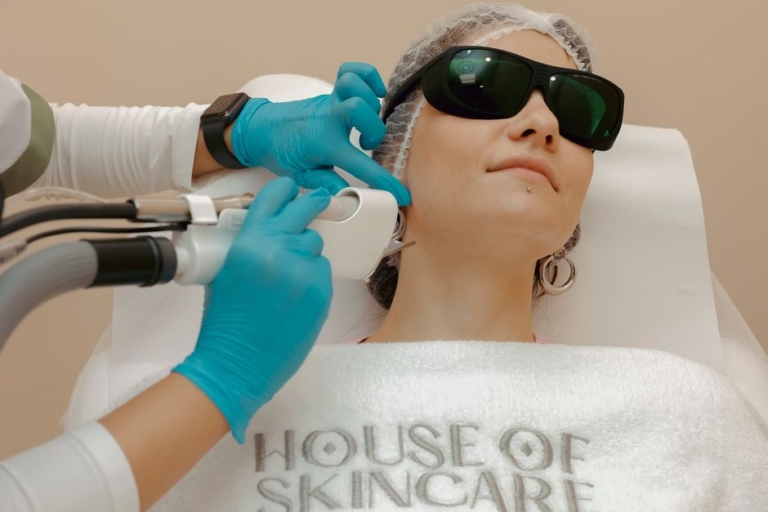
Full body laser hair removal is a professional treatment that uses focused light energy to reduce unwanted hair across every major zone of the body — from the face and underarms to the legs and back.
Here’s what you need to know at a glance:
- What it is: A series of laser sessions that target hair follicles to slow and reduce hair growth long-term
- How many sessions: Most people need 6 to 16 sessions depending on the area, hair type, and skin tone
- How long each session takes: Roughly 60 to 90 minutes for a full body treatment
- Does it hurt: Most people describe it as a mild sting or rubber band snap — cooling systems make it very manageable
- Is it permanent: It produces long-lasting reduction, not guaranteed permanent removal — some maintenance is normal
- Who it works best for: People with dark, coarse hair and light to medium skin tones see the strongest results, though modern lasers can treat a wide range of skin tones safely
- Typical cost: Full body packages vary widely but often range from a few hundred to several thousand dollars depending on the clinic and number of sessions included
Consider this: the average woman spends roughly 1,728 hours of her lifetime shaving her legs alone. That’s time that laser hair removal is designed to give back.
This guide walks you through everything — how the technology works, what areas are included, what to expect during and after each session, who makes a good candidate, and how professional clinic treatments compare to at-home devices.
I’m Scott Melamed, President and CEO of ProMD Health, where our teams combine scientific rigor with aesthetic expertise to help patients achieve real, lasting results — including full body laser hair removal as part of our comprehensive body treatment services. My background in biotechnology and clinical healthcare, combined with years of leading one of the fastest-growing aesthetics organizations in the country, informs how we approach every treatment with both safety and outcomes in mind.
What Full Body Laser Hair Removal Is and How It Works
At its core, full body laser hair removal is a bundled treatment plan designed to reduce hair growth across multiple body areas with one coordinated series of sessions.
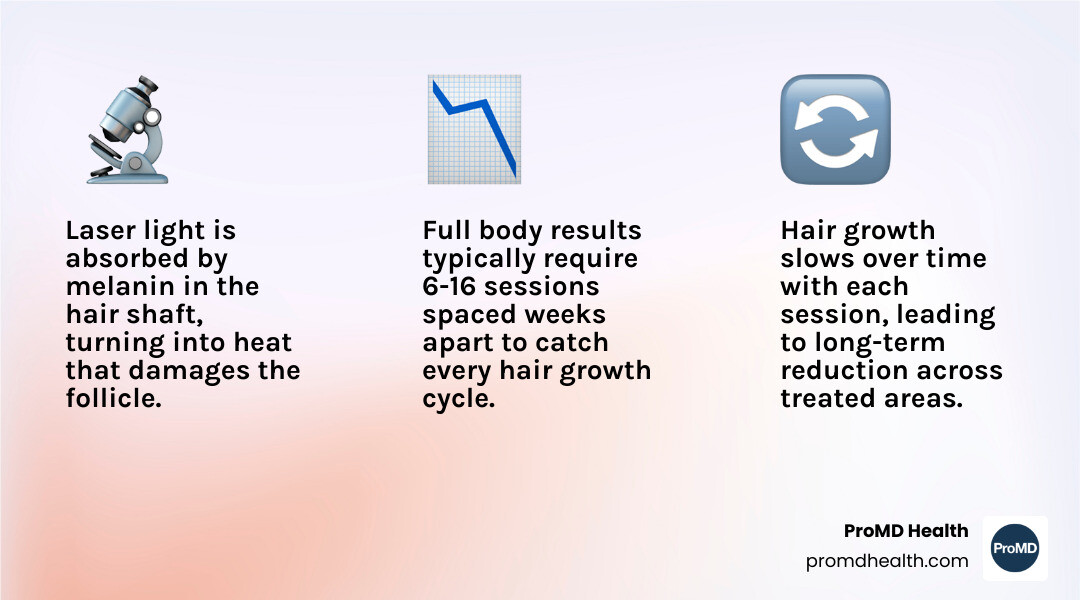
Laser hair removal works through a process called selective photothermolysis. That is the science-y way of saying the laser is attracted to pigment in the hair. The light energy is absorbed by melanin in the hair shaft, turns into heat, and damages the follicle enough to slow future growth.
The goal is not to make every single follicle disappear forever after one visit. If only. The real goal is long-term hair reduction: less hair, slower regrowth, finer texture, and less day-to-day maintenance.
What full body laser hair removal actually means
“Full body” usually does not mean every square inch of skin from eyebrows to toes without limits. It generally means a customized bundle of the major treatable zones on the face and body.
Most plans include a mix of:
- Face areas like upper lip, chin, cheeks, jawline, or neck
- Underarms
- Arms and hands
- Bikini line or Brazilian
- Legs and feet
- Abdomen
- Chest
- Back
- Shoulders
At ProMD Health, we build treatment plans around the areas that matter most to each patient rather than forcing a one-size-fits-all package. That matters because hair density, skin sensitivity, and goals vary a lot from person to person.
How laser energy reduces hair growth over time
The laser works best when hair is in its active growth phase, called the anagen phase. During that phase, the follicle is most connected to the hair and most vulnerable to heat damage.
After treatment, hair does not vanish on the table. Instead, treated hairs usually begin to shed over the next several days to two weeks. Then regrowth comes back slower, lighter, and thinner in many areas.
That is why patients often notice these changes first:
- Less dense regrowth
- Softer or finer hair
- Longer time between shaving
- Fewer ingrown hairs
- Smoother skin texture
Why multiple sessions are required for full-body results
Hair grows in cycles, and not every hair is in the active growth phase at the same time. That is the big reason multiple sessions are necessary.
Research and clinical guidance consistently show that many people need around 4 to 8 treatments for strong improvement, while others may need 6 to 10 sessions or more depending on the body area and hair pattern. For patients pursuing a very complete endpoint across the whole body, some sources report 12 to 16 sessions may be needed to reach about 70% to 90% reduction.
In practical terms, this means:
- Smaller hormonal areas may be more stubborn
- Coarse dark hair often responds faster
- Fine or lighter hair may respond less dramatically
- Face and body areas may need different schedules
- Maintenance sessions can be part of long-term upkeep
Areas Typically Included in a Full Body Laser Hair Removal Package
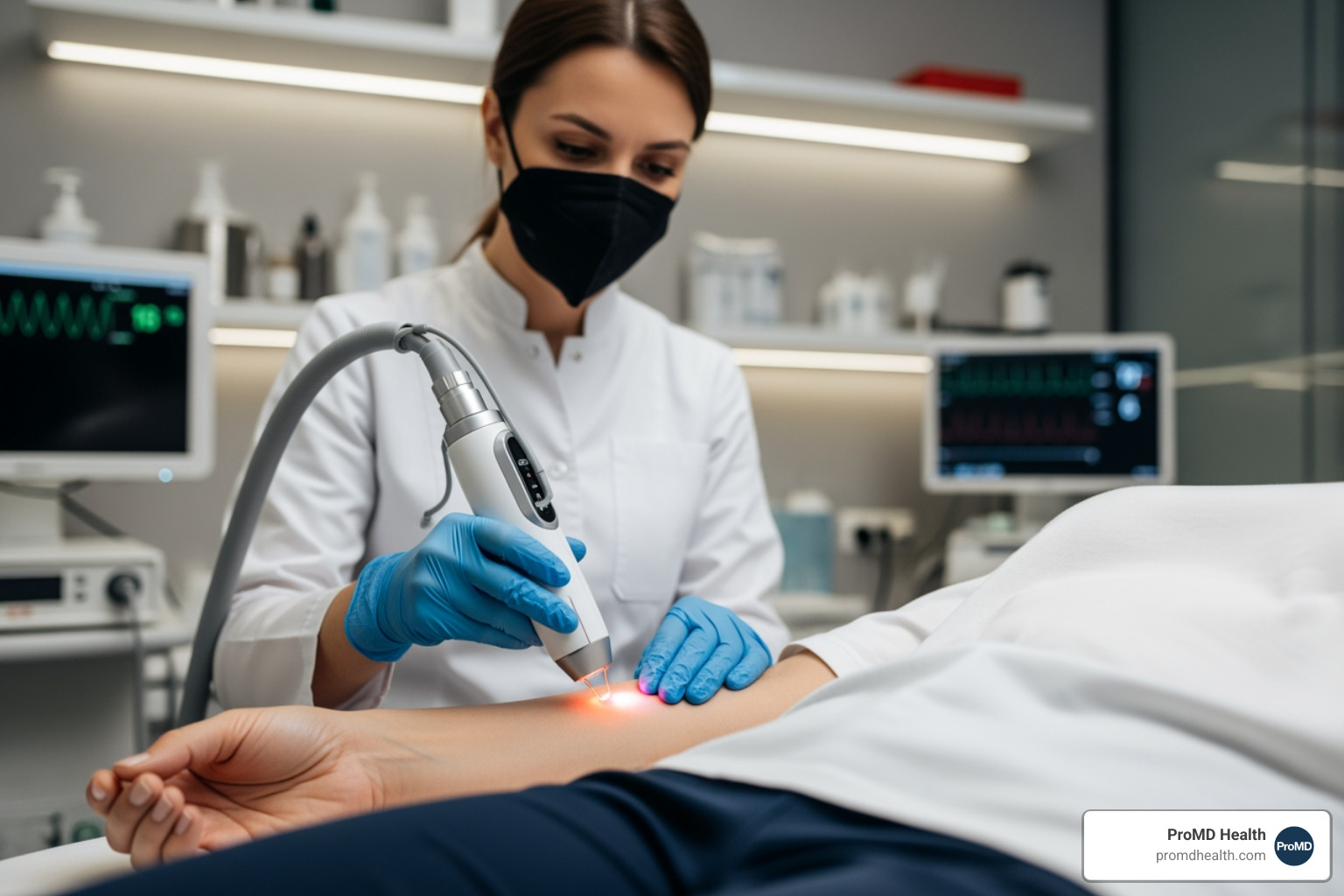
A full body package usually includes most major treatable zones, but the exact list can vary by clinic and by patient.
Face, underarms, bikini, arms, legs, and torso
These are the most commonly treated areas in a full body laser hair removal plan:
- Upper lip
- Chin
- Sideburns or cheeks
- Jawline
- Neck
- Underarms
- Bikini line
- Brazilian
- Full arms
- Hands and fingers
- Full legs
- Feet and toes
- Abdomen
- Chest
- Back
- Shoulders
For women, common combinations often include underarms, bikini or Brazilian, full legs, full arms, and facial areas such as the upper lip or chin.
For men, common combinations often include beard line shaping, neck, shoulders, chest, abdomen, and back. If back hair has been an ongoing annoyance, our related guides on back hair removal methods and smooth back hair removal options can help.
Areas that may be excluded or require extra caution
Some zones are off-limits or need special judgment for safety.
These commonly include:
- Eyelids
- Eyebrows and the immediate surrounding eye area
- Tattooed skin
- Dark pigmented lesions or suspicious spots
- Areas with active infection or irritation
- Certain scalp areas
- Some intimate areas, depending on the device and provider protocol
Laser should not be used over tattoos because the pigment can absorb energy unpredictably. The eye area is another major no-go because of the risk of serious injury.
How clinics customize “full body” for women and men
A good treatment plan is personalized, not copied from a menu.
For women, that may mean emphasizing face, underarms, bikini, legs, and arms. For men, it may mean chest, back, shoulders, neck, and beard line cleanup. Hormonal patterns, hair thickness, skin tone, and comfort level all influence the map.
If you want a broader overview of our services, explore laser hair removal or learn more about men’s laser hair removal options.
Full Body Laser Hair Removal Sessions: Timing, Comfort, and Results
One of the biggest surprises for first-time patients is that full-body treatment is often faster and easier than they expected.

How long a full body laser hair removal appointment takes
A typical full body session often takes about 60 to 90 minutes, depending on:
- How many areas are included
- The size of those areas
- Hair density
- The technology being used
- Whether sensitive zones need slower passes
Some advanced systems can treat large areas quickly with larger spot sizes and built-in cooling. Smaller areas like the upper lip may take only minutes, while larger zones like the back or full legs take longer.
For scheduling, it helps to think of full body treatment as a focused appointment, not an all-day event.
What laser hair removal feels like and whether it hurts
Most people describe the sensation as:
- A rubber band snap
- A quick warm sting
- A brief prickly heat sensation
It is usually tolerable, and many patients say it is easier than waxing. Cooling systems make a big difference here. Contact cooling, cryogen spray, or chilled air can help reduce discomfort during treatment.
Sensitive areas such as the bikini line, upper lip, and ankles may feel sharper than arms or legs. If needed, topical numbing may be an option in select cases.
The good news: the sensation stops quickly after each pulse. No medal ceremony is required afterward.
How many sessions most people need and when results show
Many patients start to see a change after the first treatment cycle. Medical guidance commonly notes a 10% to 25% reduction after one session, with more visible improvement as treatments continue.
A typical pattern looks like this:
- After 1 session: some shedding and slower regrowth
- After 2 to 3 sessions: hair often starts looking patchier and finer
- After 4 to 8 sessions: many people see substantial reduction
- After 6 to 10 or more sessions: long-term reduction becomes more obvious
- After a full series: occasional maintenance may be needed
Most sessions are spaced about 4 to 8 weeks apart, depending on the body area and your hair cycle.
Benefits, Candidacy, and Safety Considerations
Benefits of laser over shaving, waxing, and depilatories
The biggest advantage of laser is not just hair removal. It is freedom from the constant cycle of removing hair.
Compared with shaving, waxing, and depilatory creams, laser can offer:
- Longer-lasting results
- Less frequent upkeep
- Fewer ingrown hairs
- Less razor burn and stubble
- Smoother skin
- Better convenience over time
That time savings is real. Again, the average woman is estimated to spend 1,728 hours shaving her legs over a lifetime. That is a lot of shower arithmetic.
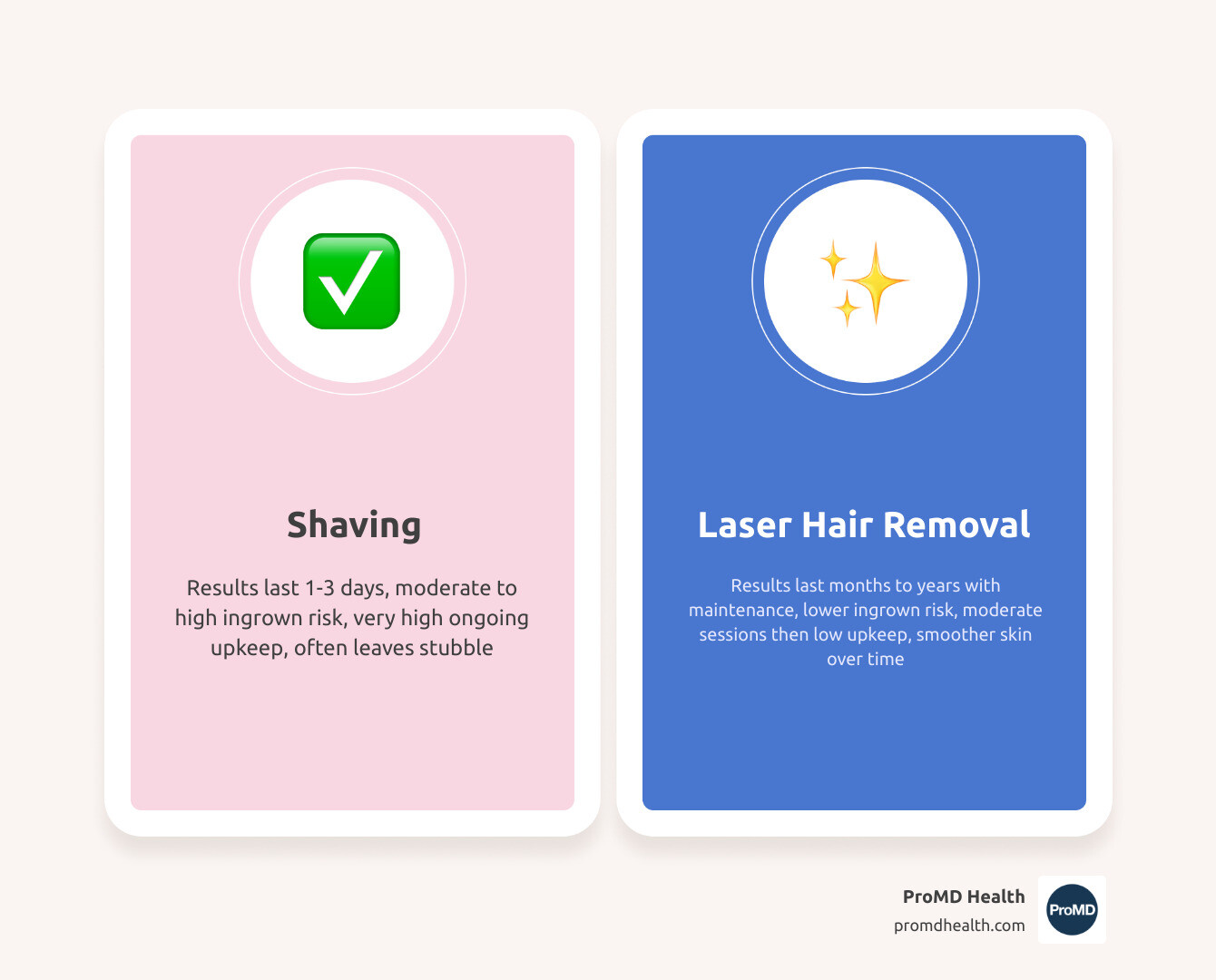
| Method | How long results last | Ingrown risk | Ongoing upkeep | Skin feel |
|---|---|---|---|---|
| Laser hair removal | Months to years with maintenance | Lower for many patients | Moderate during treatment series, low after | Smoother over time |
| Shaving | 1 to 3 days | Moderate to high | Very high | Can leave stubble |
| Waxing | 3 to 6 weeks | Moderate | Ongoing | Smooth but can irritate |
| Depilatory creams | Several days to 2 weeks | Moderate | Ongoing | Variable, may irritate |
Who is a good candidate for treatment
Traditionally, laser hair removal worked best on people with dark, coarse hair and lighter skin because the contrast made the target easier to isolate.
That is still true in general. But modern systems can safely treat a much wider range of skin tones, including many deeper skin tones, when the right wavelength and settings are used by experienced professionals.
Good candidates often include people who have:
- Dark brown or black hair
- Coarse or medium-thickness hair
- Ingrown hairs from shaving or waxing
- Large treatment areas they want to simplify
- Realistic expectations about gradual results
Important note: very light blonde, gray, white, or red hair usually responds less well because there is less usable pigment for the laser to target.
Hormonal conditions can also affect results. If someone has facial hair linked to PCOS or other hormonal drivers, laser can still help, but maintenance may be more important.
Risks, side effects, and when laser may not be recommended
Laser hair removal is generally safe when performed by trained professionals, but it is still a medical aesthetic procedure, not a casual flashlight moment.
Common temporary effects include:
- Redness
- Mild swelling around follicles
- Warmth or tenderness
- Temporary sensitivity
These usually improve within 24 to 72 hours.
Less common but possible risks include:
- Hyperpigmentation or hypopigmentation
- Burns or blisters
- Crusting
- Infection
- Herpes simplex flare in predisposed patients
- Scarring, especially in those prone to keloids
Laser may not be recommended, delayed, or modified if you are:
- Pregnant
- Taking photosensitizing medications or certain antibiotics
- Recently tanned or using self-tanner
- Prone to keloid scarring
- Treating skin with active infection, rash, or open wounds
- Seeking treatment over tattoos or near the eyes
For a technology overview, you can review scientific information on laser hair removal basics.
How to Prepare, What Aftercare Looks Like, and What It Costs
How to prepare before a full body laser hair removal session
Preparation matters because it improves both safety and results.
We typically recommend:
- Shave the treatment area the day before or about 24 hours before treatment
- Do not wax, tweeze, thread, or pluck for several weeks before treatment
- Avoid significant sun exposure and tanning before your session
- Skip self-tanner
- Arrive with clean skin free of lotions, oils, deodorant, or makeup on treated areas
- Tell us about medications, especially antibiotics or photosensitizing drugs
Why shaving but not waxing? Because the follicle needs to stay in place for the laser to target it. Waxing removes the target itself, which is not very helpful.
Aftercare and downtime after treatment
Downtime is usually minimal. Most people return to normal activities right away, though the skin may look slightly pink or feel sun-kissed for a day or two.
Aftercare usually includes:
- Use broad-spectrum SPF 30 or higher
- Avoid direct sun exposure
- Skip hot showers, saunas, and very intense workouts for about 24 hours if skin feels irritated
- Use cool compresses if needed
- Avoid harsh exfoliants, retinoids, or irritating products on treated skin for a short period
- Let shedding happen naturally rather than scrubbing aggressively
If redness lasts beyond a few days or you notice blistering, contact your provider.
Typical cost of full body treatment and package structures
Pricing varies widely based on geography, technology, provider expertise, and what “full body” includes.
Research examples show:
- Some single full-body sessions may fall around $525 to $620
- Some clinics list full-body pricing closer to $1,800 per treatment
- Packages often include 6 sessions
- Annual or membership-style plans may also be offered
This is why comparing prices without comparing inclusions can be misleading. One package may cover only a handful of zones, while another includes nearly every major body area.
What affects cost most:
- Number of areas included
- Number of sessions in the package
- Device technology
- Provider expertise
- Whether touch-ups are included
For more on bundled options, visit full body laser options.
Professional Clinic Treatments vs At-Home Devices
At-home hair removal devices have come a long way, but they are not the same as professional treatment.
The pros and cons of professional treatments
Professional in-office treatment offers:
- Medical oversight
- Customized settings based on skin tone and hair type
- More powerful equipment
- Faster treatment of large areas
- Better safety protocols
- More predictable results for full-body plans
This matters most for people treating large areas, darker skin tones, coarse hair, or sensitive zones.
How at-home laser and light devices compare
At-home devices can be convenient, but they usually involve tradeoffs:
- Lower power output
- More frequent sessions
- More user error risk
- Slower results
- More limitations by skin tone and hair color
- Small treatment windows and battery limits
Some at-home devices use diode laser technology, while many use IPL rather than true laser. IPL uses broad-spectrum light and can be less targeted than clinic-grade laser systems.
Research on home devices shows promising results for some users, including noticeable reduction after a series of treatments. But for full-body treatment, the consistency and speed of professional care usually win.
Which option makes the most sense for your goals
Professional treatment often makes the most sense if you want:
- Full-body convenience
- Faster treatment sessions
- Better customization
- Help with stubborn or coarse hair
- Safer treatment on a broader range of skin tones
At-home devices may make sense if you want:
- A lower upfront barrier
- Small-area touch-ups
- A DIY schedule
- Maintenance after professional treatment
If you are weighing longer-term options, our guide to permanent hair reduction solutions can help.
Frequently Asked Questions About Full Body Laser Hair Removal
Is full body laser hair removal permanent?
It is best described as long-term hair reduction, not guaranteed permanent hair removal forever. Many follicles become inactive for a long time, but some hair can return over time due to hormones, age, or genetics. When it comes back, it is often lighter and finer. Maintenance sessions are common.
Can all skin tones get full body laser hair removal?
Many skin tones can be treated safely with modern laser systems, but success depends on using the right technology, settings, and provider judgment. Darker skin tones require special care because the skin contains more melanin. Hair color matters too: very light blonde, gray, white, and some red hair respond less well.
Is full body laser hair removal worth it?
For many patients, yes. If you are tired of shaving, waxing, razor bumps, or ingrowns, the long-term convenience can be worth the upfront investment. The value is not just financial. It is also about confidence, comfort, smoother skin, and getting time back.
Conclusion
Full body laser hair removal can be a game changer for people who want smoother skin and less daily maintenance. It works by targeting hair follicles in their growth phase, and while it is not a one-and-done treatment, it can produce meaningful long-term reduction across large areas of the body.
At ProMD Health, we believe the best results come from personalized treatment planning, appropriate technology, and careful medical oversight. As George Gavrila, MD, Founder and Medical Director of ProMD Health, emphasizes across our care philosophy, successful aesthetic treatment starts with matching the right approach to the right patient.
If you are ready to spend less time shaving and more time enjoying the results, explore our laser services and schedule a consultation with our team.