
Anti-aging hormone treatment: 5 Proven Benefits
Understanding the Science Behind Healthy Aging
Anti-aging hormone treatment is a medical approach that replaces or rebalances hormones that naturally decline with age—like estrogen, testosterone, DHEA, and human growth hormone (HGH)—to help reduce signs of aging and improve overall health.
Quick Answer: What You Need to Know
- What it treats: Low energy, weight gain, mood changes, thinning skin, decreased muscle mass, low libido, and other age-related symptoms
- How it works: Restores declining hormone levels through creams, patches, pellets, injections, or tablets
- Key hormones: Estrogen, progesterone, testosterone, DHEA, and HGH
- Best candidates: People experiencing symptoms of hormone imbalance, especially during perimenopause or andropause
- Results timeline: Most people notice improvements within weeks to months
- Safety note: Requires medical supervision, comprehensive testing, and ongoing monitoring
Aging is more than skin deep. It’s a complex biological process driven by your endocrine system—the network of glands producing hormones. Hormones are your body’s chemical messengers, regulating everything from metabolism and sleep to skin elasticity and bone density. While your body produces them in abundance when you’re young, production begins to decline around age 30.
This gradual decrease affects how you look and feel. Your skin loses elasticity, energy drops, body composition shifts, and your mood becomes harder to manage. Research shows that approximately 30% of skin collagen is lost in the first five years after menopause, with an average decline of 2.1% per year over a 20-year period. The good news is that modern medicine offers options to address these changes at their source.
I’m Scott Melamed, President and CEO of ProMD Health. With a Master’s in Biotechnology from Johns Hopkins University specializing in Novel Drug Development and a background in endocrine system research, I have deep insight into how hormone treatment can restore vitality. At ProMD Health, we’ve helped thousands of patients reclaim their energy and confidence through personalized hormone optimization.

The Hormonal Connection to Aging
You’ve likely noticed how some people seem to age more gracefully than others. The difference often comes down to hormonal aging versus the simple passage of time.
Chronological aging is counting birthdays. Hormonal aging is what happens inside your body as hormone levels shift, which is the real story behind why you might feel different than you did a decade ago.
Your endocrine system produces over 50 different hormones that regulate nearly everything: your metabolism, mood, sleep quality, and even how your skin looks and feels. As this system becomes less efficient with age, you’ll notice the effects in both your mirror and your daily life. When hormones are balanced, you feel energized and vibrant. When they’re not, things start to feel “off.”
How Key Hormones Influence the Aging Process
Understanding the hormones with the biggest impact on aging helps explain why anti-aging hormone treatment can be so effective.
Estrogen is crucial for more than just reproductive health. For women, it’s your skin’s best friend, boosting collagen and keeping skin hydrated and plump. When estrogen drops during perimenopause and menopause, the effects are swift. Research shows women lose about 30% of their skin collagen in the first five years after menopause. You can read more in scientific research on estrogen and skin health. Estrogen is also essential for maintaining strong bones, and falling levels increase the risk for osteoporosis.
Testosterone isn’t just for men. For men experiencing “andropause,” declining testosterone leads to lost muscle mass, belly fat gain, fatigue, and low libido. For women, testosterone supports muscle strength, bone density, and a healthy sex drive. When it drops, you may find it harder to maintain muscle, your energy tanks, and your libido wanes.
DHEA (Dehydroepiandrosterone) is a parent hormone that your body converts into testosterone and estrogen. DHEA levels peak in your twenties and decline sharply with age. By 70, most people have only 20% of their peak levels. This decline affects muscle mass, bone strength, hair thickness, mood, and sexual function.
HGH (Human Growth Hormone) is needed by adults for tissue repair and maintaining healthy body composition. The pituitary gland produces less HGH as you age, contributing to muscle loss and fat gain, especially around the midsection. For postmenopausal women, declining HGH and estrogen can lead to stubborn abdominal weight gain. While HGH therapy has generated buzz, it remains controversial for healthy adults and carries risks, making a qualified provider essential.
Recognizing the Signs of Hormonal Imbalance
Many people dismiss symptoms of hormonal imbalance as just “getting older,” but they are often signs that your hormones need attention. If several of these sound familiar, anti-aging hormone treatment could help you feel like yourself again.
- Fatigue and low energy: A persistent exhaustion that lingers even after a full night’s sleep, making you feel like you’re dragging through life.
- Unexplained weight gain: The scale creeps up, especially around your belly, despite consistent diet and exercise. This is common as testosterone declines in men and estrogen and HGH drop in postmenopausal women.
- Mood swings and irritability: Feeling like you’re on an emotional rollercoaster, with unexplained anxiety, irritability, or even depression.
- Brain fog: Difficulty focusing, losing your train of thought, or forgetting why you walked into a room. It can be unsettling but is often hormone-related.
- Poor sleep quality: Trouble falling asleep, waking up in the middle of the night, or feeling unrested after a full night’s sleep.
- Decreased libido: A complete lack of interest in sex, which can strain relationships and is one of the most common reasons people seek hormone therapy.
- Thinning hair and dry skin: Visible signs of internal changes, as estrogen and DHEA are essential for healthy hair and skin. Your hair may fall out more, and your skin may feel dry and papery.
The Ultimate Guide to Anti-aging Hormone Treatment
When exploring options to feel like yourself again, you’ll encounter terms like “bioidentical hormones” and “conventional hormone therapy.” Let’s break down what they mean.
Bioidentical hormones are created to be molecularly identical to the hormones your body produces. They typically start from plant sources, like yams or soy, and are modified in a lab to match the exact structure of human estrogen, progesterone, or testosterone.
Conventional hormone therapy (CHT) uses hormones that are similar but not identical to human hormones. Some are synthesized in a lab, while others are derived from animal sources, such as conjugated equine estrogens from pregnant horses.
Both approaches aim to restore hormonal balance, but they use different pathways.
Bioidentical vs. Conventional Hormone Therapy
The differences between these approaches matter when choosing an anti-aging hormone treatment. Here’s what sets them apart:
- Molecular structure: Bioidentical hormones are exact replicas of your body’s hormones, while conventional hormones have a similar but distinct structure.
- Source materials: Bioidentical hormones originate from plant compounds, while conventional hormones may be synthetic or animal-derived.
- Customization: Bioidentical hormones can be custom-compounded by specialized pharmacies for your specific needs. Conventional hormones come in standardized doses.
- FDA approval: Some bioidentical products are FDA-approved, but custom-compounded versions are not. Most conventional therapies are FDA-approved.
| Feature | Bioidentical Hormones | Conventional Hormones |
|---|---|---|
| Molecular Structure | Identical to hormones produced by the human body | Similar but not identical to human hormones |
| Source | Plant-derived (e.g., yams, soy), then chemically altered | Synthetic compounds or animal-derived (e.g., pregnant mare’s urine) |
| Customization | Often compounded by pharmacies to individual specifications | Standardized doses and formulations |
| FDA Approval Status | Some are FDA-approved; compounded versions are not | Most are FDA-approved |
Compounded vs. FDA-Approved Hormones
This distinction is crucial for your safety. FDA-approved bioidentical hormones are pharmaceutical products that have undergone rigorous testing for safety, efficacy, and quality control. When you use an FDA-approved product, you know exactly what you’re getting.
Compounded bioidentical hormones are custom-mixed by a pharmacy based on a doctor’s prescription. While this sounds ideal, these versions have not been tested or approved by the FDA. Their safety, effectiveness, and dosage consistency aren’t guaranteed by regulatory oversight. Claims that compounded hormones are safer or more “natural” are not supported by solid scientific evidence, and many medical organizations have expressed concerns due to a lack of long-term safety data.
This doesn’t mean compounded hormones are never appropriate, but it highlights the need for a knowledgeable provider who understands both the benefits and limitations.
Forms of Hormone Replacement Therapy
Modern anti-aging hormone treatment offers several delivery methods, and the best one depends on your lifestyle and body’s response.
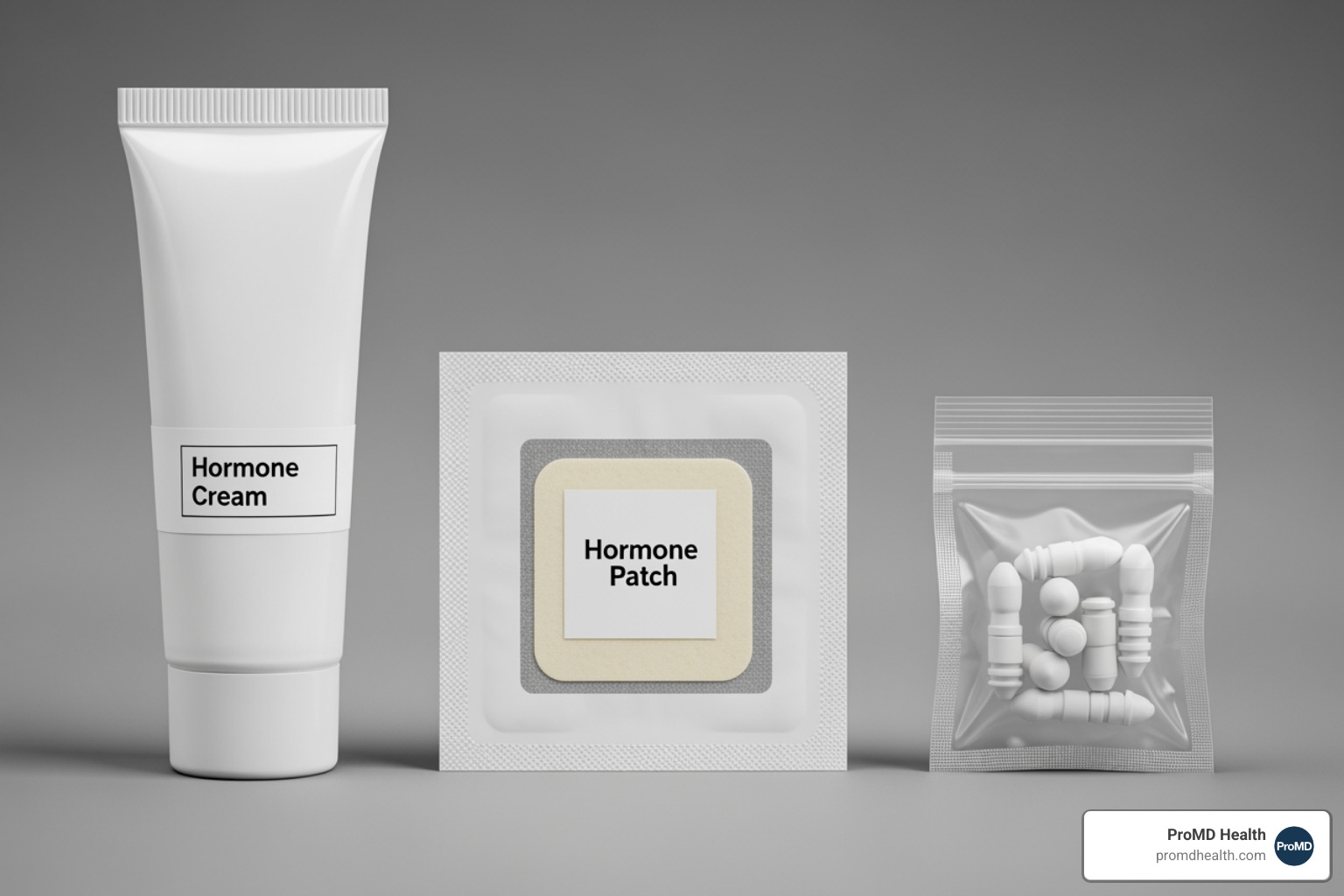
- Creams and gels: Applied to the skin, they provide a steady, non-invasive hormone release. They bypass the liver, which may reduce risks like blood clots compared to oral forms.
- Patches: Applied to the skin every few days, they deliver a controlled dose without the need for daily application.
- Pellets: Tiny implants placed under the skin during a quick in-office procedure. They release hormones consistently for several months, offering a “set it and forget it” approach.
- Injections: Delivered into a muscle or under the skin, usually weekly or bi-weekly. This method provides a concentrated dose and works well for testosterone replacement.
- Oral tablets: A straightforward daily pill. However, oral hormones pass through the liver first, which can increase the risk of certain side effects, especially with estrogen.
Benefits vs. Risks: A Balanced View
Starting anti-aging hormone treatment is a personal decision we approach with careful consideration. At ProMD Health, our goal is to help you “Look Younger and Feel Younger” by weighing your personal health history against potential outcomes to ensure the safest, most effective path forward.
What Are the Potential Benefits of Anti-aging Hormone Treatment?
When properly administered, anti-aging hormone treatment can offer wide-ranging benefits that restore youthful vitality.
- Improved Skin Appearance: Hormones like estrogen and DHEA boost collagen, elastin, and hyaluronic acid, leading to firmer, smoother, and more hydrated skin.
- Hair and Nail Health: Balanced hormones can lead to thicker hair and stronger, less brittle nails.
- Increased Energy and Vitality: Alleviating hormonal imbalances can combat fatigue and help you regain your zest for life.
- Better Mood and Cognitive Function: Treatment can help stabilize mood, reduce anxiety, promote restful sleep, and sharpen focus, combating “brain fog.”
- Body Composition Changes: Optimizing hormones like testosterone and HGH can help you regain lost muscle and reduce stubborn fat, especially abdominal fat. Research supports the role of hormones in healthy muscle mass development.
- Improved Libido and Sexual Function: Restoring hormone levels can significantly improve sex drive, reduce vaginal dryness in women, and help men with erectile function.
- Bone Density Protection: Hormone therapy, particularly with estrogen, can prevent the accelerated bone loss that occurs after menopause, reducing the risk of osteoporosis.
Is Anti-aging Hormone Treatment Safe for Everyone?
While the benefits are compelling, anti-aging hormone treatment is not without risks and is not a one-size-fits-all solution. Potential side effects can include weight changes, blurred vision, acne, headaches, and mood swings. More serious but less common risks include blood clots, stroke, and gallbladder disease.
The Women’s Health Initiative (WHI) study from the early 2000s raised concerns about hormone therapy, but a modern interpretation of the WHI study has led to the “timing hypothesis.” This suggests that the timing of initiation significantly impacts the risk-benefit profile.
Studies now indicate that starting hormone therapy during perimenopause may offer the most benefits with fewer risks. Research found that women who started HT around age 48 and continued for four to eight years aged more slowly. Conversely, initiating therapy well into menopause may carry higher risks. You can read more about the benefits of starting therapy in perimenopause.
Who should not take bioidentical hormones? Individuals with a history of breast cancer, uterine cancer, ovarian cancer, blood clots, heart disease, stroke, or liver disease are generally not candidates. This underscores the critical importance of a comprehensive medical evaluation and ongoing supervision.
Your Treatment Journey: What to Expect
Starting an anti-aging hormone treatment journey with ProMD Health is a partnership. We believe your path to feeling your best should be unique to you. We work together, keeping your health story and goals at the heart of every decision.
The Process: From Testing to Treatment
Your journey toward hormonal balance is a thoughtful, guided process designed to get things just right for you.
- Initial Consultation: It all starts with a conversation. We’ll listen to your story, diving into your symptoms, health history, and what you’re hoping to achieve.
- Comprehensive Testing: Next, we get a clear picture of what’s happening inside through blood work and sometimes saliva samples. These tests pinpoint your exact hormone levels and identify any imbalances.
- Personalized Treatment Plan: With your test results, we’ll craft a custom plan. We’ll choose the right hormones (estrogen, progesterone, testosterone, DHEA, or HGH) and the best delivery method, always aiming for the lowest effective dose.
- Ongoing Monitoring: Our partnership continues after treatment begins. We’ll regularly check your hormone levels and how you’re feeling to fine-tune your dosage, ensuring your treatment remains safe and effective.
Most people notice positive changes within a few weeks, but it can take up to three months to feel the full effects. Patience and consistency are your best allies.
Complementary and Alternative Approaches
Anti-aging hormone treatment shines when paired with a holistic approach to well-being. We encourage complementary strategies that boost your overall health and improve the benefits of your therapy.
- Nutrient-Rich Diet: A diet filled with whole foods, healthy fats, and lean proteins provides the building blocks for healthy hormone production.
- Regular Exercise: Physical activity helps build muscle, strengthen bones, support your heart, and lift your mood.
- Stress Management: Practices like yoga, meditation, or time in nature can help regulate stress hormones and bring more balance to your life.
- Targeted Supplements: Depending on your needs, we might suggest specific vitamins, minerals, or herbs to complement your hormone therapy.
Want to explore more ways to support your overall well-being? Check out our other wellness services!
Frequently Asked Questions about Hormone Therapy for Aging
We understand you have questions about anti-aging hormone treatment. Here are straightforward answers to some of the most common ones we hear at ProMD Health.
How do I know if my symptoms are from a hormone imbalance?
The symptoms of hormonal imbalance often overlap with other health conditions, like thyroid disease or anemia, which makes self-diagnosis difficult. That’s why we don’t guess with your health. At ProMD Health, we rely on comprehensive blood testing (and sometimes saliva testing) to get an accurate picture of your hormone levels.
Testing is just one piece of the puzzle. Consulting with a specialist is crucial. We review your complete medical history and symptoms to rule out other potential causes before recommending anti-aging hormone treatment. This ensures we’re addressing the right problem with the right solution.
How long do I need to be on hormone therapy?
There’s no standard answer, as treatment is highly individualized. The duration depends on your symptoms, health goals, and how your body responds. Some patients use hormone therapy for a few years to steer perimenopause or andropause, while others continue long-term to maintain their quality of life. It’s not necessarily a lifelong commitment, but it’s also not a quick fix.
Regular re-evaluation with your doctor is key. We schedule ongoing appointments to monitor your progress and ensure your treatment plan still aligns with your goals. Your needs may change, and your treatment should evolve accordingly.
Are bioidentical hormones safer than conventional HRT?
This is a common and important question. The term “bioidentical” means the hormones are molecularly identical to what your body produces. Because of this match, some people may tolerate them better. Your body recognizes them as familiar.
However, it’s critical to understand that all hormone therapy has risks. The “bioidentical” label doesn’t automatically mean “safer” or “risk-free.” Whether a hormone is bioidentical or conventional, FDA-approved or compounded, it requires careful medical supervision.
The most important safety factor is proper dosing and monitoring by a qualified expert. At ProMD Health, we focus on evidence-based practices, using the lowest effective dose for the shortest necessary duration. We conduct regular monitoring to ensure your safety and adjust treatment as needed. Your health deserves that level of careful attention.
Conclusion: Reclaiming Your Vitality for the Years Ahead
As we’ve explored, hormones are central to how we age, influencing everything from skin health and energy to cognitive function and bone strength. While aging is inevitable, a decline in your quality of life due to hormonal changes is not.
Anti-aging hormone treatment, when personalized to your unique biology, offers a real opportunity to restore balance and reclaim vitality. This isn’t about chasing eternal youth; it’s about feeling like yourself again—energetic, confident, and able to fully engage with life at any age.
The benefits—from revitalized skin and better body composition to improved mood and stronger bones—are achievable with the right approach. Hormone therapy is not something to pursue casually. The type of hormone, the timing of treatment, and your individual health history all matter enormously.
This is where expert guidance is essential. At ProMD Health, we focus on comprehensive testing and truly personalized anti-aging hormone treatment and wellness plans. Our commitment is to help you “Look Younger and Feel Younger” through evidence-based medicine delivered with compassion.
With locations serving patients in Annapolis, Arlington, Ashburn, Bel Air, Bethesda, Columbia, Easton, Fort Lauderdale, Hutto, Lafayette, Lewes, Timonium, Tysons Corner, Washington, Wellington, and Westminster, our team of specialists is ready to partner with you. We’ll steer this journey together, monitoring your progress and ensuring your safety every step of the way.
You deserve to feel vibrant and fully alive. If the symptoms we’ve discussed resonate with you, it’s time to explore what’s possible. Take the first step towards a healthier, more vibrant you by scheduling a consultation with us today. Your future self will thank you.


