
Managing Hunger While Fasting: 12 Winning Strategies
Why Managing Hunger While Fasting Feels Like an Uphill Battle
Managing hunger while fasting is a primary challenge for newcomers to intermittent fasting. The good news is that hunger during a fast is normal, manageable, and usually temporary. With the right strategies, you can steer it smoothly.
Quick answers for managing hunger while fasting:
- Stay hydrated with water, black coffee, or herbal tea.
- Eat protein and fiber during eating windows for lasting satiety.
- Keep busy to distract yourself from hunger pangs.
- Sleep well to regulate hunger hormones like ghrelin.
- Start gradually with shorter fasting windows (e.g., 12:12).
- Eat slowly when breaking your fast to prevent overeating.
- Manage stress, as high cortisol increases cravings.
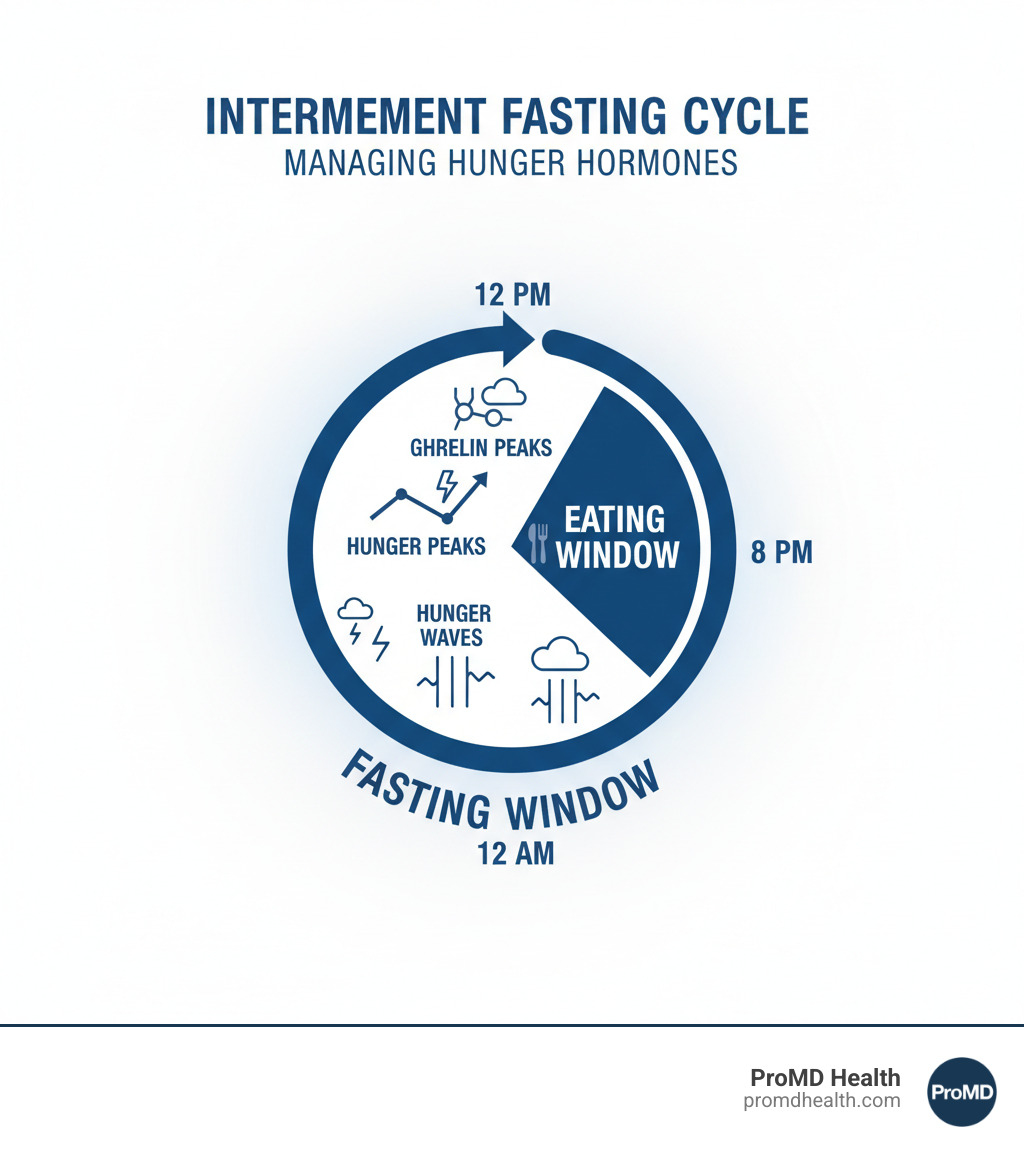
Hunger happens because your body releases ghrelin (the hunger hormone) at your usual meal times. However, studies show that with consistent intermittent fasting, the desire to eat decreases over time as your body adapts. The key is learning to distinguish true physical hunger, which builds gradually, from sudden emotional cravings driven by stress or boredom.
I’m Scott Melamed, President and CEO of ProMD Health. With a background in biotechnology and years of experience in medically supervised wellness programs, I’ve seen how understanding the science of hunger transforms fasting from a struggle into a sustainable practice. This guide will share proven strategies to help you manage cravings.
Understanding the Hunger Response: Why You Feel Hungry When Fasting
Understanding what happens in your body during a fast makes hunger much easier to handle. During fasting hours, your body stops using glucose from your last meal and starts burning stored fat for energy. This metabolic switch, called ketosis, is linked to many of fasting’s benefits. However, this transition can trigger hunger signals as your body adjusts.
How Hormones Like Ghrelin and Leptin Influence Hunger During Fasting
Two key hormones regulate your hunger: ghrelin and leptin.
Ghrelin is the “hunger hormone.” Produced in your stomach, its levels rise before your usual mealtimes, signaling your brain to eat. Research on the effect of intermittent fasting on appetite shows ghrelin levels change during fasting. The good news is that your body adapts. Ghrelin spikes are often most intense on the first two days of fasting and then decrease as your body adjusts to the new schedule. Eating protein when you break your fast is particularly effective at keeping ghrelin in check.
Leptin is the “satiety hormone.” Produced by fat cells, it tells your brain you’re full. During fasting, as your body uses fat stores, leptin levels can drop, which may increase appetite. However, responses are highly individual, and the body typically readjusts over time.
Blood Sugar Levels and the Hunger Rollercoaster
Your blood sugar also affects hunger. During a fast, blood sugar naturally declines, which encourages fat burning. However, sharp drops can cause intense hunger or irritability. The solution is to eat balanced meals with protein, fiber, and healthy fats during your eating window to keep blood sugar stable.
True Hunger vs. Emotional Hunger and Cravings
Learning to differentiate between physical and emotional hunger is a powerful skill for managing hunger while fasting.
- True physiological hunger builds gradually. It’s a physical need for fuel that can be satisfied by any nutritious meal.
- Emotional hunger strikes suddenly and craves specific comfort foods. It’s often triggered by stress, boredom, or other emotions, not a physical need for energy.
When a craving hits, pause and ask if you’re physically hungry or just seeking comfort. This awareness is key, as research shows that with consistent fasting, the desire to eat decreases while feelings of fullness after meals increase.
12 Winning Strategies for Managing Hunger While Fasting
With the right toolkit, managing hunger while fasting becomes a manageable skill. Here are 12 science-backed strategies to help you succeed.
Strategies 1-3: Master Your Hydration to Curb Cravings
Thirst is often mistaken for hunger. Since you’re not getting fluids from food while fasting, hydration is critical.
- Drink plenty of water. When hunger strikes, drink a large glass of water and wait 15 minutes. The feeling often subsides. Sparkling water is a great alternative if you find plain water boring, as the carbonation can increase feelings of fullness.
- Enjoy black coffee and herbal tea. Caffeine is a natural appetite suppressant. Unsweetened herbal teas like peppermint or ginger can soothe the stomach and provide a comforting ritual. For more ideas, check out this list of 10 Drinks for Intermittent Fasting You Should Use.
- Maintain electrolyte balance. During longer fasts, a pinch of high-quality sea salt in your water can help replenish essential minerals and prevent fatigue that can be mistaken for hunger.
Strategies 4-6: Plan Your Meals to Prevent Hunger Pangs
What you eat during your eating window directly impacts how you feel during your fast. Strategic meal planning is key.

- Prioritize protein at every meal. Protein is the most satiating macronutrient. It slows digestion and stabilizes blood sugar, sending powerful fullness signals to your brain. Research confirms that adding more protein to your diet increases satiety.
- Focus on fiber-rich foods. Fiber adds bulk to meals and slows digestion, keeping you full for hours. Load up on vegetables, legumes, nuts, and seeds during your eating window.
- Include healthy fats and low-glycemic carbs. Healthy fats from sources like avocados and olive oil trigger satiety hormones. Paired with low-glycemic carbs like whole grains and sweet potatoes, they provide steady energy and prevent the blood sugar rollercoaster that leads to hunger.
Strategies 7-9: Use Mindful Techniques for managing hunger while fasting
Engaging your mind can be as effective as any food or drink.
- Stay busy and distracted. Boredom often leads to thoughts of food. Engage in focused activities like work projects, hobbies, or household chores to keep your mind occupied.
- Practice mindful eating and eating slowly. When you do eat, slow down. It gives your brain time to register fullness, preventing overeating. This mindfulness can also help you observe hunger during a fast without reacting emotionally. Research on mindfulness during meals shows it can weaken cravings.
- Use deep breathing and grounding techniques. When a craving feels intense, try a few minutes of deep belly breathing to calm your nervous system. This can help you regain control and ride out the wave of hunger.
Strategies 10-12: Optimize Your Lifestyle for managing hunger while fasting
Your daily habits are the foundation for successful fasting.

- Prioritize sleep. Lack of sleep disrupts hunger hormones, increasing ghrelin (hunger) and decreasing leptin (satiety). Studies on sleep deprivation and hunger confirm it boosts appetite and cravings. Aim for the recommended 7–9 hours per night.
- Manage stress levels. Chronic stress raises cortisol, a hormone that can increase cravings and the drive to eat. Incorporate stress-management activities like meditation, yoga, or time in nature into your routine.
- Incorporate light exercise. Physical activity can reduce food cravings and regulate appetite hormones. Light to moderate exercise like walking or yoga is often beneficial during a fast, serving as a great distraction and mood booster.
Easing In: Beginner-Friendly Fasting and How to Break Your Fast
Jumping into a long fast from day one can lead to intense hunger and burnout. A gradual approach is the smartest way to ensure managing hunger while fasting is sustainable.
Beginner-Friendly Fasting Methods
Starting with shorter fasts gives your body and hunger hormones time to adapt. The University of Michigan School of Public Health recommends methods where most fasting hours occur while you sleep.
- The 12:12 method involves a 12-hour fast and a 12-hour eating window. If you finish dinner at 7 PM and eat breakfast at 7 AM, you’ve completed a 12-hour fast, mostly while sleeping.
- The 14:10 method extends the fast to 14 hours. This is a small step up that further trains your body to go longer without food.
- The 16:8 method is a popular and effective goal for many. It involves a 16-hour fast and an 8-hour eating window (e.g., 12 PM to 8 PM). While challenging at first, many people find their hunger decreases significantly once they adapt.
| Fasting Method | Fasting Window | Eating Window | Pros for Hunger Management | Cons for Hunger Management |
|---|---|---|---|---|
| 12:12 | 12 Hours | 12 Hours | Easiest for beginners; mostly overnight; minimal hunger disruption. | May not provide strong metabolic benefits for everyone. |
| 14:10 | 14 Hours | 10 Hours | Gentle progression from 12:12; still relatively comfortable. | Requires slight adjustment from standard eating patterns. |
| 16:8 | 16 Hours | 8 Hours | Popular and effective; allows for two main meals; adaptable. | Can be challenging initially as hunger hormones adjust. |
The goal is to find a sustainable practice. There’s no need to rush; progress at a pace that feels right for you.
How to Break Your Fast Gently
How you break your fast is crucial for preventing rebound hunger and digestive issues. When your eating window opens, resist the urge to eat everything at once.
- Eat mindfully and slowly. It takes about 20 minutes for your brain to register fullness. Eating slowly helps prevent overeating.
- Focus on whole foods. Your first meal should be nutrient-dense, centered on protein, healthy fats, and fiber-rich vegetables. This provides sustained energy and stabilizes blood sugar.
- Avoid sugary and processed foods. These can cause a blood sugar spike and crash, leaving you hungrier later.
- Start with a moderate portion. Give your body time to adjust. You can always eat more later in your window if you’re still truly hungry.
Safety First: Potential Risks and When to Consult a Professional
While intermittent fasting is a powerful tool, it isn’t a one-size-fits-all solution. Safely managing hunger while fasting requires understanding potential risks and knowing when professional guidance is necessary.
Understanding the Risks: What You Need to Know
Pay attention to your body’s signals. Potential risks and red flags include:
- Hormonal Imbalance: Particularly for women, prolonged or severe fasting can disrupt menstrual cycles. If you notice significant changes, consult a provider.
- Cardiovascular Concerns: A 2024 American Heart Association study found that 8-hour time-restricted eating linked to a 91% higher risk of cardiovascular death in certain populations, especially those with pre-existing heart conditions. This highlights the need for personalization.
- Nutrient Deficiencies: A shorter eating window requires careful meal planning to ensure you get all essential nutrients.
- Binge Eating: If hunger leads to a consistent cycle of binge eating, the fasting approach may not be right for you.
- Persistent Side Effects: While some fatigue is normal initially, low energy, headaches, or dizziness that persist beyond the first week or two are warning signs.
When Professional Guidance Isn’t Optional
Consult a healthcare professional before starting intermittent fasting if any of the following apply to you:
- Pre-existing medical conditions, such as diabetes, heart disease, or kidney problems.
- Currently taking any medications, especially for blood sugar or blood pressure.
- Pregnant or breastfeeding, as fasting is contraindicated during these times.
- A history of eating disorders, as the restrictive nature of fasting can be a trigger.
At ProMD Health, we emphasize personalized, medically supervised care. Our team understands that every body is unique. The Advantages of Medically Supervised Weight Loss include expert guidance that adapts to your body’s response, ensuring your journey is both safe and effective. Working with professionals helps determine the right protocol for your health status and lifestyle, setting you up for long-term success.
Frequently Asked Questions about Hunger and Fasting
Here are answers to common questions about managing hunger while fasting.
How long does it take for hunger to go away when fasting?
The first one to two days are typically the hardest, as your hunger hormone (ghrelin) is still operating on its old schedule. However, it gets easier quickly. Most people report that intense hunger waves subside significantly after the first 24-48 hours as the body adapts to burning fat for fuel.
Hunger tends to come in waves that rise, peak, and then pass. The key is to ride out these temporary waves, knowing they will become less frequent and intense with consistency.
Can I drink anything besides water while fasting?
Yes. While water is essential, other zero-calorie beverages can help with hydration and hunger management.
- What to drink: Black coffee, unsweetened tea (green, black, or herbal), and sparkling water are all excellent choices. A teaspoon of apple cider vinegar in water may also help.
- What to avoid: Any beverage with calories, sugar, or artificial sweeteners will break your fast. This includes sodas, juices, and coffee with milk or cream.
Is it better to start with a shorter fasting window?
Absolutely. Starting gradually is the smartest approach for long-term success. We recommend beginners start with a 12:12 or 14:10 method. This allows your body and mind to adjust comfortably with minimal side effects.
A significant portion of these shorter fasts occurs while you’re asleep, making them much easier to manage. Once you’re comfortable, you can slowly extend your fasting window to 16:8 or longer. This progression helps build sustainable habits and makes you far more likely to stick with the practice.
Conclusion
Managing hunger while fasting is not about fighting your body; it’s about understanding it. Hunger pangs are temporary signals you can learn to steer with the right strategies.
By staying hydrated, planning nutrient-dense meals, using mindful techniques, and optimizing your lifestyle, you create a strong foundation for success. Remember to start gradually with shorter fasting windows and always break your fast gently with whole foods.
Most importantly, prioritize your safety. Intermittent fasting is not for everyone, and aggressive protocols can carry risks. If you have pre-existing health conditions, are on medication, or have a history of eating disorders, consulting a healthcare professional is essential.
At ProMD Health, we know that personalized, medically supervised care is the key to sustainable results. One-size-fits-all approaches rarely work for long-term wellness.
Managing hunger is achievable through smart strategies and professional support when needed. Your wellness journey should feel empowering, not like a constant battle.
Explore our medically supervised Weight Management programs to achieve your goals safely and effectively. We’re here to guide you every step of the way.


