
PRP Injected Into Face: 3 Transformative Benefits
The Natural Solution for Aging Skin
PRP injected into face treatments have moved beyond celebrity buzz to become a sought-after regenerative aesthetic procedure. If you’re exploring this treatment, here’s a quick overview:
Quick Answer: PRP Facial Injections
- What it is: A concentrated solution of your own platelets and growth factors injected into facial skin.
- Purpose: Stimulates collagen production, reduces wrinkles, and restores volume naturally.
- Procedure time: 45 minutes to 1 hour.
- Results timeline: Initial improvements in 3-4 weeks; full effects in 3-6 months.
- How many treatments: Typically 3-6 sessions spaced 6-8 weeks apart.
- Results last: 12-18 months with annual maintenance.
- Cost: $250-$1,500 per session.
- Recovery: Minimal downtime; redness and swelling resolve in 3-7 days.
If you’ve noticed deepening fine lines or a loss of youthful plumpness, you’re not alone. Many people are turning to platelet-rich plasma (PRP) as a natural way to refresh their skin. Unlike surgical facelifts or synthetic fillers, PRP uses growth factors from your own blood to trigger collagen production and tissue regeneration, reversing visible signs of aging.
I’m Scott Melamed, President and CEO of ProMD Health. From my research in regenerative medicine at Johns Hopkins to leading a premier aesthetic healthcare organization, I’ve seen how PRP injected into face treatments transform not just appearance, but confidence. This guide will walk you through everything you need to know.

What is Platelet-Rich Plasma (PRP) and How Does It Work?
Platelet-Rich Plasma (PRP) is a concentrated solution created from your own blood. It contains a much higher concentration of platelets than normal blood. These platelets are packed with growth factors, your body’s natural healing agents.
The process is simple. We perform a standard blood draw (1-4 vials) and use a centrifuge to separate the components. This centrifugation process isolates the platelet-rich plasma, a golden-hued concentrate, from other blood cells. Because this treatment is autologous (from your own body), it’s incredibly safe and eliminates the risk of allergic reactions. The prepared PRP is then injected into targeted facial areas to stimulate collagen, elastin, and cell regeneration.
For more details, our guide on Explaining PRP Treatments: What Are They? and this overview from Johns Hopkins Medicine on Platelet-Rich Plasma (PRP) Injections are excellent resources.

The Science Behind Getting PRP Injected Into Face for Rejuvenation
When PRP is injected into face tissues, the concentrated platelets release a cascade of powerful growth factors. These messengers signal your skin cells to begin regeneration.
This process jumpstarts collagen production, the protein that keeps skin firm and elastic. It also boosts elastin, which helps skin bounce back. The result is firmer, more resilient skin. PRP also promotes cellular regeneration and tissue remodeling by creating a fibrin matrix (a scaffold for new tissue) and increasing blood supply to the area. This brings more oxygen and nutrients to your skin, enhancing its health and vibrancy.
Essentially, we are directing your body’s natural healing response to refresh your facial skin. Scientific research on PRP for skin confirms its effectiveness, showing measurable increases in skin volume and elasticity with high patient satisfaction.
PRP Injections vs. a “Vampire Facial”
While often used interchangeably, these terms refer to different procedures.
PRP Injections (or a “Vampire Facelift”) involve directly injecting PRP into the face, much like dermal fillers. At ProMD Health, we often combine PRP with hyaluronic acid fillers. The filler provides immediate volume, while the PRP works over time to regenerate tissue. This approach is ideal for restoring volume, addressing deep wrinkles, and providing a subtle lift.
The Vampire Facial combines PRP with microneedling. A device creates tiny punctures in the skin, and PRP is applied topically to penetrate through these micro-channels. This method excels at improving surface-level concerns like fine lines, acne scars, enlarged pores, and uneven texture.
Both treatments use your own platelets, but they target different goals. We’ll help you determine the best approach for your unique skin concerns.
The Transformative Benefits of Getting PRP Injected Into Face
Patients often ask what PRP injected into face treatments can actually do for their skin. The answer is that it improves skin health from within, delivering genuinely transformative and natural-looking results. Here’s what you can expect:
- Softer Wrinkles and Fine Lines: New collagen fills in creases around the mouth, eyes, and forehead for a smoother appearance.
- Improved Skin Texture and Tone: PRP helps restore a radiant glow, evens out skin tone, and smooths rough patches. Learn more about how to Improve Skin Tone & Texture with PRP.
- Natural Volume Restoration: It stimulates your body to rebuild lost volume in areas like the cheeks, temples, and under-eye tear troughs, correcting a hollow or tired look.
- Under-Eye Rejuvenation: This is one of our most requested treatments. PRP can soften dark hollows and improve crepey skin under the eyes.
- Scar Reduction: Growth factors promote tissue remodeling, which can significantly improve the appearance of acne and surgical scars.
- Natural-Looking Results: Because PRP works with your body, the changes are gradual and authentic. You’ll look refreshed and vibrant, not like a different person.
As family nurse practitioner Tiffany Carmichael notes, “PRP injections can improve your skin’s texture, volume and elasticity.”

Who is an Ideal Candidate for PRP?
If you’re in good overall health, noticing signs of aging, and have realistic expectations, you are likely a great candidate. PRP is safe for all skin types and tones because it’s autologous (from your own body).
However, PRP may not be recommended if you have certain conditions, such as:
- Blood disorders (e.g., hemophilia)
- Active infections or skin cancer in the treatment area
- Hepatitis C or other blood-borne illnesses
- Cardiovascular disease requiring blood thinners (which may need to be paused with your doctor’s approval)
We’ll review your medical history during your consultation to ensure your safety.
How PRP Compares to Other Treatments
Here’s a quick comparison of how PRP injected into face treatments stack up against other popular options:
- Vs. Dermal Fillers: Fillers provide instant volume by “filling space,” but they don’t improve skin quality. PRP works progressively to rebuild your collagen matrix for more natural-looking, long-term improvement. The two can be combined in a “Vampire Facelift” for both immediate and regenerative results.
- Vs. Microneedling Alone: Adding PRP to microneedling (a “Vampire Facial”) boosts the results. The PRP penetrates deeper through the micro-channels, enhancing healing, speeding up results, and reducing downtime.
- Vs. Neurotoxins (Botox): Neurotoxins relax muscles to smooth dynamic wrinkles (from facial movements). PRP improves skin quality and static wrinkles (present at rest) by stimulating collagen. Many patients use both synergistically for comprehensive facial rejuvenation.
What truly sets PRP apart is its regenerative nature. It stimulates your body’s own repair mechanisms for holistic, long-term improvement.
Your Step-by-Step Guide to the PRP Injection Procedure
Knowing what to expect during your PRP injected into face treatment can ease any anxiety. At ProMD Health, we’ve refined the process for your comfort and safety.
The Procedure: From Blood Draw to Injection
Your appointment will typically last 45 minutes to an hour. Here’s a breakdown of the steps:
- Consultation & Prep: It begins with a consultation to create your personalized treatment plan. Before your appointment, we’ll ask you to drink plenty of water and temporarily avoid certain medications (like aspirin and blood thinners), supplements (fish oil, vitamin E), alcohol, and caffeine. You should also pause active skincare like retinoids for about a week.
- Blood Draw & Centrifugation: On treatment day, we apply a topical numbing cream to your face. While it takes effect, a medical professional will draw a small amount of blood (1-4 vials). The blood is then placed in a centrifuge machine to isolate the concentrated platelet-rich plasma.
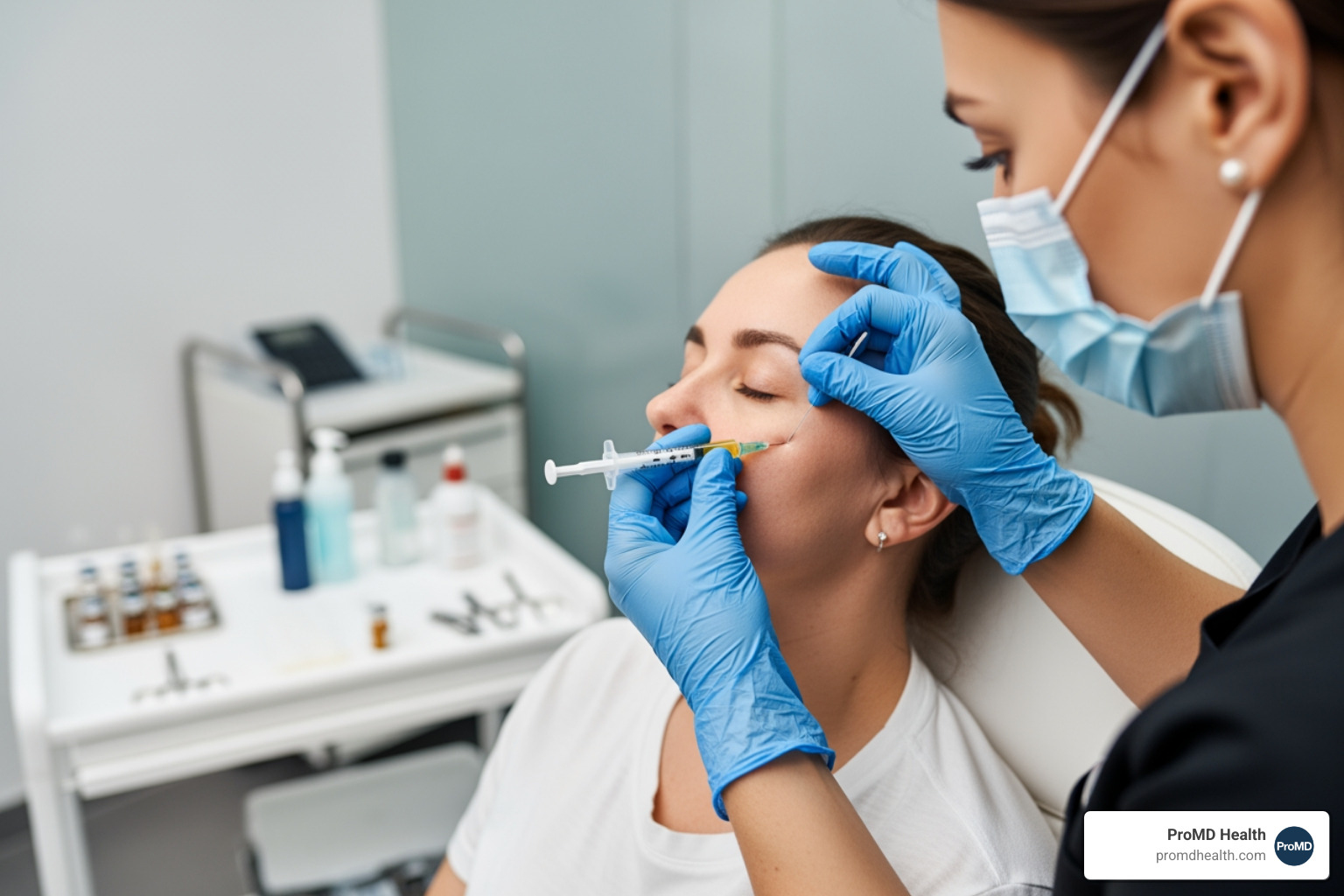
- Injection: Once the PRP is ready, your provider will inject it into targeted facial areas using very fine needles. Thanks to the numbing cream, most patients report only a mild sensation of pressure.
For more on what to expect after similar treatments, read our guide on What to Expect After Microneedling with PRP.
Recovery and Potential Side Effects
One of the biggest advantages of PRP is minimal downtime. Most patients return to their daily activities immediately. However, you can expect some common, temporary side effects:
- Redness: Usually fades within a day.
- Mild Swelling: Typically resolves in 1-3 days.
- Bruising: May occur, especially under the eyes, and disappears within 3-7 days.
- Tenderness: Can be managed with an ice pack or acetaminophen (Tylenol).
Since PRP uses your own blood, the risk of an allergic reaction is virtually zero. Serious complications like infection or nerve injuries are rare with an experienced provider following sterile protocols.
Aftercare: What to Do After Your PRP Injected Into Face Treatment
Proper aftercare is crucial for optimal results. Follow your provider’s specific instructions, which will generally include these key points:
- For the first 3 days: Avoid makeup, strenuous exercise, swimming, saunas, and excessive sun exposure. Use a wide-brimmed hat and mineral sunscreen if you must be outdoors.
- Avoid other treatments: Do not schedule other cosmetic procedures like chemical peels or laser treatments for at least a month.
- Topical PRP: If you had a Vampire Facial, do not wash your face for at least 5 hours post-treatment to allow the PRP to absorb.
- Pain relief: Avoid NSAIDs like ibuprofen, as they can interfere with collagen formation. Use acetaminophen if needed.
Results, Longevity, and Cost: What to Expect from Your Treatment
Understanding the timeline and investment for PRP injected into face treatments is key. Unlike “overnight” fixes, PRP works on your body’s natural schedule.
When Will You See Results, and How Long Do They Last?
While you may notice some initial plumpness, the real results unfold over time as your body builds new collagen.
- First Month: Improvements in skin texture become noticeable. Your skin may feel smoother and softer.
- Three Months: Collagen production peaks, leading to more dramatic changes like softened fine lines and restored volume.
- Full Effects: The complete results of your treatment series will develop over several months.
Results typically last for twelve to eighteen months, though this can vary based on age, lifestyle, and skincare habits. We recommend annual touch-up treatments to maintain your skin’s refreshd appearance.
How Many Treatments Are Needed?
PRP works best as a series. For the most noticeable and lasting results, we recommend an initial series of three to six sessions, spaced six to eight weeks apart. This schedule allows your skin time to regenerate between treatments.
The exact number of sessions depends on your individual concerns. Mild issues may only require three treatments, while deeper wrinkles or significant volume loss may benefit from five or six. After the initial series, annual maintenance treatments are recommended to sustain your results. During your consultation, we’ll create a personalized plan for your unique needs. For more information, see our guide on The Benefits of PRP Treatment.
The Cost of PRP Facial Rejuvenation
The cost of PRP injected into face treatments varies by location, provider expertise, and the treatment area. In the U.S., a single session typically ranges from $250 to $1,500.
As an elective cosmetic procedure, PRP is not covered by medical insurance. However, many patients find it offers excellent long-term value compared to treatments requiring more frequent touch-ups. We provide transparent pricing and discuss payment options during your consultation to make your aesthetic journey accessible.

Frequently Asked Questions about PRP Injections
Here are answers to the most common questions we receive about PRP injected into face treatments.
Is the PRP injection procedure painful?
We prioritize your comfort. A topical numbing cream is applied before the procedure to minimize discomfort. Most patients report feeling a mild pressure sensation rather than pain during the injections. Afterward, any tenderness is easily managed with an ice pack or acetaminophen.
How many treatments will I need to see results?
While you may see an initial glow, the best results come from a series of treatments. We typically recommend an initial series of 3 or more treatments, spaced 6-8 weeks apart, to allow for optimal collagen regeneration. After the initial series, annual maintenance treatments are advised to sustain your results.
Is PRP safe for all skin types and tones?
Yes. Because PRP is an autologous treatment (using your own blood), the risk of allergic reactions or adverse immune responses is virtually nonexistent. This makes it a safe and effective option for all skin types and tones, including sensitive skin and diverse ethnic skin, which can be at higher risk for complications with other treatments.
Conclusion: Refresh Your Skin Naturally
As we’ve explored, PRP injected into face treatments offer a unique way to refresh your skin using your body’s own healing power. It’s a natural alternative to synthetic fillers and invasive surgery, working from the inside out to trigger collagen production, smooth wrinkles, and restore volume.
The results are gradual, authentic, and long-lasting. PRP is versatile enough to address concerns from fine lines and under-eye hollows to acne scars, and its autologous nature makes it safe for all skin types and tones.
At ProMD Health, we’ve seen how this treatment transforms not just how people look, but how they feel. While it requires patience and a series of sessions, the investment in a natural, long-lasting solution is worth it for those seeking real results that last 12-18 months.
If you’re ready for a safe, effective alternative to creams and more invasive procedures, PRP could be your answer. We invite you to take the next step toward refreshed, radiant skin. Our experienced team is here to create a personalized treatment plan to help you look and feel younger.


